


What is the Duke Blue Devils men's basketball NIL and roster strategy for the 2027 season?
Quality
Certified

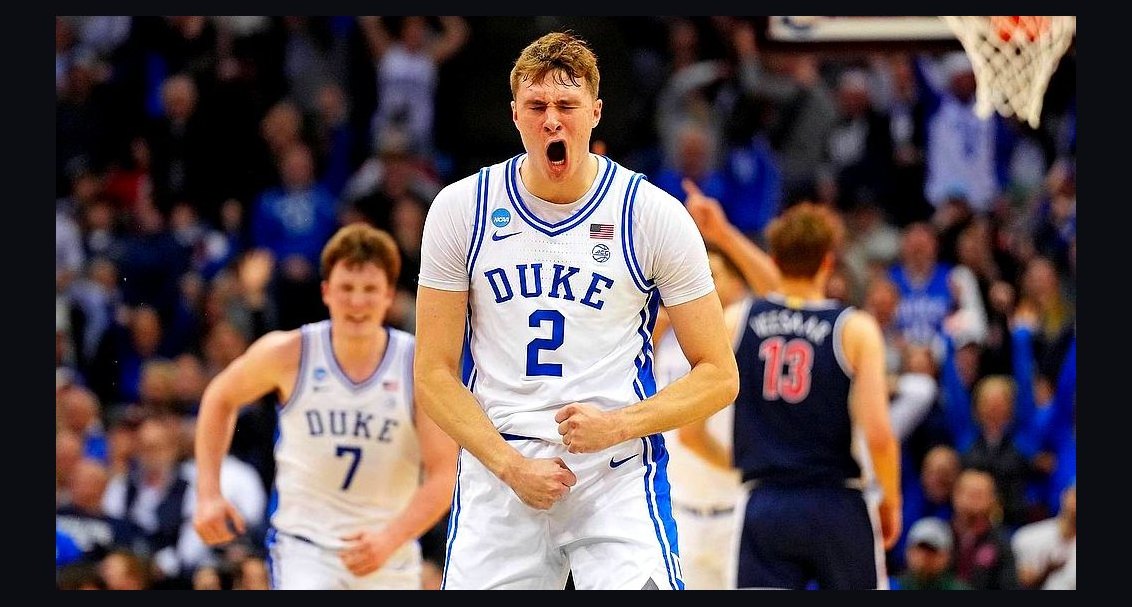
Duke's 2027 basketball roster strategy weighs two paths: keep running Jon Scheyer's one-and-done freshman-factory model behind the No. 1-ranked 2026 class, or pivot toward the hybrid continuity model SEC and Big Ten programs use under the House settlement's revenue-sharing cap. NIL spend stays concentrated on a handful of blue-chip freshmen rather than distributed across a veteran roster, which keeps Duke's ceiling high but its floor fragile.
The two options compared
Duke's front office, and by extension Iron Dukes, the program's NIL collective, is functionally choosing between two roster-construction philosophies for the 2026-27 season, and the choice shapes everything downstream — recruiting pitches, collective spend, and even how Jon Scheyer manages a locker room that turns over almost entirely every twelve months.
Option one is the freshman-factory model Duke has run since Scheyer took over from Mike Krzyzewski. It leans on the Cameron Indoor Stadium recruiting pitch, a Hall of Fame coaching pedigree, and an NBA Draft pipeline that has produced seven first-and-second-round picks across the 2025 and 2026 classes, including Cooper Flagg at No. 1 overall and Cameron Boozer as a projected top-three selection. Under this model, Duke signs the No. 1 national class nearly every year, starts three or four true freshmen, and accepts that the entire rotation graduates or declares for the draft each spring. The upside is a roster stocked with the single highest-upside talent in the country every season. The downside, now sharpened by the House v. NCAA settlement, is zero roster continuity — Duke enters 2026-27 with effectively no returning starters, one experienced rotation piece in Patrick Ngongba II, and total dependence on an incoming class living up to its recruiting rankings from day one.

Option two is the hybrid continuity model that programs like Tennessee, Arkansas, and increasingly Kentucky under Mark Pope have adopted. It blends two or three elite freshmen with three or four multi-year transfer portal veterans signed to continuity-based agreements, often two-year deals that lock in NIL compensation across both seasons. The pitch to a transfer is retention money and a defined role, not just brand exposure. The trade-off is a lower recruiting ceiling — five-star prospects sometimes prefer a roster with fewer established veterans ahead of them — but a materially higher floor, because half the roster already knows the system, the conference, and each other when November arrives.
Duke has not fully committed to either extreme. The 2026-27 roster is being built almost entirely on option one, anchored by the incoming class of Cayden Boozer, Cameron Williams, Nikolas Khamenia, and Shelton Henderson, with Ngongba as the lone continuity piece. The strategic question for the program — and for anyone modeling where Duke basketball goes from here — is whether that stays the plan through 2028 or whether the NIL math forces a hybrid pivot sooner than Scheyer would prefer.
How to decide between them

The decision framework Duke's staff is implicitly running looks like a resource-allocation problem more than a basketball one: given a fixed NIL and revenue-share pool, where does the marginal dollar produce the most wins, and does that answer change year to year based on which model — pure freshman or hybrid continuity — the roster is chasing.
The first branch point is talent acquisition: did Duke land a recruiting class strong enough to start three or four true freshmen without a drop-off. Scheyer has answered that question affirmatively three years running, which is why option one has stayed the default. The second branch point is whether any proven production returns — a Ngongba, a healthy holdover big, a sophomore who chose to stay rather than declare. When that box is checked, the freshman-heavy model is low-risk relative to its ceiling. When it is not, the program is one injury or one underperforming freshman away from missing the tournament entirely, which is close to the bind Duke faces entering 2026-27 with a near-zero returning core.
The third branch point is outcome-driven and retrospective: did the prior season's roster construction produce a Final Four-caliber team. Duke has gone 57-15 across the last two seasons under this exact model but is 0-2 in Elite Eights, which is the statistical signal that pushes the decision tree toward reassessment. A program with Duke's recruiting gravity can absorb one more freshman-heavy cycle on reputation alone; a second consecutive Elite Eight exit with another No. 1 class would be the data point that forces Iron Dukes and the athletic department to fund a genuine hybrid pivot rather than a cosmetic one.
Concrete numbers behind each option

The dollar figures are what actually separate these two paths, and they are constrained by the same ceiling: the House v. NCAA settlement, effective July 1, 2025, caps direct athlete revenue sharing at roughly $20.5 million per athletic department for 2025-26, escalating near 4 percent annually toward roughly $21.3 million for 2026-27. Football absorbs the largest share at every power-conference program, commonly 65 to 75 percent of the pool even at a basketball-first school like Duke, which leaves men's basketball with an estimated $2.5 to $4 million in direct revenue share to split across 13 scholarship spots. Women's basketball and Olympic sports claim another $3 to $5 million for Title IX compliance, tightening the men's basketball allocation further.
Layered on top of revenue share is third-party NIL through the Iron Dukes collective, which most estimates place at $2 to $4 million annually for men's basketball, bringing Duke's total basketball NIL pool to an estimated $5 to $7 million. That is roughly half of what reported SEC leaders are deploying — Texas Tech's Matador Club has been reported spending close to $10 million on basketball NIL in a single cycle, and Tennessee's Spyre Sports Group and Arkansas's collective operate on a comparable scale. Under the freshman-factory model, that $5 to $7 million pool is not evenly distributed; roughly 60 to 70 percent typically flows to the top two or three signees in a class. For 2026-27, that points to Cayden Boozer commanding an estimated $800,000 to $1.2 million and Cameron Williams in the $600,000 to $900,000 range, with the remaining 30 to 40 percent split among the rest of the roster and walk-ons.
The hybrid model's numbers look different in shape, not necessarily total size. Continuity-focused programs tend to pay returning veterans $300,000 to $500,000 each across two or three retained players, then use the remainder — often a smaller slice, given fewer total mouths to feed in a given signing class — on one or two headline freshmen. The net effect is a roster where NIL dollars buy stability as much as ceiling. This is, in essence, the same allocation trade-off a RevOps leader faces when deciding whether to concentrate budget on a handful of high-ticket new-logo deals or spread it across renewal and expansion motions that protect the existing base: concentrated freshman spend maximizes peak talent per dollar the way an all-inbound pipeline maximizes deal size, while hybrid continuity spend protects the floor the way a renewals-and-expansion motion protects recurring revenue. Duke, running the concentrated model, is effectively all-in on new-logo acquisition every single year with no renewal book to fall back on.
On the recruiting side, the numbers cut against Duke in head-to-head bidding. Reports describe five-star prospects choosing between offers like $1.2 million at Duke and $2.4 million at an SEC program, a gap the Boozer twins closed through family ties — their father Carlos Boozer is a Duke alum — rather than Duke outbidding the market. Cameron Williams reportedly turned down a $2.0 million offer elsewhere for less money at Duke. Those numbers suggest the brand premium is still real but shrinking relative to the cash premium SEC collectives can offer, and it is a gap that widens, not narrows, as more programs fully fund the revenue-share cap.
Implementation details and sequencing

However Duke's staff weighs the two models, the roster-building calendar imposes a fixed sequence that both paths have to run through, and the timing dictates when NIL dollars actually get committed relative to when results are known.
The sequencing starts in April, immediately after the national title game, when the spring signing period closes and Duke's staff knows exactly who is declaring for the draft, who is transferring out, and who is staying. This is also when Iron Dukes has to start committing dollars, because the transfer portal's primary window opens shortly after and elite continuity targets do not wait. A program pursuing the hybrid model has to move fast here, locking multi-year NIL agreements with veteran transfers before a cash-flush SEC program outbids them for the same names. A program staying in the pure freshman model, as Duke largely has, spends this window instead reinforcing commitments from its already-signed freshman class and filling one or two supplementary portal spots rather than rebuilding half the roster.
By June and July, the athletic department finalizes its revenue-share budget for the coming year under the $20.5 to $21.3 million cap, which sets the hard ceiling for both the football and basketball allocations before the season even begins. This is a fixed, largely non-negotiable step — Duke cannot spend past the cap regardless of which roster philosophy it favors, so the internal fight is entirely about allocation percentage between sports and, within basketball, between concentrated freshman deals and distributed veteran deals.

Summer workouts in July and August are where the two models diverge most visibly in practice. A freshman-heavy roster needs significant on-court integration time, since four or five new starters have to learn Scheyer's system, on-ball actions, and defensive rotations essentially from zero. A hybrid roster needs less pure system installation but more locker-room integration, blending returning leadership with new pieces who already have established roles elsewhere. Duke's 2026-27 offseason falls squarely into the former category, given the near-total roster turnover.
The season itself, November through March, is the only real-time feedback loop on the model. Tournament outcome becomes the data point that feeds back into next April's decision: an Elite Eight-or-better finish reinforces the existing freshman-factory approach and validates the concentrated NIL spend, while a disappointing finish — as happened with last season's Elite Eight exit against a full-strength roster — accelerates internal pressure toward the hybrid pivot for the following cycle. That feedback loop is exactly why 2026-27 carries outsized weight: a second consecutive letdown with another No. 1 class turns this from an abstract strategic debate into a mandate.
Related questions
Why doesn't Duke just outspend SEC programs on NIL?

Duke is funded at the House settlement's revenue-share cap like every power program, but the Iron Dukes collective and the ACC's regional donor base are smaller and less concentrated than boosters at Texas Tech, Tennessee, or Arkansas, who can layer larger third-party NIL on top of the same cap.
Does Duke's model work if a top recruit underperforms?
Not well. The freshman-factory approach has almost no roster continuity to fall back on, so an underperforming or injured freshman directly lowers the team's floor with no proven veteran to absorb minutes.
How does the transfer portal affect Duke's recruiting pitch?
Duke recruits primarily on brand, development pedigree, and NBA draft outcomes rather than portal retention money, which is why its portal activity is lighter than continuity-focused SEC programs.
Is Jon Scheyer's job actually at risk over roster strategy?
Not imminently, but a second straight Elite Eight-or-worse finish with another elite class would intensify scrutiny, given his 89-25 career record has yet to produce a Final Four.
FAQ
Does Duke still rely primarily on one-and-done freshmen for 2027? Yes. The 2026 recruiting class, ranked No. 1 nationally and headlined by Cayden Boozer and Cameron Williams, is the foundation of the 2026-27 roster, continuing the model that produced Cooper Flagg and Cameron Boozer.

How much NIL money does Duke basketball actually have? Estimates put Duke's combined revenue-share and Iron Dukes collective basketball pool at roughly $5 to $7 million, well below the $8 to $12 million reportedly available at some SEC programs.
What does the House settlement change about roster building? It caps direct revenue sharing near $20.5 to $21.3 million per school and rewards programs that use multi-year continuity contracts, which structurally favors hybrid-model programs over pure freshman-factory ones like Duke.
Who is Duke losing from the 2025-26 roster? Cameron Boozer and Isaiah Evans are both expected to enter the 2026 NBA Draft, continuing a pattern where Duke's top scorers leave after one season.
Could Duke shift toward more transfers in future seasons? It's plausible if results don't improve. A hybrid approach blending two or three freshmen with retained or transferred veterans would mirror what Tennessee and Arkansas already run successfully.
Why does Cameron Indoor still matter if NIL money is behind SEC programs? Cameron Indoor Stadium and Duke's NBA development pipeline still provide a measurable draft-stock premium for prospects, which partially offsets the cash gap versus SEC offers.
Sources
- CBS Sports — https://www.cbssports.com/college-basketball/
- ESPN — https://www.espn.com/mens-college-basketball/team/_/id/150/duke-blue-devils
- Sports Illustrated — https://www.si.com/college/duke
- Duke Chronicle — https://www.dukechronicle.com/section/sports
- Yahoo Sports — https://sports.yahoo.com/college-basketball/
- WRAL Sports Fan — https://www.wralsportsfan.com/duke/
- On3 NIL — https://www.on3.com/nil/
- NCAA.org — https://www.ncaa.org/sports/2021/6/10/name-image-likeness.aspx
Related on PULSE
- What are Duke Blue Devils men's basketball's 2027 NIL needs and strategy?
- What is the Duke Blue Devils NIL strategy for women's basketball in 2027?
- What is the Duke Blue Devils NIL recruiting strategy for college basketball in 2027?
- How much do Duke women's basketball players earn from NIL in 2027?
- How does the House settlement cap affect athletic department revenue share in 2027?
This page will be disappearing soon. Save it to your device for $1 — or read it free while it is here.
@Kory-White- · if Venmo asks, the last 4 of my number are 2012
This page is gone.
This one is off the shelf now. $1 keeps it on your phone for good — the whole page, pictures and diagrams included.
 nilHow much do Duke basketball players earn from NIL in 2027?
 nilWhat is the Auburn Tigers men's basketball NIL and roster strategy for the 2027 season?
 nilWhat is the Maryland Terrapins men's basketball NIL and roster strategy for the 2027 season?
 nilWhat is the Florida Gators men's basketball NIL and roster strategy for the 2027 season?
 nilWhat is the Michigan State Spartans men's basketball NIL and roster strategy for the 2027 season?
 nilWhat is the Houston Cougars men's basketball NIL and roster strategy for the 2027 season?
 nilWhat is the Arkansas Razorbacks men's basketball NIL and roster strategy for the 2027 season?
 nilWhat is the Kansas Jayhawks men's basketball NIL and roster strategy for the 2027 season?
 nilWhat is the Kentucky Wildcats men's basketball NIL and roster strategy for the 2027 season?
 nilWhat is the Baylor Bears men's basketball NIL and roster strategy for the 2027 season?