


What is Gong and why is it a hot RevOps tool for 2027?
Quality
Certified
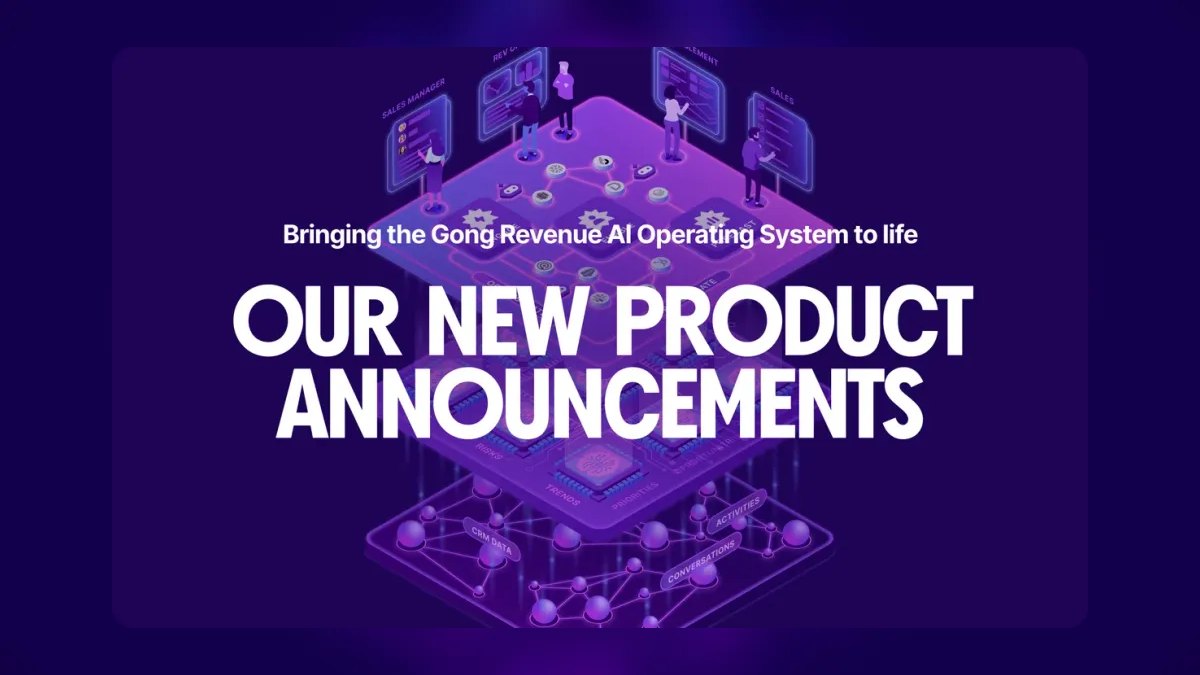
Gong is a revenue intelligence platform that records, transcribes, and analyzes sales calls, meetings, and emails, then turns that conversation data into coaching signals, deal-risk flags, and forecast scores. It stays hot in 2027 because raw transcription became commodity while the analysis layer on top of it did not.
The outcome you should expect
Buying Gong does not, by itself, change a number. What it changes is the quality of the evidence available to the people who change numbers — frontline managers, deal desk, and the RevOps team that runs forecast inspection. When teams get a return, the return shows up in three places, and it is worth naming them precisely because vendors tend to blur them together into one glossy percentage.
The first is coaching throughput. Before conversation intelligence, a manager with eight reps might listen to four calls a month, chosen essentially at random or after a deal already went sideways. With call analysis running automatically, the same manager reviews clipped moments across dozens of calls in the same hour — the thirty seconds where a pricing objection landed and the rep changed the subject, the discovery call where the rep talked for eleven minutes straight without a question. The measurable effect is that coaching stops being rationed. Whether it improves win rate depends entirely on whether the manager actually holds the coaching conversation afterward.
The second is forecast defensibility. This is the outcome RevOps leaders usually care about most, and it is subtly different from forecast accuracy. Accuracy is whether the number lands. Defensibility is whether you can explain, before the quarter closes, why you believe the number — and challenge a rep's commit with something other than a hunch. When a deal is marked 90% but has had no multi-threaded conversation in three weeks, no economic buyer on any recorded call, and a competitor mentioned twice in the last meeting, that is an argument you can make in a pipeline review without it becoming a personality conflict. The data does the confronting.

The third is institutional memory. Reps leave. Territories get reassigned. In an organization without conversation capture, the entire history of a $400K account lives in a departed rep's head and eleven lines of CRM notes. With capture in place, the new owner listens to the last four conversations before their first call. This benefit is unglamorous, rarely modeled in a business case, and frequently the thing customers name first when asked what they would miss.
What you should not expect is pipeline generation. Gong is a rearview instrument. It tells you what happened in conversations that already occurred; it does not tell a rep which account to call tomorrow, does not enrich a contact record, and does not fire an outbound sequence off a website visit. Teams that buy it expecting a top-of-funnel lift are disappointed on schedule, usually around month four, and the disappointment is a scoping error rather than a product failure.
What drives that outcome
The mechanism is worth drawing out because it explains why two companies can buy identical licenses and get opposite results. The platform produces signal; humans convert signal into behavior; behavior moves the number. Break the middle link and the whole chain is inert.

Capture comes first and has to be near-total. If half your calls happen on a personal cell phone or in an unrecorded conference room, the pattern analysis is drawing conclusions from a biased sample — and biased in the worst direction, because the calls least likely to be recorded are often the high-stakes executive conversations that matter most. Practically this means the recording integration has to cover your dialer, your video conferencing, and your email, and it means legal and enablement have to settle consent policy before rollout rather than during it.
Analysis is the layer that separates a revenue intelligence platform from a note-taker. Speaker separation, topic tracking across an entire team's corpus, competitor mention trending, question rate, longest monologue, next-step detection — these are aggregate views no manager could assemble manually. The unit of value is not the single call summary; it is the observation that pricing is surfacing in the second meeting this quarter when it used to surface in the fourth, across four hundred calls.
Then comes the human loop, which is where most implementations quietly fail. Someone has to look at the analysis on a schedule, decide something, and follow up. RevOps owns building that cadence: a weekly manager review of flagged deals, a monthly coaching theme drawn from aggregate data, a forecast call that runs off engagement signals rather than rep sentiment. Without the cadence, the platform is an archive with a search bar.
Notice what sits between analysis and outcome in that diagram: two human rituals. RevOps teams evaluating this category should read the diagram backward during the buying process. If you cannot name who runs the weekly inspection and who runs the coaching 1:1, you are buying the left half of the chart and hoping the right half assembles itself.
Benchmarks and realistic ranges

Gong does not publish list pricing, which is itself a useful signal about where it sits in the market. Every number you see quoted in public — on review sites, in procurement forums, in vendor comparison posts — is a data point from somebody's negotiated contract, not a rate card, and the spread is wide. Treat published figures as a range to anchor against, not a quote.
The structure of the pricing is more reliable than the magnitude. It is a two-part tariff: an annual platform fee that is independent of headcount, plus a per-seat license. That structure has a specific consequence for RevOps math. The platform fee is a fixed cost amortized across your recorded seats, so the effective cost per rep falls sharply as you add seats. A team of fifteen carries the full platform fee across fifteen people; a team of a hundred and fifty carries the same fee across ten times the base. This is the entire arithmetic reason the category consolidates upmarket, and it is why the conventional wisdom that Gong makes sense above roughly fifty reps is a statement about cost structure rather than about product capability.
Budget for more than the license line. Implementation, integration work with your CRM and dialer, admin time, and enablement to drive adoption all land in year one. A reasonable planning posture is to assume total first-year cost meaningfully exceeds the sum of seat licenses, and to hold contingency for the integration work that always turns out to be less standard than the demo suggested. Native connectors to major CRMs, dialers, and video platforms exist and generally work; custom API work against a less common system in your stack is where timelines stretch.

On the value side, be disciplined about what you can actually measure. Win rate is a noisy metric at small deal counts — if your team closes forty deals a quarter, a three-point win rate move is statistical noise, and you will not be able to attribute it to a tool with any honesty. Forecast accuracy measured as absolute error against commit is more tractable but takes several quarters of clean data to trend. The metrics that move fastest and are easiest to attribute are activity-level: number of calls reviewed per manager per month, percentage of deals with a documented next step, percentage of open opportunities with more than one contact engaged. Those are the leading indicators. Instrument them from day one, because they are what you will use to justify the renewal.
Set expectations on transcription quality too. Modern speech-to-text on clean audio from a business headset is strong; on a rep dialing from a car through a phone speaker, with a prospect on a bad line, it degrades noticeably. Heavy accents, industry jargon, product names, and crosstalk all reduce accuracy. Most platforms let you supply a custom vocabulary of product and competitor names, and doing so is the highest-leverage twenty minutes of configuration available to you — competitor mention tracking is worthless if the system transcribes your main rival's name three different ways.
Finally, benchmark against the alternative you actually have, not against doing nothing. The competitive floor in 2027 is not "no recording." It is a five-dollar-a-seat AI note-taker that produces a decent summary and pushes it into the CRM. Against that floor, the question is not whether call recording has value — it obviously does — but whether the aggregate analysis, deal scoring, and coaching workflow are worth the difference. For a twelve-person team, they usually are not. For a two-hundred-person org with three layers of sales management and a board asking hard questions about forecast reliability, they usually are.
Risks, edge cases, and failure modes

The dominant failure mode is the expensive archive. The platform gets deployed, recording works, everyone is impressed for six weeks, and then usage collapses to a handful of power users who search for old calls occasionally. Nobody runs the coaching cadence, nobody changes the pipeline review, and at renewal the finance team asks what the return was and RevOps cannot answer. This happens often enough that it should be the default assumption you design against. The countermeasure is boring: name an owner, define a weekly ritual, and report adoption metrics to leadership monthly for the first two quarters.
The second risk is scope confusion, which usually presents as an unspoken assumption that the platform will solve top-of-funnel. It will not. Prospecting intelligence — who to contact, which accounts show intent, which website visitors to route — comes from a different class of tool entirely, and RevOps teams frequently need a data enrichment and signal layer alongside conversation intelligence rather than instead of it. Draw your stack map before you sign, and be explicit about which box this purchase fills.
Third, consent and privacy. Call recording is regulated differently across jurisdictions, and the rules for two-party consent states in the US differ from the rules under European data protection law. If you sell internationally, this is a real workstream involving legal, not a checkbox. Practical issues that come up: how disclosure is delivered on outbound calls, whether prospects can request deletion, how long recordings are retained, and whether recordings of internal conversations discussing personnel are being captured incidentally. Sort retention policy before the first recording, because retrofitting a retention rule onto two years of accumulated audio is unpleasant.

Fourth, the surveillance dynamic. Reps notice when every call is recorded and scored, and the reaction is not uniformly positive. Handled badly — scores in a public leaderboard, talk-ratio used punitively in performance reviews — it corrodes trust and produces gaming behavior: reps performing for the metric, asking token questions to bump their question rate, avoiding the platform for sensitive conversations. Handled well, framed as coaching support with managers modeling their own call reviews first, it is accepted quickly. This is a change management problem with a technical veneer, and the organizations that get it wrong are usually the ones that skipped the framing conversation.
Fifth, data hygiene upstream. Conversation intelligence attaches insight to CRM objects, and if your opportunity data is a mess — deals in the wrong stage, contacts not associated, duplicate accounts — the intelligence attaches to the wrong things or nothing at all. Deal scoring in particular depends on the CRM's picture of the opportunity being roughly true. Fixing CRM hygiene is not glamorous prep work; it is a precondition.
Sixth, and this one catches sophisticated teams: over-trusting the deal score. An AI-generated probability derived from engagement patterns is genuinely useful and genuinely incomplete. It cannot see the conversation that happened in a hallway at a conference, the procurement dynamics discussed on an unrecorded internal call at the buyer, or the budget freeze that has not been announced yet. Treat the score as one input into a human judgment, weighted alongside rep intelligence and deal desk review. Teams that hand the forecast entirely to the model discover the gap the hard way, usually in a quarter where a large deal that scored well simply did not close.
A practical rollout plan

A conversation intelligence rollout has a natural shape, and running it in this order avoids most of the failure modes above. Budget roughly a quarter from contract to steady state, longer if you have international consent requirements or a messy CRM.
Start with the pre-work, before the contract if possible. Settle consent and retention policy with legal. Audit CRM hygiene on opportunities and contacts. Inventory where conversations actually happen — which dialer, which video platform, whether reps use personal devices — and decide what is in scope for capture. Define the two or three success metrics you will report on, and capture their baseline now, because you cannot demonstrate improvement against a baseline you never measured.
Then run a pilot rather than a full deployment. One team, one manager, six to twelve reps, four to six weeks. The pilot's job is not to prove the technology records calls — it will — but to prove that a manager can run a coaching cadence off the data and that reps tolerate it. Pick a manager who is genuinely interested rather than the one with spare capacity. Configure the custom vocabulary with your product names, competitor names, and industry jargon during this phase.
Expand deliberately after the pilot, one team at a time, with the pilot manager helping onboard the next. Roll the analysis into the existing pipeline review rather than creating a new meeting — a new meeting will be cancelled within two months, whereas a new agenda item in an existing meeting survives. At the same time, wire the outputs back into the CRM so that the insight lives where the rest of the revenue team already works.

Only after adoption is real should you turn on forecast scoring as a decision input. Running it in shadow mode for a quarter first — recording what the model predicted, comparing to what happened, without letting it influence the commit — gives you a calibration read and buys credibility with the sales leaders who will otherwise dismiss it.
One adjacent note worth carrying into the plan: the same rollout logic applies to neighboring categories in the RevOps stack. Whether you are deploying conversation intelligence, a data enrichment layer, or a forecasting overlay, the pattern holds — pre-work on data hygiene, a narrow pilot with a willing owner, expansion through existing rituals rather than new ones, and a shadow period before any model output touches a committed number. The tooling changes; the failure modes do not.
Related questions
Is Gong worth it for a team under twenty reps?
Usually not. The fixed platform fee spreads across too few seats, so effective per-rep cost is high, and small teams typically lack the call volume for aggregate pattern analysis to be statistically meaningful. A lighter conversation-intelligence product covers recording and basic analytics for far less.
Does Gong replace a CRM?
No. It captures and analyzes conversations; it does not manage accounts, opportunities, or pipeline structure. Teams run it alongside Salesforce or HubSpot, with insight flowing back into the CRM. Deal scoring actually depends on CRM data quality, so a messy CRM degrades it.
How is revenue intelligence different from an AI note-taker?
Note-takers summarize individual meetings. Revenue intelligence analyzes the whole corpus — topic trends across hundreds of calls, competitor mention frequency, coaching patterns by rep, deal risk scoring. The gap is aggregate analysis and workflow, not transcription quality, which is now broadly commoditized.
What metric proves it is working?

Leading indicators first: calls reviewed per manager, percentage of open deals with a documented next step, percentage multi-threaded. Win rate and forecast error are the real goals but move too slowly and noisily to attribute cleanly in the first two quarters.
What breaks a rollout most often?
Absence of a coaching cadence. The platform produces signal reliably; the failure is that nobody schedules the meeting where signal becomes a decision. Second most common is consent and retention policy handled after deployment rather than before.
FAQ
Does Gong publish its pricing?
No. Pricing is quoted per deal and structured as an annual platform fee plus per-user licenses. Public figures circulating on review and comparison sites reflect individual negotiated contracts rather than a published rate card, so treat them as a rough anchor and expect your own quote to depend on seat count, contract length, and which modules you take.
What does Gong actually capture?
Sales calls, video meetings, and email, depending on which integrations you enable. Recordings are transcribed with speaker separation, then analyzed for topics, questions, talk ratios, competitor mentions, objections, and next steps. Coverage is only as complete as your integrations — conversations on unrecorded channels are invisible, which biases any aggregate analysis built on top.

Can it improve forecast accuracy?
It can improve forecast defensibility immediately and accuracy over time, provided the scoring is calibrated against your own closed-won history rather than trusted out of the box. Run it in shadow mode for a quarter, compare predictions to outcomes, then introduce it as one input among several. It cannot see conversations that happen off-platform.
Is call recording legal everywhere we sell?
Consent requirements vary by jurisdiction, and multi-party consent rules plus European data protection obligations both apply to recorded sales calls. This is a legal workstream, not a settings toggle. Settle disclosure language, retention duration, and deletion request handling before the first recording, since retrofitting policy onto an existing archive is painful.
How do reps typically react?
Reaction depends almost entirely on framing. Positioned as coaching support, with managers reviewing their own calls first and metrics never used punitively in isolation, adoption is usually smooth. Positioned as monitoring, with public leaderboards on talk ratio, it produces gaming and avoidance. The technical rollout is easy; the trust conversation determines whether it works.
What should we buy instead if we are too small?
A lighter conversation-intelligence or AI note-taking product that records, transcribes, and pushes summaries into the CRM. That covers institutional memory and basic coaching for a fraction of the cost. Graduate to a full revenue intelligence platform when you have the call volume for aggregate analysis and management layers to consume it.
Sources
- https://www.gong.io/ — vendor product documentation for the revenue intelligence platform
- https://www.g2.com/products/gong/reviews — practitioner reviews, ratings, and comparison data
- https://www.gartner.com/reviews/market/revenue-intelligence-platforms — analyst market definition and vendor coverage
- https://www.salesforce.com/sales/analytics/sales-forecasting/ — CRM-side forecasting concepts and terminology
- https://gdpr.eu/ — EU data protection obligations relevant to recording and retention
- https://www.ftc.gov/business-guidance/privacy-security — US regulatory guidance on consumer data handling
- https://www.trustradius.com/conversation-intelligence — category overview and vendor comparison
- https://hbr.org/topic/subject/sales — research and commentary on sales management practice
Related on PULSE
- What is dbt and why is it a hot RevOps data transformation tool for 2027?
- What is LinkedIn Sales Navigator and why is it a hot RevOps account-intelligence tool for 2027?
- What is Bardeen and why is it a hot RevOps AI automation tool for 2027?
- What is RB2B and why is it a hot RevOps website-visitor identification tool for 2027?
- What is Qualified (Piper the AI SDR) and why is it a hot RevOps tool for 2027?
- What is HubSpot Breeze and why is it a hot RevOps tool for 2027?
This page will be disappearing soon. Save it to your device for $1 — or read it free while it is here.
@Kory-White- · if Venmo asks, the last 4 of my number are 2012
This page is gone.
This one is off the shelf now. $1 keeps it on your phone for good — the whole page, pictures and diagrams included.
 revopsHow should a 2027 sales org run the crisis playbook for a botched product launch?
 revopsWhat are North Carolina Tar Heels men's basketball's 2027 NIL needs and strategy?
 revopsHow do you respond to a sudden churn spike in 2027?
 revopsHow do you compare quotas across sales segments in 2027?
 revopsWhat are Michigan Wolverines football's 2027 NIL needs and strategy?
 revopsHow do you actually use AI in B2B SaaS sales — and what's hype vs real in 2027?
 revopsHow should a 2027 sales enablement team run content audits at scale?
 revopsHow do you build a customer reference program that AEs can actually use in 2027?
 revopsWhat are Penn State Nittany Lions football's 2027 NIL needs and strategy?
 revopsHow should a 2027 sales org structure deal review templates?