


What is Gainsight and why is it a hot RevOps customer-success platform for 2027?
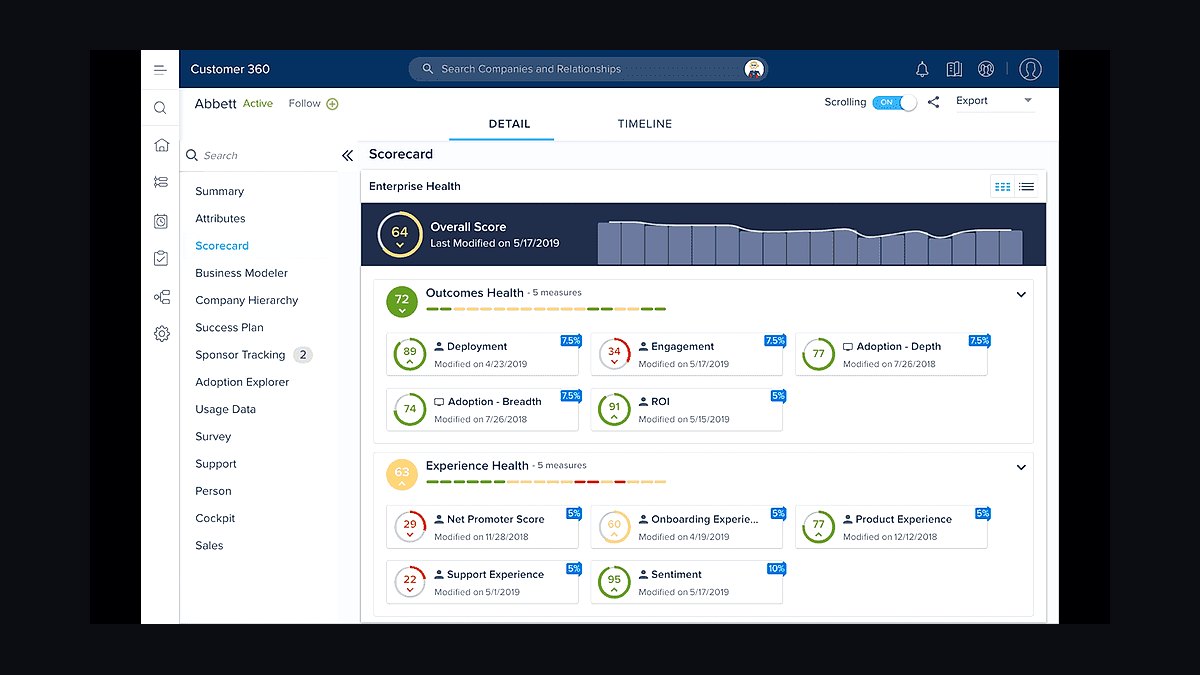
Gainsight is the enterprise customer-success platform that anchors retention and expansion programs, and it is a hot RevOps tool for 2027 because, as net revenue retention becomes the metric boards care most about, the system that operationalizes keeping and growing existing customers has moved from a CS nice-to-have into the center of the revenue conversation. Gainsight's core is customer health scoring, playbooks, and the workflows that let customer-success teams manage retention at scale across hundreds or thousands of accounts. Under its broader CustomerOS umbrella it now spans Gainsight CS (customer success), Gainsight PX (product analytics and in-app engagement), Skilljar (customer education), Customer Communities, and Staircase AI agents — an attempt to unify the entire post-sale customer experience. Its 2026 AI layer adds Copilot and an Insight Agent that bolt onto the existing architecture, with a January 2026 release adding Copilot Usage Reports to track AI adoption across the org. The honest reality is that Gainsight is an enterprise commitment: pricing is undisclosed and runs roughly twelve hundred to forty-two hundred dollars per user per year, with implementation fees from thirty thousand to over one hundred twenty thousand and mid-market deployments often landing between fifty thousand and one hundred fifty thousand-plus annually. Under new CEO Chuck Ganapathi, Gainsight continues to anchor the CS tech stack for organizations running large-scale, ops-heavy retention programs. For RevOps teams where retention and expansion are the growth engine, Gainsight is the operating system.
1What Gainsight actually is
Gainsight is the category-defining customer-success platform — the system that helps CS teams systematically retain and grow existing customers rather than managing relationships ad hoc. Its purpose is to make retention and expansion repeatable and measurable at scale, which is exactly what an enterprise with thousands of accounts needs.
The foundation is the customer health score — a composite metric combining product usage, engagement, support history, and other signals to indicate whether an account is thriving or at risk of churn. Around health scores, Gainsight provides playbooks: structured, repeatable workflows that fire when an account hits a condition (a dropping health score, an upcoming renewal, a usage milestone), guiding CSMs through the right actions. This turns retention from a CSM's intuition into an operationalized, consistent motion.

1.1 CustomerOS — the unified post-sale platform
Gainsight has expanded beyond core CS into CustomerOS, an umbrella bringing together Gainsight CS (customer success), Gainsight PX (product analytics and in-app engagement), Skilljar by Gainsight (customer education), Customer Communities, and Staircase AI agents. The strategic intent is to unify the entire post-sale experience — success, product adoption, education, and community — in one platform, so the signals that predict retention and expansion all live together. For RevOps, this is a bid to make Gainsight the single system of record for everything that happens after the sale.
2Where Gainsight fits in the RevOps stack
Gainsight occupies the post-sale revenue layer — the retention-and-expansion engine that sits alongside the CRM and complements the new-business motion. As RevOps increasingly owns the full revenue lifecycle (not just new sales), Gainsight is the tool that operationalizes the back half of that lifecycle.

The diagram shows Gainsight's value: signals feed health scores, health scores trigger playbooks, playbooks drive measured CSM action, and AI surfaces what to prioritize — all rolling up to the retention and expansion metrics RevOps now owns. The payoff is making net revenue retention a managed, repeatable system rather than a hope.
2.1 Why retention is the 2027 priority
The strategic context is that the growth playbook shifted. When capital was cheap, new-logo acquisition drove growth; as efficiency became the mandate, net revenue retention — keeping and expanding existing customers — became the metric boards scrutinize most, because expansion revenue is cheaper than new acquisition and NRR compounds. Gainsight is the platform built to maximize exactly that. For RevOps, this elevates customer success from a cost center to a revenue engine, and Gainsight is the system that operationalizes it at enterprise scale.

2.2 Enterprise pricing and implementation
Gainsight is a serious enterprise commitment. Pricing is undisclosed, running roughly twelve hundred to forty-two hundred dollars per user per year, with implementation fees from thirty thousand to over one hundred twenty thousand and 5-to-10% annual uplifts; mid-market deployments (500-2,000 customer records) often land between fifty thousand and one hundred fifty thousand-plus annually. The implementation cost and configuration overhead are significant — Gainsight is powerful but not lightweight. RevOps must budget for the full deployed cost, not just licenses, and plan for a real implementation project.
3Who Gainsight is for
Gainsight fits enterprises and larger mid-market companies running ops-heavy, large-scale retention and expansion programs across many accounts. It rewards organizations for whom NRR is a strategic priority and who have the scale and resources to operationalize customer success rigorously.

3.1 Where it shines
The strongest fit is a company with hundreds or thousands of customer accounts where retention and expansion grow revenue, and where CS needs to be systematic rather than relationship-by-relationship. For these organizations, Gainsight's health scores, playbooks, and CustomerOS breadth make retention a measurable, repeatable operation, and the AI layer helps CSMs prioritize across large books. It shines where the cost of churn is high and the upside of expansion is the primary growth lever.
3.2 Where it is a weaker fit
Gainsight is a weaker fit for small companies and early-stage teams that cannot justify the five-to-six-figure cost and heavy implementation — lighter, cheaper CS tools exist for them. It is also less suited to organizations with simple, low-volume customer bases where systematic CS operations add overhead without proportional benefit. The configuration burden means teams without ops capacity to implement and maintain it will underuse a powerful but complex platform.

4The 2027 edge
Gainsight is a 2027 story because retention and expansion have become the dominant growth priority, and Gainsight is the established system for operationalizing them at scale, now broadened by CustomerOS and layered with AI. The edge is its depth and breadth in the post-sale domain — health scoring, playbooks, product analytics, education, and community unified — which a point CS tool cannot match.
4.1 The RevOps shift
The 2027 implication for RevOps is ownership of the full revenue lifecycle, with retention and expansion as central as new business. RevOps configures the health-score models, designs the playbooks, owns the data feeding CustomerOS, and governs how the AI surfaces priorities — making NRR a managed system with clear inputs and accountable outcomes. The discipline expands from pipeline-and-forecast to retention-and-expansion operations, and teams that operationalize CS rigorously through Gainsight will compound revenue from their existing base far more reliably than those treating retention as a relationship art.

5Limits and watch-outs
The first watch-out is cost and implementation: at five-to-six figures annually plus thirty-to-one-hundred-twenty-thousand-dollar implementation and ongoing configuration overhead, Gainsight is a major commitment that only pays off at scale, so RevOps must model total cost and plan a real deployment project rather than expecting quick value. The second is configuration complexity — Gainsight is powerful but heavy, and the AI features bolt onto existing architecture without simplifying the setup burden, so a team without dedicated ops capacity will struggle to realize its potential. The third is the scale prerequisite: the platform's value is proportional to account volume and the strategic importance of NRR; small or simple customer bases will not justify it. The fourth is data dependence — health scores are only as predictive as the usage, engagement, and support data feeding them, so garbage in produces misleading scores and mis-triggered playbooks. Finally, organizational change matters: Gainsight operationalizes CS, but only if the CS team actually adopts the playbooks and acts on the scores; without adoption, it is expensive shelfware.
6Bottom Line
Gainsight is a strong 2027 bet for enterprises and larger mid-market companies where retention and expansion grow revenue, because it operationalizes net revenue retention at scale through health scores, playbooks, and the broad CustomerOS suite, now layered with Copilot and Insight Agent AI. The strategic shift it embodies is customer success becoming a managed revenue engine as NRR becomes the board's priority metric, with RevOps owning the full post-sale lifecycle. Buy it if you run large-scale, ops-heavy retention programs, NRR is your primary growth lever, and you have the scale and resources for a serious implementation; be cautious if you are small or early-stage, your customer base is simple, or you lack the ops capacity to configure and adopt a complex platform. Its differentiator is depth and breadth in the post-sale domain — the established operating system for retention and expansion — priced and scoped like the enterprise platform it is.

Related on PULSE
- What is Vitally and why is it a hot RevOps customer-success platform for 2027?
- How do you diagnose whether your churn is a product problem or a customer-success problem?
- How do you design a RevOps control tower in Palantir-driven forecast simulations that catches sandbox changes breaking production flows before weekly commit calls for consumption ramp deals with customer success on Gainsight?
- How do you design a RevOps control tower in Palantir Ontology that catches sandbox changes breaking production flows before weekly commit calls for land-and-expand with customer success on Gainsight?
- How do you prove Palantir AIP improved win rate without creating a new shadow data mart for event-sourced pipeline teams on HubSpot when customer success on Gainsight?
- How do you use Palantir pipeline digital twins to dedupe broken lead routing across brands in HubSpot during AE-led pods when customer success on Gainsight?
FAQ
Is Gainsight only for large enterprises? Gainsight is built for scale, so it’s most common in mid-market and enterprise companies with hundreds or thousands of accounts. Smaller teams often find the upfront cost and implementation complexity challenging, though some lighter use cases exist.
How does Gainsight’s AI actually help customer success? Its Copilot and Insight Agent surface at-risk accounts, suggest next-best actions, and summarize customer interactions from existing data. The AI doesn’t replace workflows but automates alerts and recommendations, with adoption tracking added in early 2026.
What’s the difference between Gainsight CS and Gainsight PX? Gainsight CS focuses on health scores, playbooks, and retention workflows for account management. Gainsight PX handles product analytics and in-app engagement, like feature adoption and user behavior, which can feed into CS health data.
Does Gainsight integrate with common CRM and revenue tools? Yes, it has native integrations with Salesforce, HubSpot, and Marketo, plus APIs for custom connections. Most deployments rely on syncing account and contact data from your CRM to trigger health scoring and playbooks.
How long does a typical Gainsight implementation take? Full deployment often ranges from three to six months, depending on data complexity and custom workflows. The initial setup of health scores and basic playbooks can start in four to eight weeks, but deeper integrations take longer.
What’s the honest total cost for a team of fifty? For fifty users, expect annual subscription costs between sixty thousand and two hundred ten thousand dollars, plus implementation fees from thirty thousand to over one hundred twenty thousand. Pricing is not public and varies by modules and negotiation.
Sources
- Gainsight.com product pages on customer success, health scores, CustomerOS, PX, Skilljar, and AI (Copilot, Insight Agent)
- Oliv.ai 2026 Gainsight features and per-user pricing analyses including implementation costs
- Vendr and G2 2026 Gainsight pricing data and customer reviews
- SoftwareAdvice and SaaSworthy 2026 Gainsight CS profiles and pricing
- Industry analysis on net revenue retention and customer success as a revenue engine
This page will be disappearing soon. Save it to your device for $1 — or read it free while it is here.
@Kory-White- · if Venmo asks, the last 4 of my number are 2012
This page is gone.
This one is off the shelf now. $1 keeps it on your phone for good — the whole page, pictures and diagrams included.
 revopsWhat are Kentucky Wildcats men's basketball's 2027 NIL needs and strategy?
 revopsWhat are the 2027 best churn-save playbooks?
 revopsHow do you respond to a sudden churn spike in 2027?
 revopsHow should a 2027 sales org draw boundaries between deal desk and RevOps?
 revopsHow do you actually use AI in B2B SaaS sales — and what's hype vs real in 2027?
 revopsWhat are Penn State Nittany Lions football's 2027 NIL needs and strategy?
 revopsWhat capacity-planning models do SaaS sales teams use in 2027?
 revopsWhat's a healthy AE ramp time — and how do you actually design ramp in 2027?
 revopsHow should a 2027 CSM build an ROI justification ahead of renewal?
 revopsHow should a 2027 RevOps team handle international forecast complexity?