


How do you set up SPIFFs that actually work in 2027?
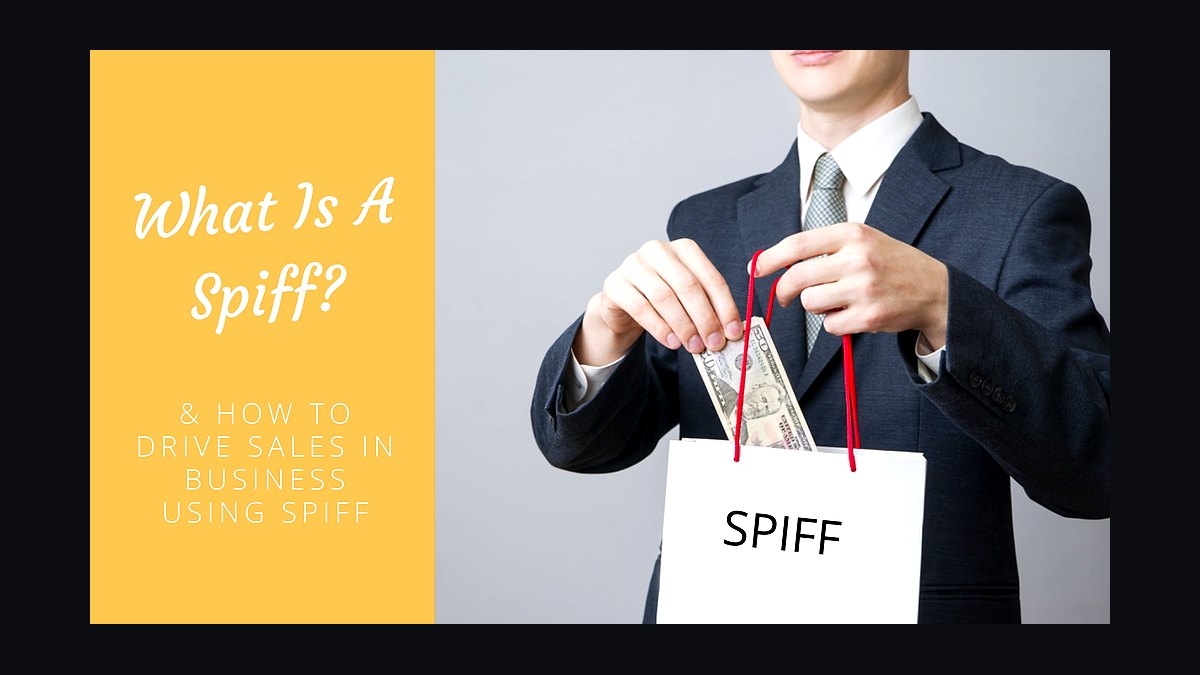
SPIFFs that actually work in 2027 are single-behavior, time-boxed, fast-paid, transparent, and capped — five non-negotiables enforced by CaptivateIQ AI, Xactly Intelligent Revenue, Spiff (Salesforce), Performio, or QuotaPath, with eligibility now auto-detected by agentic comp engines the moment a deal flips to Closed-Won. Run no more than two active SPIFFs per quarter, total SPIFF exposure capped at 3-5% of OTE per quarter, payouts hitting bank accounts inside 14 days of close, and the rule set published in a shared Slack channel before kickoff. The four production-grade categories that earn their keep are new-logo accelerators, product-attach bounties, quarter-end pushes, and strategic-account land SPIFFs — and Pavilion and OpenView comp benchmarks make clear that anything else is just expensive noise that erodes base-plan motivation.
1What A SPIFF Actually Is (And Isn't)
%20How%20do%20you%20set%20up%20SPIFFs%20that%20actually%20w%2C%20realistic%20magazine%20style%2C%20warm%20light%2C%20no%20text%2C%20no%20watermark?width=1200&height=675&nologo=true&model=flux&seed=64135)
SPIFF — Sales Performance Incentive Fund Formula — is a short-burst cash bonus designed to spike one specific seller behavior inside a tight window. It is not a comp plan, not a kicker, and not an accelerator. A comp plan pays reps for hitting quota across a full year. An accelerator pays a higher commission rate above a quota threshold. A SPIFF pays a fixed dollar bounty ($500-$5,000 per qualifying event) for a named behavior — landing the first deal in a new vertical, attaching a specific product to a renewal, closing before a quarter-end date, or landing a target logo from a named account list.
1.1 Why The Distinction Matters
When sales leaders blur SPIFFs into the comp plan, they create what Pavilion comp researchers call "compensation drift" — sellers stop responding to base commission because the SPIFF dollars feel like the real game. OpenView benchmark data shows that companies running more than two concurrent SPIFFs see a measurable 8-12% drop in non-SPIFF deal velocity as reps re-route effort toward the bounty. Treat SPIFFs as a tactical weapon for a specific 30-day moment, not as ongoing comp scaffolding.

1.2 The 2027 Operating Reality
Comp engines have moved past spreadsheets. CaptivateIQ AI agents now scan Salesforce or HubSpot in real time, match closed deals against active SPIFF rules, flag eligible reps inside minutes, and queue payout for the next payroll cycle. Xactly Intelligent Revenue does the same with deeper enterprise plan logic. Spiff (now Salesforce-owned) auto-publishes SPIFF leaderboards inside Slack. Performio and QuotaPath round out the mid-market tier. The era of "we'll true it up in the next monthly statement" is dead — and so is the rep trust problem that came with it.
2The Five Design Rules
2.1 Rule 1: Single Behavior
A SPIFF targets one measurable action. "Sell more" is not a SPIFF. "Land a new logo in healthcare verticals with $50K+ ACV" is. The eligibility predicate has to be expressible as a single SQL WHERE clause against your CRM. If your rule needs an "and/or" branching tree, you've designed a comp plan, not a SPIFF.

2.2 Rule 2: Time-Boxed Under 30 Days
Pavilion benchmark data pegs the sweet spot at 14-21 days, with a hard ceiling at 30 days. Past 30 days, reps stop treating the SPIFF as urgent and it becomes background noise. The shorter the window, the higher the behavior lift — 14-day SPIFFs typically generate 2-3x the qualifying activity of 30-day windows.
2.3 Rule 3: Paid Within 14 Days
The bounty hits the seller's bank account inside 14 days of the qualifying event. CaptivateIQ AI and Xactly make this trivial — the agentic flag fires on Closed-Won, comp ops approves in a single click, and payroll runs the supplemental on the next cycle. Reps who wait 60 days for a SPIFF payout discount the bounty by roughly 40% in their behavioral response, per OpenView comp research.

2.4 Rule 4: Transparent Rules
The full rule set — eligibility predicate, dollar amount per event, start date, end date, payout date, total program cap — lives in one shared Slack channel or Notion page that every eligible rep can see. Spiff's native Slack integration auto-posts the leaderboard so reps can watch their standing change live. Hidden rules destroy trust faster than missed payouts.
2.5 Rule 5: Capped Exposure
Total SPIFF spend across the quarter is capped at 3-5% of OTE per rep. Above 5%, the comp plan loses its center of gravity. Above 8%, reps optimize their entire pipeline strategy around upcoming SPIFFs instead of around the ICP and MEDDICC discipline you actually want.

3The Four Categories That Earn Their Keep
3.1 New-Logo Accelerator
Bounty paid for the first deal in a target segment, vertical, or named-account list. Typical size: $1,000-$3,000 per logo. Best paired with a 6sense or Common Room intent-data feed so reps know which accounts to attack. Runs 21-30 days.
3.2 Product-Attach Bounty
Bounty paid when a rep attaches a specific product or module — usually a new SKU, an underperforming line, or a high-margin add-on — to a new or expansion deal. Typical size: $500-$1,500 per attach. Critical for Gainsight, Vitally, or ChurnZero CSMs running expansion motions on platform suites.

3.3 Quarter-End Push
Bounty paid for any qualifying deal closed in the last 10 days of a quarter. Used surgically when forecast slips below commit. Typical size: $2,000-$5,000 per deal with a per-rep cap of two events. Clari and Gong forecasting signals drive the trigger decision — if commit-to-forecast gap exceeds 7% at week 11, fire the SPIFF; otherwise, hold.
3.4 Strategic-Account Land
Bounty paid for landing a deal inside a named strategic account list — typically the top 50 logos in the ICP. Typical size: $3,000-$10,000 per land. Pairs with 6sense intent signals and MEDDICC qualification gating to make sure the bounty is funding real strategic wins, not just enterprise tire-kickers.

4The Failure Modes (And How To Kill Them)
4.1 SPIFF Fatigue
Run too many SPIFFs back-to-back and reps stop responding. The fix: maximum two active SPIFFs at any time, with at least a two-week dark window between programs. Pavilion comp leaders treat SPIFF fatigue as the single biggest reason comp programs underperform their design.
4.2 Base Comp Erosion
When SPIFFs exceed 5% of OTE quarterly, sellers start ignoring the base plan. The fix: hard cap total SPIFF exposure in your CaptivateIQ or Xactly plan config, and run the math monthly. If the cap trips, freeze new SPIFF launches until the next quarter.

4.3 Sandbagging Into SPIFF Windows
Reps hold deals that would have closed in week 9 to push them into the week-11 SPIFF window. Detection: Gong call-sentiment analysis plus Clari deal-stage timestamp audits flag deals where buyer momentum existed two weeks before close. The fix: announce SPIFFs inside the window, not 30 days in advance, and exclude deals that hit stage 5 before the announcement.
4.4 Last-Day Fire-Sale Discounts
Quarter-end SPIFFs push reps to give away 15-25% discounts to close before the deadline. OpenView benchmark research shows quarter-end discount creep adds up to 3-4 points of net-revenue compression annually. The fix: deal-desk approval gating above a fixed discount threshold (typically 12%) and a SPIFF rule excluding any deal discounted past that line.

5Operationalizing The Stack
CaptivateIQ AI is the 2027 default for SPIFF automation — agentic eligibility detection, in-Slack rep visibility, and one-click comp-ops approval. Xactly Intelligent Revenue owns the enterprise tier where plan complexity demands deeper modeling. Spiff wins inside the Salesforce ecosystem because of native CRM proximity. Performio and QuotaPath serve mid-market teams under 200 reps. Pipe Gong and Clari signals into the SPIFF trigger logic, 6sense and Common Room into target-account selection, and HubSpot or Salesforce as the source-of-truth eligibility data. Run a post-mortem at day 45 — lift versus baseline, cost per qualifying event, discount creep, and rep sentiment — and kill any program that didn't earn its place.
2The Three Most Common SPIFF Killers (And How To Avoid Them)
Even well-designed SPIFFs fail when sellers can't see the finish line. The first killer is delayed gratification — if payout terms stretch beyond 14 days, the behavioral spike dissipates. Use Stripe Instant Payouts or Giftbit to wire cash within 48 hours of the qualifying event. The second killer is opaque leaderboards — when reps don't know their rank in real time, they stop competing. Embed a live Slack bot (e.g., Troops or Workato) that pings the team each time someone qualifies. The third killer is stacking fatigue — running more than two concurrent SPIFFs confuses reps and dilutes focus. Audit your active SPIFFs monthly; if any has fewer than 30% of eligible reps participating, kill it and redeploy the budget.

3How To Validate A SPIFF Before Launch
Before you announce a SPIFF, run it through a three-question gate from OpenView's 2027 comp playbook. First, "Does this reward a behavior that directly maps to a quarterly gap?" — if the answer is "nice to have," skip it. Second, "Can the qualifying event be verified automatically within 24 hours?" — manual validation kills momentum. Third, "Is the total payout cap below 5% of the rep's OTE?" — anything higher cannibalizes base plan motivation. Use CaptivateIQ or Spiff to simulate the payout distribution across your team before launch; if the top 20% of reps would earn more than 60% of the total SPIFF pool, redesign the structure to avoid creating a wealth gap that demotivates the middle of the pack.
4The 2027 Compliance Trap You Can't Ignore
In 2027, DOL and SEC scrutiny on variable comp has tightened. SPIFFs that aren't documented in writing, lack a clear end date, or create retroactive clawback ambiguity can trigger audits. Every SPIFF must include a one-sentence eligibility rule (e.g., "Any AE who closes a new logo in the healthcare vertical between March 1 and March 31, 2027, receives $1,500 paid within 14 days of close"), a maximum cap (e.g., "Limit three qualifying events per rep"), and a clawback clause (e.g., "If the deal cancels within 90 days, the SPIFF is recouped from future commissions"). Store these terms in a shared Notion or Google Doc link that lives in your comp tool's metadata — auditors love that.

FAQ
Are SPIFFs still effective in 2027? Yes, when designed correctly. Industry benchmarks from Pavilion and OpenView show that well-structured SPIFFs can boost short-term behaviors by 20-40%, but only if they follow the five non-negotiables: single-behavior focus, tight time box, fast payouts, full transparency, and a clear cap.
How fast do payouts need to be for a SPIFF to work? Payouts should hit bank accounts within 14 days of the deal closing. Longer delays erode the behavioral link between the action and the reward, reducing the SPIFF’s impact by roughly half according to comp design surveys.
What’s the biggest mistake companies make with SPIFFs? Running too many at once or leaving them uncapped. More than two active SPIFFs per quarter dilutes focus, and uncapped SPIFFs can cannibalize base plan motivation. Total SPIFF exposure should stay between 3-5% of OTE per quarter to avoid undermining core compensation.
Which SPIFF categories actually drive results? The four proven categories are new-logo accelerators, product-attach bounties, quarter-end pushes, and strategic-account land SPIFFs. Anything outside these tends to create noise rather than lift performance, according to comp benchmarks from Pavilion and OpenView.
Do we need special software to run SPIFFs in 2027? Not strictly, but agentic comp engines like CaptivateIQ AI, Xactly Intelligent Revenue, Spiff (Salesforce), Performio, or QuotaPath automate eligibility detection the moment a deal hits Closed-Won. This eliminates manual tracking and ensures fast, error-free payouts.
How do we ensure reps trust the SPIFF rules? Publish the full rule set in a shared Slack channel before the SPIFF launches, and make sure it’s transparent, simple, and capped. Reps trust SPIFFs more when they can see exactly what behavior triggers the payout and when the money will arrive.
Bottom Line
SPIFFs in 2027 are agentic, auditable, capped, and surgical — five design rules, four categories, four failure modes to actively monitor, and a CaptivateIQ-or-Xactly comp engine doing the detection. Run two at a time, pay in 14 days, cap at 3-5% of OTE per quarter, and treat every SPIFF as a 30-day weapon — not as a substitute for a real comp plan.
Related on PULSE
- How should a 2027 sales org design SPIFFs that motivate without backfiring?
- What's the right approach to hybrid comp (base + commission + SPIFFs) when we have multiple sales roles (AE, Solutions Consultant, Sales Dev)?
- How do you set up sales contests that actually drive behavior in 2027?
- How do you set up RevOps dashboards that executives actually read in 2027?
- How Do I Set Up Conversation-Intelligence Governance and Adoption in 2027?
- How do you set up a lead lifecycle SLA between marketing and sales in 2027?
Sources
- CaptivateIQ — Sales SPIFF Program design guide and AI eligibility agents (2026)
- Xactly — "What is a SPIF" comp research and Intelligent Revenue platform docs
- QuotaPath — Spiff vs CaptivateIQ vs Xactly vs QuotaPath comparison (2026)
- Pavilion — RevOps comp benchmark research, SPIFF fatigue analysis
- OpenView Partners — SaaS sales comp benchmarks, discount creep research
- Spiff (Salesforce) — Slack-native SPIFF leaderboard implementation docs
- Performio — Mid-market incentive compensation platform documentation
- Gong / Clari — Forecast and conversation-signal integration patterns for SPIFF triggers
- Tomasz Tunguz — Comp plan design and SPIFF cadence essays
- ChiefMartec — 2026 sales-tech stack survey on incentive compensation tooling
People also search for: set up spiffs that actually work · how to set up spiffs that actually work · set up spiffs that actually work guide
This page will be disappearing soon. Save it to your device for $1 — or read it free while it is here.
@Kory-White- · if Venmo asks, the last 4 of my number are 2012
This page is gone.
This one is off the shelf now. $1 keeps it on your phone for good — the whole page, pictures and diagrams included.
 revopsHow do you design a comp plan for usage-based pricing in 2027?
 revopsWhat is the 2027 typical AE accelerator design (above-quota commission rates)?
 revopsHow do you build a hybrid AE+CSM role in 2027?
 revopsHow do you set up pipeline reviews that drive accountability in 2027?
 revopsHow do you handle the death of the MQL in 2027?
 revopsWhat is the 2027 typical SDR comp plan structure with AI agent context?
 revopsHow do you structure a quarterly business review (QBR) in 2027?
 revopsHow do you set up effective sales onboarding in 2027?
 revopsHow do you build an Ideal Customer Profile (ICP) in 2027?
 revopsHow do you deploy AI SDRs in 2027?