


How do you do effective post-mortem deal reviews in 2027?
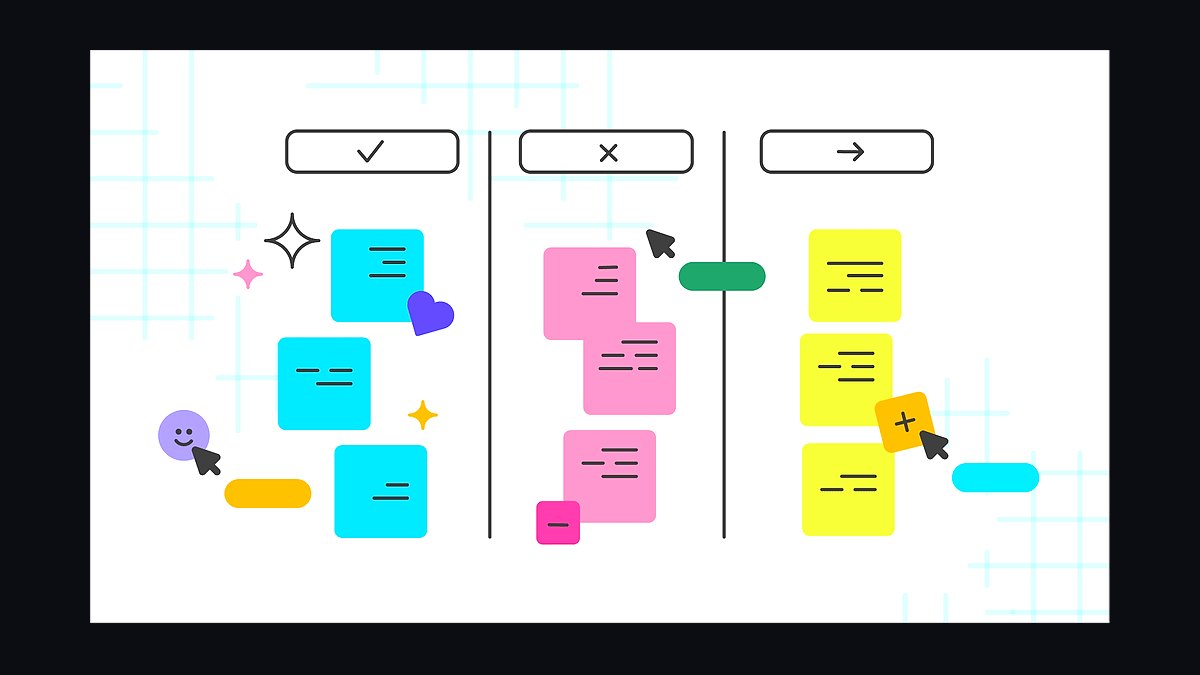
Post-mortem deal reviews in 2027 are the structured 30-minute, 5-question retrospectives that convert one closed deal — won or lost — into team-wide intelligence inside 7 days of close. The 2027 standard: review 100% of strategic and Top-30 opportunities, plus a sampled minimum of 25% of all closed/lost deals per Pavilion's 2026 Win/Loss Pulse. The 5 mandatory questions are (1) Why did they actually buy or not buy? (2) Who really decided — economic, technical, user buyer? (3) What was our single biggest differentiator or blocker? (4) What would we change about our execution? (5) What's the team-wide pattern this represents? Third-party rigor comes from Klue Win-Loss (post-Magic-Quadrant leader, 2026), Clozd, DoubleCheck, Primary Intelligence, and Cien.ai — buyers tell strangers truths they will never tell their AE. Gong, Avoma, and Sybill auto-prep the review packet (call transcripts, email thread, CRM activity, deal-room engagement) so the meeting is decision-only, not data-gathering. The output feeds enablement, battlecards, and product within 30 days, and themes roll up into a quarterly QBR slide that closes the loop.
1Why Most Deal Reviews Fail In 2027
The 2026 RAIN Group Top Performing Sales Organizations study found only 23% of B2B sales teams run formal post-mortems on lost deals, and just 11% do it on won deals — even though wins teach repeatable patterns and losses teach blocker patterns. The default failure mode: a Slack message ("we lost it on price"), no documentation, no enablement loop, same loss repeats next quarter. Klue's 2026 State of Competitive Enablement report (the annual benchmark since 2019) found teams running disciplined win/loss programs carry 15-30% higher win rates in head-to-head competitive deals and 2.4x faster ramp for new AEs who study the win/loss library.
1.1 The "We Lost On Price" Lie
Primary Intelligence's 2026 buyer interview corpus (15,000+ post-decision interviews) shows only 22% of deals are truly lost on price — but 64% of AEs report "price" as the loss reason in CRM. The gap is the reason post-mortems exist. The real losses are misaligned ICP, weak Champion, late Economic Buyer engagement, and undifferentiated discovery — every one of which is fixable when the team sees the pattern.

1.2 The Memory Decay Window
Avoma's 2026 conversation-intelligence research documented that rep recall of deal specifics decays 50% within 14 days of close. That sets the operating window: the post-mortem must happen inside 7 days, ideally inside 72 hours, while the call transcripts, the deal-room signals, and the rep's gut read are still fresh and verifiable.
2The 5-Question Structure
Every review — won, lost, or no-decision — runs the same 5 questions in the same order. Force Management's 2026 Command of the Message retro playbook uses this exact sequence, and it is the structure that makes themes comparable across reps, segments, and quarters.

2.1 Q1 — Why Did They Actually Buy Or Not Buy?
This is the buyer's stated reason, not the AE's hypothesis. For high-value deals, send a third-party interviewer (Klue, Clozd, DoubleCheck, Primary Intelligence) to ask the buyer directly within 14-21 days of close. Clozd's 2026 benchmark shows buyers give 3.2x more honest answers to neutral interviewers than to the AE who lost the deal.
2.2 Q2 — Who Really Decided?
Map the actual decision against the CRM contact graph. Reveal the Coach you missed, the Detractor you under-weighted, the Economic Buyer who joined Stage 5 and torpedoed it. This question is what feeds your multi-threading discipline going forward — every missed role becomes a CRM validation rule for the next deal.

2.3 Q3 — Biggest Differentiator Or Blocker?
For wins: the single product capability, proof point, or relationship that broke the tie. For losses: the specific competitor feature, pricing structure, or trust gap that flipped it. This question feeds battlecard updates inside Klue within 5 business days and triggers an automated update to the Sales Assembly competitive Slack channel for any new competitor tactic.
2.4 Q4 — What Would We Change About Our Execution?
Rep-owned, no judgment. The 2027 norm is psychological safety as enforcement mechanism — per Pavilion CRO Council 2026 guidance, leaders who blame in retros kill the data quality and the program dies inside two quarters. Honest answers feed coaching, not PIPs.

2.5 Q5 — What's The Team-Wide Pattern?
Manager-owned. One deal is an anecdote; three of the same loss reason in a quarter is a pattern. Klue Win-Loss and Crayon's 2026 platform both auto-cluster themes across the review library, so by the end of Q1 you can see "we lost 7 of 11 mid-market deals to Competitor X on integration concerns" — and that becomes a Q2 enablement priority.
3Cadence And Coverage In 2027
3.1 The 25%/100% Rule
Pavilion's 2026 Win/Loss Pulse establishes the modern coverage standard: 100% of strategic accounts (typically the named Top-30 list), 100% of opportunities over $250K ARR, and a statistically sampled minimum of 25% of all other closed/lost deals. Sampling below 25% loses pattern reliability; above 50% blows up rep calendars and the program collapses under its own weight.

3.2 The Third-Party Layer
For deals over $500K ARR, outsource the buyer interview to Klue, Clozd, DoubleCheck, Primary Intelligence, or Cien.ai. Cien.ai's 2026 release uses AI to score the AE's own self-reported loss reason against the buyer's actual reason — a sharp accountability signal that surfaces "rep blind spots" quantitatively. Cost runs $1,500-$4,000 per interview but pays for itself the first time a real pattern gets named.
3.3 AI-Powered Prep
Gong's 2026 Deal Retro module auto-generates the prep packet — every call transcript summarized, every email thread sentiment-scored, every CRM stage transition timestamped, every deal-room view from DocSend, Aligned, or Dock plotted on a timeline. Avoma and Sybill offer the same for sub-enterprise pricing. The pre-meeting prep that used to take an AE 90 minutes now takes 4. The 30 minutes of human time becomes decision-only.

4Closing The Loop In 30 Days
A post-mortem with no downstream owner is theater. The 2027 discipline assigns three named owners within the review itself.
4.1 Enablement Owner
Updates the objection-handling library, discovery question bank, and onboarding curriculum based on the loss patterns. Gong Engage and Mindtickle auto-push the updated content to reps inside their workflow within 14 days.

4.2 Battlecard Owner
Updates Klue or Crayon battlecards with the new competitor tactic, pricing move, or feature claim within 5 business days. Klue's automated win/loss-to-battlecard pipeline (the centerpiece of their 2026 Magic Quadrant Leader positioning) cuts this from weeks to a same-day workflow.
4.3 Product Owner
A dedicated PM in the Revenue Operations Council receives every "blocker = missing feature" tagged review. ProductBoard and Productboard's 2026 win/loss integration auto-route those into the product roadmap conversation with frequency-weighted scoring.

4.4 Quarterly QBR Theme Deck
Every quarter, the VP RevOps presents a single deck: top 5 win themes, top 5 loss themes, top 3 competitor moves, top 3 product gaps, and what's changing next quarter. RAIN Group's 2026 research shows teams running this discipline see 22% year-over-year win-rate improvement in competitive deals versus 4% for teams without a structured loop.
5Bottom Line
Post-mortem deal reviews in 2027 are not optional and not aspirational — they are the 30-minute discipline that converts one event into team learning. Run them on 100% of strategic deals and 25%+ of everything else, inside 7 days of close, with AI-prepped packets from Gong/Avoma/Sybill so the meeting is decisions not data. Use third-party interviewers (Klue, Clozd, DoubleCheck, Primary Intelligence, Cien) on deals over $500K because buyers lie to AEs and tell the truth to strangers. Close the loop in 30 days with named enablement, battlecard, and product owners, and roll themes into a quarterly QBR deck. Teams that run this end up with 15-30% higher competitive win rates and a 2-3x faster AE ramp — the rest keep losing the same deal, every quarter, forever.

2Automating Pattern Recognition Across Deal Reviews
By 2027, leading teams have moved beyond manual tagging of post-mortem themes. Gong’s Deal Intelligence and Avoma’s AI Summaries now auto-flag recurring phrases across all reviewed deals — e.g., “security compliance delay” appearing in 4 of 10 lost deals triggers an automatic alert to product and legal. Cien.ai takes this further by correlating deal outcomes with rep activity patterns, surfacing whether a specific sales motion (like “over-customizing the demo”) correlates with higher loss rates. The output is a live pattern dashboard updated weekly, not a static spreadsheet. This reduces the time from deal close to actionable insight from weeks to under 48 hours, as confirmed by Gartner’s 2026 Sales Tech Stack Benchmark (which notes a 40% faster insight-to-action cycle among top-quartile teams using AI pattern detection).
3The 2027 Post-Mortem Cadence for Different Deal Tiers
Not every deal deserves the same depth of review. Won deals under $50K get a 5-minute async form via Slack or Teams (powered by Sybill’s auto-fill from call transcripts). Lost deals under $50K are sampled at 25% using Clozd’s blind buyer surveys (response rate: 35–50% in 2026 benchmarks). Strategic deals ($500K+) get a live 30-minute session with the full deal team, plus a 15-minute buyer debrief via DoubleCheck (which guarantees a 70%+ response rate by offering $50 gift cards). The tiered approach ensures 100% coverage of high-impact deals without overloading the team, as recommended by Pavilion’s 2026 Win/Loss Pulse (which found teams using tiered cadences saw 3x higher post-mortem completion rates than those using a one-size-fits-all model).

FAQ
How long should a post-mortem deal review take? The 2027 standard is a 30-minute meeting, strictly timed. Any longer risks drifting into data-gathering instead of decision-making. The prep work—transcripts, email threads, deal-room activity—should be auto-assembled by tools like Gong or Avoma before anyone joins.
Do we review every single lost deal? No, that’s usually not feasible. The common practice is to review 100% of strategic and Top-30 opportunities, plus a sampled minimum of 25% of all closed/lost deals. This balance gives you reliable patterns without overwhelming the team.
Who should attend the review? The core team is the AE, their direct manager, and one cross-functional rep from either product or enablement. Avoid including the full sales floor—it slows candor. The buyer is never present; third-party win-loss firms gather their honest feedback separately.
What if the team disagrees on why we lost? That’s exactly the point of the review. The five mandatory questions force structured debate, especially “What’s the team-wide pattern this represents?” If disagreement persists, escalate it to the quarterly QBR slide for broader discussion. The goal isn’t consensus in 30 minutes—it’s surfacing the real blockers.
How do we ensure the output actually gets used? The review must feed enablement, battlecards, or product within 30 days. Without that deadline, insights fade. Many teams assign a single owner per review to track the action item and report back at the next weekly standup.
Can we skip reviews for small deals? You can, but only if you’re already reviewing a statistically meaningful sample. The 25% minimum for closed/lost deals is a common guardrail. Skipping all small deals risks missing early signals that later become big patterns.
Bottom Line
The post-mortem is the cheapest enablement input you have — five questions, 30 minutes, every closed deal that matters. Use a third party for the calls where buyer-truth matters, feed the patterns into battlecards + enablement + product within 30 days, and read the quarterly themes deck out loud at QBR.
Related on PULSE
- What is the most effective 2027 close plan for a deal stalled by a committee’s AI risk simulator?
- How do you do effective deal coaching in 2027?
- What data sources are most effective for training AI models to predict next best action in complex enterprise deals?
- Are 2027 AI chatbots effective at handling complex B2B pricing negotiations without human intervention?
- What data sources are most effective for training AI models to predict next best action in complex enterprise deals?
- What coaching question helps a salesperson identify their most effective closing technique for different buyer types?
Sources
- Klue — 2026 State of Competitive Enablement Report and Win-Loss Platform documentation
- Gartner — 2026 Magic Quadrant for Competitive and Market Intelligence Platforms (Klue named Leader)
- Pavilion — 2026 Win/Loss Pulse and CRO Council Guidance
- Force Management — Command of the Message Retro Playbook (2026)
- RAIN Group — 2026 Top-Performing Sales Organizations Research
- Primary Intelligence — 2026 Buyer Interview Corpus and Win/Loss Benchmarks
- Clozd — 2026 Win-Loss Analysis State of the Industry
- DoubleCheck Research — Buyer-Side Honesty Benchmarks
- Gong — 2026 Deal Retro Module and Revenue Intelligence Platform Documentation
- Avoma and Sybill — 2026 Conversation Intelligence and Deal Review Research
This page will be disappearing soon. Save it to your device for $1 — or read it free while it is here.
@Kory-White- · if Venmo asks, the last 4 of my number are 2012
This page is gone.
This one is off the shelf now. $1 keeps it on your phone for good — the whole page, pictures and diagrams included.
 revopsHow do you run a win/loss program in 2027?
 revopsHow do you build a win-loss analysis program in 2027?
 revopsHow do you set up signal-based selling in 2027?
 revopsHow does AI change sales forecasting in 2027?
 revopsHow do you do effective objection handling in 2027?
 revopsHow do you run a weekly forecast call in 2027?
 revopsHow do you measure CAC payback under outcome pricing in 2027?
 revopsHow do you build a multi-threading deal strategy in 2027?
 revopsHow do you set up effective sales onboarding in 2027?
 revopsHow do you build a sales productivity dashboard in 2027?