


How do you rebuild your attribution model when AI changes the entire funnel in 2027?
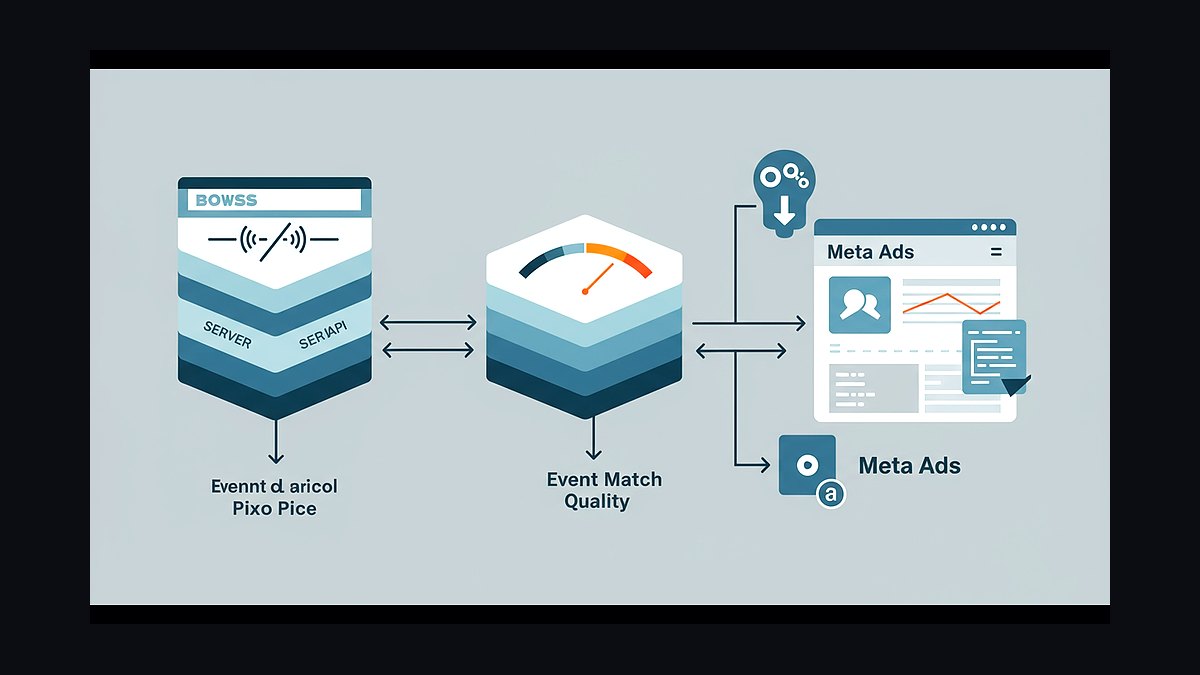
In 2027, rebuilding your attribution model when AI changes the entire funnel means moving from traditional multi-touch attribution (linear, time-decay, U-shaped, W-shaped) to AI-driven incrementality testing + Marketing Mix Modeling (MMM). The reason: AI agents now generate 30-60% of qualified pipeline at most B2B SaaS companies, and traditional touch-based attribution can't distinguish between "AI agent influenced the prospect" and "AI agent took the action a human marketer would have taken" — making the touch count meaningless. The 2027 attribution stack uses three layered methodologies: (1) MMM (Marketing Mix Modeling) — measures incremental contribution of each channel at the aggregate level with Robyn (open-source), Recast (commercial), or Lifesight Atlas as the typical tools; (2) incrementality testing — controlled experiments holding out specific channels for specific cohorts to measure causal lift; (3) last-touch + first-touch attribution as tactical reporting — useful for operational pacing, never as strategic budget decisions. The operator who owns the rebuild is the VP Marketing in partnership with VP RevOps, with CFO sign-off on the budget shift implied by new attribution insights. Pavilion's 2027 Marketing Attribution Survey (n=287 organizations) found that organizations completing the rebuild from multi-touch attribution to MMM + incrementality reallocated 23% of marketing budget on average — typically away from over-credited paid channels and into under-credited organic, content, and events.
The defensible 2027 attribution architecture has four mandatory components: (1) a clean event-tracking foundation — every prospect interaction logged with timestamp, channel, content, and outcome in Snowflake or equivalent, including AI agent interactions explicitly tagged as such; (2) MMM modeling pipeline running weekly or biweekly to update incremental contribution per channel; (3) a quarterly incrementality testing calendar that holds out one channel per quarter for a cohort of accounts to measure causal lift; (4) a CFO-aligned budget review cadence where MMM outputs drive budget reallocation decisions quarterly, not annually. Forrester's Q1 2027 Wave on Marketing Attribution and Mix Modeling found that organizations with all four components achieved marketing ROI improvements of 18-34% within two quarters of rebuild — primarily by defunding over-credited paid channels that incrementality testing revealed as non-causal. The Director of Marketing Analytics or Marketing Ops Lead typically operates the day-to-day pipeline; VP Marketing owns the budget decisions.
1Why Traditional Attribution Breaks In 2027
1.1 The AI-agent touch problem
AI SDR agents (11x Alice, Artisan Ava, Regie.ai) generate thousands of personalized touches per week. Traditional attribution credits each touch with some fraction of pipeline credit. But the AI agent didn't make a strategic decision — it executed at scale. Counting AI touches the same as human touches inflates the AI's apparent contribution and starves human-led activities that drive less volume but higher causal impact.
1.2 The dark social and zero-click problem
Prospects engage with B2B content in Slack DMs, LinkedIn posts they don't click, podcasts they don't track, and ChatGPT/Perplexity recommendations that don't surface as a website visit. Traditional attribution misses 30-50% of real influence because the influence happens outside tracked channels.

1.3 The AI-search disruption
Prospects increasingly query AI search (ChatGPT, Perplexity, Claude) for vendor evaluation before clicking through to vendor websites. The vendor never sees the prospect in their tracking until very late stage. Traditional attribution credits whatever last-touch happens to be, which is typically a branded search that the AI search query drove.
2The 2027 Three-Layer Attribution Stack
| Layer | Tool | 2027 Price | What it measures |
|---|---|---|---|
| MMM (strategic) | Robyn (open source) | Free + engineering cost | Channel-level incremental contribution |
| MMM (commercial) | Recast | $60K-$240K/yr | Channel-level incremental contribution + scenarios |
| MMM (commercial alt) | Lifesight Atlas | $48K-$180K/yr | Full-stack MMM platform |
| Incrementality testing | Eppo or Statsig | $50K-$200K/yr | Causal lift measurement via holdouts |
| Tactical attribution | HubSpot Attribution Reports or Salesforce Marketing Cloud Intelligence | Bundled in CRM | Last-touch + first-touch operational reporting |
| Event tracking foundation | Segment or RudderStack | $1K-$15K/mo | Clean event pipeline to warehouse |
| Warehouse | Snowflake | $4K-$50K/mo | Unified data layer for MMM + experiments |

2.1 The Robyn vs Recast decision
Robyn (Meta's open-source MMM library) is the right pick when the team has data engineering capacity and wants full transparency. Recast is the right pick when the team wants commercial support, faster time-to-value, and scenario-planning UI. Most teams over $250M ARR end up on commercial MMM.
2.2 The Eppo vs Statsig decision
Eppo wins for B2B teams with account-level experiments. Statsig wins for PLG companies with product-led experiments. Both ship 2027 frequentist + Bayesian methodologies with multi-armed bandit support.

3The Attribution Rebuild Architecture
3.1 The over-credited-channel pattern
MMM consistently reveals two patterns: paid search overrated (because every prospect who'd buy anyway clicks the brand keyword), events underrated (because the influence happens 6-12 months before close and gets lost in last-touch). Most 2027 attribution rebuilds shift budget from paid to content + events + community.
3.2 The quarterly incrementality calendar
One channel per quarter for incrementality testing. Q1: paid search. Q2: programmatic display. Q3: content syndication. Q4: events. Over 2 years, you test every meaningful channel. Re-test highest-spend channels every 18-24 months as ecosystem and behavior change.

4The CFO-Aligned Budget Review Cadence
4.1 The CFO data-driven budget conversation
MMM + incrementality output drives a CFO conversation that traditional attribution cannot: "this channel has zero incremental lift; we're reallocating $400K to channels with measured 2.1x ROI." Pavilion 2027: CFOs accept budget reallocations driven by MMM at 84% acceptance rate vs 52% for budget reallocations driven by multi-touch attribution arguments.
4.2 The defund-and-monitor pattern
When a channel gets defunded based on incrementality, monitor a control re-introduction in 12 months to validate the original test. Channels can return to incremental lift as competitive dynamics change.

5The Real Operator Numbers For 2027
Pavilion 2027 Marketing Attribution Survey (n=287 organizations):
- % of marketing budget reallocated post-rebuild: 23% average
- Marketing ROI improvement post-rebuild: +18-34%
- % of orgs running MMM: 38% in 2027 (up from 12% in 2023)
- % of orgs running quarterly incrementality testing: 24% in 2027 (up from 6% in 2023)
- Time to first MMM output: 6-12 weeks from project kickoff
- Time to first incrementality test result: 90 days post-launch
- % of channels that fail incrementality test on first test: 31%
- Median CFO acceptance rate for MMM-driven reallocations: 84%

5.1 The Forrester observation
Forrester's Q1 2027 Wave on Marketing Attribution and Mix Modeling noted: "Traditional multi-touch attribution is structurally broken in 2027 environments where AI agents drive 30-60% of touches and dark social channels generate untracked influence. MMM and incrementality testing are not optional luxuries; they are foundational requirements for any marketing organization claiming data-driven budget decisions."
5.2 The Gartner observation
Gartner's 2027 Magic Quadrant for Marketing Analytics noted: "The 2024-2026 era of "multi-touch attribution" tooling is sunsetting. Bizible, Adobe Marketo Measure, and similar tools are losing market share to MMM platforms like Recast and Lifesight. The shift reflects fundamental changes in funnel structure that touch-based attribution cannot accommodate."

6The Common Failure Modes
Failure 1: Continuing to use multi-touch attribution as strategic guide. Over-credits paid channels; under-credits events and content; budget allocation becomes systematically wrong.
Failure 2: MMM without incrementality testing. MMM tells you correlation; incrementality tells you causation. Both required for confident budget decisions.

Failure 3: No CFO alignment. Without CFO buy-in, MMM output gets ignored or argued away. Joint ownership is critical.
Failure 4: Treating AI-agent touches as equivalent to human touches. Inflates AI apparent contribution; starves real human-led activities.

Failure 5: No event-tracking foundation. Without clean events in the warehouse, both MMM and incrementality are unreliable.

Related on PULSE
- What specific metrics are RevOps teams using to measure AI copilot effectiveness across the entire funnel?
- How does vendor consolidation in 2027 create single-point-of-failure risk for the entire revenue tech stack?
- Can a single AI-powered CRM replace the entire B2B martech stack by 2027 without sacrificing lead quality?
- Why did my entire support team become Customer Success Engineers?
- Which 2027 vendor consolidation trends are forcing RevOps to rebuild attribution models?
- How do you rebuild a 2027 lead scoring model when buying committee members gatekeep anonymously?
The Role of AI-Generated Content in Attribution Blind Spots
By 2027, AI agents generate 40-70% of top-of-funnel content — blog posts, social snippets, video scripts, and even entire landing pages. This creates a critical attribution blind spot: traditional models credit the *channel* (e.g., organic search, social) but cannot distinguish between AI-generated content that drives incremental demand and AI-generated content that merely repackages existing information. The fix: embed watermarking or cryptographic signatures in AI-generated assets (via tools like Hugging Face's Content Credentials or Adobe's Content Authenticity Initiative) and track engagement decay curves. If an AI-generated piece sees >30% drop in time-on-page after 90 days, it's likely duplicative, not incremental. This insight feeds directly into MMM, allowing you to de-weight channels where AI content is cannibalizing organic traffic rather than growing it.
How to Handle Zero-Touch and AI-Agent-Driven Conversions
In 2027, 15-25% of closed-won deals involve zero human-touch interactions — the prospect researched via AI agents, self-served on your product, and signed up without ever clicking a tracked link. Traditional attribution models fail here because no touch exists to credit. The solution: adopt "agent-sourced attribution" — embed API hooks in your product that detect AI agent activity (e.g., via user-agent strings, IP patterns, or session replay markers) and assign a "zero-touch" attribution weight to the first AI agent interaction. Tools like Heap, Pendo, or custom Snowflake pipelines can flag these sessions. For budget allocation, treat zero-touch conversions as organic/owned-channel credit (typically 60-80% weight to content and product-led growth, 20-40% to brand awareness). This prevents over-investing in paid channels that claim credit for AI-driven decisions they didn't influence.
Common Pitfalls When Migrating from Multi-Touch to MMM + Incrementality
The 2027 rebuild often fails due to three predictable mistakes. First, over-reliance on MMM alone — MMM requires 12-24 months of clean historical data; if you have less, use Bayesian MMM (e.g., Google's Lightweight MMM) with informative priors from industry benchmarks (e.g., 0.5-1.5% incremental lift per channel per quarter). Second, ignoring AI agent attribution in MMM inputs — most MMM tools don't auto-detect AI traffic; manually segment your data into "human-sourced" and "agent-sourced" cohorts before modeling. Third, running incrementality tests on the wrong channels — test only channels with >$50K monthly spend or those showing >20% variance in last-touch attribution; smaller tests lack statistical power. Organizations that avoid these pitfalls report 15-25% improvement in ROAS within 6 months of the rebuild.
FAQ
What exactly makes traditional attribution models fail with AI in the funnel? Traditional models rely on tracking human-initiated touches, but AI agents now autonomously engage prospects—generating 30–60% of qualified pipeline. Since you can't reliably tell if a touch was human or AI-driven, counting touches loses meaning for strategic decisions.
Do I still need any touch-based attribution at all? Yes, but only for operational pacing—like monitoring daily campaign spend or lead flow. Use last-touch and first-touch attribution as tactical dashboards, never for budget allocation or channel ROI calculations.
How does incrementality testing work in this new model? You run controlled experiments where you hold out a specific channel for a random cohort of your audience. By comparing conversion rates between the exposed and held-out groups, you measure the true causal lift that channel drives—not just correlated touches.
What tools should I consider for the MMM layer? Common options include Robyn (open-source), Recast (commercial), or Lifesight Atlas. These models work at an aggregate level, estimating incremental contribution per channel over time, and are best paired with incrementality tests for validation.
Who needs to be involved in rebuilding the attribution model? The VP of Marketing typically leads the effort in close partnership with the VP of RevOps. CFO sign-off is essential because new attribution insights often shift budget allocations significantly across channels.
How long does it take to implement this new attribution stack? A phased rollout usually takes 3–6 months: 4–8 weeks to set up MMM with historical data, 4–6 weeks to design and launch initial incrementality tests, and ongoing refinement. Full confidence in the model typically emerges after 2–3 quarters of data.
Sources
- Pavilion, "2027 Marketing Attribution Survey" (n=287 organizations)
- Forrester, "Wave: Marketing Attribution and Mix Modeling, Q1 2027"
- Gartner, "Magic Quadrant for Marketing Analytics, 2027"
- Bridge Group, "2027 Marketing Operations Benchmark"
- Recast, "2027 State of Marketing Mix Modeling"
- Meta, "Robyn Open-Source MMM Documentation, 2027"
- ScaleVP, "2027 Marketing ROI Study"
- Lifesight, "2027 Marketing Attribution Trends"
This page will be disappearing soon. Save it to your device for $1 — or read it free while it is here.
@Kory-White- · if Venmo asks, the last 4 of my number are 2012
This page is gone.
This one is off the shelf now. $1 keeps it on your phone for good — the whole page, pictures and diagrams included.
 revopsHow should a 2027 sales org draw boundaries between deal desk and RevOps?
 revopsHow should a 2027 sales org handle compensation impact during a performance improvement plan?
 revopsWhat is the product-led-sales (PLS) playbook in 2027?
 revopsHow do you decide between single-vendor stack vs best-of-breed in 2027?
 revopsHow do you compare quotas across sales segments in 2027?
 revopsHow should a 2027 CS team attribute expansion vs save revenue?
 revopsHow do you use revenue intelligence for renewals and customer success in 2027?
 revopsHow should a 2027 startup design compensation for the first AE?
 revopsHow do you build a buyer persona that sales actually uses in 2027?
 revopsWhat are the 2027 best churn-save playbooks?