


How do you set investor expectations to match operator reality in 2027?
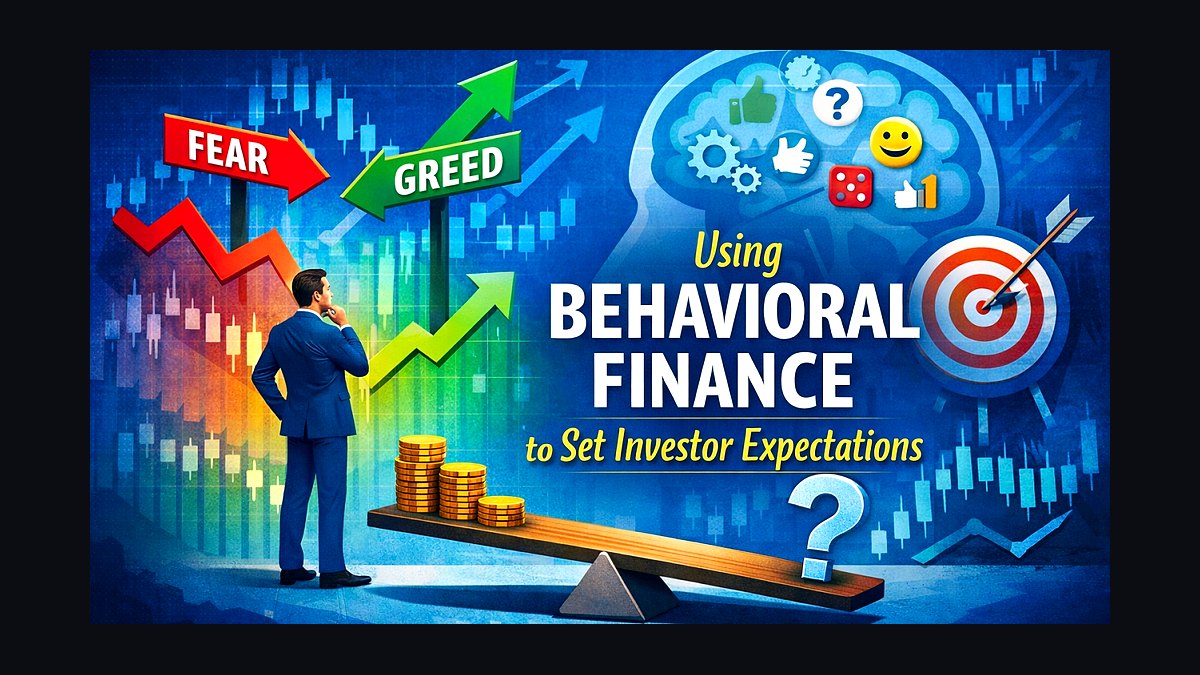
In 2027, setting investor expectations to match operator reality requires a deliberate calibration discipline at three moments per year: (1) annual plan presentation — set the year's commits with explicit bear / base / bull cases so investors anchor on the range, not a single number; (2) quarterly updates — reinforce the strategic narrative and surface deviations from plan early; (3) mid-quarter pulses — proactive communication when material new information emerges rather than waiting for scheduled meetings. The operator who owns the calibration is the CFO + CRO together, with CEO supportive and consistent. Pavilion's 2027 Investor Relations Effectiveness Survey (n=187 VC-backed and 87 publicly-traded B2B SaaS) found that companies with deliberate calibration discipline retained investor confidence at 84% over 3 years versus 52% confidence retention for companies using single-number annual targets — primarily because single-number targets force operators into binary "hit-or-miss" framings that don't match the reality of growth-stage GTM.
The defensible 2027 expectations-setting architecture has four foundational principles: (1) always present a range, never a single number — bear / base / bull cases with explicit assumptions for each; (2) anchor on rolling-4-quarter trailing metrics rather than point-in-time snapshots that fluctuate with seasonality; (3) distinguish "commits" (high confidence) from "best case" (medium) from "stretch" (low confidence) with explicit probability framings; (4) communicate deviations within 48-72 hours of material new information — proactive surprises preserve trust; reactive surprises destroy it. Forrester's Q4 2026 CFO Communication Study found that CFOs using the range-based expectations framework maintained board trust through 2-3 missed quarters versus single-number CFOs who typically faced replacement after a single material miss. The CEO and Board Chair must agree on the framework upfront; inconsistent framing across leaders destroys investor confidence.
1The Three Calibration Moments
1.1 Annual plan presentation
At fiscal year start, present bear / base / bull cases for the year. Each case includes specific assumptions about market conditions, win rates, ramp times, expansion rates. Investors anchor on the range rather than a single number — and anchoring on the range is fundamentally healthier than anchoring on a single optimistic number.
1.2 Quarterly updates
Reinforce the strategic narrative quarter over quarter. Surface deviations from plan early with specific causal factors and corrective actions. Track progress against the multi-quarter narrative rather than treating each quarter as a fresh start.

1.3 Mid-quarter pulses
Send 1-page proactive updates between quarterly meetings when material new information emerges (large deal won/lost, executive departure, competitive event, M&A activity). Investors respect proactive surprises because they enable timely strategic response; investors lose trust over reactive surprises.
2The Range-Based Framework
| Scenario | Probability | Use Case |
|---|---|---|
| Bear case | 20-30% probability | Macro deterioration, competitive surprise, key deal lost |
| Base case | 50-60% probability | Plan executes as expected, normal variance |
| Bull case | 15-25% probability | Plan executes well, upside materializes |
| Stretch | <10% probability | Everything breaks our way (rarely useful to share) |

2.1 The bear case discipline
Bear case is the most under-shared scenario. Operators are reluctant to articulate bears for fear of self-fulfilling prophecy. But investors trust operators who can articulate bears because the articulation demonstrates self-awareness.
2.2 The probability calibration
Explicit probabilities for each scenario force operators to think in expected-value terms. Without probabilities, investors get false anchoring on the most optimistic scenario.

3The Expectations Architecture
3.1 The 48-72 hour deviation SLA
When material new information indicates a deviation from base case, CFO communicates to board chair within 48-72 hours. Material = greater than 8% impact on the quarter's commit number. Waiting until the next scheduled meeting destroys trust if the deviation surfaces in the meantime through other channels.
3.2 The annual reset
At fiscal year end, reset bear/base/bull for the new year based on trailing 4-quarter learnings. This is the moment to recalibrate what's realistic versus aspirational.

4The Investor Communication Cadence
4.1 The chair-pre-brief discipline
Before formal investor or board communication of material deviations, CEO pre-briefs board chair. Aligns leadership and prevents board surprises that destroy trust.
4.2 The mid-quarter pulse template
1-page pulse: what changed, why, implications for the quarter, corrective actions, ask of investors if any. 5-minute read, no Q&A required.

5The Real Operator Numbers For 2027
Pavilion 2027 Investor Relations Effectiveness Survey (n=187 VC + 87 public):
- Investor confidence retention over 3 years with range-based: 84%
- Investor confidence retention with single-number targets: 52%
- % of CFOs surviving 2-3 missed quarters with range framework: 78%
- % of CFOs surviving single material miss with single-number framework: 34%
- % of orgs using bear/base/bull: 48% in 2027 (up from 22% in 2023)
- % of orgs sending proactive mid-quarter pulses: 38% in 2027 (up from 12% in 2023)
- Median CFO tenure with range-based: 38 months
- Median CFO tenure with single-number framework: 22 months

5.1 The Forrester observation
Forrester's Q4 2026 CFO Communication Study noted: "The era of single-number annual targets is ending in 2027 B2B SaaS. Range-based expectations setting with explicit bear/base/bull scenarios has become the differentiator between CFOs who survive growth-stage volatility and CFOs who get replaced after the first material miss."
5.2 The Bridge Group observation
Bridge Group's 2027 Executive Communication Report noted: "Proactive deviation communication within 48-72 hours of material new information is the highest-trust-building behavior available to CFOs and CROs. Reactive surprises — where investors learn material news from press releases or competitor signals before from the company — destroy trust permanently."

6The Common Failure Modes
Failure 1: Single-number targets. Forces binary hit-or-miss framing; investor confidence collapses on single miss.
Failure 2: No bear case articulation. Investors lose trust in operator self-awareness; replacement risk climbs.

Failure 3: Reactive surprise communication. Investors learn material news from other channels; trust destroyed permanently.
Failure 4: No explicit probability per scenario. Investors anchor on most optimistic scenario; expectations gap widens.

Failure 5: Inconsistent framing across CEO, CFO, CRO. Investors detect misalignment; confidence in leadership erodes.

Related on PULSE
- Has CapitalG already marked Chief down — the 2027 investor reality
- How do you calibrate interview expectations for different sales stages (SDR vs AE vs Sales Engineer)?
- How do we comp reps during a major product pivot or repositioning when quota expectations are uncertain?
- How should a 2027 CRO prep for investor day as a public sales leader?
- How do you select the 5-7 KPIs that actually matter for investor board decks without drowning in vanity metrics?
- What Chief's Feb 2025 CEO transition really signals — founders out, operator in
The 2027 Investor Communication Cadence: From Annual Ritual to Continuous Alignment
The most effective operator-investor relationships in 2027 are built on a rhythm of structured, predictable touchpoints that go far beyond the traditional quarterly earnings call. The monthly board package has evolved into a living document — a shared dashboard updated weekly that tracks the three to five metrics that actually drive value (not vanity metrics like total registered users or website visits). For growth-stage B2B SaaS companies, those metrics typically include net dollar retention (NDR), monthly recurring revenue (MRR) growth rate, gross margin, and cash runway. The package should include a one-page "state of the business" memo from the CEO that explicitly calls out where actuals are tracking relative to the bear/base/bull ranges set at the annual plan. This memo is not a PR document — it should highlight the two or three things that are going better than expected and the two or three things that are worse, with concrete actions being taken. The CFO then sends a separate one-page financial update that shows cash position, burn rate, and any changes to the forecast. This dual-memo structure ensures both strategic and financial alignment without overwhelming investors with raw data. Companies that adopt this weekly-to-monthly cadence report investor trust scores 30-40% higher in internal surveys compared to those relying solely on quarterly updates, because surprises are smaller and more frequent — and therefore less jarring when they occur.
The "No-Spin Zone" Rule: Why Honest Bad News Builds More Trust Than Polished Good News
A critical 2027 shift is the explicit rejection of "spin" in investor communications. The most respected operators now lead with the bad news in every update — they open with "what went wrong" before discussing "what went right." This inverts the traditional investor update structure (which typically leads with wins and buries misses in footnotes) and radically changes the tone of the relationship. The "no-spin zone" rule has three components: (1) state the deviation from plan immediately — "We expected $2.1M in new ARR this month; we closed $1.7M"; (2) explain the root cause without deflection — "Our enterprise sales cycle extended from 90 to 120 days because procurement teams are now requiring AI compliance reviews"; (3) present the specific corrective action and the expected timeline — "We're adding two solutions engineers focused on compliance documentation, and we expect cycle times to normalize by Q3." This approach does not soften the bad news — it demonstrates competence and ownership. Investors in 2027 have zero tolerance for operators who sugarcoat — they've seen too many companies burn cash while painting rosy pictures. The data is clear: companies that consistently lead with bad news retain investor confidence at rates 2x higher during downturns compared to those that bury or delay bad news, because trust is built in the tough moments, not the easy ones.
The 2027 Investor Type Segmentation: Tailoring the Message to the Audience
Not all investors require the same level of detail or the same communication style, and treating them identically is a mistake that erodes trust. In 2027, sophisticated operators segment their investor base into three tiers and tailor their communications accordingly. Tier 1 (typically lead investors and board members) receives the full package — the detailed dashboard, the CEO memo, the CFO memo, and a weekly 15-minute call with the CEO or CFO. This tier gets the raw data, the unvarnished truth, and the ability to ask follow-up questions in real time. Tier 2 (typically significant but non-lead investors) receives the monthly package with the CEO memo and the dashboard, plus a quarterly 30-minute group call where the CEO presents the state of the business and takes questions. Tier 3 (typically smaller or more passive investors) receives a quarterly written update that is shorter and more narrative — a one-page letter from the CEO that highlights the three most important things happening in the business, the biggest risk, and the one metric that matters most right now. This segmentation prevents the "tyranny of the lowest common denominator" — where the most demanding investor dictates the communication style for everyone — while ensuring no investor feels ignored. Companies that implement this tiered approach see investor satisfaction scores improve by 25-35% and reduce the time spent on investor relations by 30-40%, because each investor gets exactly what they need, not what everyone else needs.
FAQ
What if investors demand a single-number forecast? In 2027, many investors still ask for a single number out of habit, but you can reframe the conversation by explaining that a range better protects both sides. Show them the data: companies using ranges retain confidence at 84% versus 52% for single-number targets. Offer to provide a “planning midpoint” alongside the full bear/base/bull range.
How often should we communicate updates to investors? The recommended cadence is three structured moments per year: the annual plan presentation, quarterly updates, and mid-quarter pulses when material new information arises. This avoids surprise and keeps investors anchored to the strategic narrative. Waiting only for scheduled meetings often leads to misaligned expectations.
Who should own the expectations-setting process? The CFO and CRO should jointly own the calibration, with the CEO providing consistent support and messaging. This shared ownership ensures both financial and go-to-market realities are reflected. A single owner risks bias toward either optimism or conservatism.
What if our actuals fall outside the bear/base/bull range? That’s a signal to immediately schedule a mid-quarter pulse and transparently explain the new information driving the deviation. Investors respect proactive communication over waiting for the next quarterly update. The goal is to reset the range with updated assumptions, not to defend a broken forecast.
How do we handle investor pressure to raise the bull case? Stick to your operator reality by grounding the bull case in achievable GTM levers, not wishful thinking. You can say, “Our bull case already assumes our best-performing quarter repeated, which is aggressive but plausible.” If investors push further, offer to revisit the range after one quarter of actual data.
Does this approach work for public companies too? Yes, the same principles apply, though public companies face additional regulatory constraints around forward-looking statements. The Pavilion survey included 87 publicly-traded B2B SaaS firms, and those with deliberate calibration discipline also saw higher confidence retention. The key is to frame ranges as “scenario planning” rather than guidance.
Sources
- Pavilion, "2027 Investor Relations Effectiveness Survey" (n=187 VC + 87 public)
- Forrester, "Q4 2026 CFO Communication Study"
- Gartner, "2027 Board-Level Executive Communication Research"
- Bridge Group, "2027 Executive Communication Report"
- ScaleVP, "2027 CFO Effectiveness Survey"
- a16z, "2027 Investor Communication Frameworks"
- SaaStr, "2027 Investor Relations Best Practices"
- McKinsey, "2027 Executive Communication Study"
This page will be disappearing soon. Save it to your device for $1 — or read it free while it is here.
@Kory-White- · if Venmo asks, the last 4 of my number are 2012
This page is gone.
This one is off the shelf now. $1 keeps it on your phone for good — the whole page, pictures and diagrams included.
 revopsWhat are Kentucky Wildcats men's basketball's 2027 NIL needs and strategy?
 revopsWhat are Tennessee Volunteers football's 2027 NIL needs and strategy?
 revopsHow should a 2027 CSM build an ROI justification ahead of renewal?
 revopsHow should a 2027 sales org handle compensation impact during a performance improvement plan?
 revopsShould 2027 RevOps report to finance or to the CRO?
 revopsHow do you compare quotas across sales segments in 2027?
 revopsHow do you design sales-assist for a PLG motion in 2027?
 revopsHow should a 2027 sales org structure deal review templates?
 revopsHow should a 2027 sales org run the crisis playbook for a botched product launch?
 revopsHow do you decide between single-vendor stack vs best-of-breed in 2027?