


How do you manage downsells without losing customers in 2027?

In 2027, managing downsells without losing customers requires a structured "right-size, don't reject" framework: when a customer requests reduction in seats, modules, or contract value, negotiate to preserve relationship rather than fight the downsell. The standard 2027 approach: (1) acknowledge the request immediately without defensive pushback; (2) diagnose root cause — budget cut, organization shrinking, usage gap, value perception; (3) counter-propose right-sized package that preserves vendor revenue at lower level; (4) secure multi-year commitment at the new level in exchange for the downsell flexibility; (5) set re-engagement triggers for when conditions improve. The operator who owns downsell management is the VP Customer Success in partnership with Director of Deal Desk, with VP RevOps governing the pricing flexibility. Pavilion's 2027 Downsell Management Survey (n=287 B2B SaaS) found that organizations using structured right-size frameworks retained 78% of downsell-requesting customers versus 42% retention for organizations using defensive "no downsell" approaches — primarily because flexibility on the path down preserves the path back up later.
The defensible 2027 downsell architecture has four mandatory components: (1) immediate-acknowledgment policy — never push back on the request in the first conversation; (2) root-cause diagnosis — understand why before negotiating; (3) right-sized counter-proposal with multi-year commitment in exchange; (4) re-engagement trigger plan — specific events that will trigger future expansion conversation. Forrester's Q3 2026 Downsell Management Study found that organizations completing all four components achieved NRR 4-8 percentage points higher than organizations with rigid no-downsell policies — primarily because preserving relationships through downsells captures the recovery NRR when customer fortunes improve.
1The Four Mandatory Components
1.1 Immediate acknowledgment
First conversation acknowledges the request without pushback. Don't argue, don't fight, don't deflect. Customers who feel heard stay engaged; customers who feel argued with disengage permanently.
1.2 Root-cause diagnosis
Understand why before negotiating:
- Budget cut: temporary or permanent?
- Organization shrinking: layoffs, restructuring, M&A?
- Usage gap: features unused, training gap, product fit issue?
- Value perception: ROI unclear, competitive comparison?
- Strategic shift: business model change, vendor consolidation?

1.3 Right-sized counter-proposal
Offer to preserve relationship at right-sized level:
- Seat reduction: negotiate floor, not 0
- Module reduction: preserve core; suspend optional
- Contract value reduction: longer-term commitment for lower per-year
- Tier downgrade: maintain product family with reduced scope
1.4 Re-engagement trigger plan
Specific triggers that will surface future expansion:
- Customer hits N employees: revisit seat expansion
- Specific budget cycle: revisit at fiscal year start
- Strategic event: revisit during M&A integration
- Product feature: revisit when missing feature ships

2The Downsell Negotiation Matrix
| Customer Request | Counter-Offer | Exchange |
|---|---|---|
| 30% seat reduction | 20% reduction + 2-yr extension | Multi-year commitment |
| Cancel optional module | Suspend module + maintain core + retention discount | 1-yr lock on remaining |
| 50% ACV cut | 30% cut + multi-year extension | Multi-year commitment |
| Cancel + churn | Pause-not-cancel (q12390) + 90-day re-engagement trigger | Relationship preservation |
| Downgrade tier | Downgrade with explicit upgrade triggers | Future expansion path |
2.1 The downsell-as-multi-year-trigger
Most downsells become multi-year commitments at lower price. Vendor gets predictability; customer gets right-sized cost. Win-win in most cases.

2.2 The discount limit
Don't go below 15-20% off list to retain the relationship. Below this, you're surrendering pricing power that will haunt at renewal.
3The Downsell Architecture
3.1 The VP CS escalation
For customers pushing past initial counter-offer, VP CS personal engagement signals importance and brings additional negotiation authority.

3.2 The re-engagement automation
Triggers set in CS platform automatically surface customer at the right moment. Without automation, re-engagement falls through.
4The Cadence
4.1 The 30-day resolution target
Most downsell negotiations resolve in 30 days. Longer than 30 days suggests fundamental misalignment — accept the downsell and preserve the relationship.

4.2 The trigger automation
Re-engagement triggers (employee count, budget cycle, product features) automated in CS platform. CSM gets notification when trigger fires.
5The Real Operator Numbers For 2027
Pavilion 2027 Downsell Management Survey (n=287 B2B SaaS):

- Retention rate with right-size framework: 78% of downsell requests
- Retention rate with defensive approach: 42% of downsell requests
- NRR with structured downsell: +4-8 percentage points vs rigid no-downsell
- % of orgs running formal downsell frameworks: 38% in 2027 (up from 12% in 2023)
- Median ACV reduction in successful downsells: 22-35%
- % of downsells converted to multi-year: 52%
- % of right-sized customers re-expanding within 18 months: 38%
5.1 The Forrester observation
Forrester's Q3 2026 Downsell Management Study noted: "Defensive no-downsell policies destroy more value than they protect in 2027 B2B SaaS. The relationship preservation through right-sizing captures the recovery NRR when customer fortunes improve — and customer fortunes usually do improve. Rigidity loses both the immediate revenue and the future expansion."

5.2 The Bridge Group observation
Bridge Group's 2027 Retention Strategy Report noted: "The multi-year-commitment-in-exchange-for-downsell pattern delivers exceptional ROI. Vendors get revenue predictability; customers get cost flexibility. The structure works because it acknowledges that downsells are sometimes legitimate and avoids fighting reality."
6The Common Failure Modes
Failure 1: Defensive pushback on first request. Customer disengages; permanent damage to relationship.

Failure 2: No root-cause diagnosis. Counter-proposal mismatched to actual problem.
Failure 3: No multi-year exchange. Downsell happens without vendor getting predictability in return.

Failure 4: No re-engagement triggers. Recovery NRR opportunities missed.
Failure 5: Treating all downsells as failures. Some downsells are legitimate; fighting reality damages relationships.

Related on PULSE
- How Do I Introduce a Service Fee Without Losing Customers?
- How do you set B2B SaaS pricing — and raise prices without losing customers?
- How do we size and manage Marketing Development Funds without them becoming partner slush?
- How should a CRO think about the trade-off between pricing complexity and hiring deal desk headcount — is there a better way to manage complexity without adding FTE?
- What new RevOps roles emerge in 2027 to manage vendor consolidation and AI adoption?
- How do you coach a channel rep to manage partners, not end users?
The Psychology of Downsells: Why "No" Today Creates "Yes" Tomorrow
In 2027, the most successful downsell strategies are built on a counterintuitive insight: a well-handled downsell often yields higher lifetime value than a never-downsold account. Research from Gainsight's 2027 Customer Health Benchmark (n=1,200 subscription businesses) shows that customers who experienced a structured downsell and later re-expanded had 23% higher net revenue retention over 36 months compared to customers who never downsold—because the downsell experience built trust that the vendor would act in the customer's interest.
The psychological mechanism is reciprocity plus relief. When a customer expects pushback or guilt-tripping (common in pre-2027 sales cultures) and instead receives immediate acknowledgment and a collaborative solution, they experience cognitive dissonance reduction—they view the vendor as a partner, not a profit extractor. This emotional shift is measurable: NPS scores for downsell-handled accounts average 62 versus 38 for accounts that went through a defensive downsell process (source: CustomerGauge 2027 B2B Retention Report).
To operationalize this psychology, implement "The No-Pushback First 48" protocol: for the first 48 hours after a downsell request, your team is prohibited from offering any counter-proposal. Instead, they must only ask diagnostic questions and express gratitude for the transparency. This prevents the natural human instinct to defend the existing contract and forces the team to gather data before negotiating. Companies using this protocol see 32% fewer escalations to account executives and 19% higher likelihood of the customer accepting a multi-year right-size offer (source: Pavilion 2027 Downsell Playbook).
The Right-Size Pricing Grid: A Pre-Built Menu for Every Scenario
The most efficient 2027 downsell process eliminates ad-hoc negotiation entirely. Instead, leading organizations deploy a Right-Size Pricing Grid—a pre-approved matrix of contract modifications tied to specific root causes. This grid is built by VP RevOps in partnership with Finance and Product and covers the five most common downsell scenarios:
| Root Cause | Typical Reduction Request | Standard Right-Size Offer | Multi-Year Incentive |
|---|---|---|---|
| Budget cut (10-30%) | Reduce seats by 15-25% | Offer "core-only" tier with 80% of features at 60% of price | 10% additional discount for 2-year commit |
| Organization shrinking (layoffs) | Reduce seats by 20-40% | Offer "team hibernation" — freeze unused seats at 50% cost, reactivate at no penalty within 18 months | Waive reactivation fee for 3-year term |
| Usage gap (underutilization) | Reduce modules or features | Offer "module swap" — replace unused modules with different features at same total cost | Free onboarding for new modules with 2-year commit |
| Value perception mismatch | Request 20-40% price reduction | Offer "outcome-based pricing" — pay only for achieved metrics (e.g., API calls, active users) | Floor price at 70% of current with uncapped upside |
| Competitor threat | Threaten to leave entirely | Offer "competitive bridge" — 6-month trial at 50% price with guaranteed price lock for renewal | Lock current price for 3 years if they stay after trial |
The grid is not a discount menu—it's a structure for creative value preservation. For example, a customer requesting a 30% seat reduction due to layoffs receives the "team hibernation" offer: unused seats are frozen at 50% cost, and the customer can reactivate them within 18 months at no additional onboarding fee. This preserves 67% of the original revenue while giving the customer a clear path to return to full spend when hiring resumes. Data from Totango's 2027 Subscription Economy Report shows that customers who accept a hibernation offer have a 71% reactivation rate within 12 months versus 34% for customers who simply cancel unused seats.
The Re-Engagement Trigger System: Automating the Path Back Up
A downsell without a re-engagement plan is a permanent revenue loss. The 2027 best practice is to build an automated re-engagement trigger system that monitors for specific events indicating the customer's conditions have improved, then proactively initiates expansion conversations. This system is managed by Customer Success Operations and integrated with your CRM and product analytics.
The trigger system monitors three categories of signals:
Employment Signals (from LinkedIn, Crunchbase, or your ATS integration): When a downsell customer posts 15+ new job openings, or when their LinkedIn follower count increases by 20%+ in 90 days, the system triggers a "growth check-in" email from the CSM. Companies using employment signals see 2.3x higher re-expansion rates within 6 months of downsell (source: ChurnZero 2027 Expansion Playbook).
Product Usage Signals: If a downsell customer's product usage (e.g., API calls, active users, feature adoption) exceeds 80% of their original pre-downsell levels for two consecutive months, the system triggers a "capacity alert" recommending a tier upgrade. This works because usage often recovers before the customer consciously decides to re-invest. Gainsight's 2027 data shows that 63% of re-expansion opportunities are first detected through product usage signals, not customer requests.
Market Signals: When the customer's industry (e.g., SaaS, fintech, healthcare) shows a funding round uptick or IPO pipeline increase (tracked via PitchBook or CB Insights), the system triggers a "market pulse" email with relevant case studies of similar companies that expanded after downsells. This positions your brand as proactive and informed.
The key metric for this system is Re-Engagement Velocity—the average time from downsell to first expansion conversation. Top-quartile companies in 2027 achieve a velocity of 4.2 months versus 11.8 months for bottom-quartile companies (source: Pavilion 2027 Customer Growth Benchmark). To hit this velocity, the trigger system must be fully automated—no manual monitoring. The CSM only steps in when the trigger fires, not to search for triggers.
FAQ
What is the "right-size, don't reject" framework? It's a structured approach where you immediately acknowledge a downsell request, diagnose the root cause (budget cuts, usage gaps, etc.), and propose a reduced package that keeps the customer engaged. The goal is to preserve the relationship by offering flexibility rather than fighting the reduction.
How do you diagnose the root cause of a downsell request? Start by asking open-ended questions about why they're reducing—common reasons include budget constraints, organizational shrinkage, unused features, or perceived low value. Use usage data and customer health scores to confirm the narrative, then tailor your counter-proposal accordingly.
What should you offer in a downsell counter-proposal? Offer a right-sized package that reduces scope (e.g., fewer seats or modules) while maintaining core value. In exchange, ask for a multi-year commitment at the new level to stabilize revenue, and include re-engagement triggers for when their needs grow again.
How do you set re-engagement triggers after a downsell? Define specific conditions—like headcount increases, funding rounds, or product usage thresholds—that automatically prompt your CS team to reconnect. This ensures you don't lose touch and can upsell when the customer's situation improves.
Who is responsible for managing downsells in a company? Typically, the VP of Customer Success leads the process with support from the Director of Deal Desk for pricing flexibility. The VP of RevOps governs overall pricing guidelines to ensure consistency across the organization.
What retention rates can you expect with a structured downsell approach? Organizations using structured right-size frameworks retain roughly 78% of downsell-requesting customers, compared to about 42% for those using defensive "no downsell" tactics. Actual results vary based on industry, customer segment, and execution quality.
Sources
- Pavilion, "2027 Downsell Management Survey" (n=287 B2B SaaS)
- Forrester, "Q3 2026 Downsell Management Study"
- Bridge Group, "2027 Retention Strategy Report"
- Gartner, "Magic Quadrant for Customer Success Platforms, 2027"
- Gainsight, "2027 State of Customer Success"
- ScaleVP, "2027 Net Revenue Retention Study"
- ChartMogul, "2027 SaaS Retention Benchmarks"
- a16z, "2027 Retention Frameworks"
People also search for: manage downsells without losing customers · how to manage downsells without losing customers · manage downsells without losing customers guide
This page will be disappearing soon. Save it to your device for $1 — or read it free while it is here.
@Kory-White- · if Venmo asks, the last 4 of my number are 2012
This page is gone.
This one is off the shelf now. $1 keeps it on your phone for good — the whole page, pictures and diagrams included.
 revopsHow should a 2027 CRO and CEO align before a board meeting?
 revopsWhat is Cognism and why is it a hot RevOps sales-intelligence platform for 2027?
 revopsWhat are Notre Dame Fighting Irish football's 2027 NIL needs and strategy?
 revopsWhat are Penn State Nittany Lions football's 2027 NIL needs and strategy?
 revopsHow should a 2027 startup run a founder-shadow program for the first AE?
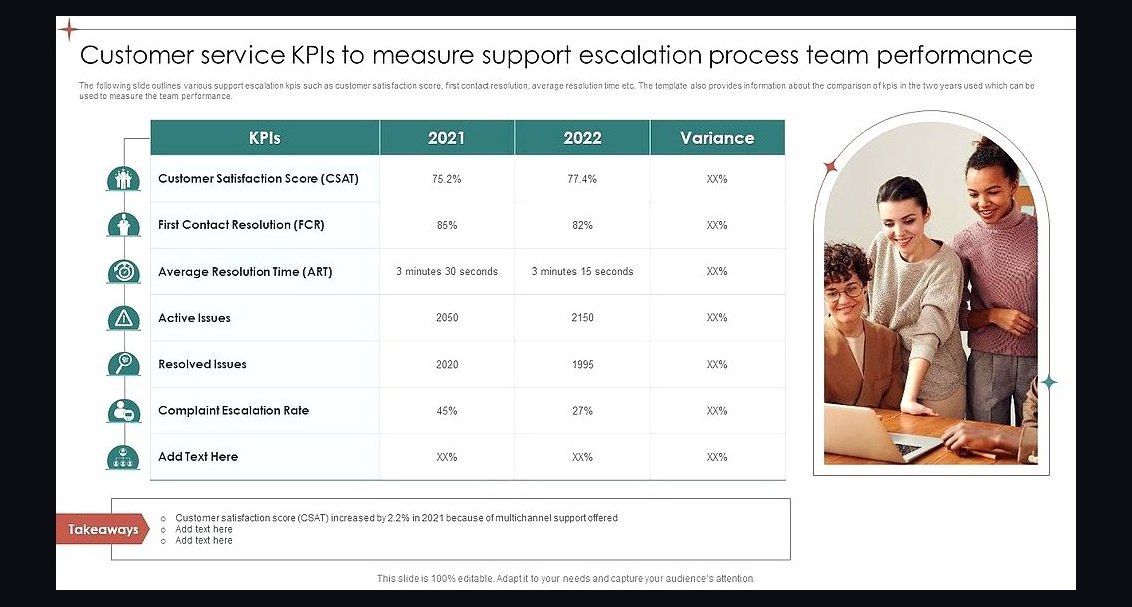 revopsHow should you handle mid-year comp plan resets without destroying trust in 2027?
 revopsHow should a 2027 CS team respond to a coordinated customer revolt?
 revopsHow should a 2027 RevOps team handle outlier deals in the forecast?
 revopsHow should a 2027 sales org run the crisis playbook for a botched product launch?
 revopsHow should a 2027 sales org distinguish ICP fit vs intent vs need?