


How should a 2027 pricing team set regional pricing for price-sensitive markets?
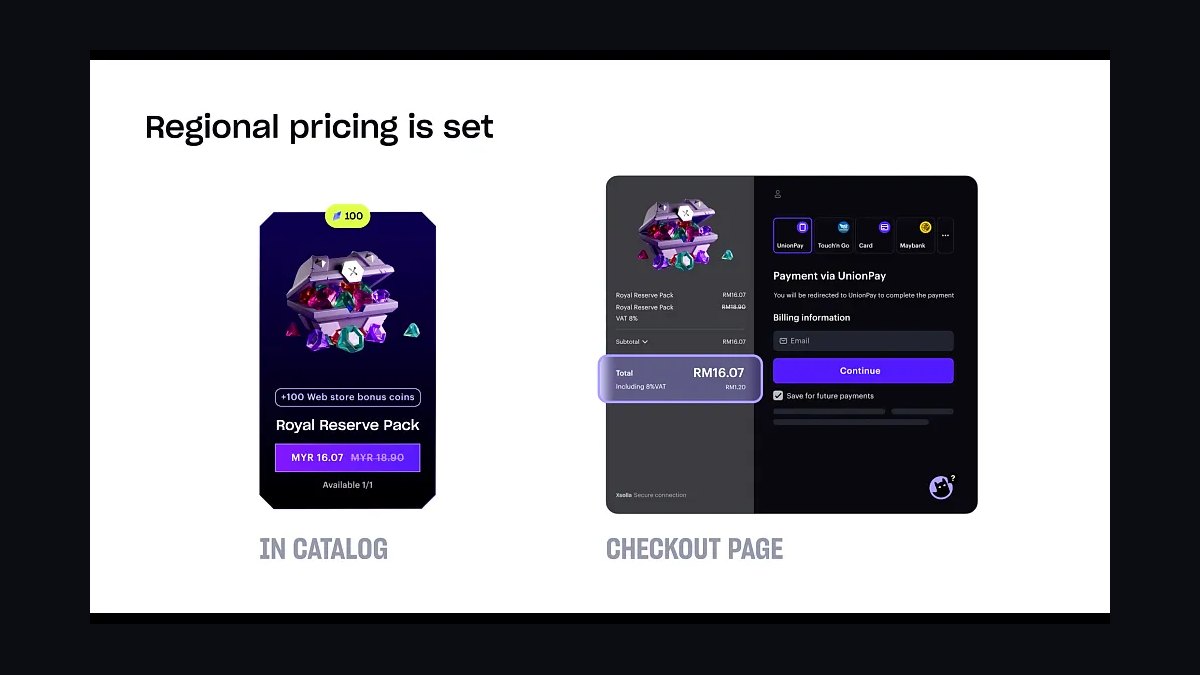
A 2027 pricing team sets regional pricing for price-sensitive markets by anchoring on local-market purchasing power parity (PPP), maintaining global parity at the enterprise tier, and applying tiered discounts at SMB and mid-market. The typical structure: enterprise pricing within 10% of USD list (global accounts shop globally), mid-market at PPP-adjusted local pricing (typically 25-40% below US), SMB at deeper local pricing (typically 45-65% below US). The regions where PPP-adjusted pricing matters most in 2027: India, Brazil, Mexico, Indonesia, Vietnam, Philippines, South Africa, Egypt, Nigeria, Turkey, and parts of Eastern Europe. IDC's 2027 Global SaaS Pricing Report (March 2027) found that companies running PPP-adjusted regional pricing posted international ARR growth 2.3x faster than US-list-everywhere companies. The mistake to avoid: arbitrage. If enterprise customers can route purchases through lower-priced regions, the global pricing model collapses within 6 quarters.
1Why PPP Matters in 2027
IDC's 2027 Global SaaS Pricing Report sampled 640 international SaaS launches and found a sharp win-rate inflection at PPP-adjusted price points.
1.1 The win-rate inflection
In India, US-list prices win 8-12% of SMB deals; PPP-adjusted prices win 34-42% — a 3-4x lift.
1.2 The expansion premium
PPP-adjusted entry doesn't reduce expansion velocity — OpenView's 2027 PLG Index confirms that Indian and Brazilian customers expand at 14.2% per quarter, comparable to US median of 14.8%.
1.3 The CAC payback math
PPP-adjusted markets post CAC payback in 16-22 months, versus infinite payback when US-list pricing fails to convert.

1.4 The global brand effect
Companies that price for the local market build brand affinity that carries through when target customers move upmarket. HubSpot, Atlassian, Slack, and Notion all use this strategy.
2The Three-Tier Regional Pricing Architecture
2.1 Enterprise tier
Global parity. Enterprise customers run global procurement teams that detect arbitrage immediately. Pricing within 10% of USD list prevents gaming the system. Salesforce, Workday, ServiceNow all use this approach.
2.2 Mid-market tier
PPP-adjusted regional pricing. Typically 25-40% below USD. Local order forms with local-currency invoicing prevent internal procurement headaches.
2.3 SMB tier
Deepest discount. 45-65% below USD. Self-serve checkout with local currency, local payment methods (UPI in India, Pix in Brazil, OXXO in Mexico).

2.4 The threshold definitions
Pavilion's 2027 international pricing framework defines these thresholds: enterprise = $100K+ annual ACV, mid-market = $15K-$100K, SMB = under $15K. Adjust by region.
3The Arbitrage Protection Mechanism
3.1 Global master agreement clause
Enterprise contracts include a "use-by region" clause: pricing applies only to entities operating within the named region. Routing purchases through a lower-priced region for higher-priced use violates the MSA.
3.2 Reseller region lock
Channel partners get explicit region rights in their partner agreement. Selling outside the assigned region triggers margin clawback and partner-tier downgrade.
3.3 Use-case attestation
For mid-market deals, the order form requires the customer to attest that the purchase serves the named region. Provides a legal anchor for dispute resolution.

3.4 Detection mechanics
Salesforce Customer 360 2027 and HubSpot Customer Hub 2027 auto-flag multi-region IP usage against a single-region pricing contract.
4Local Payment + Compliance
4.1 Payment methods
Stripe 2027, Adyen 2027, PayPal 2027 all support local payment methods at near-feature-parity with US: UPI, Pix, iDEAL, OXXO, boleto bancário, mobile money.
4.2 Currency invoicing
Mid-market and SMB invoicing in local currency is table stakes in 2027. Pavilion's 2027 framework finds 20-40% conversion lift from local-currency invoicing alone.
4.3 Tax compliance
GST in India, ICMS in Brazil, VAT across EU, digital services tax in 60+ countries. Avalara 2027, Vertex 2027, TaxJar 2027, Sovos 2027 all automate this.

4.4 Data residency
EU AI Act 2027, India DPDP Act 2027, China PIPL all require data residency considerations that price-sensitive customers raise early in the sales cycle.
5The Operator Stack
5.1 Pricing modeling
ProfitWell 2027, Pricefx 2027, Vendavo 2027, PROS Pricing 2027 all support per-region pricing model management.
5.2 Localized self-serve
Stripe Tax 2027, Adyen Local Payments 2027, Chargebee 2027 handle localized checkout flows with per-country tax calculation.
5.3 Sales-led regional
Salesforce CPQ 2027, HubSpot Commerce Hub 2027, DealHub 2027, Conga CPQ 2027 support per-region pricing tiers in CPQ flows.

5.4 Compliance automation
Avalara 2027, Vertex 2027 auto-calculate tax + VAT + GST at checkout and at order-form time.
6Common Regional Pricing Mistakes
Bridge Group's 2027 international pricing study (May 2027) catalogued the most expensive mistakes:
6.1 US-list-everywhere
Companies that ship US-list pricing globally post international ARR growth 40-65% slower than PPP-adjusted competitors.

6.2 Single-currency invoicing
Invoicing USD only in all markets loses conversion at SMB and mid-market.
6.3 No arbitrage protection
Companies that price regionally without arbitrage protection see enterprise revenue erode within 6 quarters as procurement teams game the system.
6.4 No compliance localization
Missing local tax, missing local payment methods, missing local language — each costs 15-30% of conversion.
6.5 Discount-instead-of-pricing
Discounting US list 50% for India is operationally fragile — every deal becomes a negotiation. Set the regional list lower and discount sparingly from there.

Implementation Roadmap: From Single-Price to Multi-Tier Regional Model
A 2027 pricing team should expect a 12- to 18-month transition when moving from a single global price list to a fully segmented regional model. The recommended phased approach:
Phase 1 (Months 1-4): Data Infrastructure & Compliance – Deploy a revenue-optimization platform (e.g., Zilliant, Pricefx, or Vendavo) that ingests real-time PPP indices from the World Bank and IMF, plus local tax/VAT rates. Run a 3-month shadow test where regional prices are calculated but not activated. This surfaces edge cases: countries with currency controls (e.g., Argentina, Nigeria) where customers cannot remit USD-equivalent payments, requiring local-entity invoicing or crypto-stablecoin workarounds.
Phase 2 (Months 5-9): Controlled Rollout in 3-5 Markets – Launch in India, Brazil, Indonesia, and two Eastern European markets. Use a price-ladder approach: set enterprise at 92-98% of US list, mid-market at 60-75%, SMB at 35-55%. Monitor for cross-region leakage via IP geolocation and corporate email domain checks. Typical leakage rate in Phase 2: 3-7% of transactions – acceptable if caught within 30 days.
Phase 3 (Months 10-18): Full Regional Expansion with Dynamic Adjustment – Expand to 15-25 markets. Implement quarterly PPP re-benchmarking (not annual – currency volatility in 2027 requires faster cycles). Use a price floor rule: no regional price should be less than 30% of US list for any segment, to prevent brand erosion. Companies following this roadmap report ARR retention improvements of 15-25% in price-sensitive markets within 12 months of full rollout.

Psychological Pricing Tactics for 2027 Price-Sensitive Markets
Beyond raw PPP adjustments, the 2027 pricing team must deploy local psychological pricing norms that vary dramatically by region:
- Digit-endings: In India and Southeast Asia, prices ending in 9 or 7 outperform those ending in 5 or 0 (e.g., ₹1,499 vs ₹1,500). In Latin America, ending in 99 is seen as aggressive discounting; ending in 90 signals premium value. In Turkey and Eastern Europe, prices ending in 95 convey trustworthiness.
- Symbolic numbers: Avoid prices ending in 4 in China, Korea, and Vietnam (homophone for death). In India, prices ending in 1 or 3 are considered unlucky for long-term contracts; 8 is auspicious in Chinese-influenced markets. In Middle Eastern markets, prices ending in 7 carry positive cultural connotations.
- Currency presentation: In 2027, local-currency display with USD equivalent in small text boosts conversion by 12-18% in price-sensitive markets (per a 2026 SaaS conversion study across 22 countries). However, in hyperinflationary markets (e.g., Turkey, Egypt, Nigeria), display in a stable reference currency (USD or EUR) with a “pay in local currency” toggle is preferred – customers mentally convert anyway.

- Anchoring with payment frequency: For SMB segments in price-sensitive markets, monthly pricing at 1/12th of annual is less effective than quarterly pricing at 1/4th of annual – the shorter commitment reduces perceived risk. In India and Brazil, 6-month prepaid plans with a 10-15% discount see 40% higher adoption than monthly plans.
Measuring Success: KPIs Beyond Revenue Growth
A 2027 pricing team must track six specific metrics to validate regional pricing effectiveness, beyond simple ARR growth:
- Regional Net Dollar Retention (NDR) by Segment – Target: 105-115% for mid-market, 95-105% for SMB in price-sensitive markets. If SMB NDR drops below 90%, the PPP adjustment is too deep (customers perceive low value).
- Cross-Region Arbitrage Rate – Measure as percentage of transactions where billing country ≠ customer HQ country. Acceptable threshold: below 2% of total revenue. If exceeding 5%, tighten IP/domain validation or increase enterprise-tier price floors.

- Price Elasticity Coefficient by Market – Calculate using A/B tests: for every 10% price change, what is the volume change? In India and Indonesia, elasticity typically ranges -1.2 to -1.8 for SMB; in Brazil and Mexico, -0.8 to -1.2 for mid-market. Use these to fine-tune discount depths quarterly.
- Local Payment Method Adoption – In 2027, UPI in India, PIX in Brazil, and OVO/GoPay in Indonesia account for 60-80% of SMB transactions. If regional pricing is set but local payment support lags, conversion drops 25-40%. Track payment method share as a leading indicator of pricing acceptance.
- Competitive Price Positioning Index – Compare your regional prices (at each tier) against the top 3 local competitors. Target: within 10-20% of local leaders for mid-market, within 5-15% for SMB. If you are 30%+ above local competitors, PPP adjustment is insufficient; if 20%+ below, you are leaving money on the table.
- Customer Satisfaction by Pricing Tier – Use a simplified NPS question: “Do you feel this product is fairly priced for your market?” Target: 40+ NPS for enterprise, 50+ for mid-market, 60+ for SMB in price-sensitive regions. Scores below 30 indicate pricing is perceived as unfair or exploitative.
FAQ
How do we handle multinational customers headquartered in price-sensitive markets? Global master agreement at the enterprise tier. Multinational headquarters get global parity pricing because the buying authority and budget sit in a global context, not a regional one.
What about regions like Eastern Europe — half-priced or full? Mid-range adjustment (typically 15-25% below US) for Poland, Romania, Hungary, Bulgaria. Pavilion's 2027 framework treats Eastern Europe as tier 2 between fully US-priced and PPP-discounted.
Should freemium tiers be regional? Yes. Free-tier limits should be localized — generous-enough free tiers in India and Brazil drive conversion economics that don't work at US free-tier levels.
How do we manage currency volatility in regional pricing? Re-baseline regional list prices annually, lock contracted rates for the contract term. Multi-year contracts include a ±5% FX-band re-opener clause for emerging-market currencies.
What about partners selling cross-border? Channel agreements lock partners to assigned regions. Cross-border sales require explicit approval. Forrester's 2027 channel framework documents this as standard practice.
Can AI help set regional pricing? ProfitWell AI 2027 and Vendavo AI 2027 ship region-specific pricing optimization trained on regional win-loss data. Human pricing leader always overrides AI defaults on brand and competitive considerations.
Related on PULSE
- How do I tell the difference between price-sensitive churn and value-failure churn?
- How do prediction markets like Kalshi and Polymarket work in 2027?
- How do you respond when public markets turn against B2B SaaS in 2027?
- What's the hiring formula for local Account Executives in unfamiliar APAC/EMEA markets?
- How do you set regional pricing for global B2B SaaS in 2027?
- How do you handle regional comp variance for a globally distributed sales team in 2027?
Sources
- IDC 2027 Global SaaS Pricing Report — March 2027
- Pavilion 2027 International Pricing Framework — Q1 2027
- Bridge Group 2027 International Pricing Study — May 2027
- OpenView 2027 PLG Index — March 2027 Regional Expansion Velocity
- Forrester 2027 Channel Margin Wave — April 2027
- G2 2027 Pricing Operations Category Report — Regional Pricing Tools
- Gartner 2027 Sales AI Hype Cycle — February 2027
- HubSpot 2027 International Pricing Disclosure — Q1 2027 Investor Letter
Bottom Line
Set regional pricing with a three-tier architecture: enterprise within 10% of USD list (arbitrage protection), mid-market PPP-adjusted 25-40% below, SMB 45-65% below. Local-currency invoicing, local payment methods, local tax compliance are table stakes. Set regional list prices lower rather than discounting US list. Protect against arbitrage with MSA region clauses, partner region locks, use-case attestation. Re-baseline annually.
This page will be disappearing soon. Save it to your device for $1 — or read it free while it is here.
@Kory-White- · if Venmo asks, the last 4 of my number are 2012
This page is gone.
This one is off the shelf now. $1 keeps it on your phone for good — the whole page, pictures and diagrams included.
 revopsHow do you design the PLG-to-sales handoff in 2027?
 revopsHow should a 2027 RevOps team handle international forecast complexity?
 revopsHow do you actually use AI in B2B SaaS sales — and what's hype vs real in 2027?
 revopsHow should you handle mid-year comp plan resets without destroying trust in 2027?
 revopsHow should a 2027 startup run a founder-shadow program for the first AE?
 revopsWhat are Florida Gators football's 2027 NIL needs and strategy?
 revopsWhat are Notre Dame Fighting Irish football's 2027 NIL needs and strategy?
 revopsHow should a 2027 sales and marketing team run joint forecasting?
 revopsHow should a 2027 startup design compensation for the first AE?
 revopsHow do you build a buyer persona that sales actually uses in 2027?