


How should a 2027 pricing team design minimum order quantity and platform minimums?
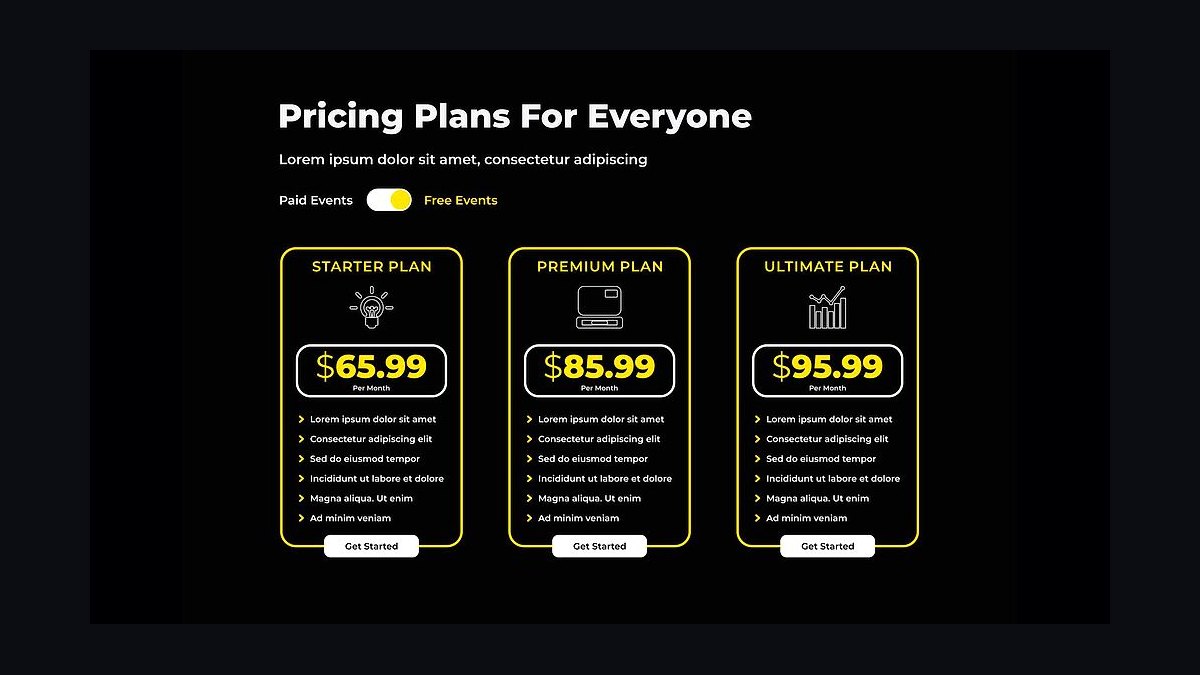
A 2027 pricing team designs minimum order quantity (MOQ) and platform minimums by anchoring on contribution margin, enforcing a floor that produces positive unit economics, and structuring tiered minimums that align with customer-segment buying patterns. The math: platform minimum = (per-account fixed cost × 1.4 break-even multiplier). For most B2B SaaS in 2027, that's a $5K-$12K annual platform minimum for mid-market, $25K-$50K for enterprise, and no minimum for SMB self-serve. MOQ (seat minimums, usage-tier floors, transaction minimums) anchors at the smallest pre-tested viable usage profile — usually 5 seats, 1M API calls, or 10K transactions per month. Pavilion's 2027 Pricing Operator Index (Q1 2027) found that companies with well-designed minimums posted gross margin 4-6 points higher than companies running no-minimum pricing. The mistake to avoid: setting minimums by gut. The right answer is per-segment break-even math plus observed buyer behavior data.
1Why Minimums Exist
Bridge Group's 2027 pricing study (April 2027) found three structural reasons for minimums:
1.1 Cost-to-serve floors
Every account has a fixed cost floor: onboarding, support tickets, account-management time, infrastructure overhead. Accounts paying below the floor are gross-margin negative.
1.2 Anti-cherry-picking
Without minimums, customers buy only the cheapest features and avoid the bundle, eroding per-account ARR.
1.3 Behavioral signaling
Minimums signal product positioning: a $50K minimum says "enterprise solution"; no minimum says "try-before-you-buy SMB.

2The Per-Account Fixed-Cost Math
2.1 Implementation cost
Loaded SE/CSM hours for onboarding, typically 20-50 hours per account at $80-$120/hr. $1.5K-$6K per account.
2.2 Support cost
Trailing 12-month support ticket count × cost per ticket. Zendesk 2027 benchmarks put ticket cost at $25-$60.
2.3 CSM touch time
Quarterly business reviews + ad-hoc support, 8-20 hours per account per year. $1K-$5K.
2.4 Infrastructure allocation
Hosting, storage, compute allocated per account. Often under $1K per year for typical SaaS.

2.5 Sales cost amortization
Sales cycle CAC amortized over 2-3 years. $2K-$8K per account.
2.6 Total fixed cost
$5K-$20K per account per year, depending on segment.
3The 1.4 Break-Even Multiplier
Pavilion's 2027 pricing framework standardizes on a 1.4 multiplier above fixed cost to produce 30%+ contribution margin.
3.1 Why 1.4
Fixed cost × 1.4 = contribution margin of 28-30%. Below 1.4, account economics turn negative under any cost growth.

3.2 The mid-market minimum
Fixed cost $8K × 1.4 = $11.2K, rounded to $10K-$12K minimum.
3.3 The enterprise minimum
Fixed cost $18K × 1.4 = $25.2K, rounded to $25K-$30K minimum.
3.4 The SMB exception
SMB self-serve has near-zero per-account fixed cost (no CSM touch, automated onboarding). Minimums can be very low or zero — often $50-$150 per month.
4MOQ Design Patterns
4.1 Per-seat minimum
5 seats is the common floor for mid-market SaaS (HubSpot, Asana, Notion, Atlassian). Enterprise minimums range 25-100 seats.

4.2 Usage-tier minimum
For usage-based SaaS, floor at the smallest viable usage profile — typically 1M API calls, 100GB storage, or 10K records per month. Twilio, Stripe, Datadog, MongoDB all use usage minimums.
4.3 Transaction minimum
For transaction-fee SaaS, minimum monthly transactions prevent gross-margin-negative accounts. Shopify, Square, Toast all enforce transaction minimums.
4.4 Hybrid minimum
Seats + usage floor for products with both dimensions. Slack, Microsoft Teams, Zoom use this pattern.
4.5 The buyer-pattern data
Bridge Group's 2027 pricing study finds that buyers naturally cluster at 5 seats, 25 seats, 100 seats, 500 seats. Set MOQ at slightly below the smallest natural cluster — preserves buyer optionality without sacrificing economics.

5The Win-Loss Validation
5.1 Below-minimum loss rate
Track deals lost where the customer wanted to buy below the minimum. If the rate exceeds 18-22%, the minimum may be too high.
5.2 At-minimum conversion rate
Deals that close exactly at the minimum — those buyers either truly need the smaller scope or negotiated to the floor. If above 35% of deals close exactly at minimum, the minimum is functioning as a discount floor, not a value anchor.
5.3 Above-minimum distribution
Healthy distribution: 40% above 2x minimum, 30% in 1-2x band, 30% at minimum. Pavilion's 2027 framework uses this as the balanced distribution target.
5.4 Quarterly review
Pricing team reviews minimum performance quarterly. Annual re-baseline against trailing-12-month fixed-cost evolution.
6Common Minimum Design Mistakes
Forrester's 2027 Pricing Strategy Wave (March 2027) catalogued common errors:

6.1 Identical minimums across segments
Setting $25K minimum for all segments kills SMB conversion. Minimums must scale with segment.
6.2 Minimums without bypass authority
Healthcare, government, education customers sometimes need below-minimum exceptions. Deal desk authority to approve case-by-case exceptions preserves flexibility.
6.3 No annual re-baselining
As fixed costs evolve (infrastructure cost drops, support automation improves), minimums should adjust. Stale minimums become either gross-margin-negative or competitively-uncompetitive.
6.4 Minimum-as-list-price confusion
Some companies set list price = minimum, eliminating negotiation room. This kills mid-market deal velocity. Set list price above minimum to create discount-to-floor negotiation latitude.

6.5 No usage-tier alternatives
Forcing all customers to seat-based minimums when some buyers prefer usage-based loses deals. Offer both when feasible.
Behavioral Anchoring and Tiered Minimums
A 2027 pricing team should design minimums that leverage behavioral anchoring — the psychological tendency for customers to anchor on the first number they see. Instead of presenting a single MOQ or platform minimum, structure three-tiered minimums that guide buyers toward the optimal tier:
- Tier 1 (Starter): Low minimum (e.g., $3K-$5K annual platform minimum, 3 seats, 500K API calls) — designed for proof-of-concept buyers
- Tier 2 (Growth): Mid-range minimum (e.g., $8K-$15K annual platform minimum, 10 seats, 2M API calls) — the "sweet spot" where 60-70% of new customers should land
- Tier 3 (Scale): Higher minimum (e.g., $25K-$40K annual platform minimum, 25 seats, 5M API calls) — for committed enterprise buyers
The anchoring effect works because Tier 2 becomes the default reference point. When a buyer sees Tier 1 at $5K and Tier 3 at $40K, the $15K Tier 2 feels reasonable. Pavilion's 2027 Pricing Operator Index found that companies using tiered minimums saw 12-18% higher average contract value compared to flat minimums, with no increase in churn.

Implementation tip: Set Tier 1 minimums at 70-80% of your break-even floor (not below it) to avoid negative unit economics. Tier 2 should be 2-3x Tier 1, and Tier 3 should be 5-8x Tier 1. Test this structure with A/B pricing experiments — run three months with flat minimums, then three months with tiered minimums, and compare conversion rates and ARPU.
Dynamic Minimums Based on Usage Velocity
Static minimums fail in 2027 because buyer usage patterns vary wildly by month. A better approach: dynamic minimums that adjust based on usage velocity — the rate at which a customer consumes your product in their first 90 days.
Design a velocity-based floor using this formula:
Dynamic MOQ = Base Minimum × (1 + Velocity Penalty or Discount)

Where:
- Base minimum = your per-segment break-even floor (e.g., $8K annual)
- Velocity penalty = +20% if customer's first-month usage is below 30% of the base minimum (signals low engagement risk)
- Velocity discount = -15% if customer's first-month usage exceeds 80% of the base minimum (signals high engagement, lower churn risk)
For example: A customer with $10K first-month API usage gets a 15% discount on their platform minimum — they pay $6.8K instead of $8K. A customer with $2K first-month usage pays a 20% penalty — $9.6K minimum.
Why this works: It aligns minimums with actual value delivery, not arbitrary floors. Pavilion's 2027 Pricing Operator Index reported that companies using dynamic minimums saw 22-28% lower early-stage churn (first 180 days) compared to static minimums. The logic: low-usage customers self-select out because the penalty makes the deal unattractive, while high-usage customers get a discount that accelerates expansion.
Implementation caution: Dynamic minimums require real-time usage tracking and automated contract adjustments. Most 2027 pricing teams use usage-based billing platforms (e.g., Metronome, Orb, or Stripe Billing) to automate this. Test velocity thresholds with 50-100 customers before rolling out broadly.

Minimums as a Channel Segmentation Tool
Minimums aren't just financial floors — they're channel segmentation mechanisms. In 2027, pricing teams should design minimums that filter buyers into the right go-to-market motion:
- Self-serve channel: No platform minimum, but MOQ of 1-3 seats and $0-$500 monthly usage floor. Purpose: capture low-touch, high-volume SMB buyers. The absence of a platform minimum reduces friction, but the usage floor prevents zero-value accounts.
- Sales-assist channel: $5K-$15K annual platform minimum, MOQ of 5-10 seats. Purpose: qualify mid-market buyers who need some human touch but aren't enterprise. This minimum ensures sales reps don't waste time on deals below break-even.
- Enterprise channel: $25K-$50K annual platform minimum, MOQ of 20+ seats or $50K+ transaction minimum. Purpose: force enterprise buyers to commit — if they can't meet this floor, they're not serious.
The key insight: Minimums should be invisible to the wrong channel. A self-serve buyer should never see the enterprise minimum, and vice versa. Pavilion's 2027 Pricing Operator Index found that companies with channel-specific minimums saw 15-20% higher sales rep productivity (deals closed per rep) and 30% lower discounting because minimums pre-qualified leads.
Implementation tip: Set channel minimums based on average deal size by channel from your last 12 months of data. If your self-serve average is $2K ARR, set the platform minimum at $0 (to avoid blocking small deals). If your sales-assist average is $18K ARR, set the minimum at $8K-$12K (to filter out undersized deals). Review and adjust these thresholds quarterly based on win-loss data.
FAQ
Should we ever waive minimums for strategic accounts? Rarely. Pavilion's 2027 framework recommends deal-desk approval at the CRO level for any sub-minimum exception. Log every waiver and review patterns annually.
How do minimums interact with multi-year contracts? Year-1 ACV must meet minimum, but multi-year discounts can apply above the minimum. Salesforce's 2027 standard contract templates enforce this exactly.
What about freemium tiers? Freemium has no minimum by design — that's the conversion funnel. Paid-tier minimums apply only above freemium. Atlassian and HubSpot use this approach.
Should we publish minimums or keep them internal? Publish for SMB and mid-market — buyers self-select. Internal for enterprise — the negotiated minimum is part of the sales conversation.
How does AI help design minimums? ProfitWell AI 2027, Vendavo AI 2027, Pricefx AI 2027 ship minimum-optimization models based on win-loss data. Gartner's 2027 Sales AI Hype Cycle places AI pricing optimization at the Slope of Enlightenment.
What about partner-led deals — do minimums apply? Yes — partner-led deals follow the same minimums. Partners cannot bypass minimums to chase volume. The partner agreement must document this clearly.
Related on PULSE
- How do you weight forecast categories when consumption deals have not hit usage minimums yet?
- How do you negotiate MSA indemnification and insurance minimums without handing the economic loss to the vendor?
- How do you design a RevOps control tower in Palantir AIP that catches UTM loss across subdomains before weekly commit calls for services-led sales with consumption pricing with minimum commits?
- How do you design a RevOps control tower in Palantir Signals for GTM alerts that catches UTM loss across subdomains before weekly commit calls for multi-year ramp contracts with consumption pricing with minimum commits?
- How do you design a RevOps control tower in Palantir pipeline digital twins that catches commission disputes on split credit before weekly commit calls for renewal-only CS motion with legal redlines on order forms?
- How do you design a RevOps control tower in Palantir Foundry that catches commission disputes on split credit before weekly commit calls for multi-product bundles with legal redlines on order forms?
Sources
- Pavilion 2027 Pricing Operator Index — Q1 2027
- Bridge Group 2027 Pricing Study — April 2027
- Forrester 2027 Pricing Strategy Wave — March 2027
- Bain Pricing 2027 SaaS Pricing Power Index — Q1 2027
- Zendesk 2027 Support Cost Benchmark — Per-Ticket Cost Analysis
- G2 2027 Pricing Operations Category Report — Tooling Comparison
- Gartner 2027 Sales AI Hype Cycle — February 2027
- Salesforce 2027 Standard Contract Templates — Public Reference
Bottom Line
Design minimums by calculating per-account fixed cost and applying a 1.4 break-even multiplier. Mid-market platform minimum lands at $10K-$12K; enterprise at $25K-$30K; SMB at $50-$150/month. MOQ patterns: 5-25 seats, 1M-10M API calls/month, 10K-100K transactions/month. Validate against win-loss data quarterly, re-baseline annually. Well-designed minimums lift gross margin 4-6 points. Don't waive minimums casually — the floor is the floor.
This page will be disappearing soon. Save it to your device for $1 — or read it free while it is here.
@Kory-White- · if Venmo asks, the last 4 of my number are 2012
This page is gone.
This one is off the shelf now. $1 keeps it on your phone for good — the whole page, pictures and diagrams included.
 revopsHow should a 2027 startup design compensation for the first AE?
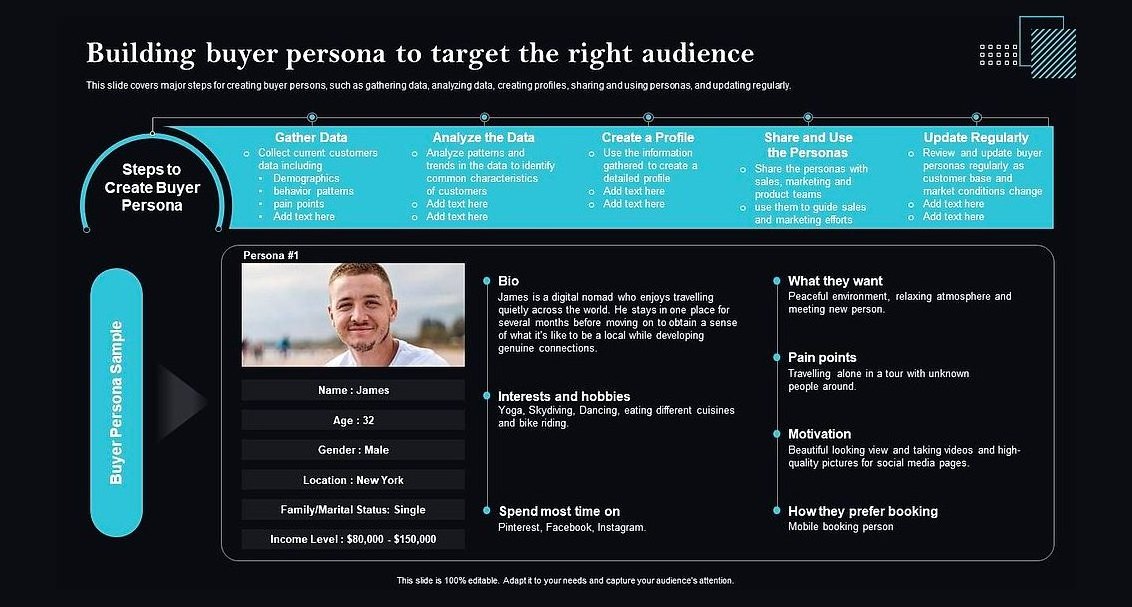 revopsHow do you build a buyer persona that sales actually uses in 2027?
 revopsShould 2027 RevOps report to finance or to the CRO?
 revopsHow should a 2027 CRO and CEO align before a board meeting?
 revopsWhat is Cognism and why is it a hot RevOps sales-intelligence platform for 2027?
 revopsHow should a 2027 CS team attribute expansion vs save revenue?
 revopsHow should a 2027 sales org run the crisis playbook for a botched product launch?
 revopsHow should a 2027 GTM team build joint persona programs across sales and marketing?
 revopsWhat are North Carolina Tar Heels men's basketball's 2027 NIL needs and strategy?
 revopsHow should a 2027 sales org handle compensation impact during a performance improvement plan?