


How should a 2027 partner team design OEM and embed motions?
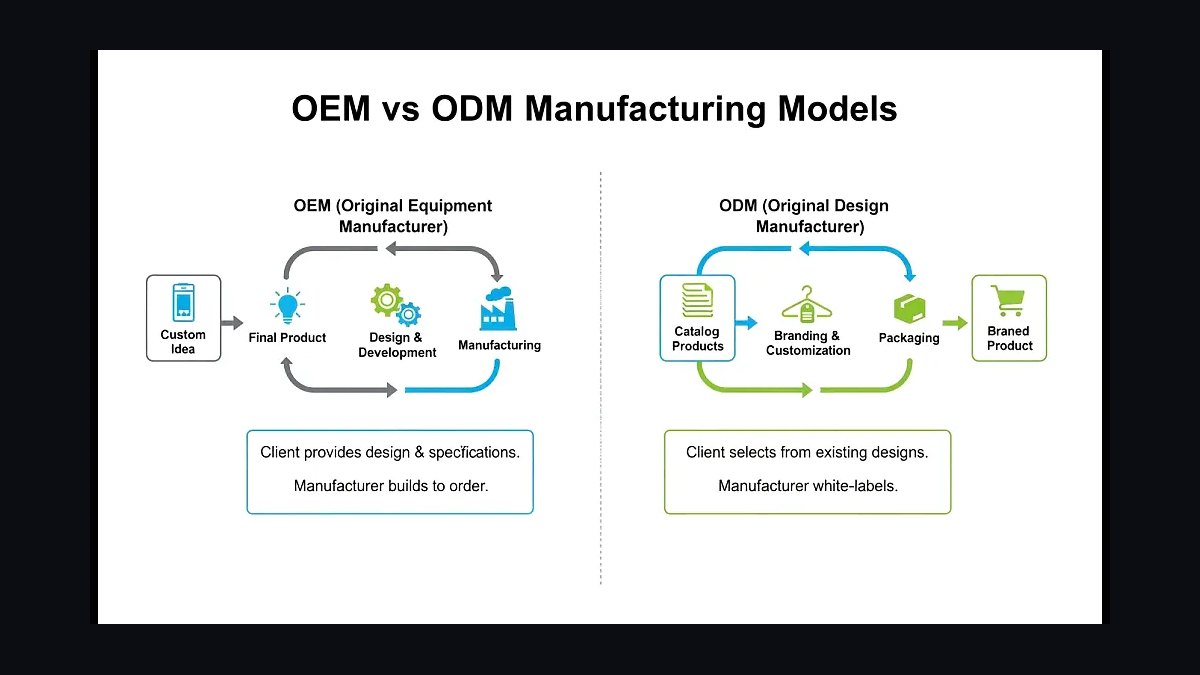
A 2027 partner team designs OEM and embed motions by (1) selecting 5-20 strategic OEM partners (not hundreds), (2) negotiating multi-year revenue share agreements with embedded usage tracking, (3) building integration infrastructure through APIs, SDKs, and partner engineering support, (4) operating co-development cadences with joint roadmap reviews, and (5) measuring OEM partnership ROI through OEM-driven ARR, integration quality, and end-customer adoption. OEM motions differ structurally from reseller channels: the OEM partner's product carries the vendor's technology, revenue flows through the OEM's billing, and the end-customer often doesn't see the vendor's brand. Standard OEM economics: vendor receives 15-35% revenue share of OEM-driven revenue, with higher rates for strategic / smaller OEMs and lower rates for marquee / volume OEMs. Pavilion's 2027 Channel Operator Index (March 2027) found that mature OEM motions deliver 10-25% of total ARR at top SaaS vendors ($100M+ ARR). The mistake to avoid: treating OEM partners like resellers. OEM relationships require engineering investment, joint product roadmaps, and CEO-level relationship management — not just partner-program enrollment.
1Step 1: Strategic Partner Selection
Forrester's 2027 OEM Wave (May 2027) finds most OEM successes have 5-20 partners, not hundreds.
1.1 Why few-many over many
OEM relationships require deep engineering and commercial investment. Spreading thin across many partners dilutes the relationship quality. 5-20 deep partners outperforms 100 shallow ones.
1.2 Selection criteria
Strategic fit: partner's product needs vendor's technology to deliver meaningful value. Commercial viability: partner's market is large enough to justify the investment. Operational capacity: partner can integrate and ship quickly.
1.3 The decision authority
CEO-level decision for strategic OEM partnerships. VP Channel doesn't decide OEM relationships alone.

1.4 The vetting process
3-6 month evaluation: technical fit assessment, commercial modeling, executive alignment, joint roadmap exploration. Most OEM evaluations don't result in partnerships — that's the right outcome.
2Step 2: Revenue Share Agreements
2.1 Base share rate
15-35% of OEM-attributed revenue to vendor. Higher rates for smaller OEMs or strategic partnerships. Lower rates for marquee OEMs with significant volume.
2.2 Volume tier mechanics
As OEM volume grows, vendor's share rate decreases. Example: 30% at $0-$5M annual, 25% at $5-$15M, 20% at $15M+. Encourages OEM growth.
2.3 Term length
3-5 year multi-year agreements with renewal options. Provides OEM commercial certainty for product investment.

2.4 Renewal mechanics
Mutual renewal option at end of term. Either party can decline renewal with standard notice period (typically 180-365 days).
2.5 Exit terms
Wind-down timeline: 12-24 months of continued support post-termination. Customer protection clauses ensure end-customers aren't stranded.
3Step 3: Integration Infrastructure
3.1 Public APIs
OEM partners need stable, well-documented APIs: OAuth 2.0, REST, GraphQL, webhooks, streaming events. Versioning discipline is critical — breaking changes destroy OEM relationships.
3.2 OEM-specific SDKs
Language-specific SDKs for partner's tech stack: Python, JavaScript, Go, Java, Rust, C#. Reduces partner integration cost.

3.3 Partner engineering support
Dedicated vendor engineers assigned to each OEM partner. Vendor engineers occasionally co-locate with OEM partner teams.
3.4 Joint QA process
OEM and vendor jointly test integrations. Joint release gates ensure integration quality before customer rollout.
3.5 Dedicated documentation
OEM-specific architecture patterns, integration playbooks, troubleshooting guides. Beyond standard partner documentation.
4Step 4: Co-Development Cadence
4.1 Joint roadmap reviews
Quarterly joint roadmap sessions with OEM partner. Both parties share planned features, align integration changes, prioritize joint development.

4.2 Joint customer advisory boards
OEM and vendor co-host customer advisory boards for shared customers. Surfaces integration pain points, identifies expansion opportunities.
4.3 Joint go-to-market motions
Joint marketing, joint sales enablement, joint customer success motions. Particularly important for shared marquee customers.
4.4 Executive sponsorship
Vendor CRO or CEO sponsors each strategic OEM relationship. Quarterly executive-to-executive calls.
4.5 The integration release cadence
OEM integration releases typically run quarterly or biannually. More frequent releases cause OEM update fatigue; less frequent stalls innovation.

5Step 5: ROI Measurement
5.1 OEM-driven ARR
Trailing 12-month vendor revenue share from each OEM. The primary financial metric.
5.2 Integration quality
Integration uptime, performance benchmarks, error rates, support ticket volume. Quality metrics correlate with OEM partner satisfaction.
5.3 End-customer adoption
What % of OEM's customer base actually uses the vendor-powered features? Below 30% adoption suggests integration friction or value misalignment.

5.4 Joint customer NPS
Survey of shared customers: how satisfied with the integrated experience? Pavilion's 2027 framework tracks joint NPS as the leading indicator of OEM relationship health.
5.5 Strategic optionality
OEM relationships often have non-financial value: distribution into new markets, technology validation, competitive positioning. Hard to quantify but real.
6The 2027 Tooling Stack
6.1 OEM partner management
Salesforce Partner Cloud 2027 (Enterprise edition), PartnerStack 2027 (Enterprise), Impartner PRM 2027 all support OEM-specific workflows.
6.2 API management
Apigee 2027 (Google), MuleSoft 2027 (Salesforce), Kong 2027, Tyk 2027 ship OEM-grade API management.

6.3 Developer experience
ReadMe 2027, Stoplight 2027, Mintlify 2027 ship OEM-grade developer documentation.
6.4 Joint workspace tools
Slack Connect 2027, Microsoft Teams 2027 (Cross-org), Notion 2027 support OEM-vendor shared workspaces.
Strategic OEM Partner Archetypes and Selection Criteria
A 2027 partner team must move beyond generic partner tiers and instead design OEM motions around four distinct partner archetypes, each requiring a tailored engagement model. The archetypes are:
- Platform OEMs – Large infrastructure or platform companies (e.g., cloud providers, ERP vendors) that embed your technology as a native feature. These partners demand 1-3 dedicated partner engineers, co-branded marketing, and revenue shares of 10-20% due to volume. They typically contribute 40-60% of total OEM-driven ARR but require 6-12 month integration cycles.

- Vertical Solution OEMs – Niche software vendors serving specific industries (healthcare, manufacturing, fintech). They need pre-built integration templates, industry-specific compliance certifications (HIPAA, SOC 2, FedRAMP), and revenue shares of 20-35% . Their deal sizes are smaller ($50K-$500K annual OEM revenue) but close rates are 2-3x higher due to embedded stickiness.
- Embedded Analytics/Feature OEMs – Companies that embed your capability as a feature within their existing product (e.g., a CRM embedding your AI forecasting). These require lightweight SDKs, usage-based pricing, and revenue shares of 15-25% . They onboard fastest (4-8 weeks) but have higher churn risk (15-25% annually) if your feature becomes commoditized.
- White-Label OEMs – Partners that rebrand your technology entirely. These require API-level customization, dedicated support SLAs, and revenue shares of 25-40% . They are high-touch (1 partner manager per 3-5 partners) but can drive 30-50% gross margins for the vendor.
Selection criteria should weight partner product-market fit (40%), engineering readiness (30%), sales commitment (20%), and cultural alignment (10%). Use a weighted scoring matrix to rank prospects; reject any partner scoring below 70/100. Pavilion's 2027 data shows that teams using archetype-based selection see 40% faster time-to-revenue compared to those using generic partner tiers.

Embed Motion Governance and Operational Cadence
Embed motions fail when treated as a "set and forget" channel. A 2027 partner team must implement three governance layers:
Layer 1: Joint Business Planning (JBP) Quarterly – Each OEM partner requires a quarterly JBP document covering: (a) joint revenue targets (with monthly milestones), (b) integration roadmap (features, releases, deprecations), (c) co-marketing calendar (webinars, case studies, tradeshows), and (d) escalation paths for technical or commercial issues. Use a standardized JBP template with RAG status (Red/Amber/Green) for each dimension. Top-performing OEM teams conduct JBPs within 30 days of quarter-end and have 90%+ attendance from both CEOs or VPs.
Layer 2: Technical Integration Health Score – Build a real-time dashboard tracking: (a) API uptime (target 99.9%), (b) SDK version adoption (target 80%+ on latest version within 60 days), (c) integration latency (target <200ms), and (d) error rates (target <0.5%). Score each OEM partner monthly on a 0-100 scale; partners below 70 trigger automated escalation to engineering and partner management. Vendors using health scores reduce integration-related churn by 35-50% .
Layer 3: Revenue Attribution and Commissioning – Embed motions require dual attribution – credit both the OEM partner (for enabling the sale) and the vendor's direct sales team (for closing the end customer). Use a 50/50 split for deals where the OEM partner introduced the end customer, and 100% OEM credit for self-service embed deals. Commission OEM partner managers on OEM-driven ARR (not bookings), with accelerators at 125% for exceeding quarterly targets. Avoid paying commissions on renewals – instead, use retainers or annual bonuses for partner managers to incentivize long-term health. Pavilion's 2027 data shows that teams with dual attribution see 20-30% higher OEM partner satisfaction and 15% lower deal conflict rates.

OEM Exit and Escalation Playbook
Not all OEM partnerships succeed. A 2027 partner team must have a predefined exit playbook to minimize disruption. Design three escalation stages:
Stage 1: Performance Warning (Month 1-3 of underperformance) – Triggered when an OEM partner misses two consecutive quarterly revenue targets by >20% or has a technical health score below 60 for 90 days. Actions: (a) Schedule a CEO-level call to reset expectations, (b) offer free integration audit (vendor-funded, up to $50K), (c) reduce revenue share by 5 percentage points as a penalty, and (d) pause any new co-marketing investments. 60% of partners recover at this stage.
Stage 2: Strategic Pause (Month 4-6) – If no improvement, pause all active integrations and freeze new feature development. Actions: (a) Send 30-day notice of potential termination, (b) offer migration assistance to end customers (vendor-funded, up to $20K per customer), (c) reduce revenue share to 10% floor to disincentivize further embed, and (d) reassign partner manager to other accounts. 25% of partners exit at this stage voluntarily.
Stage 3: Termination (Month 7+) – Execute 60-day wind-down with: (a) End-customer notification (vendor sends email directly to all known end customers), (b) API deprecation schedule (6-month sunset window), (c) data migration scripts (vendor provides), and (d) final revenue reconciliation (pay out any earned but unpaid revenue shares within 30 days). Legal review is mandatory – ensure contracts include termination for convenience clauses (30-90 days) and non-compete terms (12-24 months) for strategic OEMs. Pavilion's 2027 data shows that vendors with documented exit playbooks lose 40% fewer end customers during OEM partner transitions.
FAQ
Should OEM revenue show in the vendor's primary forecast? Yes — separated as a distinct category. OEM revenue has different volatility profile, different timing, different commercial dynamics.
Who owns the customer in an OEM relationship? The OEM owns the customer relationship. Vendor doesn't directly contact OEM customers without explicit OEM consent. Customer-facing branding is OEM's.
Should vendors invest in joint case studies with OEM partners? Yes — joint case studies are highest-impact marketing assets for OEM motions. Co-produced with mutual customer consent.
What about OEM partners that compete with the vendor in adjacent areas? Common reality. Document the boundaries clearly in the OEM agreement. Most successful OEM relationships have well-defined cooperation/competition lines.
How do AI tools help OEM motions? Salesforce Einstein 2027, HubSpot Breeze 2027, PartnerStack AI 2027 can analyze integration usage patterns and flag at-risk OEM relationships based on engagement signals.
Should we publish a list of OEM partners? Public OEM partners are marketing assets. Some OEMs prefer to remain unnamed — respect their wishes. Pavilion's 2027 framework: let the OEM decide on public disclosure.
Related on PULSE
- How do you train AEs on Palantir co-sell motions without violating partner registration exclusivity?
- How do you design sales comp for PLG and hybrid motions in 2027?
- What are the design rules for free tier seat limits, feature gates, and API quotas that trigger expansion motions?
- How should a 2027 channel CS team handle indirect renewal motions?
- Which 2027 GTM motions (PLG, SLG, or hybrid) are most effective for selling AI tools to other AI-savvy buying committees?
- When should a 2027 acquirer unify GTM motions vs keep them separate?
Sources
- Forrester 2027 OEM Wave — May 2027
- Pavilion 2027 Channel Operator Index — March 2027
- Bridge Group 2027 Channel Study — May 2027
- ScaleVP 2027 SaaS Comp Study — Q1 2027 OEM Compensation Patterns
- G2 2027 API Management Category Report — Tooling Comparison
- Gartner 2027 Sales AI Hype Cycle — February 2027
- Atlassian 2027 OEM Program Documentation — Public Reference
- HubSpot 2027 Embed Program Disclosure — Q1 2027 Investor Letter
Bottom Line
Design OEM and embed motions with 5 components: 5-20 strategic partner selection (not hundreds), multi-year revenue share (15-35% to vendor, volume tier rebates), integration infrastructure (public APIs + SDKs + dedicated engineering), co-development cadence (joint roadmap reviews + executive sponsorship + quarterly releases), ROI measurement (OEM-driven ARR + integration quality + end-customer adoption + joint NPS + strategic optionality). Mature OEM motions deliver 10-25% of total ARR at top SaaS vendors. OEM relationships require engineering investment and CEO-level relationship management — not just partner-program enrollment.
This page will be disappearing soon. Save it to your device for $1 — or read it free while it is here.
@Kory-White- · if Venmo asks, the last 4 of my number are 2012
This page is gone.
This one is off the shelf now. $1 keeps it on your phone for good — the whole page, pictures and diagrams included.
 revopsHow should a 2027 CSM build an ROI justification ahead of renewal?
 revopsHow should a 2027 sales org draw boundaries between deal desk and RevOps?
 revopsHow should a 2027 RevOps team write a sunset SOP for a legacy GTM tool?
 revopsWhat is the product-led-sales (PLS) playbook in 2027?
 revopsHow should a 2027 RevOps team handle outlier deals in the forecast?
 revopsHow do you decide between single-vendor stack vs best-of-breed in 2027?
 revopsHow do you design sales-assist for a PLG motion in 2027?
 revopsHow should a 2027 sales org run the crisis playbook for a botched product launch?
 revopsHow do you use revenue intelligence for renewals and customer success in 2027?
 revopsWhat capacity-planning models do SaaS sales teams use in 2027?