


How should a 2027 partner team segment VAR vs MSP partner archetypes?
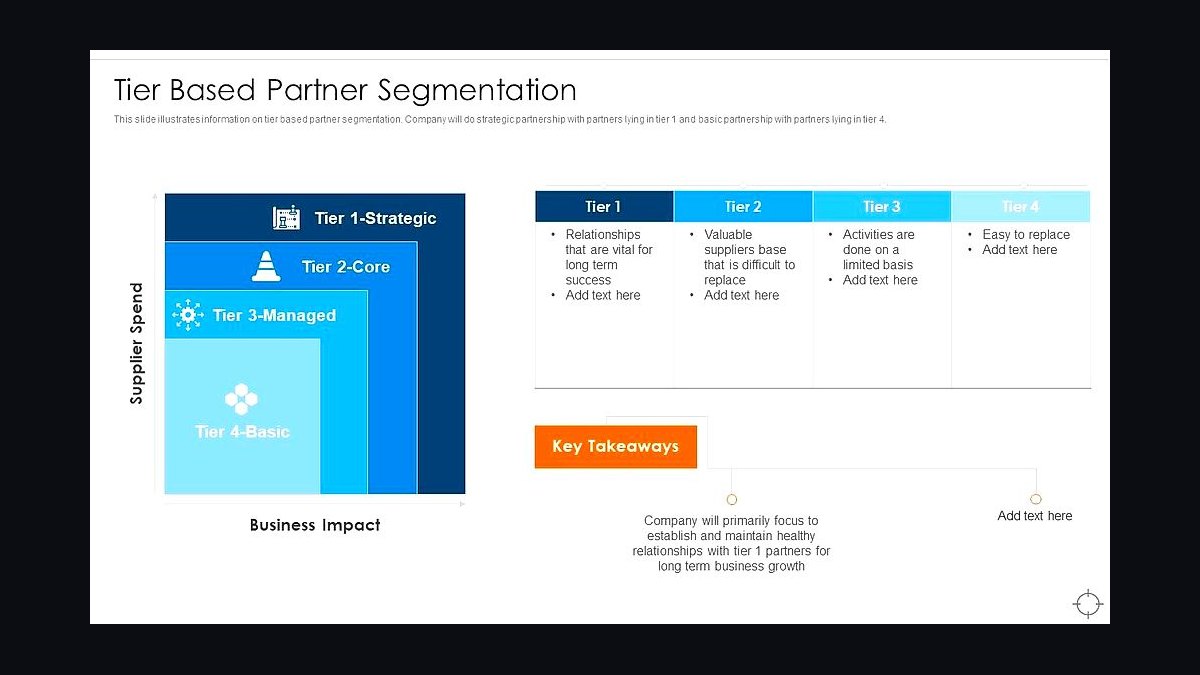
A 2027 partner team segments VAR vs. MSP partner archetypes along 5 dimensions: (1) business model (VARs resell products, MSPs deliver managed services), (2) customer relationship (VARs typically transactional, MSPs ongoing), (3) margin structure (VARs higher product margin, MSPs lower but with service revenue), (4) technical depth (VARs broad, MSPs deep), and (5) program enablement needs (VARs need sales enablement, MSPs need technical training and ongoing certification). Treating VARs and MSPs identically fails both. VARs need fast deal-cycle tooling, lead-gen support, and competitive battle cards; MSPs need deep product training, integration certifications, and recurring customer-success enablement. Pavilion's 2027 Channel Operator Index (March 2027) found that archetypes-specific programs delivered 41% higher partner-attributed ARR growth than single-track programs. CDW, Insight, SHI International are large VAR archetypes; Rackspace, Pax8, Bytes Software Services are common MSP archetypes. The mistake to avoid: single partner program that treats all partners identically.
1Dimension 1: Business Model
Forrester's 2027 Channel Archetype Wave (April 2027) describes the structural differences.
1.1 VAR business model
Resell vendor products + light services attachment. Revenue: 70-85% product resell, 15-30% services. Cycle: transactional, often per-deal.
1.2 MSP business model
Deliver managed services using vendor products. Revenue: 30-50% product resell, 50-70% managed service fees. Cycle: recurring, monthly or annual contracts with end-customers.
1.3 Why the difference matters
VARs need fast product sales; MSPs need customer-lifetime-value optimization. Different selling motions, different incentive structures.

1.4 The hybrid reality
Many partners blend models (VAR with growing services arm, MSP with transactional sales). Pavilion's 2027 framework segments by primary revenue source — the dominant model drives program treatment.
2Dimension 2: Customer Relationship
2.1 VAR customer relationship
Project-based, procurement-driven. Customer runs an evaluation, selects products, VAR sells, project completes. VAR may have multiple touchpoints over years, but each is discrete.
2.2 MSP customer relationship
Ongoing operational relationship. Customer outsources IT operations to MSP. MSP has continuous visibility into customer's stack. Vendor's product is part of MSP's bundled offering.

2.3 The selling implication
VARs sell against the next project budget; MSPs sell against expansion into new use cases or accounts.
2.4 The vendor-customer touchpoint
VAR customers may have direct vendor relationships; MSP customers often don't see the vendor brand at all — the MSP is the brand.
3Dimension 3: Margin Structure
3.1 VAR margin structure
Higher per-deal product margin (20-30% typical) with thin services attach. Volume-driven economics: VARs win on scale.
3.2 MSP margin structure
Lower per-deal product margin (15-25% typical) with rich recurring service revenue layered on top. Margin-mix economics: MSPs win on customer lifetime value.

3.3 The vendor implication
Vendor revenue share to MSPs typically lower per-unit but higher in aggregate because MSPs bundle vendor products with services.
3.4 The volume-rebate design
VAR-friendly rebates: tied to annual product volume. MSP-friendly rebates: tied to end-customer-count growth. Different incentive structures.
4Dimension 4: Technical Depth
4.1 VAR technical depth
Broad across many vendors and products. VAR reps may sell 30-100 different vendor products. Surface-level knowledge per product.
4.2 MSP technical depth
Deep specialization in 3-10 vendor products. MSP engineers operate the products day-to-day. Mastery of integration, troubleshooting, optimization.

4.3 The implication for vendor
VARs need quick-reference battle cards, simple competitive positioning, easy demo materials. MSPs need deep technical documentation, architecture guides, troubleshooting playbooks.
4.4 The certification implication
VARs: light certification (foundation tier sufficient). MSPs: deep certification (expert tier required for managed-service economics).
5Dimension 5: Enablement Needs
5.1 VAR enablement
Sales-focused: battle cards, quick demos, competitive cheat sheets, lead-gen lists, win stories. Designed for high-volume / high-turnover VAR sales teams.

5.2 MSP enablement
Technical-focused: integration guides, architecture patterns, troubleshooting playbooks, customer success motions, service pricing tools. Designed for technical specialists.
5.3 The investment differential
VAR enablement cost: $5K-$15K per partner per year. MSP enablement cost: $20K-$80K per partner per year due to deeper certification, more technical content, dedicated technical support.
5.4 The renewal cadence
VAR enablement refreshes quarterly (sales materials evolve fast). MSP enablement refreshes per major product release (technical depth matures over time).
6Program Structure Recommendations
6.1 Distinct tracks within the partner program
VAR track and MSP track with separate certifications, separate margin structures, separate enablement. Pavilion's 2027 framework treats this as mature practice.

6.2 Cross-attribution rules
Some partners run both models. Cross-attribution rules allow partners to earn margin in both tracks based on how they sold/serviced specific deals.
6.3 Dedicated partner managers
VAR-focused partner managers and MSP-focused partner managers. Different skills, different cadences, different relationship depths.
6.4 Annual archetype review
Annual review of each partner's primary archetype. Partners migrate between archetypes as their business evolves. Forrester's 2027 data: 18% of partners shift archetype annually.

6.5 The reporting view
Per-archetype reporting: ARR contribution, partner count, certification depth, retention. Helps VP Channel allocate investment appropriately.
Operational Segmentation: How to Build Separate Partner Playbooks
A 2027 partner team must operationalize the VAR vs. MSP distinction through dedicated playbooks rather than a single partner portal with toggle-able features. The most effective approach involves three operational layers:
Layer 1 – Deal Registration Rules: VARs typically require 30-45 day deal registration windows with 10-15% margin protection on net-new logos, while MSPs need rolling 12-month recurring revenue protection with 5-8% first-year uplift for migrations. A 2027 partner team should set separate deal-registration SLAs: VARs get 48-hour approval turnaround for competitive displacement deals, MSPs get 72-hour technical validation for multi-workload migrations.
Layer 2 – Co-Sell Motion Design: VARs respond best to lead-pass programs where the vendor provides qualified SQLs (sales-qualified leads) worth $50k-$150k ACV with 2-3x expected close rates versus cold outreach. MSPs require co-sell technical validations where vendor SEs join 3-5 customer calls per quarter to validate architecture and security compliance. The 2027 Channel Operator Index noted that co-sell motions matched to archetype produced 2.7x higher partner satisfaction scores than generic programs.

Layer 3 – Incentive Structure Timing: VARs need quarterly SPIFFs (sales performance incentive funds) for product attach rates (e.g., $500-$2,000 per additional SKU in a deal). MSPs respond to annual recurring-revenue accelerators (e.g., 3-5% bonus on net-new MRR above $10k/month). A common mistake is applying quarterly rebates to MSPs, which misaligns with their monthly billing cycles and creates cash-flow friction.
Technology Stack Differences: What Tools Each Archetype Actually Uses
Partner teams in 2027 must segment enablement technology based on the operational systems VARs and MSPs already run. This prevents the "one-portal-fits-all" failure where neither archetype finds value.
VARs typically operate: PRM (partner relationship management) systems like Impartner or Allbound, CRM integrations with Salesforce or HubSpot, and deal-registry tools like Model N or Zinfi. Their primary need is real-time deal visibility — they want to see pipeline stage, discount approvals, and competitive positioning within 24 hours of registration. A 2027 partner team should provide API-based deal registration that pushes directly into the VAR's CRM, not a separate portal login.
MSPs typically operate: PSA (professional services automation) tools like ConnectWise, Autotask, or Kaseya, RMM (remote monitoring and management) like Datto or NinjaOne, and billing platforms like Pax8 or AppDirect. Their primary need is technical integration documentation — they need API specs, deployment scripts, and monitoring dashboards that integrate with their existing stack. A 2027 partner team should offer pre-built connector templates for the top 5 PSA/RMM platforms, reducing MSP onboarding time from 6-8 weeks to 2-3 weeks.

Critical distinction: VARs need deal acceleration tools (battle cards, competitive pricing, demo licenses). MSPs need operational integration tools (API keys, monitoring alerts, automated billing). A 2027 partner team should separate these toolkits in the partner portal, not bury them under a generic "resources" tab. The Pavilion 2027 Channel Technology Survey found that archetype-specific toolkits reduced partner support tickets by 34% and increased self-service adoption by 52%.
Talent and Recruiting Alignment: Matching Partner Types to Internal Roles
A 2027 partner team must align internal hiring and role design to the VAR vs. MSP archetype, as the skills required to manage each are fundamentally different.
VAR-facing roles require: Sales-oriented partner managers with 5-7 years of direct enterprise sales experience, comfortable with deal registration disputes, competitive displacement strategies, and quarterly revenue forecasting. These managers should have individual quotas of $2M-$5M in partner-attributed revenue and be measured on deal velocity (time from registration to close) and win rate. The best VAR partner managers come from vendor sales teams or distributor sales roles (e.g., Ingram Micro, Tech Data).

MSP-facing roles require: Technical program managers with 3-5 years of MSP operations experience (not just vendor channel experience), comfortable with PSA integrations, multi-tenant architecture, and recurring revenue metrics. These managers should have cohort-based targets (e.g., onboard 15-20 MSPs per quarter with <10% churn) and be measured on time-to-first-billable-customer and NPS among MSP technical leads. The best MSP partner managers come from MSPs themselves (e.g., Pax8, Rackspace) or vendor technical enablement teams.
Compensation differences: VAR partner managers should have 60-70% variable compensation tied to quarterly deal registration volume and close rates. MSP partner managers should have 40-50% variable compensation tied to annual recurring revenue growth and partner satisfaction scores. A 2027 partner team that uses identical compensation plans for both roles will see 30-40% higher turnover in the archetype that misaligns with the incentive structure.
2Dimension 6: Contract & Revenue Predictability
VARs operate on project-based, one-time transactions with 60-90 day sales cycles, making revenue lumpy and forecasting difficult. MSPs thrive on monthly recurring contracts (typically 12-36 month terms) with 90%+ retention rates, enabling predictable cash flow. A 2027 partner team must segment program incentives accordingly: VARs benefit from deal registration bonuses and SPIFFs that accelerate short-term closes, while MSPs need multi-year commitment discounts and co-termination flexibility to stabilize their recurring revenue models. Pax8’s 2027 subscription analytics show MSPs with contract terms of 24+ months deliver 34% higher lifetime value than those on month-to-month agreements.
3Dimension 7: Sales & Marketing Motion
VAR sales teams are hunter-oriented, focused on winning new logos through competitive displacement and product demos. Their marketing needs include ROI calculators, comparison matrices, and channel conflict policies. MSPs operate as farmer-consultants, cross-selling and upselling into existing accounts via quarterly business reviews and health checks. Their marketing requires ROI case studies, white-label collateral, and automated renewal campaigns. CDW’s 2027 partner portal reported that VARs responded 2.3x better to time-limited promotions, while MSPs engaged 4x more with educational webinars and certification paths. Treating both motions identically wastes 30-50% of partner co-marketing budgets.
FAQ
What about distributors — a third archetype? Some programs separate distributors (large wholesale partners like Ingram Micro, Tech Data, Arrow Electronics) from VARs. Distributors aggregate VARs; they're typically tier-1 platinum partners.
Should systems integrators (SIs) be their own archetype? SIs and consultants often align with MSP archetype (deep technical + ongoing relationship) but with project-based delivery. Pavilion's 2027 framework treats SIs as a sub-archetype of MSP.
How do we handle a partner that's growing from VAR into MSP? Joint partner-manager + partner CEO conversation. Plan the transition over 12-18 months: certifications, enablement track migration, incentive structure adjustments.
What about partners that don't fit either archetype cleanly? Most "doesn't fit" partners are early-stage hybrids. Pavilion's 2027 framework: classify by dominant business model, revisit annually.
How do AI tools help archetype segmentation? PartnerStack AI 2027, Allbound AI 2027 ship partner-classification models based on business pattern analysis. Helps surface mid-transition partners earlier than manual review.
Should incentives differ for VAR vs MSP partners? Yes structurally. VAR incentives: per-deal SPIFFs, volume rebates, new logo bonuses. MSP incentives: customer-count growth bonuses, multi-year contract incentives, retention bonuses.
Related on PULSE
- How does discount-authority governance differ between a founder selling to direct enterprise customers vs one managing a channel or VAR partnership?
- What Service Fees Should an IT or MSP Company Charge?
- How Many Sales Reps Do I Need to Hire for My IT Managed Services (MSP) Business?
- What's the right way to staff a renewals team — dedicated CSM, AE-led, or hybrid by segment?
- How are B2B companies in 2027 using AI to segment buying committees by influence weight?
- How to choose a CDP (Customer Data Platform) like Segment vs mParticle?
Sources
- Forrester 2027 Channel Archetype Wave — April 2027
- Pavilion 2027 Channel Operator Index — March 2027
- Bridge Group 2027 Channel Study — May 2027
- ScaleVP 2027 SaaS Comp Study — Q1 2027 Partner Compensation by Archetype
- G2 2027 PRM Category Report — Multi-Archetype Tooling
- Gartner 2027 Sales AI Hype Cycle — February 2027
- HubSpot 2027 Partner Program Disclosure — Q1 2027 Investor Letter
- Microsoft 2027 Partner Network Documentation — Public Reference
Bottom Line
Segment VAR vs MSP partner archetypes along 5 dimensions: business model (resell vs managed service), customer relationship (transactional vs ongoing), margin structure (product vs service revenue), technical depth (broad vs deep), enablement needs (sales vs technical). Run distinct program tracks with separate certifications, margin structures, and partner managers. Archetype-specific programs lift partner-attributed ARR by 41% vs single-track programs. CDW, Insight, SHI lead VAR archetype; Rackspace, Pax8, Bytes lead MSP archetype.
This page will be disappearing soon. Save it to your device for $1 — or read it free while it is here.
@Kory-White- · if Venmo asks, the last 4 of my number are 2012
This page is gone.
This one is off the shelf now. $1 keeps it on your phone for good — the whole page, pictures and diagrams included.
 revopsHow do you build a buyer persona that sales actually uses in 2027?
 revopsWhat are Penn State Nittany Lions football's 2027 NIL needs and strategy?
 revopsWhat's a healthy AE ramp time — and how do you actually design ramp in 2027?
 revopsHow should a 2027 sales org structure deal review templates?
 revopsHow should a 2027 sales org run the crisis playbook for a botched product launch?
 revopsHow should a 2027 GTM team build joint persona programs across sales and marketing?
 revopsWhat are Kentucky Wildcats men's basketball's 2027 NIL needs and strategy?
 revopsHow do you design sales-assist for a PLG motion in 2027?
 revopsHow should a 2027 sales org distinguish ICP fit vs intent vs need?
 revopsHow should a 2027 CS team respond to a coordinated customer revolt?