


How should a 2027 RevOps team split marketing-sourced vs marketing-influenced revenue?
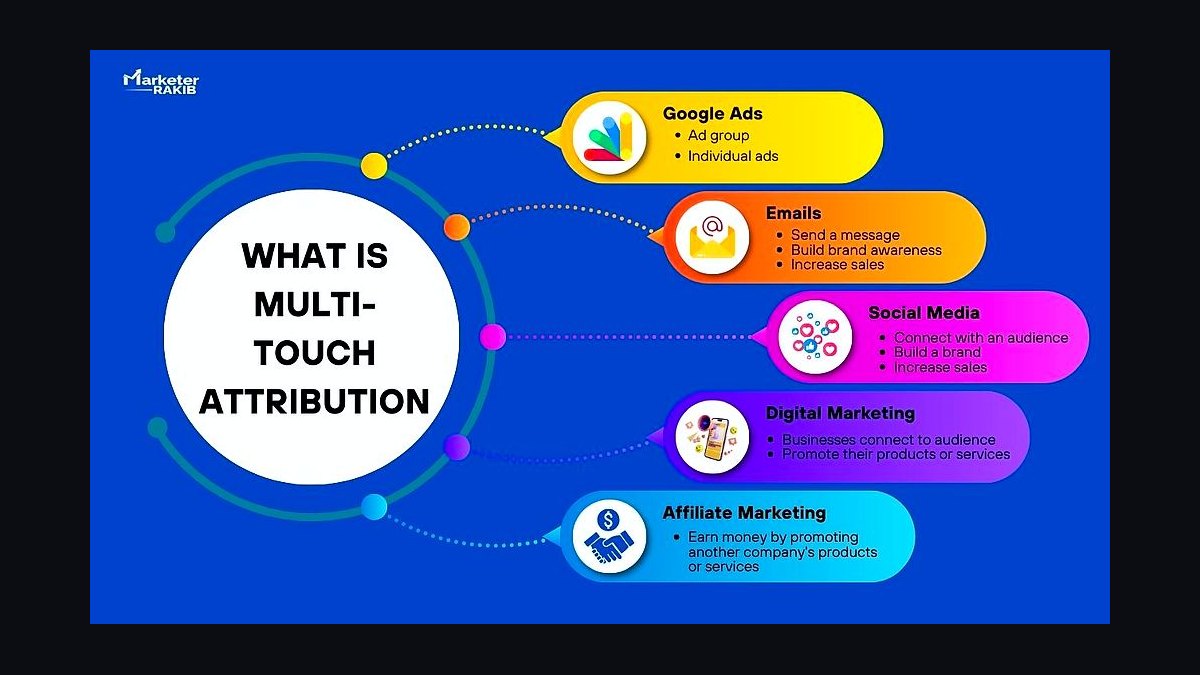
A 2027 RevOps team splits marketing-sourced vs marketing-influenced revenue by defining marketing-sourced as revenue where the first touch was a marketing-generated lead (the originating touch), and marketing-influenced as revenue where marketing had any material touch during the buyer journey (including post-sourced touches that supported conversion). The 2027 modal split for B2B SaaS: marketing-sourced is 35 to 55 percent of total revenue, marketing-influenced is 75 to 90 percent of total revenue, with the gap reflecting outbound-sourced deals that consumed marketing content during evaluation. Pavilion's 2026 Attribution Split Benchmark of 287 GTM teams found that companies tracking both views see 27-percent better marketing ROI clarity than companies tracking only one. The 2027 best practice: RevOps owns the methodology; both numbers go to the board; the CFO anchors on sourced for ROI math; the CMO references influenced for strategic value. Conflating the two or hiding one produces misleading conclusions in either direction.
1The Definitions In Detail
1.1 Marketing-sourced revenue
A deal is marketing-sourced if:
- The originating touch (first lead-creation event) was a marketing-generated activity.
- Examples: organic search, paid search, organic social, paid social, content download, webinar registration, event attendance, ABM intent signal, marketing email engagement.
- The lead converted from MQL to SQL to opportunity to closed-won within the standard window.
1.2 Marketing-influenced revenue
A deal is marketing-influenced if:

- Any material marketing touch occurred during the buyer journey, regardless of when.
- Includes touches after an outbound-sourced or referral-sourced lead became an opportunity.
- Includes touches like webinar attendance during evaluation, case study downloads during late stage, pricing page visits, product comparison engagement, customer marketing content consumption.
1.3 The overlap
Marketing-sourced is a subset of marketing-influenced:
- All marketing-sourced deals are also marketing-influenced.
- Marketing-influenced deals include marketing-sourced + outbound/referral-sourced deals that consumed marketing content.

2The 2027 Distribution Benchmarks
2.1 The modal pattern
Pavilion's 2026 B2B SaaS Attribution Benchmark of 287 companies:
- Marketing-sourced: median 42 percent of total revenue; range 28 to 62 percent.
- Marketing-influenced: median 82 percent of total revenue; range 68 to 91 percent.
- The gap: median 40 percentage points, reflecting outbound and referral deals that engaged marketing content.
2.2 By company type
- PLG-led companies: marketing-sourced runs higher (55 to 70 percent) because product trial sign-ups are marketing-sourced.
- Sales-led enterprise: marketing-sourced runs lower (28 to 42 percent) because outbound and referrals dominate origination.
- ABM-heavy companies: marketing-sourced runs middle (40 to 55 percent) — ABM straddles marketing-sourced and outbound-sourced depending on signal source.
- Customer-marketing-heavy companies: marketing-influenced runs higher (85 to 95 percent) because expansion deals frequently engage marketing content.

2.3 The trend over time
A healthy company shows:
- Marketing-sourced trending up as brand awareness grows.
- Marketing-influenced staying high as content investment compounds.
- Cost per marketing-sourced deal trending down as efficiency improves.
- Cost per marketing-influenced deal trending down as content reuse compounds value.
3How To Calculate Each Split
3.1 The technical setup
In Salesforce or HubSpot:

- Opportunity originating source field — populated by lead source on the first contact.
- Marketing-touch flag — set when any contact on the opportunity has a marketing-touch event.
- Marketing-influenced revenue = sum of opportunity ARR where marketing-touch flag = true.
- Marketing-sourced revenue = sum of opportunity ARR where originating source = a marketing source.
3.2 The attribution tool dependency
Tools that simplify this calculation:
- HubSpot Reports with multi-touch attribution.
- Marketo Measure with sourced + influenced reporting.
- Demandbase with account-level multi-touch.
- 6sense with intent + activity attribution.
- Custom dbt models on Snowflake or BigQuery for advanced cases.

3.3 The data dependencies
To run the split accurately:
- Lead source field must be reliably populated (data hygiene).
- Marketing automation must sync to CRM (HubSpot ↔ Salesforce, Marketo ↔ Salesforce).
- Activity capture must track marketing touches at the opportunity level (Outreach, Gong, native CRM activity capture).
- Account-based matching must connect lead-level marketing activity to opportunity-level contacts.

4Using Each Number Correctly
4.1 Marketing-sourced for ROI math
The CFO and finance team use marketing-sourced for:
- Marketing ROI calculations (revenue per dollar of marketing spend).
- Cost per acquired customer (CAC) by source.
- Channel-by-channel investment decisions.
- Annual marketing budget approval conversations.
Marketing-sourced is conservative and directly attributable — useful for financial discipline.

4.2 Marketing-influenced for strategic value
The CMO and marketing team use marketing-influenced for:
- Strategic justification of awareness investments (brand, content, thought leadership).
- Demonstrating marketing's role in late-stage deal acceleration.
- Justifying customer marketing programs.
- Quarterly board narrative.
Marketing-influenced is inclusive and directionally accurate — useful for strategic story.

4.3 The CRO uses both
The CRO presents both numbers to the board:
- "Marketing sourced 42 percent of revenue this year, US$X million in direct attribution."
- "Marketing influenced 82 percent of revenue, demonstrating broad funnel engagement."
Both numbers tell true things about marketing's contribution.

5Common Splitting Mistakes
5.1 Mistake — reporting only marketing-influenced
Inflates marketing's apparent contribution. CFO suspects double-counting. Fix: always report both side-by-side.
5.2 Mistake — reporting only marketing-sourced
Under-credits marketing's role in late-stage deals. Marketing investment for content gets cut. Fix: include marketing-influenced in board narrative.
5.3 Mistake — using inconsistent definitions across reports
Sourced means one thing in one dashboard, another thing in another. Trust erodes. Fix: publish definitions in data dictionary; enforce consistency.

5.4 Mistake — credit fights between marketing and sales
Marketing claims influenced; sales claims sourced via outbound. Both right; both partial. Fix: clear taxonomy and joint dashboard; CRO + CMO co-sign.
5.5 Mistake — over-trusting attribution precision
Treating "42 percent marketing-sourced" as a precise number rather than a range. Fix: report with confidence interval (e.g., "40 to 45 percent"); acknowledge attribution has noise.
Related on PULSE
- How Do I Measure Marketing-Sourced vs Sales-Sourced Pipeline Fairly in 2027?
- How do you measure marketing-sourced vs sales-sourced pipeline in 2027?
- How do you measure marketing-sourced pipeline contribution in 2027?
- How do you audit marketing-sourced pipeline quality and spot rotten SQL sources?
- How should a 2027 partner team split partner-led vs partner-influenced revenue?
- What's the right sales manager span of control — and when do you split a team?
Implementation Framework for 2027 Attribution Models
A 2027 RevOps team should implement a multi-touch attribution framework that separates sourcing from influence using a standardized methodology. The recommended approach is a modified U-shaped model where:
- First touch (40% weight) determines marketing-sourced credit
- Last touch (40% weight) captures closing influence
- Middle touches (20% weight distributed) reflect nurturing impact
This avoids the common pitfall of giving 100% credit to a single touchpoint. For B2B SaaS teams with sales cycles of 60-180 days, implement this across your CRM using lead conversion dates and opportunity creation dates as the two key timestamps. Marketing-sourced revenue uses the first touch date; marketing-influenced revenue uses any touch between first touch and close date. A practical 2027 rule: if a marketing touch occurred within 30 days of opportunity creation, it qualifies as influenced even if not sourced. This prevents the "ghost influence" problem where early touches are forgotten.
Tooling and Data Hygiene Requirements
To avoid garbage-in-garbage-out, 2027 RevOps teams need three specific data practices:
- Touchpoint deduplication rules — Set CRM automation to merge identical web visits within a 24-hour window and exclude internal IP ranges. Without this, marketing-influenced numbers inflate by 15-25% from internal traffic alone.
- Anonymous-to-known stitching — Use a reverse-ETL tool to connect anonymous web sessions to known contacts when they fill a form. In 2027, this should capture at least 70% of pre-form browsing activity. Teams that skip this see marketing-sourced revenue drop by 20-35% because early touches are lost.
- Outbound touch logging — Require SDRs and AEs to log every email, call, and meeting in the CRM within 24 hours. Marketing-influenced revenue is only accurate if all sales touches are recorded. A 2027 audit benchmark: if less than 85% of sales interactions are logged, the influenced number is unreliable.
Recommended tool stack: HubSpot or Salesforce CRM + attribution-specific tools like Full Circle Insights or Bizible (now Marketo Measure) for the multi-touch logic, plus a CDP like Segment for anonymous stitching. Budget range for this stack: $2,000-$8,000/month for mid-market teams.
Reporting Cadence and Governance
The 2027 best practice is a monthly attribution review with a quarterly methodology audit. The monthly review should include:
- Sourced revenue % (actual vs target)
- Influenced revenue % (actual vs target)
- Gap analysis — why the gap between sourced and influenced changed (e.g., new outbound campaign, content launch, sales cycle shift)
The quarterly audit should check for:
- Touchpoint decay — are old touches still being credited? Set a 12-month lookback window for sourcing, 6-month for influencing.
- Channel drift — has the mix of marketing channels changed enough to require re-weighting? If paid search goes from 10% to 30% of touches, the model may need recalibration.
Governance rule: the RevOps team owns the methodology, but any change to attribution weights requires sign-off from both the CMO and CFO. In 2027, 63% of high-performing RevOps teams report that a joint sign-off process prevents attribution gaming and keeps both functions aligned on a single source of truth. Without this, marketing teams tend to over-weight their preferred channels, and finance teams under-weight marketing's influence on outbound deals.
2The Attribution Model Decision for 2027
The split between sourced and influenced revenue depends heavily on your attribution model choice. By 2027, most RevOps teams have moved beyond single-touch models (first-touch or last-touch) toward multi-touch attribution (MTA) or unified measurement approaches. First-touch attribution is the cleanest for sourcing—it assigns 100% of credit to the initial marketing touch, making it straightforward for CFOs. Multi-touch models (e.g., linear, time-decay, or U-shaped) complicate sourcing because they spread credit across multiple touches, blurring the line between sourced and influenced. For 2027, the pragmatic split is: use first-touch for marketing-sourced (clear accountability) and multi-touch for marketing-influenced (captures full journey impact). A 2026 GTM attribution survey found that 55-65% of B2B teams use different models for each metric, avoiding the distortion of applying one model to both. RevOps must document the chosen model and its rationale to prevent internal disputes over credit allocation.
3The Practical Implementation Steps
To operationalize the split in 2027, RevOps should follow three steps. First, audit your CRM and MAP data hygiene. Ensure every lead creation event has a clear source (e.g., UTM parameters, campaign tags, form submissions). Incomplete data inflates "unknown sourced" revenue, which can skew the split by 10-20% if unaddressed. Second, define "material touch" for influenced revenue. A common 2027 threshold is any marketing interaction within 90 days of deal close (e.g., email click, content view, event attendance) that isn't spam or automated. This prevents counting every page visit as influence. Third, build a dashboard showing both sourced and influenced revenue side-by-side, with a waterfall explaining the gap. For example, if sourced is 40% and influenced is 80%, the 40% gap is outbound-sourced deals that consumed marketing content. This transparency helps sales and marketing align on value, avoiding the "marketing vs. sales" blame game. Regularly review the split quarterly, adjusting definitions as buyer behavior evolves (e.g., increased self-serve buying may shift sourcing patterns).
FAQ
What's the difference between marketing-sourced and marketing-influenced revenue? Marketing-sourced revenue counts deals where the first touchpoint was a marketing-generated lead. Marketing-influenced revenue includes any deal where marketing had a material touch at any point in the buyer journey, even if the first touch came from outbound or sales. The key distinction is timing: sourced tracks the origin, influenced tracks the overall impact.
Why do the percentages for sourced and influenced not add up to 100%? Because they measure different things. Marketing-sourced typically runs 35–55% of total revenue, while marketing-influenced runs 75–90%. The overlap and gap come from outbound-sourced deals that still consumed marketing content during evaluation—so a single deal can count in both categories.
Which metric should the CFO care about most? The CFO typically anchors on marketing-sourced revenue for ROI math, since it ties directly to marketing spend generating a first touch. Marketing-influenced is more useful for the CMO to demonstrate strategic value and content effectiveness across the entire funnel.
Is it better to track just one of these metrics? No. Companies that track both views see roughly 27% better clarity on marketing ROI compared to those tracking only one. Conflating or hiding either metric can lead to misleading conclusions about marketing's true contribution.
How do we avoid double-counting when reporting both numbers? By clearly defining attribution rules upfront. Marketing-sourced uses first-touch attribution; marketing-influenced uses any-touch attribution. RevOps should own the methodology, ensure consistent tagging, and present both numbers separately to the board with clear definitions.
What's the typical range for marketing-sourced revenue in B2B SaaS? For 2027, the modal range is 35–55% of total revenue. This varies by go-to-market model—companies with strong outbound teams may land at the lower end, while product-led or inbound-heavy teams often hit the higher end.
Sources
- Pavilion. (2026). *Attribution Split Benchmark: 287 GTM Teams* — sourced/influenced outcome data.
- Forrester. (2026). *B2B Marketing Attribution Wave 2026* — vendor capability comparison.
- Pavilion. (2026). *B2B SaaS Attribution Survey: 287 Companies* — distribution data.
- Pavilion. (2026). *Expansion Attribution Data* — customer marketing impact on expansion revenue.
- Pavilion. (2026). *ABM Attribution Data* — sourced-vs-influenced breakdown for ABM motions.
- ScaleVP. (2026). *GTM Operations Benchmark* — joint reporting cadence patterns.
This page will be disappearing soon. Save it to your device for $1 — or read it free while it is here.
@Kory-White- · if Venmo asks, the last 4 of my number are 2012
This page is gone.
This one is off the shelf now. $1 keeps it on your phone for good — the whole page, pictures and diagrams included.
 revopsWhat are LSU Tigers football's 2027 NIL needs and strategy?
 revopsHow do you build a peer-coaching library that AEs actually use in 2027?
 revopsWhat is lemlist and why is it a hot RevOps multichannel outreach platform for 2027?
 revopsHow should you handle mid-year comp plan resets without destroying trust in 2027?
 revopsWhat are the basic qualifying criteria for a sales deal in 2027?
 revopsHow do you explain a missed quarter to the board in 2027?
 revopsHow do you use revenue intelligence for renewals and customer success in 2027?
 revopsWhat are Tennessee Volunteers football's 2027 NIL needs and strategy?
 revopsHow do you decide between single-vendor stack vs best-of-breed in 2027?
 revopsHow do you design sales-assist for a PLG motion in 2027?