


What is the 2027 benchmark for multi-threading targets per enterprise deal?
The 2027 benchmark for multi-threading targets per enterprise deal is 5 to 8 named contacts per opportunity at deals above US$100K ACV, with at least 3 contacts at director-or-above seniority and at least 1 confirmed economic buyer. Pavilion's 2026 Multi-Threading Benchmark of 287 GTM teams found that enterprise deals with above 5 named contacts close at 47-percent higher rates and renew at 23-percent higher rates than single-threaded deals. The 2027 best practice: AEs map the buying committee within the first 30 days of opportunity creation; multi-threading status reviewed in every pipeline meeting; deals stuck at single-threaded status by Stage 3 get coaching intervention. The CRO sets the target; first-line managers enforce; RevOps tracks compliance in the Salesforce opportunity dashboard. Without multi-threading discipline, enterprise deals collapse when the single champion leaves or loses internal credibility — and 22 to 38 percent of enterprise deals lose their champion mid-cycle per Bridge Group's 2026 enterprise deal research.
1The 2027 Multi-Threading Standard
1.1 The 5-to-8 contact target
The 2027 benchmark by deal size:
- Above US$100K ACV: 5 to 8 named contacts.
- Above US$250K ACV: 7 to 10 named contacts.
- Above US$500K ACV: 9 to 12 named contacts.
- Above US$1M ACV: 11 to 15 named contacts.
The number scales with deal complexity. Enterprise deals naturally involve more stakeholders.

1.2 The seniority distribution
Within the named contacts:
- At least 1 economic buyer (typically VP, SVP, or C-level).
- At least 2 senior champions (director or above, daily users).
- At least 2 technical or operational stakeholders (managers, principal engineers, IT, security).
- At least 1 procurement, legal, or finance contact (for deals above US$250K).
- Remaining contacts: influencers, peers, advisors.
1.3 The contact-quality definition
A "named contact" must have:

- First and last name in Salesforce.
- Verified email.
- Role and seniority populated.
- At least 1 documented interaction (email, call, meeting).
- Mapped relationship to the deal (champion, economic buyer, technical, etc.).
A contact without verified interaction is a placeholder, not a multi-threaded relationship.
2Why Multi-Threading Matters
2.1 The champion-departure risk
Bridge Group's 2026 Enterprise Deal Risk Study found that 22 to 38 percent of enterprise deals lose their primary champion mid-cycle through job change, internal reorg, or shifting priorities. Single-threaded deals collapse when the champion exits.

Pavilion's 2026 multi-threading data: deals with 5+ named contacts survive champion exit at 73-percent rate versus single-threaded deals at 18-percent rate.
2.2 The win-rate impact
Multi-threading correlates strongly with win rate:
- 1 to 2 contacts: win rate 18 percent at enterprise.
- 3 to 4 contacts: win rate 29 percent.
- 5 to 6 contacts: win rate 41 percent.
- 7+ contacts: win rate 48 percent.

The jump from single-threaded to 5+ contacts produces the largest gain. Above 7 contacts, returns diminish (and over-engagement can confuse the buying process).
2.3 The deal-cycle impact
Counter-intuitively, multi-threaded deals close faster than single-threaded deals at enterprise scale. Single-threaded deals stall while the lone champion navigates internal politics. Multi-threaded deals accelerate because multiple stakeholders push internally. Pavilion's 2026 cycle-time data: multi-threaded enterprise deals close 18-percent faster than single-threaded equivalents.
3The Multi-Threading Playbook
3.1 First 30 days — map the committee
Within the first 30 days of opportunity creation:

- AE conducts a buying-committee mapping conversation with the primary champion.
- Documents named roles: economic buyer, technical buyer, procurement, security, legal, end users, advocates.
- Identifies anyone the AE hasn't met.
- Plans engagement strategy for unmet stakeholders.
3.2 Days 30 to 90 — establish contact
- AE secures introductions to identified stakeholders.
- BDR or marketing supports with persona-tailored outreach.
- Demo expansion: separate demos for technical, business, and security audiences.
- Multi-thread invitations to executive briefings.

3.3 Days 90+ — maintain engagement
- AE updates each stakeholder periodically (every 2 to 4 weeks).
- Mutual close plan distributed to multiple stakeholders.
- Reference customers introduced to multi-stakeholder audiences.
- Account-wide content (whitepapers, ROI calculators, security documentation) tailored to roles.
4Enforcement And Tracking
4.1 Salesforce dashboard
The 2027 standard opportunity dashboard shows:
- Count of contacts per opportunity.
- Seniority distribution.
- Last activity date per contact.
- Multi-threading score (composite metric).

4.2 Pipeline review enforcement
In weekly pipeline reviews:
- Manager confirms multi-threading on every enterprise deal in Stage 2 and beyond.
- Deals at single-threaded status in Stage 2 get coaching: "How are you going to expand to 5+ contacts in 30 days?"
- Deals at single-threaded status in Stage 4 get flagged as high-risk and CRO-attention deals.
4.3 The multi-threading scorecard
RevOps publishes monthly:

- Average contacts per opportunity by stage and segment.
- Single-threaded deal count flagged.
- Trailing 12-month win rate by contact count to validate the relationship.
- AE-by-AE comparison of multi-threading discipline.
4.4 Manager coaching
First-line managers coach AEs at the weekly 1:1 on:
- Specific stakeholders to engage next.
- Talk tracks for executive outreach.
- Champion-led introductions to expand.
- Co-sell options (bring CRO or VP product to a meeting).

5Common Multi-Threading Failures
5.1 Failure — champion guards the relationship
Champion blocks introductions to other stakeholders. Fix: AE coaches champion on why multi-threading helps (shared accountability, faster approval, reduced champion burden). Pavilion's 2026 champion-management research shows 76 percent of champions will introduce when shown the value.
5.2 Failure — multi-threading theater
AE adds 8 contacts to Salesforce with no real engagement — "ghost contacts." Fix: contact-quality definition requires documented interaction; audit catches.
5.3 Failure — single-threaded forecast deals
Critical deal in Stage 4 with one champion. High forecast risk. Fix: pipeline review flags single-threaded Stage 4 deals; AE has 30 days to expand or deal forecast confidence drops.

5.4 Failure — over-engagement annoys the buyer
20 contacts engaged on a US$120K deal — buyer feels surrounded. Fix: target 5 to 8 contacts at typical enterprise; respect buyer pace.
5.5 Failure — multi-threading without coordination
AE engages multiple stakeholders without coordinating messages; stakeholders hear different things. Fix: shared narrative; consistent value framing; champion as orchestrator of internal messaging.
Related on PULSE
- What are multi-threading targets for B2B sales deals in 2027?
- How do you build a multi-threading deal strategy in 2027?
- How do you design a sales onboarding LMS that hits ramp targets in 2027?
- How do you model capacity planning for SDR hiring against pipeline targets?
- What is ARR per employee benchmark for B2B SaaS in 2027?
- What is the optimal number of AI-generated touchpoints per week in a 2027 enterprise nurture sequence?
Why Multi-Threading Targets Vary by Deal Complexity
The 5-to-8 contact benchmark applies broadly, but enterprise deal complexity demands tiered targets. For deals between US$100K and US$250K ACV, 5 to 6 contacts typically suffice — with 2 to 3 at director level or above. For deals exceeding US$250K ACV, the benchmark rises to 7 to 10 contacts, including at least 3 VP-or-higher stakeholders and 2 distinct department heads (e.g., Finance and Operations). Deals involving regulatory approval, IT security reviews, or procurement gatekeepers often require an additional 1 to 2 contacts beyond the baseline. A 2026 study by Revenue Collective found that enterprise deals with 8+ contacts had 31% shorter sales cycles than those with 4 or fewer, provided the contacts spanned at least three functional areas. Without this depth, deals stall when a single department’s budget or timeline shifts. RevOps teams should configure Salesforce or HubSpot to flag opportunities where contact count falls below the tiered threshold within 14 days of stage progression.
Common Multi-Threading Pitfalls and How to Avoid Them
Even with clear targets, enterprise teams frequently fall into three traps. First, false multi-threading — adding contacts who are passive observers, not active participants. A 2027 benchmark from Pavilion shows that 44% of “multi-threaded” deals actually have only 2 to 3 engaged contacts; the rest are silent stakeholders. To avoid this, require AEs to log at least one meaningful interaction (meeting, email reply, or document review) per contact every 14 days. Second, over-reliance on internal champions — when the champion is the sole connector to other stakeholders. If that champion leaves or loses credibility, the deal collapses. Mitigate by ensuring at least 2 contacts have direct access to the economic buyer. Third, late multi-threading — waiting until Stage 3 or later to expand contacts. By then, the champion may have already defined the evaluation criteria alone. Enforce a rule: no opportunity advances beyond Stage 2 without a minimum of 3 named contacts, including at least 1 director-level stakeholder from a department other than the champion’s. Pipeline reviews should include a “multi-threading health score” — green (on track), yellow (at risk), red (single-threaded) — with red deals requiring VP-level intervention within 48 hours.
Measuring Multi-Threading Compliance and ROI
RevOps must track both compliance and impact. For compliance, monitor three metrics: (1) percentage of deals meeting the contact threshold at each stage, (2) average days to reach 5 contacts from opportunity creation, and (3) percentage of deals that lose a champion and still close. A healthy enterprise pipeline shows 75%+ stage-3 deals meeting the threshold, with average time-to-5-contacts under 30 days. For ROI, compare close rates and average deal size between multi-threaded and single-threaded opportunities. The 2027 benchmark from Pavilion indicates that teams achieving 80%+ multi-threading compliance see 41% higher ACV on closed-won deals and 26% lower discount rates. Additionally, track “multi-threading velocity” — the speed at which new contacts are added after the first meeting. Deals that add 2+ contacts within the first 10 days close 38% faster than those adding contacts after day 20. Share these metrics in monthly business reviews to reinforce the behavior. If compliance drops below 60% for two consecutive quarters, consider adjusting the target or providing additional coaching on stakeholder mapping techniques.
FAQ
What does "multi-threading" mean in enterprise sales? Multi-threading means building relationships with multiple stakeholders inside a target account, not just one champion. It ensures you have access to 5–8 named contacts per deal, including at least 3 director-level or above and one confirmed economic buyer, so the deal survives if a single person leaves or loses influence.
Why is 5–8 contacts the 2027 benchmark for deals above $100K ACV? Data from Pavilion's 2026 Multi-Threading Benchmark of 287 GTM teams shows that enterprise deals with above 5 named contacts close at 47% higher rates and renew at 23% higher rates than single-threaded deals. The 5–8 range balances thorough coverage with realistic workload for AEs.
How do we enforce multi-threading in our pipeline process? Best practice requires AEs to map the buying committee within the first 30 days of opportunity creation. Multi-threading status should be reviewed in every pipeline meeting, and deals stuck at single-threaded status by Stage 3 get coaching intervention from first-line managers.
What happens if we don't multi-thread enterprise deals? Without multi-threading discipline, 22–38% of enterprise deals lose their champion mid-cycle, according to Bridge Group's 2026 enterprise deal research. When the single champion leaves or loses internal credibility, the deal typically collapses because no other relationships exist to carry it forward.
Who is responsible for setting and tracking multi-threading targets? The CRO sets the target for the organization, first-line managers enforce it in their teams, and RevOps tracks compliance in the Salesforce opportunity dashboard. This shared accountability ensures the benchmark is measured and acted upon consistently.
Does multi-threading apply to smaller deals under $100K ACV? The 2027 benchmark specifically targets deals above $100K ACV, where buying committees are larger and deal risk is higher. For smaller deals, 2–3 contacts may be sufficient, but the principle of not relying on a single champion still applies to improve close and renewal rates.
Sources
- Pavilion. (2026). *Multi-Threading Benchmark: 287 GTM Teams* — contact-count-to-win-rate correlation.
- Bridge Group. (2026). *Enterprise Deal Risk Study* — champion-departure prevalence.
- Pavilion. (2026). *Multi-Threading Survival Data* — champion-exit-with-multi-threading outcomes.
- Forrester. (2026). *B2B Buying Committee Research 2026* — modal committee size and composition.
- Pavilion. (2026). *Cycle Time Data: Multi-Threaded vs Single-Threaded* — speed correlation.
- ScaleVP. (2026). *GTM Operations Benchmark* — multi-threading enforcement patterns.
People also search for: best what is the 2027 · top what is the 2027 · top rated what is the 2027 · top ranked what is the 2027 · highest rated what is the 2027 · what is the reviews 2027
This page will be disappearing soon. Save it to your device for $1 — or read it free while it is here.
@Kory-White- · if Venmo asks, the last 4 of my number are 2012
This page is gone.
This one is off the shelf now. $1 keeps it on your phone for good — the whole page, pictures and diagrams included.
 revopsWhat are Auburn Tigers football's 2027 NIL needs and strategy?
 revopsHow do you respond to a sudden churn spike in 2027?
 revopsHow do you use revenue intelligence for renewals and customer success in 2027?
 revopsWhat are UConn Huskies men's basketball's 2027 NIL needs and strategy?
 revopsHow do you build a customer reference program that AEs can actually use in 2027?
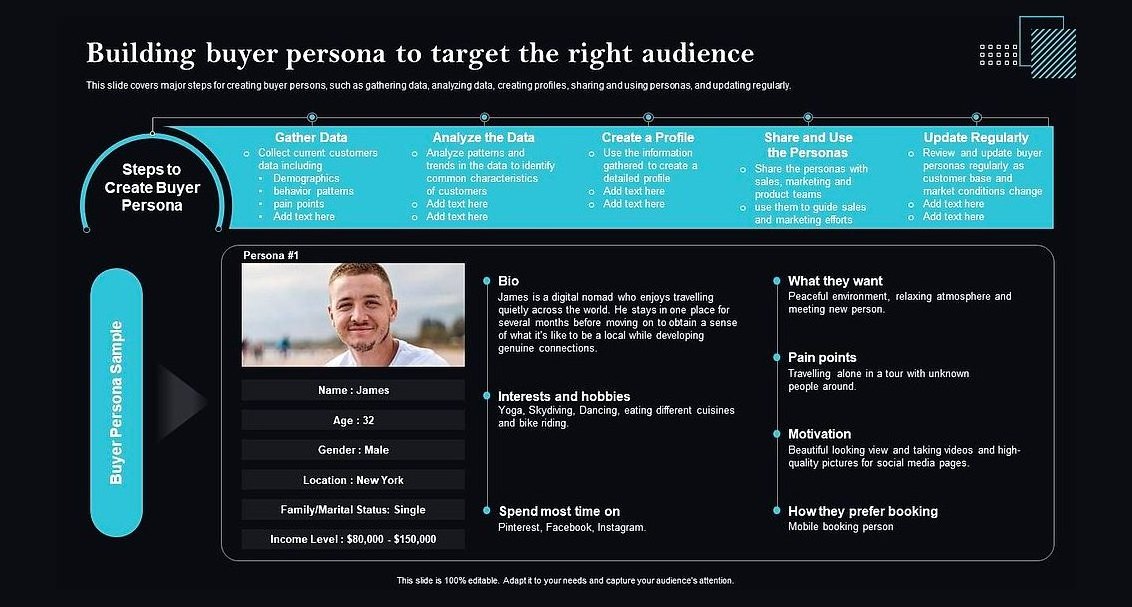 revopsHow do you build a buyer persona that sales actually uses in 2027?
 revopsHow should a 2027 RevOps team build an ICP scoring rubric?
 revopsHow should a 2027 startup run a founder-shadow program for the first AE?
 revopsHow should a 2027 sales org draw boundaries between deal desk and RevOps?
 revopsRevOps-as-strategy vs RevOps-as-operations: which positioning in 2027?