


What do revenue intelligence platforms NOT tell you in 2027?
Quality
Certified
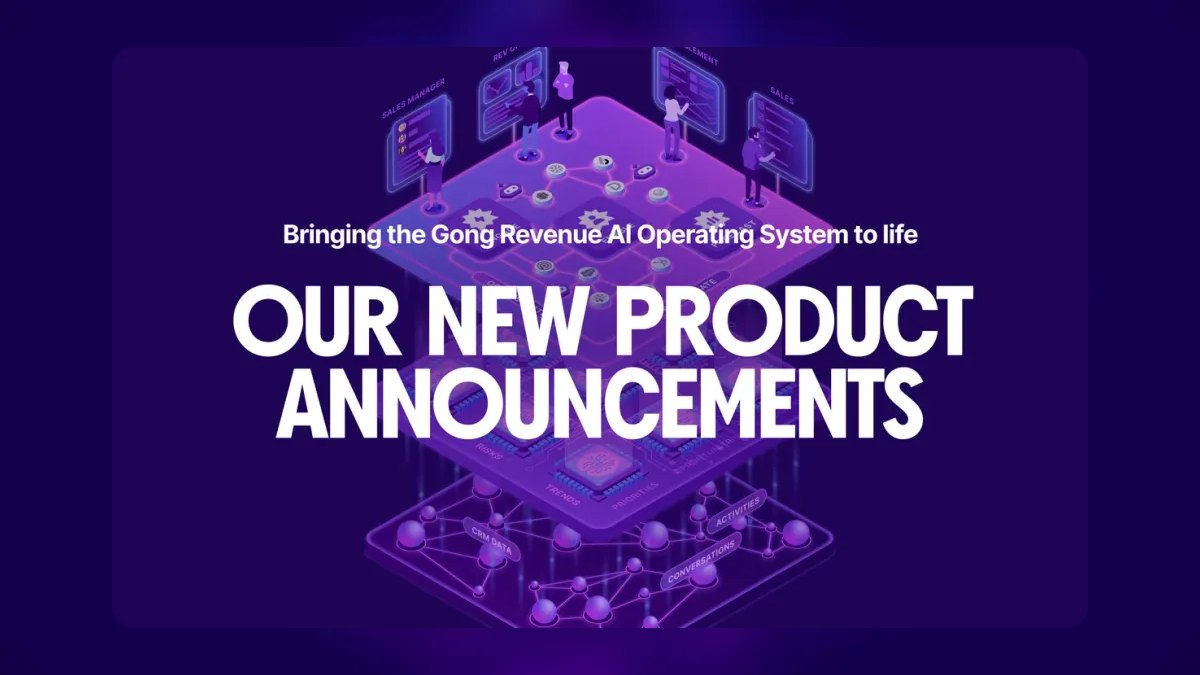
Revenue intelligence platforms tell you what happened inside your own conversations, calendar, and CRM. They cannot tell you why the buyer actually decided, what your competitor said in demos you never joined, how internal politics shifted, or whether a slowdown is you or the category. That unseen half decides most deals.
The deal that closed lost with a green dashboard
Picture a mid-market data platform deal in the second quarter of 2027. Four recorded calls, roughly three and a half hours of captured audio. The revenue intelligence platform shows everything a RevOps leader could want: multi-threading across five contacts, MEDDIC fields at ninety percent completion, next steps confirmed on every call, positive sentiment trending upward across meetings two through four, and a deal score sitting comfortably in the green. The forecast category is Commit. The rep is confident. The manager signed off in pipeline review without a single probing question, because the dashboard already answered the questions the manager would have asked.
Three weeks later the deal goes to the competitor. The post-mortem, run through a third-party win-loss interview six weeks after that, turns up the actual sequence. The champion — a director of analytics — never had budget authority, only influence. During the evaluation, the buyer's CFO pushed a cost-reduction mandate down through the organization. A new VP of engineering started in week three of the evaluation and had used a competing product at a previous employer, where it worked well enough that switching cost felt unjustified. The buyer ran two competitor demos your team never saw. And in a Slack thread lasting twenty-two minutes, the champion lost the internal argument for the larger line item and quietly pivoted to advocating for the cheaper option.
Not one of those five facts existed inside the revenue intelligence platform. Every one of them was decisive. The platform was not wrong — the sentiment really was positive, the multi-threading really did happen, the next steps really were confirmed. It was measuring an accurate slice of a much larger reality and presenting that slice with the visual confidence of a complete picture.
This is the structural failure mode. A typical enterprise evaluation in 2027 involves somewhere between fifteen and twenty-five hours of buyer-side activity: internal review meetings, asynchronous threads, shared evaluation spreadsheets, reference calls with peers who used your product somewhere else, security and procurement review, and the informal hallway conversations that settle things before the formal decision is announced. Your recorded calls represent three to five hours of that. You are analyzing roughly fifteen to twenty percent of the elapsed decision process and drawing conclusions about one hundred percent of the outcome.

The practical consequence for a revenue team is not that the platform lies. It is that a green dashboard suppresses the exact human inquiry that would have caught the problem. When the score says seventy-eight percent, nobody asks the champion whether they can actually sign. When sentiment trends up, nobody schedules the skip-level call to the economic buyer. Confidence displayed in a user interface substitutes for confidence earned through verification, and the substitution feels like efficiency right up until the quarter closes short.
How the capture boundary actually works
To use revenue intelligence well you have to understand precisely where its perimeter sits, because the perimeter is defined by access, not by importance. The platform ingests what it can legally and technically reach: recorded calls where consent was captured, email sent through connected mailboxes, calendar metadata, CRM field history, and in some deployments connected support or product-usage telemetry. Everything else is dark — not because the vendor is negligent, but because there is no lawful pipe into a buyer's internal Slack workspace, their private evaluation document, or the phone call your champion had with their finance partner.
Inside the perimeter, the processing chain runs roughly like this: audio capture, speech-to-text transcription, speaker diarization, entity and keyword extraction, sentiment classification, then aggregation into deal-level and rep-level scores. Each stage introduces its own error, and the errors compound in a direction nobody surfaces in the interface.

Transcription is the first compounding point. Word-level accuracy on clean audio from native speakers with good microphones is genuinely strong — the leading engines are in the mid-nineties as a percentage. But the residual errors are not randomly distributed across filler words. They cluster on exactly the tokens that carry decision weight: proper nouns, product names, competitor names, technical acronyms, and spoken numbers. A misheard vendor name pollutes competitive intelligence. A misheard figure pollutes deal-size prediction. Accented speech, non-native speakers, cross-talk on multi-party calls, and poor conference-room microphones all degrade accuracy further, and multilingual deployments across European or Asian regions degrade further still. Almost no platform exposes a per-call transcript confidence audit, so the analyst downstream cannot tell a clean transcript from a degraded one.
Sentiment classification is the second compounding point. Sentiment models read lexical and prosodic cues — word choice, pace, interruption patterns — and map them onto a positive-to-negative scale. This works reasonably well at scale and poorly at the individual-call level, because professional buyers are trained not to leak. A procurement lead can sound warm and engaged while running a price-discovery exercise with no intent to buy. A skeptical engineer can sound negative on every call and still be your strongest technical advocate. The sentiment signal is directional across a trend line of four to six meetings; it is close to meaningless as a verdict on any single conversation.
The third compounding point is the reflexivity problem, and it is the one that has grown fastest. Buyers in 2027 know they are being recorded and analyzed. Procurement functions in larger organizations now coach evaluation teams on recorded-call hygiene: stay high-level on the record, take pricing detail to email or an unrecorded call, do not disclose the real budget ceiling until vendor pricing is on the table. Your platform faithfully tags a budget discussion. It cannot tag the fact that the budget discussion was theater.
The diagram makes the asymmetry legible. Two independent narrowings happen before a number reaches a pipeline review: the access narrowing, which discards most of the decision process, and the processing narrowing, which introduces error into what remains. Neither narrowing is visible in the output. A deal score is rendered with the same visual authority whether it was computed from six high-fidelity calls with the full buying committee or from two muffled calls with a junior evaluator who has no authority at all.
There is one more mechanical detail worth understanding: score drift. Scores move week to week for at least three different reasons that look identical in the interface. Real signal — the buyer went quiet, a stakeholder dropped out of the thread. Model artifact — the vendor retrained the scoring model overnight and every deal in the portfolio shifted a few points. Extraction noise — a competitor was named once in passing and the model over-weighted the mention. Reps and managers burn a meaningful slice of their platform time trying to reverse-engineer which of the three caused a change, and the platform rarely offers a changelog that would answer it in five seconds.
Numbers, ranges, and what to budget

Concrete figures make the coverage argument arguable rather than rhetorical, so here is how the arithmetic tends to run in practice. Take a hundred-person revenue organization with forty quota-carrying sellers running enterprise and mid-market motions.
On the capture side: if a typical closed-won deal in that org involves four to six recorded meetings averaging forty-five minutes, the platform holds roughly three to four and a half hours of buyer-facing conversation per deal. Add connected email — perhaps forty to eighty messages — and CRM activity history. Against a buyer-side process that consumes fifteen to twenty-five hours of internal effort, you are looking at captured coverage in the range of fifteen to twenty-five percent of elapsed decision activity, and perhaps forty to fifty-five percent of decision-relevant signal once you weight for the fact that your own meetings are disproportionately important. That second number is the honest one to plan around: the platform sees roughly half the signal that determines the outcome.
On the accuracy side, three ranges matter for planning. Transcription word accuracy on good audio sits in the mid-nineties, with errors concentrated on names and numbers — assume materially worse on accented, multilingual, or conference-room audio. Sentiment classification is well below the accuracy of transcription and should be treated as a trend instrument. Deal-scoring accuracy, measured as whether the score's directional call matched the actual outcome, lands in a band where roughly a quarter to a third of confident calls are wrong. The uncertainty band around any single displayed probability is wide enough that a deal shown at seventy-three percent could honestly be described as "somewhere between the high forties and the mid nineties," and platforms almost never render that interval because it undercuts the product's core promise.
On the budget side, the useful question is not what revenue intelligence costs but what the complements cost, since the complements are what convert a half-picture into a decision-grade picture. Rough planning ranges for a forty-seller organization, expressed as annual spend:

Third-party win-loss interview programs are typically priced by interview volume and analyst depth. A program covering thirty to sixty interviews a year — enough for statistically meaningful pattern detection in a mid-market motion — generally lands in the mid five figures to low six figures annually. The cheaper end is survey-heavy; the expensive end includes recorded interviews conducted by an analyst who is not on your payroll, which is the whole point, because buyers tell a neutral third party things they will never tell the rep who just lost their deal.
Competitive intelligence platforms with battlecard management, win-loss tagging, and competitor content monitoring cluster in the mid five figures annually for an organization of that size, scaling with seat count and the number of tracked competitors. Below roughly twenty-five to thirty sellers, a disciplined internal kill-card library maintained by product marketing in a shared doc plus a quarterly competitive review usually beats the tooling on total cost of ownership. Above that, the coordination overhead of the manual approach exceeds the license.
Buyer-intent and relationship-mapping tooling — the layer that gives you a partial read on account-level research activity and organizational structure — runs on a per-seat basis in the low hundreds of dollars per seat per month for premium tiers, so a fifteen-seat deployment for your enterprise team is a mid five-figure annual line.
Expert-network and benchmark subscriptions that bridge the macro blind spot start in the five figures for entry tiers. Free alternatives exist and are underrated: public-company earnings calls in your buyers' verticals, published quarterly SaaS benchmark reports from operator communities and growth-stage investors, and job-posting volume as a proxy for hiring freezes in your target segments. A RevOps analyst spending four hours a quarter on those free sources will answer "is it us or is it the category" better than most paid dashboards.
Sequencing matters more than the totals. If you can only fund one complement, fund win-loss interviews. It is the single highest-yield addition because it directly attacks the largest blind spot — the gap between stated and actual buyer rationale — and because its output improves every other system you own. Win-loss findings retrain your qualification criteria, your battlecards, your pricing posture, and your discovery questions simultaneously. Competitive intelligence tooling is the second buy. Intent data is third and the most oversold of the three. Expert networks are a luxury until you have exhausted the free macro sources.

One more number worth tracking internally, because no vendor will produce it for you: your own stated-reason mismatch rate. Compare the closed-lost reason the rep entered in the CRM against the reason surfaced by a neutral third-party interview for the same deal. Organizations that run this comparison for the first time are routinely startled — a large fraction of recorded loss reasons do not survive contact with the buyer's own account. Price is the reflexive answer reps give and it is very often a stand-in for insufficient value articulation, a missing capability, a champion without authority, or a timing problem nobody named. Measuring your own mismatch rate costs nothing beyond the win-loss program you already decided to fund, and it tells you exactly how much to discount your own CRM's loss-reason field.
Trade-offs among the ways to close the gap
Every method of closing a blind spot has a cost, a latency, and a failure mode, and the right mix depends on deal size and motion. There is no configuration that closes all five gaps cheaply.
Third-party win-loss interviews give the highest-fidelity buyer rationale available. Their weakness is latency: an interview typically happens four to eight weeks after the decision, so findings inform the next cohort of deals rather than the one that just closed. They are also useless as an in-flight signal. Budget them as a strategy instrument, not a deal instrument.
Internal win-loss — your own team calling the buyer — is nearly free and much faster, and it is systematically biased. Buyers soften the truth for the person who lost the deal, and reps hear the softened version as confirmation. Internal interviews are worth running as a supplement, never as a replacement, and the interviewer should be someone with no compensation tied to the outcome.
Competitive intelligence platforms partially close the "conversations you weren't in" gap by aggregating what competitors publish, what buyers report, and what your own reps observe. They cannot show you the actual competing demo. Their real value is speed of battlecard iteration, and their real failure mode is decay: a competitive library nobody updates is worse than none, because reps trust stale claims and get corrected by the buyer in front of the committee.

Champion feedback loops — short structured check-ins with your internal advocate between formal meetings — are the cheapest meaningful addition and the most underused. Two or three questions, asked asynchronously: who else has weighed in since we last spoke, what is the strongest objection you have heard internally, and what would have to be true for this to get approved this quarter. The failure mode is champion overload; ask too often and the channel closes. The other failure mode is trusting a champion who is themselves misinformed about their organization's budget process.
Skip-level executive contact — your CRO or VP calling the buyer's economic buyer directly — catches things no other method reaches, because a peer-level conversation surfaces the political and budget context that never gets said to a rep. It does not scale, it consumes your most expensive calendar, and it can undercut the rep's standing if handled clumsily. Reserve it for the deals that carry the quarter.
Buyer-side surveys at milestone boundaries add modest structured signal at almost no cost. One or two questions after a demo or a proposal — how confident are you that this solves the problem, what is the single biggest remaining concern — produce a comparable-over-time series that sentiment analysis cannot. Response rates are the constraint; keep it to one screen and never ask twice in a week.
Macro and category sourcing closes the "is it us" question. Free sources handle most of it. The trade-off is analyst time rather than license cost, and the failure mode is doing it reactively during a bad quarter instead of continuously, when the baseline would have been useful.
The structural rule the diagram encodes is triangulation. Any conclusion that matters — this deal is at risk, this competitor is beating us on capability, this segment is softening — should be supported by at least two independent sources before it changes a decision. When sources conflict, the conflict itself is the most valuable signal you have. A platform saying a deal is healthy while the rep says the champion has gone quiet while competitive intelligence says a rival just cut list pricing is not a contradiction to resolve by picking a favorite. It is a composite picture that no single source could have produced.
A practical allocation for how a pipeline review should spend its attention: roughly a third on platform evidence, a third on field intelligence from reps and frontline managers, a quarter on external inputs including win-loss and competitive findings, and the remainder on direct executive contact with buyers. The exact split matters less than the fact that platform evidence is capped well below half. The moment a review becomes a dashboard read-out, the blind spots stop being blind spots and become invisible spots — nobody is even aware there is something outside the frame.
Pitfalls that turn a useful platform into a liability

The first and largest pitfall is treating the deal score as a verdict rather than a triage signal. The correct use is inverted from how most teams use it: the score should tell you which deals deserve human investigation, not which deals you can stop investigating. A high score on a large deal is a reason to verify, because the cost of a confidently wrong green deal is the entire quarter. Pair every score with a short manual health checklist covering the things the platform structurally cannot see — does your champion have signature authority or only influence, is the budget approved or merely discussed, has procurement or security review actually started, do you know the names of every person who will be in the decision meeting, and have you spoken to anyone who could kill the deal. Five questions, two minutes, and they catch a meaningful share of the deals where the score is confidently wrong.
The second pitfall is sentiment as truth. Teams build alerting on negative sentiment and treat a single flagged call as a fire. Sentiment is a trend instrument. Alert on a sustained decline across three or more consecutive meetings; ignore single-call readings entirely. Anything else generates noise that trains managers to dismiss the whole signal class.
The third pitfall is tracker sprawl. Keyword and topic trackers are cheap to create and expensive to maintain, so organizations accumulate dozens of them until every deal fires several alerts a week and nobody reads any of them. Hold the count to something a manager can recite from memory — roughly eight to fifteen high-signal trackers — and formally retire one before adding a new one. A tracker that fires on more than a small fraction of calls is not a signal, it is background.

The fourth pitfall is benchmarking activity across dissimilar motions. A field seller running six-figure deals with a long cycle will always look inactive next to an inside seller running velocity deals, and a manager who compares them will coach the field seller toward exactly the wrong behavior. Benchmark within motion, within segment, and within tenure band. If your cohorts are too small for that to be statistically meaningful, they are too small for activity benchmarking at all — use them for coaching conversations, not for performance judgments.
The fifth pitfall is the reflexive one: reps optimizing for what the platform measures. If talk-time ratio is a scored metric, reps will manage their talk-time ratio, including by asking dead-air questions that inflate the buyer's share without improving discovery. If next-step confirmation is scored, next steps will be confirmed on every call regardless of whether they are real. Every measured behavior becomes a performed behavior. The defense is to score outcomes and use behavioral metrics only as diagnostic context inside a coaching conversation — never as a standalone number on a leaderboard.
The sixth pitfall is unaudited transcript quality. Teams draw conclusions from calls whose transcripts are substantially degraded and never know it. Spot-check a small sample each month — pull five or ten calls, particularly from non-native speakers, conference rooms, and multilingual regions, and read the transcript against the audio for the segments where names, competitors, and numbers appear. If accuracy in those segments is poor, the competitive intelligence derived from that region is poor, and you should know that before it shapes a strategy.
The seventh pitfall is letting the platform replace customer listening. This is the one that compounds worst over time. When executives can read a dashboard, they stop calling buyers. When managers can read a call summary, they stop listening to calls. The organization's direct contact with reality thins out while its confidence in its own picture rises, and that divergence is invisible from the inside until a quarter misses for reasons nobody saw coming.
The countermeasure is a scheduled blind-spot audit. Once a quarter, put revenue leadership, RevOps, and enablement in a room for an hour with one agenda item: what did we get wrong last quarter, and what would have needed to be visible for us to have gotten it right. Walk the closed-lost list. For each material loss, name which of the five blind spots was decisive. The output is a short list of instrumentation changes — a question added to discovery, a competitor added to the tracked list, a survey added at the proposal milestone, a skip-level call added to the enterprise playbook. The discipline of writing down what you could not see is what keeps a revenue intelligence platform in its correct role: an excellent instrument for half the picture, and an honest one only when the organization keeps looking at the other half.
Related questions

Does this mean revenue intelligence is not worth buying?
No. It is the best available instrument for conversation coaching, stage discipline, and forecast hygiene, and it covers roughly half of decision-relevant signal. The argument here is against treating it as complete, not against owning it. Budget the complements alongside the license.
Which blind spot should a small team close first?
Buyer rationale, via win-loss interviews conducted by someone with no stake in the outcome. It has the highest yield because its findings improve qualification, battlecards, pricing posture, and discovery questions simultaneously, and it directly corrects your CRM's unreliable loss-reason field.
Can AI agents close these gaps by pulling external data?
Partially. Agents that synthesize public earnings, hiring signals, and review-site activity into deal context are improving and will narrow the macro and competitive gaps. They cannot reach a buyer's private Slack, internal documents, or unrecorded calls, so the largest gaps stay structural.
How do you handle it when the platform and the rep disagree?
Treat the disagreement as the finding, not as a tie to break. Go get a third source — a champion check-in, a competitive data point, or an executive call — before changing the forecast. Disagreement between two sources is usually pointing at something neither one captured.
Is intent data a substitute for the missing buyer-side view?
It is a weak proxy. Account-level research signals tell you something is happening; they rarely tell you who, why, or with what authority. Useful for prioritization and prospecting timing, not for judging the health of a live enterprise opportunity.
FAQ

Why does a deal score look precise when its accuracy is not?
Because a single number renders cleanly in an interface and an uncertainty band does not. Displaying a wide confidence interval next to every deal would communicate honestly but undermine the perception of control the product is selling. Assume a substantial band around any number you see, and use scores to decide where to investigate rather than what to conclude.
Are recorded calls becoming less useful as buyers get savvier?
Somewhat, at the margins. Sophisticated procurement functions now coach evaluators to keep recorded calls high-level and move detail to email or unrecorded conversations. That does not make recordings worthless — coaching value and stage discipline are unaffected — but it does mean the strategic content of recorded calls is thinner than it was, and you should weight unrecorded channels more heavily than you did a few years ago.
How many win-loss interviews do we need before the findings mean anything?
Enough to see repetition rather than anecdote. For a mid-market motion, a program in the range of thirty to sixty interviews a year usually surfaces stable patterns. Below roughly twenty a year you are collecting stories, which still beats nothing but should not drive structural changes to pricing or packaging on its own.
What is the cheapest thing we can do this week to close a blind spot?
Add a structured champion check-in between formal meetings on every deal above your median size. Three questions, asynchronous, two minutes of the champion's time. It costs nothing, it surfaces authority and political problems earlier than any platform will, and it gives you a comparable signal across deals.
Should we stop trusting sentiment analysis entirely?
No — reframe it. Sentiment is reliable enough as a trend across four to six meetings and unreliable as a verdict on any one call. Build alerting on sustained decline, never on single readings, and never let a sentiment score alone move a forecast category.
Does any vendor plan to fix the unreachable-channel problem?
The reachable improvements are external-signal integration — hiring data, public financials, review activity — and tighter partnership with intent and win-loss providers. Consolidation in that direction is a reasonable expectation. The buyer's private internal channels remain inaccessible for legal and practical reasons, so plan for that gap to persist indefinitely.
Sources
- https://www.gartner.com/en/sales
- https://www.forrester.com/research/
- https://hbr.org/topic/subject/sales
- https://www.mckinsey.com/capabilities/growth-marketing-and-sales/our-insights
- https://www.salesforce.com/resources/research-reports/state-of-sales/
- https://www.gong.io/resources/
- https://www.klue.com/blog
- https://www.g2.com/categories/revenue-operations-and-intelligence-roi
- https://joinpavilion.com/
- https://www.bridgegroupinc.com/research
Related on PULSE
- What is the cost-benefit math of revenue intelligence platforms in 2027?
- What is the ROI of conversation intelligence platforms in 2027?
- How do you run a win-loss interview program that reps actually trust?
- When should a CRO call the economic buyer directly?
- How do you tell if a rep needs coaching or a PIP?
- How do you coach reps to tell better customer stories?
This page will be disappearing soon. Save it to your device for $1 — or read it free while it is here.
@Kory-White- · if Venmo asks, the last 4 of my number are 2012
This page is gone.
This one is off the shelf now. $1 keeps it on your phone for good — the whole page, pictures and diagrams included.
 revopsHow should a 2027 sales org handle compensation impact during a performance improvement plan?
 revopsHow should a 2027 sales org structure deal review templates?
 revopsHow do you design a sales kickoff that changes behavior in 2027?
 revopsWhat is the product-led-sales (PLS) playbook in 2027?
 revopsHow should a 2027 CRO and CEO align before a board meeting?
 revopsWhat are Penn State Nittany Lions football's 2027 NIL needs and strategy?
 revopsHow should a 2027 sales enablement team run content audits at scale?
 revopsWhat is lemlist and why is it a hot RevOps multichannel outreach platform for 2027?
 revopsWhat are the basic qualifying criteria for a sales deal in 2027?
 revopsWhat are Notre Dame Fighting Irish football's 2027 NIL needs and strategy?