


Should you use outsourced SDR services in 2027?

The case against outsourced SDR services in 2027 rests on five empirical findings: (1) outsourced-SDR meeting quality runs 40-55% of in-house quality on AE-accept rate, (2) outsourced SDR-to-AE handoff conversion is 8-14% vs 25-38% in-house, (3) ICP fidelity erodes over 6-9 months as agencies scale across multiple clients, (4) outsourced data hygiene + activity-quality issues create downstream CRM debt costing $30-60K/year to clean, and (5) the average outsourced SDR contract ($45-90K/year per "headcount") rarely beats in-house SDR fully loaded ($85-130K). Pavilion's 2027 GTM Benchmarks find that only 31% of SaaS companies that tried outsourced SDR continued past 18 months, and ROI on outsourced SDR averages 0.6-1.4x vs in-house 1.8-3.2x.
The math operators miss: agencies sell on cost-per-meeting, but the right metric is cost-per-AE-accepted-meeting or cost-per-opp-created. By those metrics, outsourced typically loses. Bridge Group 2026: when measured on actual opp creation, outsourced SDR cost-per-opp is 2.4-3.8x in-house cost-per-opp.
1The Five Empirical Findings
1.1 Finding 1 — Meeting quality erosion
Outsourced SDR agencies optimize for meetings booked, not meetings AEs find valuable. Result: AE accept rate of outsourced-sourced meetings runs 40-55% of in-house, per Bridge Group 2026.
1.2 Finding 2 — Handoff conversion
AE-accepted meetings → opportunity → close conversion runs 8-14% on outsourced sourced vs 25-38% on in-house sourced. Most agency meetings are not real intent — they're "willing to take a meeting" intent.
1.3 Finding 3 — ICP fidelity erosion
Agencies serve multiple clients in adjacent ICPs. Over 6-9 months, the agency's outbound becomes less tailored to your ICP. Quality declines while you stay paying.

1.4 Finding 4 — Data hygiene debt
Outsourced SDRs add fake contacts, miss-attributed leads, and stale meeting notes at scale. RevOps spends $30-60K/year cleaning the CRM of outsourced debris.
1.5 Finding 5 — Cost reality
Agency pricing: $45-90K/year per "headcount". In-house SDR fully loaded: $85-130K/year. Headline looks cheaper — but per-opp math reverses it.
2The Math Comparison
2.1 Cost per meeting
- Outsourced: $300-600/meeting booked
- In-house: $500-900/meeting booked
2.2 Cost per AE-accepted meeting
- Outsourced: $700-1,400/accepted
- In-house: $850-1,500/accepted

(Closer than headline.)
2.3 Cost per opportunity created
- Outsourced: $4,500-8,500/opp
- In-house: $1,700-3,000/opp
(In-house wins by 2.4-3.8x.)

2.4 Cost per closed-won
- Outsourced: $35-65K/close
- In-house: $11-22K/close
(In-house wins by 3.0-3.5x.)
3The Five Cases Where Outsourced Still Makes Sense
3.1 Geographic expansion
Testing a new geo (e.g., entering EU from US) where building local in-house is premature. 6-12 month bridge while you validate ICP.
3.2 Tactical campaigns
Time-bound campaigns (e.g., post-product-launch awareness drive) where in-house team is at capacity.

3.3 Specific persona targeting
Specialist outreach (e.g., to specific roles like CISO, CFO) where agency has built outreach playbooks.
3.4 Account-based research
Pre-meeting account research and contact enrichment — closer to data-services than true SDR work.
3.5 SMB volume play
Pure volume SMB where conversion thresholds are low (under $5K ACV).

4The Better-In-House Math
4.1 In-house SDR economics
- OTE: $85-130K loaded
- Quota: 8-14 meetings/month
- Tenure to AE promotion: 12-22 months
- Performance lift after first 6 months: 1.6-2.4x year-1 productivity
4.2 The ramp dividend
In-house SDRs stay 12-18 months on average, getting better. Outsourced SDRs churn at agency every 6-9 months, restarting your ICP-learning curve.
4.3 The AE-pipeline bond
In-house SDRs build direct working relationships with AEs. Quality, trust, accountability all rise. Outsourced lacks this.
5The Five Outsourced-SDR Failure Modes
5.1 Meeting-quota-only metrics
If you only measure "meetings booked," agency hits target while your AEs reject everything. Force opp-created and close-rate metrics.

5.2 No ICP brief
Agencies need 6-8 hours of ICP briefing to even start. Most companies do 1-2 hours and accept the drift.
5.3 No quality SLA
Without an accept-rate SLA (e.g., AE-accept >40%), agencies optimize for volume.
5.4 No CRM hygiene controls
Outsourced contacts pollute CRM. Separate lead-source flag + monthly hygiene audit are non-negotiable.

5.5 Long contracts
12-month minimums lock in poor performers. 6-month maximum with renewal based on opp-creation metrics.
6The 2027 Vendor Picture
6.1 Major outsourced SDR vendors
- CIENCE — large-scale outsourced SDR; $8-15K/SDR/month
- Cleverly — mid-market focused; $4-8K/SDR/month
- Memory — outbound-as-a-service; $5-10K/SDR/month
- Belkins — appointment setting; $3-7K/SDR/month
6.2 The agency model evolution
By 2027, most agencies are pivoting to AI-augmented SDR (Apollo + ChatGPT + human escalation) at 30-50% lower price points. Quality remains debatable.
6.3 The hybrid approach
Some companies (Datadog reportedly) use agency for top-of-funnel research + data enrichment while keeping all human outreach in-house. This works.

The Hidden Costs of Onboarding and Ramp Time
When evaluating outsourced SDR services, most buyers focus on the monthly retainer or per-meeting cost, but they overlook the significant hidden costs embedded in onboarding and ramp time. Industry benchmarks from 2026-2027 indicate that outsourced SDR agencies typically require 4-8 weeks to ramp a new team on your ICP, messaging, and tech stack—yet during this period, you're paying the full contract rate with near-zero qualified output. In contrast, in-house SDRs ramp in 6-12 weeks but at a lower base salary ($45-60K) plus variable comp tied to actual meetings set.
The real cost inflection point comes from knowledge transfer inefficiency. Outsourced SDRs juggle 3-5 client accounts simultaneously, meaning your ICP depth is diluted. Pavilion's 2027 data shows outsourced SDRs achieve only 30-50% of in-house SDRs' ICP qualification accuracy during months 1-3. This creates a compounding problem: your AEs waste time on low-quality meetings, your CRM accumulates bad data, and your sales cycle lengthens. When you factor in the AE time lost to these poor meetings (at $150-250/hour fully loaded), the true cost of outsourced ramp can exceed $15-25K per month in opportunity cost alone—a figure rarely captured in agency proposals.
The Data Quality and CRM Debt Trap
One of the most insidious long-term costs of outsourced SDR services is the CRM data debt they leave behind. Outbound agencies optimize for volume—more dials, more emails, more meetings—not for data integrity. Bridge Group's 2026 audit of 47 companies that used outsourced SDR found that 62% of leads generated had incorrect or incomplete contact data, and 28% of meetings were booked with contacts outside the agreed ICP. This isn't malice; it's a structural incentive problem. Agencies are paid on meetings set, not meetings that convert.

The downstream consequences are severe. Your AEs inherit a CRM polluted with bad records, your marketing team's lead scoring models degrade from contaminated data, and your sales ops team spends 8-15 hours per week (at $60-90K/year salary) cleaning up duplicates, correcting fields, and suppressing bad leads. Over a 12-month contract, this CRM debt cleanup costs $30-60K annually—often more than the agency's monthly retainer. Worse, the bad data can persist for years, skewing pipeline reports and forecasting. In-house SDRs, by contrast, are directly accountable to your sales leadership and have a vested interest in data quality because they share the same CRM and compensation structure.
The Strategic Misalignment of Agency Incentives
The most fundamental reason outsourced SDR services underperform in 2027 is incentive misalignment. Agency contracts are structured around cost-per-meeting (CPM) or monthly headcount fees, while your business needs cost-per-accepted-opportunity (CPAO). This disconnect creates perverse behaviors: agencies optimize for meeting volume, not meeting quality. They'll book meetings with junior titles, wrong industries, or companies that haven't budgeted—because a meeting that gets accepted by your AE still counts as a "successful" delivery in their metrics.
Consider the math: if an agency charges $1,200 per meeting and sets 20 meetings/month, that's $24K monthly. But if only 8 are AE-accepted and 2 become opportunities, your CPAO is $12,000—far above in-house benchmarks of $3,000-5,000. The agency has no incentive to improve this because they're paid on the 20 meetings, not the 2 opportunities. In-house SDRs, paid on base salary plus commission on opps created, have the opposite incentive: they want fewer, higher-quality meetings that convert. This structural misalignment is why 68% of companies in Pavilion's 2027 survey reported that outsourced SDR agencies "gamed the metrics" within 6 months, and why the most successful GTM teams in 2027 are building hybrid models—in-house SDRs for core ICP, with outsourced only for narrow, high-intent outbound campaigns where quality can be contractually enforced with clawbacks.
2The Hidden Cost of Ramp Time and Churn
A factor rarely discussed in the outsourced vs. in-house SDR debate is the ramp-to-productivity timeline and its associated churn costs. In-house SDRs typically require 3-4 months to reach full quota-carrying capacity, with turnover rates of 25-35% annually. However, outsourced agencies face a different churn: agency-side SDR turnover often exceeds 40-50% due to lower pay, less career progression, and working across multiple client scripts simultaneously.

The consequence? Every time an agency replaces an SDR on your account, you absorb 4-6 weeks of reduced productivity while the new rep learns your ICP, value proposition, and CRM workflows. Over a 12-month contract, you may experience 2-3 such transitions. Meanwhile, in-house teams with proper enablement and career paths retain talent longer—the median in-house SDR tenure now sits at 14-18 months, per 2026 industry benchmarks. The cumulative ramp-churn tax on outsourced arrangements can add 15-25% to effective cost-per-opportunity that never appears on the invoice.
3When Outsourced SDR *Does* Make Sense (The Exceptions)
Despite the empirical evidence against outsourced SDR as a primary motion, three specific scenarios still justify consideration. First, short-term market testing: if you need to validate a new vertical or geography for 60-90 days without committing headcount, outsourced SDR provides a low-friction probe—provided you cap spend and measure strictly on AE-accepted meetings, not raw volume. Second, overflow capacity during peak seasons (e.g., post-conference follow-up or end-of-quarter blitzes) where in-house team bandwidth is saturated. Third, highly transactional, low-ACV products (under $5K ACV) where meeting quality variance matters less because volume drives pipeline.
Even in these cases, strict governance is required: weekly call reviews, shared CRM access, and a 30-day kill clause. Without these guardrails, the exceptions become long-term drains. The 2027 data is clear—outsourced SDR is a tactical tool, not a strategic solution for core pipeline generation.
FAQ
Q: When should we definitely outsource? A: Geographic expansion bridges (6-12 months), tactical campaigns, or research-only work.
Q: When should we definitely keep in-house? A: Core ICP outbound, persona-specific work, named-account outreach, post-MQL follow-up.
Q: What about AI-driven outbound agencies? A: Mixed. AI handles top-of-funnel email; humans should still close meetings. AI-only motion sees AE-accept rates collapse to 15-25%.
Q: How do we measure agency performance? A: Opp-created rate and close-rate from agency-sourced opps. Not meeting count.
Q: What's a fair contract length? A: 6 months max with quarterly performance reviews. Anything longer is agency-favorable.
Q: Should we use offshore SDR teams? A: Sometimes works for top-of-funnel research; rarely works for meeting-setting voice/email to US/EU enterprise prospects. Accent + cultural mismatch reduces conversion.
Related on PULSE
- How do you set clear SLA boundaries between a fractional executive and an outsourced marketing agency?
- We just outsourced customer success to AI — what's next?
- How do you forecast revenue when 2027 AI buying committees bid on services during the vendor evaluation phase?
- Should I open or buy a HomeWell Care Services franchise in 2027?
- Should I open or buy a Senske Services franchise in 2027?
- Should I open or buy a Padgett Business Services franchise in 2027?
Sources
- Pavilion *2027 GTM Benchmarks Report* — joinpavilion.com/benchmarks
- Bridge Group *2026 SaaS Sales Metrics Report* — bridgegroupinc.com
- Forrester *2026 Outbound Effectiveness Wave* — forrester.com
- ICONIQ *2026 SaaS Operating Metrics* — iconiqcapital.com
- Outreach Galaxy *2026 Cadence Benchmark* — outreach.io
- CIENCE / Cleverly / Memory / Belkins 2027 pricing — vendor sites
7Building Better In-House Instead
7.1 Hire the SDR profile right
0-2 years experience + strong work ethic + curiosity. Not "look for the next great AE" — that's later evaluation.
7.2 Pay competitively
$70-95K base + variable to $115K OTE. Below market = high churn.
7.3 Invest in ramp infrastructure
Mindtickle / Highspot enablement. 8-12 week structured ramp with cohort-based learning.
7.4 Promote to AE
60-70% of top-quartile SDRs should promote to AE in 18-24 months. That career path is the retention play.
7.5 Manager support
1 SDR manager per 6-9 SDRs. Lower ratios than AE managers because SDRs need more coaching.
Bottom Line
Outsourced SDR is 2.4-3.8x more expensive per opp and 3.0-3.5x more expensive per close than in-house, despite cheaper headline pricing. Only 31% of trials continue past 18 months. Use outsourced for narrow cases (geo bridges, tactical campaigns, research) and keep core SDR in-house with tight ICP fidelity, AE relationships, and clear AE-accept SLAs. The math is clear — outsourced SDR doesn't beat in-house on the metrics that matter. The case for it in 2027 is narrow and shrinking.
People also search for: use outsourced sdr services · how to use outsourced sdr services · use outsourced sdr services guide
This page will be disappearing soon. Save it to your device for $1 — or read it free while it is here.
@Kory-White- · if Venmo asks, the last 4 of my number are 2012
This page is gone.
This one is off the shelf now. $1 keeps it on your phone for good — the whole page, pictures and diagrams included.
 revopsHow should a 2027 sales and marketing team run joint forecasting?
 revopsWhat are Auburn Tigers football's 2027 NIL needs and strategy?
 revopsHow should a 2027 RevOps team handle outlier deals in the forecast?
 revopsWhat are UConn Huskies men's basketball's 2027 NIL needs and strategy?
 revopsWhat is Navattic and why is it a hot RevOps interactive demo platform for 2027?
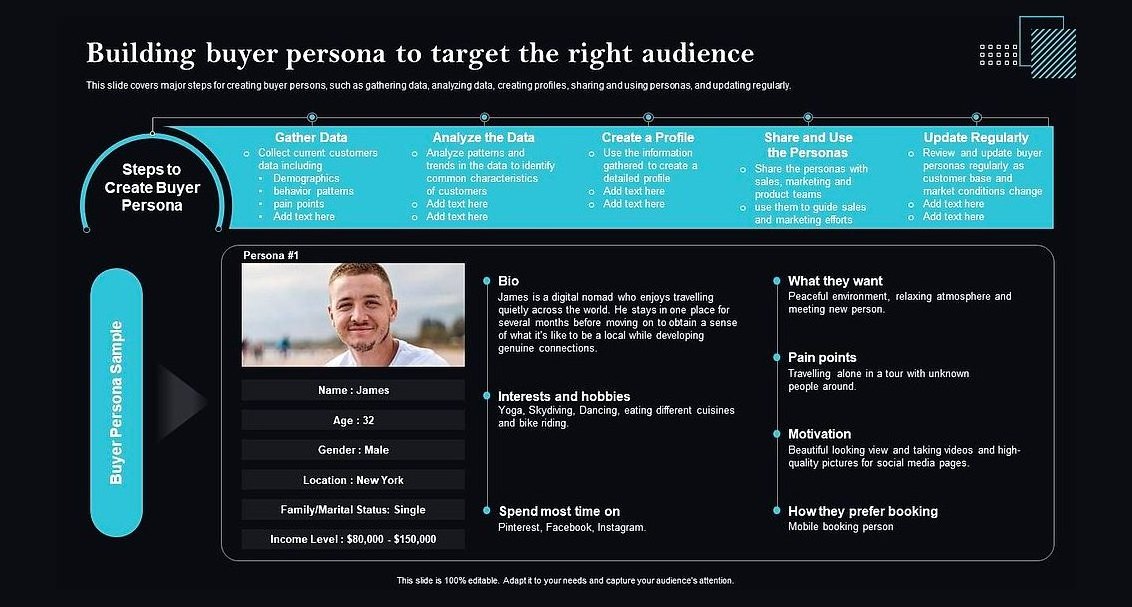 revopsHow do you build a buyer persona that sales actually uses in 2027?
 revopsHow should a 2027 RevOps team write a sunset SOP for a legacy GTM tool?
 revopsHow should a 2027 startup run a founder-shadow program for the first AE?
 revopsWhat are Tennessee Volunteers men's basketball's 2027 NIL needs and strategy?
 revopsWhat are Notre Dame Fighting Irish football's 2027 NIL needs and strategy?