


What is a Sales Engineer and when do you need one in 2027?
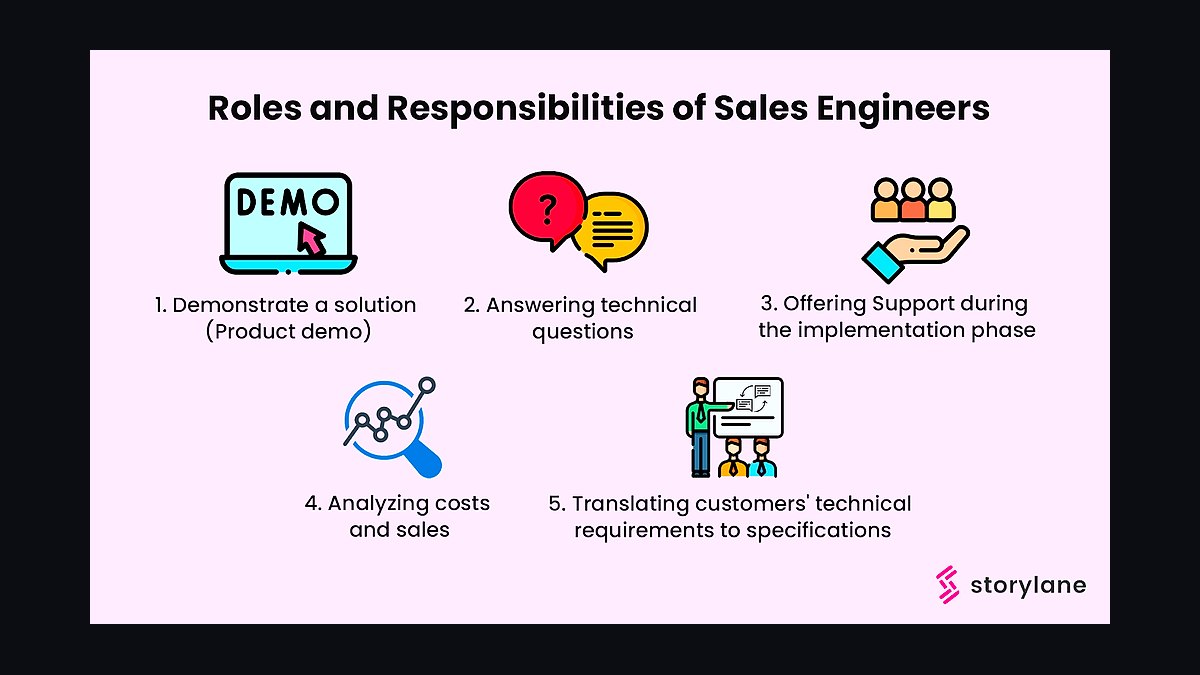
A Sales Engineer (SE) — also called a Solutions Engineer, Solutions Consultant, or Pre-Sales Engineer — is the technical co-pilot to the Account Executive who runs discovery, demos, proofs-of-concept, security reviews, and architecture conversations on deals the AE alone cannot close. You need your first SE when ACV crosses ~$25K, your AE win rate stalls below 22% on technical deals, or POCs lasting more than 30 days are eating AE capacity — typically Series A late or early Series B, $5-15M ARR. Below that, the founder or a senior CSM covers it. Above $25M ARR with enterprise motion, plan on 1 SE per 3-4 AEs and expect a 15-25 point lift in win rate with one attached to the deal (per Vivun's 2026 Deal Lift benchmarks).
1What A Sales Engineer Actually Does
1.1 The Job In One Sentence
A Sales Engineer owns the "technical win" — the moment the buyer's engineering, security, or IT team gives the AE a thumbs-up to proceed to procurement. Everything else (commercial win, legal, paper) is the AE's lane.
1.2 The Five Core Deliverables
Per the PreSales Collective 2026 Role Charter and Vivun's Definitive Guide to PreSales KPIs, every SE is measured against five recurring deliverables:
- Technical Discovery — uncover use cases, constraints, integration surface, non-functional requirements (security, scale, SLA).
- Tailored Demo — never the canned deck; custom sandbox or scripted demo flow mapped to the prospect's stack.
- Proof of Concept (POC) — a time-boxed, exit-criteria-driven trial in the prospect's environment.
- RFP and Security Questionnaire — SIG, CAIQ, SOC 2 attestations, vendor security review (VSR) responses.
- Solution Architecture Diagram — the reference architecture the buyer's engineering team will sign off on.

1.3 What An SE Is NOT
A Sales Engineer is not a Customer Success Manager, not a Solutions Architect on the post-sale side, and not a support engineer. The moment the deal closes, the SE hands off and exits. Conflating these roles is the single most common mistake RevOps leaders make in their first SE hire.
2When You Actually Need One (The Triggers)
2.1 The ACV Trigger
The cleanest signal is deal size. Below $5K ACV, no SE needed — your AE runs a 14-day self-serve trial. Between $5K and $25K ACV, founder or senior AE covers technical questions. At $25K+ ACV, an SE pays for itself on deal 4 or 5. By $75K+ ACV with multi-stakeholder enterprise motion, SE attach is mandatory — Insight Partners' 2026 SaaS GTM Survey shows 94% of enterprise deals above $100K have a named SE on the opportunity.

2.2 The Win-Rate Trigger
Track your technical win rate — the % of opportunities that survive technical evaluation. If it sits below 45% while your commercial win rate is healthy (>65%), you have a technical bottleneck, not a sales bottleneck. Vivun benchmarks show that adding an SE to deals previously run solo lifts technical win rate by 18-26 points within two quarters.
2.3 The POC Drag Trigger
If your AEs are spending more than 8 hours per week on POC babysitting, configuration, or security questionnaires, you are burning $180K+ of fully-loaded AE time per year per AE on work an SE does 3x faster. Mid-Market AE OTE in 2027 = $220-285K per Pavilion's 2026 Comp Report; SE OTE for the equivalent band runs $175-225K. The math favors the SE hire the moment a single AE spends >20% of their week on technical pre-sales work.
2.4 The Competitive Trigger
If you are losing deals to a competitor with stronger technical credibility (Snowflake vs Databricks, Datadog vs New Relic, Okta vs Auth0), an SE is a direct competitive lever. Buyers will not tell you they doubt your tech — they will simply pick the vendor whose SE showed up with a working architecture diagram.

3SE Compensation, Quota, And Ratio Math
3.1 The 2027 Pay Bands
Per RepVue's May 2026 Salaries Index and Everstage's 2026 SE Compensation Benchmarks:
- SMB / Commercial SE: Base $120-140K, OTE $160-185K, 70/30 base/variable.
- Mid-Market SE: Base $140-160K, OTE $185-225K, 75/25 split.
- Enterprise SE: Base $160-185K, OTE $225-285K, 80/20 split.
- Principal / Strategic SE: Base $190-220K, OTE $285-340K.

Top-paying employers (RepVue, May 2026): Moveworks $335K median, SentinelOne $320K, F5 $305K. Median SE OTE across SaaS = $200K; median base = $145K.
3.2 The Right AE-to-SE Ratio
Gartner's 2026 PreSales Staffing Study gives a range of 1:1 to 1:6, with mode at 1:4:
- Enterprise / strategic accounts ($250K+ ACV): 1 SE : 1-2 AEs (named-account pairing).
- Mid-Market ($50-250K ACV): 1 SE : 3-4 AEs (pooled).
- Commercial / SMB ($5-50K ACV): 1 SE : 5-7 AEs (queue model, only attached on $25K+ deals).

Insight Partners 2026 benchmark: the ratio of AE quota to SE quota carry = 1.44:1, meaning an SE carries roughly 70% of an AE's number as their team attainment goal.
3.3 Variable Comp Structure
The dominant 2026 structure (Vivun Comp Guide): 50% of variable tied to attached opportunity revenue, 30% to technical win rate or POC pass rate, 20% to MBOs (enablement, content, partner cert). Avoid paying SEs purely on AE quota — it creates passive SEs who only show up for deal-close theater.

4The First-SE Hiring Playbook
4.1 Hire Profile
For your first SE, hire a builder, not a presenter. Look for 5-8 years technical experience, 2+ years customer-facing, comfort with API, SQL, and at least one cloud (AWS / Azure / GCP), and a portfolio of demo environments they personally built. Skip ex-AEs — they often default to selling instead of validating.
4.2 The 30-60-90 Plan
- Day 30: Shadow 10 deals, build first sandbox demo, complete product certification.
- Day 60: Lead discovery on 5 active opps, deliver 3 custom demos, ship 1 reusable POC template.
- Day 90: Own technical win on 8+ active opps, publish reference architecture doc, deliver internal training.
4.3 Where To Find Them
PreSales Collective Slack (12,000+ members, 2026), Vivun job board, RepVue SE leaderboard, LinkedIn boolean for "Solutions Engineer" + your competitor. The best SEs come from your competitor's customer base — they already know the buyer profile and the objections.

5The Metrics That Prove SE ROI
5.1 Attach Rate
% of pipeline opportunities with a named SE attached. Vivun's 2026 benchmark median = 62% across SaaS; best-in-class >80% for enterprise-only teams. Below 40% means your SE team is under-utilized or your routing is broken.
5.2 Deal Lift
The difference in ACV when an SE is attached vs not attached on comparable opportunities. Vivun 2026 benchmark = +37% ACV uplift with SE attached. This is the single best number to bring to the CFO when defending the hire.

5.3 Technical Win Rate
% of opps that pass technical evaluation. Healthy mid-market SaaS = 55-70%; enterprise = 45-60%. Track by SE, by AE, by product line — patterns surface fast.
5.4 Days To Close (Acceleration)
Vivun 2026 benchmark: deals with SE attached close 23% faster than solo-AE deals on equivalent ACV. For a $120K ACV deal closing 3 weeks earlier, the NPV impact alone justifies the SE salary across 8-10 deals per year.
6Common Mistakes RevOps Leaders Make
6.1 Hiring Too Early
Hiring an SE before you have product-market fit or before ACV justifies it burns $200K+ and demoralizes the SE (no deals to work). Use the $25K ACV and $3M+ ARR floor as your gate.

6.2 Pooling When You Should Pair
Pooling SEs across 6+ AEs at $150K+ ACV kills account intimacy. Named-account pairing at enterprise scale beats pooling by 12-18 points of win rate (Force Management 2026 study).
6.3 Paying SEs Off Pure AE Quota
This creates order-takers. Tie 30%+ of variable to technical win rate or POC pass rate so the SE owns their own number.

6.4 Letting The SE Become A Demo Robot
If your SE delivers >15 demos/week, they are not doing discovery — they are running a demo factory. Reset the demo qualification bar (MEDDPICC qualification + executive sponsor confirmed before SE demo) and reclaim 40% of their week.
2When the Founder or CSM Should Still Own the Demo
Before your first dedicated SE hire, the founder or a senior CSM can handle technical demos for deals under $25K ACV or when your product is simple enough to demo in under 30 minutes. The warning sign to hire: your founder is spending more than 20% of their week on demos rather than product strategy, or your CSM is neglecting post-sale renewals because they're stuck in pre-sale loops. A rule of thumb: if you're running more than 5 technical demos per week and your close rate on those is below 20%, it's time to hire.
3The Cost of Not Having a Sales Engineer
Skipping the SE hire can cost you 10-25% of potential revenue on mid-market and enterprise deals. Without an SE, AEs often oversell capabilities during discovery, leading to 30-60 day POCs that fail because requirements weren't properly mapped. Worse, security reviews stack up and deal cycles extend by 40-60% — from 90 to 150+ days. For companies at $5-15M ARR, each lost technical deal due to no SE support can represent $50K-$200K in missed ACV. The SE hire usually pays for itself within 3-6 months through improved win rates alone.
FAQ
What’s the difference between a Sales Engineer and a Solutions Architect? Sales Engineers focus on the pre-sales cycle—discovery, demos, and proof-of-concept—to help close deals. Solutions Architects often work post-sale, designing and implementing custom integrations or long-term architectures. In practice, the titles overlap, but SEs are typically more deal-driven and quota-aligned.
Do I need a Sales Engineer if my product is simple to demo? Even simple products can benefit from an SE when the buyer’s decision involves technical stakeholders like IT or security teams. If your AE can handle all questions alone, you might not need one yet, but as deal complexity grows—especially with compliance or integration requirements—an SE becomes valuable.
How much does a Sales Engineer cost? Total compensation for a mid-level SE typically ranges from $120K to $200K, including base salary and variable commission. Senior or enterprise-focused SEs can exceed $250K. Costs vary by region and industry, but expect roughly 60-70% base and 30-40% variable.
Can a founder or CSM act as a Sales Engineer? Yes, early on—especially below $5M ARR—founders or senior CSMs often handle technical demos and discovery. But as deal volume grows, this becomes unsustainable because it pulls them from product development or customer success. A dedicated SE usually pays off once you have more than a handful of technical deals per month.
What’s the typical win rate lift from having a Sales Engineer? Attaching an SE to a deal can improve win rates by an estimated 15 to 25 percentage points, based on industry benchmarks. The lift is highest in competitive, technical deals where the buyer requires deep product validation or security reviews.
When should I hire my first Sales Engineer? Most companies hire their first SE when average contract value reaches around $25K, AE win rates on technical deals fall below 20-25%, or proofs-of-concept consistently stretch beyond 30 days. This often happens in late Series A or early Series B, roughly $5-15M ARR.
Bottom Line
A Sales Engineer is the most under-rated revenue hire between $5M and $25M ARR. The trigger isn't a calendar date — it's a deal-size and win-rate signal. Hire your first SE when ACV clears $25K, AE-time-on-technical exceeds 20%, or technical win rate slips below 45%. Pay them $185-225K OTE at mid-market, $225-285K at enterprise, ratio them 1:3 to 1:4 against AEs, and measure them on attach rate, deal lift, technical win rate, and days-to-close. Done right, one SE returns 3-5x their loaded cost within four quarters.
Related on PULSE
- What's the right sales engineer (SE) to AE ratio — and when do you need one?
- Is the 2027 trend of AI-coded product demos reducing or increasing the need for sales engineer intervention?
- How do you coach a sales engineer to sell, not just demo?
- What is a Solutions Architect and how does the role differ from a Sales Engineer?
- How do you design sales engineer comp in 2027 (recurring vs one-time)?
- How do you attribute CHIEF summit and salon event pipeline to NRR in Salesforce during services-led sales when bookings vs billings timing mismatches breaks reporting and no data engineer?
Sources
- Vivun — *Sales Engineering Insights & Definitive Guide to PreSales KPIs* (2026 edition)
- Vivun — *Optimizing PreSales Staffing Ratios: Debunking the 1:4 Myth* (Vivun Blog, 2026)
- RepVue — *Sales Engineer Salary Index* (May 2026 update; median OTE $200K, base $145K)
- Everstage — *Sales Engineer Compensation: Salary, Bonuses & OTE in 2026*
- PreSales Collective — *PreSales Metrics That Matter* (community research, 12K+ members)
- Pavilion — *2026 SaaS Sales Compensation & Leadership Survey* (Mid-Market AE OTE $220-285K)
- Insight Partners — *2026 SaaS Periodic Table & GTM Benchmark Report* (AE:SE quota ratio 1.44:1)
- Gartner — *2026 PreSales Staffing & Ratio Study* (1:1 to 1:6 range, 1:4 mode)
- Force Management — *Command of the Message & Named-Account Pairing Research* (2026)
- Alexander Group — *Sales Force Productivity Benchmark: Sales Engineers Enable Higher Sales-per-Rep* (2026)
This page will be disappearing soon. Save it to your device for $1 — or read it free while it is here.
@Kory-White- · if Venmo asks, the last 4 of my number are 2012
This page is gone.
This one is off the shelf now. $1 keeps it on your phone for good — the whole page, pictures and diagrams included.
 revopsWhat are Tennessee Volunteers men's basketball's 2027 NIL needs and strategy?
 revopsWhat are Notre Dame Fighting Irish football's 2027 NIL needs and strategy?
 revopsWhat's a healthy AE ramp time — and how do you actually design ramp in 2027?
 revopsHow should a 2027 sales org distinguish ICP fit vs intent vs need?
 revopsRevOps-as-strategy vs RevOps-as-operations: which positioning in 2027?
 revopsWhat are the basic qualifying criteria for a sales deal in 2027?
 revopsHow do you operate sales during a system outage during end-of-quarter in 2027?
 revopsHow should a 2027 sales enablement team run content audits at scale?
 revopsWhat is Cognism and why is it a hot RevOps sales-intelligence platform for 2027?
 revopsHow do you explain a missed quarter to the board in 2027?