


What is a buyer persona and how does it differ from an ICP in 2027?
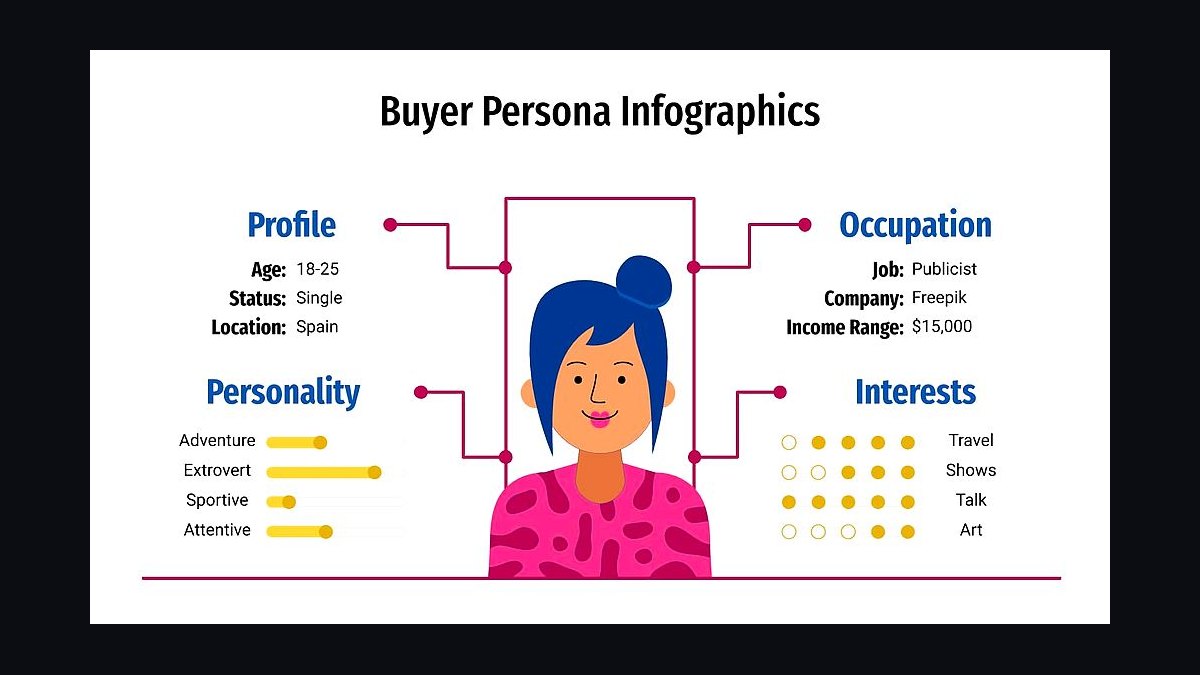
An Ideal Customer Profile (ICP) describes the company you want to sell to — firmographics, technographics, growth stage, trigger events. A buyer persona describes the human inside that company who signs, champions, blocks, or uses the product — role, pains, incentives, decision criteria. In 2027 B2B SaaS, one ICP typically maps to 6-13 personas inside a single deal, per Gartner and Forrester research, so RevOps owns the ICP while marketing and enablement own the persona library — but both must reconcile inside the same CRM object model.
1Definitions That Actually Hold Up In A Pipeline Review
1.1 ICP is an account-level construct
An ICP is the firmographic, technographic, and behavioral signature of the company that gets the most value from your product and gives you the most value back. For a typical Series B SaaS company in 2027, an ICP reads like a one-paragraph filter: "US-headquartered B2B SaaS, $20M-$80M ARR, 120-450 employees, Salesforce + HubSpot stack, has hired a VP RevOps in the last 9 months, NRR below 105%." It is a boolean — an account either fits or it doesn't.
1.2 Persona is an individual-level construct
A buyer persona is the role-level archetype of a human stakeholder: their title band, reporting line, personal KPIs, decision authority, pains, buying triggers, and disqualifying objections. A modern SaaS GTM motion usually carries 3-5 named personas — Economic Buyer, Champion, Technical Validator, End User, Procurement — per the MEDDPICC framework codified by Andy Whyte in *MEDDICC* (2020, revised 2024).

1.3 The one-liner that survives the whiteboard
ICP defines who to target. Persona defines how to sell to them. Said another way: ICP gets you the meeting, persona gets you the signature.
2The Seven Hard Differences
2.1 Object of analysis
ICP analyzes the account. Persona analyzes the contact. In Salesforce terms, ICP lives on the Account object (industry, employees, ARR, tech stack fields). Persona lives on the Contact or Lead object (title normalization, persona picklist, decision role).
2.2 Data sources
ICP is built from closed-won analysis — pull the last 24 months of won deals, segment by firmographics (industry, size, geo), technographics (HG Insights, BuiltWith, ZoomInfo TechStack), and behavioral signals (G2 intent, Bombora, 6sense). Persona is built from win-loss interviews, Gong call transcripts, and post-onboarding NPS verbatims. Different inputs, different owners.

2.3 Number of objects per deal
You have one ICP in a deal. You have 6-13 personas in a deal. Per Gartner's 2024 B2B Buying Survey (refreshed 2026), the average enterprise SaaS deal involves 8-13 stakeholders; Forrester's 2025 State of Business Buying report puts the median at 13 for deals over $100K ACV.
2.4 Refresh cadence
ICP is refreshed annually or after a material strategic pivot (new product line, new segment, new geo). Persona refreshes are quarterly — titles drift, CRO Syndicate's 2026 SaaS Titles Survey found that 34% of "Head of RevOps" titles did not exist 24 months earlier, and AI-native roles like "GTM Engineer" emerged net-new from 2025 to 2027.

2.5 Ownership inside RevOps
RevOps owns the ICP because it is enforced in routing, SLAs, lead scoring, and territory carving. Marketing owns the persona because it drives messaging, content, ABM ads, and SDR sequences. Enablement owns the bridge — making sure AEs can recognize each persona on a discovery call and run the right play.
2.6 What "out of ICP" means versus "out of persona"
If an account is out of ICP, you should usually disqualify — the unit economics will not work, even if the deal closes. If a contact is out of persona inside an ICP-fit account, you don't disqualify, you multi-thread — you find the right persona.

2.7 Measurable impact
Per Gartner research cited in HubSpot's 2026 State of Sales report, companies with a documented ICP have a 68% higher win rate and are 50% more likely to acquire new customers versus those operating on gut feel. Persona-driven sequences from Outreach's 2026 benchmarks show 2.4x higher reply rates versus untargeted blasts.
3The Anatomy Of A 2027 ICP
3.1 The three-layer framework (TK Kader / Pavilion)
Layer 1 — Firmographics: industry (NAICS code), employee count, ARR, geography, ownership (PE-backed, VC-backed, public, bootstrapped). Layer 2 — Technographics: required tech stack (e.g., Salesforce + Outreach + Gong), incompatible stack (e.g., HubSpot-only blocks an enterprise CPQ buyer). Layer 3 — Triggers and macro: hired a new VP, raised Series B, NRR below 105%, lost a key vendor.

3.2 Tiering inside the ICP
Tier 1: high-fit, high-budget, fast-moving — $50K+ ACV target, AE-led, 1:1 ABM. Tier 2: good fit, longer cycle — $25-50K ACV, AE + SDR, 1:few ABM. Tier 3: ICP-adjacent — product-led or partner-led, no direct AE coverage.
3.3 Real-world example
A 2027 ICP for a $35M-ARR sales-engagement vendor competing with Outreach, Salesloft, Apollo: "US/UK/Canada B2B SaaS or fintech, 200-2,000 employees, Salesforce as CRM, has at least 25 SDR/AE seats, NRR under 110%, no incumbent sales-engagement tool or contract expiring within 12 months."
4The Anatomy Of A 2027 Buyer Persona
4.1 The five-field minimum
Every persona must answer: (1) Title band and reporting line, (2) Personal KPI, (3) Top three pains, (4) Decision role under MEDDPICC (Economic Buyer, Champion, Technical Validator, User, Blocker), (5) Disqualifying objection.

4.2 Worked example — RevOps Director persona
Title band: Director / Sr. Director / Head of RevOps. Reports to: CRO or COO. Personal KPI: pipeline coverage ratio, forecast accuracy, GTM tech-stack cost per rep. Top pains: data hygiene, attribution, tool sprawl. Decision role: Champion (rarely Economic Buyer below $250K ACV). OTE in 2027: $220-285K per Pavilion's 2026 RevOps Compensation Report. Disqualifier: "I just bought a similar tool last quarter."
4.3 What separates a persona from a marketing fluff doc
A real persona has named operators behind it. The strongest GTM teams cite 3-5 customer interviews per persona by name (with permission). If your persona doc reads like horoscope copy — "Mary the Marketer values authentic connection" — it is not a persona. It is a poster.

5How They Operate Together In One RevOps System
5.1 ICP as the gate, persona as the route
The MQL-to-SQL handoff uses ICP as a hard gate (fit score >= 70) and persona as routing logic (Economic Buyer leads route direct to AE; End User leads route to nurture).
5.2 Scoring model
Modern 6sense / Demandbase / MadKudu scoring models combine an account fit score (ICP-derived) with a contact fit score (persona-derived) and a behavioral intent score. The three are multiplied — an in-ICP company with a Champion-grade contact showing intent is the only signal that should auto-route to a Tier 1 AE.

5.3 Common breakdown
The #1 RevOps failure mode is having an ICP doc in Notion that no one looks at and persona PDFs that marketing made 18 months ago. Both need to be encoded as picklists, fit scores, and routing rules inside the CRM — not slides.
6Common Mistakes That Cost Pipeline
6.1 Confusing ICP with TAM
TAM is every company that could theoretically buy. ICP is the slice that should buy *first*. A SaaS company with a $4B TAM might have a $180M serviceable ICP. Selling TAM-wide is how Series B companies burn cash on outbound that does not convert.

6.2 Treating persona as a marketing-only artifact
If sales cannot recite the top three pains of the Economic Buyer persona in a stage-gate review, the persona is not operational. Force Management and Winning by Design both build their entire methodology around persona-specific pain discovery.
6.3 Letting personas multiply past 5
Concentrate on 3-4 core personas that drive >90% of revenue, per SaaStr's 2026 GTM Benchmark Report. Twelve-persona libraries always degrade — sellers default to one or two and ignore the rest.
6.4 Refreshing neither
The fastest signal that a GTM org has stalled growth is an ICP last updated more than 18 months ago. Macro shifts (AI consolidation, 2026 SaaS contraction, Salesforce-Informatica close in 2025) reshape ICPs every 12 months.

2How ICP and Personas Interact in a Deal Progression
In a typical B2B SaaS deal, the ICP filters accounts into the pipeline, while personas filter the human interactions within those accounts. For example, an account might perfectly match your ICP (e.g., $50M ARR SaaS company with a VP RevOps), but if you can't identify or engage the right personas—say, the Economic Buyer is a CRO who prioritizes ROI, while the Champion is a Director of Sales Ops who cares about workflow automation—the deal stalls. Research from Gong (2024) indicates that deals where all relevant personas are mapped and engaged close 30-40% faster than those with incomplete persona coverage. This means your CRM should tag both ICP fit (account-level score) and persona engagement (contact-level tags) to prioritize resources effectively.
3Common Mistakes When Mixing ICP and Personas
A frequent error is treating personas as static profiles. In 2027, buyer personas shift as companies restructure—e.g., a VP of Revenue Operations may absorb responsibilities from a CMO in a downturn. Another mistake is over-indexing on a single persona, like only targeting Champions, while ignoring Technical Validators who can block deals on security or integration grounds. According to a 2026 Forrester survey, 55% of B2B deals are lost because a persona (often the End User or Procurement) was not addressed early. To avoid this, run quarterly persona audits: interview 5-7 people in each role from your closed-won and closed-lost accounts to update pains and triggers. This keeps your persona library aligned with real-world buying dynamics, not outdated assumptions.
FAQ
Can one company have multiple buyer personas? Yes, absolutely. In B2B SaaS, a single deal often involves 6 to 13 different personas — from the economic buyer to the technical champion to the end user. Each persona has distinct pains, incentives, and decision criteria that must be addressed separately.
How often should we update our buyer personas? Most teams refresh personas every 6 to 12 months, or whenever a major product shift or market change occurs. Stale personas can lead to misaligned messaging and wasted sales efforts.
Who owns the ICP versus the buyer persona in an organization? Typically, RevOps owns the ICP (the company profile), while marketing and sales enablement own the persona library. However, both must be reconciled in the same CRM object model to ensure consistent targeting and messaging.
What’s the biggest mistake companies make with buyer personas? The most common error is treating personas as static demographic profiles rather than dynamic decision-making maps. Personas should include specific pains, triggers, and buying criteria that evolve with market feedback.
Can a buyer persona be too detailed? Yes, overly detailed personas can become impractical and hard to maintain. Focus on the 5-7 attributes that actually influence purchase decisions — role, key pain points, decision criteria, information sources, and common objections.
How do we validate if our buyer personas are accurate? The best validation comes from win/loss analysis and direct interviews with actual buyers. If your personas don’t match what real prospects say in discovery calls or churn interviews, they need revision.
Bottom Line
ICP and buyer persona are not synonyms and not optional. ICP is the account-level filter that decides where to spend your GTM dollars. Persona is the contact-level playbook that decides how to win each seat at the table inside that account. In 2027, with B2B buying committees at 8-13 stakeholders and AI-native research giving every buyer five vendor opinions before the first call, RevOps teams that operationalize both — encoded in CRM, scored automatically, refreshed on cadence — convert at a meaningfully higher rate than teams that keep them as slides. The work is unglamorous: closed-won analysis, customer interviews, picklist hygiene. The payoff is a pipeline that actually closes.
Related on PULSE
- Top 10 Buyer Persona Shifts in 2027 That Require New Sales Playbooks
- How do you build a buyer persona that sales actually uses?
- How should a 2027 GTM team build joint persona programs across sales and marketing?
- How does Pipedrive’s deal stage tracking differ from Freshsales’ lead scoring?
- What is Solution Selling and how does it differ from Challenger?
- What is a Solutions Architect and how does the role differ from a Sales Engineer?
Sources
- Gartner, *2024 B2B Buying Survey* (refreshed 2026): buying committee size 6-13 stakeholders.
- Forrester, *2025 State of Business Buying Report*: median 13-person buying group at enterprise.
- Pavilion, *2026 RevOps Compensation Report*: RevOps Director OTE $220-285K.
- Andy Whyte, *MEDDICC: The Ultimate Guide to Staying One Step Ahead in the Complex Sale* (2020, rev. 2024).
- Aaron Ross & Marylou Tyler, *Predictable Revenue* — original specialized-persona-per-role argument.
- SaaStr, *2026 GTM Benchmark Report*: persona concentration and ICP win-rate uplift.
- HubSpot, *2026 State of Sales Report*: ICP win-rate +68%, new-customer acquisition +50%.
- Bridge Group, *2026 SaaS AE Metrics & Compensation*: persona-segmented quota benchmarks.
- TK Kader / Unstoppable, *ICP Framework Guide*: three-layer firmographic / technographic / trigger model.
- 6sense, *2026 Predictable Revenue Operations Report*: combined account + persona + intent scoring.
- Outreach, *2026 Sales Engagement Benchmarks*: 2.4x reply-rate lift from persona-tailored sequences.
- Gong, *2026 Win-Rate Research*: persona-specific discovery questions and stage-gate conversion data.
This page will be disappearing soon. Save it to your device for $1 — or read it free while it is here.
@Kory-White- · if Venmo asks, the last 4 of my number are 2012
This page is gone.
This one is off the shelf now. $1 keeps it on your phone for good — the whole page, pictures and diagrams included.
 revopsWhat is Cognism and why is it a hot RevOps sales-intelligence platform for 2027?
 revopsWhat are Penn State Nittany Lions football's 2027 NIL needs and strategy?
 revopsHow should a 2027 sales org distinguish ICP fit vs intent vs need?
 revopsHow should a 2027 sales org draw boundaries between deal desk and RevOps?
 revopsHow do you do usage-data triggered outbound for PLG accounts in 2027?
 revopsWhat are Notre Dame Fighting Irish football's 2027 NIL needs and strategy?
 revopsHow do you actually use AI in B2B SaaS sales — and what's hype vs real in 2027?
 revopsHow do you design a sales kickoff that changes behavior in 2027?
 revopsWhat are LSU Tigers football's 2027 NIL needs and strategy?
 revopsWhat's a healthy AE ramp time — and how do you actually design ramp in 2027?