


What is the UConn Huskies NIL recruiting strategy for college basketball in 2027?
Quality
Certified

UConn's 2027 NIL basketball recruiting strategy is disciplined allocation, not auction bidding. Dan Hurley has named roughly $14 million as his "in-contention" roster floor, funded by House-settlement revenue share plus a rebuilt collective after Bleeding Blue for Good wound down. The Huskies pitch development, championship stage, and back-loaded retention money over top-of-market freshman guarantees.
The outcome you should expect from a discipline-first roster budget
If UConn executes the strategy as Hurley has described it publicly, the observable outcome for the 2027 cycle is a roster that looks expensive in aggregate and cheap per unproven player. That distinction matters more than the headline number. A program spending $14 million with 60 percent of it concentrated in returners and proven transfers is running a fundamentally different risk profile than a program spending $14 million with 60 percent concentrated in incoming freshmen who have never played a college possession.
Expect three concrete signatures in the results. First, a small 2027 high school class — two, maybe three signees — rather than a five-man haul. When you are paying market rate for proven upperclassmen through the portal, high school slots become scarce and each one has to clear a higher bar. Second, expect at least one retention deal that looks like an overpay by national valuation standards. Keeping a Braylon Mullins-type player off the NBA path costs a premium precisely because the alternative buyer is the NBA, not another school. Third, expect Hurley to publicly lose a recruit or two on money and say so. He already turned down a reported $4.5 million ask from a single prospect and called the number ridiculous. That is not a leak; that is positioning. Every time he says it, he tells the next 2027 family what the ceiling conversation will sound like, which filters the board before official visits burn calendar.

The adjacent effect worth understanding is what this does to the transfer portal downstream. A program that back-loads compensation creates a retention gradient: year-one money is modest, year-three money is real. That gradient is a defense against portal poaching, but only if the escalators are credible and the player believes the program will still exist in its current form when the escalator triggers. Coaching stability is therefore part of the compensation package whether or not anyone writes it into a term sheet. UConn has that stability. Programs on their third coach in five years do not, and they compensate by front-loading — which is why they lose the same players two years later.
There is a further outcome that shows up off the roster sheet entirely. When a school pays through injury — as UConn signaled by retaining Solo Ball's scholarship and NIL guarantee during a season he missed — it changes what the parents of a 2027 recruit ask about on the visit. The conversation shifts from "what is the number" to "what happens if the number's conditions break." That is a much better conversation for a program with institutional depth and a worse one for a collective-dependent program whose guarantees are only as good as this year's donor cycle. Selling downside protection is a strategy available to schools with balance sheets, and it is a strategy that costs relatively little to offer while being extremely expensive to imitate.
What actually drives the number

The $14 million figure is not a budget line someone approved. It is a floor derived from what competitive rosters cost in the current market, and it is assembled from at least three distinct funding rails that behave very differently under stress.
The first rail is direct revenue sharing under the House v. NCAA settlement. The school-wide cap sits near $20.5 million in year one and escalates roughly four percent annually. That money is institutional, contractually clean, and does not depend on anyone answering a fundraising call in July. It is also shared across the entire athletic department. UConn's structural advantage here is real and underappreciated: without an SEC-or-Big-Ten-scale football program consuming the majority of the pool, men's basketball can claim a much larger percentage share than it could at a peer with a $10 million football allocation to fund first. The Huskies are also carrying a nationally elite women's basketball program, which has its own legitimate claim on the pool and its own Title IX considerations, so the men's share is large but not unconstrained.
The second rail is collective money. This is the volatile one. Bleeding Blue for Good — incorporated in August 2022 by former UConn Foundation figures John Malfettone and Jon Greenblatt, operated by former Husky and WNBA player Ashley Battle — stopped accepting donations at the end of 2025 and wound down through June 30, 2026. Its 990 filings show roughly $3.48 million raised across 2022 and 2023 combined, with about $3.24 million of that in 2023 alone. Those numbers are instructive not because they represent the future but because they set the baseline: a well-run charity-model collective at a two-time national champion cleared low single-digit millions annually. The replacement vehicle has to do materially better than that, from a standing start, in a market where the tax-deductibility argument that motivated many original donors no longer applies after IRS Memorandum 202405013 removed the 501(c)(3) shield in 2024.

The third rail is genuine third-party endorsement money — the CVS-type partnership Alex Karaban announced alongside teammates. This rail is the smallest in dollar terms and the most valuable in recruiting terms, because it is the only one a recruit can point to as evidence that the school builds brands rather than just writes checks. A $50,000 regional insurance deal that a player sourced through the program's NIL education staff is worth more in a living room than $200,000 of anonymous collective money, because it proves a repeatable capability rather than a one-time transaction.
The reason the three-rail structure matters for recruiting rather than just accounting is correlation. Revenue-share money and collective money fail for different reasons at different times. Institutional money is stable but capped and politically contested internally. Collective money is uncapped but cyclical, sentiment-driven, and highly correlated with last season's tournament result — which is exactly backwards from when you need it, since a program needs the most money to rebuild after a bad year. A strategy that assumes both rails perform simultaneously is fragile. A strategy that treats revenue share as the guaranteed floor and collective money as the variable top-up is the one that survives a first-round exit, and it is the one Hurley's public framing implies.
Benchmarks and realistic ranges
Any specific dollar figure attached to an individual 2027 recruit should be treated as an estimate, because these deals are private and the public valuation platforms publish modeled numbers, not contract terms. With that caveat stated plainly, the market has enough public reference points to reason about ranges.

Public valuation estimates for UConn returners have been reported in the range of roughly $1.1 million for Silas Demary Jr., around $803,000 for Braylon Mullins, and near $485,000 for Alex Karaban. Read those as market signals rather than payroll. What they tell a 2027 recruit is the shape of the curve: a lead guard who produces at a high level in a program with March exposure lands in seven figures, a high-usage returner with NBA buzz lands in high six figures, and a valued culture-carrier role player lands in the mid six figures. That is a legible ladder, and legibility is itself a recruiting asset. A recruit can locate himself on it.
For an incoming four-star in the 2027 class — the tier where a target like Kamsi Awaka, ranked around No. 71 nationally and No. 11 at center by 247Sports, sits — the realistic entry range at a program running this strategy is a low-to-mid six figure first-year package, escalating meaningfully by year three if the player performs. Hurley's stated refusal to pay $4.5 million for a high schooler defines the ceiling from the other direction. Between "we will not pay millions for unproven" and "our proven returners clear high six figures," the freshman band is squeezed into a narrow, honest window.
Position matters more than it used to, and Hurley has said so directly: frontcourt players command the highest NIL figures because supply is thin. That scarcity premium is real and worth quantifying in behavior rather than dollars. When there are eight legitimate high-major centers in a class and forty legitimate guards, the center market clears at a premium regardless of ranking parity. A No. 71 center and a No. 71 guard are not the same purchase. UConn's 2027 board tilting toward bigs and combo forwards is not a stylistic preference; it is where the roster hole is and where the market forces the spend, which is an uncomfortable combination.

The allocation split within the $14 million tells the rest of the story. Roughly a third to star retention, roughly a third to portal premium for plug-and-play upperclassmen, a smaller slice to the high school class, and a reserve for the line items the House settlement pulled in-house — enhanced healthcare, travel, and image-rights guarantees that used to live somewhere else on the ledger. That reserve is not optional and it is the thing most outside estimates forget. A program that budgets $14 million and forgets the administrative drag ends up with $12.5 million of usable roster money and a very awkward March conversation.
For a useful adjacent benchmark: the Big East's media rights cycle with FOX, NBC and TNT runs through 2031 and is healthy for a basketball-centric league, but it is not SEC or Big Ten money. That means UConn's revenue-share headroom is structurally smaller than Kentucky's or Duke's, and collective dollars therefore have to carry proportionally more weight. The Huskies are competing at blue-blood level on a non-blue-blood revenue base, which is exactly why the discipline is a strategy rather than a virtue.
Risks, edge cases, and failure modes
The strategy has three failure modes that are worth separating, because they fail at different times and require different contingencies.
The first is retention risk concentrated in a single decision. If a Mullins-tier returner declares for the NBA Draft and stays in, the program does not just lose a player — it loses the anchor of the retention narrative it uses to recruit. The money redirects to the portal, which is fine mechanically, but the pitch weakens. A 2027 recruit hearing "we pay our returners" wants to see returners. This is the standard problem with any strategy built on a demonstrated pattern: the pattern needs recent instances. The mitigation is having more than one retention story running at a time, which is why deals like the Karaban brand-building narrative matter beyond their dollar value.

The second is collective replacement risk. The post-Bleeding-Blue vehicle has to hit its first full-year fundraising target from a standing start, in a for-profit structure that no longer offers donors a tax deduction, in a market where donor fatigue is genuine and widely reported across programs. If that vehicle clears its number, the $14 million floor is real. If it lands materially short, the floor becomes aspirational and the roster gets built to whatever the revenue share alone supports. The dangerous version of this failure is the slow one: the collective raises seventy percent of target, Hurley commits at ninety percent assuming momentum, and the gap surfaces in February when there is no portal window open to fix it. Any program running a two-rail budget needs a hard checkpoint date where the collective number is trued up before commitments are made against it, not after.
The third is the escalator credibility problem, and it is the subtlest. Back-loaded compensation only recruits if the player believes the back end will arrive. That belief depends on the coach staying, the collective surviving, and the escalator triggers being written in terms the player can actually verify — minutes played, awards, tournament results — rather than vague performance language a program can dispute later. The first time a high-profile player publicly claims a school did not honor an escalator, every back-loaded offer at that school gets discounted in every living room for two years. The operational discipline required here is unglamorous: write triggers in objective, third-party-verifiable terms, and pay them fast and visibly when they hit.
There are edge cases worth naming too. An injury mid-cycle to a player carrying a large guaranteed number consumes budget while producing nothing on the floor — the Solo Ball situation illustrates the shape of it, and the program's willingness to honor the guarantee is a recruiting asset that is simultaneously a budget risk. A coaching-staff departure to the NBA or another program resets every relationship-based commitment in the class at once. And a compliance environment that is still settling means the rules governing what a collective can promise, and how it must be reported, can shift inside a recruiting cycle in ways no one has priced.

The failure mode nobody plans for is reputational rather than financial: a program that talks publicly about discipline and then quietly makes a top-of-market exception for one recruit loses the discipline story permanently. The strategy only works as a consistent public posture. The moment it becomes a negotiating position, every agent tests it.
A practical rollout plan for the cycle
The operating cadence for a 2027 NIL recruiting strategy is not a single decision — it is a calendar with hard checkpoints, and most programs that miss their number miss it by sequencing rather than by amount.
Start with the true-up. Before any commitment is made against collective money, the collective needs a verified year-to-date number and a defensible projection. This happens in spring, before the portal opens, because portal season is where money leaves fastest. A program that enters April not knowing its collective number is negotiating with imaginary currency.
Then run retention before acquisition. Re-signing returners is cheaper, faster, and higher-certainty than replacing them, and every returner locked in April is a portal slot you do not have to buy in May at auction prices. This ordering is the single highest-leverage operational choice in the calendar, and it is the one most easily disrupted by a splashy portal name becoming available early.
Only after retention is settled does the portal premium get spent, and only after the portal is settled does the high school class get sized. That sequencing is deliberate: the 2027 high school class is the residual, not the anchor. It gets whatever the roster actually needs after proven production is secured. This is counterintuitive to fans and to recruiting rankings, and it is the correct order for a program optimizing wins rather than class rankings.

Two operational details make or break the plan. The first is that escalator payments should be visible. A program that pays a performance trigger and lets the player talk about it converts a payroll expense into recruiting collateral at zero marginal cost. The second is that the NIL education function — the staff who help players source local endorsements from regional businesses, dealerships, and insurance firms — needs to produce documented outcomes, not just offer services. "We have an NIL department" persuades nobody. "Here are the four deals our staff sourced for players last year and what they paid" persuades everyone.
The broader lesson generalizes past basketball. This is fundamentally a RevOps problem wearing a jersey: a constrained budget, multiple revenue rails with different volatility profiles, a pipeline with defined stages, a retention motion that is cheaper than acquisition, and compensation structured with escalators tied to verifiable performance triggers. The programs that win the NIL era will be the ones that treat roster construction as an operations discipline with forecasting, checkpoints, and honest pipeline hygiene — rather than as a series of heroic individual negotiations. UConn's stated approach reads like the former. Whether it executes that way through a cycle where the collective is being rebuilt underneath it is the actual open question for 2027.
Related questions
How does the House settlement change what a collective is for?
Direct school payments became the dominant, cleanest rail. Collectives shifted from being the primary funding source to being the top-up above the institutional cap — and to sourcing genuine third-party endorsement deals, which remain uncapped and are increasingly the differentiated part of the offer.
Why did the 501(c)(3) collective model collapse?

IRS Memorandum 202405013 in 2024 removed the tax shield that made charity-paired NIL collectives attractive to donors. Without deductibility, the structure lost its main advantage, and programs migrated to for-profit, athlete-facing vehicles paired with institutional revenue sharing.
Do frontcourt recruits really cost more?
Hurley has said so directly: supply of high-major-caliber bigs is thin relative to guards, so the market clears higher. Equivalent rankings at different positions are not equivalent purchases, and a 2027 board weighted toward centers should expect to spend above class-rank benchmarks.
Is back-loaded compensation actually competitive?
It can be, but only where coaching stability and program continuity make the back end credible. A four-year total that exceeds a rival's front-loaded offer only wins if the player believes years three and four will arrive as written.
FAQ
Is $14 million a confirmed UConn budget?
It is a publicly stated floor rather than an approved line item. Hurley has described roughly $14 million as what it takes to be in contention, and it functions as an internal target assembled from revenue-share allocation, collective fundraising, and third-party deals. Actual spend can land above or below depending on donor performance and roster turnover.
How much would a four-star 2027 recruit realistically get?

Public numbers are estimates, not contracts. At a program running this strategy, a four-star entering package realistically lands in the low-to-mid six figures for year one, with meaningful escalation by year three if the player produces. Hurley's public refusal of a multi-million-dollar high school ask sets the ceiling from the other side.
What happened to Bleeding Blue for Good?
The 501(c)(3) collective stopped accepting donations at the end of 2025 and wound down through June 30, 2026. Its 990 filings show roughly $3.48 million raised across 2022 and 2023. Its charity-paired model, partnering with Hartford-area nonprofits, was a template for the era but not a sustainable endgame after the tax treatment changed.
Does UConn's smaller conference revenue hurt it here?
Structurally, yes. The Big East's media deal through 2031 is healthy for a basketball-first league but well below SEC and Big Ten levels, so revenue-share headroom is smaller than at some peers. The offset is that basketball claims a much larger share of a smaller pool than it would at a football-dominant school.
What is the biggest single risk to the 2027 plan?
The collective replacement. If the post-Bleeding-Blue vehicle materially misses its first full-year target, the floor becomes aspirational and the roster gets built to what revenue share alone supports. The dangerous version is a slow shortfall discovered after commitments are already made.
Why prioritize retention over the high school class?
Re-signing a known producer is cheaper and higher-certainty than buying a replacement at portal auction prices, and every returner locked early removes a slot you would otherwise have to fill at market. The high school class is sized last, against whatever the roster still needs.
Sources
- https://www.ncaa.org/ — NCAA governance and settlement-related rule changes
- https://uconnhuskies.com/sports/mens-basketball — official roster and signing announcements
- https://www.on3.com/nil/ — NIL valuation methodology and player valuation estimates
- https://247sports.com/season/2027-basketball/recruitingteamrankings/ — 2027 class rankings and prospect offer lists
- https://www.irs.gov/pub/irs-wd/202405013.pdf — IRS memorandum on NIL collective tax treatment
- https://www.bigeast.com/ — Big East conference media rights and membership
- https://www.espn.com/mens-college-basketball/ — program and roster reporting
- https://www.hartfordbusiness.com/ — Connecticut business reporting on the collective's wind-down
- https://projects.propublica.org/nonprofits/ — 990 filings for nonprofit collectives
- https://www.sportico.com/ — college sports business and revenue-sharing analysis
Related on PULSE
- What is the UConn Huskies NIL strategy for women's basketball in 2027?
- What is the UConn Huskies men's basketball NIL and roster strategy for the 2027 season?
- What are UConn Huskies men's basketball's 2027 NIL needs and strategy?
- What are UConn Huskies football's 2027 NIL needs and strategy as an independent?
- What is the Washington Huskies NIL strategy for football in 2027?
- What are Washington Huskies football's 2027 NIL needs and strategy?
This page will be disappearing soon. Save it to your device for $1 — or read it free while it is here.
@Kory-White- · if Venmo asks, the last 4 of my number are 2012
This page is gone.
This one is off the shelf now. $1 keeps it on your phone for good — the whole page, pictures and diagrams included.
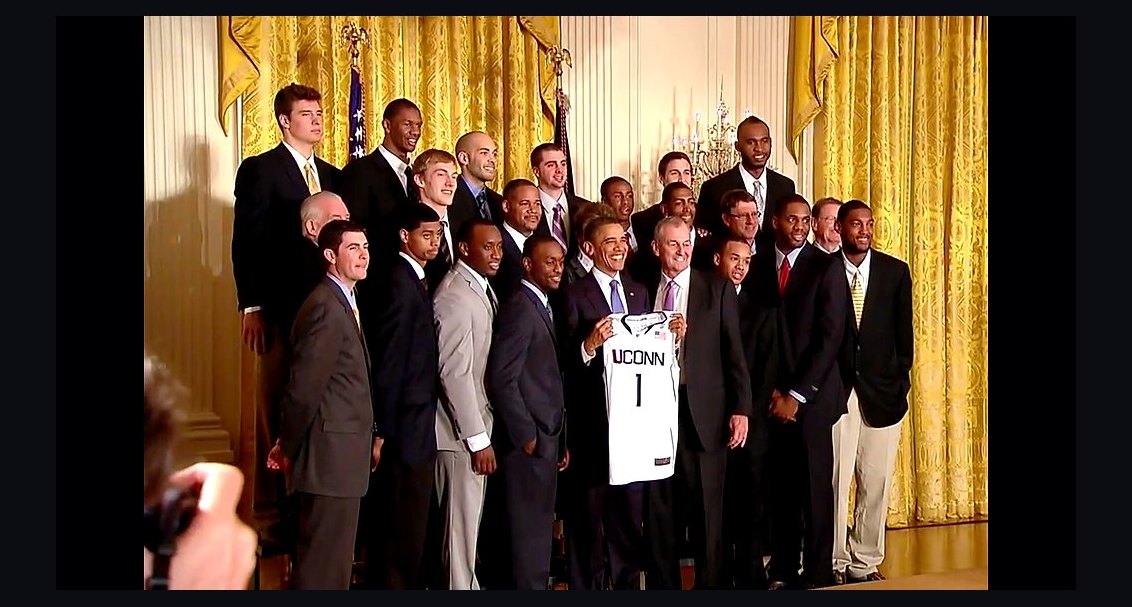 nilHow much do UConn men’s basketball players earn from NIL in 2027?
 nilHow much do Houston men’s basketball players earn from NIL in 2027?
 nilHow much do UAB men's basketball players earn from NIL in 2027?
 nilHow much do Hawaii men's basketball players earn from NIL in 2027?
 nilHow much do Oregon State men’s basketball players earn from NIL in 2027?
 nilHow much do Kansas State men’s basketball players earn from NIL in 2027?
 nilHow much do Cincinnati men’s basketball players earn from NIL in 2027?
 nilWhat are Maryland Terrapins men's basketball's 2027 NIL needs and strategy?
 nilHow much do Florida men’s basketball players earn from NIL in 2027?
 nilHow much do Boston College men’s basketball players earn from NIL in 2027?