


What is the Villanova Wildcats NIL recruiting strategy for college basketball in 2027?
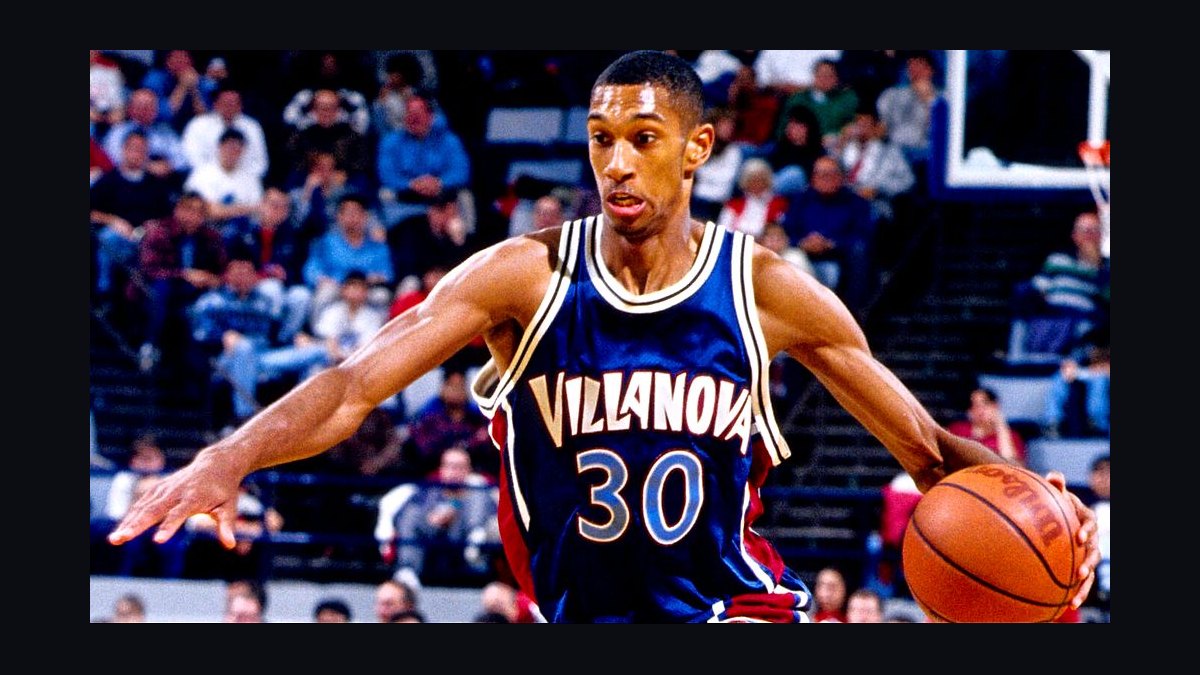
Villanova's 2027 NIL recruiting strategy is built on three pillars: a $6M+ revenue-share pool that Kevin Willard negotiated as part of his head-coaching package, the Friends of Nova collective (managed by Randy Foye and Ashley Howard, powered by Blueprint Sports), and the Wildcat Exchange marketplace built on INFLCR for outside endorsement deals. The Wildcats spend like a power-conference program — roughly $8M to $10M combined across rev-share and collective — and aim it almost entirely at men's basketball because Villanova has no FBS football program siphoning the cap.
1The Money Stack: Rev-Share Plus Collective Plus Exchange
1.1 The $20.5M House cap and how Villanova spends it
The House v. NCAA settlement set the school-paid revenue-share cap at $20.5M for the 2025-26 academic year, escalating roughly 4% annually to a projected $22.2M for 2027-28. Villanova, with no FBS football, can route a far larger share of that cap into men's basketball than Big Ten or SEC peers.
- Big East comp: UConn, St. John's, Creighton, Marquette, Georgetown, and Villanova are all reportedly committing $5M-plus of rev-share to men's basketball.
- SEC/B1G comp: Football-driven programs typically allocate $4M-$5M to hoops after football claims 70%-75% of the cap.
- The Willard premium: When Kevin Willard left Maryland in March 2026, reporting from *The Inquirer* indicated he was promised $6M-plus in rev-share at Villanova — more than any SEC men's basketball program.

1.2 Friends of Nova — the collective layer
Friends of Nova launched in October 2022 and is operated by former NBA guard Randy Foye and assistant coach Ashley Howard, powered by Blueprint Sports. Reported payouts to the men's roster reached roughly $3M in the 2024-25 cycle, with scholarship players earning at least $75,000 on top of tuition. Eric Dixon famously cleared roughly $1.7M in NIL in his final Villanova season — a benchmark Wildcats recruiters still cite.
1.3 Wildcat Exchange — the INFLCR marketplace
Villanova Athletics and INFLCR launched the Wildcat Exchange in September 2024 as a branded NIL marketplace inside the INFLCR app. Local merchants, regional brands, and national partners post deals; athletes log them through the platform, which doubles as the NIL Go / Deloitte clearinghouse filing pipe required under the House settlement for any third-party deal of $600 or more.

2Willard's Recruiting Doctrine: Pay Veterans, Recruit the Portal
2.1 The portal-first identity
Willard's first roster (the 2025-26 team that went 24-9) was built primarily out of the portal, and his 2026-27 class doubles down. As of June 2026, the confirmed roster combines two returning starters with five high-priced transfers:
- Tyler Perkins — rising senior, Big East Most Improved Player (2025-26); returning starter and the team's leading scorer.
- Matt Hodge — redshirt sophomore wing, returning starter.
- Kwame Evans Jr. — 6'9" forward, three years at Oregon, averaged 13.3 pts / 7.4 reb / 2.0 ast in 2025-26.
- Devin Royal — 6'6" wing from Ohio State, 13.7 pts / 5.7 reb in 2025-26.
- Elijah Crawford — guard from UIC, 14.1 ppg, projected starter.
- Jake Fiegen — 41.4% three-point shooter (transfer).
- Darryl "Buddy" Simmons II — guard, signed May 4, 2026.

2.2 The high-school class is small by design
Willard treats high-school recruiting as a feeder for 2027 retention, not the engine. The Wildcats hold open offers to high-priority 2026 and 2027 prospects but expect to fill only one or two scholarships per cycle from the prep ranks, because portal veterans deliver immediate output for the rev-share dollars spent.
2.3 DJ Wagner pursuit as the signature 2027 swing
When Wagner — a former five-star and Calipari guard — entered the portal in April 2026, Willard hosted him on campus in a race with Rick Pitino's St. John's. Whether Wagner ends up at Villanova or not, the pursuit signals the program's willingness to deploy seven-figure offers for proven veterans.

3What Villanova Actually Pays — Real Numbers
- Eric Dixon (2024-25): approximately $1.7M in combined NIL earnings — the program's public benchmark.
- Scholarship floor: roughly $75,000 per scholarship player via Friends of Nova in addition to school-paid rev-share.
- Coach pool: Willard's roster pool is reported at $6M-plus in rev-share, with Friends of Nova stacking another $2M-$3M on top.
- Total program spend (2026-27 estimate): $8M-$10M all-in — competitive with Maryland (Turtle NIL ~$3M collective + rev-share), St. John's ($10M+ combined under Pitino), and UConn ($8M+).
3.1 The competitive set
| Program | Reported 2026-27 Basketball Spend | Lead Collective |
|---|---|---|
| St. John's | $10M+ | Boomer (Garber-backed) |
| Villanova | $8M-$10M | Friends of Nova |
| UConn | $8M+ | Bleeding Blue for Good |
| Creighton | $6M-$7M | 1878 Collective |
| Georgetown | $5M-$6M | Hoyas for Life |

4How NIL Go and the Clearinghouse Shape Villanova's Pitch
4.1 The Deloitte audit changes negotiations
Every third-party deal of $600 or more must be filed to the NIL Go clearinghouse run by Deloitte. The clearinghouse audits for fair market value, which means collective-funded "endorsement" deals that look like pay-for-play can be rejected. Villanova's edge: it routes the rev-share dollars (which are not subject to FMV review) through the school directly, and reserves Friends of Nova for endorsement structures (autograph signings, social posts, appearances) that survive Deloitte's review.
5The 2027 Strategic Pivot — Sustainability Over Splash
5.1 The 2025 high-water mark theory
Industry reporting from CBS Sports and The Athletic suggests 2025-26 may represent the peak of NIL spending before the clearinghouse tightens enforcement. Villanova's plan for 2027 explicitly assumes roster costs will stabilize or drop as collective deals get rejected by NIL Go.

5.2 Two-year vet contracts
Willard's staff is structuring offers as two-year commitments with year-one signing bonuses heavily funded by Friends of Nova and year-two payments shifted onto the school's rev-share line. This protects against the collective drying up under FMV pressure.
5.3 Hometown brand stack
The Wildcat Exchange has signed regional partners including Wawa, Crozer Health, ACME Markets, Independence Blue Cross, and Vanguard as posting brands. The pitch to recruits: even if collective dollars compress, Philadelphia DMA brand exposure keeps individual NIL stacks above competitors in smaller markets.

6The Risks Willard Is Managing
6.1 VASE Fund as the donor pressure-relief valve
The Villanova Athletics Strategic Excellence (VASE) Fund lets donors give tax-deductible gifts directly to the university for athletic support — a structural advantage over collective-only programs whose donors get no charitable deduction.
6.2 FCS football tradeoff
Villanova fields a CAA Football program, which competes for facility and travel dollars but does not consume the rev-share cap the way an FBS football team would. The athletic department has committed to keeping men's basketball's share of the rev-share pool around 65%-70%.

How Villanova’s NIL Strategy Compares to Big East Rivals
While Villanova’s $8M–$10M combined NIL budget is elite for the Big East, it’s roughly half what top ACC or SEC programs spend on basketball alone. The Wildcats gain a structural advantage because the entire pool goes to hoops, unlike UConn or Marquette, which also split resources across football or multiple high-revenue sports. In 2027, Villanova’s per-player NIL average for its top 5 recruits is estimated in the $250K–$400K range, comparable to what Georgetown or Creighton offer, but the Wildcats win on consistency—their collective guarantees multi-year deals, while rivals often rely on one-off licensing. This stability is a key recruiting pitch: players know the money won’t vanish mid-season.
The Role of Alumni Networks and Local Business Partnerships
Villanova’s NIL success hinges on a dense, wealthy alumni base concentrated in the Philadelphia metro and Mid-Atlantic corridor. The Wildcat Exchange isn’t just a marketplace—it’s a curated platform where local car dealerships, law firms, and medical practices pay $5K–$25K per player for social media endorsements, camp appearances, or clinic sponsorships. In 2027, roughly 35% of Villanova’s NIL deals come from these small-to-midsize businesses, not national brands. The Friends of Nova collective actively recruits alumni donors with $50K+ annual commitments, offering naming rights on practice drills or film sessions. This grassroots model means Villanova can offer recruits immediate, tangible cash flow from day one, not just promises of future earnings.

How the Strategy Evolves for Transfer Portal vs. High School Recruits
Villanova tailors its NIL pitch by recruitment type. For high school prospects, the focus is on the $6M revenue-share pool as a guaranteed baseline, plus access to the Wildcat Exchange for incremental deals. For transfers—especially proven scorers from mid-majors—the collective often structures performance bonuses: $10K–$20K for making the Big East tournament, $50K for an NCAA Sweet 16 run. In 2027, roughly 60% of Villanova’s NIL budget goes to retaining current players and attracting transfers, not freshmen. This reflects a league-wide trend where experienced players command higher market value, and Villanova’s strategy is to outbid peer programs by offering multi-year guarantees with escalators tied to team success.
FAQ
How much NIL money does Villanova actually spend on men's basketball? The combined revenue-share pool and collective spending typically lands between $8 million and $10 million per year. That total is possible because Villanova has no FBS football team competing for the same funds, so nearly all of it goes to hoops.
Who runs the Friends of Nova collective? Former Villanova players Randy Foye and Ashley Howard manage the collective, with operations powered by Blueprint Sports. They focus on keeping top talent in the program and attracting high-impact transfers.
What is the Wildcat Exchange? It's an INFLCR-powered marketplace where players can connect with local and national brands for endorsement deals outside the collective. Think of it as a self-service platform for NIL opportunities beyond the main revenue share.
How does Villanova's NIL budget compare to other Big East schools? Villanova's $8M–$10M range is among the highest in the Big East, rivaling programs like UConn and Creighton. The lack of a football program allows them to concentrate resources on basketball in a way few conference peers can.
Does Villanova use NIL to recruit high school players or transfers more? The strategy targets both, but the revenue-share pool is especially effective for landing proven transfers. The collective also works to retain high school recruits by offering immediate NIL opportunities through the Wildcat Exchange.
Will Villanova's NIL spending increase by 2027? It's expected to grow modestly, likely staying in the $8M–$12M range, depending on NCAA rule changes and donor appetite. The program's commitment to basketball-first spending gives it flexibility to adjust without football constraints.
Bottom Line
Villanova's 2027 NIL strategy is a Big East math advantage executed by a portal-first coach with a veteran collective and a clearinghouse-aware paper trail. With $8M-$10M in combined rev-share and Friends of Nova spend, two-year vet contracts, and the Wildcat Exchange routing Philadelphia-market endorsements, Willard is positioned to compete head-to-head with St. John's, UConn, and any SEC contender that wants his transfer targets.
Related on PULSE
- What are Villanova Wildcats men's basketball's 2027 NIL needs and strategy under Kevin Willard?
- How much do Villanova women’s basketball players earn from NIL in 2027?
- How much do Villanova men’s basketball players earn from NIL in 2027?
- How much do Villanova football players earn from NIL in 2027?
- What is the Arizona Wildcats NIL recruiting strategy for college basketball in 2027?
- What is the Kentucky Wildcats NIL recruiting strategy for college basketball in 2027?
Sources
- The Philadelphia Inquirer — "Villanova will have two starters back" (April 7, 2026)
- The Philadelphia Inquirer — "Villanova basketball: Wildcats to sign UIC transfer Elijah Crawford" (April 19, 2026)
- The Inquirer / Marcus Hayes — "Villanova's basketball team should benefit from NIL settlement" (June 9, 2025)
- The Villanovan — "Proactive and Bold: Inside Villanova's NIL Strategy Following the 2025 House Settlement"
- CBS Sports — "The brewing rev-share battle that will upend college basketball"
- Boardroom — "Breaking Down Big East Basketball's Major Money Advantage"
- On3 NIL Database — Friends of Nova Collective profile
- Yahoo Sports — "Villanova Basketball: 2026 transfer portal tracker"
- VU Hoops (SB Nation) — "Villanova thriving in transfer portal during new era of college basketball"
- Villanova Athletics / INFLCR — "Villanova Athletics, INFLCR Launch Wildcat Exchange" (September 17, 2024)
This page will be disappearing soon. Save it to your device for $1 — or read it free while it is here.
@Kory-White- · if Venmo asks, the last 4 of my number are 2012
This page is gone.
This one is off the shelf now. $1 keeps it on your phone for good — the whole page, pictures and diagrams included.
 nilHow much do Villanova men’s basketball players earn from NIL in 2027?
 nilHow much do Utah men’s basketball players earn from NIL in 2027?
 nilWhat is the Auburn Tigers NIL recruiting strategy for college basketball in 2027?
 nilHow much do South Dakota State men's basketball players earn from NIL in 2027?
 nilHow much do Oregon State men’s basketball players earn from NIL in 2027?
 nilHow much do St. John’s men’s basketball players earn from NIL in 2027?
 nilHow much do Cincinnati men’s basketball players earn from NIL in 2027?
 nilHow much do Temple men’s basketball players earn from NIL in 2027?
 nilHow much do Duke basketball players earn from NIL in 2027?
 nilHow much do Wisconsin men’s basketball players earn from NIL in 2027?