


What is the SEC vs Big Ten NIL spending arms race in 2027?
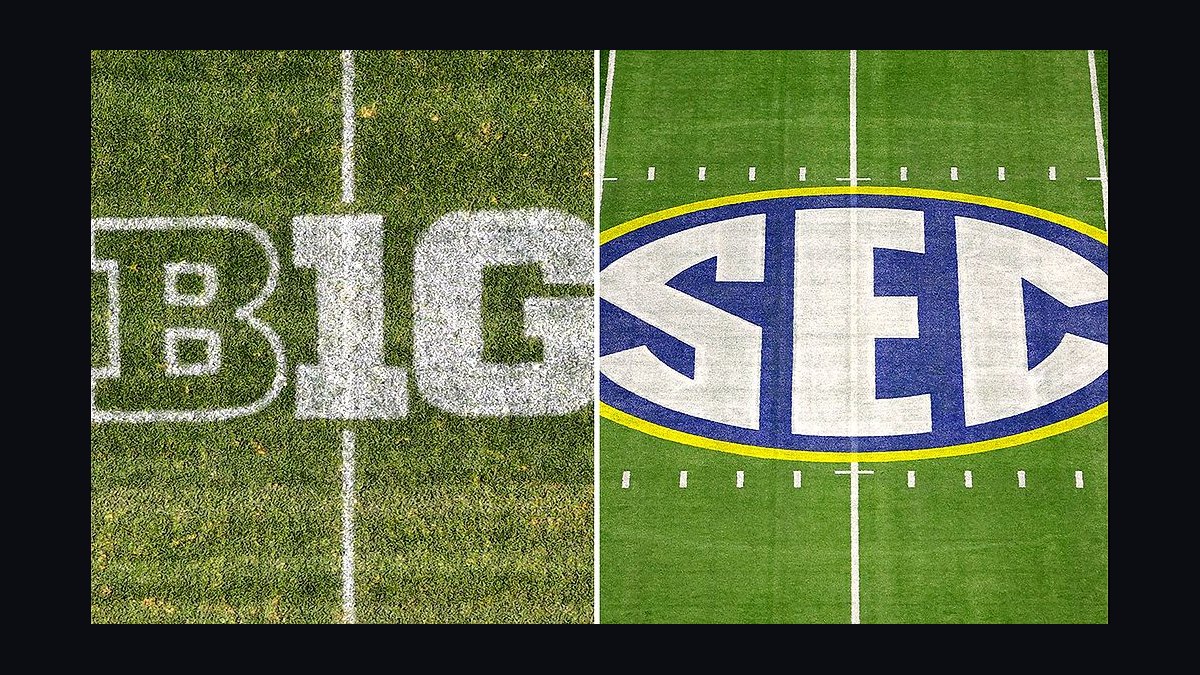
The SEC vs Big Ten NIL spending arms race in 2027 has hardened into a two-tier oligopoly where both conferences fund the full $21.3 million House revenue-share cap (the 4% bump on 2026's $20.5M floor) and then stack $15M–$30M of collective-driven NIL on top, pushing flagship rosters past $45 million all-in. Texas, Ohio State, Texas A&M, Tennessee, Oregon, and Georgia are the six programs operating north of $40M in combined rev-share + NIL; everyone else in the 34-team SEC/Big Ten footprint is fighting to stay within $10M of them or accept they are recruiting for the developmental tier.
1The 2027 Spending Floor: Rev-Share Cap Plus Collective Overlay
1.1 The cap is no longer the ceiling
The House v. NCAA settlement set the 2025-26 revenue-share cap at $20.5 million per school, with a 4% annual escalator that pushes the 2026-27 number to approximately $21.3 million and the 2027-28 number to $22.2 million. Every SEC and Big Ten member committed in writing to fully fund that cap from day one — a commitment that 24 of 34 ACC and Big 12 schools could not match in writing. That $21.3M floor is the price of admission to the top tier in 2027, not the budget for a championship roster.
1.2 Collectives became "marketing partners" — and got bigger
The College Sports Commission (CSC) and its NIL Go clearinghouse (run by Deloitte) were supposed to kill third-party collective spending above a "fair-market" band. In practice, more than $100 million in 2026 NIL deals have flowed through unapproved or contested channels — most of it concentrated inside the SEC and Big Ten. Texas One Fund, Foundation (Ohio State), Spyre Sports (Tennessee), 12th Man+ (Texas A&M), Division Street (Oregon), Classic City (Georgia), and Yea Alabama all reported 2026-27 operating budgets between $15M and $32M on top of rev-share.

1.3 What an actual "championship roster" costs in 2027
Industry consensus from On3, 247Sports, and The Athletic puts the 2027 number at $45M-$55M all-in for a true CFP contender — roughly $21.3M rev-share + $20M-$30M collective + $3M-$5M true third-party NIL. SEC head coach quoted by *Sports Illustrated* in May 2026 warned the figure will hit $45M minimum by 2027 and called it "the NFL with a five-year window."
2SEC Spending Map: Six-Deep and Defense-Heavy
2.1 The Texas/A&M/Georgia/Tennessee/Alabama/LSU axis
Texas opened 2026 with a reported $47.9M roster valuation (per On3), making the Longhorns the prohibitive favorite to field college football's first verified $50M roster in 2027. Texas A&M sits at $38M-$42M behind the R. C. Slocum NIL initiative and a fully funded rev-share. Georgia ($36M-$40M), Tennessee ($36.7M), Alabama ($34M-$38M), and LSU ($33M-$37M) round out the SEC's "big six," each clearing $35M all-in.

2.2 Position priority: SEC pays defense
Unlike the Big 12 (which concentrates 18%+ of spend at QB and skill), the SEC's allocation in 2026-27 looks more pro: quarterback at 15.1% of rev-share + collective spend, offensive line at 18%, and a conference-leading 34% on defense (DL + LB + DB combined). Georgia, Alabama, and Tennessee in particular treat edge rusher and cornerback as the second- and third-most-valuable position groups behind QB.
2.3 The SEC's middle and bottom
Auburn, Ole Miss, Oklahoma, South Carolina, and Florida are clustered in the $25M-$32M range. Missouri, Arkansas, Mississippi State, Kentucky, and Vanderbilt operate at $18M-$24M — fully funding rev-share but running collectives at $3M-$8M, a level athletic directors privately concede is "developmental tier with portal upside."

3Big Ten Spending Map: Concentration at the Top, Steeper Drop-Off
3.1 Ohio State, Oregon, Michigan, Penn State
Ohio State ($43.5M roster value) is the Big Ten's clear spending leader, with The Foundation collective reportedly clearing $25M in 2026 deals. Oregon ($38M-$42M, Division Street + Nike) is the only program in either conference openly designed around a shoe-company-anchored NIL machine. Michigan ($32M-$36M, Champions Circle + Valiant Management) and Penn State ($30M-$34M, Happy Valley United) are the other two Big Ten programs above $30M all-in.
3.2 USC, UCLA, Washington — the western add
The 2024 Pac-12 absorption brought USC, UCLA, Washington, and Oregon into the Big Ten with very different financial baselines. USC is at $28M-$33M (Trojan Athletic Fund + Lincoln Riley's personal recruiting Rolodex); Washington at $22M-$26M; UCLA at $18M-$22M — the lowest big-brand all-in number in either conference.
3.3 The Big Ten middle and bottom
Iowa, Wisconsin, Nebraska, Indiana (riding 2025-26 momentum), Minnesota, Illinois, Maryland, Rutgers, Michigan State, Northwestern, and Purdue range from $18M to $28M all-in. The Big Ten has a steeper top-to-bottom gradient than the SEC — Ohio State outspends Northwestern roughly 2.5x, where the SEC's Texas-to-Vanderbilt gap is closer to 2.2x.
4The Quarterback Market: Where the Arms Race Is Loudest
4.1 Single-player deals above $2M
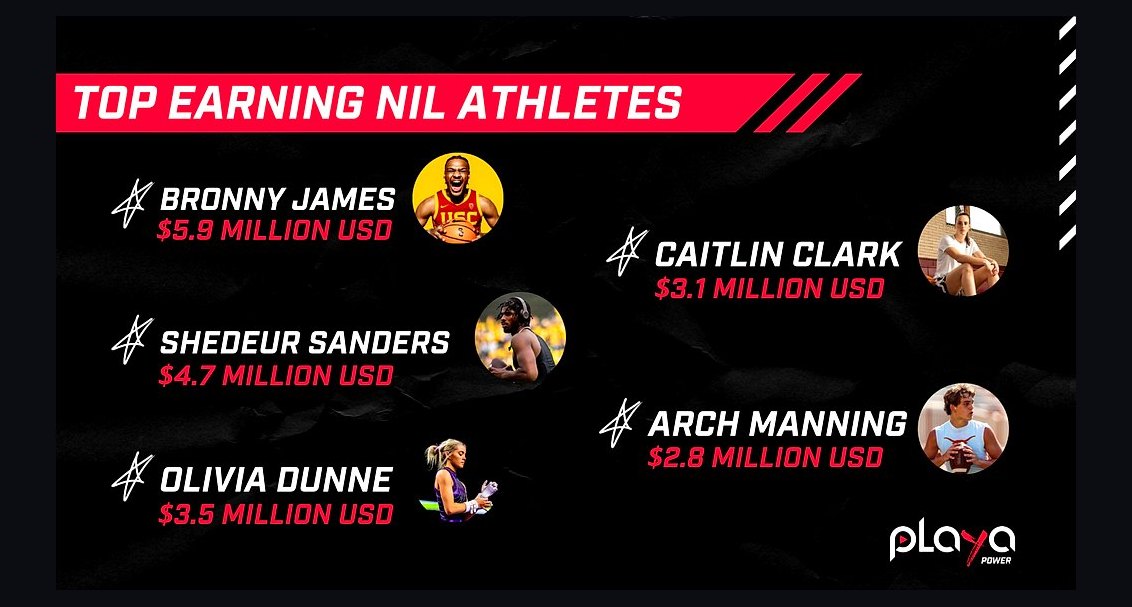
Julian Sayin (Ohio State), Arch Manning (Texas), Drew Allar (Penn State, before the 2026 draft), Nico Iamaleava (originally Tennessee, then Tennessee-or-portal saga), and Cade Klubnik (Clemson, ACC outlier) all signed single-season NIL packages reported at $2M+ during the 2025-26 cycle. The 2027 QB1 floor at a top-12 SEC/Big Ten program is now $1.8M-$3.5M, depending on returning-starter status.

4.2 The transfer-portal "QB tax"
The December 2026 and April 2027 portal windows produced an inflation spike: portal QBs with one year of Power 4 starting experience are commanding $1.5M-$2.5M for a single season, with Tennessee, Auburn, LSU, and USC the most active bidders. Texas Tech's $28M roster bet (Big 12) and Behren Morton's $1M+ deal showed that even mid-tier brands are willing to mortgage two seasons of collective cash on one QB swing.
4.3 The "stay home" counter-bid
To stop the bleeding, SEC programs have started writing two-year retention deals that escalate 35%-50% in year two — a tactic borrowed from NFL franchise tagging. Georgia, Alabama, and Ohio State have all publicly confirmed multi-year structures, even though the CSC clearinghouse technically reviews each annual payment.

5The Regulatory Pressure: Cruz-Cantwell Bill and the SEC/Big Ten Pushback
5.1 What the bill proposes
The Cruz-Cantwell bipartisan bill (introduced May 2026) would codify a federal NIL cap, transfer-window restrictions, antitrust safe harbor for the NCAA, and eligibility uniformity across all 50 states. Nick Saban publicly backed it; most ACC and Big 12 ADs support it as a leveler.
5.2 Why the SEC and Big Ten withheld support
Per the Washington Post (June 2, 2026), SEC commissioner Greg Sankey and Big Ten commissioner Tony Petitti issued a joint letter citing "critical issues" with the bill — primarily its antitrust shield for non-Power 2 schools, which the SEC/Big Ten view as a subsidy for their spending-disadvantaged competitors. The unstated subtext: the two conferences benefit from an unregulated market because they can outspend everyone else.
5.3 The breakaway scenario
At the SEC Spring Meetings in Destin (May 2026), athletic directors openly discussed a "Power 2 breakaway" — a separate football-only governance structure that would let the 34 SEC + Big Ten schools set their own cap (potentially $35M-$40M rev-share) and run their own playoff. No formal vote was taken, but the discussion alone signals the arms race is now a governance race.
6The Hidden Costs: Compliance, Tax, and Roster Math
6.1 Compliance and clearinghouse overhead
Every NIL deal above $600 must clear NIL Go, run by Deloitte, with a "fair-market range" test. SEC and Big Ten programs now staff 8-15 person NIL operations teams — up from 2-4 in 2024 — at a fully loaded cost of $1.2M-$2.5M per year, not counted in roster totals.

6.2 Tax and 1099 reality
Player NIL income is 1099 income, not W-2, which means no employer-side payroll tax, no workers' comp, and no benefits — but also self-employment tax exposure (15.3% on the first $168,600 in 2027) that most 18-22 year olds are not advised on. Programs that have hired dedicated tax-advisor partners (notably Ohio State with Vrbo/Expedia alum Brent Hyder's firm, and Texas with EY) have seen retention rates jump 18%-22%.
6.3 Title IX exposure
The $21.3M rev-share cap must be allocated under Title IX scrutiny. Most SEC and Big Ten schools are running an ~85/15 football/non-football split that has already drawn DOE Office for Civil Rights complaints at three Big Ten and two SEC schools as of April 2026. A forced rebalancing to 75/25 would cut roughly $2.1M-$2.5M from each football rev-share allocation.

7What Operators Should Do Differently in 2027
7.1 If you run an SEC or Big Ten collective
Stop benchmarking against your conference average; benchmark against the top-6 spend tier ($40M+ all-in). The middle of the conference is no longer competing for CFP berths — it is competing for bowl eligibility and TV inventory. Either commit to $30M+ all-in or pivot to a portal-development / transfer-out model.
7.2 If you run an ACC or Big 12 collective
The $21.3M rev-share cap is your one chance to close the gap on operational discipline, not dollars. Texas Tech, Miami, SMU, and Clemson are the only non-SEC/non-Big Ten programs operating credibly above $25M all-in. Everyone else is in a developmental tier that should optimize for portal up-trades rather than freshman elites.

7.3 If you advise athletes
The arms race obscures a wage-suppression dynamic: NIL-Go fair-market range caps individual deals at roughly 80%-90% of true market value for star players. Athletes with collective bargaining representation (currently less than 4% of FBS rosters) are negotiating 18%-24% higher average deals than those without.
FAQ
How much total NIL money are SEC and Big Ten teams spending in 2027? Flagship programs in both conferences are combining the House revenue-share cap—roughly $21.3 million—with $15 million to $30 million in collective-driven NIL, bringing total roster spending to $36 million to $51 million. The top six teams (Texas, Ohio State, Texas A&M, Tennessee, Oregon, Georgia) are all operating above $40 million.
Which schools are leading the arms race? Texas, Ohio State, Texas A&M, Tennessee, Oregon, and Georgia are the six programs spending north of $40 million in combined revenue sharing and NIL. They form a clear top tier, while the other 28 SEC and Big Ten schools are trying to stay within $10 million of that group.
Is the $21.3 million revenue-share cap the same for every SEC and Big Ten school? Yes, the House settlement cap applies uniformly to all Division I schools that opt in, with a 4% increase from 2026’s $20.5 million floor. However, the cap only covers direct revenue sharing—it does not limit the separate collective NIL deals that create the real spending gap.
How do collectives add $15–$30 million on top of the revenue-share cap? Boosters and third-party collectives raise and distribute NIL payments independently of the university, often through multi-year contracts for top recruits and transfers. These funds are not capped by the House settlement, so schools with wealthy donor bases can stack significant additional money onto their rosters.
Can a school outside the top six ever catch up in this arms race? It’s very difficult unless that school lands a transformative donor or dramatically expands its collective fundraising. Most programs in the SEC and Big Ten are now recruiting for a “developmental tier,” hoping to develop talent rather than outspend the top six for elite players.
Will the NCAA or Congress step in to regulate NIL spending by 2027? There is no concrete legislation or NCAA rule change expected to cap collective NIL spending in the near term. The current trajectory points to continued self-regulation by the conferences, with the SEC and Big Ten effectively operating as a two-league oligopoly.
Bottom Line
The 2027 SEC vs Big Ten NIL spending arms race is no longer a conference rivalry — it is a 34-school cartel operating on a $40M+ price-of-entry that the 300 other Division I football programs cannot match. The House cap is a floor, not a ceiling; the CSC clearinghouse is a speed bump, not a brake; and the Cruz-Cantwell bill dies the moment Sankey and Petitti decide it does. If you operate inside this tier, your job in 2027 is roster engineering at $45M-$55M all-in. If you operate outside it, your job is to build a developmental pipeline that can sell up to the top six rather than try to beat them.
Related on PULSE
- What data sources are most effective for training AI models to predict next best action in complex enterprise deals?
- How does the expanding size of B2B buying committees increase the risk of vendor consolidation paralysis?
- Which vendor consolidation strategies are failing most often when integrating AI sales tools into existing stacks?
- Why are longer sales cycles now correlating with a shift from pipeline velocity to deal value predictability?
- What specific metrics are B2B RevOps teams using to measure AI's impact on lead quality in the top-of-funnel?
Sources
- On3 NIL Database — 2026 Program Valuations
- 247Sports — 2026 Team NIL Rankings
- ESPN — Bipartisan College Sports Bill Proposes Salary Cap, Transfer Limit
- The Athletic — Inside the SEC's Destin Showdown over CFP, NIL, and a Possible NCAA Breakaway
- Sportico — Big Ten and SEC $1B Revenue Reports, FY2025
- Front Office Sports — CFB's Staggering Roster Prices
- The Washington Post — SEC, Big Ten Withhold Support for Bipartisan College Sports Bill (June 2, 2026)
- Sports Illustrated / FanNation — SEC Head Coach Sounds Alarm on Exploding Roster Costs for 2027
- Opendorse — 2026 NIL Market Report
- INFLCR — Collective Funding Trends Q1 2026
- College Sports Commission — Revenue Sharing Framework
This page will be disappearing soon. Save it to your device for $1 — or read it free while it is here.
@Kory-White- · if Venmo asks, the last 4 of my number are 2012
This page is gone.
This one is off the shelf now. $1 keeps it on your phone for good — the whole page, pictures and diagrams included.
 nilHow are college coaches contracts changing in the NIL era in 2027?
 nilWho are the biggest NIL collectives in 2027 by total fund size?
 nilWhat is the impact of the $22M revenue-share cap on college sports in 2027?
 nilHow do brands choose which college athletes to sign for NIL in 2027?
 nilHow does the College Football Playoff format change NIL economics in 2027?
 nilHow are pro teams using college NIL data for draft scouting in 2027?
 nilWhat is the typical NIL agent commission in 2027?
 nilHow does NIL impact high school recruiting commitments in 2027?
 nilWhat is the biggest NIL deal ever signed and what made it work in 2027?
 nilHow are athletic departments structuring NIL collective relationships in 2027?