


What is the typical college quarterback NIL package at a top program in 2027?
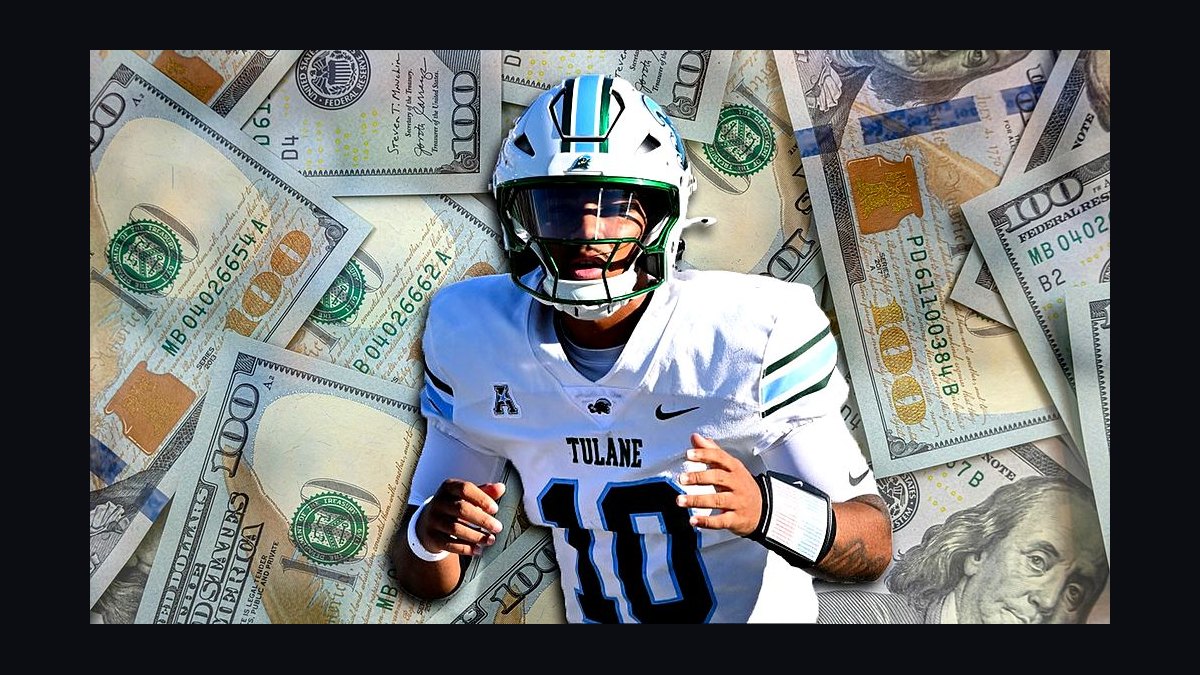
The typical starting quarterback at a top-25 college football program in 2027 earns a blended package of $2.0M to $4.5M per year, with the superstar tier ($5M-$12M+) reserved for proven Power-4 starters or generational recruits like Arch Manning ($6.8M) and Bryce Underwood ($10M-$12.5M over four years). The package is two checks: a direct revenue-share line from the school under the $20.5M House v. NCAA cap (usually $800K-$1.8M for the QB1), plus a third-party NIL stack from the program's collective and national brand deals (Nike, Red Bull, EA Sports, Powerade, Uber, Hollister). The cap-constrained school check is uniform across programs; the collective-and-brand stack is what creates 10x variance between an SEC blueblood QB1 and a Group-of-5 starter.
---
Published 2026-06-03 — Updated 2026-06-03
1The Typical 2027 Top-Program QB Package, By The Numbers
A starting quarterback at a top-25 FBS program in 2027 is no longer paid in a single number — he is paid in three stacked buckets that together define his "package."
1.1 The Three Stacks
- Revenue-share check from the school (capped pool, $20.5M in Year 1, escalating ~4% annually). The QB1 typically pulls 5-9% of the football allocation. At a school dedicating 75% of the $20.5M to football (~$15.4M), the QB1 line ranges $770K-$1.4M.
- Collective payment (booster-funded LLC, outside the cap). At an SEC/Big Ten blueblood the QB1 collective check is $1.5M-$3.5M. At a top-25 program outside the bluebloods it's $500K-$1.5M.
- National + regional brand endorsements (true NIL, deliverables-based). For a starter at a top program, $150K-$1.2M; for a star with a national profile (Manning, Beck, Underwood), $2M-$4M+.

1.2 The Median Top-25 QB1 Package In 2027
Blended across the 25 highest-resourced programs (SEC 16, Big Ten 18, top ACC like Miami/Clemson/FSU, and Big 12 anchors like Utah and Texas Tech), the median starting QB1 package runs $2.5M-$3.5M total per year. The mean is dragged up to roughly $4.0M by a handful of outliers. The floor for any Power-4 QB1 worth keeping is now $1.2M — anything lower and the portal poaches him.
1.3 The Superstar Outliers
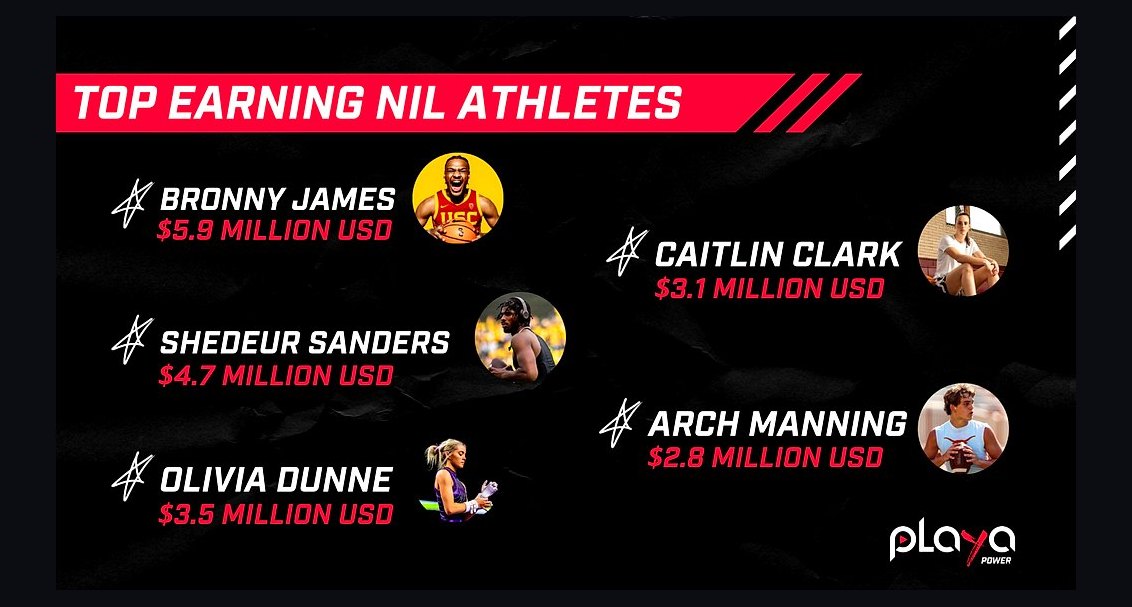
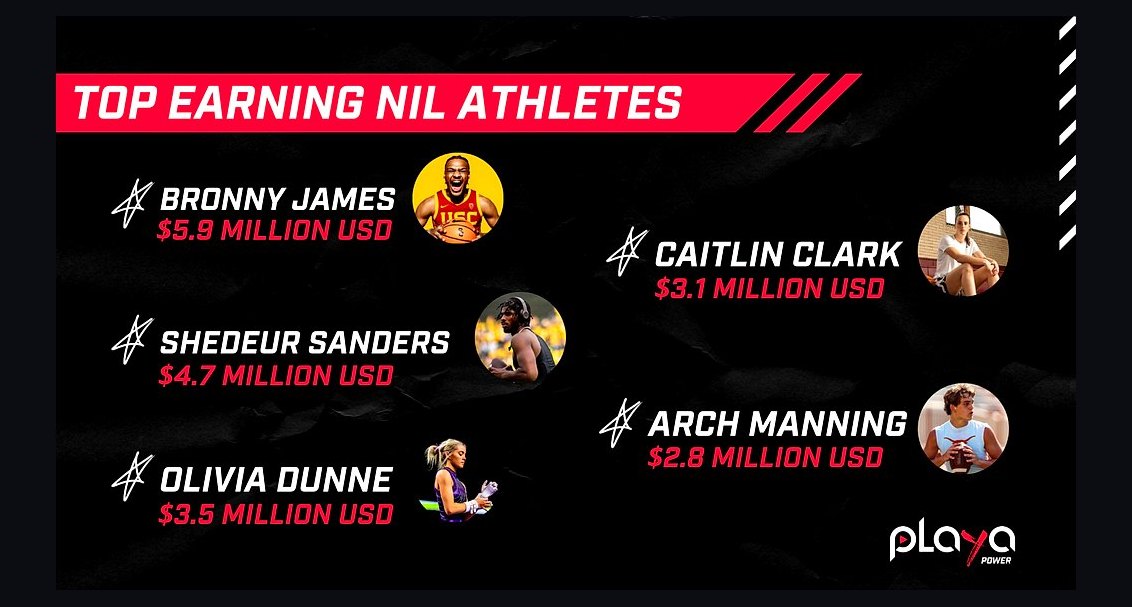
- Arch Manning (Texas): $6.8M earned in trailing 12 months; $5.4M On3 valuation — #1 athlete in any sport.
- Bryce Underwood (Michigan): $10-12.5M four-year package signed as the highest-paid recruit in CFB history; ~$3.1M annual On3 valuation.
- Carson Beck (Miami): $4.9M On3 valuation, but ~$10M total income trailing 12 months including transfer package and national deals.
- Dante Moore (Oregon): $3.0M annual to return rather than declare for the 2026 NFL Draft.
- Sam Leavitt (Oregon State / portal target): $3.5M-$4.0M annual.
2Where The Money Comes From — Source-By-Source
2.1 The Revenue-Share Check (Capped, ~$20.5M Pool)
The House v. NCAA settlement (effective July 1, 2025) created a per-school annual cap of $20.5M for 2025-26, escalating ~4% per year through the 10-year settlement window. Schools that opt in (every Power-4 program did) can pay athletes directly from athletic-department funds, no booster intermediary required.

- Allocation reality: Most opt-in schools route ~75% to football, ~15% to men's basketball, ~5% to women's basketball, ~5% to all others to stay Title-IX-defensible (a moving legal target).
- QB1 share of the football pool: 5-9%, depending on year and starter status. A senior returning starter pulls toward the high end; a first-year starter toward the low end.
- Contract form: Multi-year, fully-guaranteed at most SEC/Big Ten programs; one-year with mutual options at others. Buyouts for transfer mid-contract are now standard at $500K-$2M.
2.2 The Collective Check (Uncapped, Third-Party)
Collectives like Texas One Fund (Texas), Champions Circle (Michigan), Cavalier Futures (Virginia), Tigers Unlimited (LSU), and The 12th Man+ Fund (Texas A&M) remain the largest single line for elite QBs because the House cap doesn't apply to them.
- Structure: LLCs or 501(c)(3) nonprofits pooling donor money, paying the athlete via endorsement-style agreements (appearances, content, licensing).
- Typical deliverables for a $2M QB collective deal: 24-36 donor-event appearances/year, 2-4 promotional shoots/month, likeness license to 8-15 partner businesses.
- NIL Go clearinghouse review: Deals over $600 must clear a fair-market-value range-of-compensation test run by Deloitte under the College Sports Commission. In practice the clearinghouse has approved 97%+ of submitted deals through Q1 2027.
2.3 National + Regional Brand Endorsements
The visible-but-smaller line. EA Sports College Football 27 ($5K-$15K base + royalties), Nike/Adidas/Hollister ($50K-$500K), Red Bull/Powerade ($100K-$400K), Uber/Lyft ($75K-$250K), car dealerships/local restaurants ($25K-$150K). Manning's Vuori, Uber, Red Bull, EA Sports stack is the template; Beck's Powerade + Leaf Trading Cards + Raising Cane's stack shows the second tier.

3Position Premium — Why QBs Eat First
3.1 The Two-Thirds Concentration
Quarterbacks occupy roughly two-thirds of the top-25 NIL valuations in college football according to On3's database. Only wide receivers (Jeremiah Smith at Ohio State, Ryan Williams at Alabama) crack the QB-heavy upper tier.
3.2 Why The Premium Is Structural
- Single-point-of-failure roster math: A program spending $45M on the roster with no QB1 is worth less than a program spending $30M with a star QB1. Underwriters know this.
- Brand fit: QBs deliver 40-60% more social engagement per post than skill positions according to Opendorse Q4 2026 benchmarks, which makes them the primary national-brand target.
- Insurance value: Schools that keep their QB1 happy avoid the $5M-$10M cost of a transfer-portal replacement plus culture disruption.
3.3 How The Premium Shows Up In Contracts
The QB1 typically earns 3-5x the next-highest non-QB position on the roster and 8-15x the position-room average. A top-25 program with a $30M total football payroll will pay its QB1 ~$3M, its WR1 ~$1.2M, its LT ~$900K, and its 22nd-best player ~$80K.

4Tier-By-Tier Breakdown At The 25 Top Programs
4.1 Tier 1 — The $5M+ Quarterbacks (5-8 players)
- Arch Manning (Texas): $6.8M
- Carson Beck (Miami): ~$10M total income, $4.9M On3 val
- Bryce Underwood (Michigan): ~$3.1M annual, $10-12.5M total
- Jeremiah Smith (Ohio State, WR): included as benchmark — $4.2M
- Top transfer-portal QB landings in 2026-27: $3.5M-$5M routinely (per SI/Sports Illustrated reporting on the No. 1 portal QB at $3.5M annually)
4.2 Tier 2 — The $2M-$5M Quarterbacks (10-15 players)
Returning Power-4 starters at SEC/Big Ten/ACC top programs. Dante Moore (Oregon) at $3M, LaNorris Sellers (South Carolina) in the $2.5M range, Sam Leavitt projected $3.5-4M post-transfer, Brendan Sorsby (Texas Tech) $3.1M. Drew Allar (Penn State), DJ Lagway (Florida), Garrett Nussmeier (LSU) all sit in this band.

4.3 Tier 3 — The $1M-$2M Quarterbacks (15-25 players)
First-year Power-4 starters, second-year backups stepping in, top-25-program QB1s outside the bluebloods. Floor for a credible QB1 retention number in 2027.
4.4 Tier 4 — The Below-$1M QB1 (Group of 5 + some bottom of Power 4)
Group-of-5 starters and a handful of Power-4 programs with smaller collectives (Vanderbilt, Northwestern, Wake Forest, Boston College, Iowa State pre-2027). Range: $200K-$900K. These rosters are the primary feeder pool for the upper tiers via the portal.
5Contract Architecture — How A $3M QB Deal Is Actually Structured
5.1 The Two-Document Setup
- Revenue-share contract (school-signed): Plain employment-style agreement, direct deposit twice monthly, academic-progress clauses, disciplinary-conduct termination triggers, buyout schedule.
- NIL agreement (collective-signed or brand-signed): Deliverables list, exclusivity windows (a QB on a Pepsi deal can't film for Coke), content-approval workflow via INFLCR or Opendorse, morality clauses.

5.2 Payment Cadence
- Revenue-share line: monthly or bi-monthly direct deposit.
- Collective line: quarterly tranches typical, often front-loaded (40/30/20/10 across the four quarters of the academic year) to lock retention through spring portal window.
- Brand deals: per-deliverable or monthly retainer depending on size.
5.3 Performance Triggers (Increasingly Common in 2027)
- Conference start (4+ games): $250K-$500K
- Bowl-eligibility: $100K-$300K
- All-conference selection: $250K-$750K
- Heisman finalist invite: $500K-$1M
- CFP appearance: $500K-$1.5M

5.4 Mermaid: The Money Flow For A $3M Top-25 QB1
6The Five Programs Setting The 2027 QB Market
6.1 Texas — Arch Manning Anchor
- Total football roster spend 2027: ~$45M (reported by Sportico Q1 2027)
- Manning total package: $6.8M (collective + brand stack dominant; rev-share line a smaller fraction)
- Texas One Fund + AT&T, EA Sports, Red Bull, Uber, Vuori, Panini brand stack
6.2 Michigan — Bryce Underwood Bet
- Underwood deal: $10-12.5M over four years, largest HS recruit deal ever
- Champions Circle collective + Hollister apparel deal
- Roster spend 2027: ~$40M

6.3 Miami — Carson Beck Acquisition
- Beck transfer package + brands: ~$10M trailing 12 months
- Canes Connection collective + Powerade, Leaf Trading Cards, Raising Cane's national deals
- Roster spend 2027: ~$35M
6.4 Ohio State — Julian Sayin + Smith Stack
- Sayin (QB1) package: $3.5M-$4M band
- THE Foundation collective is the largest in college football by donor count
- Roster spend 2027: $45M-$50M (one of three reported $50M payrolls)
6.5 Texas A&M — The $50M Year
- Total roster: reported $51M for 2026 by The Athletic
- QB1 line: $3M+
- 12th Man+ Fund collective backs it

7What This Means For Recruits And Transfers In 2027
7.1 The QB Recruiting Premium
A top-100 HS QB prospect in the 2027 class can now expect a first-year package of $1.5M-$3M at a Power-4 program — the Underwood floor reset the entire HS market. 2028 five-star QB commits are already negotiating $2M-$4M first-year deals with multi-year guarantees.
7.2 The Transfer Portal Spiral
- Average top-25-program QB1 transfer-in package in winter 2026 portal: $2.8M.
- Top-10 portal QB landings: $3.5M-$5M routinely.
- Bidding wars drive 30% premium over the equivalent retention number.
7.3 Mermaid: The 2027 QB Earning Ladder
FAQ
How much of a top QB’s NIL package comes from the school versus outside deals? Typically, the school’s direct revenue-share check under the $20.5M cap accounts for $800K to $1.8M of the total. The rest—often $1M to $3M or more—comes from the program’s collective and national brand endorsements, making outside deals the larger and more variable portion.
Do backup quarterbacks at top programs earn significant NIL money? Backups usually earn far less, often in the $100K to $400K range annually. Their package is mostly from the school’s revenue-share pool, with limited collective or brand deals unless they are a high-profile recruit waiting to start.
How does a quarterback’s NIL package change from freshman to senior year? A true freshman starter might earn $1.5M to $3M, while a proven senior starter at the same program can command $3M to $5M. The increase comes from stronger brand deals and collective support, not a bigger school check, which stays within the cap.
What national brands typically sponsor top college quarterbacks? Common partners include Nike, Red Bull, EA Sports, Powerade, Uber, and Hollister. These deals usually add $200K to $800K per year for a starting QB, depending on their marketability and team success.
Can a quarterback lose NIL money if they transfer or get benched? Yes, most NIL contracts are not guaranteed for performance or playing time. If a QB is benched or transfers, collective and brand deals often reduce or cancel, leaving only the school’s revenue-share portion, which may also be adjusted.
How does NIL for a top-25 QB compare to a Group-of-5 starter? A Group-of-5 starting QB typically earns $300K to $800K total per year, with a smaller school check ($200K–$500K) and few national brand deals. The 10x variance is driven by the collective and brand stack, which is much larger at Power-4 bluebloods.
Bottom Line
A typical starting quarterback at a top-25 college football program in 2027 earns $2M-$4.5M per year, structured as a revenue-share check from the school ($800K-$1.8M, capped under the House settlement) plus a collective payment ($1.5M-$3.5M, uncapped) plus a brand-deal stack ($150K-$1.2M). The superstar tier — Manning, Underwood, Beck, Sayin, Moore — clears $5M-$10M+, with Manning at $6.8M and Underwood's $10-12.5M four-year deal setting the ceiling. The QB position premium is structural: quarterbacks occupy two-thirds of the top-25 NIL valuations because single-point-of-failure roster math makes the QB1 the highest-leverage spend on any roster. Operators building NIL strategy should budget the QB1 at 8-12% of total football roster spend, lock multi-year guaranteed deals with portal-buyout protection, and layer performance triggers for CFP and Heisman outcomes to align incentives with team success.
Related on PULSE
- What data sources are most effective for training AI models to predict next best action in complex enterprise deals?
- How does the expanding size of B2B buying committees increase the risk of vendor consolidation paralysis?
- Which vendor consolidation strategies are failing most often when integrating AI sales tools into existing stacks?
- Why are longer sales cycles now correlating with a shift from pipeline velocity to deal value predictability?
- What specific metrics are B2B RevOps teams using to measure AI's impact on lead quality in the top-of-funnel?
Sources
- On3 NIL Valuations Database — primary source for athlete-by-athlete valuation numbers, accessed Q2 2027 (on3.com/nil/rankings)
- Sports Illustrated / SI.com FanNation — reporting on Arch Manning $6.8M valuation, transfer portal QB market, Underwood retention
- CBS Sports — House v. NCAA settlement explainer and Dante Moore decision reporting
- The Athletic — Texas A&M $51M roster reporting and program-level NIL spend analysis
- Sportico — annual college-athletics revenue and roster-spend databases
- Front Office Sports — 2027-2030 projection commentary and collective fundraising tracking
- Opendorse — fair-market-value benchmarks for deliverables-based NIL agreements
- INFLCR — workflow and compliance data on athlete deal flow
- 247Sports — transfer portal 2026 QB market reporting and recruiting class valuations
- Athlon Sports / Heavy.com — Bryce Underwood $10-12.5M deal reporting and Carson Beck Miami transfer package
- ESPN — House settlement timeline reporting and conference-by-conference rev-share opt-in tracking
This page will be disappearing soon. Save it to your device for $1 — or read it free while it is here.
@Kory-White- · if Venmo asks, the last 4 of my number are 2012
This page is gone.
This one is off the shelf now. $1 keeps it on your phone for good — the whole page, pictures and diagrams included.
 nilHow do brands choose which college athletes to sign for NIL in 2027?
 nilHow do NIL contracts protect athletes from exploitation in 2027?
 nilHow do college athletes choose their NIL agents in 2027?
 nilHow do NIL collectives actually work in 2027?
 nilHow are college coaches contracts changing in the NIL era in 2027?
 nilWhat are the biggest NIL brand deals of 2027 so far?
 nilHow does the College Football Playoff format change NIL economics in 2027?
 nilWhat is the typical NIL agent commission in 2027?
 nilWhat role does social media play in college athlete NIL value in 2027?
 nilWhat is the impact of the $22M revenue-share cap on college sports in 2027?