


How are college baseball and softball programs adapting to NIL in 2027?
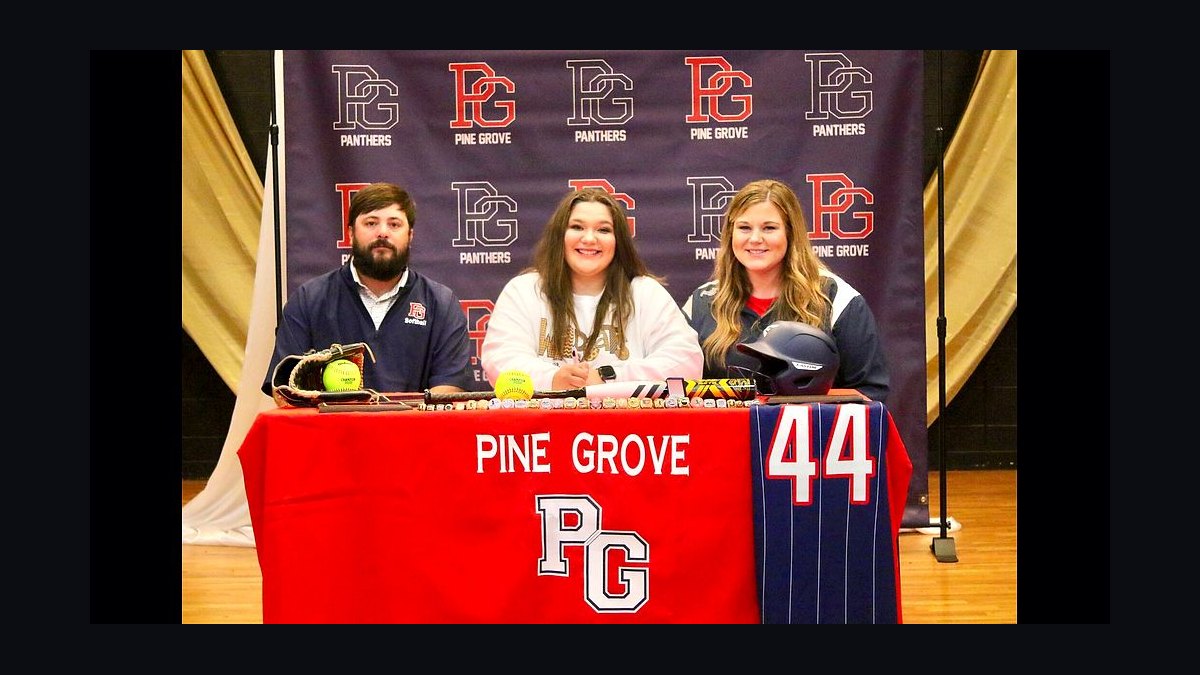
College baseball and softball are adapting to NIL in 2027 by leaning hard on three levers: expanded scholarship counts (baseball jumped from 11.7 to 34, softball from 12 to 25 under the House v. NCAA settlement), collective-funded marquee deals anchored by NiJaree Canady's back-to-back seven-figure contracts with Texas Tech's Matador Club, and revenue-share allocations that still send only roughly 13% of each school's $20.5M cap to non-revenue sports. The result is a barbell market: a handful of $500K-$1M+ stars, a thick middle of $50K-$250K starters, and a long tail still earning four-figure marketing money through Opendorse, INFLCR, and On3 NIL Database partnerships.
1The Structural Reset: House Settlement Numbers That Reshape Both Sports
1.1 New Roster and Scholarship Math
The House v. NCAA settlement, approved by Judge Claudia Wilken in June 2025 and now in its second full operating year in 2027, dismantled the old head-count vs. equivalency scholarship model. Baseball moved from 11.7 equivalency scholarships spread across ~40 roster spots to 34 fully-fundable scholarships. Softball climbed from 12 to 25. Every athlete on the roster can now be on full aid if the school chooses to fund it, which has rewired both recruiting and transfer-portal behavior.
1.2 The $20.5M Revenue-Share Cap and Sport Allocation
Each opted-in Power Four school can directly pay athletes up to $20.5M in year one (2025-26), climbing to roughly $32M by 2035 under the 10-year escalator. Football typically claims 75%, men's basketball 15%, women's basketball 5%, and all remaining sports including baseball and softball split the final ~5%. Arkansas AD Hunter Yurachek publicly stated baseball will receive about $1M of the Razorbacks' first-year pool — a meaningful jump from zero but a fraction of football's $13.5M+ share.

1.3 The Deloitte "NIL Go" Clearinghouse
Any third-party NIL deal over $600 now routes through NIL Go, the Deloitte-operated clearinghouse that judges fair-market value before approval. Collective deals still flow, but purely booster-funded "pay-for-play" contracts above market get flagged or rejected. For baseball and softball — where collectives historically subsidized below-market sponsor deals — this has forced more authentic brand partnerships through Opendorse, INFLCR, and AthleteHub.
2The Canady Effect: Softball's Million-Dollar Watershed
2.1 Texas Tech's $1,050,024 Move
NiJaree Canady transferred from Stanford to Texas Tech before the 2025 season on a one-year, $1,050,024 deal with The Matador Club — $1M base + $50K living + $24 jersey-number bonus. She became the first seven-figure softball player in NCAA history. After leading the Red Raiders to the program's first WCWS final in 2025, she re-upped for another seven figures for the 2025-26 season and earned 2026 Big 12 Co-Pitcher of the Year (21-4, 1.39 ERA, 194 strikeouts in 135 IP).

2.2 The AUSL Bridge Deal
Canady also signed a multi-year NIL agreement with the Athletes Unlimited Softball League (AUSL) in early 2026 — the first "golden ticket" guaranteed roster spot in the league's 2026 College Draft. The structure is important for the sport: it bridges college NIL earnings into professional softball income, which historically capped out around $30K-$50K per pro season.
2.3 Copycat Programs
Oklahoma, Texas, UCLA, Florida, Tennessee, and LSU have all stood up softball-dedicated NIL pools in response. Ella Parker and Kasidi Pickering at Oklahoma are estimated in the $250K-$350K range; Alyssa Atwood at Texas turned down a Texas Tech transfer pitch in 2025 to stay in Austin under a comparable six-figure package. Jordy Frahm (formerly Jordy Bahl) at Nebraska sits in the mid-six figures.
3Baseball's Slower, Bifurcated Adaptation
3.1 Why Baseball Lags Football and Basketball
Baseball's NIL valuations are structurally compressed for three reasons: the MLB Draft pulls top talent out before they accumulate brand equity, TV inventory is fragmented across SEC Network, ESPN+, and conference-owned streams, and regular-season attendance outside the SEC and a few ACC programs rarely cracks 3,000 per game. Baseball America's "Coaches Confidential" survey in 2026 put the most-commonly-heard top deals at $500K-$750K, with $800K as the reported ceiling — versus $1M+ floors for elite football quarterbacks.
3.2 The 2026-2027 Top Earners
Gavin Guidry (LSU, RHP) carries a $500K+ valuation per On3 NIL. Wehiwa Aloy (Arkansas, SS), Jace LaViolette (Texas A&M, OF), Cam Cannarella (Clemson, OF), and Hagen Smith alumni successors at Arkansas all earn between $125K and $850K annually depending on MLB Draft stock. The 2026 MLB Draft cycle drove a demand spike for draft-eligible juniors, with Tennessee, LSU, Vanderbilt, Texas A&M, and Florida front-loading collective payments to delay early signings.

3.3 The Scholarship-as-Currency Workaround
For programs without Tier 1 collectives, the 34 full scholarships function as NIL substitutes. A Big West or Sun Belt program that previously offered 25% partial aid can now offer 100% tuition + room + board + cost-of-attendance stipend — a package worth $60K-$80K per year at a private school. Coaches like Wake Forest's Tom Walter and East Carolina's Cliff Godwin have publicly framed this as "the new middle-class NIL" for non-blueblood baseball.
4The Collective Playbook in 2027
4.1 Softball Collectives Outpacing Baseball
The Matador Club (Texas Tech), Crimson & Cream (Oklahoma), Texas One Fund, and The Foundation (Florida) all carved out dedicated softball line items in their 2026-27 budgets — typically $1.5M-$3M per program. Baseball collectives at the same schools run $2M-$5M, only modestly larger despite roster sizes 2x bigger. The Matador Club publicly disclosed roughly $3.5M committed to baseball + softball combined for 2026-27.
4.2 Conference-Wide Strategies
The SEC continues to lead spending — Arkansas, LSU, Tennessee, Vanderbilt, Florida, Texas A&M, and Mississippi State all run top-15 national baseball NIL programs. The ACC's Wake Forest, Clemson, Virginia, and NC State have mid-six-figure collective baseball budgets. Oregon State and UCLA anchor West Coast spending post-Pac-12 collapse. Softball spending concentrates more narrowly — Texas, Oklahoma, UCLA, Tennessee, LSU, Florida, Texas Tech, and Alabama account for roughly 70% of all softball NIL dollars.
4.3 The Brand-Partnership Reality
Outside collectives, real third-party brands moving money into the sports include EvoShield, Marucci, Easton, Rawlings, DeMarini, Boombah, Mizuno, Athletic Brewing (21+ athletes only), Bose, Beats, Vuori, Lululemon, and regional dealerships. The WCWS in Oklahoma City has become a discrete earning window — Front Office Sports reported softball NIL deal flow spikes 4-6x during the WCWS broadcast window vs. regular-season averages.

5Operator Realities at the Program Level
5.1 The Head Coach's New Job Description
Coaches like Texas softball's Mike White, Oklahoma's Patty Gasso, LSU baseball's Jay Johnson, and Tennessee baseball's Tony Vitello now spend 30-40% of their off-season time on NIL fundraising and roster management — a fundamental shift from recruiting and scouting as the primary off-season activities. Programs without a dedicated GM (a role now standard at Tennessee, LSU, Arkansas, Texas, Florida State softball) are falling behind in the portal.
5.2 The Transfer Portal Arms Race
The NCAA transfer portal for baseball and softball now opens twice per year. Canady's Stanford-to-Texas Tech move is the template: a proven star + a willing collective + a coach who builds the package. 2026 portal data showed 41% of D-I softball starters transferred at least once; baseball hit 38%. Programs that can't match at least $50K-$100K NIL floors for proven starters are losing established juniors and seniors to mid-major collectives offering more.

5.3 The Compliance and Tax Layer
Athletes now receive 1099-NEC forms from collectives and brands; many top earners work with firms like Athlete Wealth Management, AWM Capital, or Family Office Sports Group for quarterly estimated taxes, LLC structuring, and disability insurance (the latter especially for baseball draft-eligible juniors). Schools like Vanderbilt, Duke, and Stanford offer NIL education courses for credit; Ohio State runs "The Eleven" program that teaches financial literacy to NIL earners.
6What Programs Are Doing Right (and Wrong) in 2027
6.1 Winning Plays
The programs adapting best share four traits: a dedicated sport-specific GM, a collective with predictable annual funding (not one-off booster drives), integrated portal-and-NIL evaluation, and branded content infrastructure (in-house photo, video, and social teams that raise individual athlete profiles for third-party deal flow). Tennessee baseball under Vitello, Texas softball under White, and Texas Tech softball under Gerry Glasco are the case studies.

6.2 Losing Plays
The programs falling behind typically chase the marquee star instead of building a balanced roster pool, front-load collective dollars to incoming freshmen at the expense of retaining productive juniors, or wait on third-party deals that never materialize at scale outside the WCWS / College World Series spotlight.
6.3 The Mid-Major Calculus
Coastal Carolina baseball, UCSB, Dallas Baptist, East Carolina, Liberty softball, and James Madison softball are running a scholarship-heavy, modest-NIL model — using the 34 / 25 full-aid allowance as their primary recruiting currency and layering $5K-$25K third-party deals on top. It's working for player retention but caps their portal upside against Power Four programs.

FAQ
How much NIL money can a typical Division I baseball or softball player expect in 2027? Most players fall in a wide range. A small number of stars earn $500,000 to over $1 million, many regular starters get $50,000 to $250,000, and the majority of roster players still earn four-figure amounts through platform deals on Opendorse or INFLCR.
Do the expanded scholarship limits mean every baseball player gets a full ride now? No. Baseball’s scholarship limit rose from 11.7 to 34, and softball’s from 12 to 25, but coaches can still split those awards. Many programs use partial scholarships combined with NIL earnings to make attendance affordable, so few athletes get a full cost-of-attendance scholarship alone.
How are collectives involved in baseball and softball NIL deals? Collectives, like Texas Tech’s Matador Club, often fund the largest deals. They typically concentrate on a few high-profile athletes—such as NiJaree Canady’s reported seven-figure contracts—while smaller collective pools support mid-tier starters with five- or low-six-figure agreements.
What role do revenue-sharing caps play in these sports? Under the House v. NCAA settlement, schools can share roughly $20.5 million annually with athletes, but only about 13% of that cap typically goes to non-revenue sports like baseball and softball. That limits direct school-funded NIL for most players, making third-party deals and collectives more important.
Are baseball and softball players using the same NIL platforms as football and basketball players? Yes. Most athletes in both sports use Opendorse, INFLCR, or On3 NIL Database to manage marketing opportunities, connect with brands, and track earnings. These platforms handle everything from social media promotions to autograph sessions.
Has NIL changed recruiting in college baseball and softball? Yes, especially for top talent. High school stars now often choose programs based on collective support and NIL potential, not just scholarships or facilities. Programs that lack strong collective backing can struggle to land elite recruits, while those with active collectives gain a clear advantage.
Bottom Line
College baseball and softball in 2027 are operating in a fundamentally different economy than they were in 2024. NiJaree Canady's seven-figure deals redefined softball's ceiling, the 34 / 25 scholarship expansions redefined the middle class, and the $20.5M revenue-share cap redefined what schools can directly pay. Both sports remain dwarfed by football and men's basketball in raw dollars, but the rate of professionalization is faster than either of those sports experienced in their first three NIL years. Programs that built dedicated GMs, predictable collective funding, and integrated portal strategies are winning; those waiting for the market to settle are losing recruits in real time.
Related on PULSE
- How are sales teams adapting to AI agents that book meetings without human contact?
- How are B2B sales teams adapting demo scripts for 2027 when the buyer has already run AI-generated product comparisons?
- How do you apply baseball On-Base Percentage philosophy to SDR pipeline generation?
- How do you apply baseball On-Base Percentage philosophy to SDR pipeline generation?
- Why are internal referral programs ineffective when AI agents suppress organic peer recommendations in 2027?
- How have buyer enablement programs changed to support larger buying committees in 2027?
Sources
- ESPN — "NiJaree Canady signs another 7-figure deal with Texas Tech" (2026)
- ESPN — "How NiJaree Canady became college softball's first million-dollar player" (2025 WCWS feature)
- Baseball America — "College Baseball NIL: What Are The Largest Deals? Coaches Confidential" (2026)
- 247Sports — "Arkansas Razorbacks Baseball NIL Revenue Sharing" (Hunter Yurachek interview, 2026)
- On3 NIL Database — College Baseball and Softball Valuations (rolling 2026-27)
- Opendorse — "NIL at 3" and "Top 10 Most Marketable Softball and Baseball Student-Athletes" (2026 reports)
- Front Office Sports — "WCWS Is Tight But Lucrative Earning Window for Softball Stars" (2026)
- The Athletic — House v. NCAA settlement coverage and revenue-share allocation analysis (2025-26)
- Sportico — College athletics revenue-share cap and Deloitte NIL Go reporting (2025-26)
- MLB.com — "Texas Tech's Canady gets 1st golden ticket for 2026 AUSL College Draft"
This page will be disappearing soon. Save it to your device for $1 — or read it free while it is here.
@Kory-White- · if Venmo asks, the last 4 of my number are 2012
This page is gone.
This one is off the shelf now. $1 keeps it on your phone for good — the whole page, pictures and diagrams included.
 nilWhat are the biggest NIL brand deals of 2027 so far?
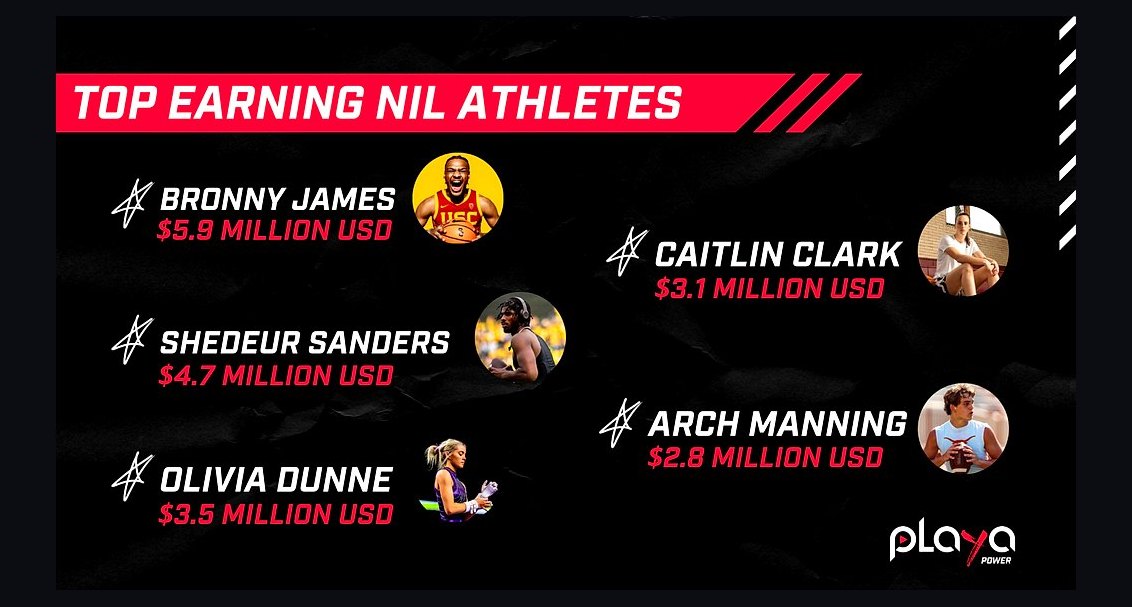 nilHow do college athletes choose their NIL agents in 2027?
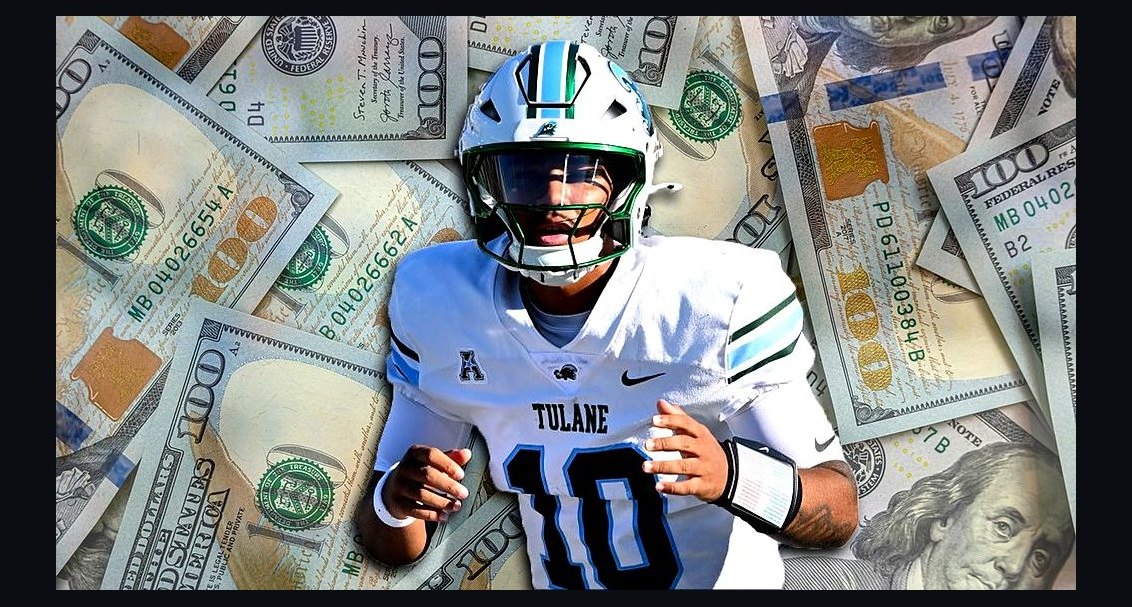 nilWhat is the typical college quarterback NIL package at a top program in 2027?
 nilHow do NIL contracts protect athletes from exploitation in 2027?
 nilWhat is the average NIL deal size for a top-100 football recruit in 2027?
 nilWhat is the typical NIL endorsement structure for a Heisman candidate in 2027?
 nilHow do NIL collectives actually work in 2027?
 nilWhat is the role of On3 Sports and 247Sports in NIL valuations in 2027?
 nilWhich NIL platforms do college athletes actually use in 2027?
 nilWhat is the future of NIL through 2030 — predictions and risks in 2027?