


How do you improve your LTV to CAC ratio in 2027?
Quality
Certified

You improve your LTV to CAC ratio in 2027 by working both sides of the equation at once: raise lifetime value through retention, expansion, and pricing, and lower acquisition cost through channel efficiency, conversion, and better targeting. Retention gains compound while CAC cuts hit a floor, so audit LTV first. Segment the ratio, and read it alongside payback.
A concrete scenario: the 4:1 ratio that was quietly bleeding cash
Picture a B2B SaaS company closing out 2026 at roughly $28M ARR. Blended LTV:CAC sits at a comfortable-looking 4:1, and the board deck leads with it. Then the CFO pulls the ratio apart by segment and the picture inverts. The self-serve SMB motion is running near 6:1 with a 9-month payback. The mid-market sales-assisted motion is at 3.4:1 with a 17-month payback. The enterprise motion — the one the CEO wants to fund aggressively in 2027 — is actually at 1.9:1 with a 31-month payback, propped up by an LTV model that assumes a 7-year average life and 85% gross margin, neither of which matches observed cohort data.
Nothing about that company's blended number is a lie, exactly. It is just an average of three very different businesses, and the average is hiding the fact that the newest growth dollar is being deployed into the weakest economics. This is the single most common way LTV:CAC fails as a decision tool: it gets reported as one number, celebrated or mourned as one number, and never used to route capital. The fix is not a better formula. The formula is fine. The fix is discipline about inputs, segmentation, and what you do with the output.
For a RevOps leader heading into 2027, the operating environment sharpens the stakes. Capital is more expensive than it was in the 2021 era, boards have internalized efficiency metrics, and "growth at any cost" is no longer a fundable story. LTV:CAC and CAC payback have moved from a slide in the appendix to the first three slides. That means the ratio is now a planning input, not a scorecard — something you forecast against, allocate against, and defend quarter by quarter.

The scenario above also illustrates why the ordering matters. If that company had started by cutting CAC — trimming paid spend, freezing headcount — it would have slowed growth without fixing the enterprise motion's fundamental problem, which is that customers churn before the acquisition cost is recovered. The retention fix is slower to show up but it changes the shape of the curve. That is the core argument of this page: work LTV first, CAC second, and segment both.
How the mechanism actually works
LTV:CAC is a ratio of two estimates, and both estimates are built from assumptions that are easy to get subtly wrong. Understanding the mechanics is what separates a number you can act on from a number you can only report.
LTV is typically calculated as average revenue per account multiplied by gross margin, multiplied by average customer lifetime. Average lifetime is usually derived from churn — if annual logo churn is 12%, average life is roughly 1/0.12, or about 8.3 years. Some teams use a discounted or capped version (often 3-5 years) to avoid the absurdity of implying a customer pays you for a decade. Either approach is defensible as long as it is applied consistently and disclosed. What is not defensible is mixing methods between quarters or between segments.

CAC is fully-loaded sales and marketing cost divided by new customers acquired in the same period. "Fully-loaded" is where most teams cheat, usually without meaning to. If you count only ad spend and exclude sales salaries, SDR cost, marketing ops headcount, tooling, and the portion of executive time spent on demand generation, you are understating CAC and inflating the ratio. A common and reasonable convention is to include all sales and marketing expense from the income statement, divided by new logos (not new logos plus expansion — expansion is an LTV event, not an acquisition event).
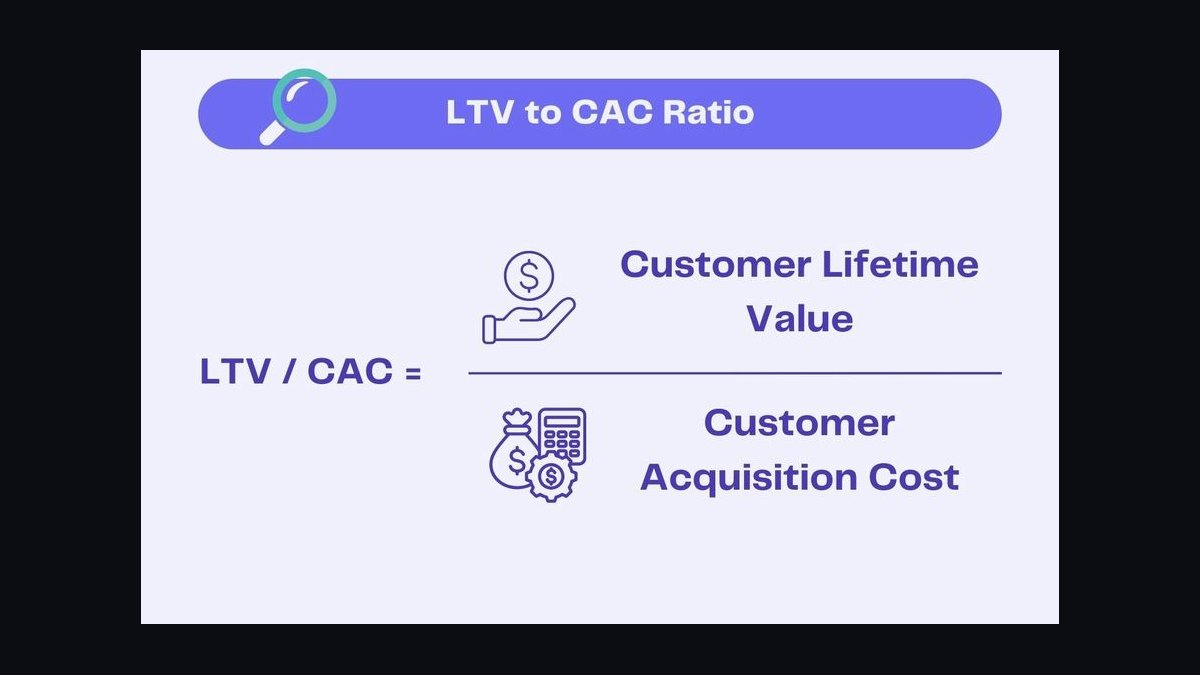
The ratio itself is LTV divided by CAC. The interpretation bands most operators use: below 3:1 signals weak unit economics that will not sustain growth; 3:1 to 5:1 is the healthy band; sustained ratios well above 5:1 often mean the company is underinvesting in growth and ceding share to competitors who are willing to pay more to acquire.
The loop at the bottom of that diagram is the part most teams skip. Improving the ratio is not a one-time project; it is a reallocation cycle. You measure, you segment, you move budget toward the segments with the strongest economics, and you re-measure. The companies that do this quarterly compound an advantage over the ones that set channel budgets once a year in a planning offsite.
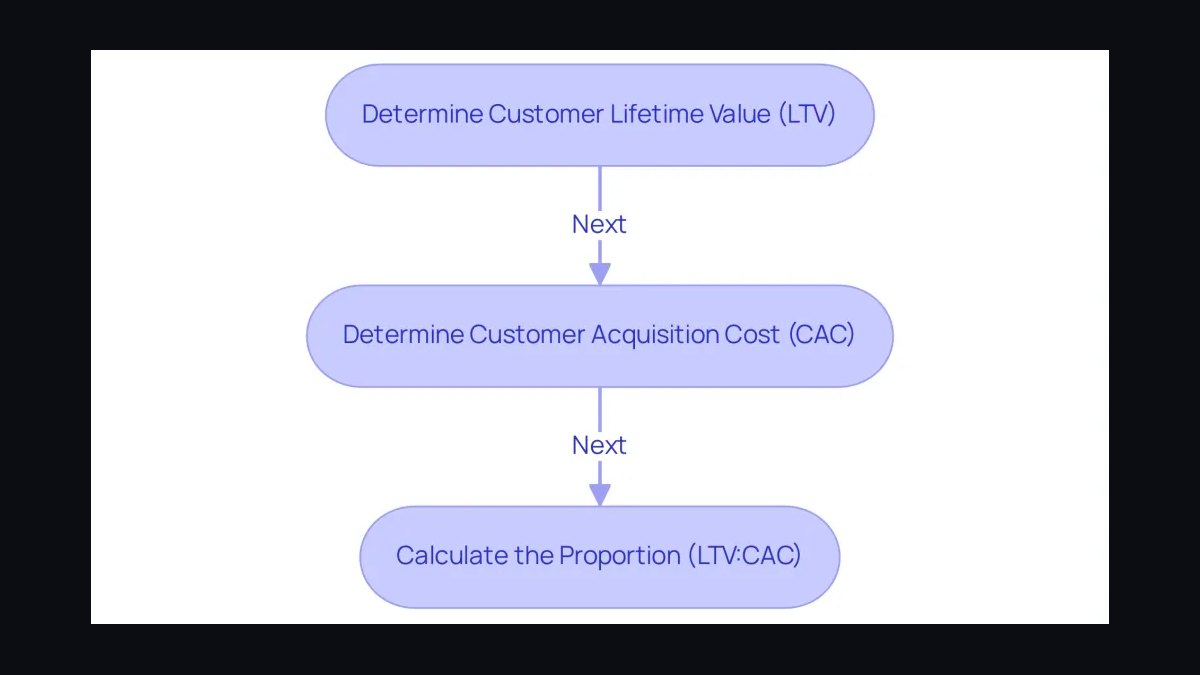
There is one more mechanical point worth internalizing: the two sides are not independent. Better ICP targeting lowers CAC and raises LTV simultaneously, because customers who fit the product retain longer and expand more. Product-led acquisition lowers CAC and often raises LTV for the same reason. This is why the highest-leverage moves are the ones that touch both sides — they are rare, but when you find one, fund it heavily.
Real numbers, ranges, and benchmarks
Benchmarks are a starting point for calibration, not a target to hit blindly. Your own cohort data is always the better reference. That said, here are the ranges that show up repeatedly in SaaS operating practice and are worth using as sanity checks.
LTV:CAC by motion. Self-serve and product-led motions commonly run 4:1 to 8:1 because acquisition cost is low and largely fixed. Sales-assisted SMB motions typically land 3:1 to 5:1. Enterprise motions with long cycles, solution engineers, and proof-of-concept costs often run 2:1 to 4:1, and it is not unusual for a newer enterprise motion to sit below 3:1 for several quarters while it matures. Judging a two-year-old enterprise motion against a mature self-serve motion is a category error.
CAC payback. The common target is under 18 months, with best-in-class operators under 12. Payback is calculated as CAC divided by gross-margin-adjusted monthly revenue per customer. A 4:1 ratio paired with a 30-month payback is a cash trap: the economics are eventually fine, but you fund the business out of pocket for two and a half years per customer. In a higher-rate environment that is a real constraint, not a theoretical one.
Net revenue retention. NRR above 110% is a strong signal; above 120% is elite and materially changes what you can afford to pay for acquisition. If each cohort grows in value, you can rationally spend more upfront. NRR below 100% means your installed base is shrinking in dollar terms, which puts enormous pressure on new logo acquisition just to stand still.
Gross margin. SaaS gross margins typically run 70% to 85%. A 10-point margin difference changes LTV by roughly the same proportion, so margin improvement — infrastructure cost reduction, support deflection, vendor renegotiation — is a legitimate LTV lever that requires no customer behavior change at all.
The retention math, made explicit. This is the single most important numeric insight on the page. Average lifetime is approximately the inverse of churn. At 15% annual churn, average life is about 6.7 years. At 10%, it is 10 years. At 5%, it is 20 years. So cutting churn from 15% to 10% does not improve LTV by a third — it improves it by roughly 50%. Cutting it from 10% to 5% doubles LTV. No CAC change comes close to that kind of leverage, and CAC reductions have a hard floor at zero. This convexity is why retention and expansion deserve first attention when a ratio is weak.
Expansion as a multiplier. Moving NRR from 100% to 115% over a couple of years can raise effective LTV by 30% or more, depending on how you model it, because you are layering growth onto a base you already paid to acquire. Structured expansion motions — usage-based upgrade triggers, product-qualified expansion signals, contractual escalators — are the usual mechanisms.
Pricing. A 5% to 15% price increase on a retained base, executed with reasonable notice and clear value framing, often produces minimal incremental churn and flows almost entirely to LTV. This is frequently the fastest LTV lever available, though it is a one-time move rather than a compounding one.
Channel spread. The variation between channels is usually larger than the variation between companies. Referral and community-driven acquisition often produces the lowest CAC and the highest-quality customers; paid channels vary widely and need to be judged on downstream LTV, not just cost per lead. A channel that looks expensive on CPL can be cheap on LTV:CAC if those customers retain and expand.
Trade-offs and alternatives
Every lever on this page has a cost, and pretending otherwise is how teams end up with a ratio that looks great and a business that stalls.
Cutting CAC versus investing in LTV. CAC reduction is fast and visible — pause a campaign and the number moves next month. LTV improvement is slow and compounding — retention work shows up over quarters. The temptation is to reach for the fast lever. The problem is that CAC cuts are self-limiting: you can trim inefficient spend, but beyond that you are cutting into demand generation that feeds the pipeline, and the ratio improves while the business shrinks. LTV work has no such ceiling. The right sequencing is usually to fix retention and expansion first, then optimize acquisition cost against a healthier base.
Chasing a higher ratio versus funding growth. A 6:1 ratio is not automatically better than a 4:1 ratio. If your competitors are acquiring at 3:1 and growing three times faster, your "efficient" 6:1 may be a slow surrender of market share. Very high ratios are a signal to test higher spend, not to celebrate. The discipline is to find the spend level where the marginal LTV:CAC is still comfortably above your threshold, and to keep spending until you reach it.
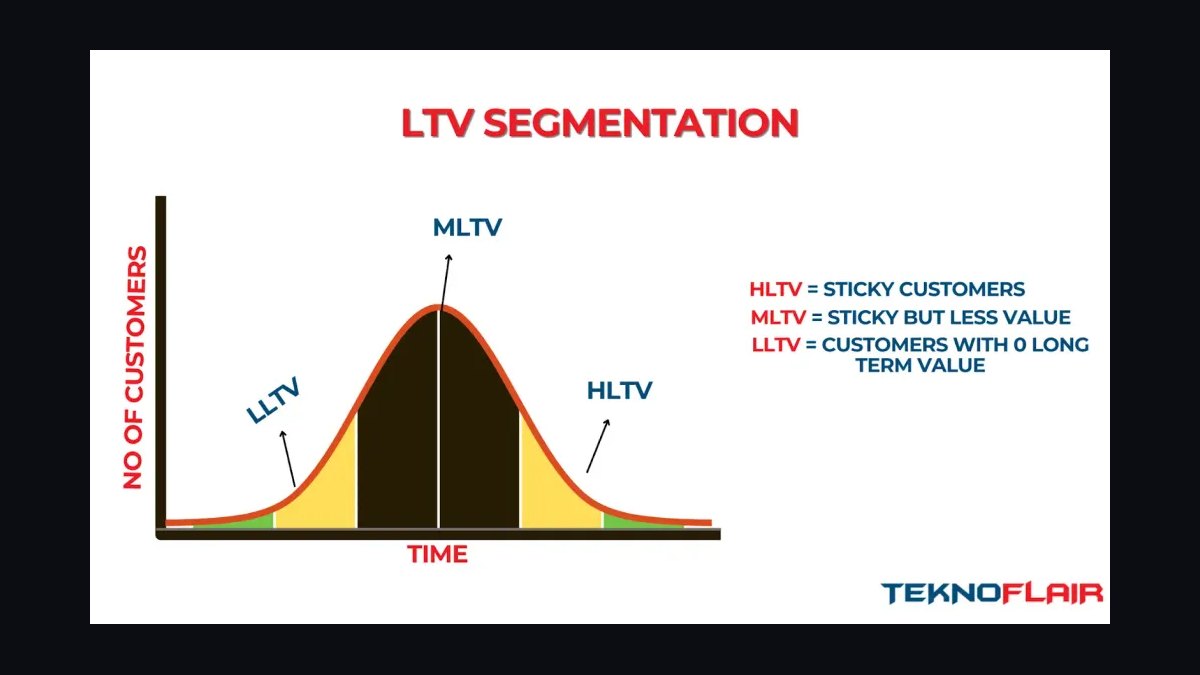
Blended versus segmented reporting. A single blended ratio is easy to communicate and easy to game. Segmented ratios are more informative and more work to maintain. The practical compromise most mature RevOps functions land on is: report blended for the board, report segmented for operating decisions, and never make an allocation decision off the blended number alone.
Annual versus monthly billing. Pushing customers to annual contracts improves cash collection and reduces churn risk, which helps LTV. But it can also slow initial conversion, which raises CAC. The net effect is usually positive, but it is worth measuring rather than assuming.
Growth-stage versus efficiency-stage posture. An early-stage company may rationally accept a 2:1 ratio to establish a beachhead, because the learning and reference value of early customers is not captured in the LTV formula. A later-stage company with a mature motion has no such excuse. The benchmark you hold yourself to should reflect where you are, not where a blog post says you should be.
Common pitfalls and how to avoid them
Optimistic LTV assumptions. The most common failure is modeling lifetime from a target churn rate rather than observed cohort behavior. If your actual 24-month retention is 60% but your model assumes 85%, your LTV is fiction. Fix: build LTV from real cohort curves, cap the lifetime assumption at a defensible number of years, and re-derive it every quarter. If you cannot produce a cohort retention curve, that is the first thing to build.
Understated CAC. Counting only media spend is the classic version. The subtler version is excluding sales salaries, SDR cost, marketing tooling, events, and the amortized cost of content that took a year to produce. Fix: pull total sales and marketing expense from the financial system, divide by new customers in the period, and document exactly what is included so the definition does not drift.
Mixing acquisition and expansion in the denominator. If you count expansion revenue as a "new customer" for CAC purposes, you understate acquisition cost. Expansion belongs on the LTV side. Keep the two clean.
Reporting only the blended number. As the opening scenario showed, a healthy blend can conceal a segment that is destroying value. Fix: segment by channel, by customer tier, and by acquisition cohort. Review the segment table quarterly and act on it.
Ignoring payback. A ratio without a payback figure is half a picture. Two companies with identical 4:1 ratios can have wildly different cash profiles. Report both, always.
Treating a very high ratio as victory. A 7:1 ratio sustained over multiple quarters usually means underinvestment. Fix: run a spend-increase test in your strongest segments and measure whether marginal LTV:CAC holds above your threshold.

Letting the definition drift. If the LTV formula changes between quarters, trend lines become meaningless and the metric loses credibility with finance. Fix: write the definition down, version it, and require sign-off to change it.
Optimizing the metric instead of the business. The ratio is a proxy. If you find yourself making decisions that improve the ratio but obviously harm the business — cutting support to reduce cost, for example, which quietly raises churn — you have lost the plot. The ratio is a lens, not a target.
Neglecting the feedback loop between acquisition quality and retention. The cheapest customers to acquire are sometimes the worst to retain. If you optimize CAC without checking downstream retention by channel, you can improve the ratio on paper while degrading it in reality. Always measure LTV by acquisition source.
Related questions
How long does it take to move LTV:CAC meaningfully?
CAC-side improvements from channel reallocation and conversion work can show up in 30 to 60 days. LTV-side improvements from retention and expansion typically take two to four quarters to compound into the ratio. Plan for a 6-to-12-month horizon for a durable shift.
Is it better to improve LTV or reduce CAC first?
Audit LTV first in most cases. Retention and expansion gains compound and have no hard ceiling, while CAC cuts hit a floor quickly. Fix the LTV side, then optimize acquisition cost against a healthier base.
Can a company have too high an LTV:CAC ratio?

Yes. A sustained ratio above roughly 5:1 often signals underinvestment in growth. If competitors are acquiring aggressively at lower ratios, an unusually high ratio can mean you are ceding market share to protect a metric.
Does a strong LTV:CAC ratio guarantee healthy cash flow?
No. The ratio says nothing about timing. A 4:1 ratio with a 30-month payback still means you fund each customer for two and a half years before breaking even. Always read the ratio alongside CAC payback.
Should expansion revenue count toward CAC calculations?
No. Expansion is an LTV event. CAC should be total sales and marketing cost divided by new customers acquired. Mixing expansion into the denominator understates true acquisition cost and inflates the ratio.
FAQ
What is a good LTV to CAC ratio in 2027? The widely used healthy band is 3:1 to 5:1. Below 3:1 suggests acquisition economics that will not sustain growth. Above 5:1 consistently often indicates underinvestment. The right target depends on your stage, motion, and market, so calibrate against your own cohort data.
Why is retention considered the bigger lever than CAC reduction?

Because lifetime is roughly the inverse of churn, so LTV responds non-linearly to retention improvements. Cutting churn from 15% to 10% raises LTV by about 50%. CAC reductions have a hard floor at zero and often come at the cost of pipeline. Retention gains compound; cost cuts do not.
How do I calculate CAC correctly? Take total sales and marketing expense for the period — including salaries, tooling, events, and overhead — and divide by the number of new customers acquired in that same period. Exclude expansion revenue from the customer count. Document what is included so the definition stays consistent.
What is CAC payback and why does it matter alongside the ratio? CAC payback is how many months of gross-margin-adjusted revenue it takes to recover acquisition cost. Target under 18 months, ideally under 12. The ratio tells you whether acquisition is ultimately profitable; payback tells you how long you wait for the cash. Both matter.
Can raising prices improve LTV:CAC without hurting retention? Often yes, if the increase is modest, well-communicated, and paired with visible value. A 5% to 15% increase on a retained base frequently produces minimal incremental churn and flows almost entirely to LTV. Test on a segment before rolling out broadly.
How often should I re-segment and re-forecast the ratio? Quarterly is the practical cadence for segment-level review and budget reallocation. Annual planning should set the targets; quarterly reviews should adjust the allocation. Waiting a full year to notice a deteriorating segment is how ratio erosion goes undetected.
Sources
- https://www.bvp.com/atlas
- https://www.iconiqcapital.com/growth/reports
- https://www.gartner.com/en/marketing
- https://openviewpartners.com/blog/
- https://www.saastr.com/
- https://www.paddle.com/studios
- https://www.battery.com/powered/
- https://www.pavilion.com/
- https://www.mckinsey.com/capabilities/growth-marketing-and-sales/our-insights
- https://www2.deloitte.com/us/en/insights.html
Related on PULSE
- What's a good LTV:CAC ratio — and why does it lie to most B2B SaaS founders?
- What is LTV (Customer Lifetime Value) and how do you calculate it in 2027?
- What's the difference between LTV and CLV, and which one matters for SaaS board reporting?
- How do you calculate 'true' LTV when you have variable churn by cohort age, and some customers never expand?
- How do I calculate LTV when expansion is meaningful?
- How do you calculate and improve pipeline coverage ratio in 2027?
This page will be disappearing soon. Save it to your device for $1 — or read it free while it is here.
@Kory-White- · if Venmo asks, the last 4 of my number are 2012
This page is gone.
This one is off the shelf now. $1 keeps it on your phone for good — the whole page, pictures and diagrams included.
 revopsHow do you measure customer acquisition cost correctly in 2027?
 revopsHow do you calculate the CAC payback period in 2027?
 revopsWhat is Magic Number and why does it matter more in 2027?
 revopsHow do you reduce forecast slippage in 2027?
 revopsHow do you align sales and customer success in 2027?
 revopsHow do you build a customer health score in 2027?
 revopsHow do you build a deal scoring model to predict close in 2027?
 revopsWho should own pipeline — demand gen or sales in 2027?
 revopsHow do you measure partner-sourced revenue in 2027?
 revopsHow do you improve average deal size in 2027?