


How do you operationalize intent data in 2027?
Published June 13, 2026 · Updated June 13, 2026
You operationalize intent data in 2027 by integrating it into your systems, scoring and prioritizing accounts by intent, routing and triggering action when accounts show buying signals, and measuring whether intent-driven plays actually produce pipeline — turning raw intent signals into timely, targeted go-to-market action. Intent data — signals that an account is researching your category or solutions (third-party topic surges, first-party engagement) — is only valuable when operationalized into action; raw intent reports that nobody acts on are useless. The approach has four parts: integrate intent into the stack, score accounts by intent (combined with fit), trigger timely action on high-intent accounts, and measure the results. The defining principle is act on intent while it is hot — intent signals decay, so the value is in timely, targeted action (sales outreach, ABM plays, ads) when an account is in-market. The 2027 best practice combines intent with fit (target high-intent AND high-fit accounts), integrates it into the ABM and sales motion, and uses AI to process intent at scale and recommend action. Operationalized intent focuses GTM effort on accounts that are actually in-market now.
1Integrate Intent Into the Stack
Intent data must be integrated into your systems to be operational — flowing into the CRM, marketing automation, and ABM platform so intent signals appear on the accounts where reps and marketers work. Intent sitting in a separate intent-vendor dashboard that nobody checks is not operationalized. The integration brings intent signals into the workflow — reps see which of their accounts are showing intent, marketing can target high-intent accounts, and the signals can trigger automated action. Sources include third-party intent (Bombora, 6sense, Demandbase — category research) and first-party intent (your website, content engagement). RevOps integrates these intent sources into the stack so the signals are actionable in the systems the team uses, not stranded in a vendor portal.
2Score and Prioritize by Intent and Fit
Raw intent is noisy, so score and prioritize accounts by intent — combined with fit. The key principle: target accounts that are high-intent AND high-fit (in-market and a good customer), not just high-intent (which includes poor-fit accounts researching the category). Combine intent strength (topic relevance, surge, recency) with ICP fit to prioritize the accounts worth acting on. This intent-plus-fit scoring (the same logic as ABM account scoring) focuses effort on in-market accounts you can actually win. Prioritizing by intent alone wastes effort on poor-fit accounts; combining intent with fit directs action to the best opportunities that are active now. RevOps builds the intent-plus-fit scoring that prioritizes which high-intent accounts deserve action.

3Trigger Timely, Targeted Action
The core of operationalizing intent is triggering timely, targeted action on high-intent accounts while the intent is hot. Because intent decays, the value is in acting fast when an account is in-market. Operationalize triggers: a high-intent, high-fit account should prompt sales outreach (with the intent context — what they're researching), activate ABM plays (targeted ads, personalized content), and get prioritized in rep queues. The action should be targeted to the intent — engaging the account around what it's researching. This timely, intent-informed action is what converts intent signals into engagement and pipeline. The 2027 best practice automates the triggers (intent threshold → action) so high-intent accounts are acted on promptly, not weeks later when the intent has cooled. RevOps builds the triggers and routing that drive action on hot accounts.
4Equip Sales to Act on Intent
For intent to drive sales action, reps must be equipped to use it. Provide reps the intent context (which accounts are showing intent, on what topics) in their workflow, and enable them to act on it — how to reach out to an in-market account, referencing the relevant context. Intent that reps don't see or don't know how to use drives no action. Surface intent in the CRM where reps work, prioritize high-intent accounts in their queues, and coach them to engage in-market accounts with relevant, timely outreach. This sales enablement — intent in the workflow plus the know-how to act — is what makes intent operational for the sales motion. RevOps ensures reps see and can act on intent, partnering with enablement on the playbooks for engaging in-market accounts.

5Measure Whether Intent Drives Pipeline
Operationalized intent must be measured — does acting on intent actually produce pipeline and revenue? Track whether intent-driven plays (outreach, ABM, ads to high-intent accounts) generate engagement, pipeline, and revenue better than non-intent-driven effort. This measurement validates that intent is worth the investment and refines the approach (which intent signals predict real opportunities, which plays convert). Intent data is a paid investment, so proving it drives pipeline is essential to justifying and optimizing it. Without measurement, you cannot tell whether intent is genuinely improving targeting or just adding noise and cost. RevOps measures the pipeline impact of intent-driven action, validating ROI and refining which intent signals and plays work. The measurement closes the loop on operationalizing intent.
6Use AI to Process Intent at Scale in 2027
In 2027, AI processes intent at scale and makes it more actionable. Intent data is high-volume and noisy, and AI distills it — identifying which accounts are genuinely in-market, which signals are meaningful, and which deserve action, more accurately than manual review. AI combines intent with fit and other signals to prioritize accounts, predicts which intent-showing accounts will become opportunities, and recommends the action (which play, which message) for each. Platforms like 6sense and Demandbase embed AI-driven intent processing and recommendations. This AI processing turns the flood of intent signals into a prioritized, actionable set of accounts with recommended actions — solving intent data's signal-to-noise problem. RevOps uses AI to make intent operational at scale, surfacing the accounts worth acting on and the actions to take. The 2027 best practice is AI-processed, prioritized, action-recommended intent integrated into the GTM motion.

6.1 Make Intent Operational by Connecting Signal to Timely Action
The strategic principle for operationalizing intent data is connecting signal to timely action — the entire value of intent is acting on it while accounts are in-market, so operationalization is fundamentally about building the path from intent signal to timely, targeted, measured action. Intent data that is not operationalized — sitting in a vendor dashboard, not integrated, not scored, not triggering action, not measured — is a wasted investment, which is the common failure (companies buy intent data and never operationalize it into action). Operationalized intent — integrated into the stack, scored with fit, triggering timely action, acted on by enabled reps, and measured for pipeline impact — focuses GTM effort on the accounts that are actually in-market now, improving targeting, timing, and efficiency. The keys are integration (intent in the workflow), fit-combined scoring (target in-market AND winnable accounts), timely triggers (act while intent is hot, since it decays), sales enablement (reps see and act on intent), and measurement (validate it drives pipeline). In 2027, AI is essential to operationalizing intent at scale — processing the noisy high-volume signals into a prioritized, action-recommended set — solving the signal-to-noise problem that otherwise makes intent overwhelming. The organizations that operationalize intent well integrate it into their systems, score accounts by intent and fit, trigger timely targeted action on hot accounts, enable reps to act on it, measure its pipeline impact, and use AI to process it at scale — focusing GTM effort on in-market winnable accounts and improving targeting and timing; those that operationalize it poorly buy intent data and let it sit unactioned in a dashboard, paying for signals nobody acts on. Intent data's value is entirely in the action it drives, so operationalizing it — building the integrated, scored, triggered, enabled, measured, AI-processed path from signal to timely action — is what turns intent from an unused data subscription into a genuine targeting-and-timing advantage. RevOps owns operationalizing intent by connecting the signal to timely, targeted, measured GTM action.
7Bottom Line
Operationalize intent data by integrating it into the CRM, marketing automation, and ABM stack; scoring and prioritizing accounts by intent combined with fit; triggering timely, targeted action on high-intent, high-fit accounts while the intent is hot; enabling reps to act on it; and measuring whether intent-driven plays produce pipeline. In 2027, use AI to process the noisy, high-volume intent into a prioritized, action-recommended set at scale. The principle is connecting signal to timely action — intent's value is acting on it while accounts are in-market, so operationalization is building the path from signal to timely, targeted, measured action. Operationalized intent focuses GTM effort on in-market winnable accounts; unactioned intent is a wasted subscription.

The Human-in-the-Loop Workflow
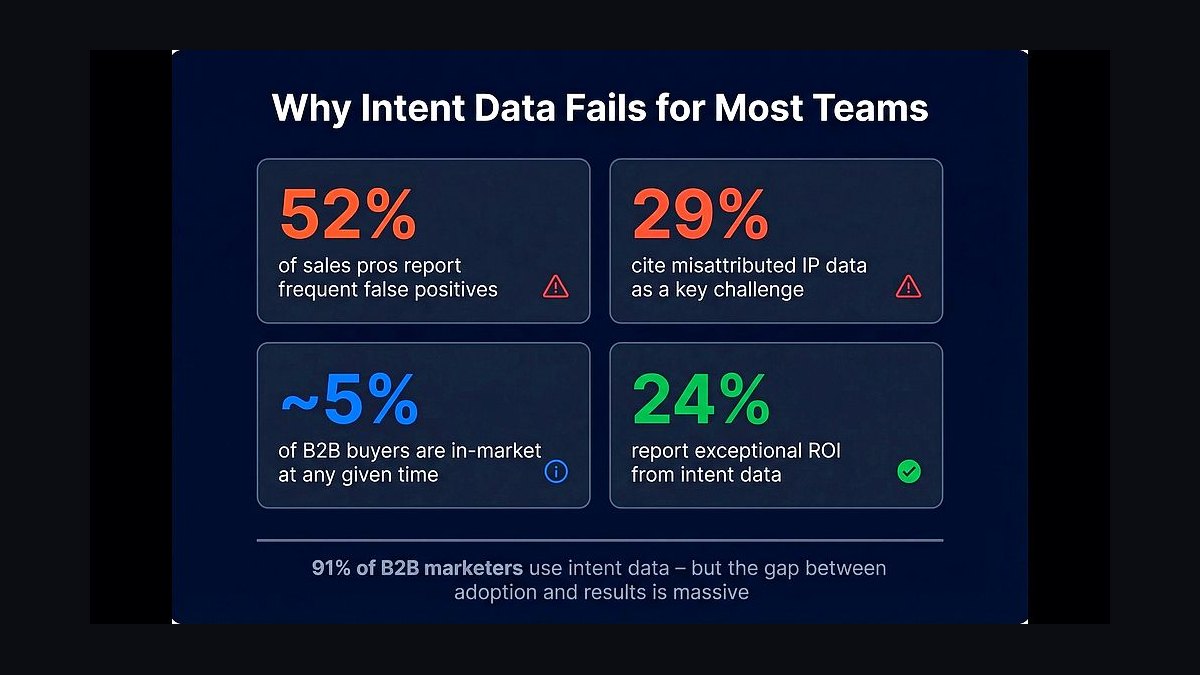
Even in 2027, intent data requires a human judgment layer to prevent automation from overreacting to noise. The most effective teams build a "triage queue" where intent-triggered accounts are reviewed by a sales development representative (SDR) or account executive within a defined time window before any automated outreach fires. This human check catches false positives—for example, a competitor's employee researching your product, or a procurement team doing due diligence on a renewal rather than a new purchase. The operational rule is simple: automate the surfacing and routing of intent signals, but keep a human gatekeeper on high-value or high-velocity triggers. This balance improves conversion rates and protects brand reputation from irrelevant or premature contact.
The Intent Data Feedback Loop
Operationalizing intent data is not a set-it-and-forget-it process; it demands a continuous feedback loop between sales outcomes and the intent scoring model. In 2027, leading teams systematically log whether an intent-driven touchpoint led to a meeting, opportunity, or closed deal—and feed that data back into the scoring algorithm. When certain intent topics or surge patterns consistently correlate with pipeline creation, those signals are weighted more heavily. Conversely, when a topic repeatedly generates false alarms, its score is dampened or the trigger is paused. This closed-loop refinement turns intent data from a static list into a dynamic, learning asset that improves over time, directly tied to revenue outcomes rather than activity metrics.

The Privacy-Compliant Activation Layer
As privacy regulations tighten and cookie deprecation reshapes digital tracking, operationalizing intent data in 2027 requires a privacy-first activation layer. This means mapping intent signals to known accounts without relying on individual-level identifiers, using aggregated or anonymized data sources. The operational step is to configure your intent platform to output only company-level signals (e.g., "Acme Corp surged on cloud security topics") and then match those to your CRM accounts. Never store raw, unhashed intent data that could be linked back to a specific person without explicit consent. This approach keeps you compliant while still enabling timely, account-based actions—such as triggering a personalized ad campaign or a sales sequence—without crossing privacy boundaries.
FAQ
What's the first step to operationalize intent data? The first step is integrating intent data into your CRM, MAP, and ABM platforms so it's accessible across your stack. Without this integration, intent signals stay siloed and can't trigger automated actions or scoring.
How do you score accounts with intent data? You combine intent signals with firmographic fit and engagement history to create a composite score. In 2027, most teams weight intent recency heavily—accounts showing intent in the recent past get priority over older signals.
What actions should you trigger from high-intent accounts? Common triggers include personalized email sequences, targeted ads, and SDR outreach—all triggered promptly after detecting the signal. The key is matching the action to the account's stage: early-intent accounts might get educational content, while late-stage signals trigger a demo request.
How do you measure if intent data is working? Track conversion rates from intent-triggered plays versus non-intent plays, and compare pipeline velocity. Results vary by industry and data quality.
What's the biggest mistake teams make with intent data? The most common error is acting on intent without verifying fit—targeting accounts that show interest but don't match your ICP. This wastes resources and can actually damage pipeline quality.
How often should you refresh intent data? Daily refreshes are standard in 2027, with some providers offering real-time signals. Intent data decays quickly—signals that are older are generally considered stale and shouldn't drive active plays.
Sources
- 6sense, Demandbase, and Bombora intent-data operationalization documentation, 2026–2027
- The RevOps Co-op community intent-data benchmarks, 2026–2027
Related on PULSE
- How will AI-driven intent data reshape B2B lead scoring by 2027?
- Why did 2027 RevOps teams stop using intent data from consolidated vendors due to audience contamination?
- How do you validate 2027 intent data when the same AI tool generates both supply and demand?
- Why are longer sales cycles in 2027 requiring RevOps to integrate real-time buyer intent data from consolidated platforms?
- What do you do when intent data and buying signals are saturated in 2027?
- How should RevOps redesign lead routing when AI in the funnel changes intent score reliability?
This page will be disappearing soon. Save it to your device for $1 — or read it free while it is here.
@Kory-White- · if Venmo asks, the last 4 of my number are 2012
This page is gone.
This one is off the shelf now. $1 keeps it on your phone for good — the whole page, pictures and diagrams included.
 revopsHow do you build a lead scoring model that sales trusts in 2027?
 revopsIs multi-touch attribution still worth it in 2027?
 revopsHow do you operationalize account-based marketing in 2027?
 revopsHow do you build a lead routing system in 2027?
 revopsHow do you build a marketing attribution model in 2027?
 revopsHow do you measure marketing's revenue impact in 2027 without third-party cookies?
 revopsWhat is the 2027 ICP rebuild trend driven by AI signal data?
 revopsHow do you measure marketing-sourced pipeline contribution in 2027?
 revopsWhat is the dark funnel and how does RevOps measure it in 2027?
 revopsHow do you build a RevOps automation roadmap in 2027?