
How are live sports media rights shifting to streaming in 2027?
 Curated byKory White · Fractional CRO · Maryland
 PULSEKNOWLEDGE LIBRARY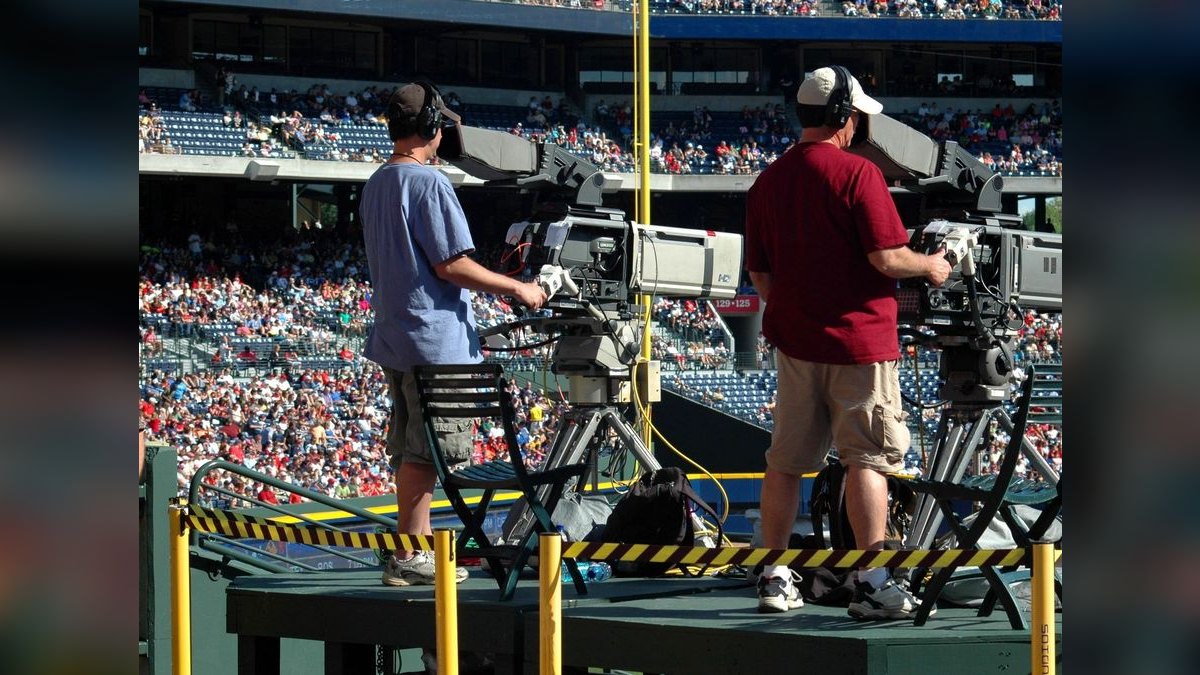
Live sports rights are shifting to streaming because platforms now outbid linear networks. Global rights spend crossed roughly $67 billion, with about $14.2 billion flowing through streaming, and Amazon Prime Video passed DAZN as the largest streaming buyer. Fans gain access but absorb more subscriptions, fragmentation, and cost.
The outcome you should expect
By 2027 the practical result is not that streaming "wins" and linear disappears — it is that every major league's rights are split across a hybrid set of buyers, and the fan is the one who reassembles them. The NBA's package is the cleanest illustration: a deal valued at roughly $76 billion over 11 years, split across ESPN (Disney), NBCUniversal, and Amazon Prime Video, with ESPN carrying roughly 80 games a season, NBC and Peacock up to 100, and Amazon 66 regular-season games. That is one league, three buyers, and at least four consumer-facing surfaces — a cable network, a broadcast network, a broadcast-owned streamer, and a general-purpose retail platform's video tier.
The NFL is the extreme version of the same pattern. Its games are spread across Disney, Paramount, Fox, NBCUniversal, Amazon, Google's YouTube, and Netflix. Seven-plus partners for one league means no single subscription — not even an expensive one — gets a fan the full season. Meanwhile other properties went the opposite direction and consolidated onto a single streamer: Paramount+ took exclusive U.S. UFC rights in a deal reported at $7.7 billion, and Netflix signed WWE Raw in a 10-year arrangement reported at $5 billion.
So the expected outcome has three concrete shapes, and you should plan against all three:
Hybrid splits (NBA, NFL). The property is deliberately fragmented across broadcast, cable, and streaming to maximize total rights revenue and reach. The league captures more dollars; the fan pays in both money and navigation friction.
Streaming exclusives (UFC on Paramount+, WWE Raw on Netflix). The property trades reach for a single very large check plus guaranteed promotional muscle inside a platform with a global subscriber base. The fan gets one bill for that property but loses the pay-per-view or linear habit they had built.
Platform-native experiments. Games distributed on surfaces that were never TV — a retail platform's video tier, a video-sharing platform's subscription package — where the sport is a retention hook attached to a much larger commerce or advertising business.
The number that anchors all of this: streaming's roughly $14.2 billion slice of a roughly $67 billion global rights market means streaming is now the fastest-growing buyer class but still a minority of total spend. Anyone telling you linear is finished in 2027 is ahead of the data. Anyone telling you the shift is reversible is behind it.
For RevOps operators watching this from the outside, the outcome to internalize is simpler than the sports specifics: when a distribution channel changes hands, the buyer set changes, and a new buyer set revalues the same asset entirely. Cable networks valued NBA games as advertising inventory that justified carriage fees. Amazon values the same games as a subscriber-acquisition and retention instrument attached to a retail flywheel. Same asset, different math, radically different bid.
What drives that outcome
Three forces are doing the actual work, and they compound.
Cord-cutting broke the funding mechanism. The old sports-rights economy ran on carriage fees — every cable subscriber paid for sports networks whether or not they watched. That cross-subsidy let a network bid far above what its actual viewership justified, because the bill was spread across tens of millions of households who never tuned in. As subscribers leave the bundle, the subsidy pool shrinks, linear margins compress, and the ceiling on what a traditional network can bid comes down with it. This is not a preference shift by leagues; it is an arithmetic constraint on the incumbent buyer.
The new buyers have a different P&L for the same content. Amazon, Netflix, Apple, Google's YouTube, and Paramount+ do not need a sports package to clear profit on its own line. They need it to acquire subscribers, reduce churn, drive engagement, and — for the retail-attached platforms — pull people into an ecosystem where video is one surface among many. When you can book a rights fee partly as customer-acquisition cost against a business with other revenue lines, you can rationally bid above what a pure-play broadcaster can. That reframing is the single biggest reason streaming spend reached roughly $14.2 billion and global rights crossed roughly $67 billion.
Advertising came back as the engine. Subscription revenue alone cannot fund multi-billion-dollar league deals. Amazon, Netflix, and Paramount+ all built or expanded ad-supported tiers, and live sports is the most valuable inventory they have: watched live, at scale, and effectively DVR-proof. That gives a platform a reason to push subscribers toward the cheaper ad tier — trading subscription ARPU for advertising ARPU on the highest-CPM inventory in the catalog. The economics of a 2027 streamer with sports look far more like a 1998 broadcast network than like 2015 subscription streaming.
A fourth, quieter driver: leagues learned that fragmentation is revenue-positive for them. Selling one national package to one network caps the price at that network's willingness to pay. Slicing a season into a Tuesday package, a Thursday package, a streaming-exclusive package, and a playoff tier creates multiple simultaneous auctions with different buyers who each value their slice differently. The NBA's three-partner structure and the NFL's seven-plus-partner structure are not accidents of negotiation — they are deliberate yield management. That is the same logic a RevOps team applies when it segments a product into tiers rather than selling one SKU: you capture more of the demand curve by refusing to price the whole thing once.
Benchmarks and realistic ranges
Use these as the reference points, and treat anything outside them as a claim that needs sourcing rather than an assumption.
Total market size. Global sports media rights crossed roughly $67 billion. Streaming's share is roughly $14.2 billion — call it a little over a fifth of total spend. If you are modeling a scenario, the defensible framing is "streaming is the growth engine on a minority base," not "streaming is the market."
Largest single buyer. Amazon Prime Video is projected at roughly 27% of streaming sports spend — approximately $3.8 billion — overtaking DAZN, which had held the top spot since 2018. The mechanism is specific and worth noting: Amazon's 11-year NBA agreement reaching its first full season front-loads recognized spend. A single league deal was enough to move a platform from challenger to global leader in one cycle, which tells you how concentrated top-tier rights value is.
Deal sizes by tier. The NBA package sits at roughly $76 billion over 11 years across three partners — an order of magnitude above any single-property streaming exclusive. UFC's exclusive U.S. deal with Paramount+ was reported around $7.7 billion. Netflix's WWE Raw arrangement was reported at 10 years and roughly $5 billion. So the realistic band for a marquee single-property streaming exclusive in this era is low-single-digit to high-single-digit billions in total contract value, while a top-tier multi-partner league package runs into the tens of billions.
Games per partner. Within the NBA structure: ESPN around 80 games per season, NBC and Peacock up to 100, Amazon 66 regular-season games. That distribution matters because it sets the fan's practical experience — no single service covers even half the national schedule, so a committed fan of one league needs multiple services.
Contract length. The durable pattern is long. Eleven years for the NBA package, eleven years for Amazon's portion, ten years for WWE Raw. Long terms are how platforms justify a rights fee against lifetime value, and how leagues lock in inflation before the buyer set can cool. The practical implication: 2027's map is largely set through the early-to-mid 2030s for the properties already sold. The next real repricing moments come at those renewal cliffs, not annually.
Per-fan cost. There is no single clean figure, and you should not invent one. What is defensible: following a single major league across its full national schedule in 2027 requires several concurrent subscriptions, and stacking those services moves total household spend back toward the cable-bill level that unbundling was supposed to escape. The bill moved and changed shape; it did not obviously shrink.
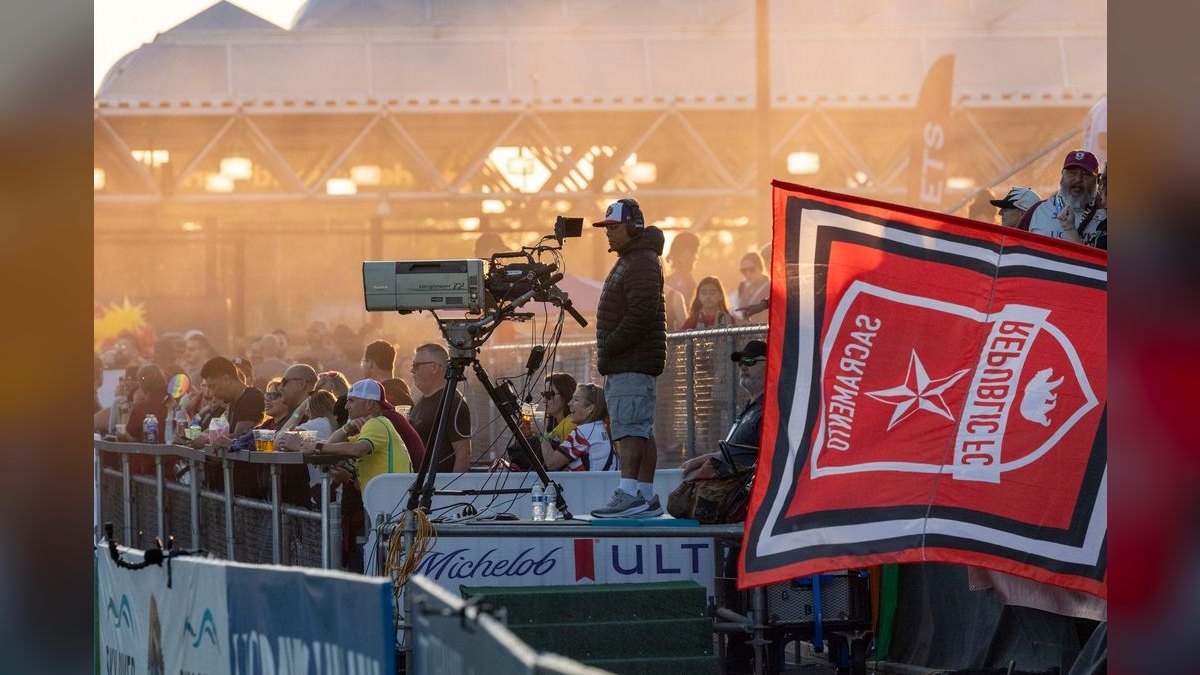
Growth direction. Streaming's share of the rights pie is rising, linear's is falling, and total spend is growing. All three can be true at once and are. The honest range for the next repricing window is wide, because it depends on whether the platforms' retention math holds — which is exactly what the next section covers.
Risks, edge cases, and failure modes
Churn is the central risk, not price. Sports as a customer-acquisition instrument only works if fans who arrive for the games stay after the season. The failure mode is a subscriber who signs up for a playoff run and cancels the week it ends — a rented audience, not a bought one. If the rights fee amortized per retained subscriber exceeds that subscriber's lifetime value, the deal destroys value regardless of how good the headline reach numbers look. Everything about the roughly $67 billion market rests on an unproven assumption: that seasonal sign-ups convert to durable tenure.
Land-grab overpayment. When a channel is in a land-grab phase, buyers overpay because the strategic fear of being locked out of marquee content outweighs the near-term return math. That dynamic produces winner's-curse outcomes: the highest bidder is disproportionately likely to be the one who mis-modeled retention. A trophy asset acquired above its retention value is still a loss, however impressive the press release. The platforms most exposed are the ones without a second revenue engine — a retail business, an ad network, a device ecosystem — to absorb a miss.
Fragmentation has a ceiling and piracy sits just past it. Fragmentation is revenue-positive for leagues right up to the point where the fan gives up. Every additional service is friction: another bill, another password, another app, another "which platform has tonight's game." Past some threshold, that friction converts into churn, into casual-fan attrition, or into piracy — which is the failure mode leagues historically underweight until it is structural. The unbundling that freed fans from cable is re-bundling as a confusing stack of subscriptions, and the confusion itself is a cost the rights holders do not book.
Technical delivery risk is real and reputational. Linear broadcast is a solved distribution problem; streaming a marquee live event to a very large concurrent audience is not. Latency behind the linear feed, regional blackouts colliding with platform geolocation, buffering at kickoff, and authentication failures at peak concurrency are all live failure modes. A single high-profile stream failure during a championship does more brand damage to a platform than a season of good delivery earns it.
Discovery collapse. When one league's games live across a broadcaster, two streamers, and a tech platform, the casual fan loses the habit of knowing where the game is. Appointment viewing depends on a stable, learnable schedule-to-channel mapping. Fragmentation breaks that mapping, and the loss shows up first among marginal fans — precisely the audience segment leagues need for long-term growth.
Regulatory and exclusivity edges. Exclusive national streaming packages raise questions about accessibility for households without adequate broadband, and about whether marquee events remain reachable outside a paywall. Different jurisdictions treat "events of national importance" very differently, so a rights structure that is clean in one market can be constrained in another. Anyone modeling a global rollout should treat regional carve-outs as the default, not the exception.
Renewal cliff concentration. Because contracts run 10-11 years, the risk is not distributed evenly across time — it clusters. When several major packages come up together, the market reprices all at once, and a platform that has quietly been underwater on retention has nowhere to hide. The correlated timing is itself a systemic risk.
A practical rollout plan
If you are on the buying side — or applying this pattern to any channel shift in a RevOps context — the sequence that survives contact with reality looks like this.
Define the retention thesis before the bid, not after. Write down, in advance, the specific number: how many net-new subscribers must this property acquire, and at what 12-month retention rate, for the deal to clear? If you cannot state it, you are not bidding — you are reacting. This is the discipline that separates a rational customer-acquisition cost from a trophy purchase.
Instrument acquisition attribution before the first game airs. You need to know which sign-ups came for the sport, on what day, through which surface. Without clean attribution you will be arguing about whether the deal worked for its entire term. Tag the acquisition source, cohort by first-game-watched, and set the measurement window before the season starts — retrofitting attribution mid-contract never produces a number anyone trusts.

Build the ad tier and the sales motion in parallel with the rights close. Live sports is the highest-value inventory a streamer will ever carry, and it is perishable — inventory that does not sell during the game is gone. If the ad stack, the measurement, and the direct-sales relationships are not in place at kickoff of season one, you have permanently forfeited a portion of the deal's economics.
Stage delivery capacity against the concurrency peak, not the average. Load-test against the championship, not the regular-season Tuesday. Run the biggest event of season one with visible redundancy and a fallback path. The reputational asymmetry is severe: flawless delivery is invisible, one failure is a permanent narrative.
Measure churn at the season boundary specifically. The month after the season ends is the only measurement that matters for the retention thesis. Track it as a distinct cohort event, compare it against the pre-deal baseline, and be honest when the number comes back bad — because the correction available in year two (bundle changes, off-season programming attached to the sport, ad-tier repricing) is much cheaper than the correction available in year eight.
Reduce fan friction as a first-class investment. Unified schedules, deep links from league apps into the right platform, clear "where is tonight's game" surfaces. Fragmentation is the fan's cost, and every point of friction you remove is churn you do not pay for later. Convenience is part of the product's value, not a separate nicety.
The transferable lesson for operators is that a hot new channel rewards early movers and punishes undisciplined ones equally. The platforms that win the sports-rights shift will not be the ones that bid highest; they will be the ones that converted seasonal viewers into long-tenured subscribers and measured it honestly enough to correct in year two.
Related questions
Is linear TV finished for live sports in 2027?
No. Streaming's roughly $14.2 billion is a minority of the roughly $67 billion global rights market. Broadcast and cable still carry the majority of games — the NBA package alone keeps ESPN and NBC central. The accurate framing is hybrid distribution, not replacement.
Why did Amazon overtake DAZN as the top streaming rights buyer?
Amazon's 11-year NBA agreement reached its first full season, front-loading recognized spend to roughly 27% of streaming sports outlay — approximately $3.8 billion. A general-purpose platform with a retail flywheel outbid a sports-specialist streamer that had led since 2018.
Do exclusive streaming deals cost leagues reach?
Yes, and deliberately. UFC on Paramount+ and WWE Raw on Netflix trade broad linear availability for a single very large check plus promotional placement inside a large global subscriber base. Leagues accept narrower reach when the guaranteed revenue and international distribution outweigh it.
How many subscriptions does following one league require now?
For the NFL, games sit across Disney, Paramount, Fox, NBCUniversal, Amazon, YouTube, and Netflix — no single service covers the season. For the NBA, coverage splits across ESPN, NBC/Peacock, and Amazon. Full national coverage of either realistically requires several concurrent services.
What would reverse the shift to streaming?
Realistically, only a retention failure at scale. If platforms find that sports-acquired subscribers churn at the season boundary faster than lifetime value supports, bids cool at the renewal cliffs. Contract terms of 10-11 years mean that repricing is years away, not imminent.
FAQ
How are live sports media rights shifting to streaming in 2027?
They are migrating from linear TV toward streaming and tech platforms, driven by cord-cutting eroding carriage-fee economics. Global rights crossed roughly $67 billion with approximately $14.2 billion flowing through streaming. Amazon, Netflix, Apple, Google's YouTube, and Paramount+ are the new buyer class, and they value the same games as subscriber acquisition rather than advertising inventory alone.
Who is the largest streaming sports rights spender?
Amazon Prime Video, projected at roughly 27% of streaming sports spend — approximately $3.8 billion — surpassing DAZN, which had led since 2018. The driver is Amazon's 11-year NBA deal reaching its first full season, which concentrated a large share of global streaming sports outlay into one platform in a single cycle.
How large is the NBA's media rights package?
Roughly $76 billion over 11 years, split across ESPN (Disney), NBCUniversal, and Amazon Prime Video. The game split runs approximately 80 per season to ESPN, up to 100 across NBC and Peacock, and 66 regular-season games to Amazon — a deliberate three-buyer structure that captures more of the demand curve than one national package would.
Which other properties moved to streaming exclusives?
Paramount+ took exclusive U.S. UFC rights in a deal reported around $7.7 billion, and Netflix signed WWE Raw in a 10-year arrangement reported at roughly $5 billion. The NFL took the opposite approach, spreading games across Disney, Paramount, Fox, NBCUniversal, Amazon, Google's YouTube, and Netflix.
How do platforms afford multi-billion-dollar rights fees?
Through a combination of advertising, subscriber growth, and price increases — not subscriptions alone. Amazon, Netflix, and Paramount+ built or expanded ad-supported tiers, and live sports is their most valuable inventory because it is watched live, at scale, and is effectively DVR-proof. Platforms with adjacent businesses can also book part of the fee as customer acquisition.
What is the biggest risk in the sports rights market?
Churn at the season boundary. Sports works as an acquisition instrument only if fans who join for the games stay afterward. If the amortized rights fee per retained subscriber exceeds that subscriber's lifetime value, the deal loses money. Whether platforms bought durable audiences or rented seasonal ones is the central unresolved question in the roughly $67 billion market.
Sources
- S&P Global Market Intelligence — Sports media rights research
- Reuters — Media & Entertainment coverage
- The Hollywood Reporter — Business news
- Variety — Streaming and media business
- Sports Business Journal — Media rights
- CNBC — Media coverage
- Nielsen — Audience measurement insights
- Deloitte — Technology, Media & Telecommunications Predictions
Related on PULSE
- [What does ESPN's direct-to-consumer streaming launch mean for the sports media bundle in 2027?](/knowledge/q13054)
- [How do the streaming wars and the path to profitability work in 2027?](/knowledge/q13046)
- [How big are college sports media rights deals and how do they drive realignment in 2027?](/knowledge/q12984)
- [What is the NBA's media rights deal and what does it signal in 2027?](/knowledge/q12994)
- [How do ad-supported streaming tiers change subscription economics in 2027?](/knowledge/q13046)
 pulse-toolsHow Many Sales Reps Do I Need to Hire for My Plumbing Company?
 pulse-toolsHow do I evaluate a fractional CRO's fit with my existing sales tech stack in 2027?
 tlWhat is the best way to structure a fractional CRO's onboarding plan for the first 90 days in 2027?
 pulse-toolsWhere do I find a fractional CRO experienced in international market expansion in 2027?
 pulse-toolsHow do I calculate the ramp-up time before a fractional CRO starts moving pipeline metrics in 2027?
 pulse-toolsHow do I compare fractional CRO onboarding timelines across candidates in 2027?
 pulse-toolsHow do I find a fractional CRO who can also cover interim VP of Sales duties in 2027?
 tlHow do I train my sales team to work effectively with a fractional CRO in 2027?
 tlHow do I structure a fractional CRO's compensation and equity package for an early-stage startup in 2027?
 pulse-toolsHow do I structure a 30-60-90 day onboarding plan for a fractional CRO in 2027?