
How Do I Budget a Comic, Game, or Hobby Store Buildout in 2026?
 Curated byKory White · Fractional CRO · Maryland
 PULSEKNOWLEDGE LIBRARY
<svg xmlns="https://www.w3.org/2000/svg" viewBox="0 0 1200 340" role="img" aria-label="How Do I Budget a Comic, Game, or Hobby Store Buildout? — PULSE Buildouts"><rect width="1200" height="340" fill="#EBE9DE"/><rect width="14" height="340" fill="#C0531F"/><text x="58" y="116" font-family="Arial,Helvetica,sans-serif" font-size="32" font-weight="800" letter-spacing="3" fill="#C0531F">PULSE BUILDOUTS · COMMERCIAL REAL ESTATE</text><text x="56" y="198" font-family="Arial,Helvetica,sans-serif" font-size="60" font-weight="800" fill="#2b2b2b">Save money. Don’t get screwed.</text><text x="58" y="258" font-family="Arial,Helvetica,sans-serif" font-size="30" font-weight="600" fill="#6b5b4d">Leases, TI, NNN & buildouts — negotiated in your favor</text><g transform="translate(1010,86)" fill="none" stroke="#C0531F" stroke-width="9" stroke-linejoin="round"><rect x="20" y="40" width="150" height="130"/><line x1="20" y1="40" x2="95" y2="6"/><line x1="170" y1="40" x2="95" y2="6"/><rect x="50" y="80" width="36" height="36"/><rect x="104" y="80" width="36" height="36"/><rect x="74" y="128" width="42" height="42"/></g></svg>
*Published June 21, 2026 · Updated June 21, 2026*
The money move for a comic/game/hobby store is to spend almost nothing on construction and almost everything on event space and shelving, because your real revenue engine is in-store play — Friday Night Magic, Warhammer tables, board-game nights — not just retail margin. Take second-generation retail space of 1,500–3,000 sq ft (a former store with existing restrooms, HVAC, and a sprinklered ceiling) so your hard buildout stays at $30–$70 per sq ft instead of the $120–$200 per sq ft a raw shell would cost. The biggest single line is gaming tables and chairs: budget $6,000–$15,000 for 6–12 sturdy tables (4'x8' folding banquet tables at $150–$300 each are fine, or premium gaming tables at $800–$2,000). Add wall and gondola shelving ($8,000–$20,000), a glass display counter ($1,500–$4,000) for graded comics and singles, POS with inventory ($2,500–$6,000), and lighting ($6,000–$15,000). The trap that kills these stores is paying for square footage you do not need at a rent you cannot cover — keep occupancy cost (rent + NNN) under 10% of projected sales, push for 2–4 months free rent, and make the landlord deliver the space with working HVAC and a sprinklered, ADA-compliant restroom so you never eat a surprise $15,000–$40,000 code upgrade.
What The Buildout Actually Costs
For a 2,000 sq ft second-generation space, here is the realistic stack:
- Shelving and fixtures: $8,000–$20,000. Gondola runs, slatwall for boxed games and minis, comic bins/longbox display, and endcaps. Used fixtures from a closed store can cut this 40–60%.
- Glass display counter: $1,500–$4,000. Lockable, for graded/key comics, sealed product, and trading-card singles — your highest-theft, highest-value items.
- Gaming tables and seating: $6,000–$15,000. This is the asset that makes the rent worth paying. Folding banquet tables run $150–$300; dedicated gaming tables $800–$2,000. Stackable chairs at $25–$60 each.
- Point-of-sale with inventory: $2,500–$6,000. A hobby-specific POS (handles singles, buylist, consignment) pays for itself in shrink control.
- Lighting: $6,000–$15,000. LED retrofit; the play area needs to be brighter than a typical store so people can read cards and rules.
- Paint, flooring, signage: $8,000–$18,000. Commercial vinyl or sealed concrete, a feature wall, and an exterior sign ($3,000–$8,000 with permit).
- Tech for events: $2,000–$6,000. A monitor or two for pairings/streaming, decent Wi-Fi, power drops at tables.
All-in for 2,000 sq ft: $45,000–$85,000 ($22–$42 per sq ft) if the space is in good second-generation condition.
The Event-Space Math That Justifies The Rent
A comic/game store lives or dies on events per week. Each gaming table that seats 4 and turns 2–3 times on a busy night drives entry fees, snack sales, and singles purchases. The planning rule: dedicate 35–50% of your floor to play space, and treat that square footage as revenue-generating, not dead space.
- A 2,000 sq ft store with 8 tables running 4 ticketed events/week at $10 entry × 16 players generates $640/week in entry alone — before the $30–$60 per attendee in product sales that play nights reliably pull.
- That play-driven traffic is why you can justify $20–$35 per sq ft rent that pure retail margin on comics (a 40–50% keystone item) could never cover alone.
- Skimp on tables to add more shelf space and you invert the model — you become a low-traffic retail store competing with online discounters on price, which you will lose.
Don't Get Screwed: The Hobby-Store Lease Traps
- Surprise code upgrades. Older second-gen spaces often have non-compliant restrooms or no sprinklers. Crossing an occupancy threshold (and event spaces push occupancy load up) can trigger $15,000–$40,000 in sprinkler, ADA, and egress work. Counter: make the landlord warrant the space is delivered code-compliant for your assembly/retail use and carry any base-building code-triggered upgrades.
- Occupancy-load reclassification. If the city treats your play area as assembly rather than retail, parking ratios and exit requirements change. Confirm the classification in writing before signing.
- Uncapped CAM. Strip-center landlords love passing through unlimited common-area maintenance. Cap controllable CAM at 5%/year with an audit right.
- Restoration clause. Anchored shelving and a counter are cheap to install, costly to remove. Cap restoration at a fixed number or strike it.
- Too much space. The classic failure: leasing 3,500 sq ft "to grow into" at full rent on day one. Lease what your sales support now and negotiate a right of first refusal on the adjacent unit instead of paying for empty space.
- No free rent. Building out a hobby store takes 6–10 weeks. Without 2–4 months abatement, you bleed rent on a dark store before a dollar comes in.
A Lean Opening Budget
- Second-gen space, 1,500–2,000 sq ft, working HVAC and compliant restroom.
- Hard buildout kept to $30,000–$60,000 using used fixtures where possible.
- Tables and chairs funded first — $6,000–$15,000 — because they drive traffic.
- 2–4 months free rent negotiated to cover the build period.
- Occupancy cost under 10% of realistic year-one sales.
- Opening inventory of $40,000–$100,000 (this dwarfs the buildout — plan cash for it).
Related on PULSE
- How Many Employees Should I Schedule Each Shift at My Comic Book Store?
- Top 10 AI-Powered Lead Scoring Models Changing the Game in 2027
- Why is EA Sports reviving its college basketball game and what does NIL have to do with it in 2027?
- How do you start a board game cafe business in 2027?
- What's the right way to set up sales-ops dashboards so reps don't game the metrics?
- How Do I Budget a Gas Station or Convenience Store Buildout?
Contingency & Permitting Reserves
Every buildout hits surprises — a hidden water line in the wall, an electrical panel that needs upgrading, or a fire marshal requiring an extra exit sign. Set aside 10–15% of your total construction budget as a contingency reserve. For a $60,000 buildout, that’s $6,000–$9,000 you can access without panic. Permitting fees vary wildly: expect $800–$3,500 for a typical retail tenant improvement permit, plus $200–$600 for a signage permit. Budget these upfront — pulling permits after work starts can double costs and delay your opening by 4–8 weeks.
Flooring, Lighting & Paint — The “Cheap Impact” Trio
You don’t need polished concrete or custom millwork to make a hobby store feel pro. Use commercial-grade vinyl plank flooring ($3–$6 per sq ft installed) — it’s durable, easy to clean after spilled dice or soda, and looks sharp. For lighting, swap builder-grade fluorescents for LED shop lights ($40–$80 each, DIY-installed) to brighten display racks and game tables. A fresh coat of semi-gloss paint in a neutral tone (one coat primer + one coat paint) runs $1.50–$3 per sq ft for a 2,000 sq ft space. Combined, these three finishes cost $8,000–$14,000 but transform a tired space into an inviting hangout — the single biggest driver of repeat visits.
Signage & Window Graphics — Your Silent Salesperson
Your storefront is your first impression. Budget $1,500–$4,000 for a backlit channel letter sign (the 3D plastic letters that glow at night). Add $500–$1,500 for vinyl window graphics — think “Friday Night Magic,” “Warhammer League,” or “Used Games Bought Here” — which cost $8–$15 per sq ft for professional installation. Don’t forget a temporary banner ($200–$400) for your grand opening. Good signage pays for itself in the first month by pulling in foot traffic that would otherwise walk past.
FAQ
What is the typical budget range for a hobby store buildout? For a 1,500–2,500 sq ft space, expect a buildout budget between $40,000 and $100,000. That covers basic electrical, lighting, shelving, and a few play tables — but not premium finishes or custom fixtures.
How much should I set aside for play tables and event space? Plan on $3,000 to $8,000 per table setup including chairs, mats, and storage. Most stores allocate 30–50% of their total buildout budget to the gaming area, since that’s where repeat customers and tournament revenue come from.
What are the biggest hidden costs in a store buildout? Permits, fire suppression, and HVAC upgrades can add $10,000 to $25,000 unexpectedly. Also budget $2,000–$5,000 for signage and $1,500–$3,000 for a basic point-of-sale system.
Should I negotiate tenant improvement (TI) allowance from the landlord? Yes — aim for $15–$35 per square foot in TI allowance from the landlord. If they offer less, ask for rent abatement or a longer lease term to offset your out-of-pocket costs.
How much does shelving and display fixtures cost for a comic or game store? New wire shelving and comic wall racks run $1,500–$4,000 per 8-foot section. Used fixtures from liquidations can cut that to $500–$1,200 per section, but expect to spend $8,000–$20,000 total for a full store.
What contingency fund should I keep for unexpected buildout issues? Set aside 15–20% of your total buildout budget as a reserve. If your buildout is $60,000, that means $9,000–$12,000 for surprises like electrical rerouting or floor leveling.
Sources
- CBRE — U.S. Retail Tenant Improvement and second-generation space cost benchmarks.
- JLL — Retail Leasing and build-out cost trend reports.
- Cushman & Wakefield — Retail Advisory and occupancy-cost ratio guidance.
- RSMeans (Gordian) — Commercial retail construction unit cost data.
- BOMA International — CAM pass-through and operating expense standards.
- ICSC (Innovating Commerce Serving Communities) — Retail lease and occupancy-cost benchmarks.
- ICv2 — Hobby games and comics retail market and store-operations data.
- International Code Council (ICC) — Occupancy classification (assembly vs mercantile) and egress requirements.
This page will be disappearing soon. Save it to your device for $1 — or read it free while it is here.
@Kory-White- · if Venmo asks, the last 4 of my number are 2012
This page is gone.
This one is off the shelf now. $1 keeps it on your phone for good — the whole page, pictures and diagrams included.
 pulse-qWho Pays for the Demising Wall Between Tenant Spaces in 2026?
 pulse-qShould I open or buy a Duck Donuts franchise in 2027?
 pulse-qShould I open or buy a Golden Corral franchise in 2027?
 pulse-qShould I open a transmission repair business in 2027?
 pulse-qShould I open or buy a Tutor Time franchise in 2027?
 pulse-qShould I open or buy a Junk Doctors franchise in 2027?
 pulse-qShould I open or buy a Krispy Kreme franchise in 2027?
 pulse-qHow Do I Tie Commission to More Than One Product in 2026?
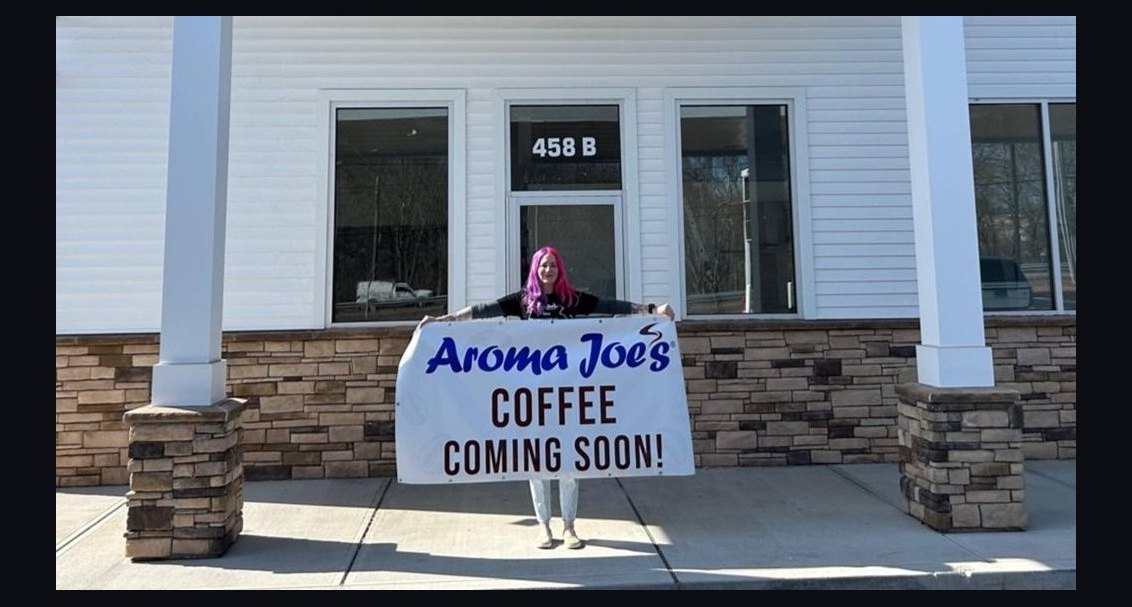 pulse-qShould I open or buy an Aroma Joe's Coffee franchise in 2027?
 pulse-qShould I open or buy a The NOW Massage franchise in 2027?