 Pulse Reviews and Analysis
How Do I Build a Sales Capacity Plan to Hit Next Year's Number in 2027?
 Curated by Kory White · Fractional CRO, CRO Syndicate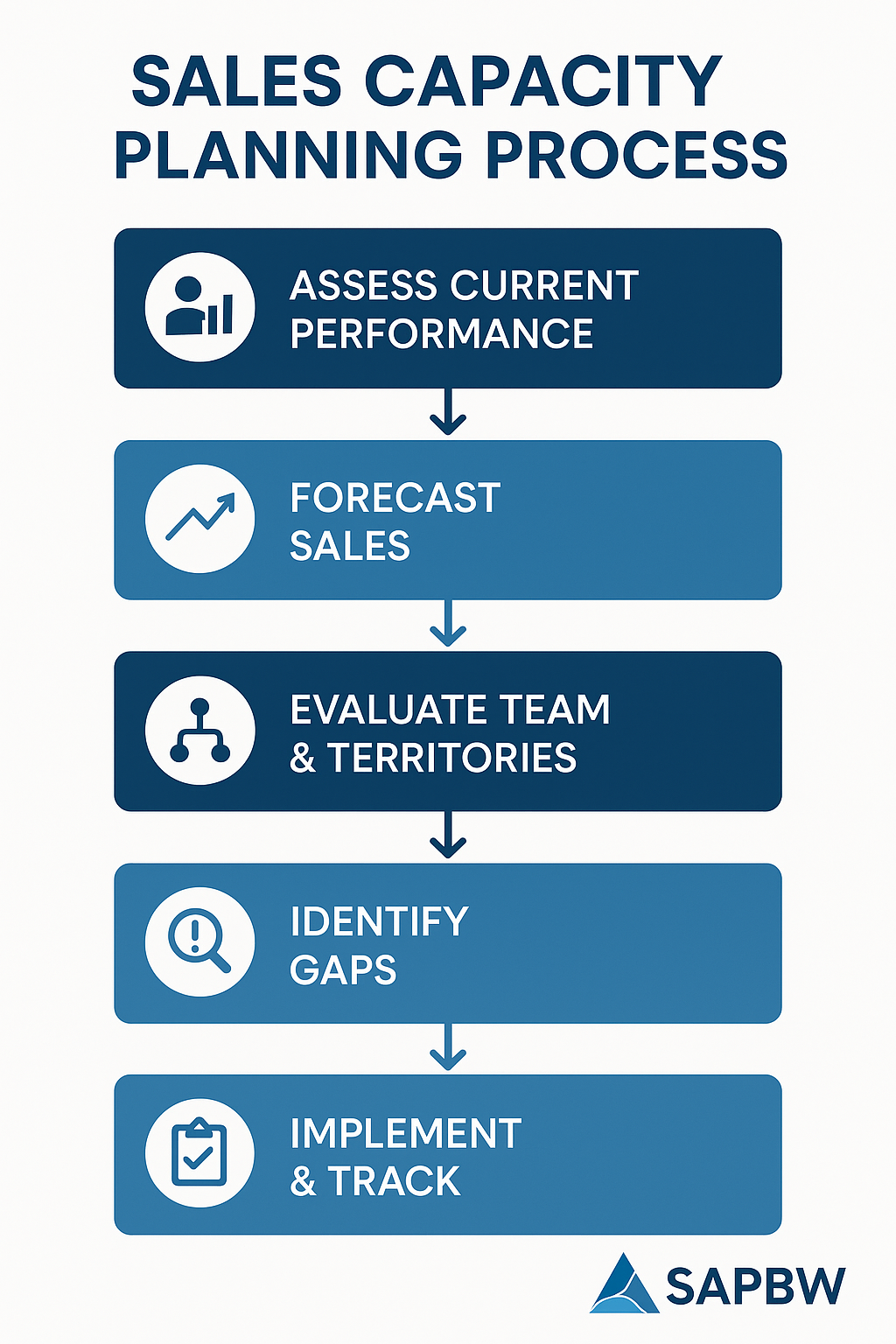
Direct Answer
To build a sales capacity plan in 2027 — the model that tells you how many reps you need to hit next year's number — work backward from the revenue target through productivity, ramp, and attrition, in that order. The core equation is simple: required productive capacity equals the revenue target divided by the realistic per-rep productivity, but the realistic version of that math has to discount for ramp (new reps do not produce at full quota immediately) and attrition (some of the reps you have or hire will leave during the year).
The most common planning error is using fully-ramped quota as if every rep produced it for all twelve months; that overstates capacity badly and guarantees a miss. A defensible capacity plan models each rep cohort by hire date, applies a ramp curve to their first several months, and bakes in an attrition assumption so you hire *ahead* of need rather than reacting after a gap opens.
Why Capacity Planning Is a Top RevOps Job in 2027
Capacity planning is where the board's revenue target meets the reality of how many human reps can actually produce it. Get it wrong on the low side and you cap growth — there simply are not enough carrying reps to hit the number no matter how good the pipeline is. Get it wrong on the high side and you over-hire, blow up CAC, and carry expensive reps with no pipeline to work.
In a 2027 environment where boards scrutinize efficiency metrics like CAC payback and the magic number, a sloppy capacity plan shows up directly as wasted spend.
The discipline has gotten more nuanced because go-to-market motions have multiplied. A team might run an enterprise field motion, a velocity inside-sales motion, and a product-led self-serve motion at once, each with different productivity and ramp characteristics. You cannot plan capacity with a single blended rep — you plan by motion and segment.
The Capacity Equation, Step by Step
Step 1 — Set Realistic Per-Rep Productivity
Start from actuals, not aspiration. Look at what your *fully-ramped* reps actually closed last year by segment, and use a realistic attainment assumption (not everyone hits 100% — model the distribution). If your historical median attainment is well under quota, plan to that reality, not to the quota number on paper.
Step 2 — Convert the Target Into Productive Rep-Equivalents
Divide the net-new revenue target by realistic per-rep productivity to get the number of *fully productive* reps you would need if they all produced for the entire year.
Step 3 — Apply the Ramp Curve
New reps do not produce full quota on day one. With ramp commonly running several months depending on deal complexity, a rep hired mid-year contributes only a fraction of an annual quota in their first year. Model each planned hire's contribution based on their start month and your ramp curve.
This is the step that converts a naive headcount into a realistic one — and it always increases the number you need to hire.
Step 4 — Layer In Attrition
Some reps will leave. Apply a historically grounded attrition rate and plan backfill hiring so departures do not silently erode capacity. Hiring is also not instant — account for the time-to-fill between an open req and a productive rep.
Step 5 — Translate Into a Monthly Hiring Plan
The output is not a single headcount; it is a hiring schedule by month that keeps productive capacity ahead of the ramp- and attrition-adjusted need. This is what recruiting and finance actually execute against.
Capacity Must Tie to Pipeline and Budget
A capacity plan is one of three numbers that have to reconcile:
- Capacity says how many reps can carry the number.
- Pipeline says whether there is enough demand for those reps to work — capacity without pipeline is just expensive idle headcount.
- Budget says whether finance can fund the plan at an acceptable cost of acquisition.
RevOps owns the reconciliation. If capacity says you need a certain headcount but marketing cannot generate enough pipeline to feed them, you either invest in demand generation or you cut the hiring plan. Hiring carrying reps with no pipeline is one of the most expensive mistakes a scaling company makes.
Segment and Motion Differences
Plan capacity separately for each motion:
- Enterprise field reps have low volume, high deal size, long ramp, and need heavy pipeline support — a small miss in headcount has a large revenue effect.
- Inside/velocity reps have higher volume, shorter ramp, and more predictable productivity, so the law of large numbers makes their capacity math more stable.
- Self-serve / PLG shifts capacity from carrying reps to product and lifecycle, with sales-assist reps layered on for expansion. Capacity here is about coverage of product-qualified accounts, not raw quota division.
Common Pitfalls
- Using quota as productivity. Plan on realistic attainment, not the quota on the comp plan.
- Ignoring ramp. Treating new hires as instantly productive is the classic over-statement of capacity.
- Forgetting attrition and time-to-fill. Without backfill and lead-time assumptions, capacity quietly erodes mid-year.
- Planning capacity without pipeline. Reps with no leads do not produce; reconcile capacity against demand.
- One blended rep. Different motions have different economics; blending them hides the real plan.
FAQ
What per-rep productivity number should I use? Your own fully-ramped reps' actual closed revenue by segment, discounted to realistic median attainment — not the paper quota.
How do I account for new hires not being productive immediately? Apply a ramp curve so each hire contributes a fraction of quota in their early months based on start date. This is the difference between a naive and a realistic plan.
How does capacity planning connect to quota setting? Capacity tells you how many reps you need; quota distributes the target across them. The two must reconcile — if the sum of realistic attainment across planned reps does not cover the target, the plan is broken.
How often should I re-run the capacity model? At least quarterly, and any time the revenue target, ramp performance, or attrition assumptions change materially. It is a living plan, not an annual artifact.
Related on PULSE
- How do you design a territory and quota model for a Series B sales team in 2027?
- How Do I Reduce New Sales Rep Ramp Time in 2027?
- What Pipeline Coverage Ratio Should I Target in 2027?
- How do you calculate CAC payback period correctly for a hybrid PLG-plus-sales motion in 2027?
- Explore the Pulse Tools library for a sales capacity model worksheet.