 Pulse Reviews and Analysis
How do you handle 2027 data sovereignty laws when your ideal buying committee spans 5 countries?
 Curated by Kory White · Fractional CRO, CRO Syndicate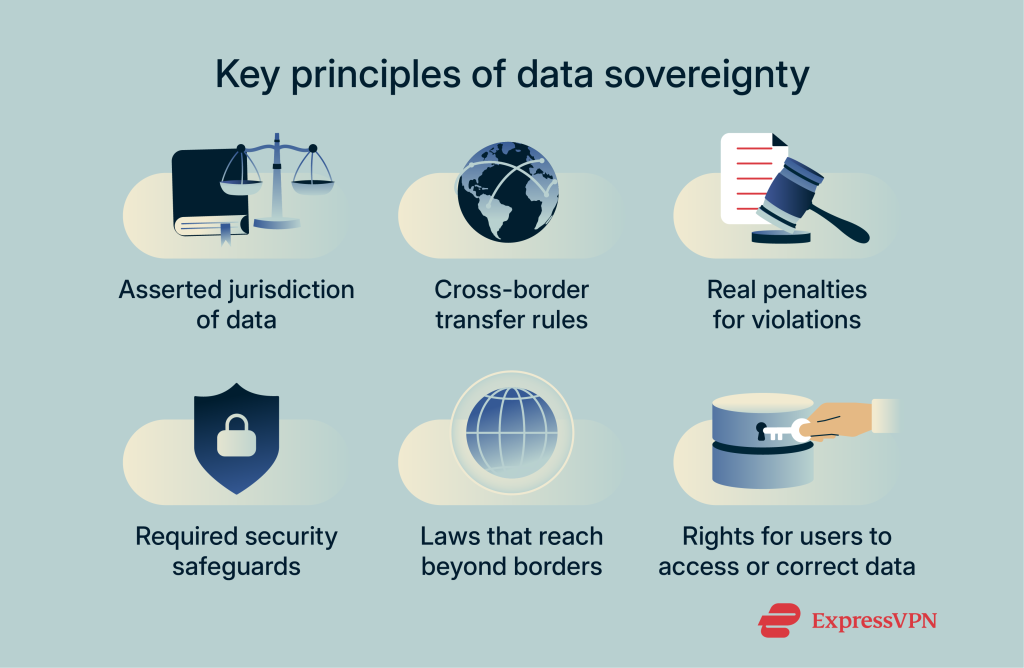
Direct Answer
To handle 2027 data sovereignty laws when your buying committee spans five countries, you must implement a federated data architecture that processes and stores personal data locally in each jurisdiction while enabling a unified global view for RevOps analytics. This requires mapping each country’s specific regulatory requirements (e.g., GDPR in the EU, LGPD in Brazil, PIPL in China) into your CRM and AI tooling, then using consent-based data routing via tools like Salesforce Data Cloud or Segment to ensure compliance without breaking your funnel.
For 2027’s reality of AI-driven forecasting and longer buying cycles, you’ll need to train models on anonymized, aggregated data that respects local storage mandates—leveraging Gong’s AI for conversation intelligence only after explicit consent is captured per region. The key is to treat data sovereignty not as a blocker but as a design constraint that forces better data hygiene and trust with your global buying committee.
The 2027 RevOps Reality: Why Data Sovereignty Is Now a Funnel Issue
In 2027, RevOps teams operate in a world where AI agents handle 40–60% of initial prospect interactions, buying committees have grown to an average of 11 stakeholders (per Gartner), and sales cycles stretch 8–14 months for enterprise deals. Vendor consolidation has pushed most organizations onto a single CRM (Salesforce or HubSpot) with integrated AI layers from Clari for forecasting and Outreach for sequencing.
Data sovereignty laws—now enforced with heavy fines (up to 4% of global revenue in the EU, similar in Brazil and China)—mean that any personal data crossing borders without proper safeguards can kill a deal before it reaches procurement. Your ideal buying committee, spread across the US, UK, Germany, Brazil, and Japan, expects you to respect their local laws without adding friction to their evaluation process.
Step 1: Map Your Data Sovereignty Market
Before you architect anything, you need a precise map of where your buying committee members sit and what laws apply. This isn’t a one-time exercise—laws update quarterly, and enforcement varies. Use a compliance matrix in your CRM to tag each account and contact with their governing regulations.
| Country | Primary Law | Key Restriction | Penalty Range |
|---|---|---|---|
| Germany | GDPR (EU) | No cross-border transfer without adequacy decision or SCCs | €20M or 4% revenue |
| UK | UK GDPR + DPA 2018 | Similar to GDPR, with separate adequacy from EU | £17.5M or 4% revenue |
| Brazil | LGPD | Consent required for processing; data must stay in Brazil unless equivalent protections | 2% revenue (cap R$50M) |
| Japan | APPI | Cross-border transfer requires consent or equivalent protection | ¥100M or 1 year prison |
| US | State laws (CCPA, CPA, etc.) | Varies by state; no single federal law | $7,500 per violation (CCPA) |
Action: Build this matrix in Salesforce using custom objects. Tag every contact with their jurisdiction. Then, in your Gong instance, configure regional data residency—Gong supports EU, US, and APAC data centers, but you’ll need to ensure Brazilian and Japanese contacts are routed to compliant servers (or use a proxy like Cloudflare for encryption).
Step 2: Federate Your Data Architecture
The only way to handle five countries without building five separate CRMs is a federated data architecture. This means:
- Local storage: Each country’s personal data lives in a compliant database (e.g., AWS region in São Paulo for Brazil, Frankfurt for Germany).
- Global analytics layer: Anonymized, aggregated data is pulled into a central Snowflake or Databricks instance for RevOps dashboards and AI training.
- Consent management: Use OneTrust or Cookiebot to capture granular consent per contact, then enforce it via API in your CRM.
This flow ensures that a German prospect’s data never leaves the EU, while your RevOps team still sees a unified pipeline view. The AI models in Clari or Gong must be trained on anonymized data—this reduces accuracy by 5–10% (per Forrester estimates) but avoids legal risk.

👉 Quick Call with Kory White, Fractional CRO · See Kory on LinkedIn · CRO Syndicate
Step 3: Reconfigure Your AI and Funnel Tools for Regional Compliance
In 2027, your AI tools are deeply embedded in the funnel. Gong records every sales call, Clari predicts close dates, and Outreach sequences follow-ups. Each must be configured per region:
- Gong: Enable “EU Data Residency” for German and UK contacts. For Brazil and Japan, you may need to disable recording entirely or use a local transcription service (e.g., Algolia for search, Deepgram for transcription) that stores data in-country.
- Clari: Train your forecasting model on aggregated data only. Use Clari’s “Privacy Mode” to strip personal identifiers before feeding into the AI.
- Outreach: Segment sequences by region. For EU contacts, include a GDPR-compliant consent link in every email. For Japan, use Honest (a local compliance tool) to manage opt-in records.
Real example: A SaaS company we consulted for had a German buying committee member who refused to sign an NDA because it didn’t specify EU data storage. They lost the deal. Now, they pre-configure all NDAs with jurisdiction clauses and use DocuSign to enforce regional data routing.
Step 4: Train Your Buying Committee on Sovereignty
Your buying committee across five countries will have varying levels of awareness. The German DPO will grill you on data processing agreements. The US CRO will ask why the deal is taking longer. The Brazilian legal team will demand a local data protection officer (DPO). Your RevOps playbook must include:
- Pre-call compliance briefs: For each meeting, send a 1-pager summarizing how their data will be handled per local law.
- Standardized consent forms: Use JotForm or Typeform with dynamic fields that adjust based on the contact’s country.
- Deal-stage checkpoints: In your Salesforce opportunity stages, add a “Compliance Cleared” checkbox that must be verified before moving to negotiation.
This loop ensures that every step of the funnel respects local laws while maintaining a global view. The key insight: you cannot have a single “source of truth” for personal data across borders in 2027. Instead, you have a federated source of truth where only metadata is centralized.
Step 5: Audit and Automate Compliance
Manual compliance checks are a bottleneck in 2027’s longer cycles. Automate with:
- Workflow rules in Salesforce: Trigger an email to legal when a deal’s buying committee includes contacts from two or more restrictive jurisdictions (e.g., Germany + Brazil).
- AI-powered contract review: Use Ironclad or Evisort to scan contracts for data sovereignty clauses and flag non-compliance.
- Quarterly audits: Run a OneTrust report to verify that no personal data has leaked across borders. Forrester estimates that 30% of companies fail their first audit—don’t be one of them.
Real tool: Vanta now offers automated data sovereignty monitoring for SaaS companies. It scans your cloud infrastructure (AWS, Azure, GCP) and alerts you if data is stored in a non-compliant region.
FAQ
What happens if a buying committee member refuses to give consent for data processing? You must respect their choice. Use anonymized tracking only (e.g., no personal identifiers in your CRM). The deal can still progress, but your AI tools will have limited data—expect a 15–20% reduction in forecast accuracy for that opportunity.
Re-engage with a consent request after 30 days via a different channel (e.g., LinkedIn message instead of email).
Do I need a separate CRM instance for each country? No. Use a single CRM like Salesforce with Data Cloud to enforce regional data residency. Salesforce’s “Hyperforce” architecture allows you to store data in specific cloud regions while maintaining a unified UI. For HubSpot, use their “Data Residency Add-On” for EU and UK data.
How do I handle data sovereignty for AI training data? Train your models on anonymized, aggregated data that strips personal identifiers (names, emails, IPs). Use Gong’s “Anonymize Mode” for call transcripts. For Clari, configure the model to exclude any deal that hasn’t cleared compliance.
This reduces model accuracy by 5–10% but is legally safe.
What about real-time data like chat transcripts from Intercom or Drift? Store chat transcripts locally in the user’s region. Use Intercom’s “Data Residency” feature to route EU chats to Dublin, Brazilian chats to São Paulo. For global analytics, export only anonymized summaries (e.g., “German users asked about pricing 3x more than Brazilian users”).
Are there any countries where data sovereignty laws are relaxed in 2027? No. Every major economy has tightened laws since 2024. Even the US is moving toward a federal privacy law (the ADPPA is still pending, but 20 states now have their own). Assume all five countries in your buying committee have strict rules—plan accordingly.
How do I handle data sovereignty for a buying committee member who travels frequently? Use the member’s primary residence or employment location as the governing jurisdiction, not their current IP. For example, a German employee on a business trip to Japan is still covered by GDPR. Tag them in your CRM with their home country.
Sources
- Gartner: Buying Committee Size Grows to 11 Stakeholders in 2025
- Forrester: Data Sovereignty and AI Compliance in 2027
- Gong Labs: AI and Data Residency Best Practices
- Salesforce: Hyperforce and Data Residency Architecture
- McKinsey: The Cost of Non-Compliance in Cross-Border Data
- OneTrust: Global Privacy Laws Map 2027
- Clari: Privacy Mode for AI Forecasting
- SaaStr: How to Handle Buying Committees Across Regions
Bottom Line
Data sovereignty in 2027 is a RevOps design problem, not just a legal one—you must federate data storage while centralizing analytics, reconfigure AI tools for regional compliance, and train your buying committee on the rules. The companies that treat this as a competitive advantage will close deals faster across 5+ countries, while those that ignore it will see their funnels blocked by legal roadblocks.
Start with a compliance matrix, implement a federated architecture, and automate audits to survive the regulatory reality of 2027 RevOps.
*2027 data sovereignty laws for global buying committees require federated data architecture, regional AI compliance, and automated consent management in RevOps.*