
Is ServiceNow CSA certification worth it in 2027?
 Curated byKory White · Fractional CRO · Maryland
 PULSEKNOWLEDGE LIBRARY
Quality
Certified

Yes, if you are committing to a ServiceNow career track. The CSA is a roughly $300 exam and about 80 hours of prep that clears resume filters at the large consultancies and typically lifts admin pay meaningfully. It is the prerequisite, not the prize — the real money sits one tier up at CIS.
The outcome you should expect from a CSA in 2027
Set your expectations at the right altitude before you book the exam, because most disappointment with the ServiceNow Certified System Administrator credential comes from expecting it to do a job it was never designed to do. The CSA is a gate-opener. It is the credential that moves your resume from the automatic-reject pile into the human-review pile at Deloitte, Accenture, Cognizant, Infosys, Tata, IBM, and NTT Data, all of which run enormous ServiceNow practices and all of which screen inbound applicants against a certification field in their applicant tracking system. When a req is tagged for ServiceNow work at one of those firms, a missing CSA very often means no recruiter callback at all — not because the hiring manager believes the exam proves competence, but because the volume of applicants forces a machine-readable filter and CSA is the one everyone agreed on.
What that translates to concretely: if you are a help-desk technician, a junior sysadmin, or an ITIL-trained service-desk lead with zero platform credentials, the CSA plus a genuinely used personal developer instance is usually enough to be considered for a junior ServiceNow administrator role. Community salary reporting and public job postings consistently show certified administrators clustered above their uncertified peers, with the gap frequently described in the ballpark of twenty to twenty-five percent. That gap is real, but it is not purely causal — people who bother to certify also tend to be the people who ask for the platform-tagged req, negotiate, and move firms, and switching employers is where most of any comp jump actually lands.
What the CSA does not do is create demand out of nothing. If your employer does not run ServiceNow and you have no line of sight to hands-on instance work within about six months, the credential ages badly. ServiceNow certifications carry maintenance obligations tied to the platform's release cadence, and a certification with no accompanying stories about incidents you triaged, catalog items you built, or ACLs you debugged is transparent in an interview within ten minutes. The interviewer will ask you to describe a business rule you wrote and why you chose a business rule over a client script, and the answer either exists or it does not.
The honest framing for a RevOps practitioner reading this from the sales-operations side: if ServiceNow is one of eight tools you touch and your actual job is pipeline hygiene, territory design, and forecast accuracy, the CSA is a poor use of eighty hours. You would extract more value from deepening on your CRM platform, on the data-warehouse layer your reporting sits on, or on the CPQ and quoting stack. The CSA is worth the effort when ServiceNow is the platform you intend to build a decade on, not one integration endpoint among many.
What actually drives the outcome
The variables that determine whether your certification pays back are surprisingly few, and none of them are the exam itself. The first is platform proximity: how close your daily work sits to a real ServiceNow instance. Someone who certifies while already administering a production instance converts the credential into a title change within a quarter or two. Someone who certifies from the outside converts it on a much longer horizon and usually only by taking a step sideways into a partner firm or a managed-service provider first, where billable-hour economics make junior certified staff genuinely useful.

The second driver is the billing model of the employer. Consulting partners bill certified consultants at higher rates than uncertified ones, and certifications map directly to partner-tier requirements that ServiceNow itself imposes on its channel. That means your certification is not just a personal credential — it is an asset on the partner's balance sheet, counted toward the badge level that determines what deals they can bid on. This is the single most underappreciated mechanic in the entire ecosystem. At a partner, you are worth more certified because the firm is worth more with you certified. In an internal IT department with no external billing, that mechanism does not exist, and the same certification produces a much flatter raise.
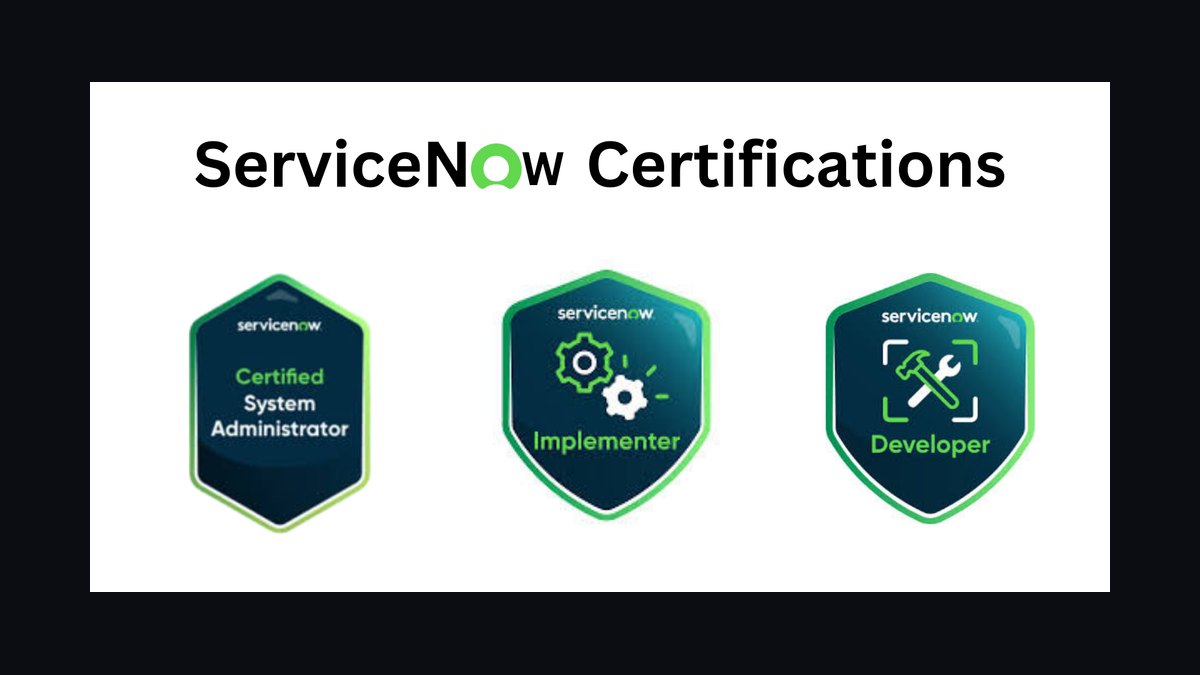
The third driver is stacking. A CSA on its own describes a person who can administer. A CSA plus a Certified Implementation Specialist in a specific module — IT Service Management, Human Resources Service Delivery, Customer Service Management, or the risk and governance family — describes a person who can be staffed on a named project tomorrow. Staffability is what gets paid. The CIS exams cost more, demand more preparation, and post lower pass rates, and that scarcity is precisely why the differential exists. Breadth across two or three CIS modules often beats depth in one, because it makes you schedulable against more of the partner's pipeline.
The fourth driver, newer and moving fast, is the platform's AI layer. ServiceNow has pushed generative and agentic capability into the core product aggressively, and the specialist credentials around that layer are undersupplied relative to how loudly customers are asking about it. The routine tier-one administration work — password resets, simple catalog edits, basic user provisioning — is exactly the work that automation compresses first. If your role is majority tier-one, the clock is running, and the correct response is to move up the stack toward design, integration, and guardrails rather than to add another administrative credential.

Benchmarks and realistic ranges
Treat every number below as a range from public postings and community salary reporting, not as a guarantee, and adjust hard for geography. In the United States and Western Europe, uncertified ServiceNow administrators generally sit in the mid-to-high five figures through low six figures, and certified administrators sit meaningfully above that band. The commonly cited premium is on the order of fifteen to twenty-five percent, and it compresses as experience grows — a fifteen-year infrastructure veteran adding a CSA sees far less movement than a two-year help-desk technician does, because the veteran was already being paid for judgment rather than for tooling.
Developers who hold the CSA plus an application-development credential plus one implementation specialty land materially higher, and senior developers and technical leads at the big consultancies higher still. The architect tier, gated by an invitation-only program with a long preparation runway, a substantial program cost, and a low pass rate, sits at the top and carries the largest differential of any credential in the ecosystem. That differential exists precisely because the program is hard to enter, expensive, and slow — scarcity is the mechanism, and any credential that becomes easy to obtain loses its premium on the same curve.
Geography changes the arithmetic more than any other single factor. In markets with very large certified populations — India and the Philippines most notably — the absolute premium for a CSA is narrower in percentage terms and much narrower in dollar terms, because supply is deep. The credential still functions as a filter for roles at the global consultancies operating there, but it does not by itself differentiate you from thousands of similarly certified applicants, and one to two years of demonstrable instance work becomes the actual differentiator. In smaller markets with thin certified supply, the reverse holds and a single certification can be decisive.

Industry matters nearly as much. Sectors with heavy platform adoption — healthcare systems, financial services, telecommunications, and government — pay the largest premiums because their instances are large, heavily customized, and compliance-constrained, and because a mistake in those environments is expensive. Retail and manufacturing generally lag. A quick diagnostic when you are evaluating a target market: read fifty postings and count how many say "CSA required" versus "CSA preferred." Required means the credential is table stakes and your differentiation must come from elsewhere. Preferred means the credential still moves you.
Budget realistically for total cost, not just the exam fee. Beyond the exam itself, most candidates spend something on practice exams and supplementary courseware, and a meaningful minority pay for a retake. If you are self-funding, plan for a total in the low hundreds rather than the exam price alone. Then add the real cost, which is opportunity cost: eighty hours is two full working weeks. For a salaried employee that is evenings and weekends. For an independent contractor billing hourly, those eighty hours have a concrete dollar value you are choosing to forgo, and that calculation should be explicit rather than ignored. Also read any employer-sponsorship agreement carefully — clawback clauses requiring repayment if you leave within a year or two of a paid exam are common across the industry and are easy to sign without noticing.

Maintenance is the line item nearly everyone forgets. ServiceNow ships major releases twice a year and ties credential currency to keeping up with them, so plan on recurring review time on an ongoing basis rather than treating the certification as a one-time purchase. Employers who use the platform seriously will usually cover this; if you are certifying speculatively while unemployed or outside the ecosystem, you are signing up for a recurring obligation with no one funding it.
Risks, edge cases, and failure modes
The most common failure is the paper-certified candidate. Someone runs practice-exam question banks, memorizes answer patterns, passes, and then cannot explain the difference between a business rule and a client script, or when a UI policy is the right tool versus a client script, or why an access control list evaluated in the wrong order silently exposed a field. Hiring managers at ServiceNow partners have seen enough of these that many now open technical screens with a live instance and a small build task. If you cannot navigate the platform under mild pressure, the credential actively hurts you, because it raised the expectation you then failed to meet. Use the free personal developer instance heavily and build things nobody asked you to build.
The second failure is certifying into the wrong tier. A project manager, business analyst, or pre-sales engineer whose job is scoping and stakeholder management usually gets more value from process credentials and from module-level implementation knowledge than from an administrator exam that spends its weight on user administration, table configuration, and platform mechanics they will never personally touch. Match the credential to the work you will actually do, not to the ladder's first rung by default.

The third is timing risk against automation. The lower tier of administrative work is being absorbed by the platform's own AI capabilities, and this is the genuine structural risk to a CSA-only career. If your day is dominated by ticket triage, account provisioning, and simple catalog maintenance, assume that scope shrinks over the next few years and plan accordingly. The defensible positions are the ones requiring judgment across systems: integration design, data model decisions, governance and access architecture, and the guardrails around automated agents. Every one of those is upstream of the administrative tier, and every one of them is a reason to keep moving rather than to settle.
The fourth is market saturation timing. Any credential that a large population can obtain cheaply eventually stops signaling much. The CSA has been widely held for years, which is exactly why it functions as a filter rather than as a differentiator. The credentials worth chasing for differentiation are the ones that are currently undersupplied — newer specialty exams, the risk and governance family, and the architect program. There is a real early-mover window on any newly launched specialty, and it closes.

The fifth, and the one that burns consultants specifically, is certifying without a staffing plan. Passing a CIS exam does not put you on a project. Someone has to decide to staff you, and that decision is made by a resource manager looking at bench cost, client fit, and prior delivery history. Tell your resourcing lead before you sit the exam, not after. The people who convert certifications into promotions are the ones who arranged the project conversation in advance.
One more edge case worth naming: the adjacent-platform pivot. The strongest CSA return I have consistently seen is not the fresh graduate and not the veteran — it is the mid-career professional with several years on a comparable enterprise platform who uses the CSA to cross over. Someone who has administered a major CRM, an ERP, or a legacy ITSM tool already understands entitlement models, workflow engines, sandbox-to-production promotion, and the political reality of change advisory boards. For that person the exam is mostly vocabulary translation, and the market rewards the combination far more than either half alone. The same logic explains why a Workday background plus the HR service delivery specialty, or a service-cloud background plus the customer service specialty, are unusually strong pairings.
A practical rollout plan
Treat this as a thirty-day project with a hard date, because open-ended study is how certifications die on to-do lists. Book the exam early — paying for a seat converts intention into a deadline.

Days one and two: provision a free personal developer instance from the official developer portal. It is a full platform instance, and it expires after a stretch of inactivity, so log in daily out of habit. Do not read about the platform before you have one open in a second tab.
Days three through ten: work the vendor's own foundational administration learning path end to end. It is free, it is structured, and it maps closely to the exam blueprint. Do the labs rather than skimming the videos. The specific competencies to over-index on are user and group administration, tables and the data model including extension and reference fields, access control list evaluation order, UI policies versus client scripts versus business rules, the update-set lifecycle, and basic reporting and dashboards.
Days eleven through eighteen: supplement with a second voice. A different instructor explaining access control lists differently is worth more than a second pass through the same material. Free video series and paid course libraries both work; the value is in the change of angle, not the price tag. While you do this, keep building in your instance — a small catalog item with a variable set, a flow that routes an approval, a scoped application with two tables and a relationship.

Days nineteen through twenty-three: find a study partner. The ServiceNow community forums and the platform subreddit both run recurring study threads. Thirty minutes a day of explaining concepts to another person exposes the gaps that silent reading hides. If you cannot explain why an ACL failed, you do not know ACLs.
Days twenty-four through twenty-seven: take full-length timed practice exams under real conditions — no notes, no pausing. Use them diagnostically to find weak domains, then go back into the instance and build in those domains. Do not use dumped exam questions as a memorization shortcut; beyond the ethics, it produces exactly the paper-certified candidate that fails technical screens.

Day twenty-eight: sit the exam. Mid-week morning slots at test centers are generally calmer than Monday or Friday. Read every question twice — the platform exams are heavy on scenario wording where one clause changes the answer.
Days twenty-nine and thirty: stop. Light review only, then sleep. Cramming the night before a scenario-based exam measurably hurts.
Then, immediately and while momentum is high, pick your next credential and set a date for it. Generalists heading into consulting should default to the IT service management implementation specialty, which has the deepest project demand. HR-adjacent backgrounds should take the HR service delivery specialty, where the certified population is thinner and the day rates reflect it. Contact-center and CRM backgrounds should take the customer service specialty. Anyone in banking, insurance, or healthcare should look hard at the risk and governance family, which commands the highest rates and the longest engagements and is the most defensible against automation because it is fundamentally about judgment and auditability. In parallel, add the AI-platform specialty while it is still undersupplied, and — this matters more than the badge — build something with the agent tooling and publish it. A public repository of scoped applications, flows, and integrations does more for a senior offer than a fourth certification does. Certifications get you in the room; the portfolio gets you the number.
Related questions
Does the CSA expire?
Yes. ServiceNow ties credential currency to its twice-yearly release cadence, so holders are expected to complete periodic maintenance rather than hold a permanent badge. Budget recurring review time. Employers who run the platform normally cover this; speculative self-funders carry it alone.
Is CSA enough to get hired with no IT experience at all?
Rarely on its own. Pair it with demonstrable instance work — a personal developer instance you actually built in, screenshots or a repository, and clear stories about what broke and how you fixed it. Help-desk or service-desk experience alongside the credential is the far more reliable entry path.
Should I take CAD or a CIS module after CSA?
CIS for most people. The application developer credential matters if you are genuinely building scoped applications; the implementation specialties matter if you want to be staffed on client projects, which is where partner economics reward you. Generalists default to the IT service management specialty.
How does this compare to a general cloud certification?
If you are committed to ServiceNow, the platform credential wins because it maps to specific hiring filters. If you are undecided about your ecosystem, a major cloud provider certification is more portable across employers and industries and ages more slowly. Pick based on where you want to be in three years.
Is the CSA useful for someone in RevOps?
Only marginally, unless your revenue operations function runs on ServiceNow for customer service or workflow orchestration. If ServiceNow is one integration endpoint among many, invest instead in your CRM, data warehouse, and quoting stack depth.
FAQ
Does the ServiceNow CSA certification guarantee a job in 2027?
No. It clears automated resume filters at the major consultancies that run large ServiceNow practices, which is genuinely valuable, but hiring still turns on experience, technical screens, and interview performance. Treat the certification as the thing that gets your application read by a human, not as the thing that closes the offer.
How long does preparation actually take?
Roughly eighty hours is the common figure, with a realistic spread from about sixty for someone already administering an instance to well over a hundred for a candidate coming in cold from outside IT. The variable that matters most is hands-on time in a live instance, not hours of video watched.
What is the honest salary impact?
Community reporting and public postings suggest a premium in the fifteen to twenty-five percent range for administrator roles, larger for early-career candidates and smaller for veterans. The much bigger jumps come from stacking an implementation specialty on top, and larger still from the architect track, where scarcity drives the differential.
Is it worth it if ServiceNow is only one of my tools?
Probably not. The certification pays back when the platform is the center of your career, not the periphery. If you administer ServiceNow alongside seven other systems and your actual mandate is something else, spend the eighty hours on the platform that defines your role instead.
Will AI make the CSA obsolete?
Not the credential, but it is compressing the tier of work the credential describes. Routine provisioning and simple catalog maintenance are being absorbed by platform automation. Design, integration, data modeling, and governance are growing. Certify, then keep moving up the stack rather than settling into tier-one administration.
Can my employer make me repay the exam fee if I leave?
Frequently, yes. Training-repayment and clawback clauses tied to employer-funded certifications are common across enterprise IT and typically cover a one- to two-year window after the employer pays. Read the agreement before signing, and factor the retention obligation into whether the certification is worth accepting on those terms.
Sources
- https://www.servicenow.com/services/training-and-certification.html
- https://developer.servicenow.com/
- https://nowlearning.servicenow.com/
- https://www.servicenow.com/community/
- https://www.reddit.com/r/servicenow/
- https://www.glassdoor.com/Salaries/servicenow-administrator-salary-SRCH_KO0,24.htm
- https://www.indeed.com/career/servicenow-administrator/salaries
- https://www.bls.gov/ooh/computer-and-information-technology/network-and-computer-systems-administrators.htm
- https://home.pearsonvue.com/servicenow
- https://www.linkedin.com/jobs/
Related on PULSE
- [Is Salesforce certification worth it in 2027?](/knowledge/q1544)
- [Is Snowflake certification worth it in 2027?](/knowledge/q1593)
- [Is Datadog certification worth it in 2027?](/knowledge/q1703)
- [Is Outreach certification worth it in 2027?](/knowledge/q1763)
- [Is Salesloft certification worth it in 2027?](/knowledge/q1822)
- [How should a 2027 enablement team design certification cadence for AEs and SEs?](/knowledge/q12443)
This page will be disappearing soon. Save it to your device for $1 — or read it free while it is here.
@Kory-White- · if Venmo asks, the last 4 of my number are 2012
This page is gone.
This one is off the shelf now. $1 keeps it on your phone for good — the whole page, pictures and diagrams included.
 servicenowShould ServiceNow acquire a Loom-equivalent in 2027?
 servicenowWhat is ServiceNow gross margin trajectory through 2028?
 servicenowHow does ServiceNow make money in 2027?
 servicenowWhat is the bear case for ServiceNow 2027?
 servicenowIs ServiceNow CSM still strategic in 2027?
 servicenowWhat is ServiceNow's playbook for the next $5B in revenue?
 servicenowHow does ServiceNow compete against AI-native workflow tools?
 servicenowWhat is ServiceNow App Engine competitive moat against OutSystems?
 servicenowServiceNow vs Salesforce — which should you buy?
 servicenowHow should ServiceNow rethink its workflow thesis for AI buyers?