

How can RevOps use AI to compress the sales cycle in hyperscale accounts in 2027?
 Curated byKory White · Fractional CRO · Maryland
Quality
Certified

RevOps compresses hyperscale sales cycles by using AI to triage buyer-intent signals, score buying-committee consensus in real time, and automatically trigger the next best action — content, outreach, or escalation — the moment a stakeholder goes quiet or a risk signal appears. Instead of replacing reps, AI removes the manual reconciliation and guesswork between touchpoints, typically compressing 14-18 month cycles into the 9-11 month range for enterprise accounts.
What it is and why it matters
Hyperscale accounts — organizations with 5,000+ employees and buying committees that routinely span 6-10 stakeholders, each holding effective veto power — have gotten slower to close, not faster. Gartner's research on B2B buying behavior points to consolidated vendor stacks and heavier evaluation rigor as the drivers: buyers want fewer, deeper partnerships, so every new vendor relationship gets scrutinized by more departments before signature. The average $1M+ ACV deal now runs 12-18 months from first touch to closed-won, up from 9-12 months five years ago.
RevOps sits at the center of this problem because it owns the systems of record — CRM, sales engagement platform, contract management — where the friction actually lives. AI matters here because the bottleneck in hyperscale deals is rarely "not enough activity." It's misallocated activity: reps chasing disengaged stakeholders, generic follow-ups sent to people who already decided, and legal review stalling because nobody flagged the non-standard clause three weeks earlier. AI's job is to find where the deal is actually stuck and route the right intervention there, rather than adding more touches everywhere.

Compression in this context does not mean rushing the buyer. Hyperscale accounts punish vendors who skip diligence steps — skipping a security review or forcing a premature executive meeting can kill a deal outright. The compression comes from eliminating dead time: the days a case study sits unsent because nobody knew Finance had a cost objection, or the weeks a contract sits in legal because nobody flagged the indemnification clause deviation on day one instead of day twelve.
The step-by-step process
Compressing a hyperscale cycle with AI follows a repeatable loop rather than a single tool purchase. In practice, RevOps teams build it in this sequence:

- Instrument the account. Connect CRM activity, email/calendar metadata, call transcripts (via Gong, Chorus, or similar conversation intelligence), and product usage data (for existing customers) into a single data layer. Without this, any AI layered on top is guessing.
- Score consensus, not just individual intent. Rather than scoring one buyer, AI aggregates engagement across the whole committee — attendance patterns, response rates, sentiment in transcripts — into a single consensus score, typically 0-100. A score under 50-60 signals the deal is at risk of stalling even if the primary champion looks engaged.
- Identify the specific gap. The system flags which named stakeholders are disengaged (no email opens in 10-14 days, missed the last two calls) versus which are actively blocking (raised unresolved objections in a transcript).
- Trigger a targeted intervention automatically. This is the compression mechanism itself: a CFO who raised a cost question in a call automatically receives an ROI model within hours, not whenever a rep remembers. A disengaged Legal contact triggers an internal Slack alert for a direct call rather than another automated email.
- Re-score on a fixed cadence. Most teams re-run the consensus score every 7-14 days. If the intervention worked, the deal proceeds on the standard path. If not, it escalates to a human — typically a VP or exec sponsor — for a 1:1 conversation, because AI has now told you exactly where the manual effort needs to go.
- Feed the outcome back into the model. Every deal that closes or stalls becomes training signal for the next hyperscale account, sharpening the risk thresholds over time.
This loop runs in parallel across every open hyperscale account, which is precisely what makes it a RevOps function rather than a rep task — no individual seller can manually track consensus shifts across a dozen 8-stakeholder deals simultaneously.

Costs, timelines, and typical ranges
Standing up AI-driven cycle compression is not a weekend project, and the timeline matters more than the software price tag. Most of the cost is data preparation, not licensing.
- Data foundation: 2-4 months. Teams with messy CRM hygiene or fragmented tools (separate systems for calls, email, and contracts) spend the bulk of this phase just getting clean, joined data before any model produces reliable scores.
- Software cost: Conversation intelligence platforms (Gong, Chorus/ZoomInfo) typically run in the low-to-mid five figures annually per few hundred seats; forecasting/risk platforms (Clari, Gainsight) add a comparable range; contract AI tools (Ironclad, Evisort) are often priced per contract volume. Total stack cost for a mid-market RevOps org typically lands in the $100K-$300K/year range once conversation intelligence, forecasting, and contract AI are combined — enterprise deployments run higher.
- Time-to-value: Expect 3-6 months before consensus scoring and risk flags are accurate enough to trust without manual double-checking. Teams that skip validation and trust the model on day one generate false escalations that erode rep confidence in the system.
- Cycle compression realized: The realistic range reported across RevOps practitioners is 20-40% stage-to-stage compression, not a dramatic overnight cut. A 16-month cycle compressing to 10-12 months is a strong, credible outcome; claims of cutting cycles in half within a quarter should be treated skeptically.
- Contract/legal phase specifically: This phase alone often consumes 4-8 months in hyperscale deals. AI-assisted clause analysis (flagging deviations from standard paper) can realistically cut legal review from roughly 2 weeks to 3-5 days on routine terms, though genuinely contested clauses still require human negotiation time regardless of tooling.
- Ongoing cost: Budget 0.5-1 FTE of RevOps analyst time per quarter to retrain scoring thresholds, audit false positives, and keep the intervention playbooks current as buyer behavior shifts.

Where teams get it wrong
The most common failure is deploying AI on top of bad data and trusting the output anyway. A consensus score built from a CRM where half the contacts are stale or duplicated will confidently produce a wrong answer, and reps who get burned by one bad AI-driven escalation stop trusting the system entirely — often permanently.
A second failure is treating AI output as an action rather than a signal. A disengagement flag on a Legal stakeholder doesn't mean "send another automated email" — it means a human needs to make a phone call. Teams that automate every intervention, including the ones that require a real relationship, end up looking exactly like the generic AI-generated outreach buyers are already fatigued by. The irony is that over-automating is what stalls hyperscale deals, since these buyers can detect templated cadences immediately and it damages trust with the exact stakeholders you're trying to win over.

A third mistake is compressing the cycle by skipping diligence steps buyers actually need — pushing for an executive meeting before technical validation is complete, or rushing a security review. Hyperscale accounts have real internal compliance requirements; forcing the pace against those requirements doesn't compress the cycle, it kills the deal or triggers a restart with a more cautious buying committee.
Finally, many RevOps teams under-invest in the feedback loop. They deploy scoring models and never revisit the thresholds, so a model tuned for a 2024 buying pattern is still running unchanged two years later, silently degrading in accuracy as buyer behavior and organizational structures change. Without a quarterly review of false-positive and false-negative rates, teams don't notice the model has drifted until pipeline forecasts stop matching reality.

Decision framework: when to choose what
Not every hyperscale deal needs the full AI stack applied identically. RevOps should route effort based on deal risk profile and account complexity, since applying maximum automation to every account wastes budget on low-risk deals and under-serves genuinely at-risk ones.
As a practical rule: deploy the full stack — conversation intelligence, consensus scoring, and contract AI — on accounts where ACV exceeds your top quartile or the buying committee exceeds 8 stakeholders, since that's where manual tracking genuinely breaks down. For smaller hyperscale deals, standard CRM-based scoring is usually sufficient until a specific risk signal (stalled stage, disengaged champion) triggers the heavier tooling. This keeps the expensive human escalation path reserved for deals that actually need it, rather than triggering VP-level interventions on every account with a quiet week.

Related questions
How long does it take to see ROI from AI-driven deal scoring?
Most teams need 3-6 months of clean, integrated data before scores are reliable enough to act on without manual verification. Expect a pilot phase on 10-20 deals before scaling company-wide.
Does AI replace the need for a dedicated deal desk in hyperscale accounts?
No. AI accelerates the analysis a deal desk performs — pricing recommendations, risk flags — but complex hyperscale negotiations, custom SOWs, and exception approvals still require human deal desk judgment.
What's the difference between lead scoring and buying-committee consensus scoring?
Lead scoring evaluates one individual's likelihood to convert. Consensus scoring aggregates engagement and sentiment across an entire buying committee to assess whether the group, collectively, is aligned enough to move forward.
Can smaller RevOps teams without a data science function still do this?
Yes — most of the platforms named here (Gong, Clari, Gainsight) ship pre-built AI scoring rather than requiring custom model-building. The bottleneck is data hygiene and integration, not data science headcount.
FAQ
What exactly does "buyer-intent signal triage" mean in practice? It means AI automatically scans data sources — content downloads, call transcripts, email engagement, support tickets — and prioritizes only the signals that indicate genuine purchase intent, so reps and RevOps focus attention on the hottest, most actionable signals instead of manually reviewing every account.
How does AI help orchestrate multi-threaded outreach to a buying committee? AI maps each committee member's role and engagement level, then sequences personalized content by persona — a technical brief for IT, a TCO model for finance — and adjusts cadence and channel automatically based on who is responding and who has gone quiet.
Can AI really compress a 12-18 month sales cycle? Realistically yes, but expect 20-40% compression, not a dramatic overnight cut. AI removes idle time between stages by surfacing consensus gaps and risk signals early; the relationship-building and diligence steps hyperscale buyers require still take real time.
What data does RevOps need for this to work in hyperscale accounts? Clean, integrated data from the CRM, sales engagement platform, and conversation intelligence tools, ideally with several quarters of historical deal outcomes. Teams without this foundation typically spend 2-4 months on data cleanup before scoring becomes trustworthy.
Does this replace sales reps on large accounts? No. AI absorbs the repetitive, data-heavy work — activity tracking, follow-up timing, risk flagging — so reps can spend their time on the strategic conversations and trust-building that hyperscale stakeholders actually require to say yes.
How should RevOps measure whether the compression is real? Track time-in-stage before and after deployment — first-contact-to-demo, demo-to-proposal, proposal-to-close — against historical benchmarks or a control group of accounts not yet on the new process. A 15-25% reduction in stage duration is a realistic, credible first-year target.
Sources
- Gartner: The B2B Buying Journey Is Getting Longer
- McKinsey: The Future of B2B Sales
- Gong: Revenue Intelligence Platform
- Salesforce: Einstein AI For Sales
- Clari: AI Forecasting For Revenue Teams
- Ironclad: AI Contract Management
- Gainsight: Customer Success Platform
- Forrester: B2B Sales Research
Related on PULSE
- What's the typical enterprise sales cycle in 2026 and how to compress it?
- DevTools sales to engineering orgs: Why do technical evaluations take 4x longer than expected, and how should you compress the proof cycle?
- How should a 2027 deal desk architect AI-generated SOWs to compress services attach cycle time?
- What is AI deal-desk automation and how does it compress enterprise sales cycles?
- Can AI-driven closed-lost reanimation actually compress sales cycles in a 2027 high-consolidation market?
- How do multi-year contract economics force reps to compress year-one value capture differently than annual deals?
This page will be disappearing soon. Save it to your device for $1 — or read it free while it is here.
@Kory-White- · if Venmo asks, the last 4 of my number are 2012
This page is gone.
This one is off the shelf now. $1 keeps it on your phone for good — the whole page, pictures and diagrams included.
 revopsWhich AI in the funnel applications are buying committees in 2027 most suspicious of?
 revopsWhich RevOps org structures in 2027 best support the shift from outbound-heavy GTM to AI-driven inbound account targeting?
 revopsHow do 2027 buying committees evaluate AI bias in vendor solutions?
 revopsHow is AI in the funnel reshaping the scoring of B2B inbound leads in 2027?
 revopsBest fractional CRO firms in 2027
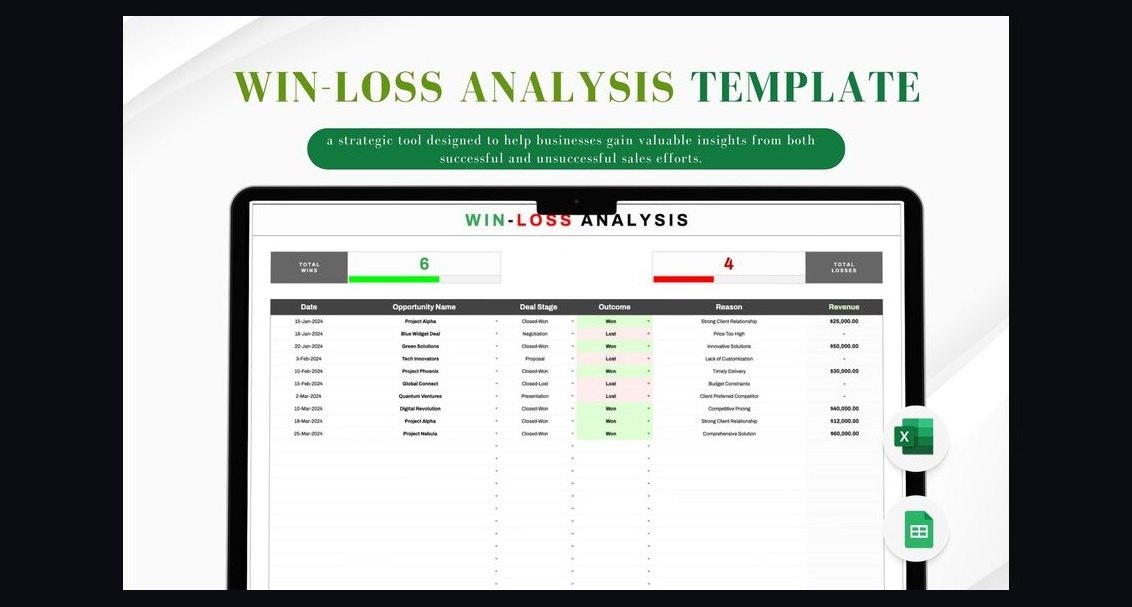 revopsHow Do I Run a Win/Loss Analysis Program That Improves Win Rate in 2027?
 revopsHow does EA Sports College Football 26 pay players through NIL in 2027?
 revopsAre longer sales cycles in 2027 forcing RevOps to redefine the 'MQL-to-revenue' attribution model?
 revopsWhat is the cost of AI vendor lock-in for B2B sales teams in 2027?
 revopsHow do AI startups build defensible moats in 2027?