
What does Datadog's 2025 RIF tell us about 2027?
 Curated byKory White · Fractional CRO · Maryland
 PULSEKNOWLEDGE LIBRARY
Quality
Certified

Datadog's 2025 reduction in force was a maturity signal, not a distress signal. A cut in the low single digits of headcount, concentrated in overlapping product teams and legacy field roles, tells you 2027 Datadog will run leaner: slower hiring, wider operating margins, AI-augmented engineering, and a narrower promotion ladder.
The outcome you should expect by 2027
Strip away the headline and a small RIF at a company still growing north of twenty percent says one thing plainly: leadership has stopped modeling hypergrowth and started modeling a durable business. That is the outcome to expect. By 2027, Datadog most likely looks like a company whose revenue keeps compounding at a decelerating but healthy clip while headcount grows barely at all — the classic shape of a SaaS business transitioning from land-grab to operating leverage.
Concretely, the expectations you should hold are these. Total employment flat to modestly up from the roughly thirteen thousand range, with net additions concentrated in a handful of functions rather than spread evenly. Revenue per employee climbing meaningfully — the arithmetic is unforgiving here, because if revenue grows in the twenties annually and headcount grows in the low single digits, revenue per head rises twenty-plus percent a year almost mechanically. Operating margin expanding, because that is precisely the lever a RIF pulls: you remove cost from the denominator while the revenue base keeps compounding. And a hiring mix that looks materially different from 2022's — heavier on AI/ML, security, and platform infrastructure; lighter on generalist product engineering, first-line support, and the wide-territory enterprise account executive.
The subtler outcome, and the one most people miss, is behavioral. RIFs do not just change the org chart; they change what employees believe about the future. After a reduction, the internal narrative shifts from "get in early on the next big product bet" to "protect the roadmap you're on." That shows up in fewer speculative internal projects, more rigorous business cases before a team gets funded, and a promotion process where "grew the team" stops counting as evidence of impact. If you are an operator inside a company that just went through a similar cut, or a RevOps leader planning headcount at a company one funding stage behind, that behavioral shift is the thing to plan around — it lands before any of the financial metrics move.

One more expectation worth naming: the RIF is unlikely to be a one-time event in the industry, even if it is a one-time event at any single company. The pattern across 2023–2025 — Salesforce, Snowflake, HubSpot, Workday, Microsoft — was not a series of independent decisions. It was an entire cohort of companies that hired against a 2021 growth curve, watched that curve flatten, and spent two years correcting. Datadog's cut being on the smaller end of that cohort tells you it either over-hired less or corrected earlier. Either way, the correction is the same species.
What this does *not* tell you is that Datadog is in trouble. A five-to-six percent reduction at a company with strong net revenue retention and a diversified product line is a portfolio decision, not a survival decision. The companies that were genuinely struggling in this period cut ten to fifteen percent, replaced executives, or did both. Reading a modest RIF as distress is the single most common analytical error people make with this data, and it leads to bad career decisions — engineers leaving healthy companies for riskier ones, and RevOps leaders panic-cutting quota capacity they will need to rebuild in eighteen months.
What drives that outcome
Three forces produce the 2027 picture, and they compound rather than merely add.
Growth deceleration is arithmetic, not failure. A company that grew above seventy percent in 2021 cannot sustain that rate at multi-billion-dollar scale; the incremental dollars required become implausible. When growth settles into the twenties, the entire operating model has to be re-based. Sales capacity models built on the assumption that every new rep ramps into an expanding market start producing reps who miss quota through no fault of their own. Support ratios calibrated to a customer base doubling every eighteen months become overstaffed when it doubles every three years. Engineering roadmaps that assumed a new product line could be funded from growth alone now have to be funded from prioritization. A RIF is the blunt instrument that re-bases all three at once.

Margin discipline is the new scorecard. Public market patience for unprofitable growth compressed sharply between 2022 and 2024. The metric that mattered shifted from revenue growth to some version of the Rule of 40 — growth plus margin — and then further toward GAAP profitability and free cash flow durability. Once the scorecard changes, the fastest lever available to a management team is people cost, because in software it is the overwhelming majority of operating expense. Cloud spend, real estate, and marketing get squeezed too, but none of them move the number the way headcount does. This is why RIFs cluster in time across an entire sector: the scorecard changed for everyone simultaneously.
AI productivity gains change the denominator. This is the newest force and the one with the longest tail. Coding assistants, LLM-assisted incident triage, automated test generation, and AI-native observability tooling genuinely reduce the human hours required for a category of work — maintenance engineering, on-call triage, first-line support, routine dashboard and alert authoring. That work was never the glamorous part of the job, but it consumed a real fraction of headcount. When it compresses, the organization needs fewer mid-level people doing maintenance and relatively more senior people doing architecture and judgment. The RIF is where that structural shift gets expressed in the org chart.
The interaction matters more than any single force. Growth deceleration alone would produce a hiring freeze, not a reduction. Margin pressure alone would produce across-the-board trims. AI productivity alone would produce gradual attrition-based shrinkage. All three together produce a targeted cut that removes specific categories of work while protecting the strategic core — which is exactly the shape a well-run RIF takes.

There is a fourth driver that gets less attention and deserves more: acquisition integration debt. A company that made a dozen acquisitions during a hypergrowth window inherits duplicate teams, duplicate infrastructure, and duplicate product surface. For a while, growth papers over that — you can afford two log pipelines when revenue is doubling. When it stops doubling, the duplication becomes visible as cost, and consolidating it means consolidating the teams that maintain it. Much of what looks like a macro-driven layoff is actually a delayed integration bill coming due.
Benchmarks and realistic ranges
Anchoring on real comparables keeps this analysis honest, and the 2023–2024 cohort gives a usable distribution.
Salesforce announced roughly eight thousand reductions in January 2023, about ten percent of its workforce, and followed with smaller rounds through 2024. Snowflake cut roughly twelve hundred in February 2024, on the order of fourteen percent, in the same window as a CEO transition from Frank Slootman to Sridhar Ramaswamy. HubSpot reduced around fifteen hundred roles in January 2024, roughly seven percent. Workday announced approximately seventeen hundred and fifty in February 2024. Microsoft executed multiple thousand-plus reductions across gaming and cloud sales in the same period. Against that distribution, a cut in the five-to-six percent range sits at the low end — closer to a trim than a restructuring.

That placement is the single most informative benchmark. Severity of cut correlates strongly with what happens next. Companies in the ten-to-fifteen percent band frequently saw executive turnover within twelve months, product line divestitures, or a strategic repositioning announced at the next investor day. Companies in the five-to-eight percent band mostly continued executing their existing strategy with a tighter cost base. If you are forecasting 2027 from a 2025 cut, the band the cut falls into is a better predictor than the absolute number.
For the financial ranges, work with directional bands rather than false precision. A mature infrastructure software company decelerating from hypergrowth typically lands in the twenty-to-thirty percent growth band for a few years before settling lower. Net revenue retention in the healthy range for this category sits somewhere between one hundred ten and one hundred twenty percent — above that and you are still in land-grab; below one hundred and expansion has stopped covering churn. Operating margin for a company mid-transition tends to sit in the high single digits to low teens, with a credible multi-year path into the mid-to-high teens as headcount growth lags revenue growth. Revenue per employee in the low two hundred thousands moving toward the mid two hundred thousands over a two-to-three year window is the arithmetic consequence of that lag.
For sales-side benchmarks, cost of sales and marketing running in the mid forties as a percentage of revenue is elevated for a company at this stage; the mature benchmark sits closer to the mid thirties to low forties. Closing that gap is worth several points of operating margin on its own, and it is why sales restructuring so often accompanies engineering reductions. The magic number — net new ARR divided by prior-period sales and marketing spend — is the cleanest single read on whether that restructuring worked. Below 0.7 and you are buying revenue inefficiently. Above 0.8 and the go-to-market engine is earning its keep. Watching that ratio over the four quarters *after* a RIF will tell you more about 2027 than any headcount announcement.

A note on the RevOps relevance, because this is where the benchmarks become actionable rather than academic. If you run revenue operations at any company in this sector, the post-RIF period is when your capacity model gets rebuilt whether you participate or not. The right move is to participate: rebuild the model bottom-up from realistic attainment distributions rather than top-down from a growth target, and be explicit that fewer reps at higher quota only works if territory quality holds. It usually does not, because territories get re-cut at the same time and the re-cut creates a quarter or two of relationship churn that no model captures.
Finally, a benchmark on timing. Sentiment and productivity recovery after a reduction typically takes twelve to eighteen months. Voluntary attrition rises in the two quarters following a cut — often among people the company most wanted to keep, because strong performers have options. That is why the year-two numbers, not the year-one numbers, are the real test of whether a RIF achieved anything.
Risks, edge cases, and failure modes
The clean story above has several ways to go wrong, and an honest read has to name them.
The cut may be larger than the announcement. Companies routinely execute reductions in tranches: a publicized round, followed by quieter performance-based exits, role eliminations during reorganizations, and backfills simply never opened. The publicly reported percentage is a floor, not a ceiling. If you are trying to read the true trajectory, watch job posting counts and total headcount over four quarters rather than the press release number.

Regretted attrition can swamp the savings. The people a company most wants to retain are the ones with the most external options, and a RIF is a strong signal to start taking recruiter calls. If the cut removes eight hundred roles and then six hundred strong performers leave voluntarily over the following year, the company has spent the cultural cost of a layoff and ended up backfilling at market rates. This failure mode is common and under-reported, because the voluntary departures do not generate headlines.
Consolidation can break customers. When the strategic response to a RIF is portfolio rationalization — merging overlapping products, deprecating small-revenue lines — the customers on those deprecated lines experience it as abandonment. Individually each line may be under five percent of revenue; collectively the churn and the reputational cost can exceed the engineering savings. The mitigation is long deprecation windows and genuine migration paths, which cost money and therefore compete directly with the margin goal that motivated the consolidation.
Founder-CEO dynamics cut both ways. A founder still running the company is generally less likely to make deep cuts and more likely to protect culture, which argues for the smaller-RIF reading. But founder tenure is not immunity. The Snowflake precedent — a CEO transition alongside a large reduction — is the reminder that boards act when growth decelerates past their tolerance. The realistic edge case is not that a founder gets removed abruptly; it is that a president or COO with an operational mandate gets hired above the existing org, and the operating model changes without a headline.

The AI productivity assumption may be over-claimed. Coding assistants demonstrably help with certain tasks. Whether they deliver a durable twenty-to-thirty percent output gain per engineer across a complex distributed system is genuinely unsettled — the measured gains in controlled studies vary widely by task type, and the maintenance burden of AI-generated code is not yet well understood at multi-year horizons. If a company sizes its 2027 headcount plan on an aggressive productivity assumption and the assumption underdelivers, it arrives at 2027 understaffed against a roadmap it already committed to. The failure shows up as slipped releases and rising incident counts, not as a line item.
Sales capacity cuts are hard to reverse quickly. Removing a quota-carrying rep is instantaneous; adding one back is a two-to-three quarter project once you count recruiting, onboarding, and ramp. A company that over-corrects field capacity in 2025 and finds demand stronger than expected in 2026 cannot simply re-hire into the gap — it loses the pipeline that capacity would have generated. This is the specific risk RevOps should be loudest about during a reduction, because it is the one the finance-driven version of the analysis systematically underweights.
Cultural drift is the slow failure. The shift from growth-startup to mature public company is not a single event; it accumulates through a hundred small decisions about process, approval thresholds, and risk tolerance. Companies rarely notice it until they realize they have not shipped a genuinely new product line in three years. The counter-move — protected budget for speculative bets, insulated from the margin math — is easy to describe and hard to sustain when every quarter has a margin target.

The edge case worth holding open: sometimes the stay-the-course read is right. An employee on a well-funded team with a strong manager and a product that is clearly strategic is often in a better position after a RIF than before, because resources concentrate toward the protected core. The generic advice to flee after a layoff is frequently wrong for exactly those people.
A practical rollout plan
If you are on the receiving end of this analysis — a RevOps leader, an engineering manager, or an operator at a company in the same cohort — here is how to act on it rather than merely observe it.
Establish the baseline before anything changes. Pull revenue per employee, cost of sales as a percentage of revenue, quota attainment distribution, and time-to-productivity for new hires. You need these numbers from before the reduction, because after it every comparison becomes contested. Twelve to eighteen months of history is enough.

Segment the work, not the people. The productive framing for capacity planning is which categories of work are compressing — maintenance engineering, routine reporting, first-line triage — and which are not — architecture, complex deal support, security review. Reductions that are planned by work category survive scrutiny; reductions planned by headcount target produce arbitrary results and get partially reversed within a year.
Rebuild the capacity model bottom-up. Start from realistic attainment, not target attainment. If sixty percent of reps historically hit quota, a model that assumes ninety percent will is a fiction that produces a miss. Model territory quality explicitly, and assume a productivity dip of one to two quarters after any territory re-cut.
Sequence the comp change separately from the headcount change. Doing both simultaneously maximizes disruption and makes it impossible to attribute the result. Reset territories first, let attainment stabilize for two quarters, then adjust comp bands. If timing forces them together, communicate them as two distinct changes with two distinct rationales.
Instrument the productivity claim. If part of the plan rests on AI tooling delivering leverage, measure it — cycle time, incident mean-time-to-resolution, deploys per engineer per week, ticket deflection rate. Set the measurement up before the reduction so you have a clean before-and-after. A productivity assumption that nobody is measuring is a hope.

Protect a speculative budget explicitly. Carve out a small, named percentage of engineering capacity that is exempt from the margin math and reports on a different cadence. Without this, the mature-public-company drift is not a risk — it is the default.
Review at four quarters, not at one. Judge the reduction on the year-two numbers: regretted attrition, magic number, revenue per employee, and whether the roadmap the company committed to actually shipped. First-quarter numbers after a RIF always look good, because you removed cost and revenue has not had time to respond.
The last node is the one people skip. When a reduction fails to produce the expected margin improvement, the instinct is to cut again. Usually the correct response is the opposite: the first cut removed capacity that was actually generating revenue, and the fix is to restore it selectively rather than compound the error.
Related questions
Does a small RIF predict a larger one within two years?
Not reliably. The stronger predictor is what happens to growth in the following four quarters. If growth stabilizes in the twenties, a single trim usually suffices. If it decelerates below twenty percent, a second round becomes considerably more likely regardless of the first round's size.
How should I read a RIF when evaluating a job offer?
Look at severity band, whether executives changed, and whether the company kept hiring in the function you would join. A modest cut with continued hiring into your target team is a much better signal than a modest cut accompanied by a hiring freeze across the board.
What happens to promotion velocity after a reduction?
It slows, particularly for individual contributors outside the protected strategic areas. Flatter structures mean fewer open levels above you, and "grew headcount" stops counting as impact. Promotion cases increasingly need to demonstrate revenue or efficiency contribution rather than scope expansion.
Do observability vendors face different pressures than application SaaS?
Somewhat. Consumption-based pricing means revenue tracks customer cloud spend, so a customer optimizing their infrastructure bill directly reduces vendor revenue. That creates a second deceleration vector application SaaS does not have, and it argues for building margin buffer earlier.
Is AI-driven headcount reduction distinguishable from ordinary cost cutting?
Usually only in retrospect. The tell is whether the reduction concentrates in automatable work categories while hiring continues in judgment-heavy roles. A cut spread evenly across functions is cost cutting wearing an AI narrative.
FAQ
Does a 2025 RIF mean the company is in financial trouble?
Not at the low-single-digit severity level. A cut of five or six percent at a company with healthy net revenue retention and continued growth is a portfolio and margin decision. Genuine distress in this sector looked like ten-to-fifteen percent reductions paired with executive turnover, product divestitures, or a publicly repositioned strategy. Severity band is the signal; the existence of a cut is not.
Will engineering hiring actually shift toward AI and security roles?
That has been the consistent pattern across the sector, and the underlying logic holds: maintenance-heavy generalist work is the category most exposed to automation, while security and machine learning infrastructure are the categories where demand is growing faster than supply. Expect the mix to shift even where total engineering headcount is flat — the composition changes before the total does.
How long before the effects of a reduction are visible in the financials?
Cost savings appear within one to two quarters and look flattering. The real test is four to six quarters out, once regretted attrition, slipped roadmap items, and any revenue impact from reduced sales capacity have had time to land. Judging a RIF on the first post-announcement quarter is how companies talk themselves into a second one they did not need.
What should RevOps specifically do during a reduction?
Own the capacity model and be loud about the asymmetry: removing a quota-carrying rep is instant, restoring one takes two to three quarters. Model territory quality explicitly, assume a one-to-two-quarter productivity dip after any re-cut, and separate the territory change from the compensation change so you can attribute the results.
Is the AI productivity gain real or is it a narrative?
Both, in different proportions depending on the task. The gains on well-scoped, pattern-heavy work — test generation, boilerplate, routine triage — are real and measurable. The gains on complex architectural work and long-horizon maintenance of AI-generated code are far less established. Sizing a multi-year headcount plan on the aggressive end of that range is the risk.
Should an employee leave a company after a modest RIF?
Not automatically. Resources tend to concentrate toward strategic products after a reduction, so someone on a protected team with a strong manager may be better positioned than before. The signals worth weighing are whether your specific team is in the protected core, whether your manager survived, and whether hiring continued in your function.
Sources
- Datadog Investor Relations (financials, 10-K filings): https://investors.datadoghq.com/
- Salesforce restructuring plan announcement, January 2023: https://www.salesforce.com/news/press-releases/2023/01/04/restructuring-plan/
- Reuters coverage of HubSpot workforce reduction, January 2024: https://www.reuters.com/technology/hubspot-lay-off-around-7-of-workforce-2024-01-25/
- Snowflake CEO transition announcement, February 2024: https://www.snowflake.com/news/snowflake-appoints-sridhar-ramaswamy-as-ceo/
- U.S. Securities and Exchange Commission EDGAR full-text filing search: https://www.sec.gov/edgar/search/
- Bureau of Labor Statistics, Job Openings and Labor Turnover Survey: https://www.bls.gov/jlt/
- Bessemer Venture Partners, State of the Cloud research: https://www.bvp.com/atlas/state-of-the-cloud
- TechCrunch technology industry coverage: https://techcrunch.com/
- Bloomberg Technology: https://www.bloomberg.com/technology
- U.S. Department of Labor WARN Act information: https://www.dol.gov/agencies/eta/layoffs/warn
Related on PULSE
- What does Salesloft 2024 Vista RIF tell us about 2027?
- What does Outreach 2024 RIF tell us about 2027?
- What does ServiceNow's 2025 RIF tell us about 2027?
- How should a 2027 sales org design RIF and severance terms for sales reps?
- Should I work for Datadog in 2027?
- Is Datadog's pricing model broken at the bottom of the market?
This page will be disappearing soon. Save it to your device for $1 — or read it free while it is here.
@Kory-White- · if Venmo asks, the last 4 of my number are 2012
This page is gone.
This one is off the shelf now. $1 keeps it on your phone for good — the whole page, pictures and diagrams included.
 should-work-for-datadogShould I work for Datadog in 2027?
 plumbingHow do you start a plumbing service business in 2027?
 custom-apparelHow do you start a custom apparel business in 2027?
 cabinet-refacingHow do you start a cabinet refacing business in 2027?
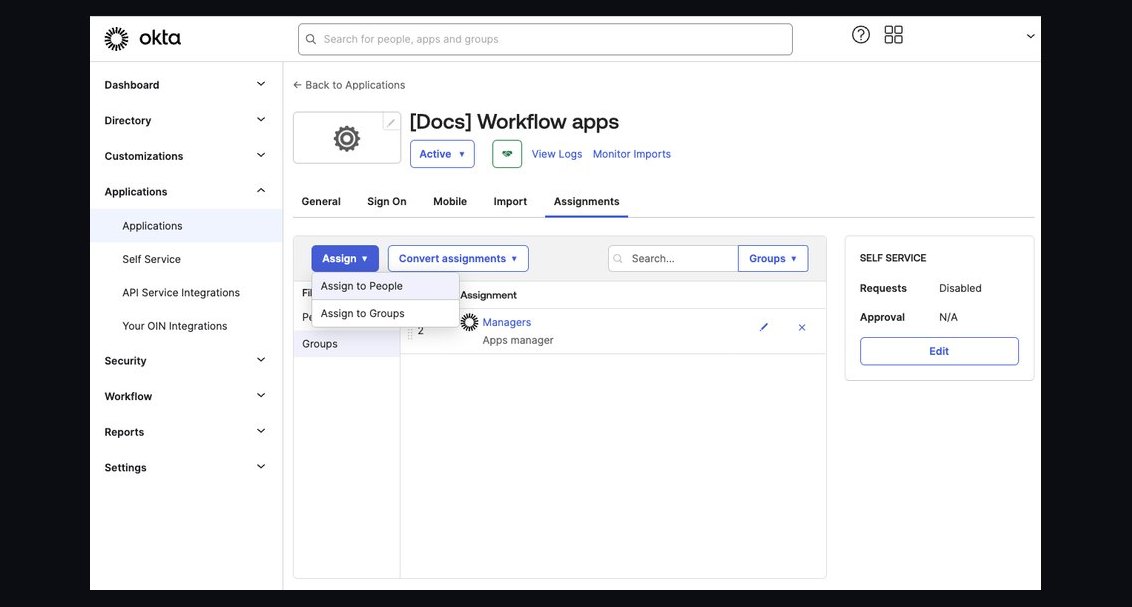 workatoHow does Workato defend against Okta in 2027?
 handymanHow do you start a handyman service business in 2027?
 ev-chargingHow do you start a EV charging installation business in 2027?
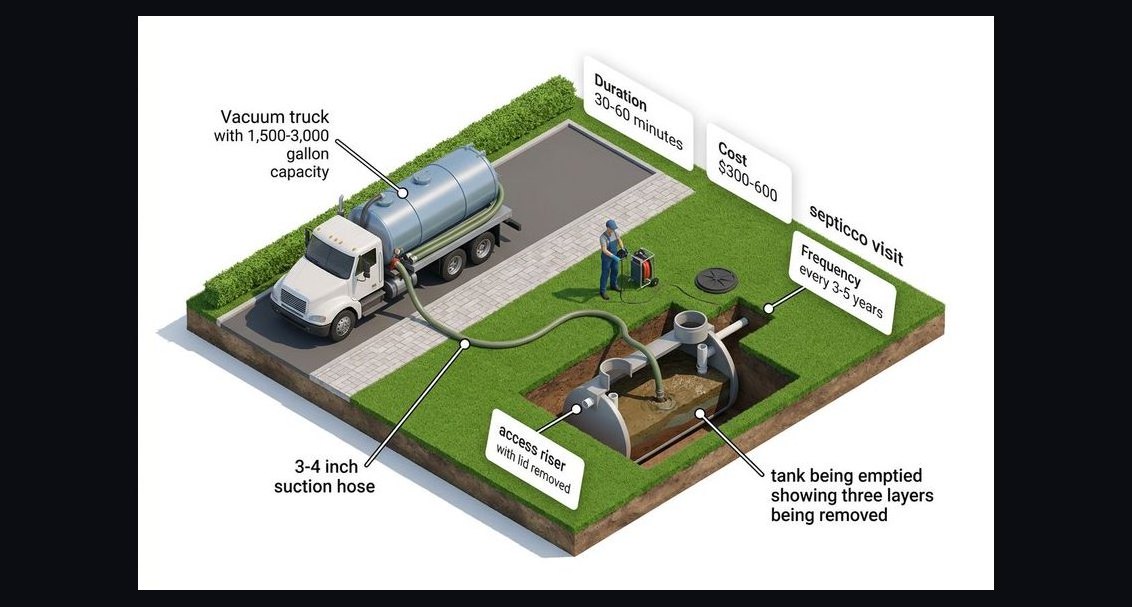 septic-tank-pumpingHow do you start a septic tank pumping business in 2027?
 datadog-nrr-trajectory-2026What is Datadog net revenue retention in 2026?
 datadog-certification-worth-itIs Datadog certification worth it in 2027?