
Why do complex local automation setups work perfectly, then break within hours in 2027?
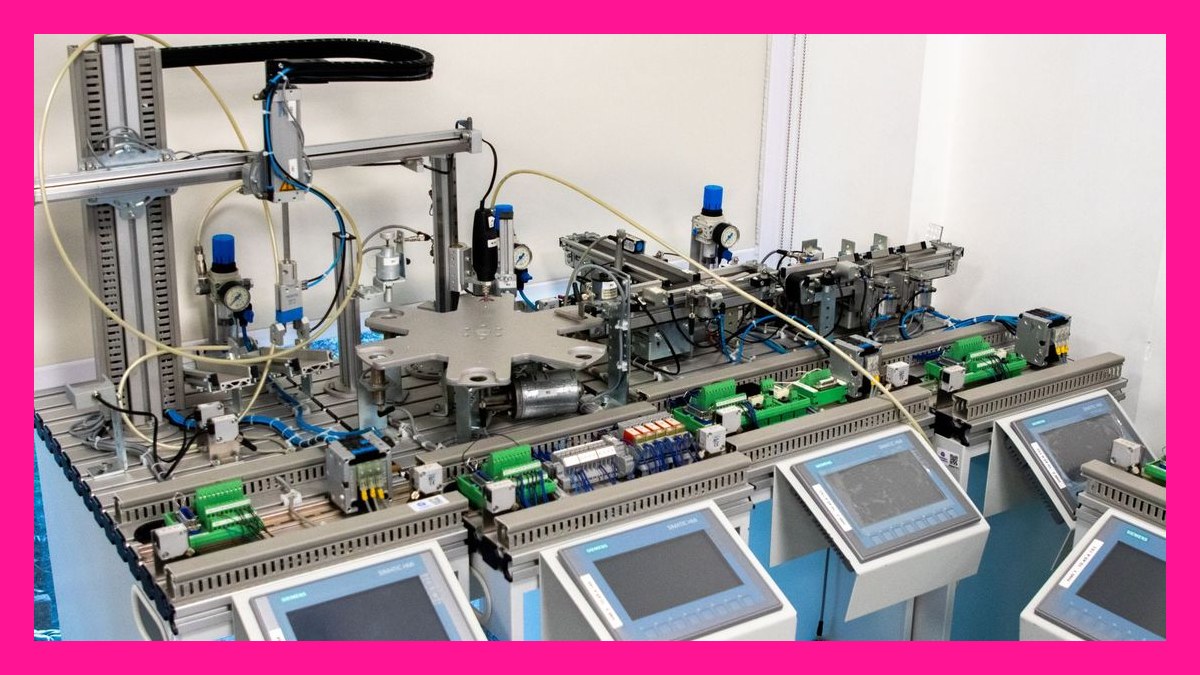
Complex local automation setups break within hours in 2027 because they depend on dozens of external conditions that silently drift — API schema changes, token expiries, DOM shifts, rate-limit tightening, and OS or dependency updates — none of which are pinned or monitored. A setup that "works perfectly" is really a setup that happened to align with every one of those conditions for one moment, and local automations have no reconciliation loop to detect or repair the first thing that moves. The result is a system that looks robust and is actually a house of cards balanced on assumptions that expire faster than ever.
The frustration is universal: you build a chain of scripts, webhooks, browser macros, and cron jobs that stitches your CRM, spreadsheets, enrichment tools, and messaging together. You test it, it runs flawlessly, you walk away — and by the next morning it has quietly failed, double-fired, or corrupted half a table. The setup did not "degrade." It hit the first condition it silently assumed and never checked. Understanding why 2027-era automations are especially prone to this — and how durable systems are architected differently — is the difference between an automation you babysit and one you trust.
Why does a local automation that passes every test still break hours later?
A passing test proves the system works under the exact conditions present at test time. It does not prove the system works under the conditions that will exist an hour later, and those conditions change constantly. When you run a browser macro against a live SaaS UI, you are implicitly asserting that the button will be in the same place, the auth cookie will still be valid, the network will respond in under your timeout, and the page will not have shipped an A/B variant to your session. Every one of those is a moving target. The test captures a snapshot; production runs against a river.
The deeper problem is that local setups have no *reconciliation*. A well-built cloud integration continuously compares desired state against actual state and self-heals — if a sync fails, it retries, backs off, and re-derives what it missed. A local script simply executes top to bottom and exits. When step three fails silently (a 200 response with an error body, an empty result set treated as "nothing to do," a token that returns stale-but-valid data), steps four through ten happily process garbage. Nothing in the chain is asking "is the world still shaped the way I assumed?" This is why the failure feels sudden: the system was never healthy in a monitored sense, it was merely unobserved. For a structured way to think about desired-versus-actual state, see how durable pipelines model this at https://pulserevops.com/knowledge/reconciliation-loops.

There is also a subtle psychology at work that makes the "it passed the test" trap so persistent. When you test an automation, you are usually watching it — you have the CRM open in another tab, you are logged in with a fresh session, your network is warm, and you are running a single record through the chain rather than the two thousand records the overnight batch will actually touch. Every one of those conditions is quietly more favorable than production. The test is not a representative sample of how the system runs; it is the single most forgiving execution the system will ever experience. Engineers call the gap between "works on my machine, right now, once" and "works unattended, at scale, repeatedly" the *reliability gap*, and local automation lives almost entirely inside it. The reason a passing test feels like proof is that humans are wired to treat a successful demonstration as evidence of general capability — but a demonstration only proves the system can succeed, not that it will keep succeeding when you stop looking.
What actually changes in the hours after setup that breaks everything?
Several categories of drift act on different clocks, and a complex setup is exposed to all of them at once. The most common is credential and session expiry: OAuth access tokens routinely live 1 hour, session cookies get rotated on the vendor's schedule, and a refresh flow you never implemented means the first expiry is fatal. The second is schema and contract drift: an upstream API adds a required field, renames a property, changes a null to an empty array, or tightens validation — none of which breaks *their* other consumers, only your unpinned assumption. The third is rate-limit and quota tightening, where a burst that was tolerated during your low-volume test trips a throttle once real traffic arrives.

Then there is the environment itself. Local machines receive OS updates, browser auto-updates that change automation-driver compatibility, dependency version bumps from an unpinned package manager, certificate rotations, and DST or timezone shifts that scramble every cron expression. In 2027 this is worse than it used to be because SaaS vendors ship continuously — daily UI changes, weekly API deprecations, aggressive bot-detection that now fingerprints headless browsers within minutes — and because AI-assisted build tools let people wire together far more integrations than they can possibly maintain. The diagram below maps the main drift vectors against how fast each one typically moves.
Each of these arrows is a condition your test happened to satisfy and your production run eventually will not. The setup did not become fragile — it was always this exposed, and time simply walked it into the first tripwire.
It helps to think about these drift vectors in terms of their *clock speed*, because that is what determines how long your setup will appear to work before it breaks. Token expiry runs on the fastest clock — often literally sixty minutes — which is exactly why the classic symptom is "it worked when I left and was dead by morning." Rate limits run on a volume clock rather than a time clock, so they stay invisible until the first genuinely busy run. Schema and contract drift runs on the vendor's release clock, which in 2027 means days to weeks, so these breaks feel more random and are harder to correlate with any change you made. Environment drift — OS patches, browser updates, dependency bumps — runs on the slowest clock but hits the hardest, because a browser auto-update that changes the automation driver can invalidate an entire category of your macros at once. A complex local setup is subscribed to *all four clocks simultaneously*, which is why its mean time between failures is not the average of these intervals but something close to the shortest one. You are only ever as stable as your fastest-drifting dependency, and in a chain with dozens of them, the fastest-drifting one is measured in hours.
Why does local complexity multiply failure instead of adding to it?
Reliability compounds multiplicatively, not additively. If each of ten steps in a chain is independently 99 percent reliable over a given window, the whole chain is only about 90 percent reliable over that same window — and most real steps against live SaaS are far below 99 percent once you account for the drift vectors above. Add more integrations and the math gets brutal fast: twenty steps at 98 percent each lands you near a coin flip. Complexity does not make a local setup more capable in proportion to its parts; it makes it more *fragile* in proportion to the product of its parts. This is the single most counterintuitive thing about home-grown automation — the elaborate version is not more powerful, it is more likely to be broken at any given moment.
Complexity also creates hidden coupling. Step seven writes a file that step nine reads; a browser tab that macro two leaves open changes what macro five sees; a shared rate-limit budget means one chatty integration starves another. In a local setup none of this coupling is declared anywhere — it lives in the order things happen to run and the state they happen to share. When you change one script, you cannot know what else you have disturbed, because the dependency graph exists only in your head and your head is not version-controlled. Durable systems fight this by making every step idempotent and independently retryable so that partial failure is safe; local chains almost never are, which is why a single mid-chain failure often corrupts data rather than merely pausing. The reliability-math and coupling patterns are unpacked further at https://pulserevops.com/knowledge/automation-reliability-math.
The takeaway is architectural, not motivational: you cannot make a long unmonitored local chain reliable by being more careful. You reduce the number of independent things that must all be true at once, or you add a layer that watches and repairs — there is no third option.
There is a second, sharper edge to the multiplicative math that most people miss: the reliability of each step is not a fixed number, it *decays over time* as drift accumulates. On the day you build it, a step might genuinely be 99 percent reliable because the token is fresh, the schema is current, and the volume is low. A week later that same step might be 90 percent reliable because the token now expires mid-run, the vendor shipped a UI change, and real traffic occasionally trips the throttle. So the chain does not just start fragile — it gets *more* fragile every day you leave it unattended, and the multiplicative product amplifies that decay. A twenty-step chain that starts at a coin flip does not stay at a coin flip; it slides toward "reliably broken" as the individual probabilities erode. This is the mathematical reason that the honest question about a complex local automation is never "will it break?" but "how many hours until the product of its decaying step reliabilities crosses the line where a failure is more likely than a success on any given run?" For most real setups in 2027, that line is crossed within a day.
How is a resilient automation architected differently from a fragile local one?
The durable version inverts almost every default of a local setup. First, it is event-driven and reconciling rather than fire-and-forget: instead of a cron job that assumes everything succeeded, it processes a queue where every job is retried with exponential backoff, dead-lettered on repeated failure, and reconciled against desired state so nothing is silently skipped. Second, it treats credentials as rotating secrets with a real refresh flow and a secrets manager, not a token pasted into a script. Third, it pins its contracts: explicit API versions, schema validation on every payload, and a loud failure (an alert, a halted pipeline) the moment an upstream shape changes — instead of a quiet corruption.
Fourth, and most important, it is observable. Every step emits structured logs, success and failure counts, and latency; a synthetic canary runs the critical path every few minutes and pages you before your customers notice. A resilient system does not promise it will never break — everything breaks — it promises that when it breaks, the failure is *contained, visible, and self-healing where possible*. That is the entire difference between an automation you check on and one that checks on itself. Many teams reach the limit of what local scripting can safely do and graduate to a managed integration layer specifically to buy reconciliation, retries, and observability they cannot practically hand-roll; the trade-offs of that move are covered at https://pulserevops.com/knowledge/local-vs-managed-integration. The practical upgrade path is: make each step idempotent, add a queue with retries in front of anything that touches an external service, pin and validate every contract, put refresh flows behind every credential, and wrap the whole thing in a canary plus alerts. Do those five things and "works perfectly then breaks within hours" becomes "breaks occasionally and heals or alerts within minutes."
It is worth being concrete about what each of those five upgrades actually buys you, because they are not equally weighted and they solve different drift vectors. Idempotency is what makes retries safe — without it, retrying a failed write can double-create a record, and a retry system layered on non-idempotent steps is more dangerous than no retry at all. The queue with backoff is what converts transient failures (a timeout, a momentary rate limit, a brief network blip) from fatal into invisible; the vast majority of real-world automation failures are transient, so this single change quietly absorbs most of them before you ever notice. Contract pinning and schema validation is what turns the slow, mysterious class of failures — the ones caused by a vendor changing something on their release clock — from silent data corruption into a loud, timestamped alert that points you straight at the field that changed. Credential refresh flows eliminate the single most common cause entirely, so the fastest clock stops being a source of breakage at all. And the canary plus alerts is what collapses your detection time from "however long until a human notices" down to minutes, which matters enormously for overnight and unattended runs where the human is asleep. Notice that none of these five make the system incapable of breaking; they each take one drift vector and convert its failure mode from *silent and fatal* to *contained and visible*. Resilience is not the absence of failure — it is the systematic conversion of silent failures into loud ones.
What should you do the moment a working automation breaks unexpectedly?
Resist the urge to immediately re-run it, which is how partial failures become duplicated writes and corrupted data. Instead, treat the break as a *signal about a specific expired assumption* and localize it. Start at the boundaries: check credentials and tokens first because expiry is the single most common cause, then check whether any upstream API, UI, or dependency changed in the failure window, then check whether volume or timing tripped a rate limit or a race condition. The failure almost always maps to exactly one of the drift vectors, and identifying which one tells you both the fix and the guard you were missing.
Then make the fix structural rather than cosmetic. If a token expired, do not paste a fresh one — add a refresh flow. If a schema changed, do not just patch the field — add validation that fails loudly next time. If a step double-fired, make it idempotent with a dedup key. Every incident is an opportunity to convert a silent assumption into a checked, monitored, self-healing one, and a setup that has survived and hardened against a dozen real breaks is far more trustworthy than one that has merely never been tested by time. The goal is not zero failures — it is failures that announce themselves and heal, so you find them in a dashboard instead of in a customer complaint.
A useful discipline here is to run a lightweight post-incident review every single time, even for a break that took thirty seconds to fix. Write down three things: which drift vector caused it, what guard would have caught it earlier, and whether that guard is worth adding now. Over a few weeks this turns your fragile setup into a hardened one *in the order that reality actually stresses it*, which is far more efficient than trying to bulletproof everything up front. You will discover that a small number of drift vectors cause the overwhelming majority of your breaks — usually credential expiry and one or two chatty vendor UIs — and that adding guards to just those converts most of your "broke overnight" incidents into "healed itself" non-events. The pattern to internalize is that reliability is earned incrementally through incidents, not designed perfectly in advance; the difference between a fragile setup and a durable one is rarely the initial architecture and almost always whether each break was converted into a permanent guard or just papered over so it could happen again tomorrow.
Related questions
Are cloud automations immune to this problem?
No — cloud automations hit the same drift, but managed platforms add retries, reconciliation, credential rotation, and monitoring by default. The failures still happen; they are simply contained and visible instead of silent and fatal, which is the entire value proposition.
Does adding more error handling fix a fragile local setup?
Only partially. Try-catch blocks stop crashes but not silent corruption or expired assumptions. Real durability comes from idempotency, retries with backoff, contract validation, and observability — architecture, not just defensive code sprinkled around existing scripts.
Why do browser-based automations break faster than API ones?
Browser automations depend on the DOM, which vendors change daily, plus bot-detection that fingerprints and blocks headless sessions within minutes in 2027. APIs offer versioned, documented contracts that change on the scale of weeks, making them far more stable to build against.
Is AI making local automation more or less reliable?
Both. AI build tools let people wire together far more integrations than they can maintain, increasing exposure to drift. But AI-driven self-healing agents that detect a broken selector or schema and repair it are beginning to close the reconciliation gap that made local setups fragile.
How often should a critical automation be monitored?
Continuously, via an automated canary running the critical path every few minutes, not manually. If you only find out it broke when someone complains, your monitoring interval is effectively "however long until a human notices," which for overnight runs is far too long.
FAQ
Why does my automation work at 5pm and break by morning? Almost always token or session expiry (typically a one-hour OAuth window), plus overnight batch volume tripping rate limits and cron timezone edge cases. The setup ran once against fresh credentials and low load; those conditions did not survive the night.
Is complexity itself the enemy, or just bad complexity? Uncontrolled complexity is the enemy. Reliability compounds multiplicatively, so each unpinned, unmonitored step drags the whole chain down. Complexity behind reconciliation, idempotency, and observability is fine — it is the hidden, unchecked kind that turns twenty steps into a coin flip.
What is reconciliation and why does it matter so much? Reconciliation is continuously comparing desired state to actual state and repairing the difference, rather than executing once and exiting. It is what lets a system recover from partial failure automatically instead of silently processing corrupt data downstream.
Should I stop building local automations entirely? No — local automations are great for low-stakes, easily-rerun tasks. Graduate to a managed or event-driven layer when the automation touches production data, runs unattended, or chains many external services, because that is where silent multiplicative failure becomes expensive.
How do I know which step actually failed? You cannot, unless every step emits structured logs with success and failure counts. Adding observability is the prerequisite to debugging; without it you are guessing, and guessing leads to re-running chains that duplicate writes and corrupt data further.
Why is 2027 worse for this than a few years ago? SaaS vendors now ship UI and API changes continuously, bot-detection fingerprints headless browsers within minutes, and AI build tools let people create far more integrations than they can maintain. More surface area, faster drift, same fragile local patterns.
Does pinning API versions really prevent breakage? It prevents an entire class of breakage — silent schema drift — by ensuring the contract you built against stays stable until you choose to upgrade. Combined with schema validation on every payload, it converts a silent corruption into a loud, fixable alert.
What is the single highest-leverage fix for a fragile setup? Put a retry-capable queue in front of anything that touches an external service and make each job idempotent. That one change converts most silent, unrecoverable mid-chain failures into safe, automatic retries — the biggest reliability gain per unit of effort.
Can I just re-run the whole chain when it breaks? Only if every step is idempotent. Blindly re-running a chain that already half-succeeded is the fastest way to duplicate records, double-send messages, and corrupt tables. Fix the assumption that failed first, confirm which steps already ran, then re-run — never reflexively.
How many integrations is too many for a local setup? There is no fixed number, but the multiplicative math bites hard past roughly ten unmonitored steps, where compounded reliability drops below ninety percent. If the chain touches production data or runs unattended, treat any point where you can no longer hold the whole dependency graph in your head as the signal to move to a managed layer.
Sources
- Google SRE Book — Handling Overload and Cascading Failures
- AWS Builders' Library — Timeouts, Retries, and Backoff with Jitter
- Microsoft Azure Architecture — Retry and Circuit Breaker Patterns
- OAuth 2.0 Authorization Framework (RFC 6749) — Access Token Expiry
- Stripe API — Versioning and Backward Compatibility
- Martin Fowler — Idempotency and Reliable Messaging Patterns
- Google Cloud — Site Reliability Engineering: Monitoring Distributed Systems
- Nielsen Norman Group — Error Message Guidelines and Silent Failure
Related on PULSE
 revopsWhy do complex local automation setups work perfectly, then break within hours in 2027?
 revopsHow do you build a revenue forecast a CFO will actually trust in 2027?
 revopsBest Luxury Cars for 2027
 revopsBest Luxury Cars for 2027
 revopsHow do you fix a broken pipeline review in 2027?
 revopsHow do you fix a broken pipeline review in 2027?
 revopsHow do you build a revenue forecast a CFO will actually trust in 2027?
 revopsWhat do the first 90 days of a new RevOps leader look like in 2027?
 revopsHow do you set SDR quotas that are actually attainable in 2027?
 revopsHow do you fix a broken pipeline review in 2027?