
How do you start a drywall repair business in 2027?
 Curated byKory White · Fractional CRO · Maryland
 PULSEKNOWLEDGE LIBRARY
Quality
Certified

Start a drywall repair business in 2027 by registering an LLC, carrying $1M general liability insurance, checking your state's contractor license threshold, and buying roughly $3,000–$8,000 in hand tools, a hopper gun, and dust-control gear. Master texture matching, price the full multi-visit job, then build homeowner, restoration, and property-management channels.
What a drywall repair business is and why the demand never stops
A drywall repair business is a specialized residential and light-commercial trade operation that patches, replaces, finishes, and textures gypsum wallboard — the paper-faced panels that make up interior walls and ceilings in essentially every building in North America. You are not a general contractor and you are not a painter, though you touch the work of both. You are the trade that shows up after the hole gets punched, after the pipe bursts, after the electrician cuts an access panel, after the DIY shelf project goes wrong, after the house settles and the corner cracks, and after the popcorn ceiling has to come down before the home can sell.
The work splits into a recurring menu of job types. Small patches — doorknob holes, nail pops, anchor holes — are quick, high-frequency, and the entry point that builds a customer base. Medium and large hole repair is the residential bread and butter: cut out, back, patch, tape, three coats of compound, sand, texture. Crack repair looks trivial and is not; settling and stress cracks done without proper preparation and feathering simply re-crack within a season. Water-damage rebuilds are the highest-value residential category, often multi-day and four figures. Sheet replacement is priced by the panel and by the square foot. Texture matching blends a repair invisibly into knockdown, orange peel, skip-trowel, Spanish lace, or smooth. Skim coating takes a textured or damaged wall to smooth. Popcorn ceiling removal is high-volume work driven by home sales. And new-construction and renovation finishing — taping and finishing the hanging work of others, plus punch-list patching — is steadier, lower-margin volume some operators build a base on.
The reason this business is durable rather than cyclical is that the demand comes from five independent streams that cannot all fail at once. Houses settle: every home on a foundation moves with seasonal soil expansion and framing shrinkage, and that movement cracks drywall at corners, seams, and door openings on a permanent, self-renewing schedule. Other trades cause damage: every plumber opening a wall, every electrician cutting an access hole, every HVAC and low-voltage installer leaves gypsum damage behind, and increasingly the trade that caused it does not fix it. Water happens constantly: roof leaks, ice dams, burst supply lines, failed water heaters, overflowing tubs, and HVAC condensation destroy ceilings year-round, and saturated drywall must be cut out, not dried in place. Occupants damage walls: doorknobs punch through, furniture gouges, movers gouge corners, and removed TV mounts leave craters. And houses turn over: every sale triggers pre-listing repair and every rental turnover triggers patch-and-prep work.
Two 2027 conditions sharpen the opportunity. First, the skilled-trades labor gap means competent finishers — people who can actually match a texture — are scarce and can charge for scarcity. Second, homeowners now find and vet tradespeople almost entirely online, which means a complete Google Business Profile and a portfolio of before-and-after texture matches functions as your storefront. The trade is dusty, physical, and multi-visit, but it is one of the lowest-barrier, fastest-cash, most demand-rich skilled trades a disciplined operator can start. That combination — cheap entry, scarce skill, structural demand — is unusual, and it is the whole reason to look at this over most other trades.

The step-by-step process to launch
The launch sequence matters, because doing it out of order is how operators end up licensed for work they cannot yet execute, or executing work they are not licensed to do.
Step one: research your state's license threshold before you take a paid job. Licensing is state-specific and is the single most important thing to verify locally. Some states require a contractor's or specialty license for any drywall work. Many set a dollar-value threshold per job — commonly somewhere in the $500 to $5,000 range depending on the state — below which the work can be done as an unlicensed handyman and above which a license is required. Others license only at the general-contractor level. Go directly to your state contractor licensing board, identify the class and threshold, and decide whether to operate under the handyman threshold initially or license fully. Insurance-restoration work, property-management contracts, and larger water-damage rebuilds generally require being properly licensed, so the license is the gate to the best channels.
Step two: form the entity and set up the money. Most operators form an LLC for liability protection and tax flexibility, register the business, obtain the local business license, and get a sales tax permit where materials or services are taxable. Open a separate business bank account the same week — commingling is how operators lose track of whether their pricing works. Entity setup, license fees, and permits typically run $100 to $1,500 depending heavily on the state.

Step three: bind insurance before the first job. A $1M-per-occurrence general liability policy is the baseline and is required by virtually every property manager, general contractor, and restoration company before they will let you on a site. Add commercial auto if you drive for work, workers' compensation the moment you have an employee, and a surety bond where the jurisdiction or the client requires one. Budget $600 to $2,000 to start.
Step four: buy the kit. Taping knives in a 4–6 inch for small work and corners, an 8–10 inch for intermediate coats, and a 12 inch for the final feathering coat. A mud pan, a hawk and trowel, inside and outside corner tools, a utility knife with plenty of blades, a drywall saw and keyhole saw, a surform rasp, a T-square, a tape measure, and a screw gun with a drywall setter. A mixing paddle and drill for compound consistency. Then the hopper gun and compressor, which is the single most important purchase because it unlocks the premium texture service. Then dust control: a sander with vacuum attachment, a drywall-rated shop vacuum, plastic sheeting, zip walls, and tape. Ladders and a small baker's scaffold. A drywall lift for ceilings and full sheets, rentable early and owned later.
Step five: practice texture on scrap board until the match is invisible. This is the step most people skip and it is the one that determines pricing power. Buy scrap panels, run knockdown at several air pressures and knife timings, run orange peel at several tip sizes, hand-apply skip-trowel, and build a physical sample library. Photograph every result.
Step six: build the demand engine. Claim and complete the Google Business Profile, launch a fast one-page site with before-and-after photos and a quote form, fund Google Local Services Ads, establish a Nextdoor presence, and get on one or two lead marketplaces for immediate flow.

Step seven: run the first jobs deliberately. Price the full multi-visit job, work clean, photograph every texture match, ask for a review at completion, and start the B2B outreach — one restoration company, one property manager, two active realtors.
Costs, timelines, and typical price ranges
The startup math is the good news. Hand tools run roughly $500 to $1,500 for a quality set. A hopper gun and compressor run $300 to $900 depending on the compressor. A drywall lift is $0 to $500 if bought used and can be rented early. Dust control gear — shop vacuum with drywall-rated filtration, vacuum sander, sheeting, zip walls — runs $300 to $1,000, and it earns that back in reviews. Ladders and a small scaffold run $200 to $800. The vehicle is often $0 marginal cost because most operators start with a van, truck, or SUV they already own; a used cargo van adds $5,000 or more. Insurance is $600 to $2,000 to start. Licensing and formation is $100 to $1,500. Software and phone — a field-service app, a payment processor, a business line — runs $50 to $200 monthly. Initial marketing is $500 to $3,000. Working capital to float materials and the gap before invoices clear is $1,000 to $5,000.
A lean solo launch with a vehicle you already own comes in around $3,000 to $8,000. A fuller launch with a purchased van and a deeper kit runs $10,000 to $25,000. That is dramatically below most trades — no heavy equipment, no inventory, no shop — which is exactly why the real filters are skill and pricing discipline, not capital.
On the revenue side, realistic 2027 residential pricing looks like this, varying by region and access difficulty:

| Service | Typical 2027 price |
|---|---|
| Small hole patch (golf ball to fist) | $100–$250 |
| Medium hole repair with texture | $200–$450 |
| Large hole repair, over ~1 sq ft, with texture | $400–$800 |
| Sheet replacement, per 4x8 installed and finished | $250–$600 |
| Crack repair, per crack, prepped and finished | $150–$400 |
| Texture matching (knockdown, orange peel, skip-trowel) | $1.50–$3.50/sq ft |
| Skim coat to smooth | $1.50–$3.00/sq ft |
| Popcorn ceiling removal | $1.50–$3.00/sq ft |
| Water-damage rebuild, ceiling or wall section | $400–$5,000+ |
| Whole-room hang, tape, finish, texture | $1.50–$3.00/sq ft of board |
| Service-call minimum / trip charge | $125–$250 |
The unit economics are unusual and worth internalizing. Take a representative medium repair: two fist-sized holes in a knockdown wall, properly cut, backed, taped, three coats with dry time between, sanded, textured to match, primed. Revenue lands at $250 to $450. Materials — compound, tape, patch, primer, sandpaper, plastic — run $15 to $50. That is the whole point: drywall is a labor and skill business, not a materials business. Gross margin runs roughly 55% to 70% on the labor portion and 25% to 40% on the materials portion, and the blend is strong precisely because materials are cheap and the value is craft.
Timeline expectations: a disciplined solo Year 1 with honest pricing and a working lead engine realistically produces $45,000 to $110,000 in owner earnings. Year 2, with an established helper and the first restoration and property-management relationships, climbs to roughly $120,000 to $250,000. Year 3, running two to three small crews with a recurring B2B base, lands around $200,000 to $400,000 with the owner primarily estimating, scheduling, and quality-controlling. Year 4 runs roughly $300,000 to $600,000. Year 5, as a mature small contracting company with diversified channels, reaches $400,000 to $800,000 or more. None of that assumes exponential growth — a drywall business scales with skilled crews and channel relationships, and both take time to build.
Where new operators get it wrong
Pricing the visible patch instead of the multi-visit job. This is the dominant failure mode and it is invisible from inside, because the operator stays busy the entire time they are going broke. Joint compound has to dry between coats, and no amount of hustle changes the chemistry. A proper repair is visit one to cut, back, patch, tape, and first-coat; a return after dry time for a wider second coat; sometimes a third feathering coat; a sanding pass; a texture pass; then prime. A "simple hole" is realistically a two-to-four calendar day process even when the hands-on labor is three hours. Setting-type hot mud compresses that meaningfully and is a real productivity lever on small repairs, but the dry-time constraint is structural on anything larger. Quote a flat $120 for "a hole" and you have priced three return trips, the setup, the containment, and the cleanup at zero.
Not charging a service-call minimum. Small jobs must cover the drive, the setup, and the dust protection before any profit exists. A $125 to $250 minimum is standard and defensible.
Never mastering texture matching. Anyone can cut a hole, screw in a patch, and slap on compound. The gap between a repair and an invisible repair is texture, and matching into knockdown, orange peel, skip-trowel, Spanish lace, or a Level 5 smooth wall is genuinely difficult — it requires reading the existing pattern, knowing the tip size and air pressure, judging compound consistency, timing the knockdown, and feathering into the surrounding surface. Most handymen cannot do it well, and a visible patch is a failed repair in the customer's eyes regardless of how sound the substrate work was. This is the moat. The tools are cheap; the skill is not, and the skill is the entire competitive position.
Underpricing dust, access, and cleanup. Drywall sanding produces a fine, pervasive dust that settles on every surface in an occupied home. The professional approach is containment with plastic and zip walls, floor protection, furniture covering, dust-controlled sanding through a vacuum sander and drywall-rated shop vac, technique clean enough to minimize sanding in the first place, and thorough cleanup. There is also a health dimension — drywall dust carries silica and fine particulates, and daily exposure warrants real respiratory protection. Customers judge the job on both the invisible repair and the state of their house afterward; a perfect patch in a dust-wrecked home does not generate a referral.

Failing to set the multi-visit expectation with the customer. A homeowner who expected one visit and instead watches you come and go three times assumes something went wrong, even when the work is flawless. Say it in the quote.
Skipping the license research or the insurance. Working above the state threshold unlicensed, or working uninsured in occupied homes and at height, converts a manageable compliance cost into an existential one.
Concentration risk. Over-depending on a single restoration company, property manager, or general contractor means their slow quarter is your crisis. The B2B channels also pay on net terms — often net-30 or longer — so an operator scaling into them needs working capital, and should let fast-paying homeowner work fund the gap.
Assuming skilled finishers can be hired on demand. They cannot. Finish and texture skill takes years and the trade has an aging workforce. Operators who scale successfully hire helpers with aptitude and attitude and develop them up through the finish skills, building loyalty and capability together rather than competing for scarce experienced finishers.
Decision framework: which model and which channel to choose
There are three distinct ways to build this, and choosing deliberately shapes your equipment, marketing, and trajectory.
The solo repair model is one skilled operator, sometimes plus a helper, running residential work booked directly with homeowners: patches, holes, cracks, texture matching, small water-damage jobs, popcorn removal. Lowest possible overhead, highest per-job margin, fastest cash, and quality the owner personally controls. The ceiling is one person's hands and calendar — a genuinely good lifestyle business at $80,000 to $140,000 in owner earnings.
The crewed repair-and-restoration model scales into two or three small crews, adds water-damage rebuild work through insurance and restoration-company partnerships, and pursues property-management and apartment turn contracts. Real scale at $150,000 to $400,000 and up, with revenue diversified across homeowner, carrier-paid, and property-management sources. The cost is that the owner becomes a manager and inherits the hiring problem.
The finishing subcontractor model focuses on hanging and finishing for general contractors, builders, and renovation companies — whole-job taping and finishing, punch-list work, new-construction texture. Predictable pipeline through a handful of relationships, lower margin, and payment timing controlled by the GC.

On channels, the three B2B routes have distinct profiles. Insurance restoration is the highest-value one most solo operators never access: when a pipe bursts or a roof leaks, the carrier pays for the repair, priced through Xactimate line items that carriers and restoration contractors use industry-wide. The entry point is becoming the reliable drywall rebuild subcontractor for one or two local water-damage mitigation firms — they do extraction and drying, then need someone to rebuild. The work is well-paid, recurring, and recession-resistant because claims happen regardless of the economy. The requirements are being properly licensed and insured, understanding Xactimate scoping and documentation, and being reliable enough that the mitigation firm will put you on their client's job.
Property management converts one-off jobs into ongoing volume. Property managers, apartment communities, build-to-rent operators, and large landlords generate continuous turn damage — every move-out means holes, anchor damage, and wall repair before re-rent. The work is recurring, predictable, and standardized enough to execute efficiently. The trade-offs are lower per-job pricing, net-30-or-longer terms, and an expectation of reliability plus the licensing and insurance to back it.
Real estate and pre-listing is the third. Every home sale is preceded by a seller and an agent who want settling cracks gone, popcorn ceilings down, water stains erased, and fixture holes invisible before photos. The jobs are well-defined, deadline-driven, and well-paid, and a single active agent transacts repeatedly — which makes each agent relationship a renewable referral source.
The homeowner channel remains the highest margin and should never be abandoned. Build it on a complete Google Business Profile with relentless review collection, Google Local Services Ads for direct paid flow, a fast site with a before-and-after texture portfolio, Nextdoor for neighbor-to-neighbor referrals, one or two lead marketplaces early, and vehicle signage plus yard signs that convert physical proximity into new work.

The sequencing that works: start solo on repair, invest hard in texture mastery, build the review base and referral engine, then layer in whichever B2B channel fits your temperament — restoration and property management if you want to own the customer relationship, contractor subcontract if you prefer steady B2B volume. The wrong move is chasing all three models before the core repair skill and reputation exist.
Sustaining the business past year one
Year one is skill-proving, reputation-building, and system-building — not scale. The solo operator takes the jobs that come through Local Services Ads, marketplaces, and Nextdoor; executes them cleanly; photographs every texture match; gathers reviews; and converts early customers into a referral base. It is also the year you discover the true labor cost of the multi-visit structure and recalibrate pricing so jobs are profitable rather than merely busy.
Scheduling is where efficiency actually lives. Because compound must dry, you cannot book back-to-back single-visit jobs. The productive operator interleaves work so that while one job's second coat dries, they are cutting and taping another — batching by neighborhood and by stage, and using fast-setting compounds where the job allows. Treat dry time as a scheduling system to optimize, not a frustration.
On taxes and structure: as profit grows, an S-corp election on the LLC can reduce self-employment tax, which is a conversation for an accountant once revenue justifies it. Sales tax treatment of materials versus labor varies significantly by state — some tax materials, some tax the full job, some treat the contractor as the end consumer — so get that right from the first invoice. Set aside quarterly estimated federal and state income tax plus self-employment tax rather than being surprised in April. Vehicle, tools, insurance, software, marketing, materials, and continuing education are legitimate deductions, and equipment purchases may qualify for first-year expensing. Once you have employees, payroll tax, withholding, and workers' compensation become real administrative obligations worth outsourcing to a payroll service.
Financing is mostly a non-issue, which is a genuine advantage. The startup cost is low enough that most operators self-fund from savings, a modest amount of credit, or by starting part-time alongside another income. The one larger purchase — a used cargo van — is financeable, and Year 2–3 growth capital for crews and a second vehicle typically comes from reinvested cash flow because margins are strong and overhead is thin. The discipline that matters is invoicing immediately, following up on receivables, taking deposits on large water-damage and whole-room jobs to fund materials, and keeping a cash cushion against fixed costs that continue between jobs.
Competitively, the field is bifurcated in a way that leaves a real opening. National handyman franchises do drywall as one service among many, with brand recognition and marketing scale but generalist crews whose texture depth varies. At the other end sits a long tail of handymen and side hustlers competing on price who often cannot match texture or work clean. Established drywall contractors focused on new construction and larger commercial finishing frequently do not prioritize small residential repair. You do not out-market the franchises or out-cheap the side hustler — you win by being the texture-matching specialist whose repairs are invisible, who leaves the house clean, who carries the license and insurance that unlock the B2B channels, and whose referral base compounds.
One note for anyone arriving at this from a RevOps or business-operations background: the same discipline applies here as anywhere. Track job-level profitability, not just revenue. Know your cost per lead by channel, your close rate on quotes, and your callback rate by job type. The operators who scale are the ones who can answer whether last month's Local Services Ads spend produced profitable work, and the ones who fail are usually running on gut feel while staying busy enough to never check.
Related questions
How much does it cost to start a drywall repair business?
A lean solo launch with a vehicle you already own runs roughly $3,000 to $8,000 — hand tools, hopper gun and compressor, dust control, insurance, formation, and initial marketing. Adding a purchased used cargo van and a deeper tool kit pushes it to $10,000 to $25,000.
Do I need a contractor license to do drywall repair?
It depends on your state. Some require a specialty or contractor license for any drywall work, many set a per-job dollar threshold (commonly $500 to $5,000) below which handyman work is allowed, and some license only at the general-contractor level. Check your state licensing board directly.
How much can a drywall repair business make in the first year?
A disciplined solo operator with honest pricing and a functioning lead engine realistically clears $45,000 to $110,000 in owner earnings in Year 1. The operators who price the patch instead of the multi-visit job stay busy and break even instead.
What is the hardest skill to learn in drywall repair?
Texture matching. Blending a repair invisibly into knockdown, orange peel, skip-trowel, or a Level 5 smooth wall requires reading the existing pattern, controlling tip size and air pressure, judging compound consistency, and feathering the edges. It is the skill that commands premium pricing.
How do I get insurance restoration work as a drywall contractor?
Get properly licensed and insured, learn Xactimate scoping and documentation, then approach local water-damage mitigation companies. They handle extraction and drying and consistently need reliable drywall subcontractors for the rebuild phase afterward.
FAQ
Why does a small drywall repair take multiple days?
Joint compound must dry fully between coats, and a proper repair takes three coats plus sanding, texture, and priming. The hands-on labor may be only three hours, but it is spread across two to four calendar days. Setting-type hot mud compresses this on small jobs, but the constraint is chemical, not effort-based.
What insurance does a drywall repair business actually need?
A $1M-per-occurrence general liability policy is the baseline and is required by nearly every property manager, general contractor, and restoration company. Add commercial auto if you drive for work, workers' compensation as soon as you have an employee, and a surety bond where the jurisdiction or client demands one.
Is drywall repair profitable given how cheap materials are?
Materials being cheap is exactly why it is profitable. A $250 to $450 medium repair consumes $15 to $50 in compound, tape, patch, and primer. Gross margin runs 55% to 70% on labor and 25% to 40% on materials. The value you sell is skill and time, not product.
Should I start solo or hire immediately?
Start solo. Year 1 is for proving the texture skill, calibrating pricing against the real multi-visit labor cost, and building the review and referral base. The first hire should be a helper who handles setup, containment, hanging, and basic mudding — roughly doubling your capacity while you keep the finish work.
How do I compete against national handyman franchises?
Not on marketing spend or price. Compete on craft: invisible texture matches, clean occupied-home work, real licensing and insurance that let you take the restoration and property-management jobs generalists cannot, and a photographed portfolio that proves the finish quality before a customer ever calls.
What is the single most common reason these businesses fail?
Underpricing. Quoting the visible patch rather than the full multi-visit job — the return trips, the setup, the dust containment, the cleanup, and the texture premium — produces an operator who is fully booked and barely solvent, and who concludes there is no money in drywall when the real problem was the quote.
Sources
- https://www.census.gov/programs-surveys/ahs.html
- https://www.bls.gov/ooh/construction-and-extraction/drywall-and-ceiling-tile-installers.html
- https://www.sba.gov/business-guide/launch-your-business/choose-business-structure
- https://www.irs.gov/businesses/small-businesses-self-employed
- https://www.osha.gov/silica-crystalline
- https://www.epa.gov/lead/renovation-repair-and-painting-program
- https://www.usg.com/content/usgcom/en.html
- https://www.gypsum.org/
- https://www.xactware.com/en-us/solutions/claims-estimating/xactimate/
- https://support.google.com/localservices/
Related on PULSE
- How do you start a handyman business in 2027?
- How do you start a painting business in 2027?
- How do you price home service jobs profitably?
- How do you get on a property manager's approved vendor list?
- How do you generate leads for a local trades business?
- How do you scale from solo operator to crews in the trades?
This page will be disappearing soon. Save it to your device for $1 — or read it free while it is here.
@Kory-White- · if Venmo asks, the last 4 of my number are 2012
This page is gone.
This one is off the shelf now. $1 keeps it on your phone for good — the whole page, pictures and diagrams included.
 move-out-cleaningHow do you start a move-out cleaning business in 2027?
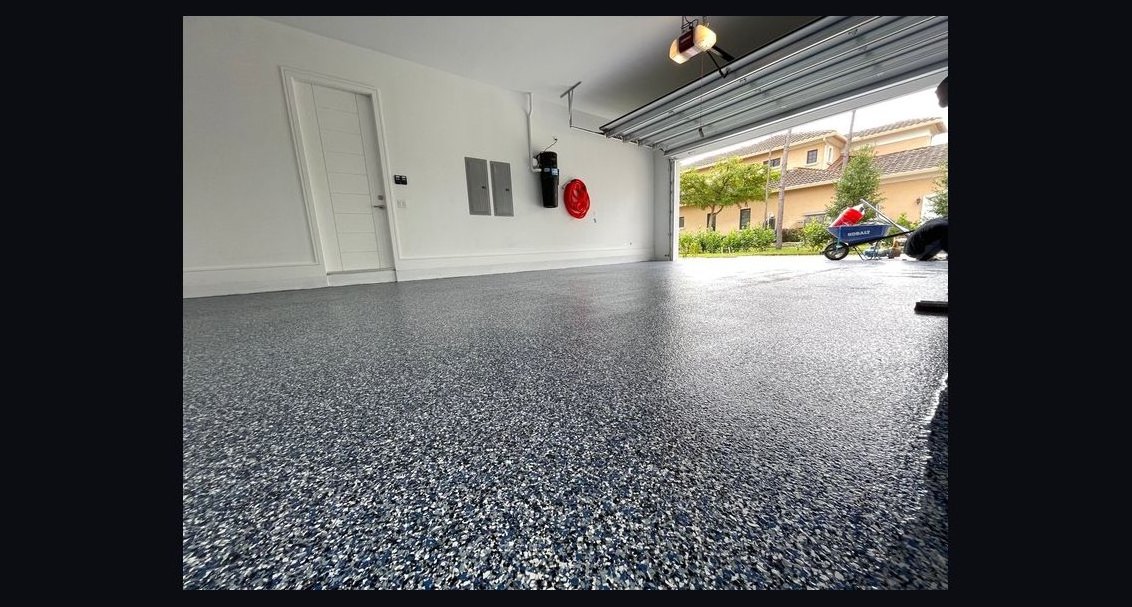 epoxy-flooringHow do you start a epoxy garage flooring business in 2027?
 plumbingHow do you start a plumbing service business in 2027?
 handyman-businessHow do you start a handyman business in 2027?
 electricianHow do you start a electrician service business in 2027?
 painting-businessHow do you start a painting business in 2027?
 handymanHow do you start a handyman service business in 2027?
 hvacHow do you start a HVAC service business in 2027?
 painting-contractorHow do you start a painting contractor business in 2027?
 hvacHow do you start an HVAC business in 2027?