
How do you start a mobile car wash business in 2027?
 Curated byKory White · Fractional CRO · Maryland
 PULSEKNOWLEDGE LIBRARY
Quality
Certified
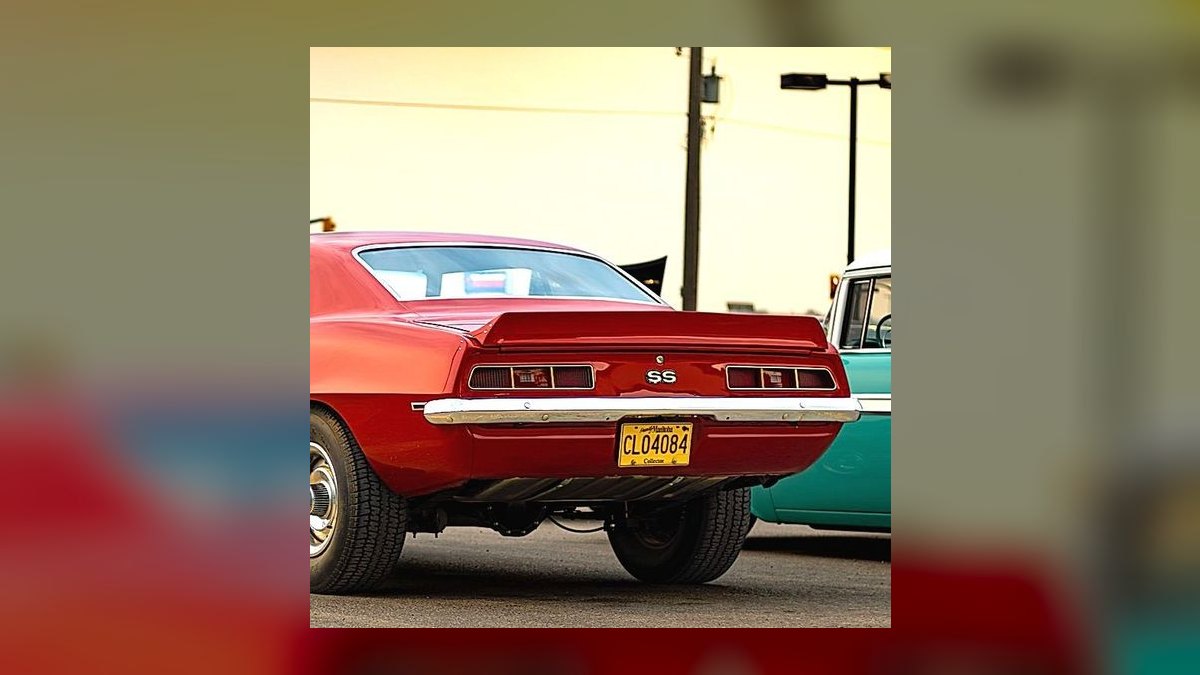
Start a mobile car wash business in 2027 by choosing a service model first — express route washing, detail-led work, or fleet contracts — then buying a rig that matches it. Budget $5,000–$12,000 with an owned vehicle, secure liability and garage-keepers coverage, and build route density before adding trucks.
The three service models you are actually choosing between
Every mobile car wash decision downstream — equipment, pricing, insurance, who you sell to, whether you hire — flows from one upfront choice among three distinct business shapes. Most people who fail never made this choice consciously; they bought a pressure washer and took whatever work called.
The express mobile wash model performs fast, frequent, lower-ticket work: exterior wash plus a light interior wipe-down, typically $30–$90 per vehicle, thirty to sixty minutes including setup and teardown. The appeal is simplicity — the skill floor is low, the equipment is cheap, and customers repeat monthly. The trap is that a small ticket cannot absorb much overhead. If you drive forty minutes to a $45 wash, you have converted an hour of unpaid driving into a job that grosses less than the drive cost you in time. Express only works when the vehicles are clustered: six cars in one apartment lot, a dozen in a single office park, or a subscription route through four adjacent streets. Sold that way it is a genuine business. Sold as scattered one-offs across a metro, it is the most reliable way to work a twelve-hour day for four hours of pay.
The detail-led model inverts the ratio: fewer vehicles, far higher tickets. A full detail — exterior wash, clay bar, wax or sealant, interior shampoo and hot-water extraction, trim dressing, glass — runs $150–$450 depending on vehicle size and how badly it has been neglected. Paint correction pushes that to $400–$900. A ceramic coating package, which requires multi-stage correction plus careful prep and cure, runs $700–$2,000 and up. The economics are structurally better because a four-hour job at $350 absorbs a forty-minute drive without flinching. The barrier is skill: paint correction is genuinely difficult, a rotary in untrained hands burns through clear coat, and a botched ceramic application means stripping and redoing it at your own cost. You cannot fake this work — the results are visible in direct sunlight from ten feet away. Budget several months of practicing on your own vehicle and cheap beaters before you charge premium rates.
The fleet-contract model sells to a business buyer rather than a consumer. Car dealerships need lot inventory kept presentable, customer vehicles cleaned at delivery and after service, and demo cars detailed. Rideshare and delivery drivers need frequent affordable cleaning to protect ratings. Corporate service fleets, municipal vehicles, and rental operations all need scheduled cleaning from one accountable vendor. Per-vehicle rates fall to roughly $15–$45 — materially below retail — but you clean twenty or forty vehicles at a single address on a fixed weekly schedule. The buyer hands you route density for free, which is the single most valuable thing anyone can give a mobile operator. The costs are a slower sales cycle measured in weeks not minutes, a sophisticated buyer who negotiates on price, site conditions that vary wildly (is there power? a spigot? are you allowed to let water reach the storm drain?), and concentration risk if one account grows past roughly a third of revenue.
The strategically correct answer for most 2027 entrants is a deliberate blend, weighted toward contracts. Build a base of two to four recurring commercial or community accounts that guarantee the week is structurally full and geographically tight. Layer retail detailing on top for margin. Use on-demand consumer washes as fill-in for open slots and as a lead source — never as the foundation. The failure shape is well documented: pure on-demand consumer mobile washing, scaled aggressively, is exactly the model that consumed enormous venture funding at Spiffy and ended in a Chapter 7 filing in May 2024 after operating across more than twenty markets. That company had brand recognition, an app, and real volume. What it did not have was an economic engine that survived the cost of dispatching a van to one driveway at a time.

Choosing your model before you spend a dollar
The decision is not a matter of taste. It follows mechanically from four inputs you can assess in an afternoon: how much capital you actually have, whether you already possess or will build detailing skill, whether your market has enough commercial vehicle density to sell into, and whether you are willing to do outbound B2B sales.
Assess capital honestly. If you own a usable van, truck, or a vehicle that can tow a small trailer, your entry cost drops by the largest single line item and a lean express-or-detail launch fits inside $5,000–$12,000. If you must buy a vehicle, you are looking at $15,000–$45,000 all-in and you should strongly prefer a model with a higher average ticket, because a financed vehicle payment against $45 washes is a treadmill.
Assess skill honestly too. Detail-led work at $400+ requires competence you either have or must build. There is no shortcut, and charging premium prices for amateur correction work generates refund demands and reviews that follow you for years. If you are starting from zero, the correct sequence is: run express and basic details first, practice correction on your own time, then raise prices as the work justifies it.
Assess your market by counting. Drive your service area and count independent used-car lots, franchise dealerships, apartment complexes over roughly one hundred units, office parks, and any visible corporate fleet yards. If you can list fifteen or more realistic commercial prospects within a twenty-minute radius, the fleet-contract path is available to you and it is the strongest foundation. If you count three, that path is thin and you should weight toward detailing, where a customer will tolerate a longer drive because the ticket justifies it.
Finally, assess your willingness to sell. Contract work requires walking into a dealership service department, asking for the person who handles reconditioning, offering a free demonstration on two lot cars, and following up three times. That is sales, not marketing, and plenty of capable operators simply will not do it. Knowing that about yourself before you buy equipment is worth more than any piece of gear.
The numbers behind each model
The variable that decides profitability is not equipment cost and not skill — it is billable hours as a percentage of working hours. A fixed-site tunnel has zero drive time. Your day is washing time plus driving plus setup plus teardown plus scheduling gaps, and only the washing bills.

Run it concretely on an eight-hour day. Scattered express: four jobs at an $80 average, spread across a metro. Each job is forty-five minutes of work plus roughly forty minutes of driving and parking. You bill about three hours of eight — a 38% billable ratio — and gross $320. Subtract $25 in supplies, $30 in fuel, and the vehicle wear you are not tracking, and the day cleared maybe $250 for twelve hours of engagement. That is the math that ends businesses.
Clustered express: eight washes at $70 inside one apartment complex or office park. One setup, near-zero travel between vehicles, roughly 75% billable. Gross $560 with $40 in supplies and $12 in fuel because you drove once. Same person, same skill, same equipment — the route structure alone roughly doubled the take-home.

Detail-led: two full details at $300 each, in different neighborhoods. Three and a half hours of work per vehicle plus thirty minutes of driving each. Roughly 87% billable, gross $600, supplies $50–$70 because clay, polish, pads, and chemicals cost real money on a full detail. The drive time barely matters because the ticket absorbs it. This is why detailing forgives geography in a way express never does.
Fleet contract: thirty dealership lot vehicles at $22 each in a single visit. Gross $660, one setup, zero inter-vehicle travel, supplies around $60 because per-vehicle chemical use on a lot wash is low. The rate looks insulting on paper and the day economics are excellent.
At the business level, a disciplined mobile operation runs a 45–65% margin after fuel, supplies, and water before owner labor. The spread inside that range is almost entirely route efficiency and supply discipline.
Startup costs break down as: cleaning rig — pressure washer, extractor or vacuum, generator, polishers, tank, hoses, tools — $3,000–$15,000 depending on whether you buy hot-water and detailing-grade equipment; vehicle $0 if owned, $5,000–$30,000+ if purchased; initial chemical and supply kit $300–$1,500; insurance first payments $500–$2,500; entity formation, local business license, and any wash or stormwater permits $200–$1,500; field-service software setup and first months a few hundred; vehicle lettering, a simple website, and initial local marketing $500–$3,000; and a working-capital reserve of $2,000–$8,000 for slow early weeks and the first seasonal dip. That reserve is the line beginners cut, and it is the line that determines whether a slow February ends the business.
On revenue: a focused solo Year 1 run with route discipline realistically produces $45,000–$140,000 in revenue and $25,000–$80,000 in owner take-home. The width of that range is not talent — it is density. Scattered operators land at the bottom. Operators who landed two recurring routes or a dealership contract land at the top. By Year 2, with the route densified and possibly a first technician or second rig, revenue commonly reaches $120,000–$300,000 with owner profit around $50,000–$130,000. A well-run Year 3 operation with two to four trucks and a real contract base lands near $250,000–$550,000 in revenue and $80,000–$180,000 in owner profit, with the founder routing and selling more than washing.

Ongoing costs deserve specificity because beginners systematically underestimate two of them. Supplies and chemicals run a real $15–$40 per full detail and more for ceramic work — soap, degreaser, iron remover, clay, polish, pads, tire dressing, glass cleaner, and a stack of microfiber towels that need laundering and eventual replacement. Water is both a cost and a constraint: a tank adds weight and refill trips, and drawing from a customer spigot is not always available on commercial lots where water may also be metered. Insurance — general liability, commercial auto, and garage-keepers coverage because you are handling customers' valuable property — typically runs several hundred to a few thousand dollars annually depending on state, coverage limits, and whether you have employees.
Building the rig and sequencing your first ninety days
The rig is your largest single decision and the range is wide because ambition varies. Core components: a water source — a tank sized to your route, or reliance on customer spigots with a tank as backup; a pressure washer, where hot-water units clean dramatically better and faster than cold but cost substantially more; a vacuum and ideally a hot-water extractor, which is the single piece of equipment that separates real interior detailing from a shop-vac job; a generator to power equipment on commercial lots with no accessible outlet; a dual-action polisher and eventually a rotary for correction work; water containment or reclamation — mats and recovery vacuums — which is increasingly required for commercial-lot work; the chemical and consumable kit; and the vehicle itself, whether van, enclosed trailer, or truck-and-trailer.
The build philosophy that survives contact with reality: buy the rig that does the work you are actually selling, and upgrade from cash flow rather than from debt. A detail-led operator needs the extractor, quality polishers, and good chemistry far more than a large tank. An express route operator needs fast water delivery and efficient setup. A fleet operator needs equipment matched to actual site conditions — walk the lot and check for power, water access, and drainage before you spec anything. Plenty of durable operations started with a $4,000–$8,000 setup, proved the route, and reinvested. A financed $25,000 rig sitting in a driveway because no route exists is the most expensive beginner mistake available, and the monthly payment is precisely what pushes people into the scattered-job trap.

Sequencing matters as much as spec. Weeks one through two: form the entity — an LLC is the near-universal choice given that you handle customers' valuable vehicles on their property — open separate business banking, obtain your local business license, and research your jurisdiction's stormwater and wash-water discharge rules before you buy containment gear or promise anything to a property manager. Wash water carrying soap, road grime, oil, and brake dust into a storm drain is a pollution violation in many jurisdictions, and commercial property managers are increasingly aware of their own liability for it. Confirm whether your state taxes car wash and detailing services — treatment varies — and set up collection correctly from day one rather than discovering it at year-end.
Weeks three through four: bind insurance before the first paid job. General liability, commercial auto on the rig vehicle, and garage-keepers coverage are not optional; one swirled finish, damaged trim piece, or chemical stain on a customer's vehicle without coverage can exceed a year of profit. Buy and assemble the rig. Practice the full service on your own vehicles and on friends' cars until your times are honest and repeatable — knowing that a full detail takes you 3.5 hours rather than the 2 you guessed changes every price on your menu.
Weeks five through eight: stand up the operating stack and start selling. Set up a field-service platform — Jobber, Housecall Pro, and Workiz are the widely used options — to hold the customer list, schedule and sequence jobs, send reminders and on-the-way texts, generate invoices, and manage recurring subscriptions. Attach card payment through Square, Stripe, or the processor built into the platform. Claim and fully complete your Google Business Profile, because consumer discovery in this category runs overwhelmingly through local search and reviews. Get vehicle lettering done — the rig parked in a visible driveway is free advertising at every job. Then begin outbound: identify your fifteen commercial prospects, offer free demonstrations on two vehicles each, and follow up.

Weeks nine through twelve: convert. Pitch a recurring plan at every single retail job — monthly residential subscriptions commonly run $80–$250/month and each conversion turns a one-off into route density. Target marketing geographically at specific neighborhoods and complexes rather than the whole metro, so density builds on purpose. Institute trip charges and area minimums so a scattered job cannot quietly break the day's economics. Start saying no to work that sits forty minutes outside the cluster — declining that job protects the profitability of every other job on the calendar.
Seasonality, water rules, and the risks that end operations
Two environmental realities shape the calendar and neither is negotiable. In cold-winter states, exterior wash demand drops sharply from roughly December through February — partially offset by road-salt-driven winter washing — and the discipline is to weight those months toward interior detailing, which persists year-round because interiors get worse in winter, not better. In hot dry markets, summer is peak demand but drought and water-use restrictions in California, Arizona, and Nevada have repeatedly constrained water use, which makes waterless and low-water wash methods and reclamation equipment core capability rather than an eco-marketing flourish. Commercial contracts dampen seasonality substantially, because dealerships and fleets need vehicles cleaned in February exactly as much as in July — another argument for building the contract base early.

The risk register is short and each item has a known mitigation. Property-damage liability is the central exposure and is managed with garage-keepers coverage, careful technique, and photographing vehicle condition before you touch anything. Environmental and runoff liability is managed with containment equipment and knowing local rules — and it doubles as a sales credential, because a property manager choosing between vendors cares which one will not create a compliance problem on their lot. Equipment failure stops revenue entirely, so maintain deliberately and keep backups for the one or two items that would idle you. Customer concentration is managed by keeping any single contract under roughly a third of revenue. Weather is managed by keeping interior work available as a rainy-day fallback and building buffers into the schedule.
The mistakes that actually kill first-year mobile operations are consistent enough to serve as a pre-launch checklist: chasing scattered residential one-offs across a whole metro; pricing supplies, water, and real job duration as though they were free; building purely on consumer on-demand and never pursuing contracts; over-equipping on debt before a route exists; ignoring seasonality with no interior pipeline and no cash reserve; discharging wash water improperly until a property manager ends the relationship; operating uninsured; running off a paper calendar instead of scheduling software; leaving the Google profile empty; staying stuck on commodity washes and never building the detailing skill that pays; and scaling to a second truck before the first route is genuinely dense — which only multiplies a broken model. Founders who fail typically made three or four of these. None of them are subtle, and all of them are avoidable by decision rather than by luck.
Worth naming for anyone applying a RevOps lens to this: the whole business reduces to a pipeline and utilization problem. Your capacity is billable hours, your funnel is contracts plus recurring subscriptions plus retail fill-in, and your governing metric is billable ratio. Operators who track that one number weekly make different decisions than those who track revenue alone — because a scattered $600 day and a clustered $600 day look identical on a bank statement and completely different on a P&L once fuel, wear, and hours are honest.
Related questions
How much can a solo mobile detailer realistically earn in year one?
A disciplined solo operator with route discipline typically generates $45,000–$140,000 in revenue and $25,000–$80,000 in owner take-home. The bottom of that range reflects scattered one-off work; the top reflects two or three recurring routes or a landed dealership contract providing predictable density.
Do you need a permit to wash cars in a customer's driveway?
Requirements vary by jurisdiction. Most places require a general business license, and many regulate wash-water discharge into storm drains under stormwater rules. Check your city and county before launching, and expect commercial property managers to ask about containment.
Is mobile car washing better than opening a fixed-site car wash?
Different businesses entirely. Fixed sites require heavy capital and win on cheap, fast, frequent exterior washes. Mobile requires a fraction of the capital and wins on interior work, detailing, and serving vehicles that cannot easily reach a tunnel — especially commercial fleets.
What is the fastest path to profitability?
Land recurring commercial contracts early. A dealership, apartment community, or corporate fleet account fills scheduled days with clustered vehicles at one address, eliminating both drive time and per-job acquisition cost — the two costs that consume scattered operators.
Should you buy new or used equipment to start?
Used commercial-grade equipment from operators upgrading or exiting is often the better value, provided you can inspect it running. Prioritize spending on the extractor and polishers if detailing, and on water delivery if running an express route.
FAQ
How much does it cost to start a mobile car wash business in 2027?
A lean launch using a vehicle you already own runs roughly $5,000–$12,000 all-in: a $3,000–$8,000 rig, $300–$1,500 in initial chemicals and supplies, $500–$2,500 in first insurance payments, $200–$1,500 in formation and licensing, and a working-capital reserve. A fuller launch with a purchased vehicle and detailing-grade equipment runs $15,000–$45,000 or more.
What licenses and insurance do I actually need?
At minimum a local business license and, in most cases, an LLC for liability protection. On insurance: general liability, commercial auto on the rig vehicle, and garage-keepers coverage because you are handling customers' valuable property. Check your jurisdiction's stormwater and wash-water discharge rules separately — those can require containment equipment or a permit for commercial-lot work.
How do I find my first customers?
Two channels in parallel. For consumers: a fully completed Google Business Profile plus steady reviews, since local search drives most discovery in this category, reinforced by lettering on the rig that advertises at every job. For business: walk into fifteen dealerships, apartment offices, and fleet yards within twenty minutes of you, offer to demonstrate on two vehicles free, and follow up three times.
Can I run this part-time while keeping a job?
Yes, and it is a common and sensible entry. Weekends and evenings suit residential work, and it lets you learn real job durations and supply costs without financial pressure. The constraint is that commercial contracts generally require weekday availability, so a part-time start tends to lock you into the retail model until you can go full-time.
How do I price a full detail without underselling myself?
Price the whole engagement, not the scrubbing. Time your own work honestly, add setup and teardown, add the drive time that job specifically requires, add $15–$40 in supplies, then apply your target hourly rate. A $150 detail that consumed five hours door-to-door paid you $30 an hour before fuel and equipment wear. Use minimums and trip charges so distance cannot silently erase the margin.
What is the single biggest reason mobile car wash businesses fail?
Windshield time — the unpaid hours driving between scattered jobs. Operators taking work wherever it falls bill roughly 40% of their working hours; operators running clustered routes and contracts bill 70–80%. Same person, same equipment, roughly double the income. Every durable strategy in this business reduces to clustering the work geographically and signing recurring contracts that deliver density for free.
Sources
- U.S. Small Business Administration — Write your business plan
- U.S. Small Business Administration — Get business insurance
- IRS — Business structures
- IRS — Estimated taxes
- EPA — Stormwater discharges from municipal separate storm sewer systems (MS4s)
- U.S. Bureau of Labor Statistics — Occupational Outlook Handbook
- California Department of Water Resources — Water conservation
- Google Business Profile Help — Add or claim your business profile
- U.S. Census Bureau — County Business Patterns
Related on PULSE
- How do you start a pressure washing business?
- How do you start a mobile detailing business?
- How do you win recurring commercial cleaning contracts?
- How do you price recurring service subscriptions?
- How do you build route density in a local service business?
- How do you scale from one truck to a small fleet?
This page will be disappearing soon. Save it to your device for $1 — or read it free while it is here.
@Kory-White- · if Venmo asks, the last 4 of my number are 2012
This page is gone.
This one is off the shelf now. $1 keeps it on your phone for good — the whole page, pictures and diagrams included.
 mobile-detailingHow do you start a mobile detailing business in 2027?
 mobile-oil-changeHow do you start a mobile oil change business in 2027?
 chimney-sweepHow do you start a chimney sweep business in 2027?
 lawn-careHow do you start a lawn care business in 2027?
 gutter-cleaningHow do you start a gutter cleaning business in 2027?
 mobile-detailingHow do you start a mobile car detailing business in 2027?
 carpet-cleaningHow do you start a carpet cleaning business in 2027?
 pressure-washingHow do you start a pressure washing business in 2027?
 hvacHow do you start a HVAC service business in 2027?
 mobile-mechanicHow do you start a mobile mechanic business in 2027?