
What's the right approach to pricing localization in different regions (FX, taxes, willingness-to-pay)?
 Curated byKory White · Fractional CRO · Maryland
 PULSEKNOWLEDGE LIBRARY
Quality
Certified
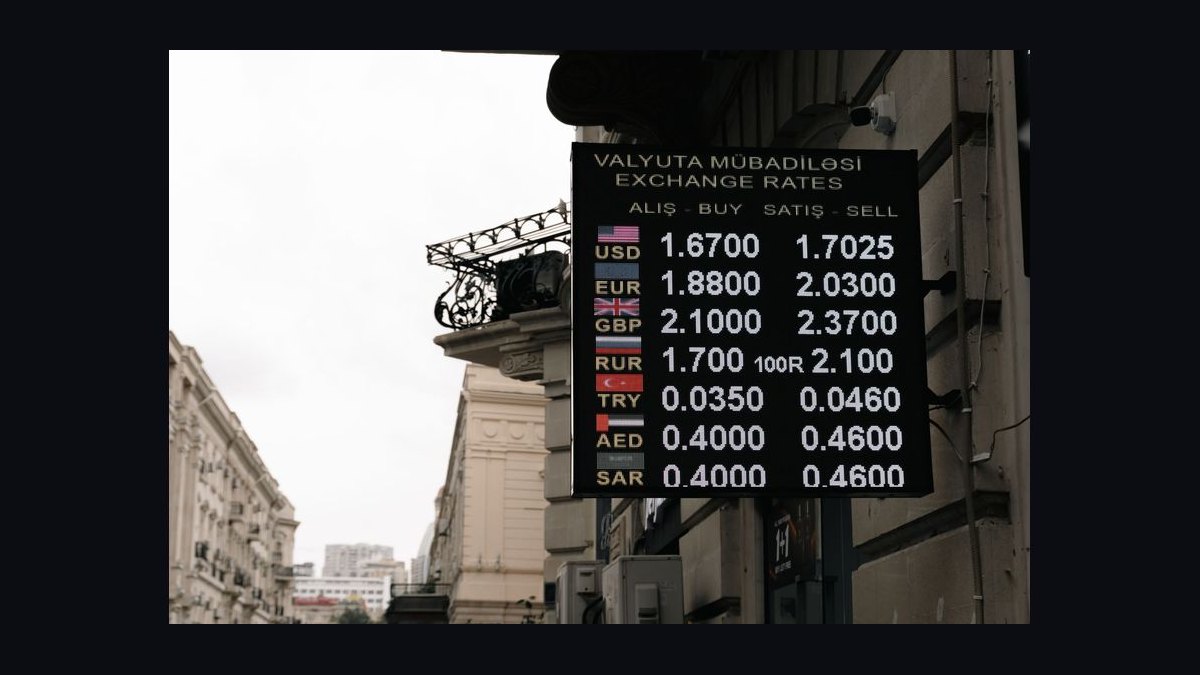
The right approach to pricing localization combines three layers: convert your base price using a buffered rolling FX rate, display tax-inclusive prices where local norms require it, and apply a willingness-to-pay multiplier tied to purchasing power parity. Set a base price in your home currency, then adjust by region — typically 0.4x to 1.2x — and validate with 3–5 price tests per market before locking anything in.
A concrete scenario: the €49 sticker that cost a quarter of pipeline
Picture a mid-market SaaS company based in Austin selling a $99/month seat-based product. In Q1 they decide to "go international" and flip a switch in their billing system that converts USD list prices to local currency at the daily spot rate. Germany shows €91, Brazil shows R$510, India shows ₹8,250. Within one quarter, three things break at once.
First, the euro weakens roughly 6% against the dollar over eight weeks. The company's EUR-denominated ARR now converts back to fewer dollars than forecast, and finance flags a revenue shortfall that has nothing to do with sales performance. Second, German prospects see €91 at the top of the pricing page, click through, and then get hit with 19% VAT at checkout — a final number of €108. Cart abandonment in that segment spikes. Third, the India price, converted straight from USD, prices the product at roughly the monthly cost of a mid-tier smartphone plan in Mumbai. Trial signups collapse because the number is simply outside the range a local buyer would ever consider for a tool at that stage.
None of these failures came from a bad product. They came from treating pricing localization as a currency conversion exercise instead of a three-layer problem: FX mechanics, tax display norms, and willingness-to-pay. The fix is not exotic — it is a repeatable process any RevOps team can run — but it has to be designed deliberately, because the default behavior of most billing systems is exactly the naive conversion that broke this company's quarter.

The rest of this page walks through how the mechanism actually works, what real numbers look like across regions, where the trade-offs bite, and the pitfalls that show up again and again when teams attempt this for the first time.
How the mechanism actually works
Pricing localization runs on three independent layers that must be solved in sequence, because each one changes the input to the next. Get the order wrong and you either double-count adjustments or leave margin on the table.
Layer one — FX conversion with a buffer. You start with a base price in your home currency (usually USD or EUR). Instead of converting at today's spot rate, use a rolling average — commonly 30, 60, or 90 days — and then add a buffer of 2–5% on top of the mid-market rate. The rolling average smooths out daily noise; the buffer protects you when the currency moves against you between repricing cycles. A team that reprices quarterly and uses a 90-day average with a 3% buffer will almost never need an emergency price change, even in a volatile quarter. A team using spot rates will be repricing constantly and confusing its own sales team.

Layer two — tax display and remittance. In the US, list prices are conventionally shown exclusive of sales tax, which is added at checkout. In the EU, UK, Australia, New Zealand, and much of Asia and Latin America, consumer-facing prices are legally required or strongly expected to be shown inclusive of VAT/GST. This is not a cosmetic choice — it changes the number the buyer sees by 15–27% in many markets. The correct mechanic is to work backwards: decide the net revenue you need per unit, then gross it up by the local tax rate to get the displayed price. If you need €100 net and German VAT is 19%, you display €119, not €100 plus tax. For B2B sales where the buyer is VAT-registered and can reclaim the tax, you can show exclusive pricing, but you must label it clearly.
Layer three — willingness-to-pay adjustment. Only after FX and tax are handled do you apply the WTP multiplier. This is the layer most teams skip or eyeball. It should be anchored to purchasing power parity (PPP) data from the World Bank or IMF, then adjusted for competitive density and market maturity. A market with low PPP but intense competition from local alternatives may need a deeper discount than PPP alone would suggest; a market with low PPP but no credible local competitor may support a higher price than PPP implies.
The sequence matters because WTP multipliers should be applied to your *net* price target, not the tax-inclusive display price. If you apply a 0.6x WTP multiplier to a tax-inclusive number, you have effectively discounted the tax too, and you will under-collect.

A useful discipline is to keep the three layers as separate columns in a pricing matrix — base price, FX-adjusted net, WTP-adjusted net, tax-inclusive display — so that when any one input changes (a currency move, a VAT rate change, a new competitor), you can see exactly which cells move and by how much. Teams that collapse these into a single number lose the ability to diagnose why a region is underperforming.
Real numbers, ranges, and benchmarks
The ranges below are starting points drawn from widely published PPP data and common SaaS pricing practice. They are not universal truths — every product has its own elasticity — but they give you a defensible place to begin testing rather than guessing.
WTP multipliers by region (relative to a US baseline of 1.0x):

- United States, Canada, Switzerland, Norway, Singapore: 0.95x–1.20x. These are high-income, high-competition markets. You can often price at or slightly above your US baseline, especially in Switzerland and Singapore where local alternatives are scarce.
- United Kingdom, Germany, France, Netherlands, Australia, Japan, South Korea: 0.75x–0.95x. Mature markets with strong local competition and price-sensitive buyers. A 10–20% discount from US list is typical.
- Spain, Italy, Poland, Czech Republic, UAE, Saudi Arabia: 0.55x–0.75x. Mid-income or high-income-but-price-sensitive markets. Expect to discount 25–45%.
- Brazil, Mexico, Turkey, South Africa, Malaysia, Thailand: 0.35x–0.55x. Lower PPP, high card churn, and often a preference for local payment methods. Discounts of 45–65% are common.
- India, Indonesia, Vietnam, Nigeria, Egypt, Pakistan: 0.20x–0.40x. Very low PPP and high price sensitivity. Many SaaS companies either price at the low end of this range or offer a stripped-down tier rather than discounting the full product.
FX buffer sizing. A 2% buffer is adequate for pegged or highly stable currencies (e.g., HKD, SGD). A 3–4% buffer suits major floating currencies (EUR, GBP, JPY, CAD, AUD). A 5% or higher buffer is prudent for volatile currencies (TRY, ARS, NGN, ZAR), and some teams add a clause allowing mid-contract repricing if the currency moves more than 10% in either direction.
Tax rates to expect. German VAT 19%, UK VAT 20%, French VAT 20%, Italian VAT 22%, Spanish VAT 21%, Dutch VAT 21%, Australian GST 10%, New Zealand GST 15%, Japanese consumption tax 10%, Indian GST typically 18% for SaaS, Brazilian ICMS and ISS vary by state and municipality but commonly total 15–20%, Canadian GST/HST 5–15% depending on province. US sales tax varies by state and by whether SaaS is taxable — commonly 0% in some states and 6–10% in others.

Repricing cadence. Quarterly is the standard for stable-currency regions. Monthly is common for volatile-currency regions. Event-driven repricing — triggered when a currency moves more than a set threshold — is increasingly common and is usually the best balance between stability and accuracy.
Payment method penetration. In the Netherlands, iDEAL accounts for the majority of online transactions. In Germany, SEPA direct debit and invoice are heavily preferred over cards. In Brazil, PIX has become dominant for consumer payments. In India, UPI is the default. In China, WeChat Pay and Alipay dominate. If your checkout only accepts cards, you will lose a meaningful share of buyers in each of these markets — often 20–40% of would-be customers in the price-sensitive tiers.
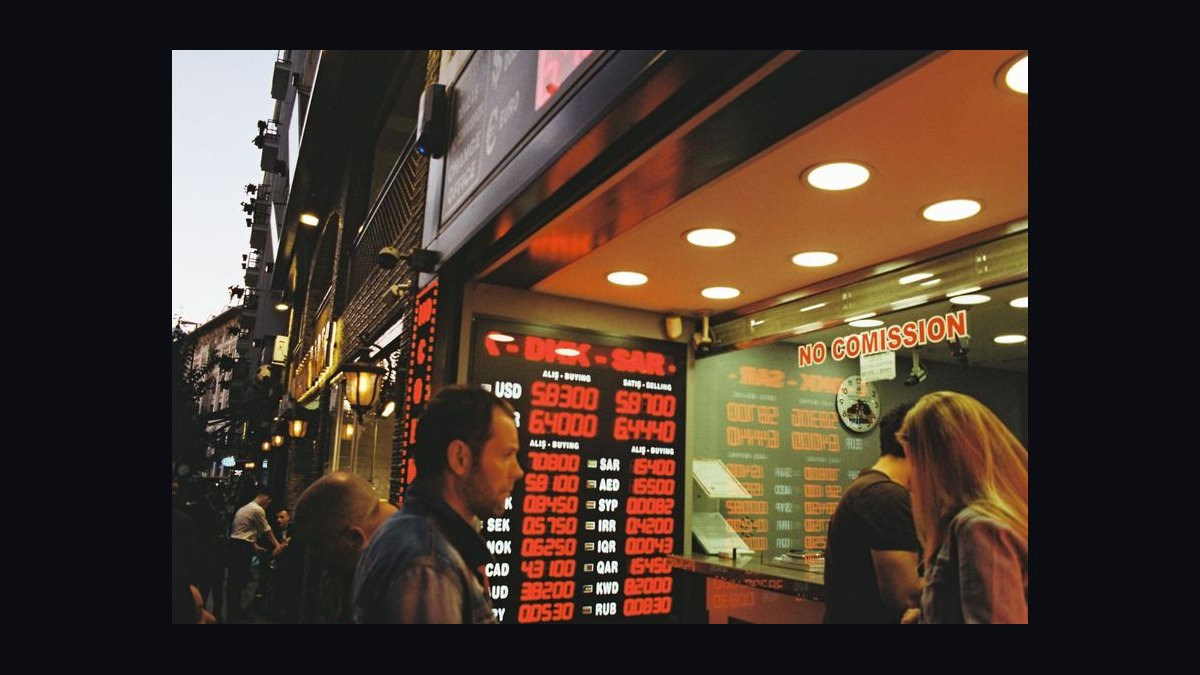
Churn and payment friction. In markets where card penetration is low and buyers prefer invoicing, involuntary churn from failed card payments can run 30–50% higher than in card-native markets. Offering local payment methods and invoice-based billing is often a bigger lever on net revenue retention than the list price itself.
Trade-offs and alternatives
Every pricing localization decision trades one objective against another. The four that come up most often:
Simplicity versus precision. A single global price in USD is simple to administer, easy to communicate, and requires no FX or tax machinery. It also leaves significant revenue on the table in high-WTP markets and prices you out of low-WTP markets. A fully localized matrix with per-region WTP tiers captures more revenue but requires ongoing maintenance, a tax engine, and a sales team that understands the differences. Most companies land somewhere in the middle: localize currency and tax, apply a coarse WTP tier structure (three to four tiers rather than per-country pricing), and reserve fine-grained pricing for the top three to five revenue markets.

Uniform pricing versus price discrimination. Charging the same net price everywhere is defensible on fairness grounds and avoids arbitrage (buyers in low-price regions reselling into high-price regions). It also means you either overprice emerging markets or underprice mature ones. Price discrimination by region is standard practice in software, media, and consumer goods, but it invites arbitrage and requires enforcement — region-locked accounts, payment-method restrictions, or terms-of-service clauses. For digital goods with instant delivery, arbitrage is a real risk; for services with onboarding and support costs, it is much less so.
Absorbing FX risk versus passing it through. You can price in local currency and absorb the FX risk yourself (stable customer experience, volatile revenue when converted back to home currency), or you can price in your home currency and let the customer bear the FX risk (stable revenue, less attractive to local buyers who dislike foreign-currency invoices). Most B2B SaaS companies price in local currency for the top five to ten markets and in USD or EUR elsewhere. A middle path is to price in local currency but include a repricing clause tied to a defined FX band.
Discounting list price versus adding a lower tier. When a market cannot support your standard price, you can either discount the standard product or introduce a lower tier with fewer features or lower limits. Discounting is faster and simpler but erodes your reference price and is hard to reverse. A lower tier preserves the integrity of your main price and gives you a natural upsell path, but it requires product work and can cannibalize the main tier if the feature gating is too generous.
The practical rule most operators converge on: use discounting for a fast test, and if the region shows durable demand, convert the discount into a proper lower tier within two to three quarters. That way you get the speed of discounting without permanently anchoring your price low.
Common pitfalls and how to avoid them
Pitfall one: converting at spot and never revisiting. The single most common failure. A price set at a spot rate six months ago is now wrong by whatever the currency has moved, and nobody notices until finance reconciles ARR. Fix: set a repricing calendar and a trigger threshold. Review quarterly at minimum, monthly for volatile currencies, and reprice automatically when a currency moves more than 5–10% from the rate used to set the current price.
Pitfall two: showing tax-exclusive prices in tax-inclusive markets. This produces a checkout shock that measurably increases abandonment. Fix: for any market where tax-inclusive display is the norm, gross up the displayed price by the local rate and show the all-in number. Use a tax engine to calculate the rate by billing address rather than hardcoding rates that will drift.

Pitfall three: applying WTP multipliers to the tax-inclusive price. This double-discounts and quietly destroys margin. Fix: keep net and gross columns separate in your pricing matrix, and apply WTP multipliers only to the net target.
Pitfall four: ignoring local payment methods. A card-only checkout in the Netherlands, Germany, Brazil, India, or China will lose a large share of buyers. Fix: enable the dominant local methods in each market you actively sell into, and offer invoice-based billing where card penetration is low.
Pitfall five: letting sales discount below the regional floor. Once a regional list price exists, reps under pressure will discount further, and the floor erodes. Fix: define a regional floor price, route any deal below it to a deal desk, and review discounting by region monthly. A deal more than 20–30% below the regional list is a signal worth investigating.

Pitfall six: pricing every country individually. Per-country pricing feels precise but is unmanageable. Fix: cluster countries into three to five WTP tiers, price at the tier level, and only carve out individual countries when the revenue justifies the maintenance.
Pitfall seven: forgetting that localization is a RevOps problem, not just a finance problem. Pricing localization touches billing, tax, sales compensation, quoting, CPQ configuration, renewal management, and reporting. If it lives only in finance, the sales team will quote inconsistently and the data will be unusable. Fix: assign ownership to RevOps, run it as a cross-functional process with finance, legal, and sales leadership, and review the regional pricing matrix on the same cadence as your other GTM operating reviews.
Pitfall eight: no measurement. Without tracking realization rate (actual price paid versus list), win rate by region, and churn by region and price point, you cannot tell whether a price change helped or hurt. Fix: instrument these metrics before you change any price, so you have a baseline to compare against.
Related questions
How often should regional prices be updated?
Quarterly for stable currencies, monthly for volatile ones, and event-driven when a currency moves more than 5–10% from the rate used to set the current price. Tie the cadence to your billing system's ability to notify customers in advance.
Should B2B SaaS show tax-inclusive prices?
For VAT-registered business buyers who can reclaim the tax, exclusive pricing with a clear label is standard. For SMB or self-serve buyers, inclusive display reduces friction. Match the display to how the buyer actually experiences the cost.
How do you handle a currency that collapses mid-contract?
Include a repricing clause tied to a defined FX band in your terms, and for very volatile currencies consider pricing in USD or EUR with local-currency invoicing as a courtesy. Never leave the risk undefined.
Is per-country pricing worth the complexity?
Only for your top three to five revenue markets. Everywhere else, cluster countries into three to five WTP tiers and price at the tier level. Per-country pricing multiplies maintenance without proportional revenue gain.
What is the biggest lever in pricing localization?
Payment methods and tax display usually move net revenue more than the list price itself. A correctly displayed, locally payable price converts better than a slightly cheaper one that is hard to buy.
FAQ
What is the right base currency for pricing localization? Use the currency your company reports in — usually USD or EUR — as the base for all internal calculations. Convert to local currencies for display and billing, but keep the base price and all margin analysis in the reporting currency so finance has a single source of truth.
How large should the FX buffer be? Two percent for pegged or highly stable currencies, 3–4% for major floating currencies, and 5% or more for volatile ones. The buffer exists to absorb movement between repricing cycles, so it should be sized to your cadence — longer cycles need larger buffers.
Do I need a tax engine, or can I hardcode rates? Hardcode only if you sell into one or two jurisdictions with stable rates. For anything broader, use a tax engine that calculates by billing address, handles registration thresholds, and produces filing-ready reports. Manual rates drift and create audit exposure.
How do I test willingness-to-pay without alienating customers? Run tests in new markets or new segments first, not on your existing base. Use a small rollout with 3–5 price points, measure conversion, churn, and revenue per user over 30–60 days, and only then roll the winning price out more broadly.
Should discounts be regional or global? Regional. A discount that makes sense in Brazil will destroy margin in Switzerland. Define a regional floor, route exceptions to a deal desk, and review discounting by region monthly so the floor does not erode.
How does pricing localization interact with sales compensation? Quotas and commissions should be set in the currency the rep is paid in, using the same FX rate the company uses for reporting. Otherwise reps in weak-currency regions see their commissions swing for reasons outside their control, which drives attrition and gaming.
Sources
- World Bank — PPP conversion factors and international comparison data: https://data.worldbank.org/indicator/PA.NUS.PPP
- International Monetary Fund — exchange rate data and currency classification: https://www.imf.org/en/Data
- OECD — consumption tax trends and VAT/GST rates by country: https://www.oecd.org/tax/consumption-tax-trends/
- European Commission — VAT rates applied in EU member states: https://taxation-customs.ec.europa.eu/taxation/vat/how-vat-works/vat-rates_en
- Stripe — documentation on multi-currency pricing and local payment methods: https://stripe.com/docs
- Avalara — VAT and GST rate guides by country: https://www.avalara.com/vatlive/en/vat-rates.html
- Chargebee — subscription billing and multi-currency documentation: https://www.chargebee.com/docs/
- Harvard Business Review — pricing strategy and willingness-to-pay research: https://hbr.org/topic/pricing
Related on PULSE
- [How do I model FX risk when scaling revenue across 4+ currency zones?](/knowledge/q446)
- [How do I structure AE compensation across regions with different cost-of-living and market rates?](/knowledge/q450)
- [How should a pricing team make currency and pricing decisions for new regions?](/knowledge/q12586)
- [How do you update territory carve-ups when outbound volume floods all regions equally?](/knowledge/q16388)
- [When should I split my sales org by segment vs region?](/knowledge/q88)
This page will be disappearing soon. Save it to your device for $1 — or read it free while it is here.
@Kory-White- · if Venmo asks, the last 4 of my number are 2012
 pricingHow do you price a deal that has a hidden multi-year volume commitment embedded in the procurement language?
 pricingWhat's the right cadence for auditing whether your pricing model is still fit-for-purpose — annual, quarterly, or event-triggered — and how does that sync with comp planning cycles?
 saasWhat's the right way to expand from SMB to mid-market without breaking SMB?
 outreachHow does Outreach grow internationally without burning margin?
 salesloftHow does Salesloft grow internationally without Vista cost-cutting?
 deal-deskHow should deal-desk approval authority be structured to prevent pricing hero-culture?
 revopsWhat is the right framework for AE discount autonomy: should it scale by tenure, deal size, quota attainment, or manager override count?
 revopsWhat are the leading indicators that a company has outgrown its current approval model — and what's the migration playbook to a neutral Deal Desk?
 pricingWhat's the realistic court utilization rate for a 6-court indoor pickleball facility, and how does pricing affect it?
 revopsHow should RevOps respond to AI-driven seat compression in 2027?