
How do I model FX risk when scaling revenue across 4+ currency zones in 2027?
 Curated byKory White · Fractional CRO · Maryland
 PULSEKNOWLEDGE LIBRARY
Quality
Certified
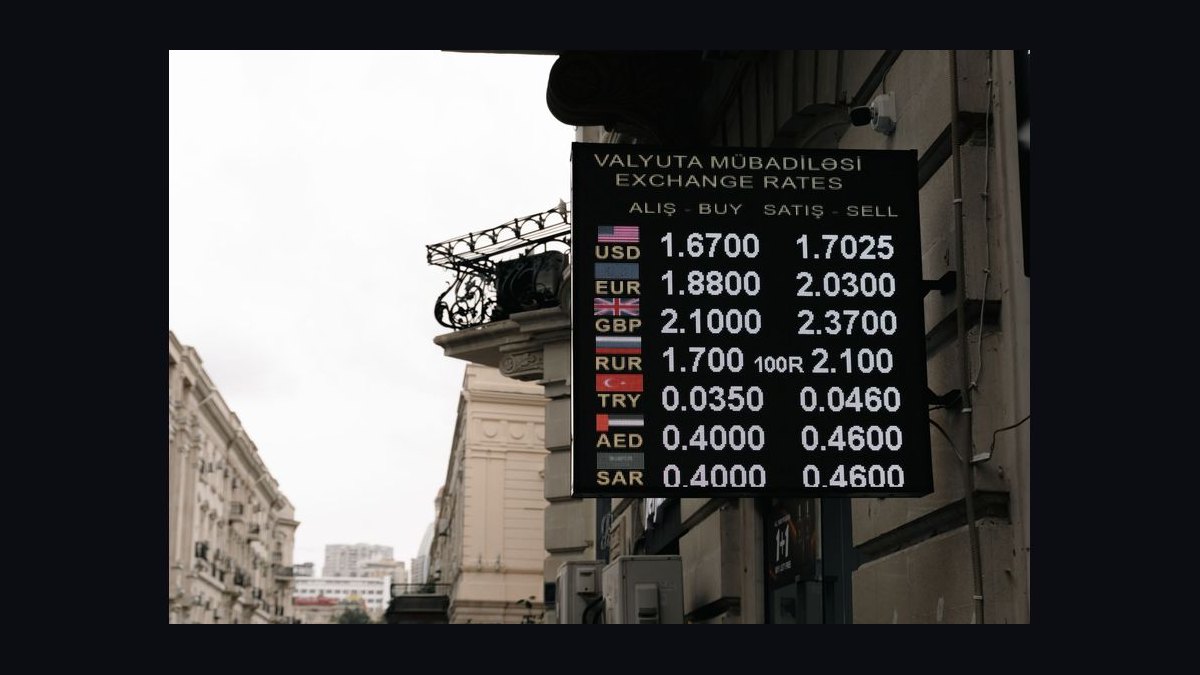
Model FX risk by separating transactional, translational, and economic exposure, then building a net exposure map by currency and month. Quantify it with Value-at-Risk and Earnings-at-Risk, translate those numbers into a written hedge policy with coverage bands and tenor ladders, and run the program through a monthly committee with a decision log.
The two approaches you are actually choosing between
Once a company crosses four currency zones, almost every FX conversation collapses into a single fork that nobody names out loud. Option one is the passive posture: convert foreign cash to the reporting currency as it arrives, accept whatever the spot market gives you, and explain the variance in the earnings call as "currency headwinds." Option two is the modeled program: an exposure map, a quantified risk number, a board-ratified hedge policy, a derivative book, hedge accounting, and a governance cadence that keeps all of it alive.
The passive posture is not stupid. It costs nothing, consumes no management attention, requires no ISDA agreements, no counterparty credit lines, no treasury management system, and no technical accounting specialist. For a business whose foreign revenue is 8% of total and whose cost base sits in the same currencies as its revenue, the passive posture is correct and the modeled program is a distraction that burns a finance director's calendar for six months to smooth a number nobody was worried about.
The modeled program earns its keep at a specific threshold: when the size of a plausible adverse currency move becomes large enough to move the reported number outside the guidance range. That is the real dividing line — not "do we have foreign revenue," but "can currency alone cause us to miss." A company with $120M of ARR and 45% of it billed outside the reporting currency, spread across five zones with a dollar-heavy cost base, is structurally long every foreign currency it touches. When the dollar strengthens 8% in a quarter, that company loses reported revenue it never lost operationally. If the guidance range is ±3%, an 8% currency move against a 45% foreign mix is a guidance miss caused entirely by something the operating team never controlled.
There is also a middle option that gets skipped too often, and it is frequently the right answer for a company in the four-to-six-zone range: the partial program. Build the exposure map and the risk quantification — the measurement half — but hedge only the single largest, most certain, most volatile exposure with plain forwards, and skip the TMS, the options book, and the full committee apparatus. You get the number, you get the board conversation, you get the biggest chunk of volatility reduction, and you skip roughly 70% of the operating cost. Many companies should live here for two or three years before graduating.

The trap in the fork is asymmetry of visibility. The cost of the modeled program is legible and lands in a budget line: software, headcount, forward points, option premium, audit fees. The cost of the passive posture is invisible until it isn't — it shows up once, in one quarter, as a number the CFO has to explain without a model to point at. Finance leaders systematically under-buy FX programs for exactly this reason, the same way they under-buy revenue-forecasting rigor: the failure mode is rare, lumpy, and easy to attribute to bad luck.
A third framing worth holding: the choice is not binary in *scope*, only in *commitment*. You can build the measurement layer without the hedging layer. You cannot credibly build the hedging layer without the measurement layer — hedging an exposure you have not netted is how companies end up paying carry to hedge euro revenue that their euro cost base was already neutralizing two floors away in the same building.
Why four zones is where the arithmetic turns on you
The intuition is that FX risk scales linearly with the number of currencies. It does not. It scales with the number of *uncorrelated* exposures and with the *dispersion* of their moves, and both of those accelerate.
The mechanical reason is the cross-terms in portfolio variance. With four currencies you have six pairwise correlation terms; with eight you have twenty-eight. Those cross-terms are where the surprises live, because they are the only part of the model that captures what happens when several currencies move the same direction at once. A portfolio of USD, EUR, GBP, and CAD exposures sits inside a tight correlation cluster — these currencies mostly move together against each other in modest ranges. Add JPY, BRL, INR, and AUD and the correlation structure fractures. Emerging-market currencies do not behave like developed-market currencies; they trend, gap, and occasionally move several percent in a single session on a political headline.

Dispersion is the second accelerant. A 3% monthly move in EUR/USD is an unremarkable month. A 3% single-session move in a high-beta emerging-market currency is a news event. Once one or two of those zones enter the mix, the loss distribution stops looking like a bell curve and grows a fat left tail. Any model that assumes normally distributed returns will systematically understate the bad days — which is precisely why parametric Value-at-Risk is a poor primary tool once emerging markets are in the book.
Diversification is real but partial, and it is important not to over-claim it. EUR and JPY rarely collapse against the dollar in the same week, so a multi-currency book genuinely carries less risk per dollar of exposure than a single-currency book of the same size. But diversification reshapes the loss distribution; it never eliminates it. And in genuine risk-off episodes — the ones that produce the quarters you remember — correlations converge toward one and the diversification benefit you modeled in calm conditions evaporates exactly when you needed it. Build the stress test that assumes it does.
The third factor is reporting-currency gravity. Every dollar of revenue booked outside the reporting currency has to be translated back at a rate the company does not control and cannot forecast. As the foreign mix climbs past a third of revenue, the reported top line becomes a blend of two independent variables — how the business performed and how six currencies moved — and no amount of operational excellence separates them without a model.

There is a RevOps consequence here that finance-only treatments miss. The number of currency zones is not an accident of geography; it is a downstream effect of go-to-market decisions made months earlier. Every time the company opens a new region, signs a reseller in a new market, or agrees to bill a strategic account in its local currency to win the deal, someone has added a row to the exposure map without telling treasury. The most valuable single process fix in a scaling multi-currency business is a rule that deal desk flags any new billing currency to treasury at the quote stage — before the contract is signed, not after the first invoice clears.
How to decide between passive, partial, and full program
The decision is not a matter of taste. It resolves into four testable questions, and the honest answer to each of them is usually already sitting in the billing system.
Question one: what share of revenue is billed in a non-reporting currency, and how concentrated is it? If any single currency is over 85% of revenue, the residual is rounding error against ordinary operating variance and no derivative program is justified. If revenue is spread across four or more zones with no dominant one, the concentration test flips positive.
Question two: how much of your cost base is already currency-matched? A company that pays euro salaries, euro hosting, and euro vendors out of euro revenue has a natural hedge that neutralizes a large fraction of its gross exposure for free. Measure net, always. A business with $31M of euro inflows and $12M of euro outflows has $19M of net exposure, not $31M — and hedging the gross number means paying carry on $12M of risk that did not exist.

Question three: what does an adverse move actually cost in earnings terms? This is the Earnings-at-Risk question, and it is the one that decides the fork. If a modeled 95% one-year adverse scenario costs less than your normal quarterly forecast variance, the currency is not your biggest problem. If it costs more than your guidance band, you need the program.
Question four: does the business pass FX through to customers? Some businesses reprice contractually or annually in local currency and effectively transfer the exposure. If pricing already absorbs currency, derivatives are duplicative.
The sequencing inside that decision tree matters more than the tree itself. Measurement always comes before instrument selection, and netting always comes before sizing. A surprising number of programs get built in reverse — a treasurer negotiates ISDA agreements and opens dealing lines before anyone has produced a defensible exposure map, and the first trades end up sized against gross revenue because that was the only number available.
One more decision input, frequently ignored: your own forecast accuracy by region. Hedge sizing is entirely downstream of forecast quality. If the Brazil team systematically over-forecasts by 20% and treasury hedges 80% of that forecast, the company is effectively hedging 96% of actual revenue — and the 16-point overshoot is a speculative short position the policy never authorized. Pull two years of forecast-versus-actual by currency before you set a single coverage band. If a region's bias is worse than ±15%, you cannot responsibly forward-hedge its forecast; you buy options on it instead, or you hedge only its contracted backlog.
Concrete numbers behind each option
Abstractions do not settle this argument. Numbers do.
The exposure map, illustratively. Take a software business at roughly $120M ARR across five zones. Next-twelve-month euro inflows of $31.0M against $12.0M of euro outflows leaves $19.0M net long euro. Sterling: $14.0M in, $6.5M out, $7.5M net. Canadian dollar: $9.0M in, $4.0M out, $5.0M net. Australian dollar: $7.0M in, $1.5M out, $5.5M net. Yen: $6.0M in, $0.5M out, $5.5M net. The reporting-currency side carries $53.0M of inflows against $95.5M of outflows — the dollar-heavy cost base that makes this company structurally long every foreign currency it touches.
Two things fall out of that table. First, the company loses reported revenue whenever the dollar strengthens, which is the default shape of a US-headquartered SaaS business and the reason so many of them guide in constant currency. Second, the largest notional is not the largest risk. Risk-weight each row by annualized volatility and the ordering changes: euro at $19.0M against roughly 8% annualized volatility contributes about $1.52M of standalone risk; the Australian dollar at $5.5M against roughly 11% contributes about $0.61M. The Australian exposure is under a third of the euro notional but carries roughly 40% of its standalone risk. A naive program hedges proportionally to notional. A modeled program hedges proportionally to risk contribution, and it is routine for a currency that represents 12% of notional to contribute 25% of total Value-at-Risk after correlation. That is the currency you hedge first.
The cost of the program. Instrument choice drives cost by an order of magnitude, and the same coverage target can be reached cheaply or expensively. An outright forward carries no upfront premium — the forward rate is spot adjusted by the interest-rate differential, the "forward points" — but it forfeits all favorable movement. A bought vanilla option preserves the upside and charges a premium that scales with volatility and tenor. A zero-cost collar funds the protective put by selling a call, netting to no upfront cash but capping participation at the call strike. A participating forward splits the difference by ratio. Cross-currency swaps handle long-dated intercompany loans and debt.
A well-run program at a mid-market company across four to six zones typically spends single-digit-to-low-double-digit basis points of hedged revenue per year on blended hedge cost. Materially above that range usually means options are being bought on exposures certain enough for forwards. Materially below it usually means the uncertain layers are simply unhedged and the program is quietly carrying risk it has not disclosed. Track the blended number monthly and report it to the committee, because forward-points carry is the cost that bleeds invisibly — particularly in high-rate-differential pairs where selling a high-yield currency forward against the dollar carries meaningfully wide points.
The coverage ladder. Coverage is not one number; it declines with forecast confidence and with tenor. Contracted backlog, where the cash flow is signed and only the rate is at risk, sits in a high band — the 70-90% range is a common policy. Highly probable forecast revenue with a strong historical track record sits lower, commonly 40-70%. Pipeline and newly opened zones sit lowest, often 0-30%, because over-hedging an uncertain forecast manufactures a speculative position. Translational net assets are a separate board policy call, frequently 0-50% or excluded from derivatives entirely.
Tenor follows the same logic. Hedging twelve months in one trade on one day is a bet on that day's rate. The disciplined structure is a rolling layered ladder: heavier coverage on the nearest quarter, stepping down across the next three, rolled forward monthly. That smooths the blended rate across time and ensures no single forecast revision can blow up the book.
The quantification. Value-at-Risk answers "over this horizon, at this confidence level, what is the worst loss we expect from currency." A one-month 95% VaR of $2.4M means that in 95 months out of 100, FX losses should be no worse than $2.4M. Three methods exist. Parametric variance-covariance is fast, transparent, and board-friendly, but assumes normality and understates fat tails. Historical simulation replays actual rate moves against today's positions, capturing the real shape of the distribution and the real correlations, but is backward-looking and misses regime changes. Monte Carlo generates thousands of scenarios from a statistical model and handles the non-linear payoffs of options, at the cost of heavier machinery and more model assumptions.

For a treasury team without quantitative staff, historical simulation is the pragmatic default: it needs only a few years of daily rate data and makes no false normality assumption. Many teams run historical simulation for the headline number and parametric VaR alongside it purely for the risk decomposition, because parametric math tells you cleanly how much of total risk each currency contributes after correlation.
Earnings-at-Risk is the same exposure re-expressed in the language the board actually speaks. It runs over the next four quarters, matching the guidance cycle, and answers "how much could currency move reported revenue, operating income, or EPS." Express it three ways — absolute dollars, percentage of revenue, and EPS impact — because different directors anchor on different units. Then stress-test beyond both: replay historical shocks through today's position, model a hypothetical correlated event where every foreign currency drops simultaneously and diversification collapses, and run the reverse stress test that asks what size move would cost you a guidance miss. If the answer to that last one is a 4% move, the program is under-hedged and the number itself is the argument.
Implementation details and sequencing
The program does not need to be built all at once and should not be. Stage it so each phase produces a usable artifact, and so the organization builds governance muscle before trading muscle.
Days 1-30: measure and mandate. The first month produces no trades. It produces visibility and authority. Name a single owner and confirm an executive sponsor in week one. Build the multi-currency exposure map in week two — inflows by *billing* currency and month, pulled from the billing and subscription system; outflows by currency from ERP accounts payable and payroll; the forward view from CRM weighted pipeline tagged by deal currency. Split by billing currency, not customer country: a French customer billed in dollars is a dollar exposure, and getting this wrong is the most common mapping error. Tag every cash flow *contracted*, *highly probable*, or *anticipated*, because both hedge sizing and hedge accounting depend on that tier. Week three quantifies: a VaR and EaR baseline with a stated confidence interval. Week four drafts the policy.
The non-negotiable output of month one is a one-page exposure summary the CFO can read in two minutes: zones, net exposure in each, the EaR number, what an adverse move costs. That page converts "we should probably hedge" into a funded, sponsored program.
Days 31-60: policy, plumbing, and first hedges. Ratify the policy at the audit committee. The policy fixes the objective — almost always reducing volatility of reported results within a stated tolerance, with an explicit written anti-speculation clause — plus scope, coverage bands, permitted instruments, counterparty limits, and an authority matrix. Open ISDA and CSA negotiations with three to five counterparties in parallel; single-counterparty concentration is a genuine failure mode when a bank pulls lines during exactly the stress event you hedged for. Configure the tooling. Then execute the first tranche deliberately unambitiously: short-tenor forwards on the most material, most certain exposure, sized well inside the policy band. The point of that first trade is not the hedge. It is running the full cycle once — recommend, approve, execute, capture, document, designate — so every handoff gets tested on something small.
Days 61-90: scale and institutionalize. Layer coverage across remaining zones to policy ratios. Build the dashboard: exposure by currency, coverage against band with green/amber/red, EaR against the board tolerance line, hedge cost against budget, and effectiveness-test status by relationship. Run the first formal monthly committee with signed minutes and a decision log. Produce the first constant-currency revenue bridge for investor relations.

The accounting layer that decides whether any of this reads well. A derivative is marked to fair value through profit and loss by default, while the hedged item — a forecast euro sale — is not yet on the books. The two halves of an economically matched position land in different periods, producing earnings volatility that is purely an accounting artifact. Hedge accounting re-synchronizes the timing by deferring the derivative's gains and losses in other comprehensive income until the hedged revenue is recognized, then releasing both together.
Under US GAAP, FX revenue programs almost always use the cash flow hedge model, and the single most common cause of a denied designation is documentation written after the trade date. The relationship must be documented at or before execution. The qualifying bar is *highly probable* forecast transactions — which is the accounting reason, independent of the risk reasoning, to put contracted backlog in forwards and pipeline in options. Under IFRS, the philosophy matches but the mechanics differ: effectiveness assessment is principles-based rather than bright-line, formal rebalancing of the hedge ratio is permitted, option time value is treated as a deferred cost of hedging in its own reserve, and voluntary de-designation is not permitted unless the risk management objective changes. If you have a US parent with IFRS-reporting subsidiaries — which you almost certainly do past four zones — the same economic hedge can be accounted for differently on each side, and group consolidation has to reconcile the two. Build that asymmetry into the trade lifecycle so a routine parent-side adjustment does not strand a subsidiary designation.
Hedge accounting failures are almost never mathematical. They are procedural: undated designation memos, a missed effectiveness test, a forecast transaction that quietly stopped being probable without triggering the required reclassification. Four disciplines hold the regime together — a signed designation memo before every trade, a standing effectiveness-test calendar, a "highly probable" guardrail tied to actual forecast-accuracy history rather than optimism, and a written de-designation playbook.
The cadence that keeps it alive. The most reliable predictor of whether an FX program survives its second year is not model sophistication. It is a monthly committee with a named chair, a fixed agenda, and a decision log. Ad-hoc hedging fails three ways: it is emotionally reactive, so trades get placed after a painful move at the worst rate; it is personality-dependent, so coverage lapses silently when the one person who watched FX leaves; and it is unauditable, because without a log neither the audit committee nor the external auditor can confirm the policy was followed.

Run the same agenda in the same order every month: exposure refresh, forecast-accuracy review, hedge position and mark-to-market, policy compliance check, new trade recommendations, hedge accounting status, counterparty and credit-limit review, and a signed decision log. The discipline lives in the items ad-hoc hedging skips — forecast accuracy, compliance, and accounting status. The decision log records date, decision, rationale, exposure affected, approver, and the policy clause relied upon. When the auditor asks why euro coverage dropped from 75% to 55% in March, the answer is one row rather than a forensic reconstruction of email threads. As a bonus, a committee that logs designation decisions at the moment they are made generates the contemporaneous hedge documentation the accounting standards demand as a byproduct.
Proving it worked. A hedge program is working when the *volatility* of FX-affected results falls, not when currency never costs anything. Report the same small metric set every month by zone: coverage ratio against band, Earnings-at-Risk against board tolerance, residual unhedged exposure, hedge effectiveness, total hedge cost against budget, and forecast accuracy by currency. The most persuasive single chart for a board is the standard deviation of quarterly FX impact before and after the program — if the spread narrows materially, the program did its job regardless of whether any individual quarter showed a hedge gain or a hedge loss.
Pair that with constant-currency reporting, which is the communication half of the same job. Recompute the current period's foreign revenue at the prior period's average rates to isolate operational performance. A company growing 22% in local currency can report 15% in the reporting currency during a strong-dollar year, and investors who cannot see through that seven-point gap mis-value the business, almost always downward. Publish the FX bridge as a waterfall — prior period revenue, organic growth, FX impact as its own bar, current period revenue — and when that bar is negative and material, name it on the call before an analyst does. State the exchange-rate assumptions embedded in guidance, and quantify sensitivity so analysts can model currency themselves.
The internal version matters just as much and gets neglected. If a UK regional leader is measured on reporting-currency-translated revenue, a falling pound makes a strong operator look like a failure and a rising pound flatters a weak one. Evaluate operating units in functional currency or at budget rates, and hold FX as a separate treasury-owned line. That principle should reach the QBR deck, the management reporting pack, and the compensation framework — not just the investor materials. It is the same discipline RevOps applies when it strips one-time deals out of a rep's attainment: measure people on what they control.
Related questions
What if we only have one big foreign currency and three small ones?
Hedge the dominant zone with a laddered forward program and monitor the rest quarterly. Netting and mapping still apply to all four, because you want the risk-weighted view, but derivatives on a zone contributing single-digit percentages of risk rarely repay their operational cost.
Does hedging mean we never lose money on currency?
No. Hedging reduces the *variance* of FX outcomes, not their expected value. A forward that protects you from a falling currency also forfeits the gain if it rises. The correct success measure is narrower dispersion of quarterly FX impact, not the absence of hedge losses.
Who should own the FX model — treasury, FP&A, or RevOps?
Treasury owns instruments, execution, and counterparty risk. FP&A owns the forecast that feeds exposure sizing. RevOps owns the upstream signal: which currencies new deals are being billed in, and flagging new billing currencies at quote stage before they surprise treasury.
How often should the exposure map be rebuilt?
Monthly is right for four to twelve zones. Real-time exposure feeds are over-engineering at that scale. Rebuild immediately, out of cycle, when a new zone opens, a large contract switches billing currency, or a forecast is materially revised.
Can we hedge translation exposure the same way as transaction exposure?
You can, via net investment hedges, but it is a deliberate board policy decision rather than a default. Translation is non-cash; hedging it spends real cash and credit capacity to smooth an accounting figure. Most companies hedge transaction exposure far more aggressively.
FAQ
What is the difference between transactional, translational, and economic exposure?
Transactional exposure is a specific contracted or highly probable foreign-currency cash flow whose reporting-currency value changes before settlement — it is cash, it is nameable, and it is cleanly hedgeable. Translational exposure arises when foreign subsidiary statements are consolidated into the parent's reporting currency; it moves reported revenue, operating income, and the cumulative translation adjustment in OCI without any cash crossing a border. Economic exposure is the slow competitive risk that sustained currency moves change the underlying economics of the business — a structurally stronger reporting currency makes your product effectively more expensive to foreign buyers than a local competitor's, and no forward contract fixes that. Keep the three in separate columns of every model; conflating them is the most common modeling error.
How much of our exposure should we actually hedge?
Coverage follows forecast confidence and tenor rather than a single number. Contracted backlog commonly sits in a 70-90% band because only the rate is uncertain. Highly probable forecast revenue with a demonstrated accuracy track record typically sits in a 40-70% band. Pipeline and new-zone forecasts sit at 0-30%, because hedging revenue that may never arrive creates a naked speculative position the moment the underlying disappears. Translational net assets are a separate policy call. Express these as bands rather than points so treasury can execute routine trades without a fresh approval each time, while the audit committee retains a hard ceiling and floor.
Which VaR method should a small treasury team use?
Historical simulation. It requires only a few years of daily rate data, makes no assumption that returns are normally distributed, and naturally captures the real correlation structure and the fat tails that matter once emerging-market currencies enter the book. Parametric variance-covariance is worth running alongside it, not as the headline number but because its math cleanly decomposes total risk by currency after correlation — which is what tells you where to hedge first. Reserve Monte Carlo for books with meaningful option positions whose non-linear payoffs the other two methods handle poorly.
What is a natural hedge and why does it come first?
A natural hedge is structural alignment between the currency of costs and the currency of revenue, so exposure cancels inside the operating model rather than through a derivative. Paying local salaries, hosting, and vendors out of local revenue is the most common form. Financing a foreign acquisition with debt denominated in that currency is another. Building regional delivery and support teams paid locally is a third. Natural hedges cost nothing, never expire, require no counterparty, and consume no credit line. Inventory them and net them out before sizing any derivative — otherwise you pay carry to hedge exposure the business already neutralized.
What is the most common way these programs fail?
Governance, not math. Programs collapse because no single person owns them, the committee meets only when something hurts, and institutional memory departs with the last treasurer. The specific failures follow predictably: hedging a biased forecast instead of a netted exposure; hedging translation with cash instruments; concentrating all notional with one relationship bank; letting a hedge designation lapse so mark-to-market suddenly flows through the income statement; and over-hedging high-carry currencies at long tenors until forward points quietly consume more than the volatility they removed was worth. Each of those is prevented by the same three artifacts — a written policy, a monthly committee, and a decision log.
When should a company skip the full program entirely?
When any single currency exceeds roughly 85% of revenue, when the cost base is already closely currency-matched, when the business genuinely passes FX through in its pricing, when the zone in question is hyperinflationary and forward markets are illiquid or punitively priced, or when the company is small enough that the treasury hire and system implementation dwarf the exposure. The counter-case is an argument for right-sizing, not for doing nothing. It stops being valid the moment three conditions hold together: revenue spread across four or more zones with no dominant one, a cost base in different currencies than revenue, and a modeled Earnings-at-Risk large enough to threaten a guidance miss.
Sources
- https://www.bis.org/statistics/rpfx22.htm
- https://www.fasb.org/derivatives-and-hedging
- https://www.ifrs.org/issued-standards/list-of-standards/ifrs-9-financial-instruments/
- https://www.imf.org/en/Publications/GFSR
- https://www.isda.org/
- https://www.federalreserve.gov/releases/h10/
- https://www.ecb.europa.eu/stats/policy_and_exchange_rates/euro_reference_exchange_rates/html/index.en.html
- https://www.investopedia.com/terms/f/foreignexchangerisk.asp
- https://www.pwc.com/us/en/services/audit-assurance/accounting-advisory/derivatives-hedging.html
Related on PULSE
- [How do I price for international vs domestic deals?](/knowledge/q82)
- [What's the right approach to international territory expansion — EMEA before APAC, or product-fit driven?](/knowledge/q248)
- [What edge-case comp problems arise with multi-currency or international reps, and how do we fix them?](/knowledge/q274)
- [How do we measure and improve forecast accuracy beyond activity metrics?](/knowledge/q391)
- [What metrics should you include in a board-ready unit economics dashboard, and in what order?](/knowledge/q424)
- [How do I design regional GTM and messaging that doesn't just translate the US playbook?](/knowledge/q448)
This page will be disappearing soon. Save it to your device for $1 — or read it free while it is here.
@Kory-White- · if Venmo asks, the last 4 of my number are 2012
This page is gone.
This one is off the shelf now. $1 keeps it on your phone for good — the whole page, pictures and diagrams included.
 nilHow do NIL collectives actually work in 2027?
 pulse-qShould I open or buy a Sugared + Bronzed franchise in 2027?
 nilWhat is the South Carolina Gamecocks football NIL and roster strategy for the 2027 season?
 pulse-qShould I open or buy a Mo' Bettahs Hawaiian Style Food franchise in 2027?
 nilHow much do Indiana football players earn from NIL in 2027?
 kahootHow'd you fix Kahoot's revenue issues in 2026?
 snowflakeWill Snowflake maintain 25%+ growth into 2027?
 pulse-qShould I open or buy an Aire Serv HVAC franchise in 2027?
 how-to-startHow do you start a residential energy audit business in 2027?
 revopsHow Do I Reconcile Competing Sales Forecasting Methods in 2027?