

How do you start a mushroom farming business in 2027?
 Curated byKory White · Fractional CRO · Maryland
Quality
Certified

Start a mushroom farming business in 2027 by picking one species (oyster), one channel (restaurant wholesale), and one climate-controlled room of 200-2,000 square feet. Budget $18,000-$65,000, buy spawn rather than making it, master contamination control, and land 8-15 chef accounts before adding anything else.
What a mushroom farm actually is as a business
The first mental correction most founders need is that a mushroom farm is not a farm. It is a small microbiology operation that happens to sell food. Nothing about it resembles row-crop agriculture: there is no soil, no season, no acreage requirement, no weather dependency in the traditional sense, and no "the crop is out there growing itself" phase. What you actually run is a sequence of controlled environments — a clean area, a substrate prep station, an incubation room, a fruiting room, and a cold-chain — through which organic material moves on a fixed schedule and comes out the far end as a perishable premium product. If you are comfortable with process control, logging, sanitation discipline, and repetitive weekly cadence, that is the temperament this business rewards. If you are drawn to it because it feels wholesome and connected to nature, the business will punish you within about six months.
The economics that make it interesting are structural. A gourmet operation fits inside a 200-square-foot spare room, a 320-square-foot insulated shipping container, or a 1,500-square-foot warehouse bay — footprints that cost a fraction of what any land-based agriculture requires. The production cycle is measured in days rather than seasons: an oyster block colonizes in 10-18 days and fruits in another 7-14, so saleable product exists roughly five to six weeks after you start, with continuous weekly harvest after that. And the gross margins are genuinely strong when the process is under control — a fruiting block carrying $3.00-$7.00 of all-in materials, labor, and energy produces $14-$23 of saleable mushrooms across two or three flushes.
Demand is real and not hypothetical. The global mushroom market including commodity white button sits somewhere in the $50-$60B range growing at mid-to-high single digits, but that headline number is misleading for a new entrant. The commodity segment — Agaricus bisporus in its white button, cremini, and portobello forms — is owned by industrial growers producing millions of pounds weekly at costs you cannot approach. That segment is closed. The segments that are open are specialty/gourmet (everything that is not white button, a smaller but faster-growing slice) and functional/medicinal (supplements, powders, tinctures, mushroom coffee, nootropic blends — the fastest-growing piece of the whole category at roughly 9-11% annual growth).
Three distinct businesses hide inside the phrase "mushroom farming," and conflating them is the most expensive early error. Model 1, gourmet fresh fruiting bodies, sells blue and pearl and pink and golden oyster, shiitake, lion's mane, king trumpet, chestnut, and pioppino to restaurants, farmers markets, CSAs, and specialty grocers. Revenue is weekly and recurring; the core competency is consistency and freshness logistics; capital runs $18K-$65K. Model 2, functional and medicinal supply, grows lion's mane, reishi, cordyceps, and turkey tail primarily to dry and sometimes powder, selling to supplement brands, tincture makers, and tea companies or building a direct brand. Revenue arrives in larger, less perishable batches on longer sales cycles; the core competency is dry-down consistency and B2B relationship-building or actual brand marketing; capital runs $25K-$90K including drying infrastructure. Model 3, substrate and spawn and grow kits, is the picks-and-shovels play: you sell colonized grain spawn, sterilized fruiting blocks, bulk substrate, agar cultures, liquid culture, and consumer kits to hobbyists, schools, and other farms. Capital is highest at $35K-$120K because commercial sterilization capacity is expensive, but the product is far less perishable and the business scales without the restaurant-delivery grind.
Most founders should start with Model 1 and bolt on a piece of Model 2 or Model 3 in Year 2 or 3, once the core loop is boringly consistent. The parallel to how a good RevOps team sequences a go-to-market motion is close to exact: you do not launch six segments, four channels, and three product lines simultaneously and hope one works. You find the wedge, prove the repeatable loop, instrument it, and only then expand. A mushroom farm that runs oyster-to-chefs profitably for eighteen months has earned the right to add lion's mane and a dried-powder SKU. One that tries all of it in Month 3 has earned a 30% contamination rate and an empty bank account.
The step-by-step process from empty room to standing weekly order
The build sequence matters as much as the components, because each stage's mistakes compound into the next. Here is the actual order of operations for a Model 1 gourmet farm.
Stage one, the space. Secure and prepare a climate-controllable room. Insulate it, add a vapor barrier, and confirm you can actually hold temperature and humidity in it — a garage in Phoenix and a basement in Minnesota are different engineering problems. Verify zoning permits production at your address; a residential home operation can run afoul of local rules once it stops looking like a hobby, and a leased commercial bay needs the landlord's written blessing for the humidity you are about to introduce into their building.

Stage two, the environments. Build or partition the distinct zones. A clean area for spawn and culture work, ideally with a laminar flow HEPA hood ($800-$2,500) though a still-air glovebox works slowly at small scale. A substrate prep area with either a pasteurizer (a 55-gallon drum, an insulated tote with an immersion heater, or a converted chest freezer, heating to roughly 150-170°F for one to two hours) or a pressure sterilizer if you are running grain or supplemented hardwood. An incubation room: dark, clean, stable at roughly 70-78°F for oyster, with airflow but minimal disturbance. And the fruiting room, which is the money room and needs four variables under simultaneous control — humidity at 85-95% via ultrasonic or commercial humidifier, fresh-air exchange on timers or a CO2 controller to flush accumulated CO2 (excess CO2 gives you long stems and undersized caps), temperature typically 60-72°F depending on species, and light from LED shop fixtures on a timer, because mushrooms need some light to fruit and pin properly.
Stage three, inputs. Buy grain spawn from a reputable supplier. Do not build your own lab in Month 1 — this is the single most common overreach and the most reliable source of early contamination. Source bulk substrate: hardwood sawdust pellets, soy hulls, straw, or a pellet/soy-hull blend. Buy filter-patch grow bags. Buy a decent scale.
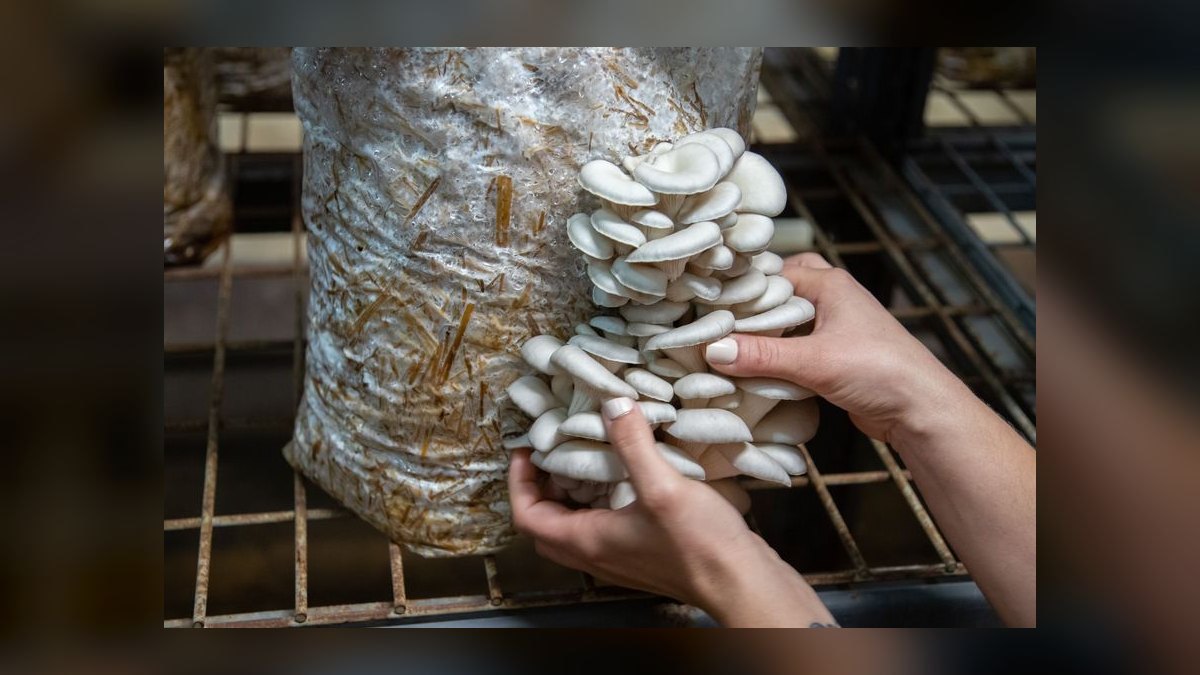
Stage four, the production loop. Mix substrate to roughly 65-70% moisture, pasteurize or sterilize, cool fully (inoculating hot substrate kills your spawn), then inoculate in the clean area at a 5-10% spawn rate. Move bags to incubation. Inspect daily and pull anything showing green Trichoderma or bacterial wet-spot immediately and isolate it away from the room — one ignored contaminated block spreads spores through an entire incubation shelf. After 10-21 days of full colonization, introduce blocks to fruiting conditions, cut or slit the bags, and let them pin. Harvest at the right stage, which for oyster is before the cap edges flatten and start dropping spores. Clean, pack into vented containers, and get product into cold storage at 34-38°F within minutes, not hours.
Stage five, sales. This is where most technically competent growers stall out. Walk into target restaurants during off-hours, roughly 2-4 pm between lunch and dinner service, with a clean sample box of genuinely beautiful product and a one-page line sheet listing species, pack sizes, prices, delivery days, and your phone number. Ask for the chef or the kitchen manager. Leave the sample. Follow up in 48 hours. In-person sample drops convert at a dramatically higher rate than email, because chefs buy on three things: product quality they can see and touch, reliability, and whether they like you. Build to 10-20 accounts through repetition of exactly this motion.

Stage six, the flywheel. Deliver on fixed days without exception — "I deliver Tuesday and Friday" is a feature, not a constraint. Reliability compounds into referrals, because chefs in a restaurant-dense neighborhood talk constantly and three reliable accounts become eight within a year. Then and only then add the second species, the farmers market, the CSA, or the value-added line.
Costs, timelines, and the unit economics that decide everything
Capital requirements split into three honest tiers, and choosing the wrong tier for your ambitions is a slow-motion failure.
The bootstrap build runs $8,000-$20,000. A spare room, basement, or single-car garage with insulation and vapor barrier. A small fruiting chamber or a "Martha tent" — a wire shelving unit wrapped in greenhouse plastic — for $300-$800. An ultrasonic humidifier at $150-$500. Heaters and a window AC unit instead of a mini-split. Box fans for fresh-air exchange. A drum or tote pasteurizer. A still-air glovebox instead of a flow hood. Purchased spawn, bulk substrate, filter-patch bags, a scale, food-grade totes, and a household refrigerator. This produces mushrooms. It also caps your scale and your consistency, and consistency is the product you are actually selling. Call this a side hustle, not income.

The serious small-farm build runs $25,000-$65,000. A leased 1,000-2,000 sq ft commercial bay or a purpose-built insulated container farm. A properly separated incubation room and climate-controlled fruiting room with commercial humidification, real HVAC, CO2-managed fresh-air exchange, and lighting. A laminar flow hood. A commercial steam pasteurization chamber. Humidity-rated metal shelving, because ordinary steel shelving in a 90% RH room rusts into scrap within two seasons. Walk-in or large commercial refrigeration. A heat sealer and packaging. A used cargo van, or a reliable car with coolers in Year 1. Business formation, licenses, and insurance. And working capital covering four to six months before revenue stabilizes. This is the build that supports $200K-$450K of revenue.
Model-specific additions stack on top. Functional/Model 2 adds $8,000-$25,000: commercial dehydrators or a dedicated drying room with dehumidification and airflow, a powder mill, moisture meters, airtight packaging, lab-testing budget for potency and contaminants, and brand/label development. Substrate/Model 3 adds $15,000-$60,000, dominated by one big-ticket item — a large autoclave or commercial steam sterilizer running anywhere from $4,000 used to $40,000+ new — plus multiple flow hoods, a grain cooker or mixer, autoclavable bag inventory, agar and culture-bank infrastructure, and substantially more incubation space.
Separately from all of that, budget 6-12 months of personal living expenses. This is not optional padding. Undercapitalized founders who need the farm to pay them in Month 4 start skipping sanitation steps to save an hour, overpromising volume to chefs they cannot supply, and harvesting flushes early to hit a number. Every one of those decisions attacks the contamination control and reliability the whole business rests on.
Unit economics at the block level. Take a standard 5 lb oyster fruiting block. Substrate materials cost $0.80-$1.80. Purchased grain spawn at a 5-10% rate costs $0.70-$1.50 — much less if you eventually make your own, which is the real integration upside. The filter-patch bag is $0.20-$0.45. Allocated labor for mixing, bagging, pasteurizing, cooling, inoculating, then later harvesting and cleaning runs $1.00-$3.00 at realistic wages. Energy for pasteurization plus weeks of climate control allocates to $0.40-$1.20. All-in: roughly $3.00-$7.00 per block, with vertically integrated veterans at the low end and beginners buying everything at the high end.

On the revenue side, a healthy oyster block runs a biological efficiency of 75-150%, meaning a 5 lb block at 65-70% substrate moisture yields roughly 1.0-2.5 lbs of fresh mushrooms across two to three flushes, with the first flush the largest. At $10-$16/lb wholesale that is $10-$40 per block. For planning, use the sober middle: 1.25-1.75 lbs per block at an $11-$13 blended price, so $14-$23 of revenue against $3-$7 of cost, a gross margin in the 60-78% range.
Now notice the fragility hiding in that margin. At a 6% contamination rate you eat the full cost on roughly one block in sixteen that yields nothing. At 20% you eat it on one in five, and your effective margin collapses toward break-even. Contamination rate is the single most important number in your P&L, and every other number is downstream of it. Two farms can look identical on a tour, run identical equipment, sell at identical prices, and have completely different bank accounts because one runs 5% and the other runs 25%.
Throughput math. A 200 sq ft fruiting room holds roughly 150-300 blocks in active fruiting depending on shelving and block size, cycling on a staggered schedule to produce a steady 6-20 lbs weekly. A well-run 1,000-1,500 sq ft operation produces 80-250 lbs per week. At a $12 blended price, 150 lbs/week is about $93,600 annually from one room — which is precisely why a small footprint still constitutes a real business.

Pricing by channel and species. Oyster moves at $8-$16/lb wholesale and $12-$22/lb at farmers-market retail. King trumpet and lion's mane command $14-$28/lb and anchor your margin. Independent chef-driven restaurants pay $10-$18/lb and order $40-$300 weekly. Grocers and co-ops pay less, $8-$14/lb, and demand more: consistent packaging, barcodes, food-safety documentation, and often a certificate of liability insurance. A good farmers-market day does $300-$1,200 in revenue but consumes 6-9 hours of your week. A mushroom CSA runs $20-$35 per weekly share across an 8-25 week season, prepaid, with excellent margin and cash flow — provided you hit the box every single week regardless of how your blocks are flushing.
The five-year trajectory. Year 1 lands at $40,000-$120,000: build-out and first failures in Months 1-2, first consistent harvests and initial chef outreach in Months 3-4, then stabilization to 8-15 accounts and $1,000-$3,000 weekly by Month 12. Net to owner in Year 1 is near zero or modestly negative — it is the investment year. Year 2 reaches $90,000-$220,000 with controlled contamination, a second and third species, a CSA or co-op channel, and the first part-time hire. Year 3 hits $150,000-$350,000 and is the fork: either a value-added dried line or limited spawn/block sales bolts on, one or two full-time staff arrive, and the owner is paid properly. Year 4 sits at $220,000-$500,000. Year 5 splits wide — $250K-$450K for a deliberately capped lifestyle farm with healthy margins and sustainable hours, or $700K-$1.2M+ for a growth farm with distribution, a value-added brand, and a 4-10 person team, which is a genuinely different business with all the management overhead that implies.
Where new farms get it wrong
The failure pattern is remarkably consistent, and naming it precisely is more useful than any amount of encouragement.
The default-playbook trap is doing everything at once. A new farmer reads the books, watches the videos, and concludes correctly that vertical integration improves margins — making your own spawn and substrate can cut cost of goods 30-50%. So the Year 1 plan becomes: run a grain-spawn lab, mix and sterilize your own substrate, grow six or eight species, sell at three farmers markets and to restaurants and online, dry the surplus, make tinctures, sell grow kits, and run farm tours. Every one of those is a reasonable activity in isolation. Attempting all of them in twelve months guarantees none is done well. The spawn lab contaminates because you are rushing between tasks. The species with no confirmed demand get composted. The third market loses money once your own time is costed honestly. The tinctures sit unsold because you have zero supplement-brand relationships. And the contamination rate creeps upward because your attention is fragmented across ten processes instead of concentrated on the two that generate cash.
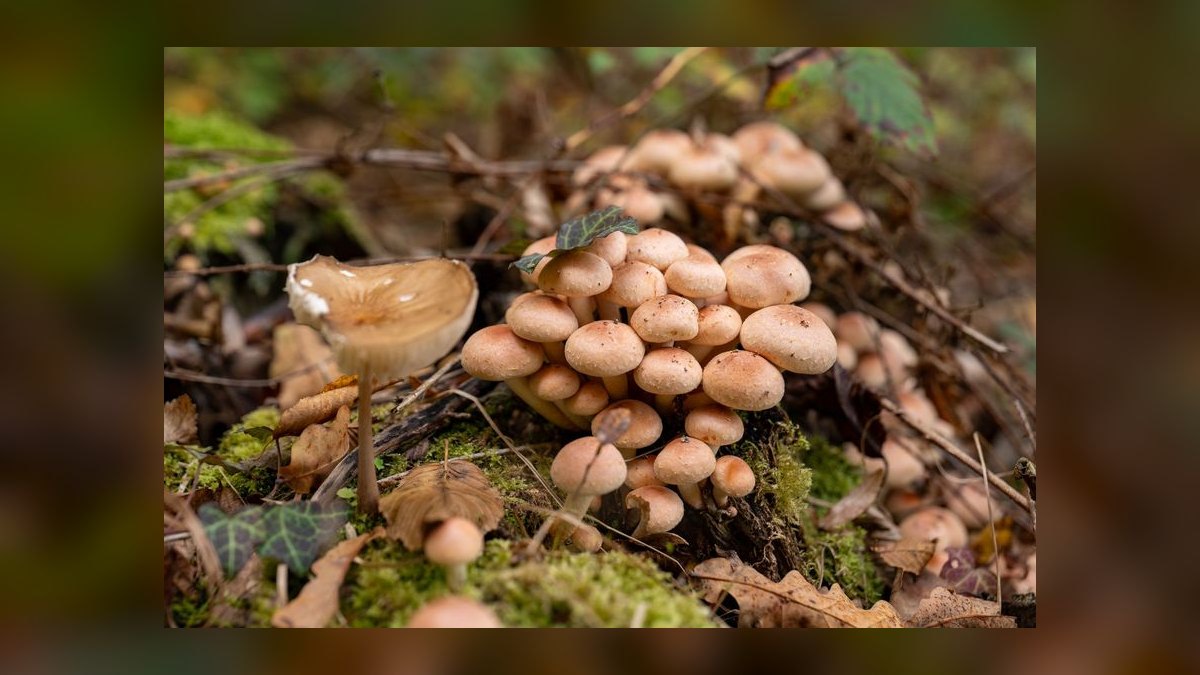
The disciplined alternative is almost boring by comparison. One species, almost always oyster, because it is fast, aggressively colonizing enough to outcompete some contaminants, cheap to substrate, and reliably in demand. Purchased grain spawn. Pasteurized rather than sterilized substrate, because pasteurization is far more forgiving and needs far less equipment. One channel, restaurant wholesale. Get 8-15 chefs ordering reliably every week before adding anything at all. The goal is not growth in Year 1 — it is a boringly consistent loop with predictable yields, contamination under 5-8%, on-time weekly deliveries, and healthy cash flow. Vertical integration is the reward for having a working business, not the method for building one.
The second error is treating contamination as bad luck rather than a measurable, improvable rate. Farms that succeed log every block: inoculation date, room, batch, outcome, yield by flush. That log is the equivalent of a clean funnel in RevOps — you cannot improve a conversion rate you do not instrument, and contamination rate is precisely a conversion rate. Blocks in, saleable blocks out. Growers who track it find patterns fast: a specific substrate supplier, a bag lot with weak filter patches, a room that spikes when the outside temperature crosses a threshold, an inoculation session done tired at 11 pm. Growers who do not track it experience contamination as weather.
The third error is inconsistency with chefs, which is more damaging than never pitching them. A chef cannot build a Thursday special around an ingredient that arrives half the time. One missed delivery costs more trust than three good weeks build. This is why overpromising volume to land an account is self-defeating: the account you win by claiming 40 lbs a week you cannot supply becomes a lost account plus a negative reference in a small, chatty professional community.
The fourth error is misreading the competition. Industrial commodity growers are not your competitor and never will be — you are not in the commodity business and competing on price against millions of pounds a week is suicide. Ignore them entirely. Your real competition for chef accounts is the established regional specialty farm with existing relationships, and you beat them on freshness, reliability, a species or quality differentiator, or by serving accounts they have outgrown and neglected. They are also potential collaborators; farms routinely buy from each other to cover shortfalls. Broadline distributors trucking specialty mushrooms in compete on one-stop convenience while you compete on local and fresh, and many chefs simply buy from both. The genuinely annoying competitor is the hobbyist selling oyster at $8/lb at the farmers market because they have never costed their own labor — they suppress prices in that one channel specifically, which is a strong argument for weighting toward wholesale, CSA, and value-added channels where hobbyists structurally cannot operate.
The fifth error is underestimating the cadence and burning out. Daily work runs 2-5 hours minimum on a small farm and never stops — not for weekends, holidays, illness, or vacation. Every day: check and adjust environment in every room, harvest anything at stage because mushrooms do not wait and a flush missed by a day is downgraded or lost, clean and pack and cold-store, inspect incubating blocks and pull contaminants, manage orders. Rolling through the week: mix and pasteurize substrate, inoculate, stage blocks into fruiting so production stays continuous rather than feast-or-famine. Weekly: deliver on fixed days, work the market, pack CSA boxes, invoice and chase receivables, review the yield and contamination log. Monthly: deep-clean and sanitize rooms, which dramatically lowers contamination pressure; reconcile books; reorder spawn, bags, and substrate; review which accounts and species are actually profitable. A solo operator cannot leave for more than a day or two without a trained backup, and building that backup before you are desperate is the difference between a business and a trap.
The sixth error is the regulatory blind spot. Mushroom farming is a food business. Most farms form an LLC, get an EIN and a business bank account, and keep real books from day one. Fresh whole mushrooms are generally regulated as a raw agricultural product with relatively light requirements in many states, but mushrooms are a special category in many jurisdictions because of misidentification risk — some states and many farmers markets require clear species identification, proof the grower can identify what they sell, or a certified identifier's involvement, particularly for any wild-harvested product. Selling dried, powdered, or value-added product moves you into a substantially more regulated space: a licensed and inspected commercial kitchen or processing facility, compliant labeling, and for anything marketed as a supplement, FDA dietary-supplement rules. Cottage-food laws may or may not cover dried mushrooms depending on the state. General liability insurance is effectively mandatory and often a precondition for markets, grocers, and restaurants to buy from you at all; budget $600-$2,500 annually for a small farm and more with value-added products or staff. Verify all of it with your state department of agriculture rather than a forum post — this is jurisdiction-specific and changes.
Decision framework for choosing your model and your next move
Before committing capital, run the gates honestly, in order. Failing an early gate makes the later ones irrelevant.
Temperament gate. Are you genuinely detail-obsessed and process-disciplined? Sterile technique is a discipline, not a green thumb. Can you tolerate a relentless daily cadence with no off-season for several years? Can you handle work where every week structurally resembles the last week? If logging contamination rates and sanitizing rooms on a fixed schedule sounds like drudgery rather than the craft itself, stop here — this is the gate that eliminates the most people and the one they most reliably lie to themselves about.
Capital gate. Do you have $25K-$65K for a serious build, or are you being honest that a sub-$10K build is a side project rather than income? Do you have 6-12 months of separate living expenses so the farm is not forced to pay you prematurely?
Market gate. Is there a metro of meaningful size within delivery range? Have you actually walked into 5-10 restaurants and confirmed a chef would buy from a reliable local grower? This is a two-week validation exercise and it is astonishing how many people skip it and build the room first.
Then choose the model against your actual edge. Model 1 if you want the fastest cash flow, have or can build chef relationships, and accept the daily grind. Model 2 if you have marketing and brand skills or B2B supply relationships, can tolerate a slower ramp, and want better long-term margins plus a brand asset with real enterprise value. Model 3 if your genuine edge is sterile lab work at volume, you have more capital for sterilization equipment, and you prefer a less perishable, more scalable, less restaurant-dependent business.
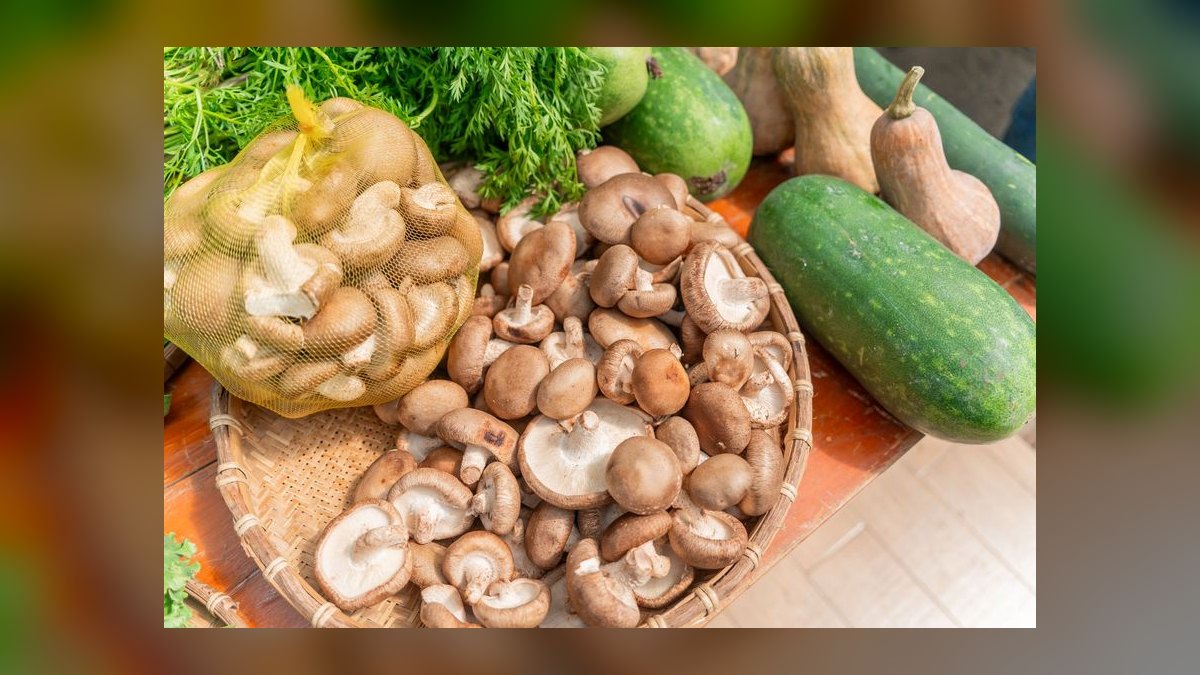
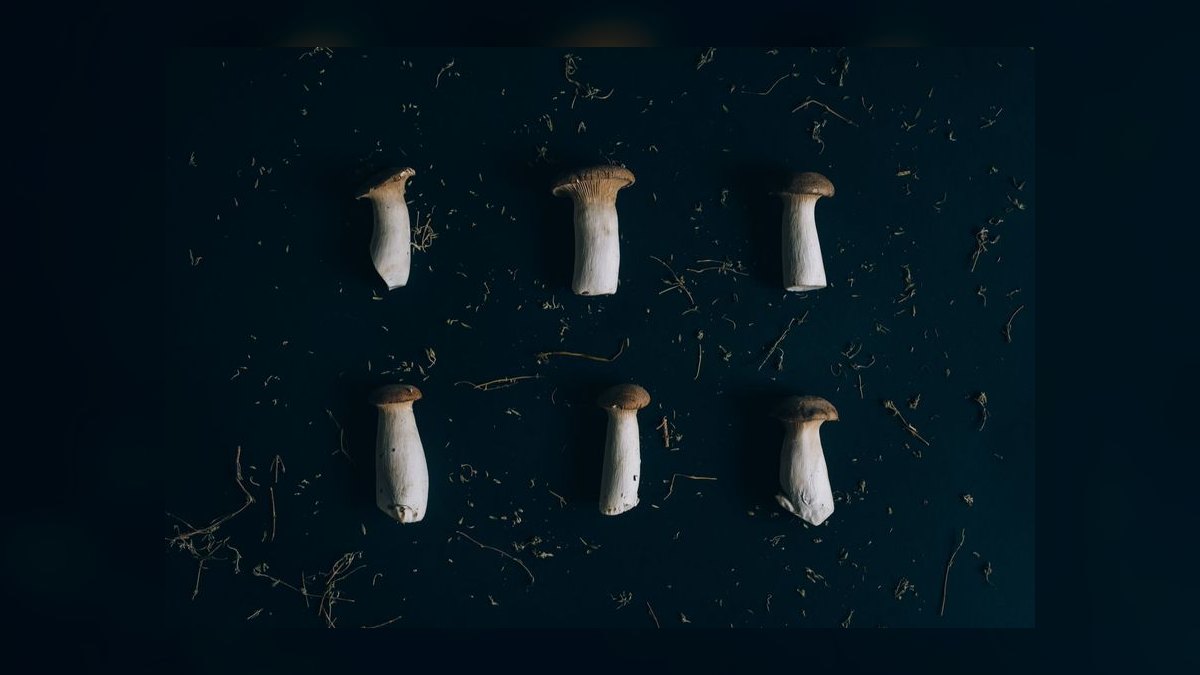
Then choose species against cycle time and demand. Oyster is the correct Year 1 anchor for almost everyone — 7-14 day fruiting after colonization, aggressive colonizer, cheap pasteurized substrate, high biological efficiency, steady demand. Blue and pearl are the workhorses; pink and golden are gorgeous but fragile with short shelf life. King trumpet commands a higher price with excellent shelf life and chef enthusiasm but is fussier and usually wants sterilized supplemented substrate — an excellent second species. Lion's mane carries high price, strong culinary and functional demand, and a distinctive look that differentiates a market stall; it is the natural bridge species into Model 2. Shiitake has enormous recognition and demand but long timelines — the block must fully colonize and then brown, often 6-12+ weeks before fruiting — making it a Year 2 species. Chestnut, pioppino, maitake, nameko, and enoki are Year 2-3 differentiation, with maitake genuinely difficult. Reishi, cordyceps, turkey tail, and chaga are the functional set, grown to dry rather than sell fresh. Avoid morels (commercially inconsistent), truffles (a multi-year orchard investment, not a farming business), and psilocybin species (legal status varies and is federally prohibited in most contexts, outside any legitimate food or supplement plan).
Then sequence hiring against revenue. Solo or a founding pair through Months 1-18, which is correct because you must understand every process before you can systematize it — but which caps you around $80K-$140K without unsustainable hours. First part-time help around Months 12-24 at $14-$22/hr, given the most teachable and lowest-risk tasks first: harvesting, cleaning, packing, deliveries, market staffing. Keep lab work, inoculation, and contamination triage yourself initially. Trained production staff in Months 24-48 as revenue approaches $250K-$500K, at a loaded cost of $35K-$55K per full-time employee depending on region, with cross-training so the farm survives illness and vacation. Past $400K-$600K, roles specialize into production lead, sales/accounts, and possibly a lab or value-added specialist — and margins compress as owner-hours convert to payroll. Staying deliberately small and outsourcing pieces — buying spawn or even pre-colonized blocks, contracting deliveries, using a co-packer for value-added — is a fully legitimate strategy that trades margin for simplicity.
Then read the five-year outlook against your plan. Functional-mushroom demand appears durable through 2032, favoring Model 2 and favoring gourmet farms that can bolt on dried product. AI and sensor automation will make a real but bounded difference: smart controllers optimizing humidity, CO2, and temperature per species and growth stage; computer vision flagging contamination on incubating blocks earlier and more reliably than a tired human on daily rounds; vision-assisted harvest timing; and demand forecasting plus route optimization on the sales side. That compresses the skill premium modestly and lowers the barrier slightly, but harvesting delicate fruiting bodies, the physical labor of substrate prep and inoculation, and relationship-driven sales all resist automation. Controlled-environment agriculture economics keep improving as LED and climate equipment get cheaper, while energy cost remains the primary operating-expense risk in hot climates and high-electricity regions. Competition intensifies at the hobbyist tier and stays defensible at the professional tier, because wholesale, CSA, value-added, and B2B channels demand a consistency hobbyists cannot deliver. Consolidation stays mild; exits are typically modest multiples of profit to a local operator, a larger regional farm, or a brand acquiring a supply source, with value concentrated in the branded value-added line, the customer relationships, and the built-out facility rather than the fresh-farming operation itself.
Related questions
Can I run a mushroom farm part-time while keeping a job?
Partially. Colonization is passive, but fruiting rooms need daily attention and harvests cannot wait. A small oyster operation with a Saturday market and two restaurant accounts is feasible around a flexible job. Wholesale accounts expecting fixed weekday deliveries generally are not.
How does mushroom farming compare to microgreens or indoor vertical farming?
Similar footprint and controlled-environment logic, different risk. Microgreens cycle faster (7-14 days) with lower contamination stakes and lower prices. Mushrooms carry higher per-pound value and higher biological risk. Many small indoor farms run both to smooth cash flow and share climate infrastructure.
What happens to unsold fresh mushrooms?
Dry them. A dehydrator converts unsold fresh product into shelf-stable dried mushrooms or powder, salvaging value and seeding a Model 2 line. This is why drying capacity is the highest-ROI early add-on — it turns a perishability problem into a second product category.
Do I need to make my own spawn to be profitable?
Not initially. Purchased spawn costs $0.70-$1.50 per block versus far less made in-house, so integration cuts cost of goods 30-50%. But a rushed lab is the leading source of contamination. Integrate only after your fruiting operation runs consistently under 8% contamination.
Is outdoor log-grown production worth considering?
For shiitake, sometimes. Log cultivation needs low capital and little climate control but yields once or twice yearly with a 6-18 month lead time, making it a supplement to indoor production rather than a primary business. It suits landowners with hardwood and patience.
FAQ
How much money do I actually need to start a mushroom farm?
For a small indoor gourmet operation, plan for $18,000-$65,000. That covers a converted container, spare room, or small warehouse bay plus incubation and fruiting build-out, a flow hood or glovebox, pasteurization equipment, humidity-rated shelving, refrigeration, packaging, and initial spawn and substrate. A bare-bones setup can start under $10,000, but treat that as a side project rather than income — and budget 6-12 months of living expenses separately either way.
Which species should a beginner grow first?
Oyster, almost without exception. It fruits in 7-14 days after colonization, tolerates cheap pasteurized substrate, colonizes aggressively enough to outcompete some contaminants, runs 75-150% biological efficiency, and sells at $8-$16/lb wholesale. Add king trumpet and lion's mane at $14-$28/lb as your second and third species once the oyster loop is consistent. Resist running more than one species until you have run one well for at least six months.
How long until the first revenue?
Roughly five to six weeks from your first inoculation to first saleable oyster harvest — 10-18 days colonizing plus 7-14 days fruiting, plus build-out time before that. Most growers reach consistent weekly sales around Month 3 or 4, and a farm producing 6-20 lbs weekly per 200 sq ft of fruiting space lands somewhere in $40,000-$120,000 for Year 1.
Can I use my basement or do I need a commercial space?
A basement or spare room works under about 200 sq ft if you can hold 85-95% humidity, 60-72°F, and adequate fresh-air exchange. The real risks are spore load in your living space, contamination you cannot isolate, and residential zoning that stops tolerating the operation once it looks commercial. A converted shipping container or leased bay separates the farm from the house and lets you quarantine a contaminated room without shutting down production.
What is the single biggest determinant of whether the farm succeeds?
Contamination rate. A farm at 5-8% is profitable and a farm at 25% is not, and they can look identical on a tour. Every other number in the P&L is downstream of it, which is why sterile and sanitary technique — not growing per se — is the core craft. Log it per block, per batch, per room, and treat it as the primary metric you manage.
Should I sell at farmers markets or to restaurants first?
Restaurants. Wholesale accounts give you predictable weekly volume, no weather dependency, and no six-to-nine-hour market day consuming your week. Farmers markets pay better per pound at $12-$22 retail and function as genuine customer acquisition — chefs and CSA subscribers find you there — but the channel is where underpriced hobbyist competition concentrates. Land 8-15 chef accounts first, then add your single best market.
Sources
- https://www.usda.gov/
- https://www.nass.usda.gov/
- https://www.ams.usda.gov/services/local-regional
- https://www.fda.gov/food/food-safety-modernization-act-fsma
- https://www.sba.gov/business-guide
- https://attra.ncat.org/
- https://extension.psu.edu/
- https://www.canr.msu.edu/
- https://www.fao.org/home/en/
- https://www.cdc.gov/foodsafety/index.html
Related on PULSE
- Should I open or buy a Mellow Mushroom franchise in 2027?
- How do you start a microgreens farming business in 2027?
- How do you start a indoor vertical farming business in 2027?
- How'd you fix Bowery Farming's revenue issues in 2026?
- How do you start a concrete floor coating business in 2027?
- How do you start a laundry pickup and delivery service business in 2027?
This page will be disappearing soon. Save it to your device for $1 — or read it free while it is here.
@Kory-White- · if Venmo asks, the last 4 of my number are 2012
This page is gone.
This one is off the shelf now. $1 keeps it on your phone for good — the whole page, pictures and diagrams included.
 vertical-farmingHow do you start a indoor vertical farming business in 2027?
 meal-prepHow do you start a niche meal prep delivery business in 2027?
 cateringHow do you start a corporate catering business in 2027?
 ghost-kitchenHow do you start a ghost kitchen business in 2027?
 meal-prep-serviceHow do you start a meal prep service business in 2027?
 personal-chefHow do you start a personal chef business in 2027?
 restaurantHow do you start a pop-up restaurant business in 2027?
 charcuterie-board-businessHow do you start a charcuterie board business in 2027?
 catering-businessHow do you start a catering business in 2027?
 microgreensHow do you start a microgreens farming business in 2027?