
How do you start a custom embroidery shop business in 2027?
 Curated byKory White · Fractional CRO · Maryland
 PULSEKNOWLEDGE LIBRARY
Quality
Certified

Start a custom embroidery shop in 2027 by choosing B2B contract decoration over retail gifts, buying used commercial multi-needle iron rather than new hobbyist machines, and selling outbound to local businesses with samples. Budget $18,000–$45,000, price per 1,000 stitches with minimums, and build a reorder log from your very first order.
Two roads out of the same machine: retail gift shop versus B2B uniform decorator
Every person who buys an embroidery machine faces the same fork within about six weeks of unboxing it, and almost nobody recognizes it as a fork. It just feels like "what work shows up." But the two paths diverge into completely different businesses with different economics, different customers, different daily rhythms, and wildly different five-year outcomes.
Road one — retail and consumer gift. Monogrammed towels, name-drop hats, baby blankets, bachelorette party totes, teacher gifts, Etsy listings, craft fairs, Facebook Marketplace. The entry barrier is essentially zero: you can list a product tonight and take an order by Friday. Order values run roughly $15 to $60. The customer is a one-time buyer who found you through a marketplace search or a friend's post. Reorder rate hovers near zero — the person who bought a monogrammed baby blanket is not coming back in ninety days for forty more. Gross margin per piece can look flattering on a spreadsheet (a $38 monogrammed tote that used $4 of blank and $0.40 of thread reads as 88% margin) but the labor denominator destroys it: you spend fifteen minutes hooping, twelve minutes stitching, eight minutes finishing and packing, plus messaging back and forth about font choice, plus a trip to the post office. That is roughly forty-five minutes of human attention for maybe $28 of contribution. Run that all day and you have built yourself a job paying under $35 an hour with zero leverage, no accumulating asset, and a marketing treadmill that never stops.
Road two — B2B contract decoration. Uniform and branded-apparel programs for local businesses: landscaping crews, HVAC and plumbing companies, pest control, breweries, restaurants, gyms, dental and medical practices, auto shops, real estate brokerages, property management firms, schools, churches, youth sports leagues. Order values run $400 to $2,500. The customer reorders three to eight times a year — every hiring wave, every spring season start, every time shirts wear out, every trade show and sponsorship. Per-piece margin is lower in percentage terms but the labor denominator collapses because you are running batches: forty-eight identical polos with one logo means you hoop in a rhythm, the machine runs largely unattended, and finishing is assembly-line. That same forty-five minutes of attention now supports hundreds of dollars of contribution rather than twenty-eight.
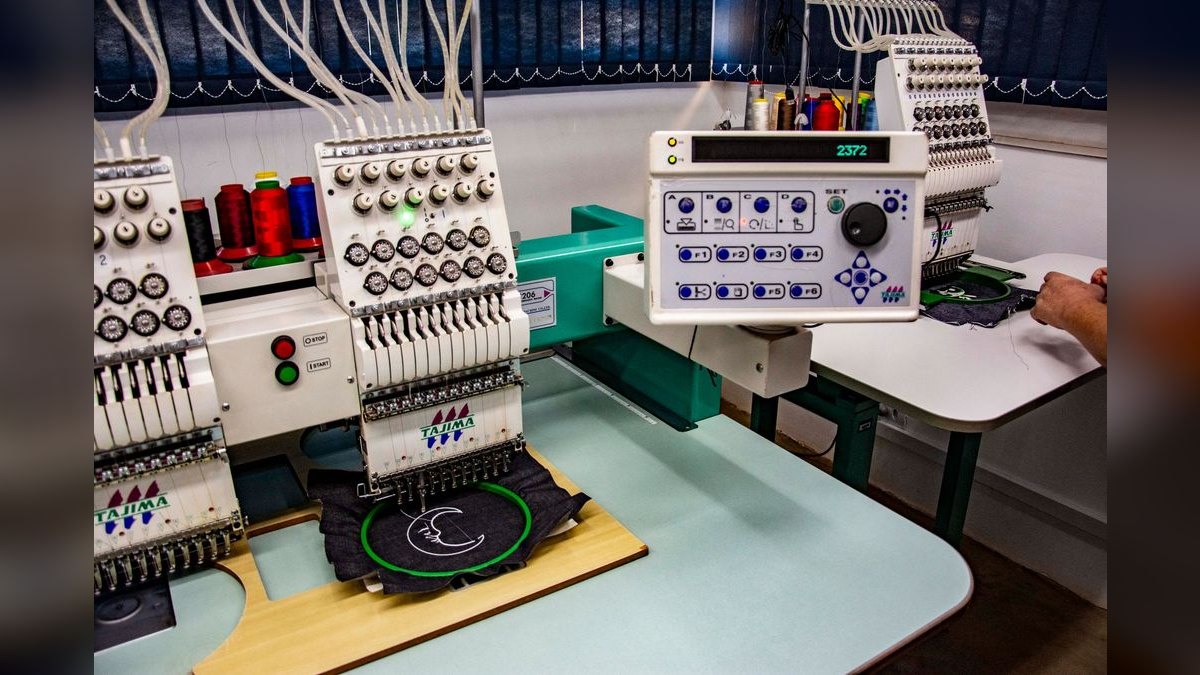
The structural difference is not effort or skill. It is whether the relationship accumulates. On road one, every dollar of revenue requires a fresh act of marketing. On road two, the second order costs you a text message, because you already hold the logo file, the garment spec, the size breakdown, and the placement notes. That accumulation is the entire business.
There is a third road worth naming because it quietly becomes the best one for a lot of operators: contract decoration for other sellers. Promotional-product distributors registered with ASI or SAGE, ad agencies, screen printers who don't own embroidery machines, and local apparel resellers all need someone to actually stitch the goods. Margin per piece is thinner because you are wholesale, but customer acquisition cost is effectively zero and volume is steady. One solid distributor relationship can be $30,000 to $100,000 of annual work that arrives without a single sales call. Plenty of shops that started chasing end users end up quietly happier as the production back-end for a handful of resellers.
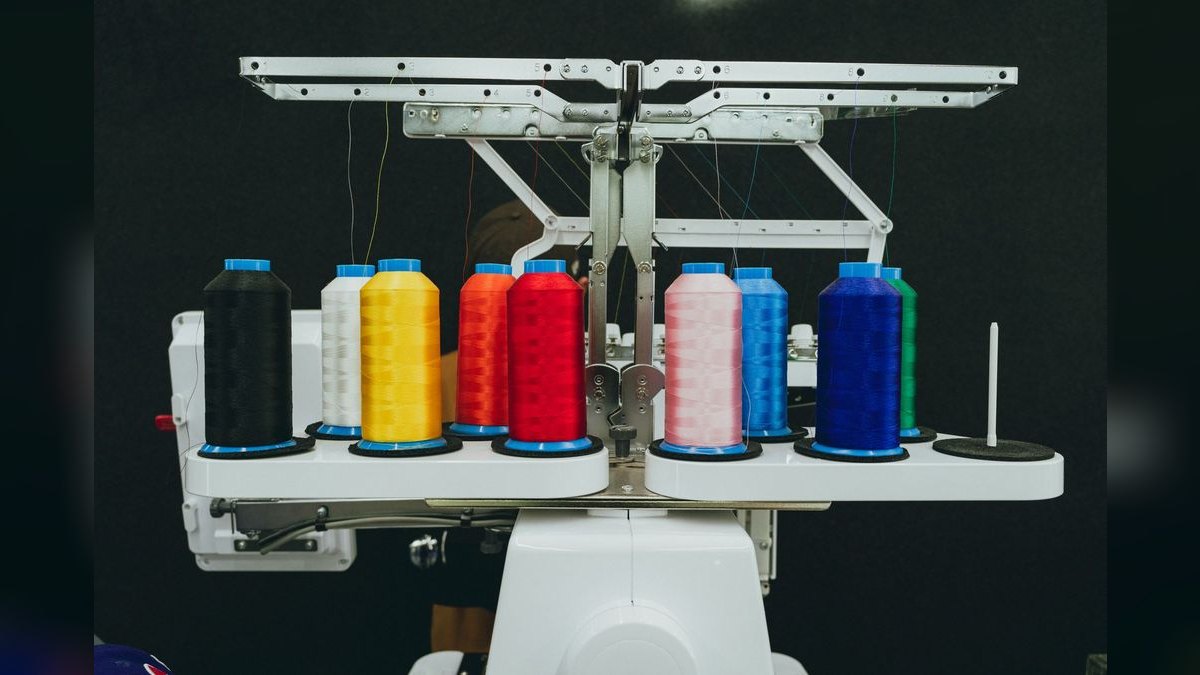
The trap is that road one is *accessible* — and accessible markets are accessible precisely because they have no barriers, no moat, and no pricing power. The founders still running strong in year five almost universally decided, before they bought the machine, that they were building a B2B production business that happens to use needles and thread.
How to decide which road you are actually built for
The choice is not purely economic, and pretending it is leads people to pick B2B on paper and then drift back into gift work because they hate the part they didn't admit they'd hate. Run yourself through an honest filter before you spend a dollar.
Are you willing to do cold outbound? This is the single hardest gate and it disqualifies more people than capital does. Your B2B buyers are not searching for you. A landscaping company owner with a 30-person crew is not typing "custom embroidery near me" into Google. He uses whoever a peer mentioned, or whoever physically walked into his shop with a sharp-looking sample cap. If the idea of driving a territory and walking into ten businesses a day makes you physically ill and you have no plan to get past that, the B2B road will starve no matter how good your stitching is.
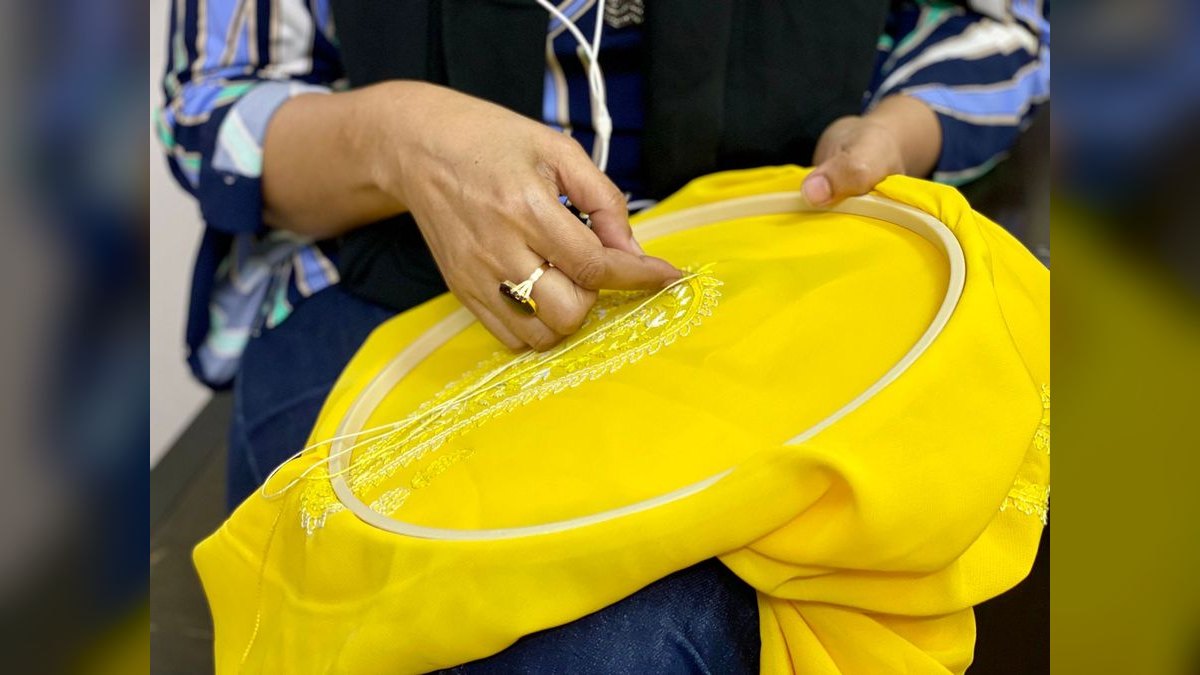
How much capital can you actually risk? A serious shop is $18,000 to $45,000. A genuinely lean start is $8,000 to $12,000 on used single-head iron with outsourced digitizing. Undercapitalized shops get pushed toward retail work because they can't afford the multi-head that makes batch labor math work.
Can you tolerate repetitive physical production for a year or two? Hooping is hand labor. You will stand, you will lift boxes of garments, you will trim jump threads until your fingers ache. Desk-job refugees often love the tangibility; some discover they hate the repetition.
Are you organized enough to never miss a date? Deadline discipline is the whole product in B2B. A missed date doesn't just lose an order, it loses the account and the referral chain behind it.
Does your 45-minute radius contain enough small businesses? A metro or mid-size town has plenty. A genuinely rural area may not support a B2B-only model, which pushes you toward contract decoration by shipping or a spirit-wear/anchor-institution strategy instead.
Do you have warm relationships already? Someone in the trades, a school connection, a church, a chamber network. A warm start dramatically de-risks year one.
mermaid flowchart LR A[Cold walk-in with sample] --> B[Logo file received] B --> C[Digitize or outsource] C --> D[Sew-out sample approved] D --> E[Garments ordered from wholesaler] E --> F[Scheduled on production board] F --> G[Hoop and run] G --> H[Trim, inspect, fold, count] H --> I[Deliver or ship] I --> J[Log: customer, file, garment, placement, colors, qty, date] J --> K{Reorder trigger} K -->|New hires| L[Proactive outreach] K -->|Season start| L K -->|Wear replacement| L L --> F J --> M[Ask for one referral] M --> A </invoke>
The recurring workflow. Once accounts exist, the shop runs a fixed cycle: quote, art and digitizing, sew-out approval, garment procurement, production scheduling, hooping, running, finishing, quality check, delivery, reorder log. Quote fast — hours, not days — because a buyer who needs shirts by Friday goes with whoever answers clearly today. Never skip the sew-out approval; running a full job on an unapproved file is how you ruin sixty garments and an account in one afternoon. Build buffer into quoted lead times for wholesale backorders, which remain a chronic headache. Keep production scheduling visible, on a whiteboard or in software like Printavo or ShopWorks, because deadline discipline is the product. Inspect every finished piece — a crooked logo or an uncaught thread break costs you the referral chain, not just the piece.
The reorder log deserves obsessive attention because it is the compounding asset. Log the customer, the digitized file location, the exact garment and color, the logo placement and size, the thread colors, the quantity, and the date. When the customer texts "same as last time," you actually can — and that single capability is what makes switching to a cheaper competitor feel like work to them.
Lead generation sequencing. The mix that works over time is roughly 60–70% outbound and referral, 15–25% contract and distributor, 10–20% inbound and digital. Start almost entirely outbound because it's the only channel you control on day one. Layer in distributor partnerships in months three to twelve as capacity allows. Chase anchor institutions — one school district, one large church, one youth sports league, one franchise group — because they carry referral ecosystems inside them. Sponsor a youth team in your own embroidered apparel, join the chamber, decorate the local 5K shirts. Let the website, Google Business Profile, and modest local SEO catch the minority who do search. Founders who try to build this inbound-first almost universally stall.
Hiring sequence. Solo through most of year one, then a part-time production assistant who hoops and finishes — hooping is teachable in days and finishing in hours, and offloading it frees the owner to sell, which is the actual constraint. Year two brings a full-time production employee, the hire that unlocks $200,000-plus. Year three adds a second production person and often an in-house digitizer or art specialist. Years four and five, if you're scaling past $500,000, require a salesperson who isn't the owner and a production lead who runs the floor. Many owners deliberately stop before that — a three-person, $300,000 to $450,000 shop netting the owner $90,000 to $160,000 is a genuinely good outcome, not a failure of ambition.
What the competitive field actually looks like, and where the pressure comes from
Positioning only makes sense against a real map of who else is stitching.

Hobbyists and side-hustlers are everywhere and compete only at the consumer-gift fringe. No capacity, no minimums discipline, no B2B service posture. They are not competition for uniform programs; they're an argument for staying out of the gift market.
Other local contract and uniform shops are your genuine direct competition — typically one to several per mid-size metro. Here's the encouraging part: accounts churn from these shops constantly, and almost never on price. They churn on missed deadlines, quiet price creep, sloppy stitching, and unanswered emails. The local market is not a fixed pie held by incumbents; it's a rotating pool where sharp service takes accounts continuously. Your best prospecting question is literally "how's your current shop doing on turnaround?"
Screen printers who also embroider compete on apparel programs broadly, and many of them sub out their embroidery — which makes them contract customers as often as rivals.

National online players — Custom Ink, 4imprint, Printful, Printify, Vistaprint, Queensboro, RushOrderTees — own the searchable, transactional, no-relationship end. They win on price transparency and reach. They structurally cannot win on local speed, low reorder minimums, in-person service, holding your file so a reorder is a text message, or a human who drives over with samples. The entire strategic point of a local B2B shop is competing where the nationals cannot follow.
Promotional-product distributors occupy an interesting dual position: they sell decorated apparel (competitor) and they need a decorator (your best customer). Treat them as a channel, not a threat.
DTF and hybrid decoration is the real 2027 pressure. Direct-to-film transfers can mimic a simple logo cheaply, which compresses the low-stitch-count tier. The correct response is not to cut prices — it's to add a heat press and a DTF supplier so you can say yes to mixed orders (embroidered crest plus printed back, printed names under a stitched logo) while positioning embroidery as the premium, durable, professional choice for polos, jackets, and caps. That preference is genuinely sticky with uniform buyers.

Looking toward 2030, three forces shape the niche. AI is changing the back office, not the needle: auto-digitizing assistance for simple logos, quote generation, customer communication drafting, reorder reminders, and production scheduling optimization all make a small team handle more volume. AI does not hoop garments, run machines, deliver in person, or build the relationship — the physical and relational core is durable. Hybrid decoration keeps expanding, so the pure-embroidery decorator is more limited than the one offering stitching plus DTF plus patches. And the online giants keep absorbing the transactional fringe, which is fine — it clarifies the local shop's job as owning the recurring, speed-sensitive, low-minimum reorder business.
The failure modes worth memorizing before you spend a dollar
New shops fail in patterns, and the patterns are predictable enough to inoculate against.
Starting in the consumer-gift market because it feels accessible. No moat, no reorders, no pricing power. Underpricing to get started — embroidery customers anchor hard on first-order pricing, and raising rates 40% on an existing account is genuinely painful. No minimums, which destroys production rhythm; ones and twos all day means per-piece labor never comes down. Buying a hobbyist machine when used commercial iron costs less and produces more. Skipping the sew-out approval and ruining a full run. No reorder log, which means you have transactions instead of a business. Overspending on space — a retail storefront before you have accounts is the classic cash-flow killer, and the shop that signs a $1,400 lease planning to sell monogrammed gifts to walk-in traffic usually discovers by month ten that the pivot to B2B came too late. Marketing inbound-first when your buyers don't search. Taking every job, which makes you un-referable: a landscaping company can't confidently refer "the person who does anything," but they will absolutely refer "our uniform shop." No deposits, so you're floating garment purchases. Ignoring digitizing quality, since bad files stitch slow, pucker, break thread, and look cheap. Quoting turnarounds you can't hit.
The operational risks that sink established shops are a different list. Deadline risk is number one — mitigate with visible scheduling, buffered quotes, and never overcommitting machine capacity. Quality escapes get caught by mandatory sew-outs and 100% finishing inspection. Customer concentration above 20–25% turns one loss into a crisis. Garment supply-chain backorders blow up turnaround promises, so quote realistically and keep safety stock of common blanks. Machine downtime is existential for a one-machine shop — build toward a second machine and cultivate a service tech relationship. Cash flow strains because you buy garments before you're paid, so require deposits and Net-15 terms. IP and trademark risk is the quiet one: decorating a logo the customer doesn't own or isn't authorized to use is infringement, so put a written customer representation on every order form and skip licensed collegiate or pro-sports work unless you go through the licensed-decorator paperwork. Owner-dependence is the risk that determines whether you built an asset or a job — document the reorder log, the SOPs, and the digitizing files.
Be honest about lifestyle too. Year one is physical and long. Seasonality is real — back-to-school in August and September can be punishing, mid-summer and January slow, and contract work is what smooths the valleys. Deadline pressure is constant low-grade stress. But the work is tangibly satisfying in a way desk jobs rarely are, and the ceiling is good: a three-person shop doing $300,000 to $450,000 with a tight account base gives an owner a flexible, autonomous livelihood without high-headcount grind. Many operators reach that and deliberately stay. That's a rational destination, not a shortfall.
Related questions
How long until an embroidery shop breaks even?
Most owner-operators reach breakeven in six to eighteen months, driven almost entirely by how fast you land your first five to ten recurring B2B accounts. Keeping monthly overhead under $2,500 and hitting $55,000–$120,000 in year-one revenue puts you inside that window.
Should I learn digitizing or outsource it?
Outsource at first — $10–$25 per logo keeps you moving while you learn production. Bring it in-house once volume makes the $2,000–$5,000 annual outsourcing spend meaningful. Learning Wilcom or Hatch to a professional level takes roughly 40–80 hours of deliberate practice.
Can I run this from a garage?
Yes, if zoning and HOA rules allow. You need roughly 100–200 square feet for a machine, hooping station, and inventory. Commercial space becomes necessary when you hire employees or store bulk blanks — budget $500–$1,500 monthly for a small flex unit.
Is DTF going to kill embroidery?
No, but it will compress the simple-logo tier. Embroidery keeps its edge on perceived quality, durability, and the premium look on polos, jackets, and caps. Add a heat press and a DTF supplier so hybrid orders become revenue rather than a lost quote.
What is the fastest way to get the first ten customers?
Territory walk-ins with a physical embroidered sample. Target trades businesses, breweries, gyms, and auto shops, five to ten drop-ins a day. Ask who handles their shirts, leave the sample, follow up in a week. Uncomfortable, and more effective than any other channel.
FAQ
What is the most common mistake new embroidery shop owners make?
Trying to serve everyone at once — retail walk-ins, marketplace gift orders, and business accounts simultaneously. It spreads your thread inventory, your hoops, your scheduling, and your attention too thin, and it makes you impossible to refer. Pick one clear niche, ideally uniform programs for local trades businesses, and build your entire workflow around repeat orders from that segment.
How much does a commercial embroidery machine actually cost in 2027?
A used multi-head machine from Tajima, Barudan, or SWF typically runs $12,000–$28,000 for a 4-head, while a new entry-level commercial single-head costs $8,000–$15,000. Used commercial single-heads sit at $3,500–$8,000. Prices swing on condition, hours, and included accessories like cap drivers and hoop sets. Avoid consumer-grade home machines — they cannot sustain production volume.
Do I need to know how to digitize logos myself?
Not to start, but it helps your margins substantially. Outsourced digitizing runs $10–$35 for a simple left-chest logo, which compounds fast across many custom orders. Learning a digitizing suite takes 40–80 hours of real practice and can save $2,000–$5,000 a year once volume is meaningful. Either way, treat digitizing quality as a core product attribute — bad files stitch slow and look cheap.
How do I price a job without guessing?
Build a rate card and stop quoting ad hoc. Charge $0.50–$1.00 per 1,000 stitches with a per-piece minimum of $5.50–$8.00 on contract work or $8–$15 on retail-priced work, mark garments up 35–60% over wholesale, and add a one-time digitizing fee of $25–$95. Tier your per-piece rate by quantity bands so volume discounts are published rather than negotiated.
Should I decorate customer-supplied garments?
Yes — it's common and often preferred by companies loyal to a specific brand. Charge a slightly higher decoration fee since you lose the garment margin, count every piece in on receipt, and put a clear clause on your terms sheet stating you're not liable for defects in customer-supplied goods or for the occasional piece lost to a machine issue.
What legal and insurance basics do I actually need?
Form an LLC, register for a sales-tax permit, and get a resale certificate so you buy blanks tax-free. Carry general liability insurance at $400–$900 a year — larger accounts and commercial landlords often require it. Add equipment coverage for your machines and workers' comp once you hire. Put an intellectual-property representation on every order form confirming the customer owns or is authorized to use the artwork.
Sources
- Promotional Products Association International — industry sales and research: https://www.ppai.org
- Advertising Specialty Institute — industry data and Counselor research: https://www.asicentral.com
- U.S. Census Bureau, County Business Patterns — business counts by employment size: https://www.census.gov/programs-surveys/cbp.html
- U.S. Small Business Administration — small business profiles and startup guidance: https://www.sba.gov
- SanMar — wholesale blank apparel catalog and decorator accounts: https://www.sanmar.com
- S&S Activewear — wholesale imprintable apparel: https://www.ssactivewear.com
- alphabroder — wholesale imprintable apparel distributor: https://www.alphabroder.com
- Tajima — commercial embroidery machines and dealer network: https://www.tajima.com
- Wilcom — embroidery digitizing software: https://www.wilcom.com
- U.S. Patent and Trademark Office — trademark basics for decorators: https://www.uspto.gov
Related on PULSE
This page will be disappearing soon. Save it to your device for $1 — or read it free while it is here.
@Kory-White- · if Venmo asks, the last 4 of my number are 2012
This page is gone.
This one is off the shelf now. $1 keeps it on your phone for good — the whole page, pictures and diagrams included.
 screen-printingHow do you start a screen printing business in 2027?
 mobile-barberHow do you start a mobile barber business in 2027?
 post-construction-cleanupHow do you start a post-construction cleanup business in 2027?
 commercial-cleaningHow do you start a commercial office cleaning business in 2027?
 handyman-businessHow do you start a handyman business in 2027?
 golf-simulatorHow do you start an indoor golf simulator studio business in 2027?
 courier-businessHow do you start a courier delivery business in 2027?
 leadership-coachingHow do you start a leadership coach business in 2027?
 massage-therapyHow do you start a massage therapy practice business in 2027?
 sublimation-printingHow do you start a sublimation printing business in 2027?