

How do you start a epoxy garage flooring business in 2027?
 Curated byKory White · Fractional CRO · Maryland
Quality
Certified
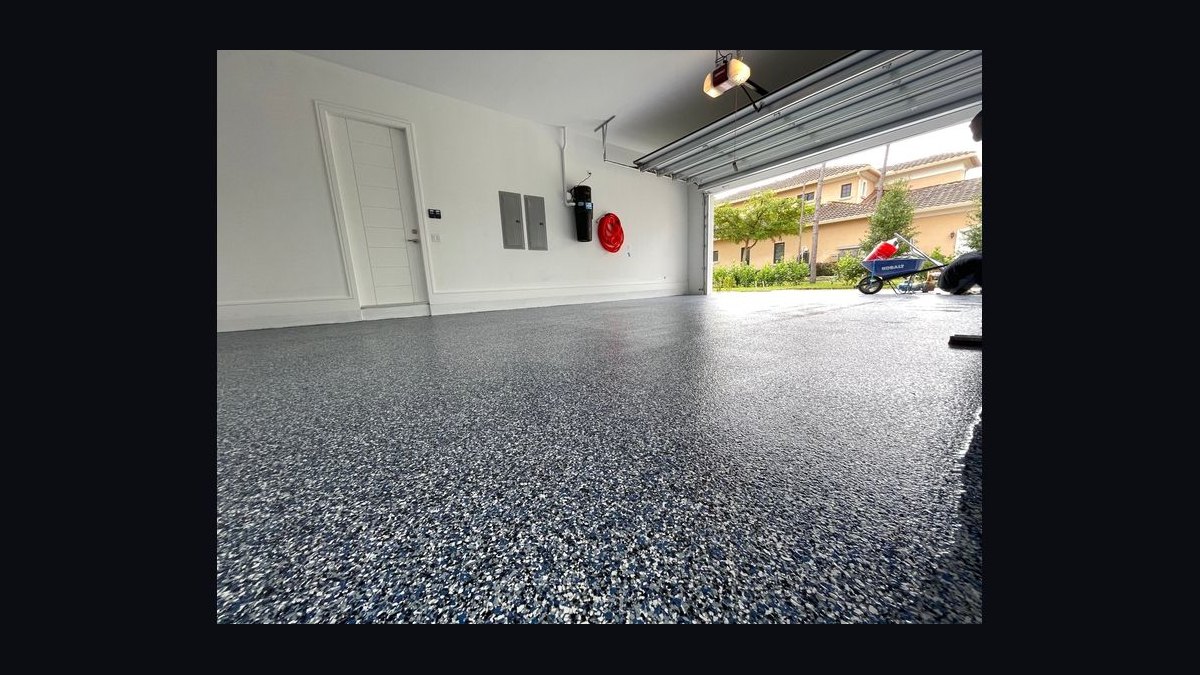
Start an epoxy garage flooring business by capitalizing $18,000–$45,000 for a diamond grinder, HEPA dust extractor, trailer, and materials; forming an LLC with general liability coverage; standardizing on single-day polyaspartic flake systems; and selling premium suburban homeowners at $5–$11 per square foot through Local Services Ads and neighborhood referral clustering.
The outcome you should expect
A focused operator who avoids the price-war trap should expect $110,000–$240,000 in Year-1 revenue working solo or owner-plus-one-helper, completing roughly 45–90 garages at an average ticket of $2,800–$4,200. That first year is an apprenticeship, not a payday: the first ten to fifteen jobs run slow and margin-thin while grinding speed, flake broadcast technique, and material estimating stabilize. Owner take-home lands somewhere between $35,000 and $75,000, and most of the surplus gets recycled into marketing spend and a second set of diamond tooling. The real Year-1 deliverable is not profit — it is a 4.8-plus star review profile, a repeatable one-day install, and a documented process another person can be trained into.
Year 2 is where the business starts to behave like a business. One full crew running smoothly, the owner shifting from installer to salesperson and marketer, 80–140 jobs, and gross margins normalizing into the 55–65% band produces $260,000–$480,000 in revenue and $70,000–$140,000 of owner take-home. Light commercial work — a warehouse bay, an auto shop, a veterinary clinic — usually appears here through a contractor referral rather than a marketing campaign.
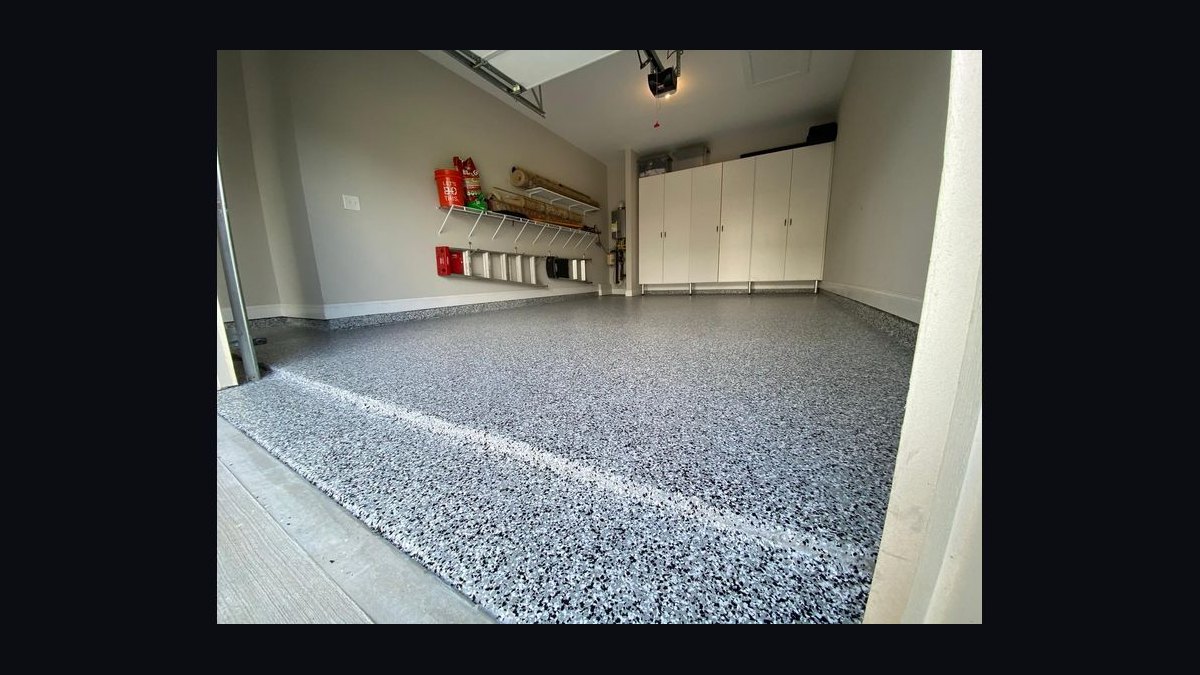
Year 3 with two trained crews reaches $450,000–$850,000 across 150–280 jobs, and this is the inflection where the operation converts from a job into an asset. Owner take-home of $120,000–$250,000 depends heavily on how much the owner is still swinging a grinder. By Years 4–5 a three-crew operation with a dedicated estimator and an ops manager can run $800,000 to $2.8 million, with the strongest independents clustering at $1.2M–$1.8M in a two-to-three-county footprint.
None of that trajectory is automatic. It is gated by exactly three variables: lead flow, hiring quality, and whether surface-prep standards survive the volume increase. Operators who hit the revenue numbers while quietly grinding lighter to fit more jobs into a week generate a delamination liability that surfaces eighteen months later as free re-dos and one-star reviews. The expected outcome above assumes you never make that trade.
What drives that outcome
The single variable that separates a compounding coatings business from a failing one is surface preparation discipline, because the coating almost never fails on its own — the bond fails, and the bond is made or lost in the four hours before any resin touches the slab. Manufacturers void warranties over skipped prep, and they are right to. Professional prep has a non-negotiable sequence: assess and moisture-test, mechanically profile with a diamond grinder to the correct concrete surface profile (generally CSP 2–3 for thin-film polyaspartic), chase and fill cracks and spalls with a rigid polyurea or epoxy filler, HEPA-vacuum to genuinely dust-free, and manage oil contamination in the engine-bay zone with degreasing, additional grinding, or a spot primer. Acid etching is not an acceptable substitute for grinding — it is inconsistent, hazardous, and a reliable tell that a crew is running the cheap playbook.
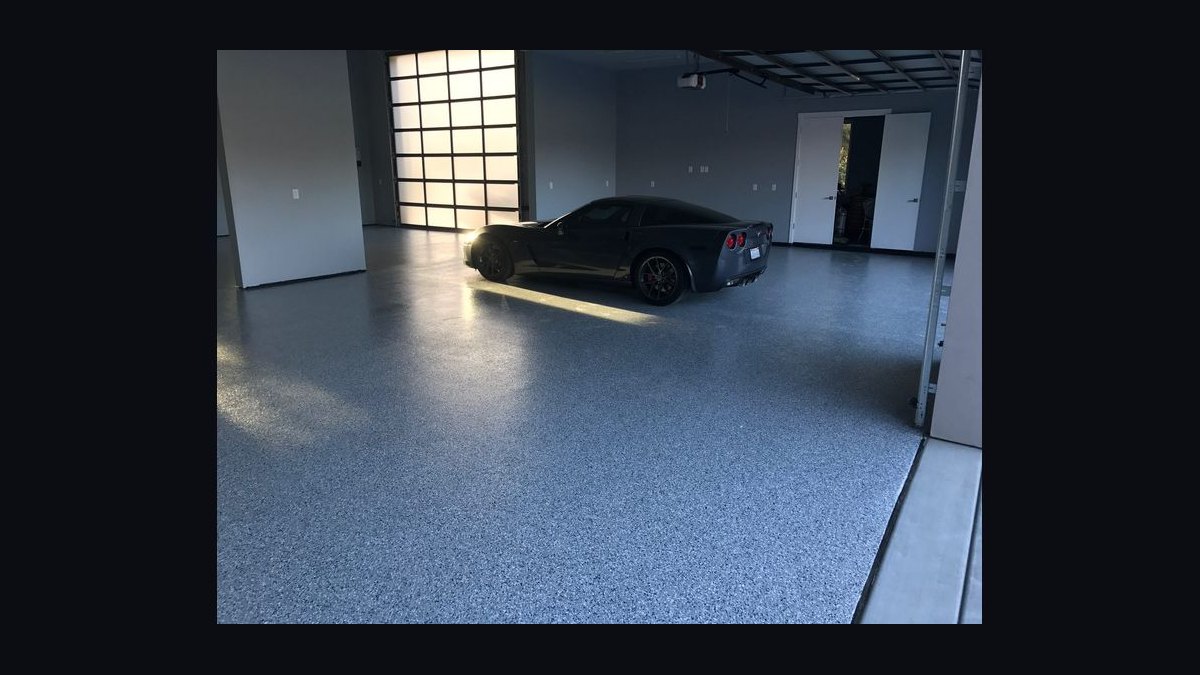
The second driver is product chemistry, because your system choice determines install speed, warranty claims, margin, and competitive position all at once. Straight water-based or solvent-based epoxy — the big-box kit product — is brittle, yellows under UV near the garage door, is prone to hot-tire pickup, and needs multiple days of cure between coats. Polyaspartic, a polyurea subclass with a controllable fast cure, is UV-stable, abrasion- and chemical-resistant, flexible enough to resist hot-tire lift, and cures fast enough that one crew can grind, basecoat, broadcast flake, scrape, and topcoat between 8 AM and 4 PM. Many of the strongest warranties in the market sit on a hybrid: polyurea high-build basecoat for adhesion and flexibility, polyaspartic topcoat for UV stability and scratch resistance.
The third driver is route density. A crew that drives two hours for a five-hour install has structurally destroyed its own weekly throughput. Deliberately clustering jobs inside two or three counties — and engineering referral clusters street by street — is what converts a theoretical four-to-five-garages-per-week capacity into an actual one.
Benchmarks and realistic ranges
Work the per-job P&L before you work the annual one. Take a representative 2.5-car attached garage at roughly 525 square feet, full-broadcast flake polyaspartic, sold at a mid-market $5 per square foot for $2,625 in revenue. Direct material — basecoat, topcoat, flake, patch and crack product, diamond segment wear, consumables — runs $475–$725; call it $600. Direct labor for a two-person crew for one day plus the estimate visit runs $300–$550 at $22–$30 per hour loaded; call it $460. Vehicle, fuel, and equipment depreciation allocated per job is $90–$170; call it $130. That leaves roughly $1,435 of gross profit, about a 55% gross margin. At premium pricing of $6.50–$8 per square foot with tighter material discipline, gross margin climbs to 62–68%. The variance is almost entirely prep efficiency and material waste — a crew that grinds clean and mixes accurately on the first job of the day prints money; one that fights the slab and over-orders flake bleeds it.
Then subtract overhead. Marketing is usually the largest line at 8–15% of revenue — $210–$390 on that job — plus insurance, software, admin, the truck payment, and an owner's draw allocation. Net operating margin for a well-run small operation lands at 18–30%. Seventy-five garages a year at a $3,800 average is roughly $285,000 in revenue and $55,000–$85,000 of owner take-home before a second crew's leverage arrives.
On the capital side, the honest startup range is $18,000 lean to $45,000 for a well-equipped two-person operation. Below $18,000 you are renting equipment and accepting scheduling limits; above $45,000 you have usually bought a second crew's gear before you have the lead flow to feed it. Surface-prep equipment consumes $8,000–$22,000 of that: a quality single- or dual-head walk-behind diamond grinder at $3,500–$9,000, a HEPA dust extractor at $1,800–$3,800, diamond tooling at $600–$2,000 as a recurring consumable, and a crack chaser plus hand tools at $500–$1,200. A shot-blaster runs $6,000–$18,000 and is normally rented until commercial work justifies owning one. Application tools add $800–$2,000. A used 6x12 or 7x14 enclosed cargo trailer behind an existing pickup runs $3,000–$8,000; a dedicated van or box truck is a Year-2 decision at up to $28,000. Initial material inventory for the first six to twelve jobs is $2,000–$5,000. Business setup — LLC, general liability, local licensing, logo, website, CRM — is $1,500–$4,500. Hold $3,000–$8,000 in working capital.
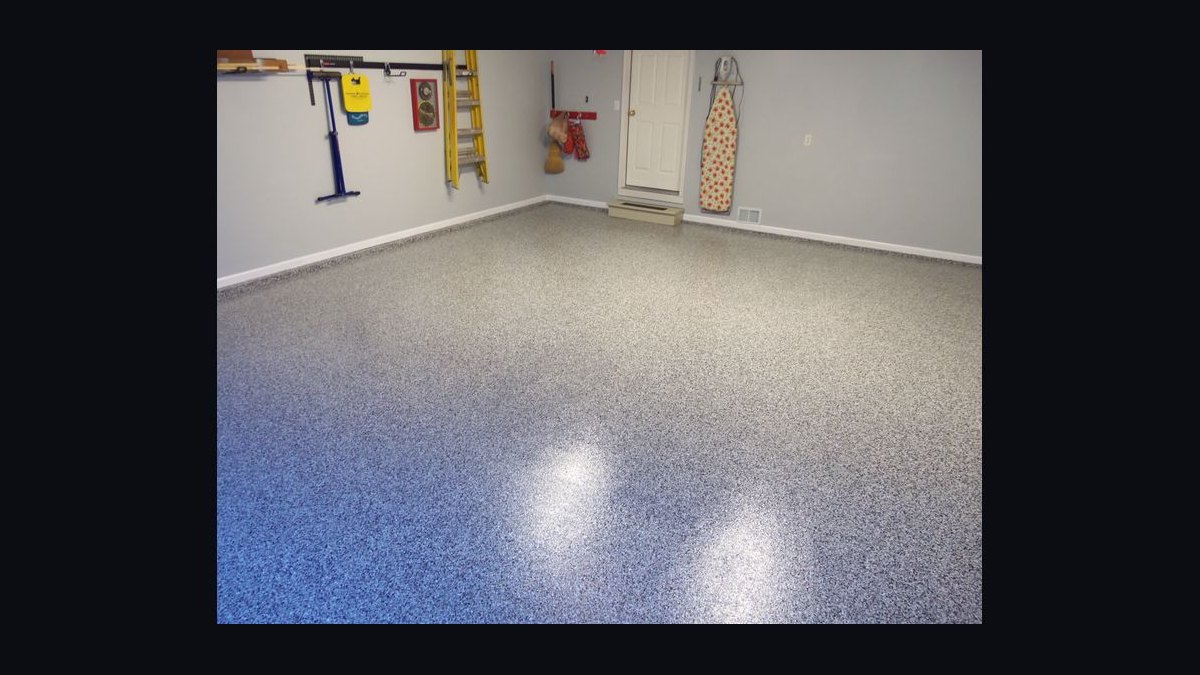
Market-side benchmarks matter for sizing your territory. The US garage flooring and concrete coatings category runs roughly $2.6B–$3.4B annually and grows 6–9% a year, a slice of a $40B-plus residential flooring market. A single trailer-based crew practically serves a 35-to-50-minute radius. In a suburban county of 350,000–500,000 people, that radius covers roughly 90,000–140,000 owner-occupied single-family homes with garages. At a conservative 0.6–1.1% annual penetration, that is 550–1,500 professionally coated garages per county per year at a $3,200–$4,800 average ticket — $2M–$7M of demand inside one county. One crew captures 90–140 of those. The strategic conclusion is decisive: you are never demand-constrained in this business, you are lead-flow- and capacity-constrained.
Sales benchmarks: a disciplined in-home estimate process converts 35–55% of qualified estimates; an undisciplined phone-quote process converts under 20% and competes only on price. Deposits should be 30–50% at signing with the balance collected on completion before the crew leaves the driveway.
Risks, edge cases, and failure modes
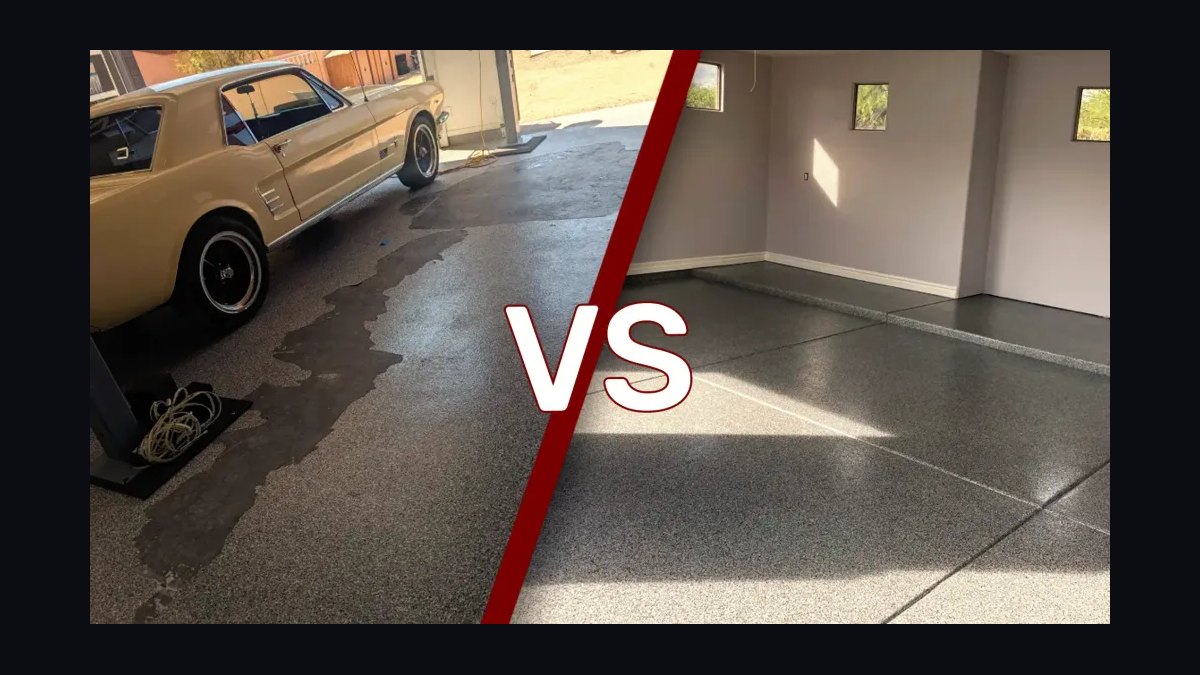
The dominant failure mode is what might be called the default playbook, and it is worth naming precisely because nearly every new entrant runs it. It looks reasonable: watch some videos, buy a $400–$1,200 kit or budget materials package, rent a grinder for the weekend, build a Facebook page, post in local buy/sell groups at "$2 per square foot," and underbid every quote to build a portfolio. It has four jaws. First, you compete with the national franchises — Garage Force, GarageExperts, Premier Garage, Granite Garage Floors — on credibility and lose, because the homeowner comparing you to a brand with hundreds of reviews reads you as risk. Second, you compete with the kit crowd on price and lose, because someone will always skip grinding, skip moisture testing, and roll a thinner coat. Third, prep shortcuts create a delamination time bomb that looks perfect on day one and peels in month nine, converting thin-margin jobs into free re-dos and one-star reviews. Fourth, taking any job anywhere eliminates route density and collapses your jobs-per-week.
Moisture vapor drive is the most expensive individual risk. Older slabs frequently lack a vapor barrier underneath, and vapor pressure will delaminate a coating months after the customer paid you. A calcium chloride kit or an in-situ relative humidity probe costs almost nothing relative to a re-do. Test every slab, record the result, and be willing to specify a moisture-tolerant primer or to decline a slab honestly. Heavily oil-contaminated slabs are the other honest-decline case — some cannot be reliably coated, and saying so protects your warranty.
Material cost volatility is the 2027-specific macro risk. Polyurea and polyaspartic resin pricing tracks petrochemical and MDI supply and can swing sharply. Build current material cost into every quote, cap quote validity at roughly thirty days, and hold a modest buffer inventory rather than speculating on either direction.

Seasonality and cash flow kill more operators than demand ever does. Spring and fall are peak; deep winter slows in cold climates, though heated attached garages remain workable year-round, and the worst summer heat-and-humidity weeks compress cure windows in the South. Plan for eight to ten strong months and two to four soft ones. Bank a reserve during the April–May and September–October peaks, shift the mix toward climate-controlled light commercial in the trough, and keep one to two months of operating expenses on hand. Businesses in this trade rarely fail on demand; they fail on a January with no reserve, a cancelled job, and payroll due Friday.
Silica exposure is both a legal and a genuine health risk. Grinding concrete generates respirable crystalline silica, which is why the HEPA setup is not optional marketing language — it is OSHA compliance plus the thing that lets you truthfully promise a dustless install inside a garage attached to living space. Respirators, eye protection, and gloves are standing crew requirements, not job-specific ones.
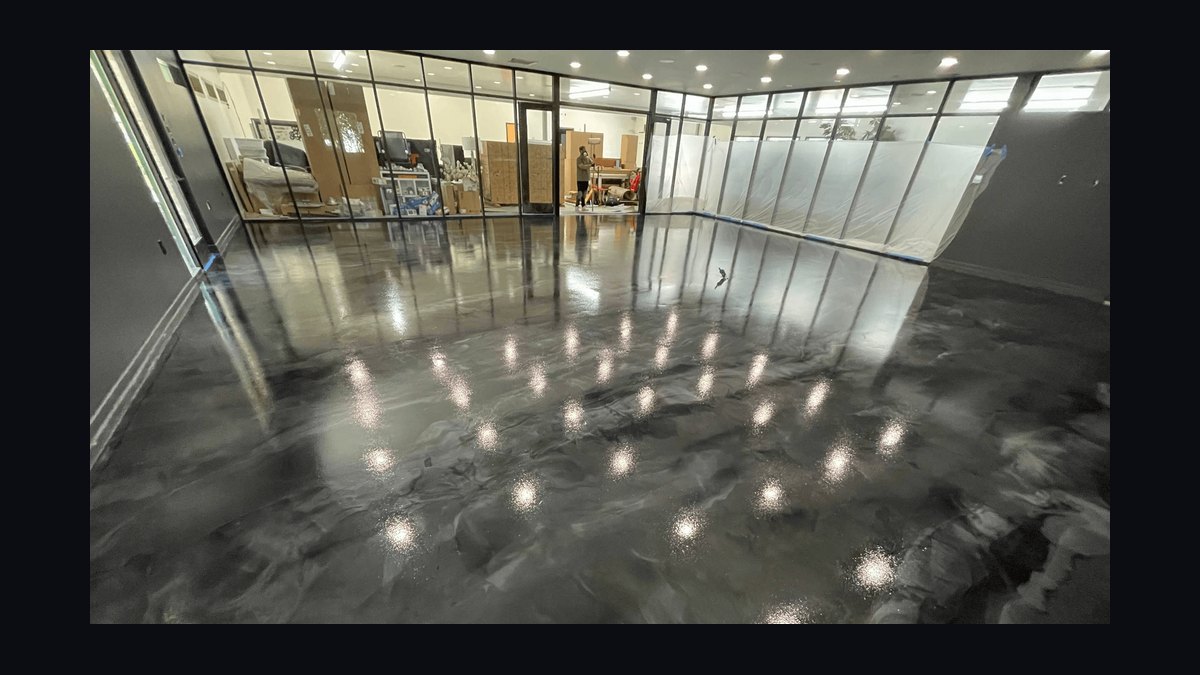
Owner-as-bottleneck is the quiet ceiling. An owner who must personally run every estimate and every install caps out around $150,000–$240,000 and a punishing physical schedule. The mitigation is training a crew lead early and hiring an estimator sooner than feels comfortable. Related is crew turnover: pay fairly, use a per-job completion bonus tied to a zero-callback standard so the crew is financially aligned with prep quality rather than raw speed, and promote crew leads from within, because leads who learned your standards do not shortcut them.
Finally, licensing exposure. Contractor licensing varies enormously by state and locality — some states require a specialty or general contractor license above a dollar threshold, others require only a business license, and many municipalities require separate local registration. Operating unlicensed where a license is required voids your standing in any dispute. General liability at $1M/$2M is the practical standard and is frequently required by HOAs and commercial clients; workers' compensation becomes legally mandatory in most states the moment you have an employee.
A practical rollout plan
Weeks 1–4: legal, capital, and supplier selection. Form the LLC, open a business bank account separate from personal funds, research your specific state and county contractor licensing requirements before quoting a single paid job, and bind general liability plus commercial auto. Choose one primary coatings supplier with contractor training and support and commit to their system — improvising chemistry across brands is how warranty claims become uninsurable. Established suppliers operators rely on include Penntek, Florock, ArmorPoxy, and Citadel, among regional resin houses. Take their training.

Weeks 3–6: buy prep equipment first, marketing second, everything else third. The grinder and the HEPA extractor are day-one purchases — renting them destroys both margin and scheduling flexibility. Budget two sets of diamond tooling: metal-bond segments for general grinding and aggressive PCD tooling for removing old coatings, mastic, and thick sealers. Add the edge grinder, crack chaser, moisture test kits, and a CSP comparison set. Rent the shot-blaster until commercial volume justifies ownership.
Weeks 5–8: build the brand and the funnel before you need them. Name the business for the category and the promise rather than for yourself — a premium buyer reads "Dave's Coatings" as a side hustle. Lock the domain and the Google Business Profile. Get a real logo, wrapped trailer, branded crew shirts, yard signs, and a conversion-focused website with a before/after gallery, embedded reviews, a quote form above the fold, click-to-call, and city-specific landing pages. Stand up a home-services CRM (Jobber, Housecall Pro, JobNimbus) and wire the two automations that matter most: an instant text response to every new lead within sixty seconds, and an automated review request after every completed job.
Weeks 6–10: practice on slabs that are not customers'. Coat your own garage, a friend's, a relative's. Grind them, test them, deliberately vary your basecoat thickness and flake broadcast rate so you learn what refusal actually looks like. Time each block. This is where you convert theory into the hour-by-hour choreography: 7:30–8:00 setup and masking, 8:00–10:30 grinding the field and edges plus crack chasing and vacuuming, 10:30–11:30 repairs and final tack, 11:30–1:00 basecoat and full flake broadcast to refusal, 1:00–2:30 scrape and re-vacuum, 2:30–4:00 clear topcoat with optional non-slip additive and demasking. Light foot traffic that evening, vehicle traffic at 24 hours.
Weeks 9–16: turn on lead flow and sell at professional prices from job one. Prioritize Google Local Services Ads with the Google Guaranteed badge plus a fully built Google Business Profile — highest-intent channel available. Layer targeted search ads on "polyaspartic garage coating [city]" style keywords. Start a consistent Instagram and TikTok feed of flake-broadcast and squeegee-pull clips; this product is intensely visual and many of the fastest-growing operators in the category are effectively content businesses with a grinder. Never quote over the phone — the prep variance is too large. Always measure in person, photograph the slab, show a physical flake sample board, and present three tiers on the spot: a standard light-flake system, a premium full-broadcast with a designer blend and the longest warranty, and a signature metallic for enthusiasts. Most buyers pick the middle, which is where your margin lives. Handle the price objection with the prep-and-warranty story, never a discount — discounting teaches the customer your price was fake.
Months 4–9: install the quality system before volume arrives. Run every job against a documented checklist — slab assessed and photographed, moisture tested and result recorded, prior coatings identified, ground to correct CSP with edges complete, cracks and spalls repaired, surface verified dust-free, basecoat mixed to spec and applied within pot life, flake broadcast to refusal, topcoat cure conditions logged, crew lead signature. File the photos and the checklist for every job; when a claim eventually arrives, that file is your evidence. Put the warranty in writing with precise inclusions (delamination, peeling, coating manufacturing defects) and exclusions (vehicle chemical spills, abuse, slab or foundation movement, owner modification).

Months 6–18: hire, then hire again. The first hire is a crew helper at $18–$26 per hour depending on market — hire for reliability and physical work ethic over experience, because grinding is teachable and showing up is not. The second crew is the actual inflection point that carries you from roughly $250,000 to $500,000-plus, and it requires a crew lead you trust to run prep unsupervised. Then add the estimator so the owner stops being the quoting bottleneck, then admin for scheduling and customer communication.
Months 12–36: widen the footprint per customer, not just the customer count. The same crew, grinder, and chemistry that coats a garage also coats basements, patios, pool decks, walkways, and small commercial floors. A customer delighted with their garage is the warmest lead available for their basement, and adding an adjacent-surface offering routinely lifts average customer value substantially without a new lead source. Partner with garage-cabinet and storage-organization companies who touch the same premium home. Maintain the past-customer list in the CRM for topcoat refreshes and eventual re-coats.
Related questions
How much does it cost to start an epoxy garage flooring business?
Realistically $18,000–$45,000. Prep equipment is $8,000–$22,000, application tools $800–$2,000, a used trailer $3,000–$8,000, initial materials $2,000–$5,000, business setup $1,500–$4,500, and working capital $3,000–$8,000. Below $18,000 you rent equipment and starve marketing — both fatal.
Is polyaspartic better than epoxy for garage floors?
For professional residential work, yes. Polyaspartic is UV-stable, resists hot-tire lift, and cures fast enough for a single-day install. Straight epoxy yellows, is brittle, and needs multi-day cure windows. Most strong warranties sit on a polyurea basecoat with a polyaspartic topcoat.
Do you need a contractor license for garage floor coating?
It varies by state and locality. Some states require a specialty or general contractor license above a dollar threshold; others require only a business license, and many cities require separate local registration. Verify your state and county before your first paid job — unlicensed work voids your standing in disputes.
How many garage floors can one crew install per week?
A trained two-person crew running a single-day polyaspartic system completes four to five garages per week when jobs are geographically clustered. Route density is the constraint — a crew driving two hours for a five-hour install drops to two or three.
Should you buy a garage flooring franchise instead?
A franchise buys a proven playbook, training, and faster Year-1 ramp for a $25,000–$60,000-plus fee plus ongoing royalties often in the 5–10% range. It de-risks the start and permanently caps the finish. Independents keep the royalty as profit but must build the system themselves.
FAQ
Why is surface prep more important than the coating itself?
Because the coating rarely fails on its own — the bond does. Diamond grinding to the correct concrete surface profile, moisture testing, crack repair, and a genuinely dust-free slab are what make the coating stick for fifteen years. Manufacturers void warranties over skipped prep. A crew that grinds light to save forty minutes spends that time many times over re-doing floors for free.
What price should you charge per square foot?
Professional flake polyaspartic systems retail roughly $5–$11 per square foot installed, with metallic systems and difficult prep pushing higher. Cheap roller crews quote $1.50–$3 because they are not grinding, testing moisture, or warrantying anything. Quote prep severity separately: a clean newer slab is your base rate, while old slabs with prior coatings, oil contamination, or extensive cracking carry a documented upcharge.
Which lead channels actually fill the schedule?
Google Local Services Ads with the Google Guaranteed badge plus a review-rich Google Business Profile deliver the highest-intent leads. Targeted search ads and a visual Instagram/TikTok feed follow. Neighborhood referral clustering — yard signs, referral incentives, door-hangers to the surrounding thirty to sixty homes — compounds because the result is visible from the street. Untargeted Facebook boosts and shared aggregator leads mostly attract bargain hunters.
Who is the ideal customer for a garage floor coating?
A homeowner aged roughly 42–65 with household income of $140,000-plus, owning a two-or-three-car attached garage in a subdivision, who has already done the kitchen and the deck. They want a one-day install, no lingering dust or smell, and a warranty they can believe. They are not the cheapest buyer and do not want to be. Expect them to be 60–70% of revenue.
How do you handle a callback or a warranty complaint?
Respond fast, show up, fix it generously, and do not argue over small money. A customer whose complaint is resolved quickly often becomes a stronger referral source than one whose job went perfectly. Keep the QC checklist and slab photos on file for every job — that documentation determines whether a claim is a covered defect, an exclusion, or a manufacturer matter.
What makes this business sellable later?
Transferable cash flow. Buyers pay for trained crews and a crew lead who runs jobs without the owner, a documented process and QC system, a CRM with a real customer list, a lead-generation system that is not the owner's personal network, clean financials separated from personal expenses, and brand equity in the reviews. The gap between a low and a high earnings multiple is almost entirely owner-independence.
Sources
- https://www.osha.gov/silica-crystalline
- https://www.sba.gov/business-guide/launch-your-business/choose-business-structure
- https://www.irs.gov/businesses/small-businesses-self-employed/limited-liability-company-llc
- https://www.astm.org/f1869-23.html
- https://www.concretenetwork.com/concrete/garage_floor_coatings/
- https://www.ascconline.org/
- https://www.nahb.org/
- https://www.census.gov/programs-surveys/ahs.html
- https://support.google.com/localservices/answer/6224841
- https://www.epa.gov/indoor-air-quality-iaq/volatile-organic-compounds-impact-indoor-air-quality
Related on PULSE
- How do you price a home-services job without racing to the bottom?
- What does a two-crew field-services operation cost to run?
- How do you build a referral engine for a local contracting business?
- How do RevOps fundamentals apply to a small contracting company?
- What lead-response speed actually converts in home services?
- How do you make a service business sellable instead of owner-dependent?
This page will be disappearing soon. Save it to your device for $1 — or read it free while it is here.
@Kory-White- · if Venmo asks, the last 4 of my number are 2012
This page is gone.
This one is off the shelf now. $1 keeps it on your phone for good — the whole page, pictures and diagrams included.
 painting-contractorHow do you start a painting contractor business in 2027?
 handymanHow do you start a handyman service business in 2027?
 hvacHow do you start a HVAC service business in 2027?
 plumbingHow do you start a plumbing service business in 2027?
 fence-installationHow do you start a fence installation business in 2027?
 hvacHow do you start an HVAC business in 2027?
 roofingHow do you start a roofing business in 2027?
 start-a-businessHow do you start a concrete floor coating business in 2027?
 ev-chargingHow do you start a EV charging installation business in 2027?
 window-cleaningHow do you start a residential window cleaning business in 2027?