


How do you start a pediatric dental practice in 2027?
Quality
Certified
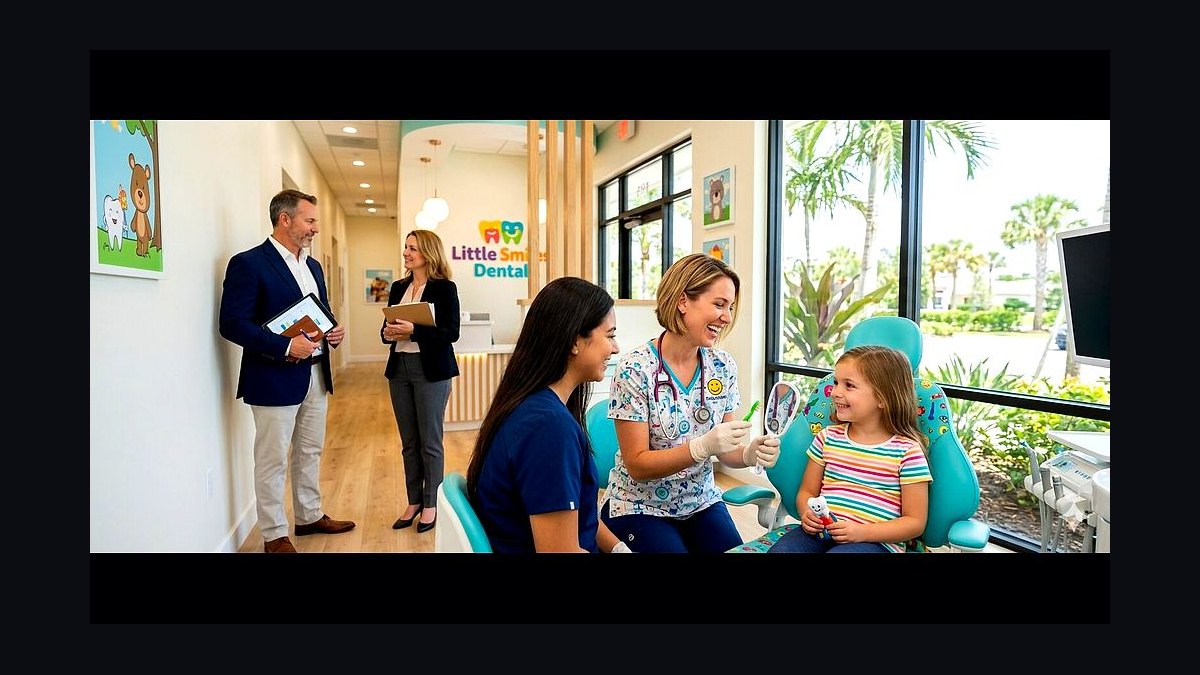
Starting a pediatric dental practice in 2027 takes a DDS/DMD, a two-year CODA-accredited pediatric residency, state licensure plus DEA and sedation permits, and roughly $650K–$1.6M in financing for a four-to-six-operatory buildout. Begin payor credentialing 90+ days early, hire a pediatric-trained team, and anchor growth in pediatrician referrals.
A resident with $410K in loans and a lease offer three miles from a hospital
Picture the actual decision point, because it is rarely the one people imagine. A second-year pediatric resident finishes in June 2027. She carries roughly $410,000 in combined undergraduate and dental school debt — squarely inside the $280K–$580K band that is typical for this pathway. She has two offers on the table. The first is a DSO associate position: $240,000 base, a $35,000 sign-on bonus, full benefits, a CE allowance, and malpractice coverage, with a partner track that materializes somewhere around year four if the numbers hold. The second is nothing at all — an empty 2,400-square-foot retail endcap in a suburb with a growing young-family population, a landlord offering $75 per square foot in tenant improvement allowance on a ten-year NNN lease at $32 per square foot, and a bank willing to write an SBA 7(a) note for $1.1 million against her license and projected collections.
The associate offer pays her more in year one. That is not in dispute and it is worth stating plainly, because the founder mythology tends to skip it. Her first-year take-home as an owner, after debt service on $1.1 million amortized over fifteen years and after the ramp period where the schedule is half-empty, is realistically $80,000 to $220,000. The DSO check is bigger and it arrives on the fifteenth and thirtieth without her thinking about it. What the DSO check does not include is the equity. By year five, a practice collecting $1.4 million at a 26% EBITDA margin is throwing off roughly $364,000 in owner earnings before her own clinical compensation is even sorted out, and it carries a sale value of somewhere between 2.5x and 4.0x that number to an associate buyer or a small DSO. That spread — a few hundred thousand dollars of foregone W-2 income in years one through three, against a seven-figure asset by year eight — is the entire trade.
The framing matters because it changes what she should optimize for. If she is building an asset, the decisions that look like overhead in year one are actually the ones that determine the multiple in year eight: payor mix discipline, a documented recall system, a clean sedation safety record, and staff retention. If she is buying herself a job, she should take the DSO offer, bank the sign-on, and revisit in three years with better clinical speed and a referral network already built. Both are legitimate. The failure mode is choosing ownership for the autonomy and then running it like an employee — no systems, no payor discipline, no exit-grade documentation.
There is a third path she is probably not considering, and it deserves a mention: acquisition. A retiring pediatric dentist in the same metro with $1.1 million in collections, a 4.7-star review profile, and a staff that has been in place seven years will typically transact at 60–80% of collections, or 2.5–4.0x EBITDA. The down payment runs $400K–$1.5M depending on structure, but she inherits cash flow on day one instead of a nine-month ramp, and sellers frequently finance a portion and stay on for twelve to twenty-four months to hand off the patient base. The buildout risk disappears. What she inherits instead is someone else's payor contracts, someone else's lease terms, and someone else's staff culture — which is either the best or worst part of the deal, and due diligence is the only way to find out which.
Adjacent specialties run the same math with different constants, and it is worth knowing where pediatric sits. General dentistry produces $650K–$1.4M per dentist FTE with a 5–20% Medicaid mix and no residency barrier at all, which means far more competition. Orthodontics runs $1.0M–$2.8M per FTE on a two-to-three-year residency plus ABO certification. Oral and maxillofacial surgery clears $1.4M–$4.5M per FTE but demands a four-to-six-year residency and heavy hospital or ASC entanglement. Pediatric lands at $850K–$2.4M per FTE — not the top of the range, but with the strongest structural moat, because behavior management and sedation competency cannot be commoditized by a corporate operator the way a routine crown prep can.
How the credentialing and buildout machine actually works
The sequence is not optional and the dependencies are strict, which is why the residency-to-first-patient window runs six to twelve months and stretches to eighteen when someone starts credentialing late. Understanding the ordering is worth more than understanding any individual step, because the two long poles — payor credentialing and buildout — can run in parallel, and people who run them in series lose a full quarter of revenue for no reason.

The credential stack has five layers. The dental degree comes first: a DDS or DMD from one of roughly seventy CODA-accredited US dental schools, four years post-bachelor's, gated by the INBDE and a regional clinical exam through CRDTS, ADEX, WREB, or CDCA. Then the specialty residency: two years at one of approximately eighty CODA-accredited pediatric programs, matched through PASS and National Matching Services, with only about 430 seats available nationally each year against roughly 5,000+ DDS/DMD graduates. That ratio is the single hardest gate in the entire pathway and it explains most of what follows — the workforce shortage, the DSO compensation pressure, and the durability of the moat all trace back to 430.
Third comes state licensure: the license itself, the jurisprudence exam, DEA registration, and then the sedation permits, which are where things get genuinely complicated. Nitrous oxide, oral conscious sedation, and IV or general anesthesia permits are all state-specific, and the regulatory posture tightened substantially after the pediatric anesthesia adverse-event cases of the 2010s. California, Florida, and New York apply particularly strict outpatient pediatric sedation review. If a practice model depends on in-office sedation, the permit timeline needs to sit on the critical path from day one, not get discovered in month four.
Fourth is board certification through the American Board of Pediatric Dentistry — a Qualifying Exam followed by an Oral Clinical Exam typically taken after a year or more in practice, with recertification every ten years. It is voluntary in the legal sense. It is not voluntary in the practical sense: DSOs, hospitals, and increasingly payors treat it as table stakes, and roughly 80–85% of practicing pediatric dentists hold it.
Fifth is payor credentialing, and this is the one that quietly wrecks launch timelines. Each payor runs a sixty-to-180-day window. CAQH ProView is the shared front door, but the state Medicaid portal and each commercial contract move on their own clock. Start ninety-plus days before the target open date, minimum. Practices either hire a credentialing specialist or contract the work out for roughly $1,500–$4,000 per dentist, and that fee is trivially worth paying — a single payor arriving three months late on a schedule that should be 45% commercial PPO costs far more than the specialist did.

Buildout runs alongside all of that. A solo dentist wants 2,000–3,000 square feet with four to six operatories arranged in an open-bay layout — three to six chairs in a shared room with low partitions, ceiling-mounted televisions, and murals. That layout is not decoration. It reduces the dentist's walking distance between chairs, it keeps parents in the eyeline, and it measurably reduces the cooperation problems that otherwise escalate into sedation cases. Retail or medical office space runs $25–$60 per square foot NNN on a seven-to-ten-year term, with $40–$120 per square foot in TI allowance. Pediatric chairs and delivery units run $8,000–$28,000 per operatory from A-dec, Pelton & Crane, Midmark, Belmont, DentalEZ, or Forest. The child-themed layer — jungle, ocean, space, sports, with ceiling TVs at $600–$1,200 each and a treasure-box prize tower — adds $30,000–$120,000 over a generic fit-out and earns it back, because pediatric dentistry is two-thirds child psychology and one-third dentistry.
What the numbers actually look like, slot by slot
Specificity is what separates a plan from a wish, so here is the equipment and capital picture in detail.
Imaging is the largest single equipment line. A digital panoramic unit with a cephalometric add-on runs $80,000–$140,000 from Vatech, Carestream, Planmeca, or Dentsply Sirona. Pano is effectively mandatory in pediatric work — caries detection, airway assessment, ortho readiness, and trauma evaluation all depend on it. The ceph add-on is what makes in-house interceptive orthodontics possible, which is a meaningful revenue decision, not just an imaging one. Intraoral sensors and cameras add $8,000–$18,000 per operatory from Dexis, Schick, Carestream, or Planmeca, and budget for replacement, because pediatric patients destroy sensors at roughly two to three times the adult rate. Cone-beam CT at $80,000–$150,000 is optional and increasingly common for airway, impactions, and interceptive ortho. CEREC-style CAD/CAM at $130,000–$200,000 is the most skippable item on the list for a pediatric practice, since the workhorse restorations are prefabricated stainless steel crowns and zirconia crowns rather than milled ceramics.

Sterilization runs $25,000–$60,000 — a Midmark M11 or M9 autoclave at $7,000–$15,000, plus ultrasonic, cassettes, and biological monitoring per CDC guidance. This is also the highest-frequency inspection target from CDC, OSHA, and the state board, so it is the wrong place to economize. Nitrous oxide as a plumbed system with scavenger and monitor costs $8,000–$15,000 from Porter, Belmed, or Accutron, requires a state permit, and is offered routinely by roughly 40–65% of pediatric practices. In-office oral conscious or IV sedation adds $15,000–$45,000 for a crash cart, capnography, pulse oximetry, emergency drugs, an AED, and PALS supplies, plus a state permit, facility inspection, and DAANCE certification for assisting staff. Roughly 25–45% of practices offer in-office oral sedation; 8–20% offer in-office IV. Many instead route severe caries and special-needs cases to hospital OR, which carries no equipment cost but a sixty-to-180-day privileging process.
Round it out with $25,000–$60,000 in initial supply inventory — composite, stainless steel crowns, zirconia crowns, fluoride, sealants, anesthetic, PPE, burs, sedation supplies — and $25,000–$70,000 for front office and lobby.
On the capital side, SBA 7(a) goes up to $5 million at 70–90% LTV, Prime plus 1.5–3.5%, over ten to twenty-five years. The dental-specialty lenders are Live Oak Bank, First Bank of the Lake, Wells Fargo Practice Finance, Bank of America Practice Solutions, Huntington Healthcare, Pinnacle, and Provide. Conventional practice loans run $300,000–$2.5 million at Prime plus 1.0–3.0% over seven to fifteen years. Equipment financing covers $100,000–$700,000 over five to seven years at 6–10% effective, through Henry Schein Financial, Patterson Financial, Benco Financial, or Crest Capital, with manufacturers frequently bundling dealer financing. Add a $50,000–$250,000 working capital line for the first-ninety-day AR lag, and founder equity of $50,000–$200,000.
Operating economics at maturity: a pediatric dentist with hygiene support sees 18–32 patients per day at a blended visit ticket of $180–$420, producing $3,500–$11,000 in daily collections. Year one lands at $420,000–$850,000. Years three through five mature into $850,000–$2.4 million per dentist FTE, with $1.5 million per FTE serving as the DSO-quality benchmark. Gross margin runs 65–72%, net 22–38% at a single-dentist office. A disciplined three-to-eight-dentist group produces 24–34% EBITDA on $4 million–$18 million in revenue; a loose one produces 10–18% on the same top line, and that gap is almost entirely scheduling, payor mix, and staff turnover.

Labor is the biggest line and the tightest constraint. Registered dental hygienists run $32–$50 per hour, or $65,000–$105,000 fully loaded, and a strong pediatric RDH books eight to fourteen prophy visits a day — that person is the recall engine. Dental assistants with CDA certification run $18–$28 per hour, $40,000–$62,000 loaded, at two to three assistants per dentist at scale. Treatment coordinators at $24–$38 per hour are the highest-leverage non-clinical hire in the building; best-in-class coordinators convert 65–82% of treatment presentations into accepted and financed cases. Front desk runs $18–$26 per hour, and an office manager at $50,000–$95,000 becomes necessary at two-plus dentists. Associate pediatric dentists command $185,000–$320,000 base plus 28–32% of collections above a threshold, and DSO packages push $200,000–$280,000 base with $20,000–$50,000 sign-on, benefits, and relocation — which is precisely why sub-scale independent practices struggle to hire.
Service mix drives all of it. Preventive work — prophylaxis, fluoride varnish, sealants, coded D1110/D1120, D1206, and D1351 — runs a $160–$340 ticket at 60–80% gross, and represents 45–60% of visits but only 25–35% of revenue. Restorative work — composites at D2391–D2394, stainless steel crowns at D2930, pulpotomies at D3220 — runs $240–$1,800 per ticket at 45–65% gross and 25–40% of revenue. Sedation and behavior management add $200–$1,400 per case, coded D9230 for nitrous, D9248 for oral conscious, D9239/D9243 for IV moderate. Interceptive orthodontics and space maintainers run $650–$2,400 per case at 5–15% of revenue. Hospital OR cases combine professional and facility fees at $2,500–$8,000 per case, and only 8–25% of practices do them regularly.
Trade-offs: payor mix, sedation depth, and the model you actually pick
Payor mix is the single most consequential strategic decision in the practice, and it is more decisive here than in almost any other dental format because of EPSDT. Early and Periodic Screening, Diagnostic and Treatment is the federal Medicaid pediatric mandate — states must cover preventive, restorative, and sealant care for enrollees from birth through age twenty-one. That creates a payor floor that adult general dentistry simply does not have. It also creates a reimbursement problem, because state rates vary enormously as a percentage of usual and customary — some states pay near-commercial rates, others pay well under half, and rates get rebased on two-to-seven-year cycles that a practice cannot control or predict.

The result is that pediatric practices carry a 35–65% Medicaid mix where general dentistry carries 5–20%. Commercial PPO — Delta Dental with its 80 million-plus enrollees, plus MetLife, Cigna, Aetna, Guardian, United Concordia, Humana, and BCBS affiliates — reimburses in-network at roughly 12–32% below UCR and typically fills 30–55% of a suburban practice. Cash, HSA, and FSA cover 5–25%, concentrated in sedation, premium themed experiences, and adolescent cosmetic work; the ceiling is lower than adult cosmetic because pediatric care is far less elective.
The most profitable configuration is generally 25–45% Medicaid, 40–55% commercial PPO, and 10–25% cash. That gets EPSDT volume and recall stickiness without becoming a volume mill. Push Medicaid past 60–70% and the practice becomes a throughput operation whose entire margin depends on state legislative decisions and whose exit multiple suffers accordingly — buyers discount Medicaid-heavy revenue. Push it below 15% and the schedule gets thin in most metros, and the community-anchor referral flywheel never spins up.
Sedation depth is the second major fork. A nitrous-only practice has the lowest capital requirement, the lowest permit burden, and the lowest malpractice exposure, but it refers out its hardest cases and loses that revenue. Adding oral conscious sedation captures more of it. Adding in-office IV or general anesthesia captures the most revenue per case and carries a categorically different risk profile — one adverse pediatric anesthesia event can end a practice, and malpractice carriers including CNA, Cincinnati, MedPro, and Liberty have tightened underwriting as several states scrutinize outpatient pediatric general anesthesia. Hospital OR privileging is the middle path: no equipment cost, no in-office anesthesia risk, but a long credentialing process and scheduling dependent on the hospital's block time.
The third fork is the ownership model itself, which loops back to the opening scenario. Solo de novo means the lowest year-one revenue and the highest long-term control. Acquisition means day-one cash flow and inherited constraints. Group-from-day-one at $1.4 million–$3.0 million in capital with six to ten operatories and an associate hired immediately compresses the timeline but front-loads the hiring risk in the tightest labor market in dentistry. A DSO partner track defers ownership but de-risks the ramp entirely.
Where these practices actually fail
The failures cluster, and almost none of them are about clinical skill. The most common is a credentialing timeline that was never treated as a critical path. A practice opens with the buildout finished, the staff hired and on payroll, and three of its six payor contracts still pending. It burns two to three months of full overhead against a schedule that can only see cash patients and one Medicaid plan. The fix is unglamorous: start credentialing ninety-plus days out, track each payor as a discrete line item with an owner and a date, and do not sign a lease commencement date that outruns the slowest contract.
The second is understaffing hygiene. Owners hire one RDH to control payroll, and the recall engine never gets built. Pediatric economics run on six-month recall — that is the annuity, and it is what a buyer is actually purchasing at exit. A practice with a weak recall system has revenue but no asset. Fill the hygiene schedule before adding restorative capacity, and instrument the recall rate: what percentage of patients seen this quarter have their next appointment already booked before they leave the building? Under 70% and something is broken at the front desk.
Third is sedation documentation drift. Everything about in-office sedation is fine right up until it is not, and the discovery process in a bad outcome is entirely about records — permit currency, PALS certification dates, capnography logs, emergency drug expiration, consent forms, monitoring intervals. Practices that treat these as paperwork rather than as the actual safety system are the ones that lose. Run mock emergencies quarterly with the whole team. It feels excessive until the day it does not.
Fourth is EPSDT audit exposure. State Medicaid programs and OIG scrutinize behavior-management modifier codes, sealant and fluoride frequency, and restorative necessity. A practice that bills aggressively on behavior management without photographic and radiographic documentation, and without adherence to AAPD-guideline frequencies, is building a recoupment liability that surfaces years later. Document at the point of care, not retroactively.

Fifth is treating marketing as advertising. Pediatric dentistry is the most referral-anchored dental specialty — mature practices draw 45–65% of new patients from referral, with 20–45% coming specifically from pediatrician offices operating under AAP and AAPD age-one first-visit guidance. Build relationships with five to fifteen local pediatric primary-care offices: annual visits, co-branded literature, reciprocal referral, actual CE. Free screenings at preschools, elementary schools, Head Start programs, and special-needs schools are mission and marketing in the same motion. Google Business Profile, Yelp, and HealthGrades reviews decide parent choices — fifty to ninety reviews at 4.7-plus stars is roughly the Map Pack threshold in a suburban metro, and pediatric reviews skew emotional. "Kind to my anxious child" outperforms any credential list. Insurance find-a-dentist directories deliver 10–20% of new patients at zero incremental cost and are routinely left unclaimed.
Sixth, and this is the one that shows up in the RevOps lens: no operating cadence. The practices that scale past a single location run their front office the way a good revenue operations team runs a pipeline — a weekly number for production, collections, new patients, recall rate, case acceptance, and open AR aging, reviewed with the team rather than in the owner's head. Software makes it possible: Dentrix Ascend, Eaglesoft, Open Dental, Curve Dental, Carestream, Practice-Web, and Denticon all report these natively. Patient communication platforms — Solutionreach, Demandforce, Weave, Lighthouse 360, RevenueWell, NexHealth, Modento, Doctible — automate recall, reminders, and review requests. Claims and eligibility run through Trojan, Vyne Dental, or DentalXChange, with pediatric Medicaid claims aging fourteen to forty-five days and commercial thirty to sixty. The tooling is not the differentiator. Looking at the numbers weekly is.
The seventh failure is strategic rather than operational: building a practice that cannot be sold. Owner-doctor sales transact at 2.5–4.0x EBITDA or 60–80% of collections. Small groups of two to five dentists go at 4.5–6.5x. Mid-market groups of five to fifteen dentists reach 6–9x with DSO platform buyers, and platform-scale groups reach 7–12x with private equity. Multiples that peaked at 8–13x across 2019–2023 have compressed toward 6–10x in 2024–2025 as rates rose and reimbursement headwinds bit. What buyers pay premiums for is legible: a documented recall system, a defensible payor mix, ABPD-certified associates who will stay, clean sedation records, a transferable lease, and a three-year EBITDA trend that goes up. Every one of those is built in year two, not assembled in the ninety days before a letter of intent.
Related questions
Should I buy an existing pediatric practice instead of starting one?

Acquisition delivers cash flow on day one and eliminates ramp risk, typically at 60–80% of collections or 2.5–4.0x EBITDA with a $400K–$1.5M down payment. You inherit the payor contracts, lease, and staff culture — verify all three in diligence before the buildout savings look decisive.
How long does credentialing take before I can see insured patients?
Budget sixty to 180 days per payor, running in parallel. Start CAQH ProView, state Medicaid enrollment, and commercial PPO applications ninety-plus days before your target open date. Hiring a credentialing specialist for $1,500–$4,000 per dentist is nearly always cheaper than the revenue lost to a late contract.
Do I need in-office general anesthesia to compete?
No. Roughly 8–20% of practices offer in-office IV sedation. Many route severe caries and special-needs cases to hospital OR under privileges instead, avoiding the $15K–$45K equipment cost and the sharply higher malpractice exposure, at the price of a sixty-to-180-day privileging process.
What Medicaid mix is too much?
Above roughly 60–70%, the practice becomes a throughput operation whose margin depends on state legislative rate decisions, and buyers discount that revenue at exit. Most profitable practices target 25–45% Medicaid alongside 40–55% commercial PPO.
How many operatories should a solo practice open with?
Four to six, in 2,000–3,000 square feet, using an open-bay layout. That supports one dentist plus hygiene at full utilization through roughly $1.8M in collections. Plumbing and wiring for two additional operatories during the initial buildout is far cheaper than retrofitting later.
FAQ
Do I need to be board-certified to open a pediatric dental practice?
ABPD certification is not legally required to practice — a state dental license plus completion of an accredited residency is the legal minimum. Practically, roughly 80–85% of practicing pediatric dentists hold it, and DSOs, hospitals seeking privileging, and some payor panels treat it as expected. Most graduates sit the Qualifying Exam soon after residency and the Oral Clinical Exam after a year or more in practice.
How much capital do I actually need to open in 2027?
A solo de novo with four to six operatories in 2,000–3,000 leased square feet generally requires $650,000–$1.6 million, covering buildout, themed design, chairs, digital pano, sterilization, nitrous plumbing, practice management software, insurance, credentialing, and six to nine months of working capital. A six-to-ten-operatory group practice with an associate from day one runs $1.4 million–$3.0 million.
Which insurance contracts matter most for a kids' dental practice?
State Medicaid and CHIP come first — the federal EPSDT mandate makes public coverage the volume floor in pediatric dentistry, unlike adult general practice. Then secure at least two or three commercial PPOs; Delta Dental is the largest at over 80 million enrollees, followed by MetLife, Cigna, Aetna, Guardian, United Concordia, and Humana. Each contract runs its own sixty-to-180-day credentialing clock.
What does the pediatric residency bottleneck mean for me?
Roughly 430 residency seats open each year against 5,000-plus DDS/DMD graduates. That scarcity is why the specialty holds a durable moat against corporate commoditization, and equally why hiring an associate is brutal — DSOs compete with $200,000–$280,000 base packages plus sign-on bonuses that a single-location practice struggles to match on cash alone. Compete on schedule control, ownership path, and culture instead.
Should I work as an associate first or open immediately after residency?
Both work. One to three years as an associate builds clinical speed, referral relationships, savings, and an understanding of practice operations you cannot get from a textbook, and DSO packages front-load income against student debt. Opening immediately is viable with strong business support — a practice consultant, a specialty lender, and a credentialing specialist — plus genuine willingness to learn operations fast.
How do I know in year two whether the practice is on track?
Watch four numbers. Collections should be climbing toward $850,000 or better. Payor mix should sit near 25–45% Medicaid and 40–55% commercial PPO. Recall rate — the share of patients leaving with their next visit already booked — should exceed 70%. Case acceptance from your treatment coordinator should land between 65% and 82%. Any one of those significantly off is a systems problem, not an effort problem.
Sources
- American Academy of Pediatric Dentistry — clinical guidelines, practice management, advocacy: https://www.aapd.org
- American Board of Pediatric Dentistry — certification requirements and recertification: https://www.abpd.org
- Commission on Dental Accreditation (CODA) — dental school and residency accreditation: https://coda.ada.org
- CMS Medicaid EPSDT — federal pediatric dental benefit mandate: https://www.medicaid.gov/medicaid/benefits/early-and-periodic-screening-diagnostic-and-treatment/index.html
- ADA Health Policy Institute — US dentist workforce and practice economics research: https://www.ada.org/resources/research/health-policy-institute
- CDC Infection Prevention & Control in Dental Settings — sterilization standards: https://www.cdc.gov/oralhealth/infectioncontrol/index.html
- OSHA Dentistry — occupational safety standards for dental offices: https://www.osha.gov/dentistry
- US Bureau of Labor Statistics, Occupational Outlook Handbook: Dentists: https://www.bls.gov/ooh/healthcare/dentists.htm
- National Matching Services — dental residency match administration: https://natmatch.com/dentres
- US Small Business Administration — 7(a) loan program terms: https://www.sba.gov/funding-programs/loans/7a-loans
Related on PULSE
- How do you start a dental practice in 2027?
- What Service Fees Should a Dental Practice Charge?
- How Do I Get My Dental Front Desk to Close Treatment Plans?
- How Many Sales Reps Do I Need to Hire for My Dental Support Organization?
- How Do I Budget a Medical or Dental Office Buildout?
- How Many Sales Reps Do I Need to Hire for My Dental Equipment Company?
This page will be disappearing soon. Save it to your device for $1 — or read it free while it is here.
@Kory-White- · if Venmo asks, the last 4 of my number are 2012
This page is gone.
This one is off the shelf now. $1 keeps it on your phone for good — the whole page, pictures and diagrams included.
 salesforceHow does Salesforce defend against Stripe in 2027?
 mobile-billboardHow do you start a mobile billboard advertising business in 2027?
 agritourismHow do you start an agritourism business in 2027?
 revopsWhat replaces RevOps stack if AI agents auto-coach reps in 2027?
 tiny-homeHow do you start a tiny home builder business in 2027?
 event-coffee-cartHow do you start a event coffee cart business in 2027?
 brand-identity-studioHow do you start a brand identity studio business in 2027?
 iv-therapyHow do you start a IV therapy clinic business in 2027?
 gutter-cleaningHow do you start a gutter cleaning business in 2027?
 container-homeHow do you start a container home builder business in 2027?