


Revenue Architecture for Supply Chain Planning Software — The Complete Operator Guide in 2027
Quality
Certified

Supply chain planning software revenue architecture works when segmentation follows supply-chain complexity rather than company size: single-tier operations, regional multi-site networks, and multi-tier global manufacturers each buy differently. Pair per-planner-per-month pricing with node and module add-ons, staff pursuit teams against a six-to-eighteen-month enterprise cycle, and forecast on rolling multi-quarter cohorts.
A manufacturer with two plants and a planner who lives in spreadsheets
Picture the deal that shows up in most SCP pipelines. A $340M specialty food manufacturer runs two plants, one co-packer, four distribution centers, and roughly 1,400 SKUs. Demand planning happens in a spreadsheet a single planner maintains — she has been there eleven years, the file has forty-two tabs, and nobody else can open it without breaking a link. Supply planning happens in the ERP's MRP module, which nobody trusts, so the plants keep their own safety-stock rules on a whiteboard. The CFO noticed that inventory grew 22% year over year while service level dropped, and asked the operations VP a question nobody could answer with data: where is the money sitting?
That is the moment an SCP deal becomes real. And notice what it is *not*. It is not a software evaluation. It is a Complete operating-model change disguised as a software evaluation. The company will need to define a monthly S&OP cadence it does not currently have, appoint a demand-plan owner, agree on a single forecast number across sales and operations, and accept that the plants lose some autonomy over safety stock. Every one of those is a political negotiation, and every one of them lands on your sales cycle as a delay you did not create and cannot compress with a better demo.
The revenue architecture question is therefore not "how do we sell Software?" It is "how do we build a commercial motion that survives a buying process where the software is maybe a third of the decision?" Three structural answers follow from that scenario, and they drive everything downstream.

First, segment by supply-chain topology, not revenue. Our food manufacturer at $340M has a simpler network than a $180M electronics firm with three contract manufacturers in Asia, a bonded warehouse, and a component tree eight levels deep. Company size is a proxy that fails constantly in this category. Better discriminators: number of planning tiers, number of stocking locations, SKU count, whether the company plans across multiple legal entities, and whether demand is forecast-driven or order-driven.
Second, the buying committee is unusually wide and unusually operational. A typical enterprise SCP evaluation involves the Chief Supply Chain Officer or VP Operations as economic sponsor, the demand-planning and supply-planning leads as day-one users, the CFO because inventory is a balance-sheet item, IT or the CIO because of ERP integration, and frequently a systems integrator who has an opinion about which platform they staff best. That is five constituencies with different success criteria — service level, working capital, project risk, integration cost, and billable hours respectively.
Third, the services attach is not a footnote. At the enterprise end, implementation services routinely run one-and-a-half to three times the software contract value in the first year. That ratio shapes everything: it determines whether you build a services organization or a partner channel, it determines how a CFO evaluates your total cost against an incumbent's, and it determines whether your first-year go-live slips — which is the single largest predictor of whether year-two expansion happens at all.
Our food manufacturer will land somewhere in the low-to-mid six figures on software with a services engagement of similar or larger size, will take five to nine months to decide, and will go live in phases over roughly a year. Design the revenue engine around that shape, not around the SaaS velocity metrics imported from a sales-tech playbook.
How the buying motion actually runs, stage by stage

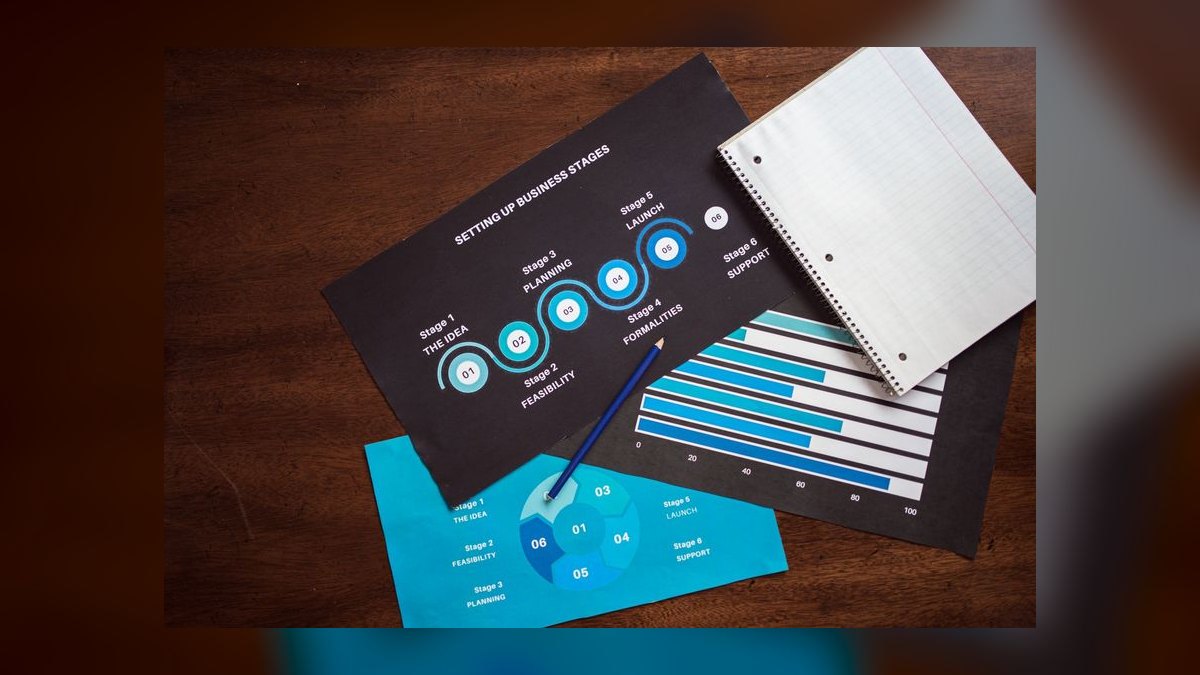
The mechanism that makes SCP revenue predictable is a staged qualification model where each gate tests a different failure risk. Most vendors lose deals because they advance on enthusiasm rather than on gate criteria.
The first gate is a business-case trigger, not interest. Interest is free in this category; every operations leader will take a demand-sensing demo. A real trigger looks like: an ERP migration already funded, a service-level miss that reached the board, an inventory write-down, a merger creating two incompatible planning processes, a new distribution center, or a leadership change bringing someone who ran your category at a prior employer. Without one of those, you are in a research cycle that may run eighteen months and close nowhere.
The second gate is the supply chain assessment — a structured diagnostic your solution architect runs across current forecast accuracy, inventory turns, service level, planning cycle time, and the number of people touching the plan. This is the highest-leverage activity in the entire motion and the one most under-resourced. It converts a feature conversation into a quantified gap, and the gap becomes the business case the CFO signs. Vendors who skip it end up competing on price against a platform whose brand the CIO already trusts.
The third gate is the pilot, which in SCP means running a real historical data set through demand planning and showing forecast-accuracy lift against the customer's own baseline. Two rules make pilots pay: use the customer's messy data rather than a clean sample, and define the success threshold in writing before you start. A pilot without a pre-agreed threshold becomes an endless science project.

The fourth gate is procurement and the integrator, and this is where deals die quietly. If the systems integrator on the account has a practice built around a competing platform, you are being scored by a referee wearing the other team's jersey. The counter is to build the integrator relationship before procurement — enablement, certified consultants, joint account planning — or to bring your own implementation capacity so the customer has a credible alternative.
The loop at the bottom matters more than the linear path above it. Expansion in SCP is not upsell in the marketing-software sense; it is the *next phase of the same transformation*. A customer who goes live on demand planning has an obvious next step in supply planning, then inventory optimization, then multi-tier visibility, then supplier collaboration. Structuring the account plan as a phased roadmap — agreed at contract signature, revisited every quarter — turns expansion from an event into a schedule.
One adjacent note worth carrying: this staged-gate structure travels well into neighboring operational categories — warehouse management, transportation management, manufacturing execution, and procurement suites all share the trigger-assessment-pilot-integrator shape. If your portfolio spans several of them, the same qualification discipline can be shared, even when the pricing metric differs.
The numbers: pricing metrics, quota math, and coverage
Pricing in this category is built on a small set of metrics, and the architecture decision is which metric carries the base contract.
Per-planner-per-month is the dominant base. It is intuitive, it maps to a named user list procurement can verify, and it grows as the planning organization professionalizes. Its weakness is that it caps value capture: a customer can run an enormous network with fifteen planners, and your revenue is stuck at fifteen seats while the customer captures nine figures of working-capital benefit.
Per-node or per-stocking-location pricing fixes that mismatch for visibility and control-tower products, where value genuinely scales with network breadth rather than headcount. It is the natural metric for multi-tier visibility and supplier collaboration.

Per-SKU pricing appears in inventory optimization and demand sensing, where the compute cost and the delivered value both scale with the item count. It prices well but forecasts badly — SKU counts move with assortment decisions you do not control, which introduces renewal volatility.
Module add-ons layered on any of the above are how most vendors reconcile the tension: a base seat price, then demand planning, supply planning, S&OP, inventory optimization, control tower, and demand sensing as separately priced components. Practically, packaging into three tiers — a starter bundle of demand plus inventory, a mid suite adding supply and S&OP, and a full integrated business planning tier adding control tower, sensing, and multi-tier collaboration — gives the sales team a ladder to climb without a bespoke quote every time.
On quota and coverage, the honest constraint is deal-size variance. When a single enterprise contract can be twenty times a mid-market contract, quota attainment becomes lumpy and standard coverage ratios mislead. Practical guardrails:
- Strategic enterprise reps carry very few named accounts — often single digits — because each account requires a multi-year relationship, not a territory sweep. Pipeline coverage should be measured on a rolling multi-quarter basis rather than in-quarter, because in-quarter coverage is meaningless when the cycle exceeds four quarters.
- Mid-market reps carry a couple dozen accounts with a three-to-eight-month cycle and can be measured on more conventional in-quarter coverage.
- Lower-mid inside reps carry the largest book with the shortest cycle, and are the only tier where a velocity playbook genuinely applies.
- Ramp is long everywhere and longest at the top: an enterprise SCP rep who has not sold operations software before needs a year or more to reach full productivity, because the credibility problem is domain fluency, not product knowledge.
Compensation should follow that shape. Enterprise roles carry a roughly even split between base and variable because the cycle is too long to run a heavily commission-weighted plan without churning reps. Mid-market tilts more variable, inside sales more still. Accelerators above quota are standard; the SCP-specific addition is a clawback or holdback tied to first-year go-live, because a rep who sells a deal the delivery organization cannot implement has destroyed more value than the commission is worth.

Two roles deserve dedicated comp design. The solutions architect in SCP is frequently a former supply-chain practitioner — a onetime VP of planning who can sit with a demand planner and speak in forecast-error terms. That person is expensive, scarce, and the highest-leverage hire in the org; comp them near senior-AE levels with a mostly-fixed structure so they optimize for deal quality rather than deal count. The vertical specialist matters because CPG, retail, discrete manufacturing, pharmaceutical, and automotive planning processes differ enough that generic demos fall flat: promotional forecasting in CPG, size-and-color assortment in retail, serialization and shelf-life in pharma, and long-lead component allocation in automotive are genuinely different problems.
On retention, the target structure is high gross retention with expansion carrying net retention meaningfully above one hundred percent. Gross retention in SCP tends to be strong once a customer is live, because ripping out a planning platform means redoing the operating model — but it is fragile in the window before full go-live, which is exactly why implementation health is a revenue metric and not a delivery metric. Expansion comes from three reliable sources: seat growth as planning organizations mature, module attach along the phased roadmap, and network expansion as the customer adds sites or acquires companies.
Trade-offs: where to compete, and what each choice costs
Every SCP vendor faces the same strategic fork, and the revenue architecture differs sharply by branch.
Competing head-on with the incumbent platform vendors at enterprise means selling against organizations with existing ERP relationships, pre-negotiated master agreements, entrenched integrator practices, and a CIO-level presumption of safety. The cost is a long, expensive, low-win-rate motion that requires pursuit teams and executive sponsorship on every deal. It is winnable — usually on architecture (cloud-native, faster scenario modeling, better user experience) or on a specific capability gap — but the pipeline coverage and rep tenure required are far higher than a plan built on generic SaaS benchmarks assumes.

Competing on vertical depth trades total addressable market for win rate. A platform that genuinely understands pharmaceutical shelf-life planning or retail assortment can beat a broader competitor inside that vertical at a materially higher win rate and shorter cycle, because the assessment phase gets faster and the reference customers are recognizable peers. The cost is a narrower market and a sales org that cannot be redeployed easily across verticals.
Competing down-market — building for the segment that is currently on spreadsheets — is the largest unit-count opportunity and the most operationally demanding. Winning here requires that implementation stops being a consulting engagement and becomes a productized onboarding measured in weeks. That is a product decision as much as a go-to-market one: pre-built integrations to common ERPs, opinionated default planning parameters, and templated data models. Vendors who try to serve this segment with an enterprise delivery model lose money on every deal.
Building services versus channeling them is the other major fork. Direct services capture the full economics and give you control over go-live quality, which protects expansion. It also grows headcount that does not scale like software and can create margin drag that public-market investors punish. A partner channel scales faster and buys you access to accounts you cannot reach, but it means your customer experience is delivered by people you do not manage — and when a partner-led implementation slips, the customer blames the software.
A fourth option deserves mention because it is increasingly common: selling planning capability as an embedded layer inside an adjacent system — an ERP, a WMS, or a commerce platform — rather than as a standalone platform. This converts a direct enterprise motion into a partnership and OEM motion, with entirely different economics: lower ACV per end customer, far lower CAC, revenue share instead of full capture, and a roadmap partly controlled by someone else. For a smaller vendor with strong algorithms and weak brand, it can be the fastest route to installed base, and it can coexist with a direct motion aimed up-market.
Pitfalls that quietly break the model
Forecasting the software and ignoring the implementation. The most common failure is a revenue plan that treats closed-won as the finish line. In SCP, closed-won starts a delivery clock, and if phase-one go-live slips well past plan, the customer's sponsor loses credibility internally, the expansion roadmap freezes, and the renewal becomes a negotiation instead of a formality. Fix: put implementation milestones on the same weekly review as pipeline, and make first-phase go-live date a tracked revenue metric with an owner.
Confusing pilot enthusiasm with a funded project. Planners genuinely enjoy evaluating planning software; it is more interesting than their day job. A pilot with delighted users and no CFO-owned business case is a deal that will sit in the forecast for three quarters and then vanish into "no decision." Fix: the business-case gate should require a named budget owner and a quantified benefit before the pilot begins, not after.
Selling to the planner and never reaching the balance sheet. Service-level improvement is a nice story; working-capital release is a fundable one. If your business case is not translated into inventory dollars and cash conversion terms, the CFO cannot compare it to the other projects competing for the same capital. Fix: build the assessment output so it emits a working-capital number by default.
Under-resourcing the solutions architect function. A single overloaded SA becomes the bottleneck on every deal above a certain size, and the symptom looks like a pipeline problem — deals stall in discovery — when it is actually a capacity problem. Fix: track SA-hours-per-deal explicitly and treat SA capacity as a pipeline constraint in the plan.
Ignoring the integrator until procurement. By the time the systems integrator writes the implementation estimate, the framing is set. If they have never staffed your platform, your total cost of ownership looks worse than the incumbent's regardless of software price. Fix: certify consultants early, and be willing to deliver the first several implementations yourself to prove the methodology exists.

Letting per-SKU or per-node metrics create renewal surprises. Usage-scaled metrics are excellent at capturing value and terrible at producing predictable renewals when the underlying count moves. A customer who rationalizes assortment can walk into a renewal with a smaller bill through no fault of yours. Fix: floor the usage component contractually, or blend it with a committed base.
Compensating expansion as if it were new business. In SCP the expansion path is a roadmap both sides agreed to, and the customer success manager who kept the go-live on track did more to earn phase two than the rep who signed the order form. Fix: split expansion credit explicitly by phase — CSM-led for seat and module growth on an existing site, AE-led for new business units, new geographies, and new network scope.
Assuming an ERP-driven demand wave is permanent. Demand for planning Architecture tends to spike after disruption and normalize afterward. A revenue plan built on the growth rate of an exceptional period will over-hire and over-quota. Fix: build the plan against a normalized growth assumption and treat any disruption-driven surge as upside, not baseline — and be ready to redirect capacity down-market when enterprise growth flattens.
Related questions
How is SCP revenue architecture different from ERP sales?
ERP sales are broader and more IT-led; SCP is narrower and more operations-led. SCP deals are usually smaller, faster, and judged on an operational outcome — forecast accuracy, inventory turns, service level — rather than on a system-of-record migration. But SCP frequently rides ERP migration budget cycles.
Should a small SCP vendor build a services organization?
Early on, yes — at least enough to prove an implementation methodology and control go-live quality, which protects retention. Shift to partners once the methodology is repeatable and documented, keeping a direct team for strategic accounts and for implementations no partner has staffed yet.
What is the best leading indicator of an SCP deal closing?

A completed supply chain assessment with a quantified working-capital gap and a named CFO-side budget owner. Demo counts, pilot enthusiasm, and user sentiment all correlate weakly. The assessment converts opinion into a number, and the number is what survives procurement.
How do you price when the customer has few planners but a huge network?
Blend metrics. Keep a per-planner base for the planning modules, and price visibility, control tower, and supplier collaboration on network nodes or trading partners. This aligns price with delivered value in networks where headcount and complexity have decoupled.
When does vertical specialization pay for itself?
Once you have three to five referenceable customers in a vertical and a demo configured with that vertical's data model. Below that, a specialist has nothing to point at. Above it, win rate and cycle time usually improve enough to justify the narrower coverage.
FAQ
How long does an enterprise supply chain planning sales cycle typically run?
Enterprise cycles commonly span six to eighteen months because the decision includes an operating-model change, an integrator selection, and a capital-allocation review, not just a software choice. Mid-market runs materially shorter — often a single quarter to two — and lower-mid or SMB deals can close in weeks when onboarding is productized. Build pipeline coverage on a rolling multi-quarter basis rather than in-quarter, or the enterprise forecast will look permanently short.
Why does implementation cost so much relative to the software?
Because the work is mostly data and process, not configuration. Master data has to be cleaned, item and location hierarchies reconciled, historical demand corrected for known anomalies, planning parameters set per item class, and an S&OP cadence stood up with named owners. That is consulting work regardless of how good the software is. The lever is productizing the repeatable parts — pre-built ERP connectors, templated data models, default parameter sets — which shrinks the ratio without pretending the work disappears.

What retention numbers should an SCP vendor plan around?
Plan for strong gross retention once customers are fully live, because replacing a planning platform means redoing the operating model. Net retention above one hundred percent should come from three sources: seat growth as the planning team professionalizes, module attach along the agreed phased roadmap, and network expansion from new sites or acquisitions. The vulnerable window is pre-go-live, so treat implementation health as a leading retention indicator.
Should sales reps be specialized by vertical or by territory?
Both, layered. Territory or named-account ownership gives clear accountability; vertical specialists overlay across territories to supply domain credibility in the assessment and pilot stages. Pure vertical alignment works only at sufficient scale — below that, specialists spend their time traveling instead of selling. The practical trigger to add a specialist is when one vertical reaches roughly a quarter of pipeline.
How do you handle a deal where the systems integrator prefers a competitor?
Assume the integrator is a decision-maker, not an advisor, and engage before procurement. Options: certify their consultants on your platform, offer to deliver phase one directly while they take later phases, or introduce a second integrator so the customer has a comparison. What does not work is arguing about software features while someone else writes the services estimate that determines total cost.
What should RevOps own in a supply chain planning software company?
Beyond standard pipeline hygiene and forecasting, RevOps should own three category-specific things: the rolling multi-quarter cohort forecast that accommodates long cycles, the implementation-milestone tracker joined to the revenue record so slipping go-lives surface as retention risk, and the module-attach model that turns the phased roadmap into a forecastable expansion pipeline.
Sources
- https://www.gartner.com/en/supply-chain
- https://www.apqc.org/expertise/supply-chain-management
- https://www.mckinsey.com/capabilities/operations/our-insights
- https://hbr.org/topic/subject/supply-chain-management
- https://www.ascm.org/
- https://sloanreview.mit.edu/topic/operations/
- https://www.bls.gov/ooh/business-and-financial/logisticians.htm
- https://www.supplychainquarterly.com/
- https://www.forrester.com/research/
Related on PULSE
- How do you architect revenue operations for a logistics + supply chain company in 2027?
- Revenue Architecture for Cold Chain Logistics Software in 2027 — The Complete Operator Guide
- Revenue Architecture for Restaurant Supply + Hospitality Smallwares + Foodservice Equipment Distribution Software in 2027
- How do you architect revenue for a Self-Storage Facility Chain in 2027?
- How to architect revenue operations for an independent pharmacy chain in 2027
- LTV to CAC Ratio Planning Model in 2027
This page will be disappearing soon. Save it to your device for $1 — or read it free while it is here.
@Kory-White- · if Venmo asks, the last 4 of my number are 2012
This page is gone.
This one is off the shelf now. $1 keeps it on your phone for good — the whole page, pictures and diagrams included.
 pulse-revenue-architectureRevenue Architecture for Construction Tendering + Bid Management SaaS in 2027 (Two-Sided Network)
 pulse-revenue-architectureRevenue Architecture for Quality Management Systems (QMS) — The Complete Operator Guide in 2027
 pulse-revenue-architectureRevenue Architecture for Caregiving + Home Health Software in 2027 (CMS Regulatory Moat, PE Roll-up)
 pulse-revenue-architectureHow do you architect revenue for an RV Park + Campground Operator in 2027?
 pulse-revenue-architectureRevenue Architecture for Weight-Loss + GLP-1 Telehealth Software in 2027 (Compounded-to-Branded Pivot, Employer-Benefits PMPM, FDA Compounding Enforcement)
 pulse-revenue-architectureRevenue Architecture for Court + Case Management Software — The Complete Operator Guide in 2027
 pulse-revenue-architectureRevenue Architecture for iPaaS in 2027 (Integration Volume Engine, Pricing, AI Integration)
 pulse-revenue-architectureRevenue Architecture for Data Catalog + Governance SaaS in 2027 (Coverage, AI Governance, Privacy)
 pulse-revenue-architectureRevenue Architecture for Biotech Research Platforms in 2027 (Scientific Productivity, FDEs, AI Design)
 pulse-revenue-architectureRevenue Architecture for TMS (Transportation Management Software) — The Complete Operator Guide in 2027