
Revenue Architecture for Public Safety / 911 / CAD Software — The Complete Operator Guide in 2027
 Curated byKory White · Fractional CRO · Maryland
 PULSEKNOWLEDGE LIBRARY
Quality
Certified
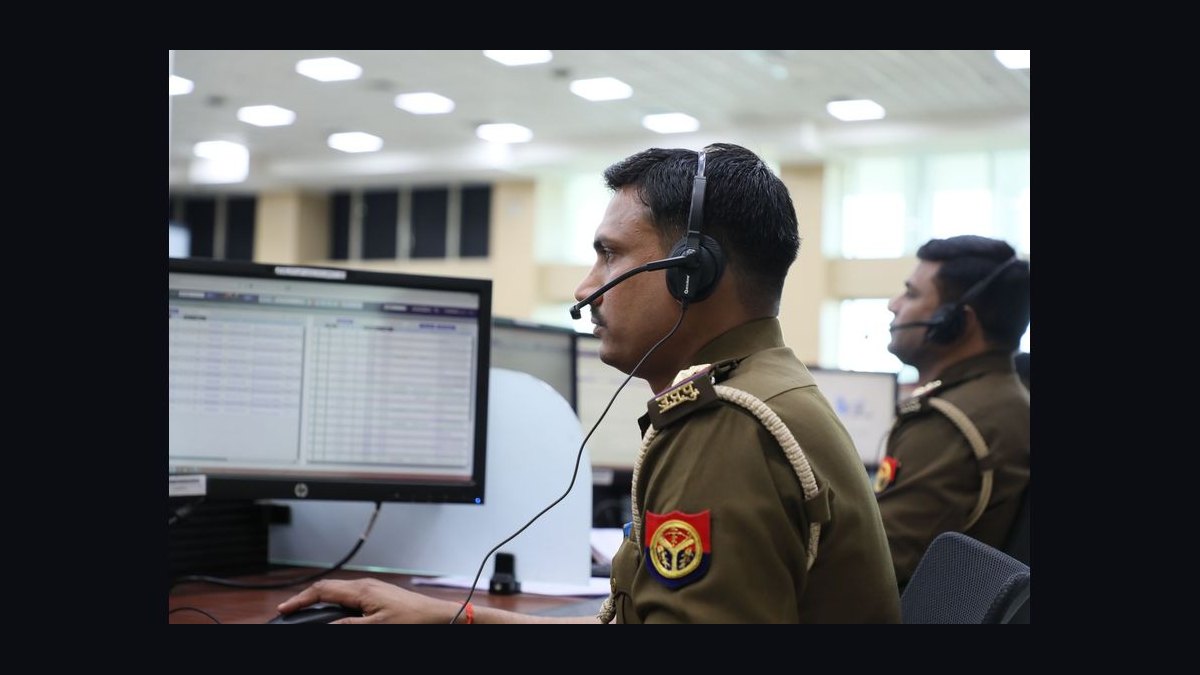
You architect a Public Safety / 911 / CAD Software revenue engine in 2027 by pairing three buyer-org tiers — large metro and state agencies, mid-size PSAPs, and small PSAPs — with per-PSAP, per-officer, and per-population pricing bands, plus a 911 Director, Public Safety Director, Chief of Police, and City CIO buying committee. This Operator guide covers the complete Architecture.
The county that had to replace CAD before a deadline it did not control
Start with a real shape of problem, because public safety revenue Architecture only makes sense once you feel the procurement gravity. A county PSAP serving roughly 180,000 residents is running a CAD platform installed over a decade ago. The original vendor has been acquired twice, the support contract is held by a reseller, and the last feature release the dispatch supervisor can remember arrived before text-to-911 was a routine expectation. The 911 Director has known for two years that the state's NG911 transition deadline lands in eighteen months. The County CIO has known for one year that the existing platform cannot ingest SIP-originated multimedia without a bolt-on that the current vendor will not commit to building. The Chief of Police cares about a different thing entirely: whether the records management system will still export clean data to the state crime reporting portal after the migration.
Three stakeholders, three timelines, one budget cycle, and a city council that meets twice a month and must publicly vote on any contract above a threshold. This is the environment in which every public safety Software deal is won or lost. Nothing about it resembles a commercial SaaS cycle. The buyer is not optimizing for productivity gains or headcount reduction. The buyer is optimizing for continuity of a service that, if it fails, becomes a front-page story within ninety seconds. That single fact reshapes pipeline math, comp design, forecast methodology, and renewal strategy more than any other vertical in enterprise Software.
The practical consequence for a revenue leader is this: you are not selling a platform, you are selling a transition that the agency has to survive. The Complete motion — discovery, pilot, RFP, council approval, implementation, cutover — is one continuous risk-management exercise from the buyer's seat. Your quota-carrying team has to be staffed and compensated for that reality, not for a fictional fast-close world.

How the revenue mechanism actually works
The mechanism has four moving parts that must be tuned together: segment design, pipeline coverage, comp architecture, and overlay specialization. Get any one wrong and the others degrade.
The segmentation logic starts with a hard truth about concentration. There are roughly 5,500 PSAPs in the United States, but the largest fifty metropolitan agencies absorb well over half of all 911 call volume. That means a named-account model for the top fifty is not a luxury, it is the only way to cover the revenue that actually moves the number. A single strategic account can carry $1.5M to $4.2M in annual contract value once CAD, NG911, records management, mobile, body-worn camera integration, and real-time crime center analytics are stacked. Losing one of those is a board-level event. Winning one takes eighteen months and a council vote.

The second tier — mid-size PSAPs serving between 50,000 and 500,000 residents — is where the volume lives. There are roughly 800 of these in the US, and they buy the suite: CAD plus NG911 plus a functional records system. Their cycles run six to fourteen months, and their buying committee is smaller but still includes the 911 Director, the County CIO, and often a police chief or fire chief. Territory AEs cover ten to twenty of these accounts each.
The third tier — small PSAPs under 50,000 residents — is roughly 5,200 agencies. These are frequently served by inside AEs managing thirty to fifty accounts, often with shared implementation resources and a lighter RFP burden. Contract values run $25,000 to $125,000. The temptation is to treat this tier as low-touch and let it churn. That is a mistake: small PSAPs are the farm system for mid-market accounts, and the reference relationships they generate matter disproportionately when a neighboring county is evaluating vendors.
The overlay layer is what separates public safety from generic govtech. A Solutions Architect who has actually run a PSAP or served as a chief carries more credibility in one discovery call than a dozen product demos. An NG911 specialist overlay tracks state-by-state deadlines and grant funding, because the buyer's urgency is often externally imposed rather than internally generated. An RFP and bid specialist manages the paperwork burden, which in this vertical is genuinely enormous — security questionnaires, criminal justice information services compliance, accessibility conformance, and reference requirements that can run to hundreds of pages.

Real numbers, ranges, and benchmarks for 2027 planning
Treat these as planning bands, not guarantees. They are drawn from patterns across the public safety Software category and should be recalibrated against your own win-loss data quarterly.
Segment sizing and ACV bands. Tier 1 strategic enterprise accounts number roughly fifty in the US, with annual contract values landing between $485,000 and $4.2M depending on module depth. Tier 2 mid-market accounts number around 800, with ACV between $125,000 and $485,000. Tier 3 accounts number roughly 5,200, with ACV between $25,000 and $125,000.

Module-level pricing anchors. Basic CAD for a small PSAP runs $45,000 to $125,000 per year. Mid-market CAD with NG911 capabilities runs $125,000 to $485,000. A full enterprise stack — CAD, NG911, records management, mobile, body-worn camera integration, and real-time crime center — runs $485,000 to $2.8M per PSAP. The NG911 transition module alone, built to the i3 standard, prices between $95,000 and $385,000. Records management runs $45 to $245 per officer-user per month. Mobile and in-car access runs $25 to $95 per officer per month. Body-worn camera and evidence storage runs $95 to $185 per officer per month. Real-time crime center and video analytics deployments run $285,000 to $1.5M per facility.
Sales cycle and coverage. Enterprise cycles run nine to twenty-four months — among the slowest in all of B2B Software, comparable to smart city infrastructure, higher education student systems, and manufacturing ERP. Mid-market runs six to fourteen months. Lower mid-market runs four to ten months. Coverage ratios should sit at roughly 5x rolling-eight-quarter pipeline for Tier 1, 4x rolling-six-quarter for Tier 2, and 3.5x rolling-three-quarter for Tier 3.
Win rates. Enterprise win rate floor should be treated as 22%, mid-market 32%, lower mid-market 42%. These are floors that trigger coaching when breached, not targets to celebrate. Some vendors in the category run meaningfully higher, but the presence of a dominant incumbent in large-agency CAD keeps enterprise win rates structurally lower than in less concentrated verticals.

Retention. Gross revenue retention should hold at 96% to 98% best-in-class. Public safety switching costs are extraordinarily high — a failed cutover can cost lives and careers — so GRR is naturally sticky. Net revenue retention should target 108% to 115%, driven by officer headcount growth of 1% to 2%, module attach of 5% to 8%, and multi-year renewal pricing escalators.
Compensation bands. Strategic Enterprise AE: $315,000 to $365,000 OTE at 50/50 split, carrying $1.2M to $1.6M quota. Mid-Market Territory AE: $205,000 to $235,000 OTE at 60/40, carrying $650,000 to $825,000 quota. Lower Mid Inside AE: $145,000 to $175,000 OTE at 65/35, carrying $475,000 to $625,000 quota. Strategic CSM: $175,000 to $205,000 OTE at 70/30 with NRR and GRR gates. Solutions Architect with former chief or director credentials: $245,000 to $285,000 OTE at 80/20. RFP and bid specialist overlay: $185,000 to $215,000 OTE at 75/25. NG911 specialist overlay: $215,000 to $245,000 OTE at 70/30.

Ramp curves. Enterprise AEs should be modeled at 10% of quota in Q1, 25% in Q2, 45% in Q3, 65% in Q4, 85% in Q5, and full quota in Q6 and beyond — an eighteen-month ramp that reflects the procurement reality. Mid-market ramps in twelve months at 25%, 50%, 75%, 100%. Lower mid-market ramps in nine months at 40%, 70%, 100%.
Accelerators. Standard structure is 1.5x commission above 100% of quota and 3x above 125%. Avoid decelerators below 75% attainment, because cycle drag in this vertical is largely outside rep control. A dedicated NG911 spiff of $15,000 to $45,000 for closing within ninety days of a state deadline is defensible and effective.
Trade-offs and alternatives in go-to-market design
The first trade-off is direct versus channel coverage. A fully direct model gives you narrative control and clean reference data, but the cost to cover 5,200 small PSAPs directly is prohibitive. Channel and reseller leverage gets you coverage and local relationships, but you lose control of the message and the implementation quality. Most mature vendors land on a blended model: direct named accounts for Tier 1 and Tier 2, channel-led for Tier 3 with strong enablement and a light direct overlay for strategic small agencies.

The second trade-off is head-on competition versus specialty positioning. In enterprise CAD, one incumbent holds a dominant share of large-agency deployments and bundles radio, body camera, and command software into a single ecosystem. Competing head-on across the entire stack is expensive and slow. Specialty positioning — being the best cloud-native NG911 platform, or the best records management system, or the best fire and EMS dispatch product — creates a defensible wedge. The trade-off is a capped ceiling: you win a narrower slice of each agency's budget, and you may be forced into integration partnerships that limit your pricing power.
The third trade-off is multi-discipline versus single-discipline focus. Agencies that dispatch police, fire, and EMS together represent larger contracts but longer cycles and more stakeholder complexity. Single-discipline focus — fire only, or EMS only — shortens cycles and simplifies the buying committee but shrinks ACV. The practical answer is usually to start single-discipline where you have credibility and expand into multi-discipline as references accumulate.

A fourth, quieter trade-off: federal and state grant dependency. NG911 transition funding from federal programs and state 911 surcharges creates deadline-driven demand, which is good for pipeline velocity. But it also means your forecast is partially hostage to appropriations cycles you do not control. Vendors that build grant-tracking capability into their revenue operations — monitoring state deadlines, DOJ and FEMA funding announcements, and 911 surcharge revenue trends — consistently forecast better than those that treat funding as background noise.
Common pitfalls and how to avoid them
Pitfall one: staffing enterprise coverage like commercial SaaS. A ten-month ramp and 3x coverage assumption borrowed from a commercial vertical will produce chronic misses in public safety. The fix is an eighteen-month enterprise ramp, 5x rolling-eight-quarter coverage, and quota relief in the first four quarters that is explicit rather than implicit.
Pitfall two: treating the 911 Director as the sole decision-maker. The director is the champion, not the buyer. The County CIO controls technical approval, the Chief of Police and Chief of Fire control operational sign-off, and the city council or county board controls the money. Deals that advance on director enthusiasm alone stall at the council vote. Map every stakeholder before the RFP, not after.

Pitfall three: underestimating implementation capacity. Winning a contract you cannot implement on the buyer's deadline destroys the reference and poisons the account for a decade. NG911 transition deadlines cluster, which means implementation resources get squeezed exactly when demand peaks. Staff implementation ahead of the sales curve, and be willing to walk away from deals you cannot deliver on time.
Pitfall four: ignoring the incumbent's bundling leverage. When a large incumbent bundles radio, CAD, body camera, and evidence storage, your standalone proposal looks like more work for the agency, not less. Counter with integration commitments, migration guarantees, and a clear articulation of what the agency gains by unbundling — usually better data portability, faster feature velocity, and lower long-term lock-in.

Pitfall five: forecasting on rep optimism rather than procurement milestones. In this vertical, the reliable forecast signals are concrete: RFP issued, RFP awarded, council agenda scheduled, contract signed. Anything upstream of RFP issuance is pipeline, not commit. Build a three-bucket model — commit at 75% or higher probability with an awarded RFP and pending council vote, best case at 45% to 74% with an RFP submitted, pipegen at 20% to 44% with qualified discovery and RFP scoping — and reconcile it weekly, not monthly.
Pitfall six: underinvesting in retention because GRR looks safe. A 96% GRR feels comfortable until you realize that a single lost enterprise account can wipe out a quarter of new logo bookings. Renewal risk scoring should track chief and director turnover within twelve months, political volatility around policing legislation, and federal funding awards to competing platforms. Any of those three turning yellow should trigger an executive sponsor touch, not a routine check-in.
Pitfall seven: letting the Solutions Architect function become a demo resource. Former chiefs and directors are the single highest-leverage hire in this vertical, and the fastest way to waste them is to turn them into generic demo support. Protect their time for discovery, executive alignment, and competitive displacement. One SA per three to four strategic AEs is the right ratio, and that SA should be in the room early, not late.
Related questions
What is the typical sales cycle for public safety software in 2027?
Nine to twenty-four months for large metro and state agencies, six to fourteen months for mid-market PSAPs, and four to ten months for smaller agencies. Public safety procurement is among the slowest in enterprise Software because of RFP requirements, council approval, and multi-stakeholder sign-off.
What retention should a public safety vendor target?
Gross revenue retention of 96% to 98% and net revenue retention of 108% to 115%. Switching costs are unusually high because a failed cutover has life-safety consequences, which keeps GRR structurally strong and makes module attach the primary expansion lever.
Should vendors compete head-on with the dominant CAD incumbent?
Only with a clear specialty wedge — cloud-native NG911, records management depth, fire and EMS dispatch, or real-time crime analytics. Head-on competition across the full stack against a bundled radio, CAD, and camera ecosystem is slow and expensive.
How does the NG911 transition affect demand?
State and federal deadlines clustered in the late 2020s create deadline-driven replacement demand. Buyers are not shopping for incremental improvement; they are racing a compliance clock, which compresses evaluation timelines when the agency is behind schedule.
How should the Solutions Architect function be staffed?
Roughly one SA per three to four strategic AEs, ideally hired from former police chiefs, fire chiefs, or 911 directors. Compensation around $245,000 to $285,000 OTE at an 80/20 split is typical, and domain credibility drives win rate more than product knowledge.
FAQ
What is the right RevOps headcount for a $200M public safety software vendor?
Roughly one RevOps FTE per $15M in ARR, with at least three analysts dedicated to NG911 deadline tracking, RFP cohort modeling, and federal grant monitoring. Public sector revenue operations carries heavier compliance and reporting load than commercial equivalents, so the ratio runs slightly richer than in pure SaaS.
How real is body camera ecosystem lock-in for non-incumbent vendors?
It is significant. One vendor holds the large majority of US police body camera and evidence storage deployments, which creates cross-sell friction for anyone selling adjacent modules. The practical responses are integration partnerships with that vendor, or vertical specialization in fire and EMS where the camera ecosystem is weaker.
What pricing model should a public safety vendor use in 2027?
Per-PSAP plus per-officer-user plus module add-ons is the standard. Base platform pricing scales with population served and call volume, while officer-seat pricing scales with records, mobile, and camera modules. Multi-year contracts with annual escalators are normal and expected by procurement.
How should forecast methodology account for government funding?
Build a three-bucket model — commit, best case, pipegen — and reconcile weekly against procurement milestones rather than rep sentiment. Layer in a funding signal tracker covering state NG911 deadlines, DOJ and FEMA grant awards, and 911 surcharge revenue trends, because those external clocks drive urgency more than any sales motion.
What are the biggest failure modes in public safety revenue structure?
Incumbent bundling leverage, implementation capacity shortfalls during deadline clusters, political volatility around policing budgets, and federal funding awards going to competing platforms. Each has a specific counter: specialty positioning, pre-staffed implementation, multi-discipline and civilian-agency diversification, and dedicated grant-tracking capability.
How does renewal risk differ from commercial SaaS?
It is concentrated rather than diffuse. Chief and 911 Director turnover, a major political event around policing, or a federal award to a competitor can each put a multi-million-dollar account at risk within a single budget cycle. Renewal scoring should weight those signals heavily and trigger executive engagement early.
Sources
- National Emergency Number Association (NENA) — https://www.nena.org
- Association of Public-Safety Communications Officials (APCO) — https://www.apcointl.org
- Federal Communications Commission, 911 and NG911 resources — https://www.fcc.gov/911
- Motorola Solutions investor relations — https://www.motorolasolutions.com/en_us/about/investor-relations.html
- Axon Enterprise investor relations — https://investor.axon.com
- Tyler Technologies investor relations — https://www.tylertech.com/about-us/investor-relations
- Hexagon AB investor relations — https://hexagon.com/company/investors
- U.S. Department of Justice COPS Office — https://cops.usdoj.gov
- National 911 Program — https://www.911.gov
- U.S. Census Bureau, government finance and population data — https://www.census.gov
Related on PULSE
- [Revenue Architecture for Smart City / Municipal Software in 2027 — The Complete Operator Guide](/knowledge/ra0101)
- [Revenue Architecture for GovTech / Public Sector SaaS in 2027 — The Complete Operator Guide](/knowledge/ra0102)
- [Revenue Architecture for Body-Worn Camera / Evidence Management Software in 2027 — The Complete Operator Guide](/knowledge/ra0103)
- [Revenue Architecture for Emergency Notification / Mass Alerting Software in 2027 — The Complete Operator Guide](/knowledge/ra0104)
- [Revenue Architecture for Records Management / RMS Software in 2027 — The Complete Operator Guide](/knowledge/ra0105)
This page will be disappearing soon. Save it to your device for $1 — or read it free while it is here.
@Kory-White- · if Venmo asks, the last 4 of my number are 2012
 pulse-revenue-architectureHow do you architect revenue operations for a logistics + supply chain company in 2027?
 pulse-revenue-architectureMarketplace GTM Architecture for SaaS Vendors in 2027
 pulse-revenue-architectureRevenue Architecture for Vertical SaaS for Roofing Contractors in 2027 (Insurance Supplements, Storm Seasonality)
 pulse-revenue-architectureRevenue Architecture for Vertical SaaS for Veterinary Clinics in 2027 (PIMS, Lab Moat, Corporate Roll-up)
 pulse-revenue-architectureHow to build SDR-to-AE handoff SLAs that actually hold in 2027
 pulse-revenue-architectureRevenue Architecture for Childcare + Daycare Management Software in 2027 (Family Comm Wedge, Tuition Billing, Government Subsidy Differentiator)
 pulse-revenue-architectureExecutive Business Review EBR Cadence in 2027
 pulse-revenue-architectureRevenue Architecture for Corporate L&D Platforms — The Complete Operator Guide in 2027
 pulse-revenue-architectureAE Specialist Track vs Manager Track Career Design in 2027
 pulse-revenue-architectureRevenue Architecture for ERP for Manufacturing — The Complete Operator Guide in 2027