
GTM Maturity Stages — 1 to 5 for SaaS in 2027
 Curated byKory White · Fractional CRO · Maryland
 PULSEKNOWLEDGE LIBRARY
Quality
Certified

SaaS GTM maturity moves through five stages: founder-led selling ($0–1M ARR), the first-rep playbook ($1–5M), a repeatable single segment ($5–20M), multi-segment scale ($20–75M), and multi-product platform ($75M+). Each stage unlocks specific capabilities, and most misses come from running a later-stage playbook on an earlier-stage operating system.
The two competing ways to read a GTM stage
Ask ten revenue leaders what stage their company is in and you will get two fundamentally different answers, because there are two competing definitions in circulation and almost nobody says which one they are using.
The first definition is revenue-indexed. You are Stage 3 because you crossed $5M ARR. This is the version investors, recruiters, and board decks default to, and it has one real virtue: it is unambiguous. Everyone can read the same number off the same dashboard. ARR bands also correlate loosely with real complexity — a company at $40M genuinely does have more segments, more headcount, and more forecast surface than one at $4M. The problem is that ARR is an output, not a capability. Two companies at $12M ARR can look identical on a cap table and behave nothing alike: one closed forty deals at $300K through a single founder-adjacent enterprise motion, the other closed twelve hundred at $10K through self-serve with a support queue attached. Their next hire, next comp plan, and next failure mode share nothing.
The second definition is capability-indexed. You are Stage 3 because a written ICP exists, stage-exit criteria are enforced in the CRM, a non-founder rep has hit quota two quarters running, and someone can forecast next quarter within a tolerable band. This version is harder to argue about in a board meeting because it requires evidence rather than a number. But it predicts what will actually happen next quarter far better, because it describes the machine rather than the machine's output.

The practical resolution is not to pick one. It is to plot both and read the gap. Revenue tells you what the market and the board expect of you; capability tells you what you can actually deliver. When capability lags revenue, you get the classic pattern — a company at $18M ARR with Stage 2 forecasting, where the CRO discovers in week nine of the quarter that the number was never there. When capability leads revenue, you get premature scale: eight VPs, three SDR pods, a partner program with zero sourced pipeline, and a burn rate calibrated for a company twice the size.
Neither gap is automatically fatal. A capability lag is usually correctable in two to three quarters if the leadership team is honest about it, because the fixes are mechanical: write the ICP down, define stage exits, instrument the forecast, run win/loss on the last fifty deals. A capability lead is more dangerous, because the cost structure is already committed and the fix means unwinding hires. That asymmetry is the single most useful thing to know about the two models. If you must be wrong, be wrong in the direction of running a slightly earlier-stage operating system than your ARR suggests. The tighter machine catches up. The bloated one has to shrink first, and shrinking costs momentum, morale, and usually the person who built it.
This is also why the adjacent question — "should we hire ahead of the motion?" — has a different answer depending on which definition you are using. Under revenue-indexing, hiring ahead looks like preparation. Under capability-indexing, it looks like adding load to a machine that has not proven it can carry the load it already has.

How to decide which stage you are actually operating in
The diagnostic that separates the two readings is not a survey. It is four artifacts you either have or do not have, and a leader can collect all four in about two weeks.
Artifact one: the forecast spread. Pull the last four quarters. For each, find what the forecast said in week three, week six, week nine, and what actually closed. If the spread between the week-three call and the final actual is consistently inside eight to ten percent, you have a Stage 3 or better forecasting capability regardless of ARR. If it swings twenty percent or more, or if it swings in different directions quarter to quarter, the forecast is not a forecast — it is a hope with a spreadsheet attached, and the company is operating one stage below its title.
Artifact two: non-founder attainment. Take every fully-ramped rep who did not found the company. What percentage hit 100% of quota last quarter? Industry medians historically sit near half the team, and a company that has genuinely cleared Stage 2 should run meaningfully above that in its core segment. If only the founder and one hero rep are hitting, the motion is not repeatable — it is two people who are good at selling.

Artifact three: the written ICP with teeth. Not a slide. A document with firmographic filters, technographic or behavioral triggers, and — this is the part almost everyone skips — a disqualification list. If nobody can name a category of prospect the company deliberately refuses to sell to, there is no ICP, only a preference.
Artifact four: stage-exit criteria that are actually enforced. Open the CRM and look at deals sitting in "Demo Completed." If any of them lack a documented next step, a named economic buyer, and a quantified pain, the stage definitions are decorative.
Run this diagnostic on the org, not on the ARR line. The output is frequently uncomfortable — a lot of $20M companies land on Stage 2 — but it is the only version that tells you what to do on Monday. And it travels well to adjacent situations: a private-equity operating partner standardizing GTM across a portfolio, or a corporate development team integrating an acquisition, is running the same four checks with different labels on them.

The numbers that define each stage
Benchmarks vary by category, motion, and year, so treat these as operating ranges to argue with rather than targets to chase. The shape matters more than any single figure.
Stage 1 — founder-led, roughly $0–1M ARR. The founder is AE, SDR, solutions engineer, and onboarding lead simultaneously. Pipeline comes overwhelmingly from the founder's network and warm introductions; outbound, if it exists, is hand-typed at night. The CRM is a starter tier or a shared table. Pricing is negotiated per deal, with the published price serving mainly as an anchor. Deal sizes are typically low five figures with sales cycles measured in weeks, and the founder's close rate on qualified intros runs far above what any hired rep will achieve, which is exactly the trap. The one capability worth building here is repeatable discovery — a short question set that surfaces economic pain in dollars inside the first fifteen minutes. Heavyweight qualification frameworks are premature; a five-question script that a second person could run is not. This stage commonly runs twelve to eighteen months.
Stage 2 — first-rep playbook, roughly $1–5M ARR. The founder hires two to four full-cycle AEs and, usually, a player-coach head of sales rather than a VP. RevOps is a fractional contractor keeping the CRM honest. Reps still prospect a meaningful share of their own day. The entire purpose of the stage is to prove the motion survives the founder leaving the room. By the end, four things must exist: a written ICP, documented stage-exit criteria, structured win/loss on at least thirty closed deals (call recording deployed and actually reviewed), and CAC payback trending toward a defensible number at the fully-loaded rep level. The characteristic failure is standing up an SDR team while AE attainment is still weak — more top-of-funnel does not fix a conversion problem, it hides it behind volume while adding six-figure annual cost per head.

Stage 3 — repeatable segment, roughly $5–20M ARR. This is where the first genuine VP Sales or CRO typically lands. The org grows to eight to twelve AEs across two manager pods, an SDR team at roughly two-to-three AEs per SDR, a demand-gen function with an accountable MQL-to-SQL conversion target, customer success with defined book sizes, and — critically — a full-time RevOps lead owning forecast, comp, and stack. Deal sizes cluster in the mid five figures for mid-market motions and low six figures for early enterprise, with cycles stretching from six weeks to four months. Net revenue retention above 110% and pipeline coverage of roughly three times the number by quarter open are the two metrics the board will actually track. The defining capability is a forecast the CRO can defend. The defining trap is adding a second motion — a PLG bolt-on, an enterprise push, a partner program — before the core motion is genuinely healthy.
Stage 4 — multi-segment scale, roughly $20–75M ARR. Same product, two or three segments, each with its own comp plan, quota, ramp, and support model. Self-serve or SMB runs low four-figure deals with cycles in days and fast payback. Mid-market runs mid five figures with quarter-long cycles. Early enterprise runs six figures with cycles of two to six months and a paper process involving legal, security review, and procurement. Sales and marketing typically consume the largest single share of operating expense here. Renewals move to a dedicated team rather than sitting with the AE, gross retention becomes a board metric in its own right, and partner-sourced pipeline starts appearing as a real line. The trap is promoting a strong mid-market rep into enterprise without a re-ramp — the motions share a title and almost nothing else, and the re-ramp is realistically half a year.
Stage 5 — multi-product platform, $75M+ ARR. Two or more products, three or more segments, and expansion revenue that exceeds new-logo revenue. Each product acquires something like a P&L: a general manager, dedicated product marketing, a CSM cohort, and its own rollout playbook with an ICP that may not match the flagship's. Account teams become pods — AE, SDR, CSM, solutions engineer, PMM — assigned to a named account list. Pricing and packaging get a standing committee, because at this scale packaging changes are a revenue lever rather than a website edit. The CRO/COO split emerges: the CRO owns new logo, expansion, and renewals; a COO or Chief of Staff to revenue owns RevOps, enablement, partner ops, and deal desk. The board watches efficiency alongside growth — the Rule of 40 and net dollar retention above 110% do more to defend the multiple than raw growth rate does.
Where the stage model bends — and the adjacent cases
The five-stage model was built from venture-backed, sales-led B2B SaaS. Several common situations bend it, and knowing how saves you from forcing a bad diagnosis.
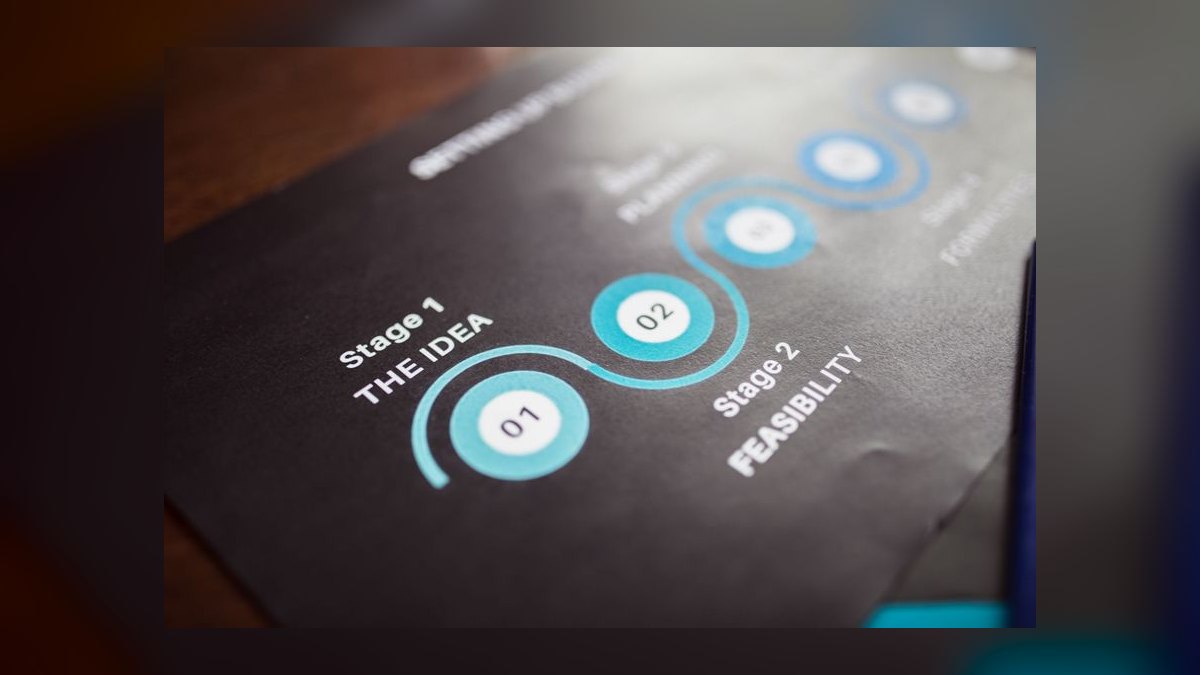
Product-led companies compress the early stages and stretch the later ones. A PLG company can reach $5M ARR with no salespeople at all, which makes Stage 2 look like it never happened. It did happen — it just happened in the product, as onboarding, activation, and conversion instrumentation rather than as a rep playbook. The Stage 2 question ("does this work without the founder?") becomes "does this work without a human?" The stretch shows up later: PLG companies often hit a wall around Stage 3–4 when they need to sell up-market and discover they have no discovery motion, no qualification language, and no one who has ever run a security review. The fix is to treat the first enterprise pod as a Stage 1 founder-led motion nested inside a Stage 4 company — small, senior, high-touch, explicitly unmeasured on volume for its first two or three quarters.
Vertical SaaS runs a smaller TAM and a longer trust cycle. In healthcare, construction, financial services, or public sector, references do more selling than any campaign will, and the buying committee is often the same five job titles at every account. Stage progression is slower in headcount terms but the ICP arrives earlier and holds firmer, because the market genuinely is narrow. Vertical companies often reach a credible Stage 3 forecast at lower ARR than horizontal peers, simply because the deal set is homogeneous enough to be predictable.
Usage-based and consumption pricing decouples bookings from revenue. When the contract is a commitment against consumption, the forecast has two layers — did we sign it, and will they burn it — and the second layer is a product and customer-success question rather than a sales one. Companies here need Stage 4-grade data infrastructure at Stage 3 revenue, because without usage telemetry flowing into the revenue workflow, nobody can see churn coming until the renewal.

Bootstrapped and capital-efficient companies often skip Stage 4 deliberately. Without pressure to triple, staying a very good Stage 3 company — one segment, one ICP, one comp plan, high retention, real profitability — is a legitimate terminal state, not a failure to progress. The stage model describes complexity, not virtue.
Carve-outs and PE portfolio companies invert the sequence. A divested business unit may arrive with $40M of revenue and no GTM operating system whatsoever, because marketing, RevOps, and deal desk all lived at the parent. That is a Stage 1 capability set attached to Stage 4 revenue, and it is the most acute version of the capability gap. The playbook is unusual: build the RevOps spine first, before touching headcount, because without it nobody can even measure what is broken.
AI-native GTM tooling shifts the ratios but not the sequence. Automated prospecting, call intelligence, and agentic research change how many people it takes to run a given motion — a Stage 3 org can genuinely run leaner than it could five years ago. What has not changed is the ordering. Automating an undefined ICP produces more wrong conversations faster. The tools compress the labor inside a stage; they do not let you skip the capability the stage exists to build.

Sequencing the fix: what to do in the first ninety days
Diagnosis is cheap. The sequencing is where leaders get it wrong, usually by trying to build the next stage before repairing the current one. The reliable order is: measure, repair the stage below, then build the stage above. Doing it in any other order means constructing a larger org on a foundation that has not been tested.
Days 1–30 — measure without changing anything. Pull four quarters of forecast-versus-actual at three checkpoints each. Read fifty closed-won and closed-lost records, and interview at least ten of the losses directly, because CRM loss reasons are a fiction written by whoever needed to move on to the next deal. Segment pipeline coverage by motion, not in aggregate — aggregate coverage of 3x routinely hides one segment at 5x and another at 1.4x. Sit in on ten live calls. Resist every urge to reorganize; the org chart is the last thing to touch, not the first.
Days 31–60 — repair the stage below. Rewrite stage-exit criteria so each one names an observable artifact rather than an activity: not "demo completed" but "economic buyer identified, quantified pain documented, mutual next step on the calendar." Clean the pipeline hard — every deal that fails the new exit criteria goes back a stage or out, and the number will drop, which is the point. Get the win/loss findings in front of the whole revenue team, unedited. Put underperformers on a defined path with a real date. If comp needs surgery, design it now for the next period rather than mid-quarter, because changing comp mid-quarter costs more trust than the fix is worth.
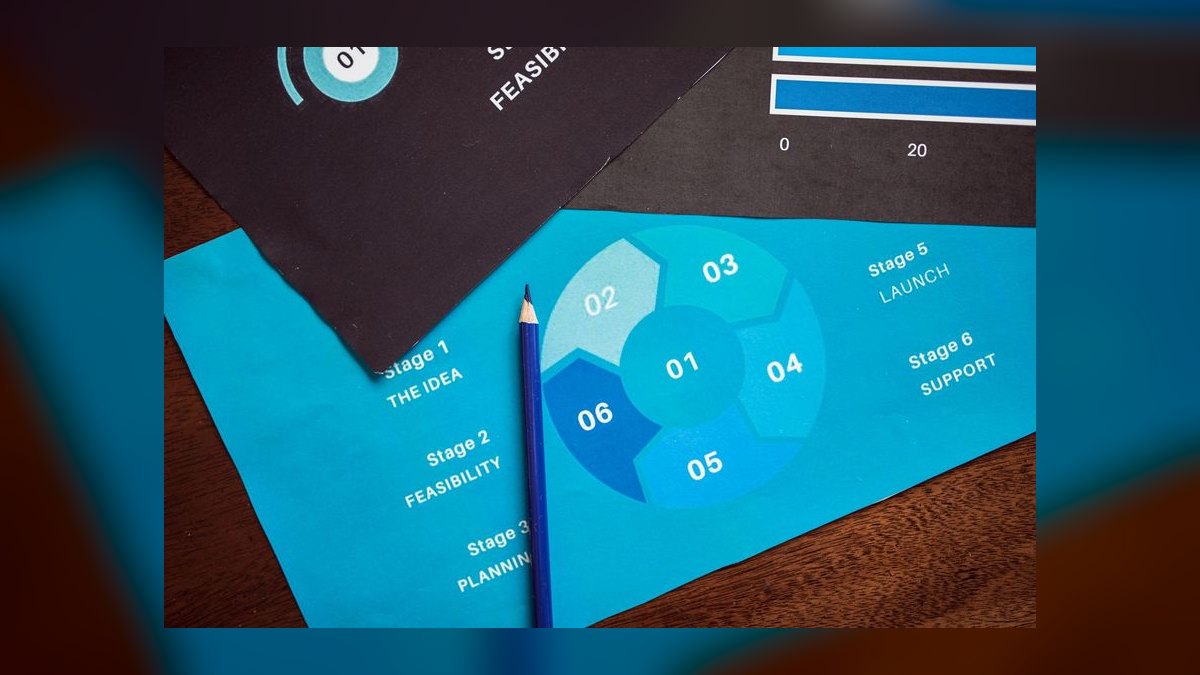
Days 61–90 — build one stage up, narrowly. Hire the one or two roles that unblock the constraint you actually measured — usually RevOps before more reps, because a rep added to a broken system produces a broken rep. Stand up the operating cadence: weekly commit call, monthly pipeline review, quarterly business review. Present the board a four-quarter plan that names the stage honestly, states which capabilities are missing, and shows what each fix costs.
The exit condition for any stage repair is the same and it is deliberately boring: two consecutive quarters of clean execution — forecast inside band, attainment at target, retention holding. One good quarter is noise. Two is a capability. Only then does the next stage's investment become an investment rather than a bet.
What breaks when you skip a stage
Stage-jumping is the most common and most expensive GTM failure, and it has a recognizable signature. A company operating one stage ahead of itself shows an org chart with more vice presidents than repeatable motions, multiple SDR pods feeding segments that were never validated, a partner program with a leader and no sourced pipeline, and — underneath all of it — a core motion that is quietly under-invested in enablement while attainment slides.

The mechanism is straightforward. Every stage exists to build one capability, and the next stage's playbook assumes that capability is present. Stage 4's multi-segment comp design assumes Stage 3's forecast works, because you cannot allocate quota across segments you cannot predict. Stage 3's territory carve assumes Stage 2's written ICP exists, because a territory is a slice of an ICP. Stage 2's rep playbook assumes Stage 1's discovery motion is documented, because that is literally what the rep is being handed. Skip one, and the next layer is built on an assumption that was never verified — and it will not fail visibly at the moment you skip it. It fails two quarters later, in a forecast miss nobody can explain, and by then three additional layers have been built on the same void.
The reverse error deserves a mention because it is rarer and less discussed: stage-lagging, where a company that has genuinely earned the next stage refuses to build it. Symptoms are a founder still on every deal above a certain size at $30M ARR, a single comp plan straining across three obviously different motions, or a CRO personally running the forecast in a spreadsheet because they do not trust the system. Stage-lagging caps growth rather than destroying it, so it survives much longer before anyone names it. The tell is that the leadership team is the bottleneck in every process diagram.
The practical rule that covers both errors: operate one stage behind the title on the door, and earn the next stage with two clean quarters. A company at $25M ARR should run a tight, boring, well-instrumented single-segment motion, hit its numbers twice in a row, and only then carve the second segment. That looks slow on a whiteboard. It is faster than the alternative, because the alternative includes an unwinding.
Related questions
Does the stage model apply to non-SaaS revenue businesses?
Largely yes for any recurring-revenue B2B model — managed services, subscription hardware, marketplaces with take rates. The capability sequence (discovery, playbook, forecast, segmentation, platform) is generic. What changes is the ARR banding, since gross margin and deal shape shift where each capability becomes urgent.
How does the model change for companies selling to the public sector?
Procurement cycles and contract vehicles dominate, so Stage 3's forecast capability arrives later and matters more. Many public-sector-heavy companies run a permanent parallel motion — commercial on the standard stage ladder, public sector on a slower, relationship-and-compliance track with its own comp and ramp.
Should RevOps be hired before or after the first sales manager?
Usually before, once you are past a handful of reps. A manager without instrumentation coaches on anecdote. RevOps makes attainment, conversion, and forecast visible, which is what a manager needs to coach against. The common exception is when the head of sales is genuinely operations-fluent.
What is the first thing to fix when revenue and capability are badly mismatched?
The forecast. Not because it drives revenue directly, but because it is the diagnostic that makes every other problem visible and dated. Until the forecast is trustworthy, every other fix is being evaluated against noise, and you cannot tell which changes worked.
Can a company be at different stages in different regions?
Routinely. A US motion at Stage 4 and an EMEA motion at Stage 1 is a normal shape after a first international expansion. Treat them as separate stage diagnoses with separate playbooks; forcing the mature region's operating system onto the new one is a classic capability-lead error.
FAQ
What exactly is a GTM maturity stage?
A defined phase in a company's growth where the revenue engine requires a specific capability set — moving from founder-led selling through a documented rep playbook, a predictable single segment, multi-segment operations, and finally a multi-product platform. The stage reflects the sophistication of the operating system underneath the revenue, not the revenue figure by itself.
How do I know which stage my company is in?
Check four artifacts rather than the ARR line: forecast accuracy over the last four quarters, non-founder quota attainment, whether a written ICP with a disqualification list exists, and whether stage-exit criteria are actually enforced in the CRM. The weakest of the four sets your true stage.
Can a company skip a stage?
Not durably. Each stage builds the capability the next stage's playbook assumes is already present, so skipping produces a hidden void that surfaces two or three quarters later as an unexplained miss. You can compress a stage — run it in six months instead of eighteen — but you cannot omit the capability it produces.
What is the single most common scaling mistake?
Running a later-stage playbook on an earlier-stage operating system: multi-channel outbound with no written ICP, multi-segment comp plans with no reliable forecast, an enterprise push with no one who has run a security review. The playbook is not wrong; the foundation underneath it was never built.
How long does each stage take?
Commonly twelve to twenty-four months, with wide variance by category, motion, and capital available. Early stages compress under product-led motions; later stages stretch when a second product or second segment is involved. Timeline matters less than the exit condition — two consecutive quarters of clean execution before investing in the next stage.
Do you need a full-time CRO at every stage?
No. Stage 1 and most of Stage 2 are better served by a founder plus a player-coach head of sales; a full CRO hired that early usually ends up debugging product-market fit rather than scaling a playbook. The role becomes genuinely necessary around Stage 3, when forecast, comp, and multi-team coordination exceed what a founder can hold.
Sources
- https://www.bvp.com/atlas — Bessemer Venture Partners Atlas, benchmarks and scaling guidance for cloud businesses
- https://www.saastr.com/ — SaaStr, operator benchmarks and stage commentary from Jason Lemkin
- https://tomtunguz.com/ — Tomasz Tunguz, data-driven posts on SaaS org structure and hiring timing
- https://blog.bridgegroupinc.com/ — The Bridge Group, SaaS AE and sales development metrics research
- https://www.gong.io/resources/ — Gong Labs, call and deal data research
- https://www.clari.com/resources/ — Clari, revenue forecasting and pipeline management research
- https://www.forcemanagement.com/ — Force Management, MEDDPICC and Command of the Message methodology
- https://www.repvue.com/ — RepVue, crowdsourced sales compensation and quota attainment data
- https://openviewpartners.com/ — OpenView, SaaS benchmarks and product-led growth research
- https://a16z.com/enterprise/ — Andreessen Horowitz enterprise, go-to-market and metrics essays
Related on PULSE
This page will be disappearing soon. Save it to your device for $1 — or read it free while it is here.
@Kory-White- · if Venmo asks, the last 4 of my number are 2012
This page is gone.
This one is off the shelf now. $1 keeps it on your phone for good — the whole page, pictures and diagrams included.
 pulse-revenue-architectureVP Sales Comp Plan for SaaS in 2027
 pulse-revenue-architectureHow do you compensate a sales team when your product has both a self-serve and enterprise motion in 2027?
 pulse-revenue-architectureTerritory Carve Review Cadence in 2027
 pulse-revenue-architectureWin-Loss Interview Program Design in 2027
 pulse-revenue-architectureCRM Hygiene Operating Rhythm for RevOps in 2027
 pulse-revenue-architectureGTM Council Charter Design in 2027
 pulse-revenue-architectureRevenue Architecture for Commercial Real Estate Brokerage — The Complete Operator Guide in 2027
 pulse-revenue-architectureNRR Board Metric Definition Framework in 2027
 pulse-revenue-architectureEconomic Buyer Access Rules in Enterprise Sales in 2027
 pulse-revenue-architectureHow to build a buyer-persona-driven GTM playbook in 2027