
Top 10 Universities for Child Development in 2027
 Curated byKory White · Fractional CRO · Maryland
 PULSEKNOWLEDGE LIBRARY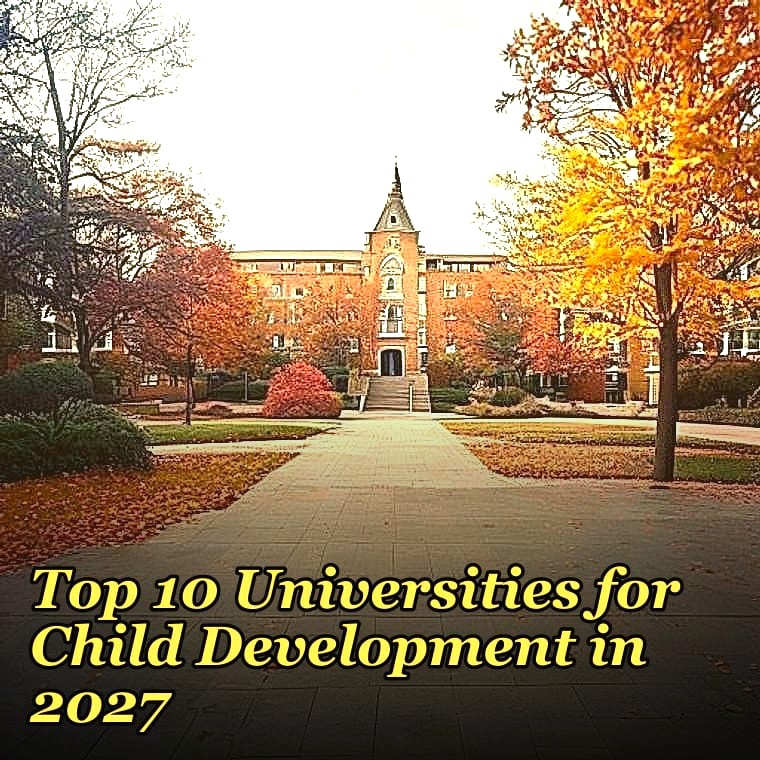
The Best Overall university for child development is Cornell University, whose Department of Psychology and the College of Human Ecology anchor decades of developmental-science research, a roughly 8% acceptance rate, and direct access to faculty studying cognition, attachment, and learning from infancy onward. The Best Value pick is the University of Minnesota, home to the legendary Institute of Child Development (ICD) — the field's oldest research institute — where a public-university net price delivers world-class developmental science for a fraction of private tuition. This ranking is built for students and families choosing where to study child development, early childhood, and human development with a true emphasis on the developmental-science angle — the research-driven study of how children grow, think, and learn. Every pick uses real, publicly reported data on programs, faculty, and outcomes.
How We Ranked the Top 10
We weighted each university against what matters most to students pursuing child development and developmental science. We drew on published data from U.S. News, Niche, NCES College Navigator and the College Scorecard, the College Board, and each program's own department pages. The weighting:
- Academic and research strength in developmental science — 25%
- Post-grad outcomes (grad school, clinical, education careers) — 20%
- Value and cost (net price, aid, ROI) — 15%
- Faculty, labs, and research resources — 15%
- Campus environment and student support — 15%
- Hands-on experience and program fit — 10%
A university with a famous name but no dedicated developmental research, or a strong lab with thin career support, drops fast. The winners pair rigorous developmental science with real outcomes.
1. Cornell University 🏆 BEST OVERALL

Type: Private (Ivy League, research) | Tuition: $68,380/yr | Best for: Students who want elite developmental-science research from infancy through adolescence
In Ithaca, Tompkins County, New York, Cornell University enrolls about 15,700 undergraduates and offers one of the deepest homes for developmental science through its College of Human Ecology and Department of Psychology. The acceptance rate is around 8%, with a median SAT near 1530 and an ACT range of 34–35. Cornell's human development faculty study cognition, attachment, neuroscience of learning, and adolescence, with extensive lab access for undergraduates. The six-year graduation rate exceeds 94%, and the student-faculty ratio is about 9:1. Cornell's strength in both basic developmental research and applied policy work — including its long history of child-and-family research — makes it the most complete program on this list.
Pros:
- College of Human Ecology with deep developmental-science faculty
- Six-year graduation rate above 94%
- Extensive undergraduate lab access across the lifespan
- Strong placement into PhD, clinical, and policy careers
Cons:
- Private tuition near $68,000 before aid
- Highly competitive admissions and workload
Verdict: The most complete developmental-science program in the country — elite research, faculty, and outcomes make it Best Overall.
2. Tufts University (Eliot-Pearson)

Type: Private (research) | Tuition: $71,300/yr | Best for: Students who want a dedicated child-study department with applied focus
In Medford, Massachusetts, just outside Boston, Tufts University enrolls about 6,800 undergraduates and houses the renowned Eliot-Pearson Department of Child Study and Human Development — one of the few standalone departments in the nation devoted entirely to children. The acceptance rate is around 10%, with a median SAT near 1500. Eliot-Pearson pairs developmental theory with applied work in education, policy, and clinical practice, and operates its own Eliot-Pearson Children's School as a laboratory and observation site. The six-year graduation rate is about 94%, and the student-faculty ratio is roughly 9:1. Few universities offer undergraduates this much direct, dedicated focus on child development.
Pros:
- Dedicated Eliot-Pearson Department of Child Study and Human Development
- On-campus laboratory children's school for observation and practice
- Strong applied focus across education, policy, and clinical work
- Six-year graduation rate around 94%
Cons:
- Highest sticker tuition on this list at $71,300
- Smaller research scale than the largest public institutes
Verdict: The premier dedicated child-study department — unmatched for students who want child development as the core, not a subfield.
3. Vanderbilt University

Type: Private (research) | Tuition: $66,000/yr | Best for: Students wanting top developmental and education research with strong aid
In Nashville, Davidson County, Tennessee, Vanderbilt University enrolls about 7,100 undergraduates and anchors developmental science through its top-ranked Peabody College of Education and Human Development. The acceptance rate is around 6%, with a median SAT near 1530. Peabody is consistently ranked among the best education and human-development colleges in the country, with faculty studying child cognition, early learning, language development, and educational psychology. The six-year graduation rate exceeds 93%, and the student-faculty ratio is about 7:1. Vanderbilt is also known for generous need-based aid that meets full demonstrated need, lowering net price substantially.
Pros:
- Top-ranked Peabody College of Education and Human Development
- Meets full demonstrated financial need
- Strong faculty in cognition, language, and early learning
- Six-year graduation rate above 93%
Cons:
- Very selective admissions near 6%
- Sticker tuition near $66,000 before aid
Verdict: A top developmental and education program with outstanding aid — excellent for research-minded students.
4. University of Minnesota (Institute of Child Development) 💎 BEST VALUE

Type: Public (research, flagship) | Tuition: $16,488/yr (in-state) / $37,000/yr (out-of-state) | Best for: Students who want the field's foundational research institute at a public price
In Minneapolis, Hennepin County, the University of Minnesota enrolls about 39,000 undergraduates and is home to the Institute of Child Development (ICD) — founded in 1925, the oldest child-development research institute in the United States and the historic birthplace of much of modern attachment and developmental research. The acceptance rate is around 70%, with a median SAT near 1370. The ICD offers undergraduate majors in child psychology with extensive lab involvement, and faculty lead landmark longitudinal studies of development. The six-year graduation rate is about 84%, and the in-state net price makes this the strongest developmental-science value in the country.
Pros:
- Institute of Child Development — the field's oldest and most storied
- In-state tuition near $16,488 delivers world-class research cheaply
- Landmark longitudinal developmental studies with student involvement
- Six-year graduation rate around 84%
Cons:
- Large university size means students must seek out labs
- Out-of-state cost is higher, though still below privates
Verdict: The foundational home of developmental science at a public price — our Best Value for child development.
5. University of Michigan

Type: Public (research, flagship) | Tuition: $17,228/yr (in-state) / $60,000/yr (out-of-state) | Best for: Students wanting elite developmental psychology and major research resources
In Ann Arbor, Washtenaw County, the University of Michigan enrolls about 33,000 undergraduates and offers a top-ranked Department of Psychology with a deep developmental psychology area. The acceptance rate is around 18%, with a median SAT near 1460. Michigan's faculty study child cognition, social development, and adolescence, and the Institute for Social Research provides unmatched data resources, including major longitudinal studies of children and families. The six-year graduation rate exceeds 93%, and the student-faculty ratio is about 11:1. For in-state students especially, the combination of research depth and cost is exceptional.
Pros:
- Top-ranked developmental psychology within a leading department
- Institute for Social Research data resources on children and families
- Six-year graduation rate above 93%
- Strong in-state value near $17,228 tuition
Cons:
- Out-of-state tuition near $60,000
- Large classes in introductory courses
Verdict: Elite developmental psychology with massive research resources — a powerhouse, especially for in-state students.
6. University of North Carolina at Chapel Hill

Type: Public (research, flagship) | Tuition: $8,998/yr (in-state) / $39,000/yr (out-of-state) | Best for: Students wanting strong developmental research and one of the lowest in-state prices
In Chapel Hill, Orange County, UNC enrolls about 20,000 undergraduates and anchors developmental science through its Department of Psychology and Neuroscience and the renowned Frank Porter Graham Child Development Institute (FPG). The acceptance rate is around 19%, with a median SAT near 1430. FPG is a national leader in early childhood research, intervention, and the famed Abecedarian Project on early education outcomes. The six-year graduation rate exceeds 90%, and in-state tuition near $8,998 is among the lowest of any top research university. UNC combines elite early-childhood research with exceptional public value.
Pros:
- Frank Porter Graham Child Development Institute — national early-childhood leader
- In-state tuition near $8,998 is among the lowest anywhere
- Home of the landmark Abecedarian early-education research
- Six-year graduation rate above 90%
Cons:
- In-state admission is competitive and prioritized for residents
- Out-of-state seats are limited
Verdict: Elite early-childhood research at a remarkable in-state price — a top public choice for developmental science.
7. Purdue University

Type: Public (research, flagship) | Tuition: $9,992/yr (in-state) / $28,794/yr (out-of-state) | Best for: Students wanting a dedicated human-development and family-science program at low cost
In West Lafayette, Tippecanoe County, Indiana, Purdue University enrolls about 37,000 undergraduates and offers a dedicated major through its Department of Human Development and Family Science (HDFS). The acceptance rate is around 50%, with a median SAT near 1280. Purdue HDFS emphasizes child development, early childhood, and family systems with strong applied and research tracks, and the university operates the Ben and Maxine Miller Child Development Laboratory School for hands-on experience. The six-year graduation rate is about 84%, and frozen, low in-state tuition makes Purdue one of the best values for a named child-development major.
Pros:
- Dedicated Human Development and Family Science department
- On-campus Miller Child Development Laboratory School
- Low, frozen in-state tuition near $9,992
- Strong applied and research tracks in early childhood
Cons:
- Less selective peer profile than top privates
- STEM-dominant campus culture
Verdict: A dedicated child-development major with a lab school and exceptional cost — a top value for applied students.
8. Penn State University

Type: Public (research, flagship) | Tuition: $19,672/yr (in-state) / $39,000/yr (out-of-state) | Best for: Students wanting a large, well-established HDFS program with research depth
In University Park, Centre County, Pennsylvania, Penn State enrolls about 40,000 undergraduates and houses a highly regarded Department of Human Development and Family Studies (HDFS) within the College of Health and Human Development. The acceptance rate is around 55%, with a median SAT near 1280. Penn State HDFS is a national leader in lifespan developmental research, prevention science, and early childhood, with extensive undergraduate research opportunities and the Child Study Center. The six-year graduation rate is about 83%, and the program's scale gives students wide access to faculty studying development from infancy through aging.
Pros:
- Nationally regarded HDFS department and Child Study Center
- Strength in prevention science and lifespan development
- Extensive undergraduate research opportunities
- Six-year graduation rate around 83%
Cons:
- Large size requires initiative to access research
- Higher in-state tuition than some public peers
Verdict: A large, deep HDFS program with strong research — ideal for students who want breadth across the lifespan.
9. University of California, Davis

Type: Public (research) | Tuition: $14,654/yr (in-state) / $46,000/yr (out-of-state) | Best for: Students wanting human-development research with a science and health focus
In Davis, Yolo County, California, UC Davis enrolls about 31,000 undergraduates and offers a dedicated major through its Department of Human Ecology / Human Development program. The acceptance rate is around 42%, with a median SAT near 1330. UC Davis emphasizes developmental science with a strong empirical and health orientation, and the Center for Mind and Brain plus campus research labs give undergraduates access to studies of cognition, language, and child development. The six-year graduation rate exceeds 86%, and California residents benefit from strong public value. The program's science-forward approach suits students aiming at research or health careers.
Pros:
- Dedicated human-development major with a science orientation
- Center for Mind and Brain and active developmental labs
- Six-year graduation rate above 86%
- Strong in-state value near $14,654 tuition
Cons:
- Out-of-state tuition near $46,000
- Quarter system runs at a fast pace
Verdict: A science-forward human-development program with strong labs — excellent for research- and health-bound students.
10. Boston University

Type: Private (research) | Tuition: $66,670/yr | Best for: Students wanting urban developmental research and clinical access
In Boston, Suffolk County, Massachusetts, Boston University enrolls about 18,000 undergraduates and offers strong developmental science through its Department of Psychological and Brain Sciences and its well-known programs in human development and child psychology. The acceptance rate is around 11%, with a median SAT near 1470. BU faculty study early cognition, language acquisition, and developmental disorders, with extensive lab access and clinical partnerships across Boston's hospitals and schools. The six-year graduation rate exceeds 88%, and the student-faculty ratio is about 10:1. The dense urban setting provides unmatched access to research sites, internships, and clinical placements.
Pros:
- Strong developmental and brain-science research faculty
- Urban access to Boston hospitals, schools, and clinical sites
- Six-year graduation rate above 88%
- Extensive lab and internship opportunities
Cons:
- High private tuition near $66,670
- Dense urban campus is not for everyone
Verdict: A strong urban developmental program with deep clinical access — ideal for students wanting research plus real-world placements.
Which One's Right for You?
What to Look For When Choosing a Child Development Program
- A real developmental-science focus — Look for a dedicated department or institute (Eliot-Pearson, ICD, FPG, HDFS) rather than a single course buried inside general psychology; the depth of faculty and labs defines the experience.
- Undergraduate lab access — The best programs let undergraduates join research on cognition, attachment, and early learning; ask how early students can work in labs.
- Lab schools and observation sites — Programs with an on-campus children's school (Tufts, Purdue) offer hands-on observation and practice that classroom-only programs cannot.
- Net price and ROI — Use the College Scorecard and net price calculators; public flagships like Minnesota, UNC, and Purdue deliver elite developmental science far below private sticker prices.
- Career and grad-school outcomes — Check placement into PhD, clinical, education, and policy paths for your intended direction, not just the school average.
- Faculty fit — Email and read faculty research; in developmental science, working with the right mentor matters more than the overall ranking.
What matters less than marketing implies: campus amenities, ranking jumps of a few spots, and general university prestige. A dedicated developmental department, lab access, and faculty fit shape your education and career far more than glossy brochures.
FAQ
Which university is best overall for child development? Cornell University ranks first for its deep College of Human Ecology and psychology faculty, 94%-plus graduation rate, and extensive undergraduate developmental-science research access from infancy through adolescence.
Which child-development program is the best value? The University of Minnesota and its Institute of Child Development — the field's oldest research institute — deliver world-class developmental science at a public in-state tuition near $16,488, the strongest value on this list.
Which schools have a dedicated child-development department? Tufts (Eliot-Pearson Department of Child Study and Human Development), Purdue (HDFS), and Penn State (HDFS) all offer standalone departments devoted to child and human development, rather than burying the subject inside general psychology.
Which universities have a lab school for hands-on experience? Tufts operates the Eliot-Pearson Children's School, and Purdue runs the Ben and Maxine Miller Child Development Laboratory School, both giving students direct observation and practice with children.
Which public universities are strongest for developmental science? The University of Minnesota (ICD), University of Michigan, UNC Chapel Hill (Frank Porter Graham Institute), Purdue, Penn State, and UC Davis all combine elite developmental research with strong public-university value.
What careers does a child-development degree lead to? Graduates pursue PhD and clinical-psychology programs, early-childhood and special education, child life, social work, family policy, research, and pediatric and developmental health roles; programs with strong research and lab access best prepare students for graduate study.
Bottom Line
For students focused on the developmental-science angle of child development, Cornell University is our Best Overall — its College of Human Ecology, deep developmental faculty, and 94%-plus graduation rate make it the most complete program in the country. The University of Minnesota, home to the field's foundational Institute of Child Development, is our Best Value, delivering world-class research at a public in-state price near $16,488. If your priorities lean toward a dedicated child-study department, a lab school, low in-state tuition, or urban clinical access, use the decision tree above to route yourself to Tufts, Vanderbilt, UNC, Purdue, or Boston University instead. Choose on departmental depth, lab access, and faculty fit — not general prestige — and your developmental-science education will set you up for graduate study and meaningful work with children.
Related on PULSE
- Top 10 Universities for Pre-Med Students in 2027
- Top 10 Historically Black Colleges and Universities in the Southeast in 2027
- Top 10 Universities for Pre-Law Students in 2027
- Top 10 Universities for Business Analytics in 2027
- Top 10 Best Historically Black Colleges and Universities in 2027
- Top 10 Public Universities in Michigan in 2027
Sources
- U.S. News — Best Psychology and Human Development Programs
- Niche — Best Colleges for Human Development and Family Studies
- NCES College Navigator — institutional data
- College Scorecard — net price and outcomes
- College Board — Big Future college search
- Cornell College of Human Ecology — Human Development
- Tufts Eliot-Pearson Department of Child Study and Human Development
- University of Minnesota Institute of Child Development
- UNC Frank Porter Graham Child Development Institute
- Purdue Human Development and Family Science
*Universities for child development review — best child development programs, developmental science rankings, ratings, review 2027, and a review of the top picks for students and families.*
People also search for: best universities for child development · top universities for child development · top rated universities for child development · top ranked universities for child development · highest rated universities for child development · universities for child development reviews
This page will be disappearing soon. Save it to your device for $1 — or read it free while it is here.
@Kory-White- · if Venmo asks, the last 4 of my number are 2012
This page is gone.
This one is off the shelf now. $1 keeps it on your phone for good — the whole page, pictures and diagrams included.
 pulse-schoolsTop 10 Private High Schools in Phoenix in 2027
 pulse-schoolsTop 10 Public High Schools in Kentucky in 2027
 pulse-schoolsTop 10 Public High Schools in Orlando in 2027
 pulse-schoolsTop 10 Best Colleges for Music Production in 2027
 pulse-schoolsTop 10 Optometry Schools in 2027
 pulse-schoolsTop 10 Universities for Architecture in 2027
 pulse-schoolsTop 10 Universities for Industrial-Organizational Psychology in 2027
 pulse-schoolsTop 10 Catholic High Schools in Maryland in 2027
 pulse-schoolsTop 10 Best Colleges for First-Generation Students in 2027
 pulse-schoolsTop 10 Universities for Entrepreneurship in 2027