
How do you build a sales playbook that reps actually use in 2027
 Curated byKory White · Fractional CRO · Maryland
 PULSEKNOWLEDGE LIBRARY
Build the playbook where reps already work: inside the CRM, as short triggered micro-plays tied to real deal events, co-written with top performers and refreshed monthly. A static document explains the why; the embedded layer delivers the how at the moment of need. Measure adherence per play, then retire whatever reps ignore.
The two (or more) options compared
Nearly every playbook project in 2027 resolves into one of three shapes, and picking the wrong one at the start is the most expensive mistake a RevOps team makes — not because the artifact is wrong, but because the delivery mechanism decides whether anyone opens it.
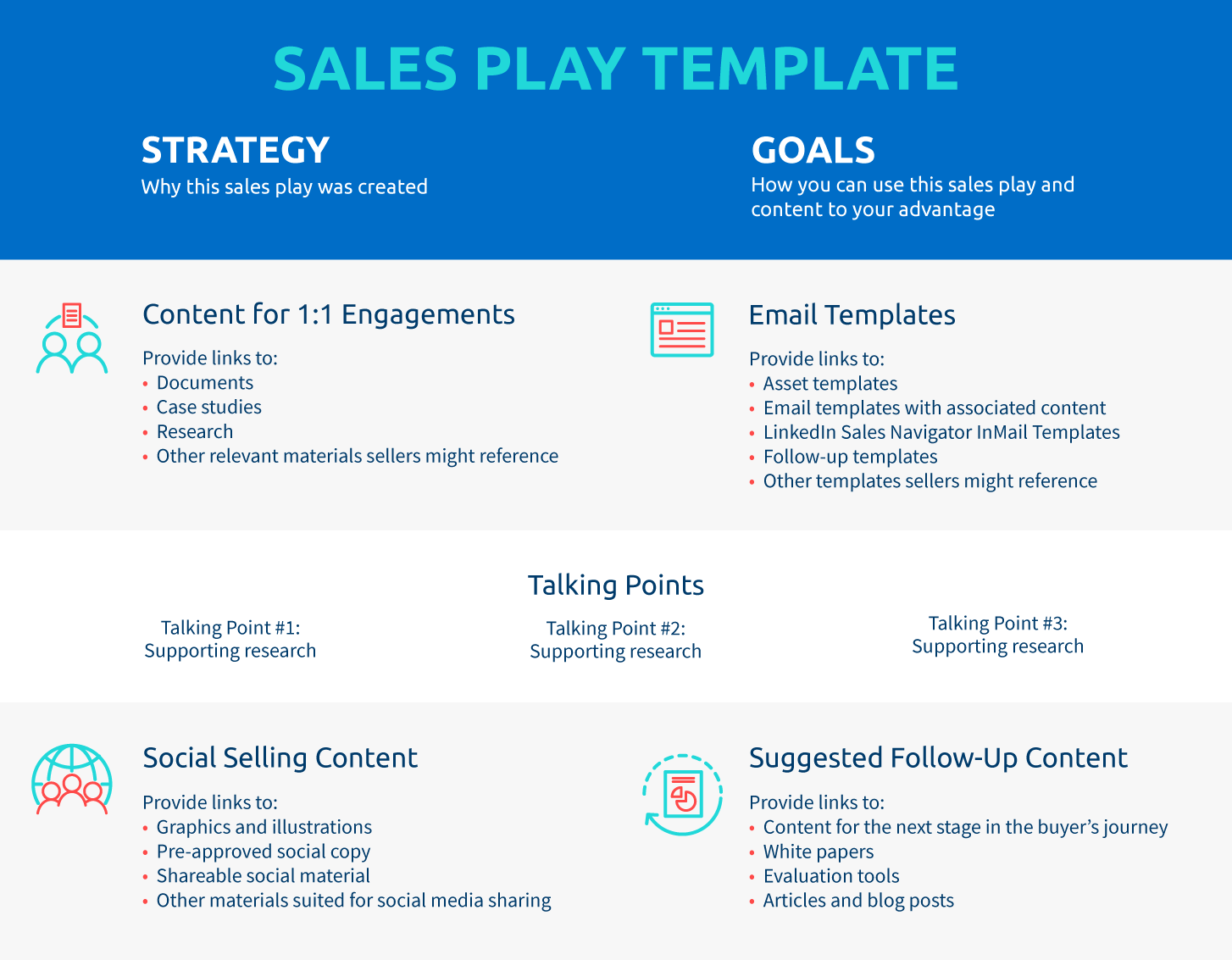
The static playbook is the familiar one: a PDF, a Notion space, a Highspot or Seismic collection, a folder on the shared drive. It holds discovery frameworks, qualification criteria, persona maps, objection handlers, competitive battle cards, pricing guardrails, and email templates. It is authored once, usually alongside annual planning, and updated when someone remembers. Its strength is coherence — a rep who reads it end to end understands the whole motion, why the company wins, and what the ideal deal looks like. Its weakness is retrieval. Nothing in a rep's day pushes them toward the document. A seller on a 40-call week does not stop mid-cycle to search a wiki for the right multi-threading approach; they improvise from memory. The document becomes an onboarding artifact and a manager's reference, which is a real use, just not the one it was funded for.

The dynamic playbook flips the model. Instead of the rep going to the content, the content comes to the rep. Rules, workflow logic, or an AI layer watch the CRM for conditions — a stage transition, 14 days of no logged activity, a single-threaded opportunity above a dollar threshold, a competitor named on a call transcript, a renewal 90 days out — and when a condition fires, a short recommended action appears in the record the rep is already looking at. The unit of content shrinks from a chapter to a micro-play: three steps, one screen, one clear outcome. Adoption improves because the friction of retrieval disappears. The cost moves from writing to engineering. Someone has to define the trigger taxonomy, own the false-positive rate, keep the content current, and answer for the day the automation nags twelve reps about a stage change that a data sync caused rather than a human.
The hybrid is what most mature teams actually land on, and it is worth naming as a first-class option instead of a compromise. The static core carries the durable material — value proposition, ICP definition, persona pain maps, discovery framework, pricing philosophy, competitive positioning. That material changes a few times a year and rewards being read as a whole. The dynamic layer carries the perishable, situational material — the specific email to send when a champion goes quiet, the two questions to ask when procurement enters, the three artifacts to attach when security review starts. Reps get the why from the core and the how from the layer, and the two reinforce each other. When a micro-play fires, it can deep-link into the relevant static section for the rep who wants context.
There is a fourth shape worth mentioning because it is increasingly common in 2027 and often gets conflated with the dynamic playbook: the conversation-intelligence-driven playbook. Here, the trigger source is not the CRM record but the call recording. Platforms that transcribe and analyze calls can detect that a rep skipped pricing discovery, that a stakeholder said something risk-shaped, or that the talk ratio ran 80/20 the wrong way. The recommended play arrives after the call rather than during the deal. This is genuinely useful for coaching and for catching what CRM fields never capture, but it is a different loop with a different latency, and treating it as a substitute for in-record guidance leaves the moment-of-need gap unfilled. The best implementations run both: call-derived signals feed the coaching loop, record-derived signals feed the execution loop.

The distinction that matters across all four is reference versus execution. A reference tool is consulted deliberately. An execution tool interrupts. Interrupting well is a design discipline — too rare and it is invisible, too frequent and reps learn to dismiss it the way they learned to dismiss every other notification. Static playbooks fail quietly through neglect. Dynamic playbooks fail loudly through noise, which at least gives you something to fix.
How to decide between them
The choice is not a maturity ladder where dynamic is the destination and static is the starter kit. Several genuinely good sales organizations run static-plus-manager-coaching indefinitely and outperform peers with elaborate automation, because their motion is simple and their managers are strong.

Data reliability is the gate, not the budget. A trigger is only as good as the field it watches. If stage changes happen in batches on Friday afternoon because reps hygiene their pipeline before the forecast call, then "stage changed to Negotiation" is not a real-time signal — it is a weekly artifact, and a play that fires on it arrives days late. Before committing to a dynamic layer, audit the three or four fields you intend to trigger on: what percentage are populated, how quickly after the real-world event they update, and how often they change in ways no human caused. If stage dates lag the underlying event by more than a couple of days on average, fix that first. Activity-based triggers (no logged email or call in N days) tend to be more trustworthy than field-based ones because they derive from system-captured behavior rather than manual entry.
Deal complexity determines how many trigger points exist at all. A transactional motion with a two-call cycle and one buyer has maybe three moments where guidance changes an outcome. An enterprise motion with six stakeholders, a security review, a procurement gate, and a nine-month cycle has dozens. The dynamic layer earns its configuration cost proportionally to the number of distinct decision points in the cycle. If your average deal touches two people and closes in three weeks, the honest recommendation is a tight static core and better call coaching.
Team size changes what problem you are solving. With eight reps, the variance problem is manageable through direct management — a leader can sit in on calls and correct in real time. Past roughly 25 to 30 reps across multiple segments or geographies, no manager can hold the whole picture, and the playbook stops being a training aid and becomes the mechanism that keeps the motion consistent. Distributed and asynchronous teams hit this threshold earlier because informal knowledge transfer — the overheard call, the hallway question — largely stopped working.

Ask who owns the thing on day 91. This is the question that predicts failure best. Dynamic playbooks decay faster than static ones because triggers drift as the CRM schema changes, as new stages get added, as integrations break. Someone needs a standing calendar block to review adherence data, prune noisy triggers, and refresh content. If no name goes in that box, build the hybrid and skip the automation, because an unmaintained dynamic layer is worse than no layer — it actively teaches reps that the system's suggestions are wrong.
Consider the adjacent surfaces too. Playbook logic rarely stays confined to new-business AEs. The same trigger infrastructure serves SDR sequencing decisions, CS renewal and expansion motions, and partner-channel enablement, and the marginal cost of extending a working trigger taxonomy to those teams is far lower than standing one up from scratch. If a customer-success team is separately shopping for a health-score-driven play system, that is a strong argument for building the shared layer once rather than twice. The same logic applies to onboarding: a rep in week two who is walked through the same micro-plays the veterans get reaches competency faster than one who reads a document and then guesses.

Concrete numbers behind each option
Costs vary widely by vendor, scope, and how much internal capacity you have, so the useful thing is to reason about the shape of the investment rather than quote figures that will not match your quote.
Static core. The dominant cost is people-time, not software. Extracting repeatable plays means reviewing recent wins and losses — a reasonable sample is the last 20 to 40 closed opportunities across segments — interviewing your top three to five performers, and drafting. Budget a few weeks of a RevOps or enablement person's time, plus scattered hours from reps and managers. The finished core should land somewhere around 30 to 50 pages; past that, completeness starts working against use. Ongoing cost is a quarterly refresh cycle plus ad-hoc updates when pricing, packaging, or the competitive set shifts. Adoption is measured through document views and search queries, which is a weak proxy — views tell you someone opened a file, not that behavior changed.
Dynamic layer. Costs split three ways: the platform (often native CRM workflow capability you already pay for, or an added enablement or conversation-intelligence seat), the configuration effort (trigger design, testing, integration into email/task/call-logging), and the ongoing tuning. The configuration phase is consistently underestimated. A realistic first build covers 8 to 12 triggers, not 40, and each one needs a definition, a content payload, a test against historical data, and a false-positive threshold. Ongoing cost is a recurring monthly review — a few hours, but non-negotiable ones. Adoption is measured properly here: adherence rate per play, defined as recommended actions completed within a defined window after the trigger fired.

Hybrid. Additive on cost, but sequenced so it does not all land at once — the static core in the first quarter, the first trigger set in the second. The advantage is that the static work is not wasted; it becomes the source material the micro-plays compress.
On outcomes, be disciplined about what you claim. The credible metrics are adherence rate (what percentage of fired plays get acted on), win-rate differential (deals where the play was followed versus matched deals where it was not), cycle-time change, and time-to-first-quota for new hires. Reported gains in the public literature range from single-digit percentage-point improvements to considerably more when data quality is high and the playbook maps tightly to how the team actually sells. Treat any figure that arrives without a stated baseline and comparison group as marketing.
Set your own thresholds before you start, because post-hoc thresholds always get met. Reasonable ones: a play with adherence below about 30 percent after two months either has a bad trigger or bad content — investigate, then retire it if the second attempt fails. A trigger whose false-positive rate exceeds roughly one in five should be paused rather than tolerated, because reps generalize from the noisy play to the whole system. Expect the first cohort of plays to have a meaningful retirement rate; that is a healthy sign of pruning, not a failed project.
One number worth tracking that teams routinely skip: the dismissal reason. When a rep skips a play, capture why in one tap — wrong timing, not relevant, already did it, disagree. "Already did it" at high volume means the trigger is firing after the behavior, which is a timing bug worth fixing rather than a content problem.
Implementation details and sequencing
Sequencing matters more than any individual step, because trust compounds in one direction and evaporates in the other. Reps who see three useless suggestions in week one will not give week four a fair hearing.
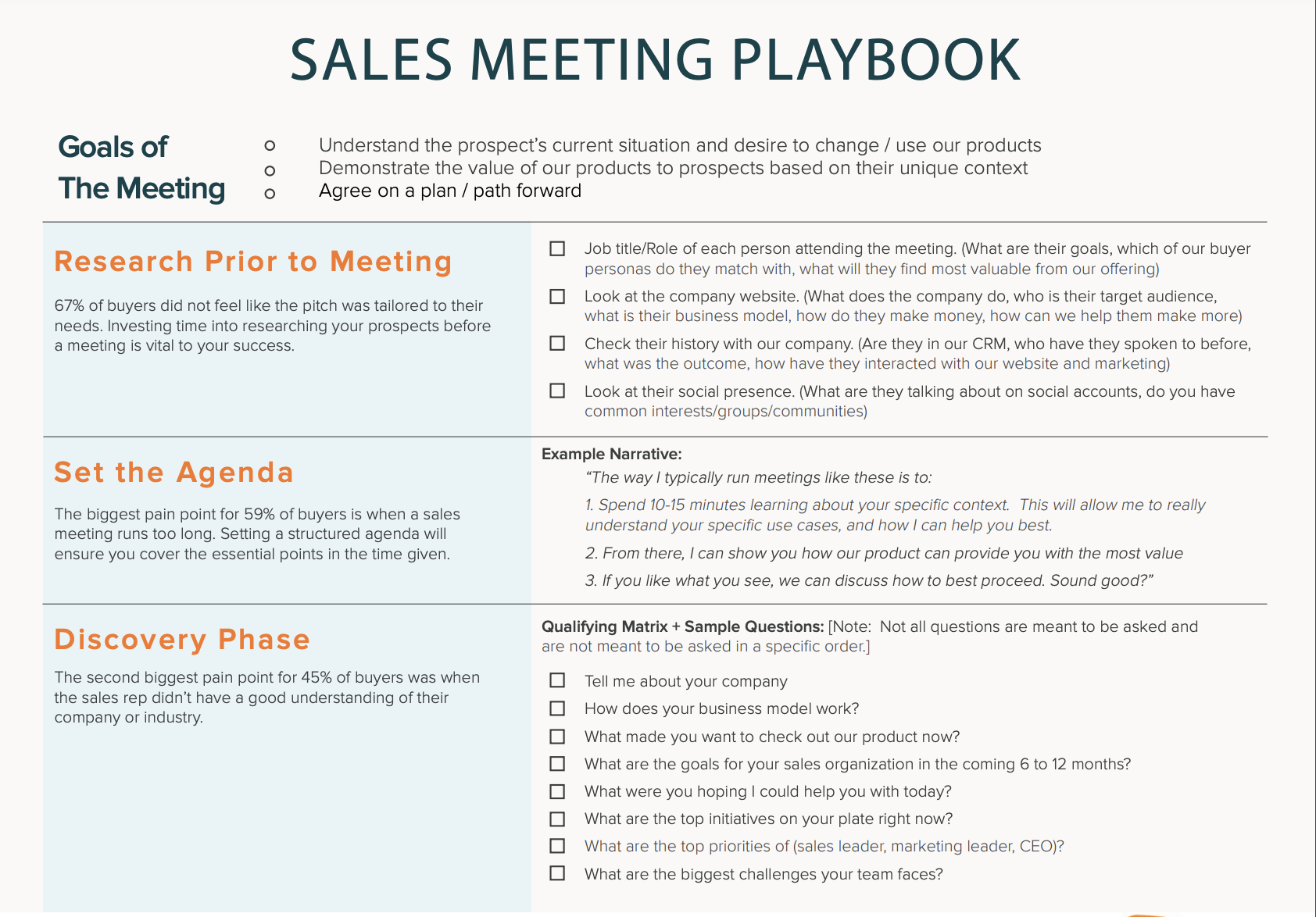
Start with the data audit, and be willing to fail the project here. Check completeness and freshness on the fields you plan to trigger on, and check them by segment — enterprise reps and SMB reps often have wildly different hygiene. Fix or drop any field that fails.
Build the static core from evidence, not from opinion. Pull the recent closed-won and closed-lost set and look for what actually differed: which stakeholders got involved and when, which artifacts were shared, how pricing was introduced, where the losses stalled. Interview top performers with specific questions — "walk me through the last deal you saved" produces better material than "what's your process." Draft it, then pilot with five to eight reps for two to three weeks and ask a narrow question: what did you look for and not find?
Define triggers before writing micro-plays. The taxonomy comes first because it constrains the content. Good candidates share three properties: the underlying event is reliably captured, the timing is actionable, and there is a genuinely better action than the default. Common starting set — stage advanced to a late stage, no activity logged in 10 to 14 days on an open opportunity above a value threshold, a single contact associated with a large deal, close date pushed twice, competitor mentioned, renewal window opening.
Keep each micro-play to three steps and one screen. Name the situation, give the action, state the expected outcome. Attach a template where one applies. If a play needs a paragraph of setup, it belongs in the static core with a deep link from the play.
Roll out to one segment before the company. Watch adherence, false positives, and — most importantly — the qualitative reaction. Sit with two reps and watch them work a day. Then run a full month before declaring the pilot a success, because novelty inflates week-one numbers.
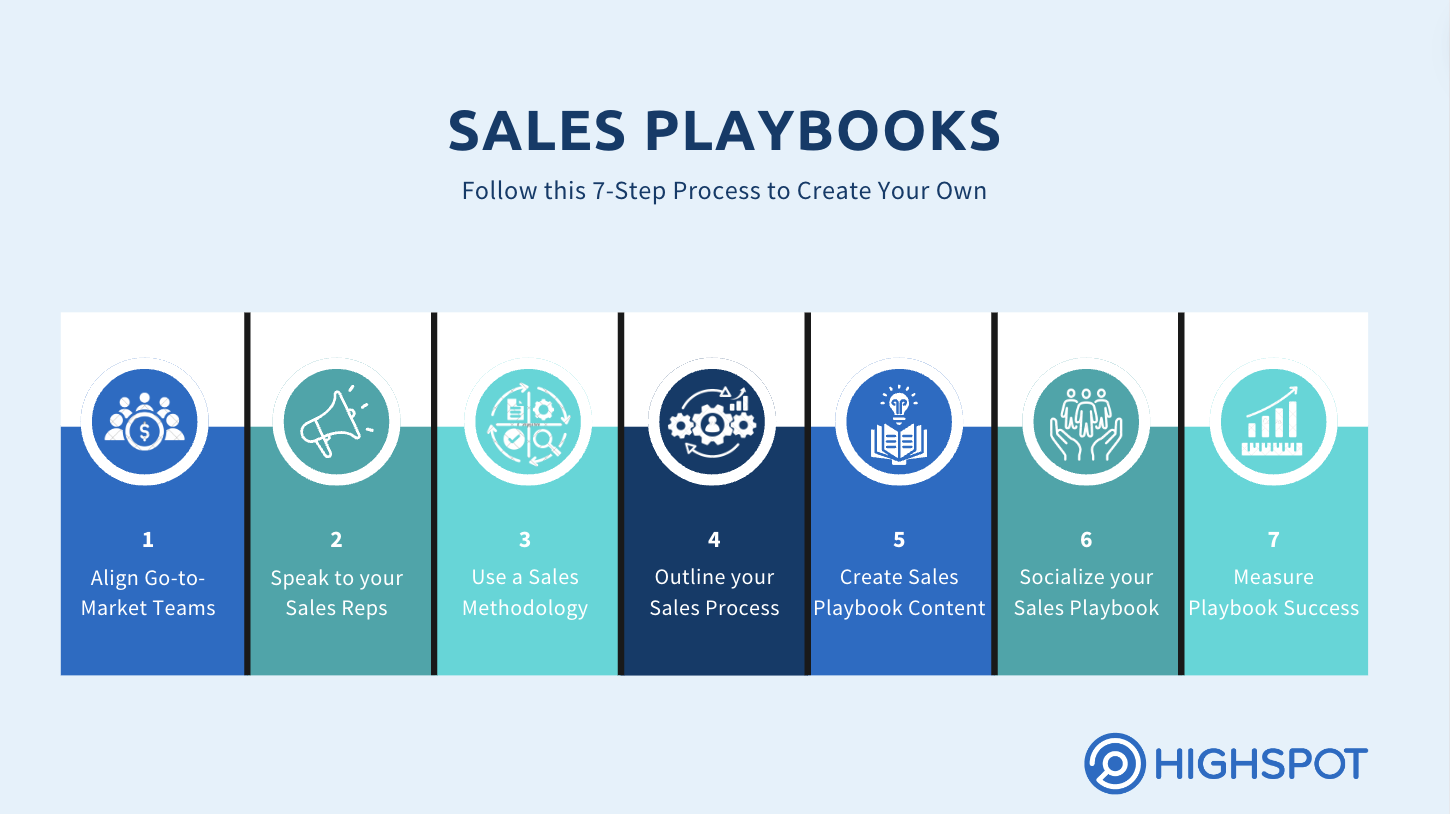
Establish governance with a specific owner and cadence. Monthly: review per-play adherence, read the dismissal reasons, retire the bottom performers, promote anything managers are recreating manually. Quarterly: refresh the static core and re-validate the trigger set against any CRM schema changes. Keep a changelog reps can see — visible maintenance is itself an adoption signal, because it tells the team that the feedback they gave went somewhere.
Involve reps as authors, not just testers. The single strongest predictor of adoption is whether the people expected to follow a play helped write it. Credit them by name in the play itself where your tooling allows. A play attributed to a respected peer carries authority that no enablement byline ever will.
Related questions
How do you measure playbook adoption in 2027?
Measure adherence per play — the share of fired triggers where the recommended action was completed in a defined window — not document views. Pair it with a win-rate comparison between followed and unfollowed plays on similar deals, and track time-to-first-quota for new hires as a slower-moving signal.
What tools are needed for a dynamic sales playbook?
A CRM with workflow automation, a signal source (native CRM logic, a conversation-intelligence platform, or an analytics layer), and a way to deliver short content inside the record. Integration depth matters far more than feature count — a play that cannot create the task it recommends adds friction.
How often should a sales playbook be updated?
Review dynamic plays monthly, since triggers drift and content goes stale quickly. Refresh the static core quarterly, or immediately after a pricing change, product launch, or competitive shift. A visible changelog matters as much as the cadence.
Can a small team benefit from a dynamic playbook?
Yes, when deals are complex or high-value enough that consistency pays. For a small team running short transactional cycles, a tight static core plus direct call coaching usually beats automation, because a manager can correct behavior faster than a trigger can detect it.
What is the biggest mistake when building a sales playbook?
Writing it in isolation from the reps expected to use it. Plays authored by enablement alone describe an idealized process; plays co-written with top performers describe what actually closes deals, and reps recognize the difference immediately.
FAQ
How do you build a sales playbook that reps actually use?
Extract plays from real won and lost deals rather than theory, co-write them with your best reps, keep each one to three steps, and deliver them inside the CRM at the moment the deal condition occurs. Then measure adherence per play and delete what nobody follows. The discipline that makes it stick is subtraction — a playbook that only grows becomes a document nobody opens.
What affects adoption the most?
Four things, roughly in order: whether the trigger fires at the right moment, how few steps the recommendation asks for, whether it appears in the tool the rep already has open, and whether reps helped create it. Content quality matters less than any of these, which is counterintuitive to most enablement teams.
How do I mitigate risk during rollout?
Clean the trigger fields before enabling anything, launch to one segment first, cap the initial trigger count around a dozen, and set a false-positive threshold that pauses a play automatically rather than relying on someone to notice. Give reps a one-tap dismissal with a reason, and act on those reasons within the same month.
What monitoring framework should I use?
A small dashboard covering adherence percentage per play, win-rate differential on followed versus unfollowed plays, average cycle-time change, and false-positive rate. Add a quarterly rep survey with two questions — is this useful, do you trust it — and a monthly review meeting with RevOps, sales leadership, and two working reps who rotate.
Does an AI layer replace the static core?
No. An AI layer is good at detecting conditions and surfacing the right short action; it is not a substitute for a shared understanding of who you sell to and why you win. Teams that skip the core end up with reps who follow prompts competently and cannot handle the conversation that goes off-script.
What happens when reps ignore a play?
Treat it as data about the play, not about the rep. Check the timing first — a high rate of "already did it" dismissals means the trigger is late. Then check relevance by segment, since a play tuned for enterprise deals often misfires in SMB. If a second version still underperforms after two months, retire it.
Sources
- https://blog.hubspot.com/sales/sales-playbook
- https://www.salesforce.com/sales/playbook/
- https://www.gong.io/blog/
- https://hbr.org/topic/subject/sales
- https://www.gartner.com/en/sales
- https://www.forrester.com/blogs/category/sales/
- https://www.pipedrive.com/en/blog/sales-playbook
- https://www.zendesk.com/blog/
Related on PULSE
- [How do you update a sales playbook for changing market conditions](/knowledge/se12)
- [How do you build a sales enablement content governance model that keeps materials current in 2027](/knowledge/se15)
- [How do you build a sales onboarding curriculum that shortens time-to-first-quota in 2027](/knowledge/se16)
This page will be disappearing soon. Save it to your device for $1 — or read it free while it is here.
@Kory-White- · if Venmo asks, the last 4 of my number are 2012
 pulse-sales-enablementHow do you create effective battle cards for competitive selling
 pulse-sales-enablementHow do you build a sales enablement onboarding program for a global sales team in 2027
 pulse-sales-enablementHow do you measure the ROI of a sales enablement program in 2027
 pulse-sales-enablementHow do you design a sales enablement onboarding program that measures ramp time by role in 2027
 pulse-sales-enablementHow do you create a sales enablement content feedback loop with frontline sellers in 2027
 pulse-sales-enablementHow do you establish a coaching cadence that improves rep performance
 pulse-sales-enablementHow do you build a sales enablement training calendar that balances onboarding with ongoing development in 2027
 pulse-sales-enablementHow do you keep sales enablement content from becoming outdated after launch in 2027
 pulse-sales-enablementHow do you design a sales enablement playbook adoption scorecard that tracks usage in 2027
 pulse-sales-enablementHow do you create a sales enablement readiness scorecard for each rep in 2027