
Lincoln’s Gettysburg Address (1863) — Text, Context, and Why It Endures
 Curated byKory White · Fractional CRO · Maryland
 PULSEKNOWLEDGE LIBRARY
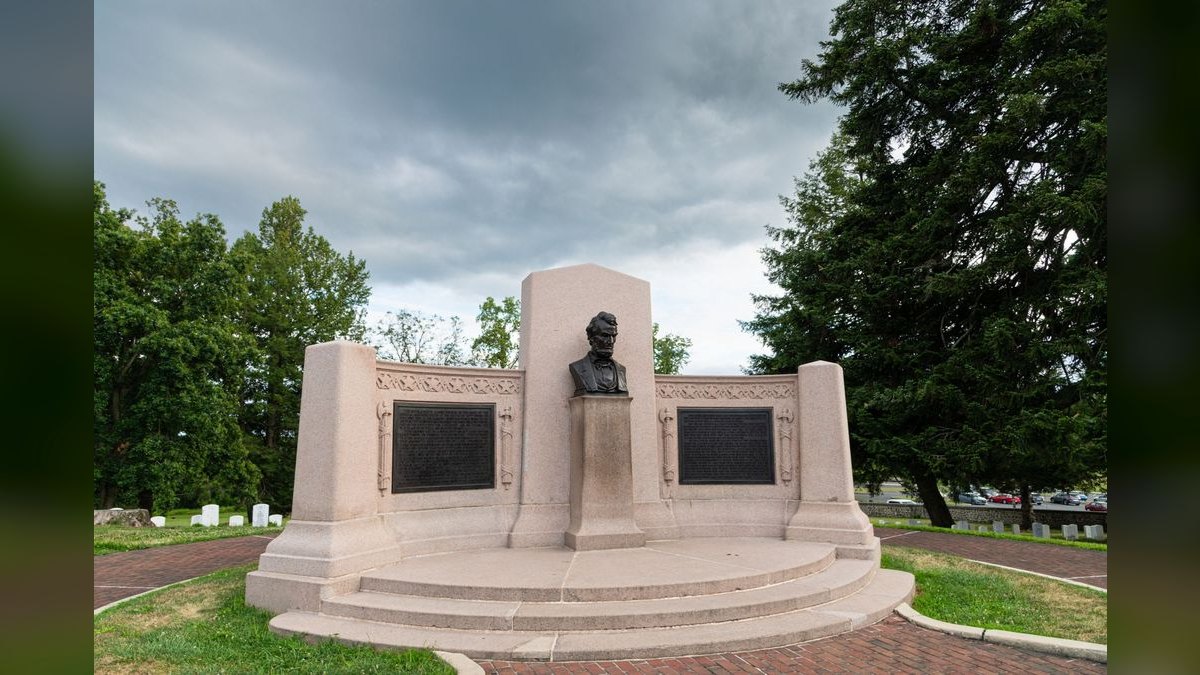
Abraham Lincoln delivered the Gettysburg Address on November 19, 1863, at the dedication of the Soldiers' National Cemetery in Gettysburg, Pennsylvania, during the American Civil War. The brief, 272-word speech reframed the war as a struggle for the principle of human equality, famously beginning with "Four score and seven years ago." Its enduring power lies in its concise, poetic redefinition of national purpose—asserting that government "of the people, by the people, for the people" must not perish from the earth. The address transformed a battlefield dedication into a timeless meditation on democracy, sacrifice, and the unfinished work of liberty, remaining one of the most quoted and analyzed speeches in American history.
The Gettysburg Address is far more than a historical artifact; it is a living document whose rhetorical genius and moral vision continue to shape how Americans understand their nation and its purpose. Delivered at a moment of profound national crisis, the speech distilled the meaning of the Civil War into a few unforgettable sentences, creating a framework for democratic renewal that has inspired generations. This guide explores the address in depth, from its historical context and rhetorical construction to its immediate reception and enduring legacy, offering a comprehensive resource for anyone seeking to understand why 272 words have achieved immortality.
Historical Context of the Gettysburg Address
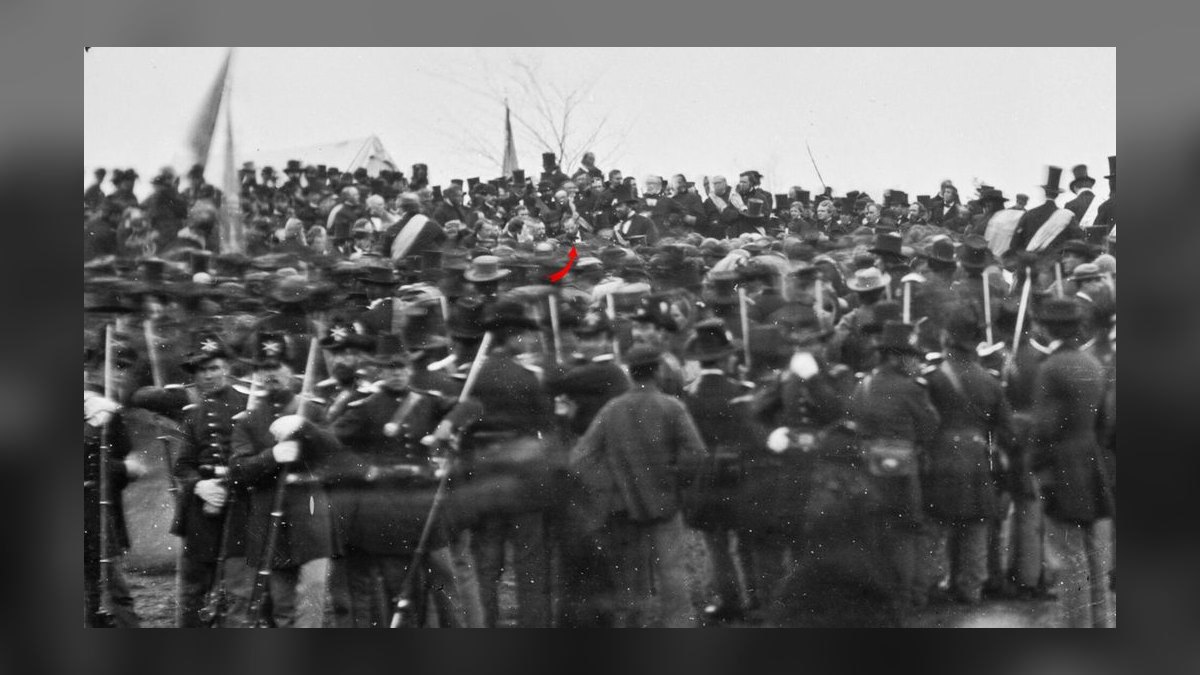
The Battle of Gettysburg, fought from July 1 to July 3, 1863, was the bloodiest engagement of the American Civil War, resulting in approximately 51,000 casualties—dead, wounded, and missing—across both Union and Confederate forces. The Union victory marked a turning point in the war, halting General Robert E. Lee's second invasion of the North. In the aftermath, a national cemetery was established to properly bury the Union dead, and a dedication ceremony was planned for November 19, 1863. The featured speaker was Edward Everett, a former U.S. senator, governor of Massachusetts, and renowned orator who delivered a two-hour, 13,607-word address. Lincoln was invited almost as an afterthought to offer "a few appropriate remarks" to formally consecrate the ground. The President's brief remarks, lasting just two to three minutes, were initially met with mixed reactions but would soon eclipse Everett's learned oration in historical significance.
The context of the speech is crucial to understanding its power. The nation was deeply divided, with the war's outcome still uncertain. The Emancipation Proclamation had been issued earlier that year, but its long-term effects were unclear. Lincoln needed to articulate a vision that would justify the immense sacrifice of the war and give meaning to the deaths of so many soldiers. The speech's genius lies in how it accomplishes this without mentioning slavery, the Confederacy, or specific battles, instead elevating the conflict to a universal struggle for democratic self-government. This approach allowed the address to transcend its immediate context and speak to future generations facing their own tests of national unity.
Rhetorical Analysis of the Gettysburg Address
Lincoln's speech achieves its power through masterful rhetorical construction. The opening phrase, "Four score and seven years ago," employs biblical language to connect the present moment to the nation's founding in 1776, framing the Civil War as a test of whether a nation "conceived in Liberty" can endure. The speech follows a three-part structure: the past of founding, the present of testing, and the future of rededication. Lincoln uses the word "dedicate" or "dedicated" five times, each time shifting the burden from the dead soldiers to the living audience. The phrase "we cannot dedicate—we cannot consecrate—we cannot hallow" employs a tricolon to emphasize that the soldiers themselves have already consecrated the ground with their sacrifice. The famous closing line, "government of the people, by the people, for the people," echoes earlier formulations by John Wycliffe and Daniel Webster but achieves unmatched resonance through Lincoln's precise placement as the final hammer blow. The address avoids naming specific generals, battles, or even slavery, instead elevating the conflict to a universal struggle for democratic self-government.
The rhetorical architecture of the Gettysburg Address rewards close structural analysis. Lincoln opens with a reference to 1776, creating an immediate temporal bridge between the Founding and the present crisis. The speech then moves through three distinct movements: past, present, and future. Lincoln uses the word "dedicate" five times, each iteration shifting the burden from the dead soldiers to the living audience. The famous closing phrase was not original to Lincoln, but his placement of it as the final rhetorical hammer blow gave it unmatched force. The address employs a subtle tricolon structure in multiple places: "we cannot dedicate—we cannot consecrate—we cannot hallow"; "of the people, by the people, for the people." This triadic rhythm creates a sense of completeness and inevitability. Notably, Lincoln never mentions slavery directly, nor does he name the Confederacy—instead, he elevates the conflict to a universal struggle for democratic self-government, making the speech applicable to any generation facing its own tests of national unity.
Immediate Reception and Evolution into Myth
When Lincoln finished speaking, the crowd's reaction was surprisingly muted—polite applause rather than thunderous ovation. Contemporary newspaper coverage was sharply divided along party lines. The Democratic-leaning *Chicago Times* dismissed it as "silly, flat, and dishwatery," while the Republican *Springfield Republican* called it "a perfect gem." Lincoln himself reportedly told his bodyguard Ward Hill Lamon that his speech "would not scour"—a frontier expression meaning it would not wear well with time. Yet within weeks, the address began its transformation. Edward Everett wrote to Lincoln the next day: "I should be glad if I could flatter myself that I came as near to the central idea of the occasion in two hours as you did in two minutes." The Associated Press telegraphed the speech nationally, and by early December, it was being reprinted in full across Union states. The turning point came in 1864, when the U.S. Sanitary Commission distributed thousands of pamphlet copies to soldiers, embedding the words into the national consciousness. Over the following decades, the address was memorized in schoolrooms, transforming from a contested political statement into a sacred civic text.
The evolution of the Gettysburg Address into a national myth is a fascinating study in cultural memory. The speech's brevity and ambiguity allowed it to be claimed by different groups for different purposes. During the Reconstruction era, it was used to justify both lenient and harsh policies toward the former Confederacy. In the early twentieth century, it became a staple of American civic education, recited by schoolchildren across the country. The address was also subject to textual variation—there are five known manuscript versions, each with slight differences—which contributed to its mystique. The most famous version, the Bliss Copy, was written in 1864 for a charitable purpose and is the text most commonly quoted today. The speech's journey from a contested political statement to a sacred text reflects the broader process by which Americans have constructed a national identity around shared symbols and narratives.

The Address as Living Document
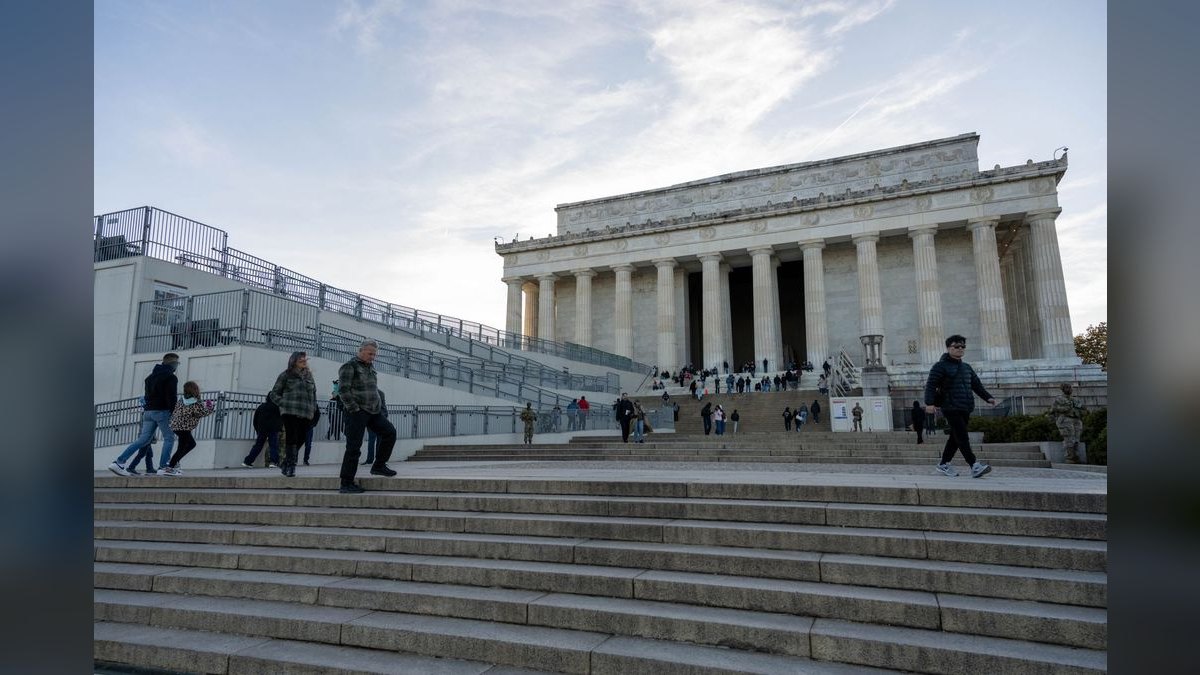
The Gettysburg Address continues to resonate because its core argument—that democracy is fragile and requires constant renewal—remains urgently relevant. Every generation since 1863 has found new meaning in its words. During the civil rights movement, Martin Luther King Jr. stood on the steps of the Lincoln Memorial in 1963, exactly one hundred years after Gettysburg, and reframed Lincoln's "unfinished work" as the struggle for racial equality. Presidents from Franklin D. Roosevelt to Ronald Reagan have quoted the address to rally the nation during crises. However, the speech has also been weaponized by opposing political factions: both anti-war activists and military hawks have cited "the last full measure of devotion" to justify their positions. In classrooms today, the address is often taught as a model of persuasive writing, but its deeper lesson is about the ongoing labor of self-governance. Lincoln's implicit warning—that a nation can die if its citizens fail to recommit to its principles—has proven prescient in eras of polarization. The speech's refusal to declare victory or assign blame makes it a flexible vessel for whatever meaning a given moment requires. This adaptability, combined with its extraordinary compression of complex ideas into ten sentences, ensures the Gettysburg Address will continue to be read, recited, and debated as long as the American experiment endures.
The address's status as a living document is evident in its continued presence in American public life. It is quoted in political speeches, referenced in legal arguments, and studied in classrooms. Its phrases have entered the common lexicon: "the last full measure of devotion," "the great task remaining before us," and "government of the people, by the people, for the people" are instantly recognizable to most Americans. The speech has also inspired countless works of art, literature, and music, from Aaron Copland's "Lincoln Portrait" to Steven Spielberg's film "Lincoln." Its influence extends beyond the United States; leaders around the world have drawn on its language and themes when articulating their own visions of democracy and national purpose. The Gettysburg Address reminds us that the work of democracy is never finished, that each generation must rededicate itself to the principles of liberty and equality. This message of ongoing struggle and renewal is perhaps the most important lesson the speech offers to contemporary audiences.
Why 272 Words Achieved Immortality
The speech's immortality stems from its compression. In just 272 words, Lincoln manages to accomplish what most orators cannot achieve in hours: he defines the stakes of the conflict, honors the dead, assigns a task to the living, and articulates a vision for the future. Every word carries weight; there is no filler, no digression, no unnecessary detail. This economy of language gives the speech a density of meaning that rewards repeated reading. The address also benefits from its musicality—the rhythm and cadence of the sentences are carefully crafted to be memorable and moving. The opening phrase "Four score and seven years ago" establishes a biblical register that elevates the entire speech. The closing lines build to a crescendo that leaves the audience with a sense of purpose and hope.
Lessons for Modern Communication
The Gettysburg Address offers timeless principles for effective communication. First, brevity is power—two minutes that people memorize beat two hours they forget. Second, build a past-present-future spine: where we came from, what we face now, what we must do next. This three-beat structure gives even a short speech real architecture. Third, use the rule of three: "dedicate, consecrate, hallow" and "of the people, by the people, for the people" are triads that land in the ear and stay there. Fourth, shrink yourself to lift the moment—Lincoln says his own words don't matter, which is exactly why they did. Fifth, end by assigning a task: don't close on a summary, but on what the audience must now do. Finally, lift the language: a single elevated phrase at the open sets a tone that ordinary words cannot match.

These lessons are not limited to public speaking; they apply to any form of persuasive communication, from business presentations to personal correspondence. The Gettysburg Address demonstrates that the most powerful messages are often the simplest, that emotion and logic can coexist, and that a clear vision of the future can inspire action in the present. In an age of information overload, Lincoln's example reminds us that less is often more, that a single well-chosen word can be worth a thousand, and that the most enduring messages are those that speak to universal human concerns.
FAQ
What exactly is the Gettysburg Address? It's a short speech Abraham Lincoln delivered on November 19, 1863, at the dedication of the Soldiers' National Cemetery in Gettysburg, Pennsylvania. The address runs just 272 words and redefined the purpose of the Civil War as a struggle for national unity and human equality.
How long did Lincoln actually speak that day? The speech lasted about two to three minutes, which surprised many in the audience expecting a longer oration. Edward Everett, the main speaker, had spoken for nearly two hours before Lincoln rose.
Is the "government of the people, by the people, for the people" line original to Lincoln? The phrasing was not entirely new—similar concepts appear in earlier writings, including those of John Wycliffe and Daniel Webster. But Lincoln's concise, powerful use in this context gave the idea its enduring, iconic form.
Why was the speech so short compared to other 19th-century addresses? Lincoln deliberately kept it brief, focusing on core principles rather than detailed policy or battle accounts. He trusted that a few clear, resonant sentences would carry more weight than a lengthy oration.
Did the audience immediately recognize the speech as great? Reactions were mixed. Some newspapers praised it, while others, especially partisan critics, dismissed it as "silly" or "flat." Its reputation grew over the following decades as its language and meaning were studied and quoted.
Why does the Gettysburg Address still matter today? It distills the American experiment into a single, memorable vision: a nation dedicated to liberty and equality, tested by conflict, and committed to enduring. Its themes of sacrifice, renewal, and democratic purpose continue to resonate in civic life and political discourse.
How many versions of the Gettysburg Address exist? There are five known manuscript versions, each with slight variations, reflecting Lincoln's careful editing process. The most famous is the Bliss Copy, which is the version most commonly quoted today.
Sources
- National Archives: Gettysburg Address
- Library of Congress: Abraham Lincoln Papers
- Abraham Lincoln Presidential Library and Museum
- The Gilder Lehrman Institute of American History
- PBS American Experience: The Civil War
- Smithsonian Magazine: The Gettysburg Address
- White House Historical Association
- Ford's Theatre: Lincoln's Speeches
- Encyclopedia Britannica: Gettysburg Address
Related on PULSE
- [Lincoln’s Second Inaugural Address (1865) — Text, Context, and Why It Endures](/knowledge/sp0006)
- [JFK’s Inaugural Address (1961) — Text, Context, and Why It Endures](/knowledge/sp0002)
- [Franklin Roosevelt’s Day of Infamy (1941) — Text, Context, and Why It Endures](/knowledge/sp0037)
- [What Makes Lincoln’s Gettysburg Address a Great Speech](/knowledge/sp0230)
- [Lou Gehrig’s Luckiest Man Farewell (1939) — Text, Context, and Why It Endures](/knowledge/sp0016)
- [Reagan’s Challenger Address (1986) — Text and Why It Endures](/knowledge/sp0012)
@Kory-White- · if Venmo asks, the last 4 of my number are 2012
 pulse-moviesTop 10 Movies on Netflix 2027
 pulse-moviesTop 10 Movies on Max 2027
 pulse-moviesTop 10 Fantasy Movies of All Time in 2027
 pulse-moviesTop 10 Documentaries of All Time in 2027
 pulse-moviesTop 10 Superhero Movies of All Time in 2027
 pulse-moviesTop 10 Romance Movies of All Time in 2027
 pulse-moviesTop 10 Westerns of All Time in 2027
 pulse-moviesTop 10 Musical Movies of All Time in 2027
 pulse-moviesTop 10 Thriller Movies of All Time in 2027
 pulse-moviesTop 10 Crime Movies of All Time in 2027