
60-Min Sales Training: Discovery Call Fundamentals
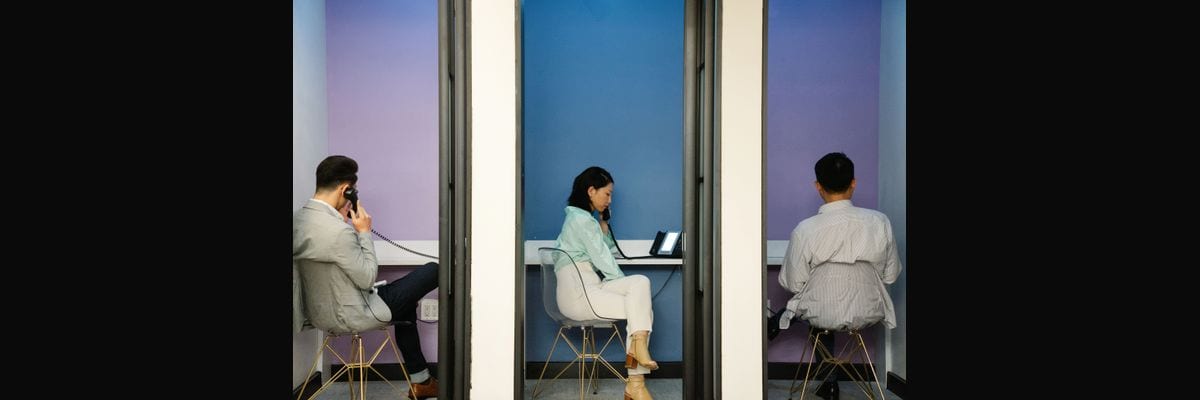
This 60-minute Monday-morning meeting trains your reps to run a 30-minute discovery call that books a second meeting more than 60% of the time using the A-P-I-C sequence (Agenda, Pain, Impact, Close-the-loop), a verbatim agenda-set, and a one-sentence mutual close. By the end of the hour your team has scripts memorized, three role-plays in the books, and a Friday metric to hold them to.
1. Setup (5 min)
Open at 9:00 sharp. Pull up this agenda on the screen so reps see it before they sit down.
Verbatim opener for the manager:
"Team — one thing this hour. We are fixing the first 30 minutes of every discovery call. Today you walk out with a verbatim agenda-set, a tested pain-impact-budget sequence, and a mutual close you will use on every call this week. By Friday I am measuring second-meeting set rate off your Monday-through-Thursday discos. The bar is 60%."
Warm-up (2 min, round-robin): Each rep answers in one sentence — "What is the question on your last disco that produced the most useful answer?" Write them on the whiteboard. You will reference these in section 4.
Why this matters in 2027: Buyers arrive to disco calls having already watched your demo on a third-party AI summarizer. Gong's 2026 conversation-intelligence report flags that average disco call length dropped from 38 minutes in 2023 to 27 minutes in 2026 because buyers cut you off when you ask questions an AI could answer. The win is earned curiosity — questions only a human in their seat can answer.
Materials needed: Whiteboard, a printed copy of the script card (section 3) per rep, a stopwatch, and the Hyperbound or Second Nature role-play seat if you have it; otherwise pair role-plays work fine.
2. Framework Teach (15 min)

Teach the A-P-I-C sequence. Four beats, 30 minutes total, never longer.
A — Agenda Set (3 min of the call). State your purpose, ask theirs, agree on time. This is the upfront contract popularized by Sandler and modernized by John Barrows in his 2025 "Sell to Win" updates. Without it, you lose control of the call by minute 10.
P — Pain (12 min of the call). Open broad, then layer down. Use three-layer pain probing: (1) surface symptom, (2) operational cost, (3) personal cost to the buyer's quarter. Most reps stop at layer one. Chris Orlob (pclub.io) named this the "three-why drill" in 2025 and it remains the single highest-leverage habit on disco calls.
I — Impact (10 min of the call). Convert pain to dollars or to a metric the buyer owns. This is the MEDDIC "Metrics" pillar applied live. Force a number. "What does that cost you per month?" is the highest-converting impact question per Gong's 2026 dataset (n=2.1M calls).
C — Close-the-loop (5 min of the call). Recap, get a verbal yes on next steps, lock the calendar invite while you are still on Zoom. This is the mutual close.
Why four beats and not five or six: Bridge Group's 2026 SDR/AE benchmark found that reps who exceeded four discovery beats inside 30 minutes had 23% lower conversion to second meeting. Buyers feel interrogated. Four is the ceiling.
The killer mistake to flag now: Reps skip the agenda set because they think it sounds robotic. Without it, 48% of disco calls drift into demo by minute 12 (Gong 2026). You then lose the right to ask hard questions because you have already pitched.
3. Verbatim Scripts (15 min)

Hand out the script card. Read each block aloud as a team. Reps highlight the lines they will use today.
Script 1 — The Agenda Set (use in minute 1 of every disco):
"Thanks for the time, [name]. Here is what I had planned for the next 30 minutes. I want to spend the first 15 understanding what triggered you to take this call and what you are trying to fix. Then I want to share two or three things I have learned working with [similar company] that might or might not apply. We end with a clear yes or no on whether a second conversation makes sense. Anything you want to add or change to that?"
Why it works: It signals you will not pitch, it pre-commits the buyer to a decision at the end, and the "yes or no" language gives them permission to say no — which paradoxically raises conversion. Patrick Dang documented this in his 2025 "Real Discovery" course.
Script 2 — The Trigger Question (replaces "tell me about your role"):
"What changed in the last 90 days that made looking at [category] worth your time this quarter?"
Why it works: It forces the buyer to articulate the compelling event, the C in MEDDPICC. Generic "tell me about yourself" questions get generic answers. This one gets a story.
Script 3 — The Three-Why Drill (use after first pain surfaces):
- Layer 1: "Walk me through the last time that happened. What did it look like?"
- Layer 2: "When that happens, what does it cost the team — hours, headcount, missed pipeline?"
- Layer 3: "And how does that show up for you personally — your Q3, your board update, your team's bandwidth?"
Why it works: Layer 3 is where deals get funded. Until the buyer connects the pain to their scorecard, you do not have a champion. Andy Paul calls this the "personal cost gate" in his 2026 podcast series.
Script 4 — The Impact-to-Dollars Pivot:
"You said you are losing roughly two reps a quarter to manual CRM data entry. If I asked your CFO what fully-loaded cost that represents, what number would they give me?"
Why it works: You force the buyer to source a CFO-credible number themselves, which they will then quote back to their CFO when they champion you internally. This is the MEDDIC Metrics pillar weaponized.
Script 5 — The Mutual Close (use at minute 25):
"Quick recap so I make sure I heard you. You said [pain], it is costing you [dollar number], and you want to be live by [date]. Did I get that right? Great. The natural next step is a 45-minute working session with [economic buyer name] and me where I show you exactly how three companies like yours got from where you are to where you want to be. I have Thursday at 10 or Friday at 2 — which works? Let's pin it on the calendar now while we are both here."
Why it works: Three moves in one paragraph — recap (proves you listened), summarize-in-their-words (locks the pain in), then calendar-while-on-Zoom. The booked-on-Zoom move is the single biggest lever on second-meeting set rate per Chorus's 2026 data.
4. Role-Plays (15 min)

Three rounds, 5 minutes each — 4 minutes of role-play plus 1 minute of feedback. Pair reps. The non-rep is the observer with the rubric below.
Round 1 — The Agenda Set (paired, 5 min). Rep delivers Script 1 cold. Observer scores: Did they name a time-box? Did they use "yes or no"? Did they ask the buyer to add to it? Switch.
Round 2 — The Three-Why Drill (paired, 5 min). Buyer rep says: "Our forecast is always off by 20%." Selling rep must run all three layers without skipping to a pitch. Observer scores: Did they land layer 3 (personal cost)? If not, what did they substitute? Switch.
Round 3 — The Mutual Close (paired, 5 min). Buyer rep gives a lukewarm yes — "yeah, this seems interesting, send me some info." Selling rep must run Script 5 and book the meeting on Zoom. Observer scores: Did they offer two specific times? Did they ask to pin the calendar live? Did the buyer commit? Switch.
Observer rubric (1-3 scale per dimension):
- Script fidelity (1 = improvised badly, 3 = verbatim with natural delivery)
- Earned the next question (1 = jumped to pitch, 3 = layered properly)
- Closed the loop (1 = "I'll follow up," 3 = calendar locked on the call)
5. Common Pitfalls (5 min)

Walk the team through the four most common failure modes. Each one has a recovery line.
Pitfall 1 — Skipping the agenda set because "we already talked on the SDR call." No. The SDR-set agenda evaporates the moment a new person joins. Re-set it. Recovery line: "I know [SDR name] walked you through the basics. I want to make sure we are aligned on what today's 30 minutes covers."
Pitfall 2 — Drifting into demo at minute 12. The buyer says "can you show me the product?" Reps capitulate. Do not. Recovery line: "Happy to — and I want to make sure I show you the right two screens. Give me three more minutes on what you are trying to solve so the demo lands."
Pitfall 3 — Settling for "a few hundred thousand" as an impact number. Vague numbers do not move CFOs. Recovery line: "Help me get sharper than that — is it closer to 200K, 500K, or seven figures? I want to make sure my proposal matches the size of the problem."
Pitfall 4 — "I'll send you some times" instead of booking on the call. Booked-later meetings ghost at 4x the rate of booked-on-Zoom meetings (Chorus 2026). Recovery line: "Let's not bounce emails — I have my calendar open right now, you have yours, let's pick a time before we hop off."
The recovery move when a call goes sideways: Stop and re-contract. "I want to pause for ten seconds — are we still on track for what you wanted out of this call, or has something shifted?" This single line saves more disco calls than any other tactic per Pavilion's 2026 AE survey.
6. Action Items + Drill (5 min)

This week, every rep does the following:
- Use the A-P-I-C scripts verbatim on every disco call Tuesday through Thursday. No improvising the agenda set or the mutual close. The middle (pain and impact) can flex.
- Submit one Gong or Chorus link per day to the #disco-coaching Slack channel, timestamped to the section the rep wants feedback on.
- Log second-meeting set rate in the CRM disco-call custom field. Required field by Friday EOD.
Accountability metric: Friday 4 PM standup. We compare second-meeting set rate. Bar is 60% team-wide. Rep with the lowest set rate does one extra 10-minute role-play with the manager Monday morning at 8:30 — not a punishment, a tune-up. Rep with the highest set rate shares their best 4-minute clip at next Monday's training.
Manager homework: Listen to one full disco call per rep this week. Score on the section-4 rubric. Bring the scores to Friday's huddle.
Close the meeting at 9:59 with: "Scripts are on your desk. Calls start at 10. Go."
Related on PULSE
- [60-Min Sales Training: Cold Calling Fundamentals](/knowledge/st0432)
- [Mastering the Discovery Call: A 30-Minute Ready-to-Run Sales Meeting Template](/knowledge/st0776)
- [Top 10 Discovery Call Templates for Sales Training Workshops](/knowledge/st0733)
- [Top 10 discovery call role-play scenarios for sales teams](/knowledge/st0532)
- [Top 10 discovery call training drills for B2B sales reps](/knowledge/st0531)
- [Discovery Call Script A/B Testing: Compare and Contrast Session](/knowledge/st0742)
FAQ
What is the A-P-I-C sequence? A-P-I-C stands for Agenda, Pain, Impact, Close-the-loop. It’s a four-step framework taught in the training to structure a discovery call that consistently books a second meeting.
How long should a discovery call be? The training focuses on a 30-minute call. Reps are taught to keep it tight—agenda in 2 minutes, pain discovery in 10–12, impact in 8–10, and close in 2–3.
What success rate can reps expect after this training? The training claims reps can book a second meeting more than 60% of the time. Actual results vary by industry, lead quality, and rep skill, but the 60% benchmark is a common target.
Do reps need prior sales experience to benefit? No. The training is designed for any Monday-morning meeting—new hires and seasoned reps alike. The scripts and role-plays are built to be memorized quickly.
What happens during the role-play portion? Reps run three full discovery call role-plays using the A-P-I-C sequence. Each role-play is timed and critiqued so they leave with muscle memory, not just theory.
Is there a follow-up metric after the training? Yes. A Friday metric is set—typically the percentage of discovery calls that convert to a second meeting. Reps are held to that number to reinforce the training.
Sources
- Pavilion CRO Council, "2026 AE Productivity Benchmark," pavilion.com/research
- Bridge Group, "2026 SaaS AE Metrics Report," bridgegroupinc.com
- Gong, "2026 Conversation Intelligence Benchmarks: Discovery Calls," gong.io/resources
- Chorus by ZoomInfo, "2026 State of Sales Conversations," chorus.ai/research
- Chris Orlob, "The Three-Why Drill," pclub.io, 2025
- John Barrows, "Sell to Win — Discovery Module," jbsales.com, 2025
- Andy Paul, "Sell with Andy Paul" podcast — Personal Cost Gate episode, 2026
- MEDDIC Academy, "MEDDPICC Practitioner Guide," meddic.academy, 2026
- Sandler Training, "Upfront Contract Playbook," sandler.com, 2026
- Patrick Dang, "Real Discovery" cohort course, patrickdang.com, 2025
 pulse-toolsWhat Service Fees Should a Law Firm Charge?
 tltl0015
 pulse-toolsHow Many Attendants Should I Schedule Each Day at My Car Wash?
 tlHow Many Sales Reps Do I Need to Hire for My Merchant Services Company?
 tlHow Many Sales Reps Do I Need to Hire for My Logistics Company?
 tlHow Many Baristas Should I Schedule Each Shift at My Coffee Shop?
 tlHow Many Sales Reps Do I Need to Hire for My SaaS Company to Hit Next Year''s Goal?
 tlHow Many Sales Reps Do I Need to Hire for My Landscaping Company This Year?
 tlHow Many Membership Sales Reps Do I Need to Hire for My Gym?
 tlHow Many Sales Reps Do I Need to Hire for My Manufacturing Company?