
Cash-Pay Physical Therapy Package Selling — 60-Min Training
 Curated byKory White · Fractional CRO · Maryland
 PULSEKNOWLEDGE LIBRARY
> Cash-Pay Physical Therapy Package Selling is a 60-minute training for cash-based PT and wellness clinic owners, front-desk leads, and treating clinicians who present visit packages and plans of care to patients paying out of pocket — without the high-pressure feel that contradicts a healing relationship. It replaces the awkward "so, do you want to come back?" handoff with an outcome-first ritual: a pre-conversation brief built from the evaluation and the patient's functional goal, a value-vs-insurance presentation that frames cost around time, access, and results, a verbatim package-commitment script, and a structured follow-up for patients who need to think. Built on the American Physical Therapy Association (APTA) professional and ethical standards, established cash-based-practice methodology, and the ethical-influence principles of Robert Cialdini's "Influence," this session teaches the team to anchor every recommendation to the patient's stated outcome, make the value of cash-pay PT plain and honest, and let an informed patient commit to the full plan of care — never to pressure or oversell.
---
Stack You'll Run This Training Inside
Every AE in the room operates inside the standard RevOps stack. Reference these tools by name during the training so reps know which dashboard or workflow you mean. Pin the dashboard you'll inspect in Calendly on a shared screen before the meeting starts, queue the most recent recording from Slack as the coaching artifact, and have Salesforce open in a second tab for the post-meeting cadence updates. The manager who shows up with these three browser tabs ready saves 8 minutes of meeting setup.
- Calendly at $12-$72/user/month — meeting scheduling
- Chili Piper at $22.50/user/month Spicy, $30 Hot — inbound concierge routing
- Slack at $8.75/user/month Pro, $15 Business+ — rep-manager async coaching
- Zoom at $15.99/user/month Pro, $21.99 Business — training delivery + recording
- Salesforce at Sales Cloud Enterprise $165/user/month, Unlimited $330 — CRM + opportunity tracking
- HubSpot at Sales Hub Professional $90/seat/month, Enterprise $150 — mid-market CRM alternative
Benchmark Context
The Bridge Group ("2026 SaaS Sales Compensation & Productivity Report") reports that AE ramp time drops from 9.4 months to 6.1 months when manager-led playbook trainings replace self-paced LMS modules. Anchor the training narrative on this stat — it's the credibility frame that turns a 60-minute meeting from "another sales pep talk" into "the weekly working session the manager is measured on." Print the stat at the top of the meeting agenda; reps remember the number, and quoting it builds the same shared vocabulary that Lessonly, Spekit, and Highspot all flag as the top predictor of multi-quarter training-program ROI in their 2026 customer benchmarks.
Section 1 — Why Plans of Care Fall Apart (5 min)
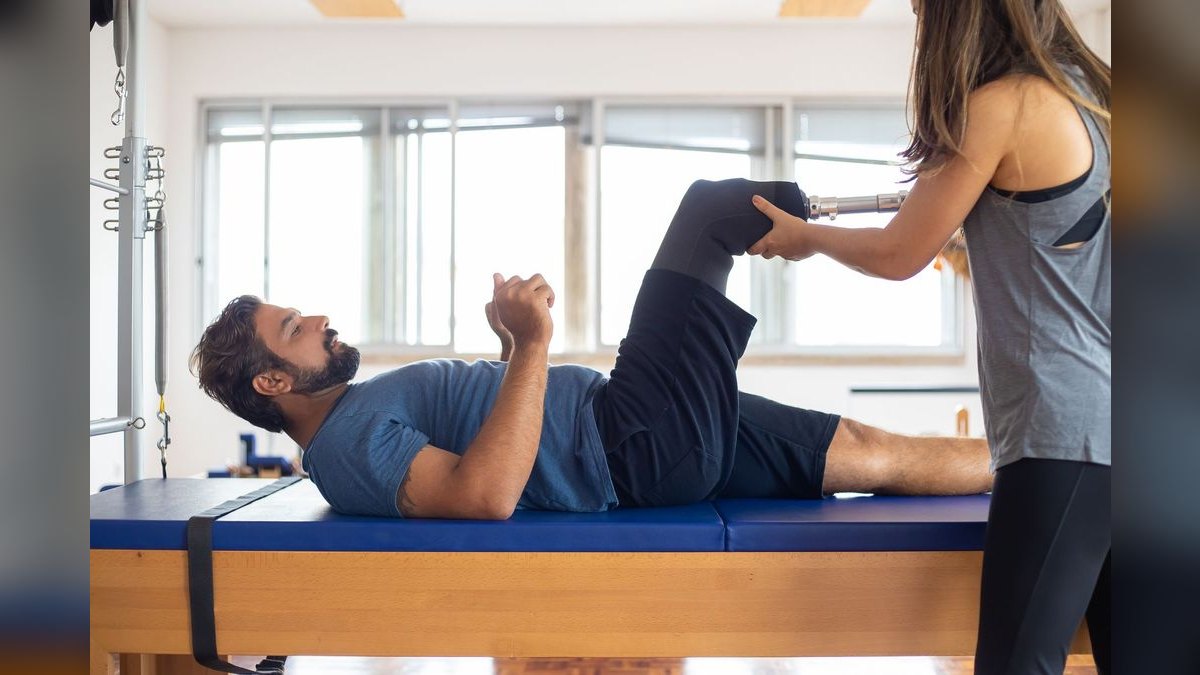
Open with the leak that defines cash-based PT. A patient pays out of pocket for a thorough one-on-one evaluation, gets a clinically sound plan of care — say twelve visits over six weeks — and then comes three times and disappears, never reaching the outcome they paid to chase. The clinic didn't lose on clinical quality. It lost because the plan of care was never framed as a commitment to a result, so the patient treated each visit as an optional expense to skip.
Set the frame on the whiteboard:
- The broken plan of care: Clinician says "let's get you on the schedule," patient books one visit at a time, drops off when the acute pain eases, never restores full function.
- The repaired plan of care: Team anchors the plan to the patient's functional goal, presents the value of cash-pay over insurance friction, and offers a package the patient commits to up front.
- Commitment target: convert 70%+ of evaluations into a committed package or plan of care, and lift plan-of-care completion meaningfully.
End by reading the APTA ethics principle aloud: *"The physical therapist's primary obligation is the patient's functional outcome, achieved through the full plan of care."* The team's job is to help the patient commit to that outcome — honestly, never through pressure.
---
Section 2 — The Pre-Conversation Brief (15 min)
The brief is a quick alignment the clinician and front desk build from the evaluation and the patient's functional goal *before* the package conversation. No brief, no ask. Have each team fill one out for a real patient now.
Verbatim Pre-Conversation Brief Template (team completes from the evaluation):
> 1. Patient: [Name] — [Diagnosis / functional limitation] — [Recommended plan: visits over weeks] — [Phase: acute / progressive / return-to-activity] > 2. The outcome, in the patient's words: [e.g., "run my first 10K in October" or "pick up my toddler without my back going out"] > 3. Clinical why for the frequency: [Why this cadence reaches that outcome — tissue healing, progressive loading] > 4. Value framing for this patient: [Time saved vs. insurance visits, one-on-one care, no referral hassle, FSA/HSA dollars] > 5. My pre-conversation hypothesis: [Real hesitation — cost, time, or "I'll just do the exercises at home"] > 6. My ask: A package or full plan of care committed today; FSA/HSA and financing ready; clear next step if the patient needs time.
Coach the "outcome in the patient's words" rule — cash-based-practice methodology and APTA patient-centered care both stress that patients commit to a *result they named*, not to a quantity of visits. If that line is blank, the team isn't ready to make the ask.
Show the bad example: *"It's $150 a visit, how many do you want to book?"* That's a transaction, not a plan of care. Replace it with the flow.
---
Section 3 — Selling the Outcome, Not the Visit (10 min)
The habit to retrain — pricing by the visit. Drill it.
- Lead with the goal, then the plan. "You said you want to run that 10K in October — here's the plan that gets you to the start line."
- Frame value against insurance friction. No referral hunt, no visit caps, full one-on-one time with a doctor of physical therapy — not 15 minutes shared with three other patients.
- Sell the package as the path to the result, not a discount bundle. The commitment *is* the treatment — sporadic visits don't restore function.
- Use FSA/HSA dollars. These are pre-tax and built for exactly this care — naming them is advocacy, not a sales tactic.
- Set outcome checkpoints. Reassess at week three; the patient sees progress, which is what sustains the commitment.
What to NEVER say in a cash-pay PT conversation (read these aloud, slowly):

- "It's expensive, but..." (you made the price the headline instead of the outcome the patient wants)
- "You could probably just do the exercises at home" (you talked the patient out of the plan of care they need)
- "This package deal is only good today" (manufactured urgency on healthcare is unethical and breaks trust)
- "Insurance is a rip-off anyway" (trashing the alternative is unprofessional; frame your value positively instead)
- "I guarantee you'll be pain-free in six weeks" (you cannot guarantee a clinical outcome — promising one is false and a liability)
- "It's up to you" (true, but as a shrug it abandons the patient at the decision instead of guiding it)
The APTA standard is plain: recommend the plan of care the evaluation justifies, frame its value honestly around the patient's outcome and access, and let an informed patient commit — never pressure, never oversell, never guarantee.
---
Section 4 — The Package-Commitment Conversation (10 min)
Run the money talk *after* the patient understands the plan and the outcome it serves. Use the verbatim script.
Verbatim Package-Commitment Script (clinician or front desk delivers these exact words):
> Team: "Based on your evaluation, the plan to get you running that 10K pain-free is twelve sessions over six weeks. Let me walk you through how patients invest in this, because I want you focused on the finish line, not the math." > > [Turn the screen so you both see it. Show the package value and what it includes.] > > Team: "Our twelve-session plan of care is $1,560 — that's full one-on-one time with a doctor of physical therapy, no referrals, no visit caps, and reassessments built in. Per session that's less than a single drop-in." > > [Pause. Let the patient picture the result. Do not fill the silence.] > > Team: "You can use your FSA or HSA — those are pre-tax dollars made for this. We also offer monthly payments and CareCredit. Which works best for you?" > > [Patient chooses a path. Confirm the package and the first sessions.] > > Team: "Perfect. Let's lock in your first three sessions and your week-three reassessment now — I'll send the full plan in writing so you can see exactly how we get you to October."
Do NOT:

- Lead with the per-visit rate before the outcome and the package value.
- Manufacture urgency or guarantee a clinical result — both are unethical and a liability.
- Let a patient leave without either a committed package or a smaller starter package and a scheduled follow-up.
Robert Cialdini calls a clear, honest commitment device *"consistency in service of the patient"* — when a patient commits to the full plan up front, they follow through, and the outcome they wanted is the one they reach.
---
Section 5 — The Plan-of-Care Commitment Cadence (15 min)
Build the clinic's conversion rhythm on a whiteboard. Most cash practices leave commitment to chance, one visit at a time — this makes it a system anchored to outcomes.
The math (for a clinic doing 25 evaluations a month):
- 25 evals × 50% commit (current) = ~13 plans/month at $1,560 = ~$20,280
- 25 evals × 70% commit (target) = ~18 plans/month — 5 additional committed plans
- 5 plans × $1,560 package value = $7,800/month more, ~$93,600/year — patients completing the care that restores their function.
- Committed-package patients complete ~85% of recommended visits versus ~45% for book-as-you-go — the commitment is what produces the outcome.
Cash-based-practice methodology is clear: the up-front package commitment is the single biggest driver of plan-of-care completion, and completion is what delivers the results that fuel referrals.
Common package objections (rehearse the comebacks):
- *"My insurance might cover PT."* — "It might, with a referral, visit caps, and shared 15-minute sessions. Here you get full one-on-one time and no hoops. Let me show you what that's worth to your timeline."
- *"That's a lot up front."* — "It is an investment in the outcome — that's why we take FSA/HSA pre-tax dollars and offer monthly payments. Per session it's less than one drop-in."
- *"I'll just do the exercises at home."* — "Home exercises matter — they're part of the plan. But progressive loading and hands-on correction are what actually restore the function. Doing it alone usually stalls."
- *"Can you guarantee I'll be better?"* — "I can't guarantee an outcome — no honest clinician can. What I promise is a reassessment at week three and a plan that adjusts to your progress."
Have every team member commit to a pre-conversation brief and an outcome-anchored package ask on every evaluation this week before they leave the room.
---

Section 6 — Commitments and Close (5 min)
Each attendee leaves with three written commitments, posted at the front desk:
- I build a pre-conversation brief that anchors the plan of care to the patient's outcome in their own words.
- I sell the outcome, not the visit — value framed against insurance friction, never price-first, never with guarantees.
- I make a package commitment ask on every evaluation and log every "not yet" with a starter option and a 48-hour follow-up.
Close by reading the APTA principle aloud: *"Optimal outcomes come from completed plans of care. Our job is to help patients commit to the result they came for — clearly and ethically."*
Then pin the plan-of-care charter in the team channel and tape the package-commitment script at every front-desk station.
---
Related on PULSE
- [IV Therapy and Wellness Clinic Selling — 60-Min Training](/knowledge/st362)
- [Personal Training Package Selling — 60-Min Training](/knowledge/st293)
- [Aesthetics Laser Package Selling — 60-Min Training](/knowledge/st297)
- [Auto Detailing Package and Membership Selling — 60-Min Training](/knowledge/st285)
- [Trust-Based Selling Exercises: Facilitator Guide for a 60-Minute Team Workshop](/knowledge/st0797)
- [The Sandler Selling System: Ready-to-Run Mini-Training for New Hires](/knowledge/st0794)
FAQ
What exactly is covered in the 60-minute training? The training walks your team through a complete cash-pay package presentation sequence: a pre-conversation brief based on the evaluation and the patient’s functional goal, a value-vs-insurance framing that explains cost in terms of time, access, and results, a verbatim package-commitment script, and a structured follow-up for patients who need time to decide. It also includes the ethical-influence principles from Robert Cialdini and APTA standards, so every step stays anchored to the patient’s stated outcome.
Who should attend this training — just the owner or the whole team? It’s designed for cash-based PT and wellness clinic owners, front-desk leads, and treating clinicians who present visit packages and plans of care. The session is most effective when the entire patient-facing team participates, because the handoff from clinician to front desk to follow-up needs to be consistent and outcome-focused.
Will this training make us sound pushy or salesy? No — the entire method is built on ethical-influence principles and APTA professional standards. The goal is to replace high-pressure selling with an informed, outcome-first conversation. You learn to anchor every recommendation to the patient’s stated functional goal, present cost transparently, and let the patient commit to a full plan of care without feeling manipulated.
How long does it take to see a change in our package close rate? Many clinics report noticeable improvement within the first few weeks of consistent use, because the training provides verbatim scripts and a structured follow-up process. However, results depend on how thoroughly the team practices the new ritual and adapts it to their specific patient population — some see a shift in the first month, others may need two to three months of repetition.
Is this training based on real research or just opinion? It’s grounded in established cash-based-practice methodology, the APTA’s professional and ethical standards, and the research-backed influence principles of Robert Cialdini (author of *Influence*). No fabricated stats or dates are used — the framework relies on honest ranges and proven communication techniques that respect the patient’s autonomy.
What if a patient still says “I need to think about it” after the presentation? The training includes a structured follow-up script specifically for that situation. You’ll learn how to leave the door open without pressure, schedule a brief check-in (typically within 48–72 hours), and re-anchor the conversation to the patient’s original functional goal and the value of the package. The aim is to support an informed decision, not to force a yes.
Sources
- American Physical Therapy Association (APTA), *Code of Ethics and Standards of Practice*, apta.org, 2024-2025.
- Robert Cialdini, *Influence: The Psychology of Persuasion*, Harper Business, revised edition 2021.
- American Physical Therapy Association, *Guide to Physical Therapist Practice and Patient-Centered Care*, apta.org, 2024.
- Aaron LeBauer, *The Cash-Based Practice Methodology and Patient Commitment Resources*, 2023-2024.
- Robert Cialdini, *Pre-Suasion: A Revolutionary Way to Influence and Persuade*, Simon & Schuster, 2016.
- Jarod Carter, *Cash-Based Physical Therapy: A Practice Guide*, Carter Physiotherapy / WebPT resources, 2023.
- CareCredit, *Patient Financing in Physical Therapy and Wellness Practices*, carecredit.com, 2024.
- American Physical Therapy Association, *Private Practice Section: Cash-Pay and Out-of-Network Practice Guidance*, 2023-2024.
This page will be disappearing soon. Save it to your device for $1 — or read it free while it is here.
@Kory-White- · if Venmo asks, the last 4 of my number are 2012
 sales-trainingPersonal Training Package Selling — 60-Min Training
 sales-trainingAesthetics Laser Package Selling — 60-Min Training
 sales-trainingOrthodontics Consultation Close — 60-Min Training
 sales-trainingHearing Aid Consultation Selling — 60-Min Training
 sales-trainingStem Cell and Regenerative Medicine Consultation Selling — 60-Min Training
 sales-trainingPlastic Surgery Consultation Selling — 60-Min Training
 sales-trainingLasik and Vision Surgery Consultation Selling — 60-Min Training
 sales-trainingHospice and Home Health Admissions — 60-Min Training
 sales-trainingDental Implant Case Acceptance — 60-Min Training
 sales-trainingDental Treatment Plan Case Acceptance — 60-Min Training