
Data Center and Colocation Selling — 60-Min Training
 Curated byKory White · Fractional CRO · Maryland
 PULSEKNOWLEDGE LIBRARY
Data center and colocation selling wins on power, availability, and connectivity — never square footage. Reps qualify kilowatts per rack, the Uptime Institute Tier the workload actually requires, carrier and cloud on-ramp latency, and compliance scope, then map a five-person committee and a rehearsed migration before proposing a multi-year term.
The outcome you should expect from this 60-minute training
Run this session properly and the change shows up in the shape of your pipeline within one full sales cycle, not in a spike of activity metrics the week after. The specific outcome is that every active opportunity carries a written technical discovery brief — total kilowatts, density per rack, redundancy topology, required Tier, carrier and cloud on-ramp list, compliance scope, and the five named committee members — before anyone builds a proposal. That single artifact is the deliverable. Reps who leave with it stop losing deals in the SLA review and the security review, which are the two stages where colocation deals quietly die.
Expect three concrete shifts. First, proposal language changes from "price per rack" and "square feet" to "$ per kW per month at Tier III with N+1 power." That reframing is not cosmetic — it changes what the buyer compares you against. A cheaper cabinet that cannot deliver 15 kW of density with the cooling to match is not the same product, and until you quote in kilowatts the buyer has no way to see that. Second, the number of stakeholders on a given opportunity record goes up, usually from one or two to four or five. That looks like the deal got harder; it means the deal got real. Infrastructure leadership, network engineering, security and compliance, procurement, and finance each hold a functional veto, and a deal mapped to only the infrastructure lead is a deal that will stall for a quarter when security asks for audit evidence nobody scoped.
Third — and this is the outcome that shows in the forecast — late-stage slippage drops. The classic colocation loss is not a competitive loss; it is a deal that reaches legal, hits an unscoped migration or an unbudgeted compliance obligation, and slides two quarters. When the migration owner, the maintenance window, and the rollback are named in discovery rather than negotiated in redlines, the close date holds.

What this training does not do: it does not make a rep a solutions engineer. The point is not that the AE designs the power topology. The point is that the AE asks the right seven questions well enough that the engineering team can design it, and speaks the vocabulary well enough that the technical buyer trusts them in the room. A rep who says "we're basically Tier IV" has told the engineer they do not understand that Uptime Institute Tiers are certified design topologies, not adjectives. That sentence costs you the technical champion in one breath, and you rarely get them back.
Set the expectation with the room at minute one: nobody leaves with a new pitch deck. Everybody leaves with a filled-out brief on a live opportunity and three written commitments taped to a monitor.
What actually drives the outcome
The mechanism is the sequence, not the content. Reps already know that data centers sell power; what they do not do is refuse to quote before the requirements are captured. The gate is what changes behavior — no brief, no proposal — because it forces the technical conversation to happen while you still have the ability to shape the design rather than respond to someone else's specification.
Start with the workload. An application does not need a cage; it needs a specific power density, a specific availability guarantee, a specific latency to wherever the rest of its architecture lives, and a migration that does not take it down. Every one of those is a design input, and every one of them moves price. A general-compute cabinet at 5 kW and a GPU or AI training rack at 40 kW occupy the same floor footprint and are entirely different deals — different power distribution, different cooling (air versus rear-door heat exchanger versus liquid), different price, different facility eligibility. Quoting per rack collapses that distinction and hands the comparison to whoever is cheapest per rack.
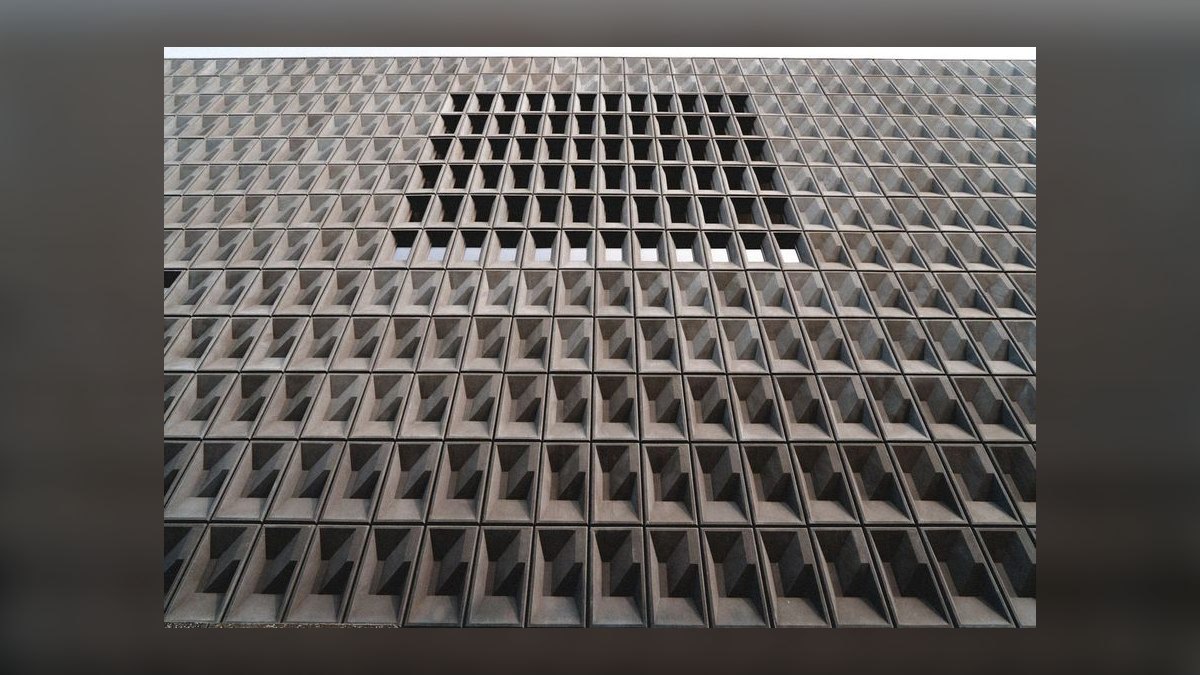
Then match the Tier to the business SLA, not to the biggest number you can sell. Uptime Institute's classification is a topology standard: Tier II adds redundant capacity components, Tier III is concurrently maintainable so any capacity component or distribution path can be taken offline for planned maintenance without stopping the workload, Tier IV is fault-tolerant against a single unplanned failure. Production revenue systems typically justify Tier III. Dev and test rarely need more than Tier II. Over-specifying prices you out of the deal; under-specifying loses you the SLA review after you have already invested three months. Both failures are qualification failures, not pricing failures.
Connectivity is often the real buying trigger and the most under-asked question in the discovery call. If the buyer is moving because their application tier needs sub-millisecond latency to a cloud on-ramp — AWS Direct Connect, Azure ExpressRoute, Google Cloud Interconnect — then carrier density and cross-connect availability in your facility are the actual product, and a facility with the right power but the wrong network fabric loses. Ask which carriers, which on-ramps, and what latency target in milliseconds, in numbers, in discovery.
Compliance scope is the fourth driver and the one most likely to blow up late. SOC 2, PCI DSS, HIPAA, and FedRAMP each carry distinct evidence and audit-support obligations, and the boundary between what the facility attests to and what the customer owns is contractual. "We'll figure that out later" is the sentence that turns a signed-in-principle deal into a two-quarter security review.

The last driver is the committee itself. Complex infrastructure is bought by a group, and the group does not meet on your schedule. Reps who pitch the infrastructure lead and assume that person will carry the deal internally are relying on a champion to run a procurement and a security review as a side project. They will not. Get all five in a room, put the design and the SLA and the migration plan and the term on one page, and let each of them react to the part they own.
Benchmarks and realistic ranges to teach in the room
Give reps numbers they can defend, and teach them to say "in our facility, at this density" rather than quoting industry figures as if they were universal. Costs vary enormously by market — a rack in a Northern Virginia or Silicon Valley campus does not price like one in a secondary metro — and by density, term length, and power commitment. The discipline to teach is the *structure* of the math, with the buyer's real numbers filled in.
Availability translated from Tier. This is the conversion reps must have memorized because it is the number the committee decides on. A concurrently maintainable design is commonly quoted around 99.98% availability, which works out to roughly one and a half to two hours of allowable annual downtime; a fault-tolerant design is quoted near 99.99%+, on the order of tens of minutes per year. Whatever numbers your facility contractually commits to, the rep should be able to state them and convert them to hours per year out loud, without a calculator. The buyer's engineering team does this conversion instinctively, and a rep who cannot is not in the conversation.

Density bands. Teach three anchors rather than a single average. Traditional general-compute cabinets sit in the low single-digit kW range. Modern enterprise virtualization and storage commonly land in the high single digits to mid-teens per rack. AI and GPU training deployments push far past that, into densities that require rear-door heat exchangers or direct liquid cooling and often cannot be served by legacy raised-floor air at all. The practical sales consequence: when a buyer says "high density," the rep's next sentence is always "what's the kW per rack, and what's the cooling design?" — because "high density" without a number is a marketing word, on both sides of the table.
The cost model structure. Build it on the whiteboard in this order, with the buyer's figures: total kW × your quoted $/kW/month × 12 = annual recurring, then add cross-connects and interconnection, then add any compliance and audit-support line items, then add remote-hands allowances. That total is the number to compare against alternatives. Compare it against on-prem by making finance state the capex for equivalent redundant power and cooling plus the fully loaded operating staff, amortized over the same term. Compare it against public cloud by modeling steady-state utilization and egress rather than list compute prices — colocation's TCO case is strongest for high-utilization, predictable workloads, and weakest for spiky ones, and a rep who pretends otherwise loses credibility with anyone who has actually modeled it.
Downtime cost. Never supply this number. Make the buyer supply it. Ask finance or the application owner: what does one hour of production outage cost this business, in revenue, SLA penalties, and recovery labor? Whatever they say, multiply it by the difference in annual allowable downtime between the topology they have and the topology you are proposing. That is the availability case, in their numbers, and it survives scrutiny in a way any industry-average figure will not.
Term and commitment ranges. Colocation contracts commonly run three to five years, with pricing improving as term and committed power increase. Teach reps that the capacity-reservation conversation — holding power and cabinet allocation while the paper moves — is a legitimate close lever in constrained markets, and a hollow one where capacity is abundant. Know which market you are in before you use it.

Sales-cycle expectations. A multi-committee infrastructure deal with a migration is not a 30-day cycle. Set the room's expectations honestly so nobody sandbags or, worse, discounts to force a close date that was never realistic. Track stage progression by artifact — brief completed, committee mapped, design reviewed by their engineers, compliance scope agreed, migration plan signed off — rather than by calendar optimism.
Risks, edge cases, and failure modes
Selling square footage. The default failure. It reduces a technical purchase to a commodity comparison you will usually lose, and it signals to the engineering buyer that you do not understand what they are buying. Every proposal artifact should lead with kilowatts, density, and Tier, with the physical footprint as a downstream consequence.
Over-specifying the Tier. A rep who sells fault-tolerant 2N to a dev/test environment prices themselves out and looks like they are upselling rather than advising. It also damages the relationship for the production deal that follows. The correct move is to right-size the environment and explicitly say so — "this doesn't need Tier IV, here's why" is one of the strongest trust-building sentences available in this sale.

Under-specifying to win on price. The mirror failure and the more expensive one. The deal survives to the SLA review, the buyer's engineering team compares the topology to the availability commitment, and the deal dies late with all your cost sunk. Or worse, it closes and the facility cannot deliver the density, and you have a churn event and a reference problem.
Ignoring cooling. Power without cooling is a claim, not a capability. A facility that can deliver the kilowatts to the rack but cannot remove the heat at that density will fail the site visit. Reps should never assert a density the facility has not confirmed it can serve with a specific cooling design.
Single-threading the committee. Any of the five can stall the deal for a quarter, and they will not tell you in advance. Security discovers unscoped audit evidence. Procurement discovers a term structure that violates policy. Finance discovers the capex-versus-opex comparison was never run. Network engineering discovers the latency to their cloud on-ramp is 40% worse than the current path. Map all five in discovery, and get each one's requirement in writing.
Hand-waving the migration. Downtime risk lives in the migration, and "your team can handle it" tells the buyer you have never run one. The de-risking move is a migration workshop plus a DR-first or backup-first deployment that proves the runbook before production moves. Name the owner, the maintenance window, and the rollback. Fear becomes a project plan.

Fighting the cloud. "Colo is always cheaper than cloud" is a sweeping claim that insults anyone who has modeled it, and it is frequently false. The winning position is hybrid: colocation for steady-state, high-utilization, control-sensitive workloads, with a high-bandwidth on-ramp to the public cloud for burst and managed services. Sell the workload-specific case, not an ideology.
Vague capacity language. "Power is no problem, we have plenty" and "we're basically Tier IV" are the two sentences that most reliably lose a technical buyer. Certified topologies are certified or they are not. Available capacity is a specific number in a specific hall on a specific date or it is a guess.
Deferring compliance. Audit scope is contractual, time-bound, and expensive to retrofit. Get it in writing during discovery, name what the facility attests to and what the customer owns, and put it in the proposal.

Emergency capacity as a pressure lever. The one legitimate exception to the full process is a genuine emergency capacity need — a failed facility, a hard eviction date. Scope an interim deployment honestly and say plainly that it is interim. Never let urgency push a buyer into the wrong Tier or the wrong density; that is a churn event with a delay fuse.
A practical rollout plan for the 60 minutes and the week after
Run the hour in six blocks and enforce the clock. The failure mode of infrastructure sales training is a 60-minute lecture on Tier topology that changes nothing on Monday.
Minutes 0–5 — the frame. Whiteboard the engineering reality: buyers lease capacity because a workload needs a density, an availability guarantee, a latency target, and a migration that does not take it down. Contrast the old pitch (price per rack, lobby, cameras) with the new one (kW, Tier, interconnection). Name the five-person committee. Do not use slides.

Minutes 5–20 — the discovery brief, filled out live. Hand out the seven-field template and have every rep complete it for a real, currently open opportunity. The fields: workload and environment; total kW and density per rack and redundancy; racks or cages plus 24-month growth plus cooling design; required Tier and the business SLA it maps to; carriers, cloud on-ramps, and latency target; compliance framework and audit cadence; and the five named committee members. Blank fields are the output — they are the rep's call list for the week. Expect most reps to have three or four blanks on their largest deal. That discomfort is the entire point of the block.
Minutes 20–30 — qualification drill. Go around the room. Each rep states one open deal, the Tier they believe it needs, and why. Challenge every answer that is not tied to a business SLA. Then read the never-say list aloud, slowly, and have the room say what each sentence signals to an engineer.
Minutes 30–40 — the committee conversation. Pair reps and rehearse presenting one page — design, SLA, migration plan, term — to a simulated committee, with the manager playing security and procurement. The coaching point is silence: present the design, then stop talking and let each stakeholder react to the part they own. Reps who fill the silence lose the objection they needed to hear.
Minutes 40–55 — build the math. Each rep builds a cost-per-kW and availability worksheet for a live opportunity, using the buyer's real downtime cost where they have it and a blank where they do not. The blanks are, again, the call list.
Minutes 55–60 — commitments. Three written commitments, taped to the monitor: top five opportunities get a completed brief and mapped committee by Friday; every proposal is built on kW, Tier, and availability SLA rather than square footage or price per rack; no signature request on a multi-year term without a migration plan naming an owner and a rollback.
The week after is where the training either lands or evaporates. The manager's job in week one is to make the blanks uncomfortable — a standing check on whether each rep has closed their missing fields with the buyer's engineering team. In week two, review the briefs on the top five deals per rep and refuse to approve any proposal without one. That refusal is the enforcement mechanism; without it, the template is a handout.
Track two leading indicators at 30 and 60 days: the percentage of open opportunities with a completed brief, and the average number of mapped stakeholders per opportunity. Track one lagging indicator at 90 days and beyond: late-stage slippage — deals that reach legal or security review and push a quarter. If briefs are up and slippage has not moved, the briefs are being filled out from memory rather than from conversations with the buyer's engineers, which is the most common way this discipline degrades. Spot-check by asking a rep where a specific density number came from and who said it.
Related questions
Should the AE or the solutions engineer own the discovery brief?
The AE owns it and completes it *with* the buyer's engineering team; the SE validates feasibility and designs the topology. If the SE fills it out alone, the AE never builds technical credibility and cannot defend the design in the committee meeting where the SE is not present.
How do we handle a buyer who has already written an RFP with a rack count?
Answer it, then reframe alongside it. Submit the compliant response and attach a one-page density-and-Tier analysis showing what the specified rack count implies about power and cooling. If their spec is internally inconsistent, that document is your differentiator and your route to the engineering team.
What if the facility genuinely cannot serve the density the buyer needs?
Say so immediately and propose what you can serve — a lower-density portion of the workload, a different hall, or a partner facility. Committing to a density you cannot deliver produces a churn event, a damaged reference, and a lost account, which is worse than a lost deal.
Does this training apply to wholesale and hyperscale deals?
The qualification discipline transfers, but the committee and the timeline expand — real estate, legal, and often board-level approval enter the process, and the cycle stretches accordingly. Run this training for retail colocation and interconnection sales, and treat wholesale as a separate motion.
FAQ
The buyer just asks for a price per rack. How do I move them off that?
Reframe in the same breath rather than refusing. "I can quote per rack, but I'll almost certainly quote you the wrong facility — what's the power density per rack and the availability requirement? Those two inputs drive most of the real cost." Then quote in $ per kW per month at a stated Tier. Once the buyer sees the same footprint price differently at 5 kW versus 15 kW, the per-rack framing dissolves on its own, and the comparison shifts to the ground where you can actually differentiate.
How do I qualify the right Uptime Institute Tier?
Tie it to the business SLA the application already commits to, not to the buyer's aspiration or your quota. Ask the application owner what uptime the business promises its customers and what happens contractually when it is missed. Production revenue systems typically justify a concurrently maintainable design; dev and test rarely need more than redundant capacity components; fault-tolerant topology is for workloads where a single unplanned failure is genuinely unacceptable. Over-specifying prices you out. Under-specifying loses you the SLA review after months of work.
Who are the real decision-makers in a colocation deal?
Five roles, each with a veto: infrastructure leadership owns the design and usually initiates; network engineering owns carriers, cross-connects, and latency; security and compliance owns audit scope and evidence; procurement owns terms, SLAs, and vendor risk; finance owns the capex-versus-opex comparison. Map all five by name and role in discovery, and get each one's requirement in writing. A deal mapped to one champion is a deal waiting to stall at whichever function was never consulted.
The prospect says public cloud is simpler, so they'll just use that. How do I respond?
Do not argue against cloud — model it with them. For high-utilization, steady-state workloads with predictable capacity and significant data movement, colocation plus a dedicated cloud on-ramp frequently wins on total cost while giving the team hardware control and a clear compliance boundary. For spiky, bursty, or managed-service-heavy workloads, cloud often genuinely wins, and saying so builds more credibility than any objection-handling script. Sell the hybrid architecture and be specific about which workloads sit where.
How do I handle compliance and audit requirements?
Scope it in writing during discovery, before the proposal. Ask which frameworks apply — SOC 2, PCI DSS, HIPAA, FedRAMP — what the audit cadence is, and what evidence their auditors have demanded in past cycles. Then state explicitly what the facility attests to and what remains the customer's responsibility, and put that boundary in the proposal. Deferring this to "we'll sort it out later" is the single most reliable way to lose a deal in security review after the technical win.
The migration risk is the buyer's biggest fear. How do I de-risk it?
Treat it as a project to be planned, not an objection to be handled. Propose a migration workshop with their infrastructure and network teams, and a DR-first or backup-first deployment that proves the runbook before any production workload moves. Name the migration owner, the maintenance window, the cutover sequence, and the rollback trigger. A documented, rehearsed migration converts an emotional blocker into a schedule — and it is often the artifact that wins the deal outright.
Sources
- Uptime Institute — Tier Standard: Topology and Tier Classification System: https://uptimeinstitute.com/tiers
- AWS Direct Connect documentation: https://aws.amazon.com/directconnect/
- Microsoft Azure ExpressRoute documentation: https://azure.microsoft.com/en-us/products/expressroute
- Google Cloud Interconnect documentation: https://cloud.google.com/network-connectivity/docs/interconnect
- AICPA — SOC 2 and the Trust Services Criteria: https://www.aicpa-cima.com/topic/audit-assurance/audit-and-assurance-greater-than-soc-2
- PCI Security Standards Council — PCI DSS: https://www.pcisecuritystandards.org/standards/pci-dss/
- U.S. HHS — HIPAA Security Rule: https://www.hhs.gov/hipaa/for-professionals/security/index.html
- FedRAMP — program documents and requirements: https://www.fedramp.gov/
- Open Compute Project — rack and power design references: https://www.opencompute.org/
- ASHRAE — Technical Committee 9.9, Mission Critical Facilities: https://tc0909.ashraetcs.org/
Related on PULSE
- [Synthetic Data Selling to the Head of Data Science — 60-Min Training](/knowledge/st415)
- [Data Loss Prevention (DLP) Selling to the CISO and Chief Privacy Officer — 60-Min Training](/knowledge/st393)
- [Sales Forecasting Accuracy: Template for a Team Meeting Focused on Data Hygiene](/knowledge/st0796)
- [Territory Mapping Workshop: Using Data to Prioritize Leads](/knowledge/st0732)
- [The Sandler Selling System: Ready-to-Run Mini-Training for New Hires](/knowledge/st0794)
- [Selling with Stories: Narrative Structure Template for a 45-Minute Sales Workshop](/knowledge/st0792)
This page will be disappearing soon. Save it to your device for $1 — or read it free while it is here.
@Kory-White- · if Venmo asks, the last 4 of my number are 2012
 sales-trainingManufacturing ERP Software Selling — 60-Min Training
 sales-trainingMSP Renewal MSA Selling — 60-Min Training
 sales-trainingCybersecurity Incident Response Engagement Selling — 60-Min Training
 sales-trainingCapital Medical Equipment Selling — 60-Min Training
 sales-trainingManaged Security (MSSP) Selling — 60-Min Training
 sales-trainingHow do you train a sales team in Media & Publishing in 2027?
 sales-trainingHow do you train a sales team in Mortgage & Lending in 2027?
 sales-trainingThe Outbound Call Recording Review — 60-Min Training in 2027
 sales-trainingHow do you train a sales team in Dental in 2027?
 sales-trainingWho Should Conduct Win-Loss Interviews So Reps Don't Skew the Answers — 60-Min Training in 2027